
农产品贸易

Search documents
养殖产业链日报:近月宽松明显-20260127
Guan Tong Qi Huo· 2026-01-27 10:01
1. Report Industry Investment Rating - No specific investment rating for the industry is provided in the report. 2. Core Viewpoints of the Report - The domestic soybean spot market price is stable with a slight upward trend, and it is expected to continue the oscillatory trend [1]. - The domestic corn spot market atmosphere is strong, with prices rising in the north and falling slightly in the south. It is recommended to view it as wide - range oscillation before the Spring Festival, and consider buying on dips if there is a significant decline [1]. - The egg - laying hen inventory in the first half of 2026 will decline monthly, with significant drops in March and April and a narrowing decline in May. It is not recommended to be overly bearish [2]. - The pig de - capacity process is ongoing. The spot supply is expected to be large around the Spring Festival, and it is difficult for near - month and spot prices to rise continuously. Far - month prices depend on capacity reduction in the past two months and the number of sows [3]. 3. Summary by Related Catalogs Soybean - The domestic soybean spot market price is stable with a slight upward trend. Northeast产区 prices are stable, farmers' asking prices are unchanged, and most traders buy casually and consume inventory. Multi - platform soybean auctions attract attention and have good transactions. There is pre - Spring Festival replenishment demand, but it is difficult for traders to raise prices [1]. Corn - The domestic corn spot market atmosphere is strong, especially in the Northeast. The average purchase price of deep - processing enterprises in the Northeast increased by 0.7% week - on - week, in North China by 0.6% week - on - week, in northern ports by 0.66% week - on - week, and decreased by 0.4% in southern ports week - on - week. The strong pattern weakens from north to south and from production areas to sales areas. Deep - processing enterprises still have pre - holiday replenishment demand, and the increase in grassroots supply does not form pressure. There are concerns about the upside space due to the price inversion between production and sales areas and continuous reserve auctions. It is recommended to view it as wide - range oscillation before the Spring Festival and consider buying on dips if there is a significant decline [1]. Egg - Based on chick - replenishment data, the inventory of egg - laying hens in the first half of 2026 will decline monthly. The inventory decline is most significant in March and April due to low previous chick - replenishment and accelerated culling of old hens. In May, the decline narrows, and the industry enters a supply - demand adjustment transition period. The market is fluctuating, and there is no obvious driving factor. Since the inventory margin has improved slightly compared to the second half of last year, it is not recommended to be overly bearish [2]. Pig - At the end of 2025, the inventory of breeding sows was 39.61 million, a decrease of 1.16 million or 2.9%, and it was 101.6% of the normal reserve. In October 2025, the sow inventory was 39.9 million. In 2025, the national pig slaughter was 719.73 million, an increase of 17.16 million or 2.4%. At the end of 2025, the national pig inventory was 429.67 million, an increase of 2.24 million or 0.5%. The pig de - capacity process is ongoing. The spot supply is expected to be large around the Spring Festival. The demand has increased, but it is difficult for near - month and spot prices to rise continuously. Far - month prices depend on capacity reduction in the past two months and the number of sows [2][3].
从单点避险到生态协同 期货工具助力西北实体企业筑牢风险防线
Xin Hua Cai Jing· 2026-01-27 07:11
Core Insights - The article discusses how agricultural and chemical enterprises in Northwest China are actively engaging in futures and derivatives markets to manage price risks, transforming from passive to proactive risk management strategies [1][6]. Group 1: Price Risk Management - Companies have historically relied on spot markets for pricing, leading to issues such as high procurement costs and reduced sales revenue due to information asymmetry and delayed market predictions [2][3]. - The introduction of futures markets has provided companies with forward-looking pricing references, enabling them to make informed decisions and stabilize operations [2][3]. Group 2: Case Studies of Successful Implementation - Shaanxi Agricultural Development Oil Group has successfully hedged against price fluctuations by participating in the futures market, achieving cost locking and risk diversification, which has enhanced operational stability and market competitiveness [3][4]. - Shaanxi Agricultural Supply Chain Management Group utilized futures to mitigate risks in corn trading, achieving a profit of 205 yuan per ton through strategic hedging [3][4]. Group 3: Innovations in Chemical Trade - Longchang Petrochemical Group has adopted a dual approach to risk management by utilizing both spot and futures markets, effectively reducing inventory exposure and optimizing costs [4][5]. - The introduction of a "secondary price lock" service by Longchang Petrochemical allows downstream clients to manage costs more effectively while maintaining supply stability [5]. Group 4: Challenges and Opportunities - Despite the successful application of futures tools, there are still challenges in the Northwest region, including a shortage of skilled professionals and resistance to new pricing models [6][7]. - The ongoing development of the Silk Road Economic Belt presents opportunities for companies to expand their procurement strategies internationally, particularly in managing currency and price risks [7]. Group 5: Future Directions - The shift from simple spot trading to integrated futures strategies reflects a broader trend towards high-quality development in China's economy, particularly in the agricultural and energy sectors [7]. - The experiences of agricultural and chemical enterprises in the Northwest provide valuable insights for future collaboration between industry and finance, indicating a path for enhanced risk management practices [7].
2025年云南对东盟进出口1320.8亿元
Ren Min Ri Bao· 2026-01-26 21:50
Group 1 - The core viewpoint of the article highlights that Yunnan's import and export to ASEAN is projected to reach 132.08 billion yuan in 2025, marking a year-on-year growth of 20.8%, achieving a historical high in trade scale [1] - During the 14th Five-Year Plan period, Yunnan's total import and export value is expected to reach 1.39 trillion yuan, representing a 40.8% increase compared to the 13th Five-Year Plan period [1] - Yunnan has established trade relations with 193 countries and regions, with import and export growth achieved with 146 of these countries and regions [1] Group 2 - In 2025, Yunnan's goods trade import and export is projected to be 273.74 billion yuan, reflecting a year-on-year growth of 10.2% [1] - The import and export growth rates for Yunnan's trade with the Middle East, Latin America, and Africa are 3.7%, 51.1%, and 75.6% respectively [1] - Agricultural product exports are valued at 19.79 billion yuan, accounting for 21% of total exports, with fresh-cut flowers and coffee leading the nation in export scale [1] Group 3 - The export of "new three items" such as photovoltaic products and lithium batteries is expected to reach 3.35 billion yuan, showing a growth of 140% [1]
中国完成1200万吨大豆采购,美国财长明确表示委内瑞拉石油中国买不到
Sou Hu Cai Jing· 2026-01-25 06:51
Group 1: Agricultural Supply as a Political Tool - China rapidly initiated a soybean procurement plan from the U.S. after the trade truce agreement, purchasing 3 million tons valued at approximately $5 billion within three months [3] - The price of soybeans rebounded from $9 to $10.5 per bushel due to China's large purchases, alleviating the financial strain on U.S. farmers [3] - China's procurement actions not only demonstrated economic reliability but also exerted indirect political pressure on the U.S. domestic political landscape, particularly affecting Republican strongholds [3] Group 2: Energy Blockade and Response - The U.S. has intensified pressure through Latin America, including naval blockades and seizing oil tankers bound for Venezuela, significantly reducing China's oil imports from Venezuela from 640,000 barrels per day to just 160,000 barrels [5] - In response, Chinese oil companies diversified their supply sources, procuring oil from the Middle East, Russia, and Brazil, while ensuring a stable supply for at least 95 days through strategic reserves [5] - China's innovative approaches, such as exploring oil-for-products trade and utilizing RMB for settlements, reflect its resilience against U.S. energy blockade strategies [5] Group 3: Impact on Ordinary Citizens and National Strategy - China's soybean purchases have provided crucial support to U.S. farmers, with U.S. Treasury officials publicly acknowledging the benefits of these transactions [7] - Conversely, the tightening energy supply has directly impacted China's refineries and strategic reserves, leading to price volatility and supply risks for ordinary citizens [7] - China's policies have ensured food security and energy autonomy, showcasing its strategic resilience in the face of external pressures while stabilizing international markets [7] Group 4: Conclusion on Dual-Track Strategy - China's dual-track operations in agriculture and energy have become a new norm in U.S.-China relations, demonstrating economic reliability in agriculture and strategic autonomy in energy [9] - The parallel strategies indicate that traditional U.S. blockade tactics are losing effectiveness, as single-point pressure cannot deliver a decisive blow to China [9] - The ongoing competition raises questions about whether this dual-track strategy will persist and how the U.S. will adapt to these evolving dynamics [9]


一周进博声音(1月14日至20日)
Xin Lang Cai Jing· 2026-01-23 10:42
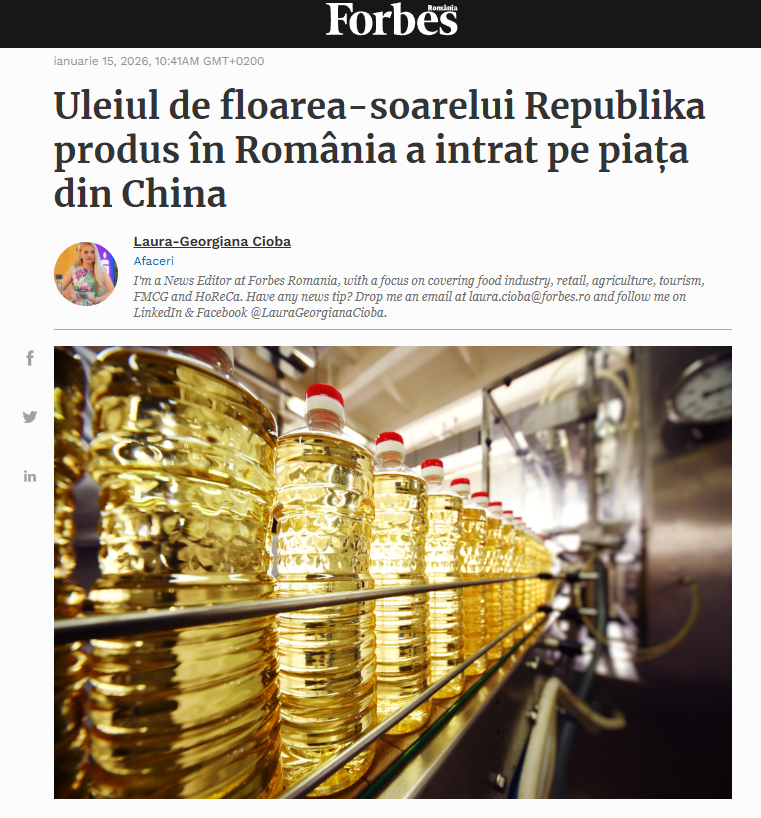
Group 1 - The China International Import Expo (CIIE) has become a significant platform for global companies to access the Chinese market, with a record number of participating enterprises and an intention to achieve over $80 billion in transactions during the eighth edition of the expo [12][11][10] - Romania's REPUBLIKA sunflower oil has gained attention as a star product in the Chinese market, showcasing successful bilateral cooperation between China and Romania [5][1] - Belarusian dessert manufacturer "Vitba" has been actively investing in the Chinese market, leveraging the rapid growth of e-commerce and participating in major trade events like CIIE to enhance market presence [5][6] Group 2 - The eighth CIIE has introduced a dedicated section for products from least developed countries, attracting 163 companies, a 23.5% increase year-on-year, highlighting China's commitment to supporting global southern economies [17] - The Chinese government aims to balance trade development and enhance import facilitation through various platforms, including CIIE, to better meet industrial and consumer needs [11][16] - The participation of 125 Canadian companies in the eighth CIIE marks a historical high, reflecting the strong trade relationship between China and Canada, with bilateral trade reaching $10 billion in the first 11 months of 2025 [24]
从极限施压到政策转向,美国对巴西关税“急转弯”的背后
Sou Hu Cai Jing· 2026-01-23 07:37
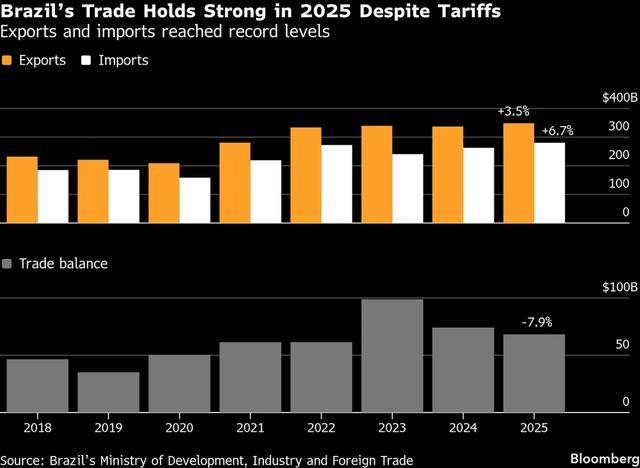
Core Viewpoint - The U.S. government's imposition of high tariffs on Brazil has led to significant policy adjustments, with Brazil successfully diversifying its trade partners and achieving record export levels despite the tariffs [1][2][6]. Group 1: U.S. Tariff Policy and Brazil's Response - In July 2025, the U.S. announced a 40% additional tariff on certain Brazilian goods, raising the total tariff rate on some exports to 50% [2][5]. - Contrary to expectations, Brazil's exports reached a historical high of $348.7 billion in 2025, marking a 3.5% increase from 2024 [2]. - Brazil's coffee export revenue hit $15.586 billion in 2025, a 24.1% increase from 2024, despite facing challenges such as reduced export volumes and increased U.S. tariffs [4][5]. Group 2: Factors Influencing U.S. Tariff Adjustments - The U.S. faced domestic supply shortages for coffee and beef, leading to increased prices and consumer dissatisfaction, which pressured the government to reconsider its tariff strategy [6][8]. - The U.S. domestic food price inflation was around 3%, with coffee prices rising by 21% and beef prices by nearly 14% year-on-year [6][8]. - The political landscape in the U.S. showed declining approval ratings for the current administration, with only about one-third of respondents approving of the handling of economic issues [8]. Group 3: Brazil's Trade Diversification Efforts - Brazil's government implemented measures such as fiscal support and price guarantees to mitigate the impact of U.S. tariffs, while also seeking to expand into new markets [5][10]. - Exports to China increased by 28.6% from August to November 2025 compared to the same period in 2024, while exports to the U.S. decreased by 25.1% [5]. - The signing of a free trade agreement between the Southern Common Market (Mercosur) and the European Union on January 17, 2026, is expected to enhance Brazil's trade relations and economic growth [1][11][13].
含权贸易解决服务产业“最后一公里”瓶颈
Qi Huo Ri Bao Wang· 2026-01-22 01:38
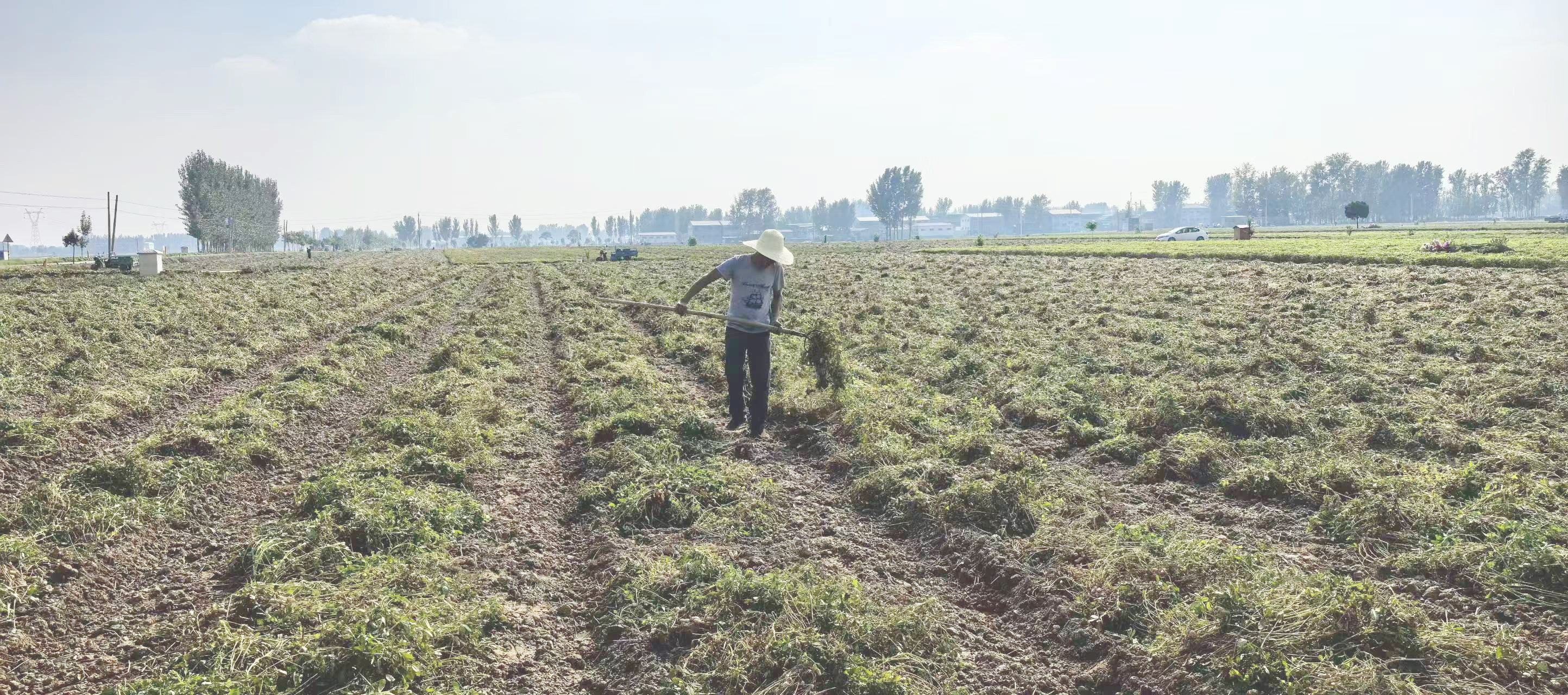
Core Viewpoint - The collaboration between Xinhu Ruifeng and agricultural trade companies exemplifies the effective implementation of the "insurance + futures" model, providing customized risk management solutions that align with national rural revitalization strategies [5][9]. Group 1: Project Background - The central government emphasizes the need to enhance financial services for rural revitalization and improve agricultural support systems, with the "insurance + futures" model gaining traction in the agricultural sector [5]. - Xinhu Ruifeng's partnership with agricultural trade companies utilizes Zhengzhou Commodity Exchange's peanut futures contracts for dynamic price management, benefiting farmers, traders, and processing enterprises [5]. Group 2: Project Process - Xinhu Ruifeng signs sales contracts with downstream partners, specifying procurement quantities (initially set at 100,000 jin), specifications, and delivery timelines, along with a two-week price protection agreement [6]. - After finalizing sales contracts, Xinhu Ruifeng engages traders to establish procurement contracts with cooperatives and farmers, ensuring compliance with quality and quantity requirements [7]. Group 3: Project Summary - The oil factory's procurement contract includes a price drop subsidy if futures prices fall below 8,050 yuan/ton, resulting in a 55 yuan/ton insurance subsidy when prices dropped to 8,032 yuan/ton, effectively reducing procurement costs [8]. - To mitigate the risk of traders withholding sales, Xinhu Ruifeng offers a price increase insurance product, providing a subsidy if futures prices exceed 8,080 yuan/ton, maintaining stable settlement prices for farmers [8]. - The "insurance + futures" model integrates financial tools with agricultural production and sales, enhancing risk management and supporting cost reduction and efficiency in the agricultural supply chain [8][9]. Group 4: Future Implications - The innovative "order purchase + rights trading" model not only protects processing enterprises and traders but also optimizes cost and profit distribution through a secondary settlement mechanism [9]. - The collaboration serves as a practical example of financial services supporting rural revitalization, with the potential for broader adoption of the "insurance + futures" model across the agricultural sector [9].
油脂有“料”:油菜籽自加拿大进口或增多,菜籽油行情转弱
Xin Lang Cai Jing· 2026-01-21 05:36
Group 1 - Canadian Prime Minister Carney's visit to China from January 14 to 17 marked a significant step in improving bilateral trade relations, resulting in the signing of the "China-Canada Economic and Trade Cooperation Roadmap" [2][8] - The two countries will continue trade discussions on electric vehicles, steel and aluminum products, canola, and agricultural products, with Canada offering a quota of 49,000 electric vehicles annually to China [3][9] - China is expected to reduce the comprehensive tariff rate on Canadian canola from 80% to around 15% by March 1, 2024, which will facilitate increased imports of Canadian canola [3][9] Group 2 - Despite tightening profit margins for canola processing, the import volume of Canadian canola is projected to increase due to favorable supply conditions, with an expected import volume of 3.22 million tons by 2026, a 37.94% increase from 2025 [4][9] - The current import tariff on canola is 9%, but the increase to 15% will raise the cost of imported canola by approximately 200 RMB per ton, reducing processing profits to around 800 RMB per ton [4][9] - The domestic market for canola oil is expected to experience a supply surplus in February, leading to a forecasted price drop to an average of 8,580 RMB per ton [6][11]

江苏创新平台搭建中国—中亚贸易“金桥”
Xin Hua Ri Bao· 2026-01-21 01:13
Core Insights - The trade cooperation between China and Central Asia is reaching new heights, with the total import and export volume expected to reach $106.3 billion by 2025, reflecting a year-on-year growth of 12% and an increase of 6 percentage points from the previous year [1] Group 1: Trade Platform Development - The "China-Central Asia Trade Facilitation Cooperation Platform" was established in Nanjing in June 2025, attracting over 20 Central Asian institutions, serving as a one-stop hub for trade connections [1] - The platform has facilitated trade intentions worth several hundred million dollars in agricultural and mineral products between China and Kazakhstan [2] - The platform's online component, "Suhao Cloud," has onboarded over 550 domestic companies, enabling Jiangsu-made products to reach Central Asian consumers [2][3] Group 2: Trade Growth and Economic Impact - Jiangsu's import and export volume with the five Central Asian countries is projected to reach 35.32 billion yuan in 2025, marking a year-on-year increase of 12.6% [3] - Companies like Changshu Longte Wear-resistant Ball Co., Ltd. have significantly increased exports to Central Asia, with a reported value exceeding 478 million yuan [4] - The logistics channels and platform services have enhanced trade efficiency, leading to a notable rise in export activities from Jiangsu to Central Asia [3][4] Group 3: Cultural and Educational Exchange - The platform has evolved into a multi-faceted bridge, hosting events like the Jiangsu-Central Asia Youth Friendship Association, which attracted nearly 120 students from 10 countries [5] - A Central Asia Publishing Center was established to facilitate cultural exchanges through book translations, enhancing cooperation in cultural publishing [5] Group 4: Innovative Trade Practices - The 2025 Jiangsu (Astana) Import and Export Commodity Exhibition saw over 60 Jiangsu enterprises sign contracts worth 800 million yuan, showcasing the effectiveness of trade networking [6] - The number of Jiangsu-Central Asia freight trains has increased to 1,420 in 2025, reflecting a year-on-year growth of 9.3% [6] Group 5: Future Development Plans - The platform aims to deepen regional economic cooperation and establish the "Central Asia Jiangsu Center" in Astana, promoting trade exhibitions and educational collaborations [7] - Plans are in place to create a national digital trade demonstration zone and enhance cross-border payment systems to facilitate trade [7]
绿地集团:推动2026年在海南增量业务规模超过100亿元
Zhong Zheng Wang· 2026-01-20 12:17
Group 1 - Greenland Group has signed strategic cooperation agreements with Hainan Agricultural Reclamation Group, Hainan Tourism Investment Group, and the People's Government of Dongfang City [1] - The agreements aim to introduce various business sectors including commerce, finance, health and wellness tourism, urban renewal, and infrastructure into Hainan, targeting to exceed a business scale of 10 billion yuan by 2026 [1] - The cooperation with Hainan Agricultural Reclamation Group focuses on urban renewal, asset optimization, agricultural product trade, and import-export trade, including revitalizing existing land resources and enhancing hotel and tourism assets [1][1] Group 2 - Collaboration with Hainan Tourism Investment Group will promote the export of new energy vehicles and focus on land revitalization, high-quality hotel tourism operations, and duty-free business layout [1] - The partnership with Dongfang City will concentrate on urban infrastructure construction, urban renewal, and the integration of cultural tourism development in areas like Jinyue Bay, Lanbo Bay, and Beili Old Street [1]
