
钢材

Search documents
广发期货日评-20251204
Guang Fa Qi Huo· 2025-12-04 02:38
Report Summary 1) Report Industry Investment Rating No investment rating for the industry is provided in the report. 2) Core Viewpoints - The short - term trading opportunities for A - share index futures are limited due to low trading volume and volatility [2]. - The current interest rate is approaching the high level before the end of September, and the allocation value of bonds within 10 years is relatively improved. The 30 - year bonds may be oversold under emotional drive. It is recommended to wait and see for the unilateral strategy and focus on the Politburo meeting and the new regulations on bond fund redemption fees [2]. - Gold is in a consolidation phase near $4200, and it is advisable to be cautious about chasing long positions unilaterally. Silver is oscillating strongly and may reach $60. Investors are advised to lock in profits after accumulating floating profits [2]. - The container shipping index is expected to fluctuate in the short - term [2]. - For steel, it is recommended to focus on the long - rebar and short - iron ore arbitrage. Iron ore is in high - level consolidation, and coking coal and coke are also in a consolidation state [2]. - Copper prices are rising again, and aluminum prices are rising with increased positions. Different trading strategies are recommended for various non - ferrous metals [2][3]. - For new energy and chemical products, different products have different market trends and corresponding trading suggestions, such as PX having strong support in the medium - term, while PTA's rebound space is limited [3]. - In the energy and chemical industry, different products have different market situations, such as LLDPE's trading volume weakening significantly and PP's supply having an upward expectation [3]. - In the agricultural products market, different products have different trends, such as palm oil falling due to potential inventory growth and sugar oscillating weakly [3]. 3) Summary by Related Catalogs Financial Sector - **Stock Index Futures**: A - share index futures have low trading volume and volatility, and the short - term trading space is limited. The dividend sector is firm, and the index futures are trading weakly [2]. - **Treasury Bonds**: The current interest rate is approaching the high level before the end of September. The 30 - year bonds are relatively weak, and the short - term market driver may come from the policy expectation difference. It is recommended to wait and see for the unilateral strategy and focus on the Politburo meeting and the new regulations on bond fund redemption fees. The positive arbitrage strategy for the 2603 contract is recommended for the spot - futures strategy [2]. - **Precious Metals**: Gold is in a consolidation phase near $4200, and it is advisable to sell out - of - the - money put options to earn time value. Silver is oscillating strongly and may reach $60. Investors are advised to lock in profits after accumulating floating profits. Platinum and palladium should be traded with a short - term high - selling and low - buying strategy, and the long - platinum and short - palladium hedge should take profits at high levels [2]. Black Sector - **Steel**: Steel mills are reducing production. It is recommended to focus on the long - rebar and short - iron ore arbitrage and narrow the spread between hot - rolled coil and rebar [2]. - **Iron Ore**: The shipment is increasing, the arrival is decreasing, and the port inventory is increasing. It is in high - level consolidation, with the range from 750 to 820 [2]. - **Coking Coal**: The price reduction range of coal in the production area is expanding, and the price of Mongolian coal is stable. The futures price is falling again, with the range from 1050 to 1150, and the 1 - 5 reverse spread is recommended [2]. - **Coke**: The first round of price cuts in December has been implemented, and the port trading price is falling. It is in a consolidation state, with the range from 1550 to 1700, and the 1 - 5 reverse spread is recommended [2]. Non - Ferrous Sector - **Copper**: The LME cancelled warehouse receipts are increasing significantly, and copper prices are rising again. The short - term decline space is limited [2]. - **Aluminum**: Aluminum prices are rising with increased positions. Different trading strategies are recommended for aluminum, waste aluminum, and aluminum alloy, with corresponding price ranges [2][3]. - **Other Non - Ferrous Metals**: For zinc, supply reduction and interest - rate cut expectations provide support, but the spot trading is dull [4]. For other non - ferrous metals such as tin, nickel, and stainless steel, different market trends and trading suggestions are provided [3]. New Energy and Chemical Sector - **New Energy**: Different new energy products such as polysilicon and lithium carbonate have different market trends and corresponding trading suggestions, such as polysilicon futures rising while the spot price is stable [3]. - **Chemical Products**: Different chemical products have different market situations, such as PX having strong support in the medium - term, while PTA's rebound space is limited. Different trading strategies are recommended for each product [3]. Energy and Chemical Sector - Different energy and chemical products such as LLDPE, PP, and methanol have different market trends and corresponding trading suggestions, such as LLDPE's trading volume weakening significantly and PP's supply having an upward expectation [3]. Agricultural Products Sector - Different agricultural products such as palm oil, sugar, and cotton have different market trends and corresponding trading suggestions, such as palm oil falling due to potential inventory growth and sugar oscillating weakly [3].
格林大华期货早盘提示-20251204
Ge Lin Qi Huo· 2025-12-04 01:10
Group 1: Report Industry Investment Rating - The investment rating for the steel industry in the black building materials sector is "volatile" [1] Group 2: Core View of the Report - The market is in a macro - policy vacuum period, but there may be expectations later. The fundamentals show that last week, the output of rebar decreased, the output of hot - rolled coils increased, and the output of five major steel products increased. The apparent demand has changed from increase to decrease, and the inventory of rebar and hot - rolled coils continues to be destocked, but the destocking speed slows down. Overall, the supply and demand are both weak. The market trading logic may still be at the industrial level, with insufficient marginal increment on the demand side. In the short term, the upside space is cautiously viewed, and the market is mainly in a volatile trend. Later, attention should be paid to the transformation of the trading logic to macro - expectations [1] Group 3: Summary by Related Catalogs Market Review - On Wednesday, rebar closed flat and hot - rolled coils closed down. They also closed down at night [1] Important Information - In October 2025, the national stainless - steel crude steel output was 3.6244 million tons, a month - on - month increase of 78,700 tons or 2.22%. In October, China's stainless - steel imports were 124,100 tons, a month - on - month increase of 3,800 tons or 3.18% and a year - on - year decrease of 34,100 tons or 21.56%. From January to October, the total stainless - steel imports were 1.2621 million tons, a year - on - year decrease of 343,000 tons or 21.37%. In October, the domestic stainless - steel exports were 358,100 tons, a month - on - month decrease of 60,400 tons or 14.43% and a year - on - year decrease of 59,300 tons or 14.2%. From January to October, the cumulative exports were 4.1408 million tons, a year - on - year increase of 1,600 tons or 0.04%. In October, China's stainless - steel apparent consumption was 3.0459 million tons, a month - on - month increase of 166,300 tons or 4.68% [1] - Chinalco Group: The first shipment of iron ore from the Simandou project was successfully sent, carrying 200,000 tons of iron ore [1] - On December 3rd, the average cost of 76 independent electric - arc furnace construction steel mills was 3,320 yuan/ton, a day - on - day decrease of 3 yuan/ton. The average profit was a loss of 29 yuan/ton, and the off - peak electricity profit was 79 yuan/ton [1] - According to the preliminary statistics of the Passenger Car Association, in November, the national passenger car market retail sales were 2.263 million vehicles, a year - on - year decrease of 7%. Among them, the new - energy market retail sales were 1.354 million vehicles, a year - on - year increase of 7%, and the new - energy market retail penetration rate was 59.8% [1] Market Logic - In the macro - policy vacuum period, there may be expectations later. Fundamentally, last week, the output of rebar decreased, the output of hot - rolled coils increased, and the output of five major steel products increased. The apparent demand has changed from increase to decrease, and the inventory of rebar and hot - rolled coils continues to be destocked, but the destocking speed slows down. Overall, the supply and demand are both weak [1] Trading Strategy - The upward movement of the futures price is weak. The market trading logic may still be at the industrial level, with insufficient marginal increment on the demand side. In the short term, the upside space is cautiously viewed, and the market is mainly in a volatile trend. Later, attention should be paid to the transformation of the trading logic to macro - expectations. The main contract has been rolled over to the May contract. The resistance level of the rebar 2605 contract is 3,200, and the strong support level is around 3,050. It is not recommended to chase long for now [1]
广发早知道:汇总版-20251203
Guang Fa Qi Huo· 2025-12-03 01:43
1. Report Industry Investment Ratings - No industry - wide investment ratings are provided in the report. 2. Core Views of the Report - The report comprehensively analyzes various sectors including financial derivatives, precious metals, shipping, and multiple commodities, presenting market conditions, influencing factors, and future outlooks for each. It suggests different trading strategies based on the characteristics of each sector, such as short - term trading, long - term investment, and arbitrage opportunities [1] 3. Summary by Directory Financial Derivatives Financial Futures - **Stock Index Futures**: A - share market declined with reduced trading volume on Tuesday. Major indices and four major stock index futures contracts all fell. There are preparations for commercial real - estate REITs and new regulations on infrastructure REITs. A - share market trading volume decreased, and there was a net capital withdrawal. Short - term strategies include lightly selling December put options and gradually building long - spread positions on dips [2][3][4] - **Treasury Futures**: Treasury futures closed down across the board, with bond yields generally rising. The central bank's bond - buying scale was less than expected, and the bond market sentiment was weak. Although there was a net capital withdrawal in the open market, the inter - bank funds were still relatively loose. It is recommended to reduce left - side operations, temporarily wait and see, and pay attention to the implementation of the bond - fund redemption fee new regulations. Also, consider the positive - spread strategy for the 2603 contract [5][6] Precious Metals - **Gold, Silver, Platinum, Palladium**: Global central banks' expectations of monetary easing have decreased. Gold weakened, while silver continued to rise due to tight inventory. Platinum was dragged down by gold, and palladium rose due to industrial support. In the long - term, the bull market in precious metals is expected to continue, but there are short - term fluctuations. Different trading strategies are recommended for each metal [7][9][10] Shipping Index (European Line) - The SCFIS European line index and related routes' indices declined. The global container shipping capacity increased year - on - year, and the demand in the eurozone and the US showed different trends. The futures market is expected to be volatile in the short term [11][12] Commodity Futures Non - ferrous Metals - **Copper**: The US manufacturing PMI was lower than expected, and the spot premium stabilized. There are concerns about potential supply shortages, and copper prices are expected to remain high in the long - term. Short - term trading should focus on December interest - rate cut expectations. It is recommended to take profits on rallies and pay attention to support levels [12][13][16] - **Alumina**: The visible inventory continued to increase, and the market supply was still abundant. The price is expected to remain in a bottom - range oscillation, and the main contract's reference range has shifted downwards [17][18][19] - **Aluminum**: Driven by both macro and micro factors, the aluminum price is expected to remain strong in the short - term. It is necessary to pay attention to the Fed's monetary policy and domestic inventory reduction [19][20][21] - **Aluminum Alloy**: The supply of scrap aluminum is tight, and the demand maintains resilience. The price is expected to have strong short - term performance, and an arbitrage strategy can be considered [21][22][24] - **Zinc**: The supply reduction expectation provides support, but the spot trading is dull. The price is expected to oscillate, and attention should be paid to the TC inflection point and refined - zinc inventory changes [24][25][27] - **Tin**: There are disturbances on the supply side, and the tin price is oscillating at a high level. It is recommended to hold existing long positions and buy on dips, while paying attention to macro changes [27][29][31] - **Nickel**: The price is oscillating within a range, and the upward driving force is limited due to fundamental pressure. It is expected to oscillate in the short - term, and attention should be paid to macro expectations and Indonesian industrial policies [31][32][33] - **Stainless Steel**: The price oscillated slightly higher, but the fundamental pressure has not improved significantly. It is expected to oscillate weakly in the short - term, and attention should be paid to steel mills' production - cut implementation and nickel - iron prices [33][34][36] - **Lithium Carbonate**: The price is oscillating, and market differences may increase in the future. It is recommended to wait and see, as the market faces issues such as large - scale factory resumption and off - season demand [37][38][40] - **Polysilicon**: The futures price opened lower and fell. The supply is expected to exceed demand in December, and it is recommended to wait and see in the futures market and take profit on put options [40][41][42] - **Industrial Silicon**: The demand is poor, and the futures price oscillated downwards. It is expected to oscillate at a low level, and the price range is estimated [43][44][44] Ferrous Metals - **Steel**: Steel mills are reducing production. The steel price is expected to oscillate within a range, and a long - rebar and short - iron - ore arbitrage strategy can be considered [45][46][47] - **Iron Ore**: The shipping volume increased, the arrival volume decreased, and the port inventory increased. The iron - ore price is expected to oscillate strongly, and the operating range is given [48][50][51] - **Coking Coal**: The price of domestic coking coal decreased, and the price of Mongolian coal stabilized. The futures price rebounded after an oversold situation. It is recommended to view it as an oscillation and consider an inverse - spread strategy [52][53][55] - **Coke**: The first - round price cut in December has been implemented, and the port trading price has declined. The futures price is expected to oscillate, and an inverse - spread strategy is recommended [56][57][58] Agricultural Products - **Meal**: The market lacks guidance, and both domestic and international markets are mainly oscillating. It is recommended to continue to pay attention to China's soybean - purchasing trends [59][60][61] - **Pigs**: The spot price pressure remains, and the month - to - month inverse - spread position can be held. The pig price is expected to oscillate weakly [63][64][64] - **Corn**: The spot price shows a differentiated trend, and the futures price is oscillating. It is necessary to pay attention to the rhythm of corn supply [65][66][66] - **Sugar**: The raw - sugar price is in a bearish pattern, and the domestic sugar price is oscillating at the bottom. It is recommended to maintain a bottom - oscillation mindset [67][68][70] - **Cotton**: The US cotton price is oscillating at the bottom, and the domestic cotton price is oscillating within a range. It is necessary to wait for the global agricultural supply - demand forecast report [70][71][72] - **Eggs**: The egg price is stable with a slight increase, but the pressure is still high. The futures price is expected to oscillate at the bottom [73][74][74] - **Oils and Fats**: The Malaysian palm - oil price rose, and the domestic palm - oil price followed suit. The domestic soybean - oil price is oscillating narrowly. Different outlooks and strategies are provided for each [75][76][77] - **Jujubes**: The price in the production area has weakened, and the futures price is oscillating weakly. It is necessary to pay attention to the terminal consumption during the peak season [78][79][79] - **Apples**: The demand for stored apples is average, and the sales are slow. The market situation is relatively stable [80][80][80] Energy and Chemicals - **PX**: The medium - term supply - demand expectation has improved, and the short - term oil price is strong. The short - term support for PX is relatively strong, and attention should be paid to the pressure around 7000 [80][81][81] - **PTA**: The supply - demand pattern is strong in the near - term and weak in the long - term. The rebound space for PTA is limited. It is recommended to view it as a high - level oscillation and consider a low - level positive - spread strategy [82][83][83] - **Short - Fiber**: The supply - demand expectation is weak, and the processing fee is mainly compressed. The price follows the raw - material fluctuations, and the processing fee should be shorted on rallies [84][85][85] - **Bottle - Chip**: The supply - demand situation in December remains loose. The price follows the raw - material fluctuations, and the processing fee is expected to be compressed. It is recommended to short the processing fee [86][87][87] - **Ethylene Glycol**: Due to expected device maintenance, the inventory - building amplitude in December will narrow, but the supply - demand pattern remains loose. It is expected to oscillate within a range [88][88][88] - **Pure Benzene**: The port inventory is increasing, the supply - demand is weak, and the price is under pressure. It is recommended to short on rebounds [89][90][90] - **Styrene**: The supply - demand is in a tight - balance state, and the profit has improved, but the upward space is limited. It is recommended to view it as a wide - range oscillation [91][92][92] - **LLDPE**: The overall trading is weak, and the spot price has little change. It is expected to oscillate within a range [93][93][94] - **PP**: There are many unexpected device maintenance events, and the downward space is limited. It is recommended to wait and see [94][94][94] - **Methanol**: The spot price is strong, and the trading is acceptable. It is recommended to short the 05MTO spread [95][95][95] - **Caustic Soda**: The supply - demand still has pressure, and the price is expected to run weakly [95][96][96] - **PVC**: The short - term futures price has rebounded, but the supply - demand contradiction has not improved. The price is expected to remain weak at the bottom [98][98][98] - **Soda Ash and Glass**: Soda - ash production has rebounded after a decline, and the futures price is oscillating. The glass sales have declined, and the spot price has fallen. Different strategies are recommended for each [99][100][101] - **Natural Rubber**: The overseas raw - material price has stopped rising and started to fall, and the rubber price is mainly oscillating. It is recommended to wait and see [102][104][104] - **Synthetic Rubber**: Driven by butadiene export news, the BR price has risen strongly. It is expected to oscillate in the short - term, and attention should be paid to the pressure around 10800 [104][106][106]
宏观策略、大类资产配置与大宗投资机会-11月刊
Guo Tou Qi Huo· 2025-11-28 13:23
Report Title - The report is titled "Macro Strategy, Asset Allocation, and Commodity Investment Opportunities - November Issue: Internal Market Exchange Meeting Strategy Sharing" by the Research Institute of Guotou Futures [1] Industry Investment Rating - No industry investment rating is provided in the report Core Viewpoints - The report focuses on the current state of global macro - liquidity, geopolitical and economic - trade situations, and their impacts on financial products and commodities. It suggests that the market is in a state of transition, with a shift from "recovery" and "recession" trading to "safe - haven" or "stagflation" trading. Attention should be paid to the linkage between geopolitical situations and Fed policies, the movement of the Japanese yen, and domestic economic policies [2][5][7] Summary by Related Catalogs 1. Previous Market Review and Outlook - **Macro - running features**: In the past month, there has been a recurrence of dollar liquidity, along with geopolitical and economic - trade disturbances. The Fed's pursuit of a stable and strong dollar has brought a de - leveraging effect on global credit expansion. Domestic economic policies have shown limited changes [3][5] - **Asset - running features**: Asset pricing has shifted towards "safe - haven" or "stagflation" trading. Precious metals have squeezed out other risk assets, and the stock market has re - balanced between technology and value sectors [5] 2. Future Outlook (1 - 2 months) - **Key factors to watch**: Geopolitical situation and Fed policy linkage, Japanese yen movement, and domestic policy orientation. Different scenarios of geopolitical cooling or intensification will have different impacts on dollar liquidity and risk assets [7][8][10] 3. Outlook for Financial Products - **Equity indices**: After September, the market has shifted to wide - range oscillations. It is recommended to wait for policy turns on a defensive configuration basis [11] - **Treasury bonds**: The central bank is expected to smooth fluctuations through various means. The yield curve may flatten slightly, but policy and institutional behavior are key variables that may cause adjustments [11][28] 4. Outlook for Commodities - **General situation**: The precious - metal - led market is in a transition to a re - inflation market, but is affected by dollar liquidity. Attention should be paid to geopolitical situations and domestic policy signals [18][19] - **Specific commodities** - **Energy**: Crude oil is expected to be weak in the medium - term due to supply - demand dynamics. Asphalt is under long - term negative pressure, and fuel oil has different supply - demand situations for high - sulfur and low - sulfur types. The far - month of the European shipping line is weak [23][30][31] - **Chemicals**: The salt - chemical sector is in a weak situation. Different strategies are recommended for glass, soda ash, caustic soda, PVC, methanol, and urea [24][34][35] - **Non - ferrous metals and precious metals**: At the end of the year, the market shows a strategy of high - low switching. Copper is in high - level oscillations, and precious metals are in a stage of adjustment. The market for lithium carbonate is affected by pre - Spring Festival production arrangements [39][40][41] - **Black commodities**: Steel is likely to continue oscillating at the bottom, iron ore may face increasing downward pressure, coke is expected to be weak, and coking coal is in an oscillating pattern. Ferroalloys are under downward pressure [43][44] - **Agricultural products**: The supply of rapeseed is uncertain, the pig industry is in a capacity - reduction process, and the egg industry's supply pressure is expected to ease [46][47][48] - **Soft commodities**: Different situations exist for rubber, sugar, apples, and logs, with corresponding investment suggestions [49][50]
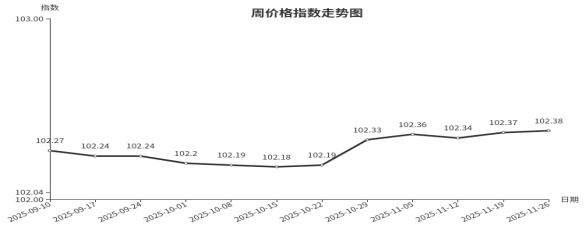
本周临沂商城周价格总指数为102.38点,环比上涨0.01点(11月20日—11月26日)
Zhong Guo Fa Zhan Wang· 2025-11-28 08:01
Core Insights - The overall price index of Linyi Mall increased slightly to 102.38 points this week, reflecting a marginal week-on-week rise of 0.01 points, but a year-on-year decline of 1.50 points [1] Price Index Summary - **Household Appliances and Audio-Visual Equipment**: The price index rose to 103.03 points, up by 0.08 points week-on-week, driven by increased sales of personal appliances like foot baths and hair dryers, despite slower sales of air conditioners and kitchen appliances [5] - **Building and Decoration Materials**: The index increased to 106.17 points, up by 0.08 points week-on-week, influenced by rising aluminum prices, although overall market demand remains weak due to lower temperatures [8] - **Steel**: The index reached 95.99 points, with a week-on-week increase of 0.02 points, but the market is experiencing seasonal slowdowns in construction activity, leading to reduced purchasing enthusiasm [10] - **Clothing and Accessories**: The index fell to 103.64 points, down by 0.02 points week-on-week, with notable price drops in footwear, although there was an increase in wholesale transactions for certain apparel items [13] - **Cultural and Office Supplies**: The index decreased to 108.63 points, down by 0.01 points week-on-week, as demand weakened and inventory levels were reduced by distributors [16] - **Daily Necessities**: The index dropped to 102.77 points, down by 0.01 points week-on-week, with price declines in various categories, although some items like jewelry saw price increases [19] Price Index Table Summary - The overall price index increased from 102.37 to 102.38 points, with various categories showing mixed results in price changes [21]

商务预报:11月17日至23日生产资料价格略有上涨
Shang Wu Bu Wang Zhan· 2025-11-28 07:04
Group 1 - The national production material market prices increased by 0.2% from the previous week [1] - Basic chemical raw material prices mainly rose, with sulfuric acid and soda ash increasing by 4.1% and 0.3% respectively, while polypropylene and methanol decreased by 2.1% and 1.3% [1] Group 2 - Rubber prices continued to rise, with natural rubber and synthetic rubber increasing by 0.9% and 0.8% respectively [2] - Coal prices showed slight fluctuations, with thermal coal and anthracite coal priced at 793 yuan and 1167 yuan per ton, increasing by 0.6% and 0.2% respectively, while coking coal decreased by 0.3% to 1073 yuan per ton [2] - Steel prices saw a slight increase, with rebar, hot-rolled strip steel, and high-speed wire rod priced at 3337 yuan, 3490 yuan, and 3523 yuan per ton, rising by 0.5%, 0.4%, and 0.2% respectively [2] Group 3 - Fertilizer prices remained stable with a slight increase, as urea prices were basically unchanged while compound fertilizer rose by 0.4% [3] Group 4 - Wholesale prices of finished oil remained stable, with 92 gasoline and 95 gasoline unchanged from the previous week, while 0 diesel increased by 0.1% [4] Group 5 - Non-ferrous metal prices experienced a slight decline, with aluminum, zinc, and copper decreasing by 0.9%, 0.9%, and 0.3% respectively [5]
商务预报:11月17日至23日食用农产品价格略有下降 生产资料价格略有上涨
Shang Wu Bu Wang Zhan· 2025-11-28 07:02
Group 1: Agricultural Products Market - The national market price of edible agricultural products decreased by 0.1% from the previous week [1] - The average wholesale price of 30 types of vegetables was 5.62 yuan per kilogram, down 0.9%, with specific declines in lettuce, broccoli, and spinach of 8.0%, 7.7%, and 3.8% respectively [1] - Poultry product wholesale prices saw slight declines, with eggs and white-feathered chickens decreasing by 1.1% and 0.2% respectively [1] - The average wholesale price of six types of fruits increased slightly, with watermelon, grapes, pears, and bananas rising by 4.0%, 1.1%, and 0.6% respectively [1] Group 2: Production Materials Market - The prices of basic chemical raw materials generally increased, with sulfuric acid and soda ash rising by 4.1% and 0.3% respectively [2] - Rubber prices continued to rise, with natural rubber and synthetic rubber increasing by 0.9% and 0.8% respectively [2] - Coal prices showed slight fluctuations, with thermal coal and smokeless lump coal priced at 793 yuan and 1167 yuan per ton, increasing by 0.6% and 0.2% respectively [2] - Steel prices experienced slight increases, with rebar, hot-rolled strip steel, and high-speed wire rod rising by 0.5%, 0.4%, and 0.2% respectively [2] - Fertilizer prices remained stable with a slight increase, as compound fertilizer rose by 0.4% [2]

“冷”加工厂的“热”贡献:欧洲钢材巨头持续看好中国市场
Sou Hu Cai Jing· 2025-11-26 20:32
Core Insights - The new cold-rolling precision processing factory of Haimu Materials Technology (Jiangsu) Co., Ltd. was inaugurated on October 25, 2023, marking a significant step in the company's expansion in China [2][3] - The factory, covering an area of 12,500 square meters, utilizes "cold technology" to produce special alloy pipes that can withstand extreme conditions, reflecting the company's commitment to innovation in the Chinese market [3][4] - Haimu's revenue from the Chinese market is projected to reach 1.544 billion yuan (approximately 220 million USD) by 2024, demonstrating strong growth potential [3] Company Development - Haimu's journey in China began in 1985, evolving from a sales office to a manufacturing base and now an innovation hub, showcasing China's transformation from a "world factory" to an "innovation highland" [3][4] - The company has achieved over 20% compound annual growth rate in its pipe business in China over the past seven years, with expectations of double-digit profit growth following the new factory's launch [4] Strategic Expansion - The Jiangsu base not only serves the Chinese market but also exports products to South Korea, Japan, and Southeast Asia, indicating a strategic layout of "rooted in China, radiating to Asia" [4] - Haimu's production process incorporates over 80% recycled steel, maintaining low greenhouse gas emissions, and the new factory features solar panels, increasing the proportion of green electricity used in production [4] Market Perspective - China is recognized as the largest chemical market and a testing ground for green technology innovation, which is a key reason for Haimu's investment in the region [5]
浙江:推动现货交易平台交易增量持续增长,聚焦钢材、塑料、橡胶等优势品种拓展业务范围
Sou Hu Cai Jing· 2025-11-26 01:56
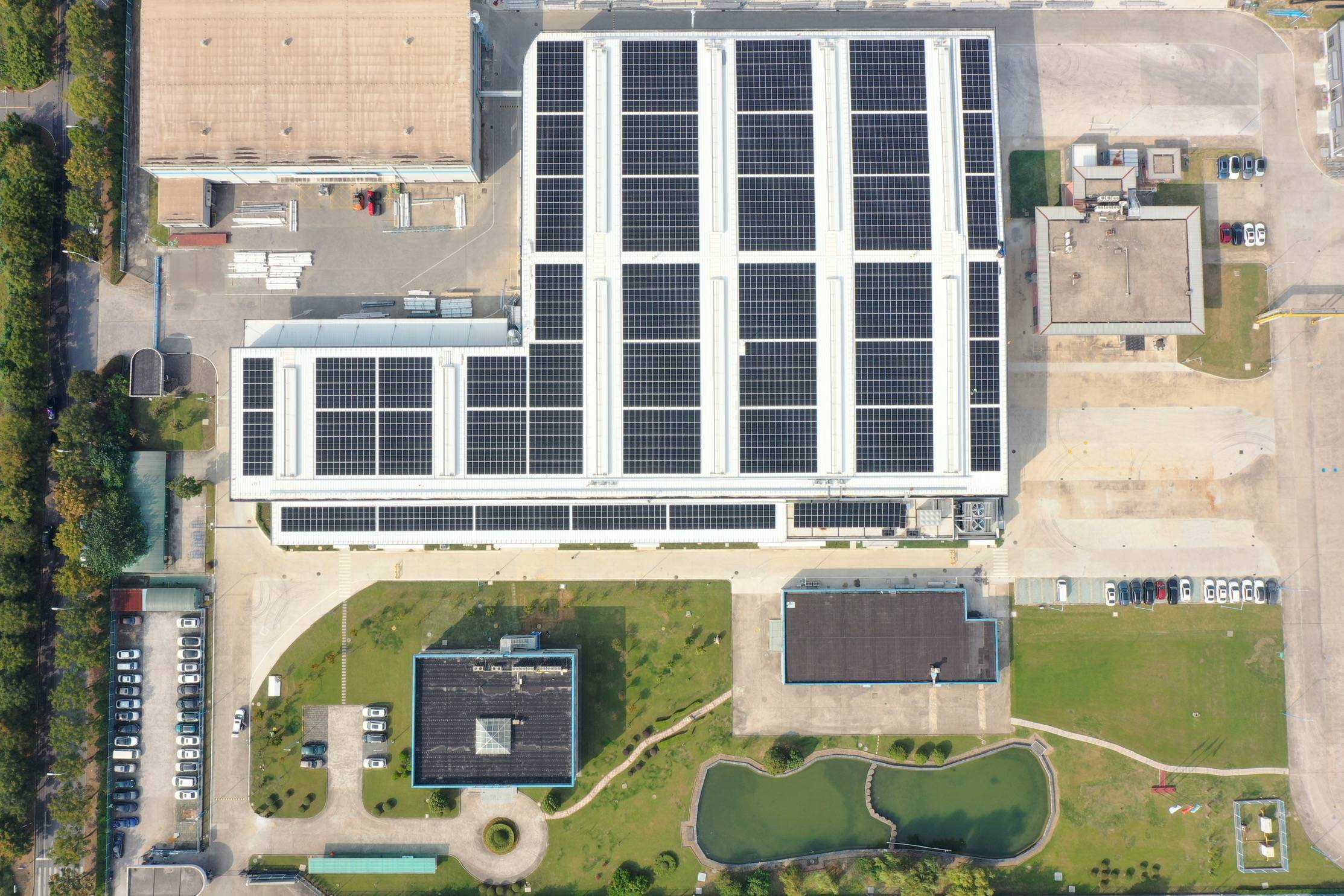
Core Viewpoint - The Zhejiang Provincial Government has issued a plan to establish an integrated off-market trading platform for bulk commodities, aiming to enhance resource allocation and trading efficiency in the region [1] Group 1: Trading Platform Development - The plan includes the construction of a spot trading platform, which will be developed in phases based on the integration of existing platforms like the Zhejiang International Oil and Gas Trading Center [1] - The platform will operate under a unified leadership, structure, accounts, operations, standards, and team [1] Group 2: Trading Volume and Product Focus - There is an emphasis on increasing trading volume on the spot trading platform, particularly focusing on refined oil and chemical bulk commodities [1] - The platform will also expand its business scope to include steel, plastics, and rubber, which are identified as advantageous products [1] Group 3: Encouragement for Industry Leaders - Leading enterprises in the petrochemical sector are encouraged to establish sales zones on the spot trading platform [1] - The plan includes exploring cooperation on national reserve iron ore rotation business, subject to approval from relevant national authorities [1] Group 4: Integration with Futures Market - The initiative aims to explore integrated development between spot and futures markets [1] - The establishment of a basis quotation area on the spot trading platform is proposed, along with the introduction of real-time market data from futures exchanges [1] - There is a focus on expanding the coverage and scale of delivery warehouses for key trading varieties in collaboration with futures exchanges [1]
中信期货晨报:国内商品期货多数上涨,新能源材料涨幅居前-20251126
Zhong Xin Qi Huo· 2025-11-26 00:51
1. Report Industry Investment Rating - Not provided in the report 2. Core Views of the Report - Overseas: On November 21st, the New York Fed President's speech hinted at a possible near - term interest rate cut, significantly boosting the December rate - cut expectation. The Fed's expectation management is turning, and it's advisable to follow key Fed voting members' speeches and potential new chair nominations around Thanksgiving [6]. - Domestic: Domestic endogenous momentum remains weak and stable. The issuance of 500 billion yuan of policy - based financial instruments in October, the accelerated issuance of special bonds in November, and the release of debt - resolution surplus quotas may bring marginal benefits to Q4 infrastructure investment. The loan prime rate has been stable since May's 10 - basis - point cut. New and second - hand housing sales and land supply have rebounded, but land transactions remain low, and real - estate physical work demand and capacity have declined [6]. - Asset Views: Due to differences among Fed policymakers on a December rate cut, the Fed's October meeting minutes being hawkish, and strong September non - farm payrolls data, the December rate - cut expectation was initially suppressed, and the US dollar index rose. After the New York Fed President's dovish speech, the market risk appetite may improve in the short term. It is recommended to consider bottom - fishing opportunities in stock indices, non - ferrous metals (copper, aluminum, tin), and precious metals [6]. 3. Summary by Related Catalogs 3.1 Macro Highlights - **Overseas Macro**: The New York Fed President's speech on November 21st hinted at a near - term rate cut, boosting the December rate - cut expectation. The Fed's expectation management is shifting, and key figures may turn dovish in the next two weeks [6]. - **Domestic Macro**: Endogenous momentum is weak. Policy - based financial instruments, special bond issuance, and debt - resolution surplus quotas may benefit Q4 infrastructure. The loan prime rate has been stable. Housing sales and land supply have rebounded, but real - estate physical work has declined [6]. - **Asset Views**: Due to Fed policy uncertainties, asset prices were initially pressured. After the dovish speech, market risk appetite may improve. It is recommended to consider bottom - fishing in stock indices, non - ferrous metals, and precious metals [6]. 3.2 View Highlights 3.2.1 Financial Sector - **Stock Index Futures**: The decline of the Shanghai Composite Index has slowed, and hedging forces are taking profits. It is expected to fluctuate upwards, with attention on incremental funds [7]. - **Stock Index Options**: Market sentiment has improved, and it is expected to fluctuate, with attention on option market liquidity [7]. - **Treasury Bond Futures**: Treasury bond futures closed higher. It is expected to fluctuate upwards, with attention on the implementation of monetary policies [7]. 3.2.2 Precious Metals - **Gold/Silver**: Geopolitical and trade tensions have eased, leading to a phased adjustment. It is expected to fluctuate, with attention on the US fundamentals, Fed policies, and global equity market trends [7]. 3.2.3 Shipping - **Container Shipping to Europe**: The peak season in Q3 has ended, and there is no upward momentum. It is expected to fluctuate, with attention on the rate of freight decline in September [7]. 3.2.4 Black Building Materials - **Steel Products**: The fundamentals are improving, and the market is expected to fluctuate, with attention on special bond issuance, steel exports, and iron - water production [7]. - **Iron Ore**: Iron - water production has slightly weakened, and the market is expected to fluctuate, with attention on overseas mine production, domestic iron - water production, weather, port inventory, and policies [7]. - **Coke**: Supply and demand have slightly declined, and the market is expected to fluctuate, with attention on steel production, coking costs, and macro sentiment [7]. - **Coking Coal**: Near - month delivery is under pressure, and the market is expected to fluctuate, with attention on steel production, coal mine safety inspections, and macro sentiment [7]. - **Silicon Iron**: The market has weakened with the sector, but cost support remains. It is expected to fluctuate, with attention on raw material costs and steel procurement [7]. - **Manganese Silicon**: The price has declined with the sector, but cost support is strong. It is expected to fluctuate, with attention on cost prices and overseas quotes [7]. - **Glass**: Spot losses are increasing, and cold - repair expectations are rising. It is expected to fluctuate, with attention on spot sales [7]. - **Soda Ash**: Coal prices have fallen, weakening cost support. It is expected to fluctuate, with attention on soda ash inventory [7]. 3.2.5 Non - Ferrous Metals and New Materials - **Copper**: Due to differences within the Fed, copper prices are consolidating at high levels. It is expected to fluctuate upwards, with attention on supply disruptions, domestic policies, Fed policies, and domestic demand [7]. - **Alumina**: The oversupply situation persists, and prices are under pressure. It is expected to fluctuate, with attention on ore production and electrolytic aluminum复产 [7]. - **Aluminum**: Inventory is decreasing, and prices are fluctuating narrowly. It is expected to fluctuate upwards, with attention on macro risks, supply disruptions, and demand [7]. - **Zinc**: The export window is open, and prices are fluctuating at high levels. It is expected to fluctuate, with attention on macro risks and zinc - ore supply [7]. - **Lead**: Social inventory has decreased, and prices are fluctuating. It is expected to fluctuate upwards, with attention on supply disruptions and battery exports [7]. - **Nickel**: Supply and demand are loose, and prices are expected to decline while fluctuating, with attention on macro, geopolitical, and Indonesian policy risks [7]. - **Stainless Steel**: Nickel - iron prices are weak, and stainless - steel prices are under pressure. It is expected to fluctuate, with attention on Indonesian policies and demand [7]. - **Tin**: Raw - material supply is tight, and prices are strongly supported. It is expected to fluctuate upwards, with attention on Wa State's复产 and demand [7]. - **Industrial Silicon**: The oversupply pressure remains, and prices are expected to fluctuate, with attention on supply - side复产 and policies [7]. - **Polysilicon**: Policy expectations are volatile, and prices are fluctuating at high levels. It is expected to fluctuate, with attention on supply - side复产 and domestic photovoltaic policies [7]. - **Lithium Carbonate**: Trading sentiment has cooled, and prices are fluctuating at high levels. It is expected to fluctuate, with attention on demand, supply disruptions, and technological breakthroughs [7]. 3.2.6 Energy and Chemicals - **Crude Oil**: Geopolitical premiums are volatile, and supply pressure continues. It is expected to decline while fluctuating, with attention on OPEC+ production policies and Middle - East geopolitics [9]. - **LPG**: Refinery output has decreased, and import costs are under pressure. It is expected to decline while fluctuating, with attention on cost - side developments [9]. - **Asphalt**: The rise of rebar prices has driven up asphalt futures. It is expected to fluctuate, with attention on sanctions and supply disruptions [9]. - **High - Sulfur Fuel Oil**: The expectation of a Russia - Ukraine agreement has weakened fuel prices. It is expected to decline while fluctuating, with attention on geopolitics and crude - oil prices [9]. - **Low - Sulfur Fuel Oil**: It has followed the weak crude - oil market. It is expected to decline while fluctuating, with attention on crude - oil prices [9]. - **Methanol**: Overseas disturbances are confirmed, and it is expected to be strong in the short term. It is expected to fluctuate, with attention on macro - energy and overseas production stoppages [9]. - **Urea**: Centralized procurement has slowed, and prices are fluctuating narrowly. It is expected to fluctuate, with attention on export quotas and Indian tenders [9]. - **Ethylene Glycol**: The supply - demand situation has improved, and some short - sellers have closed positions. It is expected to rise while fluctuating, with attention on coal and oil prices, port inventory, and Sino - US trade [9]. - **PX**: Market sentiment has cooled, and prices are adjusting. It is expected to fluctuate, with attention on crude - oil fluctuations, macro events, and aromatics blending [9]. - **PTA**: Fundamentals have improved marginally, and profits are being repaired. It is expected to fluctuate, with attention on crude - oil fluctuations and macro events [9]. - **Short - Fiber**: Downstream demand is stable, and it follows the upstream market. It is expected to fluctuate, with attention on downstream purchasing and peak - season demand [9]. - **Bottle Chips**: Cost support has increased, and prices have rebounded slightly. It is expected to fluctuate, with attention on production cuts and new - plant commissioning [9]. - **Propylene**: The spot market is strong, and prices are fluctuating. It is expected to fluctuate, with attention on oil prices and the domestic macro - economy [9]. - **PP**: Fundamental pressure is priced in, and attention should be paid to maintenance. It is expected to fluctuate, with attention on oil prices and the macro - economy [9]. - **Plastic**: Maintenance has increased slightly, and prices are fluctuating. It is expected to fluctuate, with attention on oil prices and the macro - economy [9]. - **Styrene**: The narrative of blending for gasoline has faded, and prices are mainly fluctuating. It is expected to fluctuate, with attention on oil prices, macro policies, and plant operations [9]. - **PVC**: High inventory is suppressing prices, and it may be tied to production cuts. It is expected to fluctuate, with attention on expectations, costs, and supply [9]. - **Caustic Soda**: Low - valuation and weak supply - demand conditions lead to price fluctuations. It is expected to fluctuate, with attention on market sentiment, production, and demand [9]. 3.2.7 Agriculture - **Oils and Fats**: Prices are diverging, with palm oil being weak. It is expected to decline while fluctuating, with attention on US soybean weather and Malaysian palm - oil supply - demand [9]. - **Protein Meal**: Rapeseed - meal prices have risen, and the soybean - rapeseed meal spread is expected to narrow. It is expected to fluctuate, with attention on weather, domestic demand, and trade relations [9]. - **Corn/Starch**: Bullish drivers continue, and prices have risen again. It is expected to rise while fluctuating, with attention on demand, the macro - economy, and weather [9]. - **Hogs**: Supply is abundant, and prices are weak. It is expected to decline while fluctuating, with attention on farming sentiment, epidemics, and policies [9]. - **Natural Rubber**: Floods in production areas have boosted bullish sentiment, but the upside is limited. It is expected to fluctuate, with attention on weather, raw - material prices, and the macro - economy [9]. - **Synthetic Rubber**: Raw - material transactions support prices. It is expected to fluctuate, with attention on crude - oil fluctuations [9]. - **Cotton**: Cotton prices have rebounded, and the 1 - 5 spread has widened. It is expected to fluctuate, with attention on demand and inventory [9]. - **Sugar**: Sugar prices have continued to rebound. It is expected to decline while fluctuating, with attention on imports and Brazilian production [9]. - **Pulp**: The balance of long and short factors remains, and prices are mainly fluctuating. It is expected to fluctuate, with attention on the macro - economy and US dollar - based quotes [9]. - **Offset Paper**: It is following the raw - material market and fluctuating at low levels. It is expected to fluctuate, with attention on sales, education policies, and paper - mill operations [9]. - **Logs**: Supply and demand are loose, and prices are fluctuating at low levels. It is expected to fluctuate, with attention on shipments and dispatches [9].