国防军工

Search documents
光大证券:消费与成长有望成为春季行情的两条主线
Di Yi Cai Jing· 2026-01-04 07:15
(文章来源:第一财经) 光大证券研报表示,当前来看,2025年12月下旬的上涨或许是本轮春季行情起点。对于1月份指数的行 情,投资者或许应该保持耐心。消费与成长有望成为今年春季行情的两条主线。1月行业配置方面,关 注电子、电力设备、有色金属、汽车等。若市场风格为成长,五维行业比较框架打分靠前的行业分别为 电子、电力设备、通信、有色金属、汽车、国防军工;若1月份市场风格为防御,五维行业比较框架打 分靠前的行业分别为非银金融、电子、有色金属、电力设备、汽车、交通运输等。 ...

A股市场运行周报第74期:看多马年春节,短线两手准备-20260103
ZHESHANG SECURITIES· 2026-01-03 13:44
Core Viewpoints - The report is optimistic about the A-share market post-New Year, anticipating a "good start" after the holiday due to the rise in Hong Kong stocks and the A50 index [1][2][50] - There is uncertainty regarding the sustainability of the three driving factors behind the recent A-share rally: the A500 ETF's volume and price increase, the strength of optical modules, and the booming commercial aerospace sector [1][2][50] - The mid-term outlook suggests that the market may continue to rise before March, with a general recommendation to be bullish and proactive in investments [1][2][50] Market Overview - The market experienced narrow fluctuations before the New Year, with most broad indices slightly declining; the Shanghai Composite Index rose by 0.13%, while the CSI 300 and SSE 50 fell by 0.59% and 0.47% respectively [10][48] - The A500 ETF's share increased by only 1.58 billion shares in the last three days before the holiday, a significant drop from the previous week [10][48] - The overall market sentiment indicated a tendency to "rest and prepare for the next battle," as reflected in the low volatility before the holiday [10][48] Sector Observations - The report highlights strong performance in the petrochemical and commercial aerospace sectors, with the oil and petrochemical sector rising by 3.92% and the commercial aerospace sector increasing by 3.05% [13][49] - The report notes a resurgence in interest in robotics and AI applications, with automotive and machinery sectors rising by 1.44% and 1.32% respectively, while consumer sectors like food and beverage saw declines [13][49] Fund Flow Analysis - The latest margin trading balance reached 2.54 trillion yuan, an increase of 0.47% from the previous week, indicating a positive trend in fund inflow [26][48] - The report indicates that the securities ETF saw the highest net inflow of 13.1 billion yuan, while the electronic ETF experienced the largest outflow of 8.9 billion yuan [26][48] Valuation Insights - The dynamic valuation model shows that the current market indices have seen an increase in valuation levels, with the Shanghai Composite Index's PE-TTM at 16.59, placing it in the 91.99 percentile [40][42] - The Shenzhen Component Index's PE-TTM is at 31.24, in the 77.52 percentile, indicating a generally elevated valuation across major indices [40][42]
AI与电力、新药研发、中国经济复苏.....一文读懂高盛行研团队2026年十大投资主题
华尔街见闻· 2026-01-03 10:24
Group 1: AI Infrastructure and Investment Trends - AI infrastructure investment is entering a new phase, with traditional leaders like Nvidia, Microsoft, and Amazon seeing stagnant stock prices since last summer, while new entrants like Broadcom are emerging [1][4] - Investors are shifting focus to companies that can support global computing power regardless of chip usage, indicating a significant transformation in AI investment themes [4] - Memory producers like Micron Technology and connector companies such as Amphenol and TE Connectivity are experiencing stock price surges, while utility stocks are stagnating [5] Group 2: Pharmaceutical Sector Developments - The GLP-1 weight loss drug market is undergoing a notable transformation, with Eli Lilly outperforming the market while Novo Nordisk's stock has halved, leading to a 33% downward revision in earnings expectations for 2026 [7][8] - Investment focus is shifting towards new weight loss products awaiting approval, and there is a transition in biopharmaceuticals from obesity drugs to a "Cardiology Renaissance," indicating a potential large product cycle [8] Group 3: Economic Outlook and Global Trade - Goldman Sachs economists predict that China's economic growth will exceed market consensus, driven by technological advancements and a leading export position, even amidst tariff challenges [11] - The recovery of the Chinese economy is expected to significantly impact global trade and technology dynamics in the coming year [11] Group 4: Productivity and Labor Market Dynamics - The potential for a "jobless expansion" is highlighted, as technology-driven productivity gains may support economic growth while facing labor shortages due to immigration restrictions [13] - Long-term productivity improvements are deemed essential to offset the effects of an aging workforce and declining birth rates [13] Group 5: Alternative Investments and Market Trends - The private credit market is expected to outperform private equity in 2025, attracting retail investor interest [15] - The cryptocurrency market is expanding, with companies like Coinbase and Robinhood positioned favorably in the growing sectors of cryptocurrencies and stablecoins [16] Group 6: Defense and Military Investment - The defense sector is experiencing evolving militarization, with the U.S. Space Force favoring innovators in drone and satellite technology [18] - Europe may require up to $160 billion in investments over the next five years to enhance military capabilities in response to Russian threats [19] Group 7: Robotics and Autonomous Vehicles - Advancements in technology are enhancing the capabilities of humanoid robots and autonomous vehicles, which are expected to drive profit growth for industrial tech companies like Tesla [21] - China is actively building capacity in the humanoid robot supply chain and is leading in the autonomous vehicle sector, with projections indicating a $47 billion market for Robotaxi by 2035 [22][23] Group 8: Nuclear Energy and Rare Earth Elements - Nuclear energy is experiencing a revival due to increasing demand for clean power to support the AI revolution, despite past accidents that stalled its development [25] - Rare earth metals are becoming critical components in technology, with China currently dominating this supply chain [25] Group 9: Policy and Market Sentiment - Policy uncertainties, including the Federal Reserve's actions and the Supreme Court's decisions on tariffs, are expected to dominate market sentiment in the first half of 2026 [26] - Current U.S. stock valuations are at their highest levels since the late 1990s, prompting a cautious approach from investors [2][27]


节后关键周:市场面临方向选择
Sou Hu Cai Jing· 2026-01-03 07:56
Market Overview - Global stock markets showed significant divergence this week, with U.S. markets pressured by profit-taking in technology stocks, leading to a 1.52% decline in the Nasdaq and a 1.03% drop in the S&P 500, primarily due to short-term adjustments in high-valuation sectors [1] - In contrast, European markets strengthened, with France's CAC40, Germany's DAX, and the UK's FTSE 100 all recording gains, driven by improving regional economic recovery expectations [1] - The Asia-Pacific market exhibited a mixed pattern, with strong performances from South Korea, Taiwan, and India, while Japan's Nikkei 225 index saw a slight decline [1] Domestic Market Performance - The A-share and Hong Kong stock markets displayed an independent trend of "strong Hong Kong, stable A-share," with the A-share market showing a fluctuating trend and significant index divergence [1] - The Shanghai Composite Index rose slightly by 0.13%, while the ChiNext Index and North Star 50 Index fell by 1.25% and 1.55%, respectively, becoming the main drag on the market [1] - In terms of style, small-cap and large-cap stocks showed notable divergence, with the Wind Micro-cap Index up by 0.16%, while the CSI 300 and Shenzhen Component Index fell by 0.59% and 0.58% respectively [1] Trading Activity - The average daily trading volume reached 1.97 trillion yuan, an increase of 205.3 billion yuan week-on-week, indicating strong trading momentum [2] - Resource and high-end manufacturing sectors emerged as clear leaders, with the Shenwan Oil and Petrochemical sector surging by 3.92% and the defense and military industry rising by 3.05%, driven by geopolitical tensions and resource supply constraints [2] - The Hong Kong market performed strongly, with the Hang Seng Index up by 2.01% and the Hang Seng Technology Index soaring by 4.31%, supported by robust momentum [2] Sector Performance - Semiconductor and defense sectors acted as dual drivers in Hong Kong, with the Wind Hong Kong semiconductor materials and equipment sector skyrocketing by 28.81% and the aerospace and defense sector increasing by 9.70% [2] - The strong performance in these sectors was underpinned by three main supports: favorable mergers and acquisitions, increased AI computing demand, and improved capital flow, with net inflows from southbound funds amounting to 2.573 billion HKD [2] Future Outlook - The A-share market is expected to maintain a fluctuating consolidation pattern amid a tug-of-war between policy support and fundamental verification, with clear supporting factors such as the continued rollout of policy details and a rebound in holiday consumption data [3] - However, limiting factors include the relatively limited valuation recovery space for major indices and the potential constraints posed by upcoming macroeconomic data and persistently low foreign capital activity [3][4] Investment Strategy - Investors are advised to adopt a prudent mindset, focusing on structural opportunities, particularly in "hard technology" sectors like semiconductors and commercial aerospace, as well as "stable consumption" areas such as home appliances and new energy vehicles [5] - It is also recommended to explore reasonably valued quality growth stocks from a bottom-up perspective, while maintaining positions at a reasonable level to avoid high-flying speculative stocks [6] - For the Hong Kong market, the rebound trend in the technology sector is expected to continue, but caution is warranted regarding potential profit-taking pressures following rapid gains [7]
港股创近13年来最强开局!十大顶流机构抢先预判 恒指有望再涨10000点?
Xin Lang Cai Jing· 2026-01-02 14:44
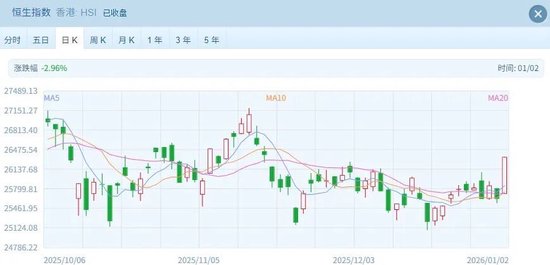
Market Overview - The Hong Kong stock market experienced its strongest opening in nearly 13 years, with the Hang Seng Index rising by 707.93 points to close at 26,338.47, marking a 2.76% increase, the best performance since January 2, 2013 [1][23][27] - The Hang Seng Tech Index performed even better, closing at 5,736.44 points, up 220.46 points, a 4% increase [2][25] Sector Performance - All sectors showed positive performance, with semiconductors, defense, software services, and home appliances leading the gains [3][28] - Notable sector performances included: - Defense and military: 7.87% - Software services: 7.78% - Home appliances: 4.18% - Steel: 3.99% [4] Key Stocks - Within the tech sector, significant gains were observed in: - Hua Hong Semiconductor and Baidu Group, both rising over 9% - NetEase up over 6% - Trip.com up over 5% - SMIC and Li Auto both up over 4% - Major companies Alibaba and Tencent both up over 4% [4][26] Analyst Predictions - Analysts noted that the strong performance of the Hong Kong market was driven by local and foreign funds, despite the absence of southbound capital [5][27] - Predictions for the Hang Seng Index in 2026 include: - DBS Bank forecasts a target of 36,500 points in a bullish scenario, representing an increase of over 10,000 points from current levels [6][29] - Morgan Stanley sets a target of 34,700 points, with a projected P/E ratio of 13.4 times [7][30] - UBS anticipates a target of 30,000 points, driven by continued positive factors from 2025 [8][31] - HSBC predicts the index will reach 31,000 points, indicating a potential increase of about 21% [11][33] Investment Strategies - Analysts suggest a shift from "single-sided bets" to "balanced allocation" in investment strategies for 2026, focusing on AI hardware and high-dividend assets [12][34] - Key investment themes include: - Growth sectors such as AI applications, semiconductors, military technology, and innovative pharmaceuticals [15][37] - Dividend assets including insurance, utilities, and quality bank stocks [16][38] - Value discovery in traditional industry leaders like steel and machinery [17][39] Market Sentiment - The overall sentiment for the Hong Kong stock market remains optimistic, with expectations of continued upward trends supported by favorable domestic and international policies [21][43] - The market is expected to experience a second round of valuation recovery, driven by internal and external factors [18][40]
港股大爆发!十大顶流机构提前预判,恒指最高有望再涨1万点?
Mei Ri Jing Ji Xin Wen· 2026-01-02 12:00
Market Performance - The Hong Kong stock market has experienced its strongest opening in nearly 13 years, with the Hang Seng Index rising by 707.93 points to close at 26,338.47, marking a 2.76% increase, the best performance since January 2, 2013 [1] - The Hang Seng Tech Index performed even better, closing at 5,736.44 points, up 220.46 points, with a 4% increase [3] Sector Performance - All sectors showed positive performance, with semiconductors, defense, software services, and home appliances leading the gains [5] - Specific sector gains included: - Defense and military industry: 7.87% - Software services: 7.78% - Home appliances: 4.18% - Consumer discretionary retail: 3.53% [6] Key Stocks - Notable stocks in the Hang Seng Tech Index included: - Hua Hong Semiconductor and Baidu Group, both rising over 9% - NetEase up over 6% - Ctrip up over 5% - Core companies Alibaba and Tencent both up over 4% [6] Analyst Predictions - Analysts noted that the strong performance of the Hong Kong market was driven by local and foreign funds, despite the absence of southbound capital [7] - DBS Bank predicts the Hang Seng Index could reach 36,500 points in the most optimistic scenario, representing an increase of over 10,000 points from current levels [7][8] - Morgan Stanley forecasts a target of 34,700 points for the Hang Seng Index, supported by stable earnings growth and a favorable global economic environment [9][10] - UBS sets a target of 30,000 points for the Hang Seng Index, driven by continued positive factors from 2025 [11] Investment Strategies - Analysts suggest a balanced investment strategy for 2026, focusing on sectors with growth certainty such as AI hardware while maintaining high-dividend assets for hedging [14] - The market is expected to see a second round of valuation recovery, driven by internal and external factors, including policy support and improved corporate earnings [18] - Key investment themes include technology, healthcare, and resource sectors, with a focus on companies with strong earnings visibility and valuation flexibility [18][19]
视频丨瞬间弹射“零帧”急停,福建舰还有哪些惊喜?
Xin Lang Cai Jing· 2026-01-01 23:53
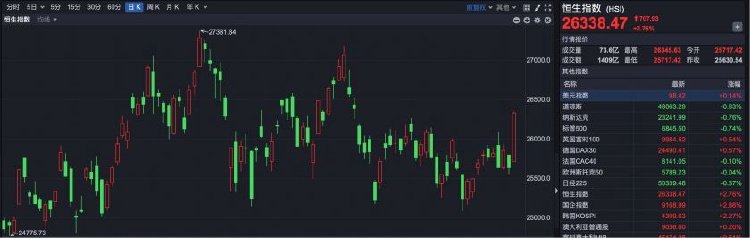
Core Viewpoint - The article highlights the significant advancements in China's naval capabilities with the introduction of the Fujian aircraft carrier, showcasing its advanced electromagnetic catapult system and the operational readiness of its carrier-based aircraft [1]. Group 1: Advancements in Naval Technology - The Fujian aircraft carrier features an electromagnetic catapult system that allows for the launch of fighter jets with full fuel and armament, significantly increasing their operational range and attack capabilities [12]. - The carrier can launch a J-15T fighter jet in just 90 seconds, with a maximum capacity of 270 to 300 aircraft operations per day [11]. - The introduction of the Fujian carrier marks a "revolution in catapult technology," enhancing the efficiency and readiness of carrier-based operations [12]. Group 2: Operational Readiness and Training - The Fujian carrier recently completed its first real combat training mission, successfully conducting multiple launches and landings with various aircraft, including J-35 and J-15T [11]. - The carrier's systems have been validated, demonstrating effective compatibility with its aircraft and enhancing its operational capabilities [11]. - The carrier's full operational capability is expected to be achieved soon, with a fully equipped air wing ready for deployment [11]. Group 3: Strategic Implications - The Fujian carrier's capabilities contribute to a comprehensive offensive and defensive maritime combat system, allowing for coordinated operations against enemy naval and land forces [11]. - The integration of the KJ-600 airborne early warning aircraft on the carrier enhances situational awareness and response times for naval operations [11].
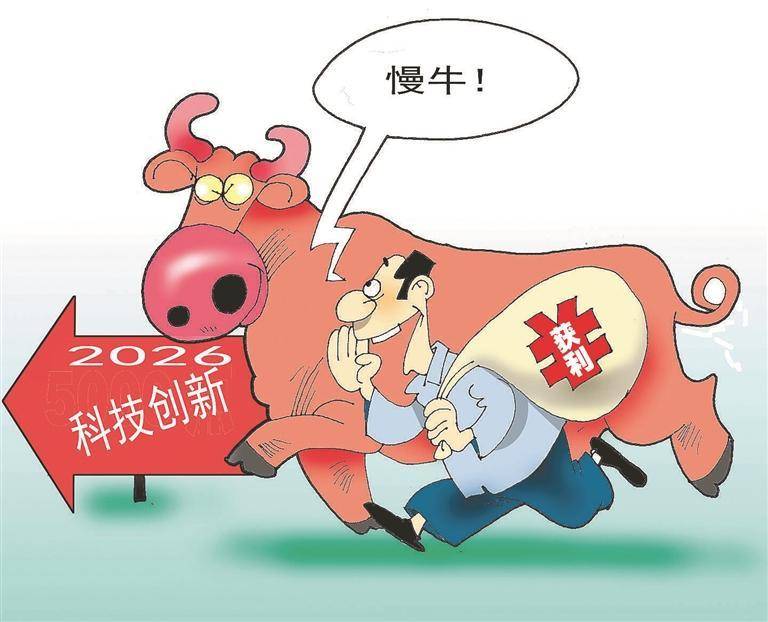
“慢牛”领跑!估值驱动转向盈利驱动
Sou Hu Cai Jing· 2026-01-01 23:12
Group 1 - The A-share market is expected to shift from valuation-driven to profit-driven, exhibiting a "slow bull" characteristic in 2026 [2][3] - Investors are advised to focus on four major directions: technology innovation, advanced manufacturing, upstream cycles, and domestic consumption [2][8] - Technology investment difficulty in 2026 will be greater than in 2025, requiring precise grasp of industry rhythms and deep stock selection for excess returns [11] Group 2 - The macroeconomic policy is expected to support resilient growth and structural upgrades, with a GDP growth target of around 5% for 2026 [5][6] - Manufacturing investment is anticipated to receive support from strong export resilience and continued policy backing for advanced manufacturing [5][6] - The focus on expanding domestic demand is crucial for stabilizing growth, with measures including increased consumption subsidies and support for service industries [5][6] Group 3 - A-share earnings are expected to enter a new phase of slow recovery in 2026, driven by technology manufacturing, inventory replenishment, and profit margin recovery [7][9] - The investment strategy should focus on cyclical recovery and technological self-reliance, with an emphasis on sectors like non-ferrous metals, machinery, and social services [7][8] Group 4 - The market is likely to see a convergence of technology and value styles, with structural opportunities emerging in value sectors as the economy stabilizes [12] - The focus on "outbound + technology" is expected to dominate market trends, particularly in the AI industry chain and resource sectors [13] Group 5 - The overall market is anticipated to be balanced between growth and value, with significant opportunities in both large-cap and small-cap stocks [14][16] - The recovery in earnings and return on equity (ROE) levels is expected to support stock market performance, with long-term funds increasingly entering the market [16]
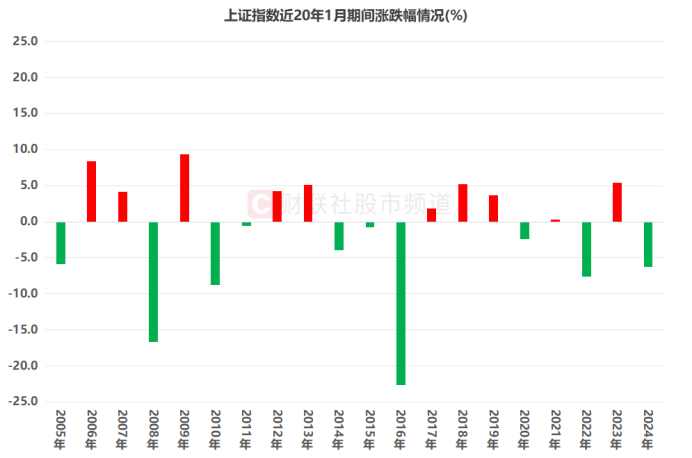
近20年数据复盘:沪指1月上涨概率50%,这些板块历史“战绩”较佳
Xin Lang Cai Jing· 2026-01-01 00:00
Group 1 - The A-share market is expected to enter 2026 with a nearly 50% probability of the Shanghai Composite Index rising in January, based on nearly 20 years of data [1] - In January, the Shanghai Composite Index has shown a monthly increase of over 5% in years such as 2009, 2006, 2023, 2018, and 2013 [1] Group 2 - Among major indices, the Sci-Tech 50, Dividend Index, and Shenzhen Component Index have shown over 50% rising probability in January over the past 20 years, with respective rates of 60%, 58%, and 55% [3] - The average increase for the Dividend Index and the Dividend Index is 0.98% and 0.74% respectively during January [3] Group 3 - In terms of industry sectors, 8 out of 31 Shenwan first-level sector indices have shown a rising probability of over 50% in January over the past 20 years, including Banking and Defense, both exceeding 60% [4] - The average increase for the Home Appliances and Banking sectors is 1.9% each, while the Computer sector averages 1.0% during January [4] Group 4 - Specific sub-sectors such as Air Conditioning, Pig Farming, and Robotics have shown relatively high rising probabilities in January over the past 20 years [6] - The average increase for sectors like Wind Power Components, Air Conditioning, and Organic Silicon is notably high [6]
国防军工行业2026年度投资策略
2025-12-31 16:02
Summary of Key Points from Conference Call Records Industry Focus - The focus is on the **defense and aerospace industry** with a specific emphasis on **commercial aerospace** and **military-civilian integration** strategies for 2026 [1][2][3]. Core Insights and Arguments - The 2026 investment strategy emphasizes "confidence in transformative growth," highlighting a bottom-up stock selection approach that distinguishes between the **first growth curve** (traditional business) and the **second growth curve** (emerging directions) [1][3]. - The **military-civilian integration** and **military trade** are identified as two major potential sectors, with commercial aerospace being particularly promising due to its high market capitalization and ongoing developments [1][5]. - The commercial aerospace sector's future is assessed based on three dimensions: market capitalization (benchmarking against SpaceX), sustainability (development of space computing and satellite internet), and catalysts (successful reusable rockets, policy support, and IPOs) [1][6]. - The demand transmission path in the military industry is driven by strategic planning, resource allocation, and execution of annual plans, indicating robust and resilient demand for national defense and military modernization [7]. Emerging Trends and Catalysts - Key catalysts for the commercial aerospace sector in 2026 include the successful networking of **GW constellation**, progress in **Qianfan constellation**, and advancements in domestic engines and large aircraft transitioning from a low-profile to a high-profile status [1][8]. - The development of domestic large aircraft and engines, such as **C919** and **Changjiang 1,000**, is accelerating, with a focus on self-sufficiency as a critical goal [9]. Investment Opportunities - The investment landscape for 2026 includes three main tracks: **domestic modernization**, **military trade**, and **military-civilian integration**, forming a comprehensive investment research framework [2][10]. - The **AI sector** and **AIDC gas turbines** are expected to drive performance growth, while high-end military equipment exports, particularly advanced fighter jets, are a clear trend in military trade [3][10]. - Specific stock recommendations include companies involved in **network information systems**, **low-orbit satellite internet**, and **AI applications**, with a focus on firms like **Aerospace Electronics** and **New Ray Energy** [12][13]. Additional Important Insights - The **"14th Five-Year Plan"** is expected to significantly increase the proportion of new operational forces, emphasizing intelligent and cost-effective solutions in equipment construction [11]. - The **2026 Saudi WDS Defense Exhibition** is anticipated to revive market expectations for high-end military trade and lead to substantial contract signings [10]. This summary encapsulates the critical insights and strategic directions discussed in the conference call, providing a comprehensive overview of the defense and aerospace industry's investment landscape for 2026.