家具

Search documents
7月零售、投资环比意外转负
HUAXI Securities· 2025-08-15 11:33
Economic Performance - July industrial added value growth slowed to 5.7%, down 1.1 percentage points from the previous month, while retail sales growth fell to 3.7% from 4.8%[2][3] - The weighted year-on-year growth rate of investment, retail, and export delivery value dropped to -0.1%, a decrease of 3 percentage points compared to the previous year[1] Demand and Supply Dynamics - The gap between supply and demand indicators reached 5.8 percentage points, the highest in recent years, indicating a significant demand shortfall[1] - July's industrial production and sales rate was 97.1%, down 0.2 percentage points year-on-year, showing a slight improvement compared to the previous month's decline of 0.3 percentage points[1] Export and Retail Trends - Export delivery value growth decreased to 0.8% in July from 4.0% in June, contributing approximately 0.09 percentage points to industrial added value growth, a drop of 0.35 percentage points from June[2] - Automotive retail sales plummeted to -1.5% in July, significantly impacting overall retail performance, which saw a reduction of 0.4 percentage points in its contribution[3] Investment Insights - Fixed asset investment growth for January to July was 1.6%, with a notable decline of 1.2 percentage points from the previous month, while equipment investment grew by 15.2%, down 2.1 percentage points[4] - July's fixed asset investment year-on-year dropped to -5.3%, influenced by extreme weather conditions affecting outdoor construction activities[4] Real Estate Market - Real estate sales area and sales value in July fell by 7.8% and 14.1% year-on-year, respectively, indicating a continued weakness in the sector[5] - New residential prices in July saw a month-on-month decline of 0.3%, with second-hand housing prices dropping by 0.5%, reflecting ongoing market challenges[5] Overall Economic Outlook - The overall economic data for July indicates a slowdown, with production showing resilience while demand remains weak[6] - The potential for new economic policies may arise in September and October, particularly in the real estate sector, as authorities seek to stabilize the market[5][8]
透视税收数据:促进转型升级、提振消费需求,“两新”政策成效明显
Sou Hu Cai Jing· 2025-08-15 11:00
Group 1 - The implementation of large-scale equipment updates and the "old-for-new" consumption policy has positively impacted industrial transformation, consumption demand, and economic circulation [1][2] - From April 2024 to July 2025, the procurement amount of machinery and equipment by enterprises increased by 7.3% year-on-year, with industrial enterprises seeing a 9.8% increase [1] - The procurement amount for information transmission software and technology service industries grew by 27.8% and 28.3% respectively, indicating strong support for industrial upgrades [1] Group 2 - The "old-for-new" policy has stimulated diverse consumer demand, with sales of daily household appliances and audio-visual equipment increasing by 44.5% and 22.8% respectively from April 2024 to July 2025 [1] - The retail sales of furniture and sanitary ware grew by 30.1% and 13.6% respectively, while the service robot manufacturing industry saw a 51.1% increase [1] - The sales of new energy vehicles surged by 81.7%, reflecting the policy's significant impact on the automotive sector [1] Group 3 - The "supply and demand smoothness" has fostered a virtuous economic cycle, with the "Two New" policies driving retail demand and subsequently enhancing supply-side manufacturing efforts [2] - Manufacturing sales revenue increased by 5.8% year-on-year, contributing to a more efficient internal economic circulation [2] - The tax authority plans to strengthen the "policy + service" dual-drive approach to ensure the continued effectiveness of the "Two New" policies for high-quality economic development [2]
好的商业模式,一定是创造了全局性增量
创业家· 2025-08-15 10:13
Core Viewpoint - Business model innovation creates efficiency by altering the transaction structure among stakeholders, ensuring that all parties earn more than before, thus generating overall incremental value [1]. Group 1: Japanese Market Insights - The Japanese consumer market serves as a "future laboratory" for Chinese brands, providing insights into consumption evolution over the next decade [6]. - Japan's experience during its "lost thirty years" offers valuable lessons for Chinese brands to win over a generation of consumers [6]. - Key strategies from Japanese brands include supply chain-driven private brands (PB), continuous iteration of major products, and defining lifestyles that resonate emotionally with consumers [7][8]. Group 2: Supply Chain and Product Development - Kobe Bussan utilizes a supply chain-driven model with over 350 factories globally, achieving a sales scale of 200 billion RMB through integrated PB products [7]. - 7-11 leverages data from its extensive network to develop PB products that meet latent consumer needs, enhancing supply chain efficiency [7]. - Nitori, a leader in furniture, applies automotive supply chain standards to achieve consistent revenue growth for 36 years [7]. Group 3: Emotional Resonance and Lifestyle Definition - Bandai focuses on developing products that tap into fundamental human desires, creating items that are both entertaining and addictive [9]. - Muji redefines user experience with its no-logo, affordable products, reflecting lifestyle changes post-economic bubble [9]. - The concept of "loneliness economy" is explored, emphasizing the importance of emotional connection in product development [9]. Group 4: Learning and Networking Opportunities - The event features prominent figures from the industry, including insights from 7-11's former CIO and product development leaders from major Japanese brands [11][14]. - Participants will engage in hands-on learning experiences, including visits to successful Japanese retail locations [11][13]. Group 5: Event Details - The study tour is scheduled from September 21 to 26, 2025, in Tokyo, with a focus on exploring innovative business models and consumer insights [20]. - The program is limited to 35 participants, specifically targeting company founders seeking new business opportunities [20].


漫评美物价上涨:“悄悄起飞”
人民网-国际频道 原创稿· 2025-08-15 10:11
Group 1 - The impact of U.S. government tariff policies is increasingly affecting the daily lives of American citizens, with about half of Americans citing high grocery prices as a major source of stress [1] - The price effects of the tariff policies have become more apparent, with prices remaining relatively stable in the spring but beginning to rise in May and continuing to increase in June [1] - Prices for goods typically produced outside the U.S., such as appliances, furniture, and toys, have all seen increases [1] Group 2 - Rising prices are causing significant stress for American consumers, with individuals expressing frustration over constantly changing prices, particularly for fruits [1]
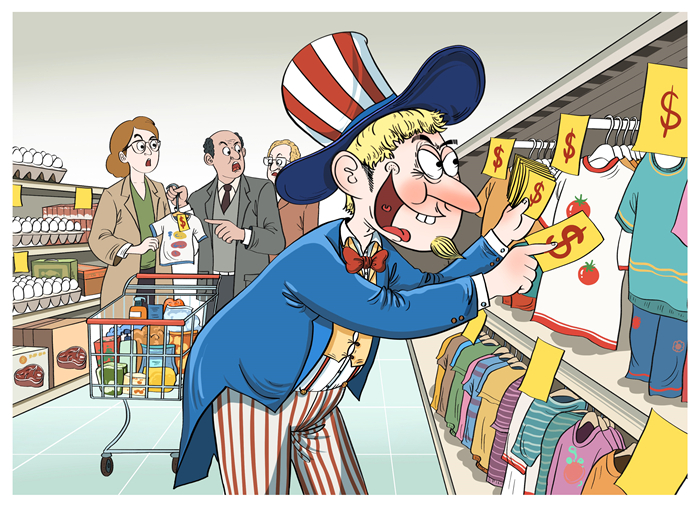
“以旧换新”政策显效 4-7月全国新能源车销量同比增长81.7%
Sou Hu Cai Jing· 2025-08-15 09:15
Group 1 - The implementation of large-scale equipment updates and the "old-for-new" consumption policy has shown positive effects in promoting industrial transformation, boosting consumer demand, and facilitating economic circulation [1][2] - From April 2024 to July 2025, the procurement amount of machinery and equipment by enterprises nationwide increased by 7.3% year-on-year, with industrial enterprises seeing a 9.8% increase [1] - The procurement amount for information transmission software and technology service industries grew by 27.8% and 28.3% year-on-year, respectively, indicating strong support for industrial upgrades [1] Group 2 - The "old-for-new" policy has stimulated diverse consumer demand, with sales of daily household appliances and audio-visual equipment increasing by 44.5% and 22.8% year-on-year, respectively [1] - Retail sales of furniture and sanitary ware grew by 30.1% and 13.6% year-on-year, while the service robot manufacturing industry saw a 51.1% increase [1] - The sales of new energy vehicles surged by 81.7% year-on-year, reflecting the policy's impact on the automotive sector [1] Group 3 - The combination of the "two new" policies has created a virtuous cycle of "policy-driven - demand release - industrial upgrade," leading to a 5.8% year-on-year increase in manufacturing sales revenue [2] - The tax authority plans to enhance the "policy + service" dual-driven approach to ensure the continued effectiveness of the "two new" policies, contributing to high-quality economic development [2]

税收数据显示:“两新”政策实施以来成效明显
Yang Shi Xin Wen· 2025-08-15 09:03
Core Insights - The implementation of large-scale equipment renewal and the "trade-in" policy has shown significant results in promoting industrial transformation, boosting consumer demand, and facilitating economic circulation [1] Equipment Procurement - From April 2024 to July 2025, the amount of machinery and equipment purchased by enterprises nationwide increased by 7.3% year-on-year, with industrial enterprises seeing a 9.8% increase [1] - The information transmission and software industry, along with technology services, experienced nearly a 30% increase in equipment procurement [1] Consumer Demand - The "trade-in" policy has significantly stimulated diverse consumer demand, with daily household appliance sales increasing by 44.5% year-on-year and furniture retail sales rising by 30.1% [1] - The demand for smart consumption has surged, with sales in the service robot manufacturing industry growing by over 50% [1] Automotive Industry Impact - The policy has also benefited the automotive sector, with nationwide sales of new energy vehicles increasing by 81.7% year-on-year, indicating a strong growth momentum [1] Retail and Manufacturing Interaction - Since the implementation of the "two new" policies, retail demand has continued to grow, prompting manufacturing enterprises to accelerate equipment upgrades, creating a positive interaction from policy drive to demand release and industrial upgrading [1] - As of July this year, manufacturing sales revenue increased by 5.8% year-on-year, contributing to a smoother economic internal circulation [1]
税收数据显示:“两新”政策效果持续显现 呈现三方面亮点
Sou Hu Cai Jing· 2025-08-15 08:51
Group 1 - The implementation of large-scale equipment renewal and the "trade-in" policy has shown positive effects in promoting industrial transformation, boosting consumer demand, and facilitating economic circulation [1][2] - From April 2024 to July 2025, the procurement amount of machinery and equipment by enterprises nationwide increased by 7.3% year-on-year, with industrial enterprises seeing a 9.8% increase [1] - The procurement amount for information transmission software and technology service industries grew by 27.8% and 28.3% year-on-year, respectively, indicating strong support for industrial upgrades [1] Group 2 - The "trade-in" policy has stimulated diverse consumer demand, with sales of daily household appliances and audio-visual equipment increasing by 44.5% and 22.8% year-on-year, respectively [1] - The retail sales of furniture and sanitary ware grew by 30.1% and 13.6% year-on-year, while the sales of service robots surged by 51.1% [1] - The sales of new energy vehicles increased by 81.7% year-on-year, reflecting the policy's positive impact on the automotive industry [1] Group 3 - The policies have created a virtuous cycle of "policy-driven - demand release - industrial upgrade," leading to a 5.8% year-on-year increase in manufacturing sales revenue [2] - The tax authorities are committed to enhancing the "policy + service" dual-drive approach to ensure the continued effectiveness of the "two new" policies [2]
税收数据显“两新”政策成效 新能源车销量同比增81.7%丨数据看板
Sou Hu Cai Jing· 2025-08-15 08:45
Group 1 - The "equipment update" policy has significantly contributed to industrial transformation and upgrading, with machinery equipment procurement amount increasing by 7.3% year-on-year from April 2024 to July 2025, and industrial enterprises seeing a 9.8% increase [1][2] - The information transmission and software industry, along with technology services, experienced substantial growth in equipment procurement, with increases of 27.8% and 28.3% respectively [1] - Private enterprises also showed a notable increase in equipment procurement by 9.3%, indicating the effective transformation of policy benefits into new driving forces for industrial upgrading [1] Group 2 - The "old-for-new" policy has stimulated diverse consumer demand, with retail sales of daily household appliances and audio-visual equipment increasing by 44.5% and 22.8% respectively from April 2024 to July 2025 [1] - Sales of furniture and sanitary ware also saw significant growth, with increases of 30.1% and 13.6% respectively, while the service robot manufacturing industry experienced a remarkable 51.1% growth [1] - The automotive sector benefited from the policy as well, with nationwide sales of new energy vehicles soaring by 81.7% during the same period [1] Group 3 - The implementation of the policies has created a positive interaction of "policy-driven - demand release - industrial upgrading," leading to a 5.8% year-on-year increase in manufacturing sales revenue from April 2024 to July 2025 [2] - The tax authority emphasizes the importance of a "policy + service" dual-drive approach to ensure the continued effectiveness of the "two new" policies, thereby injecting stronger momentum into high-quality economic development [2]
X @外汇交易员
外汇交易员· 2025-08-15 02:07
Overall Consumption Trends - Total retail sales of consumer goods reached 3.878 trillion yuan, a year-on-year increase of 3.7% [1] - Online retail sales amounted to 8.6835 trillion yuan from January to July, a year-on-year increase of 9.2% [1] - Online retail sales of physical goods accounted for 24.9% of the total retail sales of consumer goods [1] Specific Consumption Categories - Retail sales of goods increased by 4% year-on-year, reaching 3.4276 trillion yuan [1] - Catering revenue increased by 1.1% year-on-year, reaching 450.4 billion yuan [1] - Online retail sales of food, clothing, and consumer goods increased by 14.7%, 1.7%, and 5.8% respectively [1] Retail Growth in Specific Sectors - Retail sales of household appliances and audio-visual equipment increased by 30.4% year-on-year [1] - Retail sales of cultural and office supplies increased by 23.7% year-on-year [1] - Retail sales of communication equipment increased by 22.9% year-on-year [1] - Retail sales of furniture increased by 22.6% year-on-year [1] - Retail sales of sports and entertainment products increased by 21.1% year-on-year [1] - Retail sales of gold, silver, and jewelry increased by 11% year-on-year [1]
品牌力还在,你就有可能笑到最后
创业家· 2025-08-14 10:12
Core Insights - The article emphasizes the importance of brand strength, which is composed of product strength, channel strength, and communication strength. A strong product must provide value to both the company and society, while channel strength involves having significant influence in mainstream platforms or regions. Communication strength includes not only advertising but also the ability for the company to share its story organically [1]. Group 1: Japanese Brand Insights - Japanese brands have demonstrated resilience and adaptability in the face of economic challenges, providing valuable lessons for Chinese consumer brands. The Japanese market serves as a "future laboratory" for understanding consumer evolution over the next decade [6]. - Key strategies from successful Japanese brands include supply chain-driven private brand (PB) products, continuous iteration of major products, and defining lifestyle while resonating emotionally with consumers [7][8]. Group 2: Supply Chain and Product Development - Kobe Bussan utilizes a supply chain model that integrates production and sales, achieving a scale of 20 billion RMB with over 1,000 stores and 350 global factories [13]. - 7-11 employs a TEAM MD mechanism to guide supply chain development based on consumer data, creating PB products that meet latent consumer needs [7]. - Nitori, a leading furniture brand, applies automotive supply chain standards to achieve continuous revenue growth for 36 years [7]. Group 3: Emotional Resonance and Lifestyle Definition - Bandai focuses on developing products that tap into fundamental human desires, creating items that are both entertaining and addictive [9]. - Muji redefines user experience with its no-logo, affordable products, reflecting insights gained from economic downturns [9]. - The article highlights the importance of understanding consumer emotions and lifestyle changes to effectively engage with different market segments [9][10].