航运

Search documents
兴证资管国企红利优选混合发起式A:2025年第四季度利润73.2万元 净值增长率3.03%
Sou Hu Cai Jing· 2026-01-23 05:04
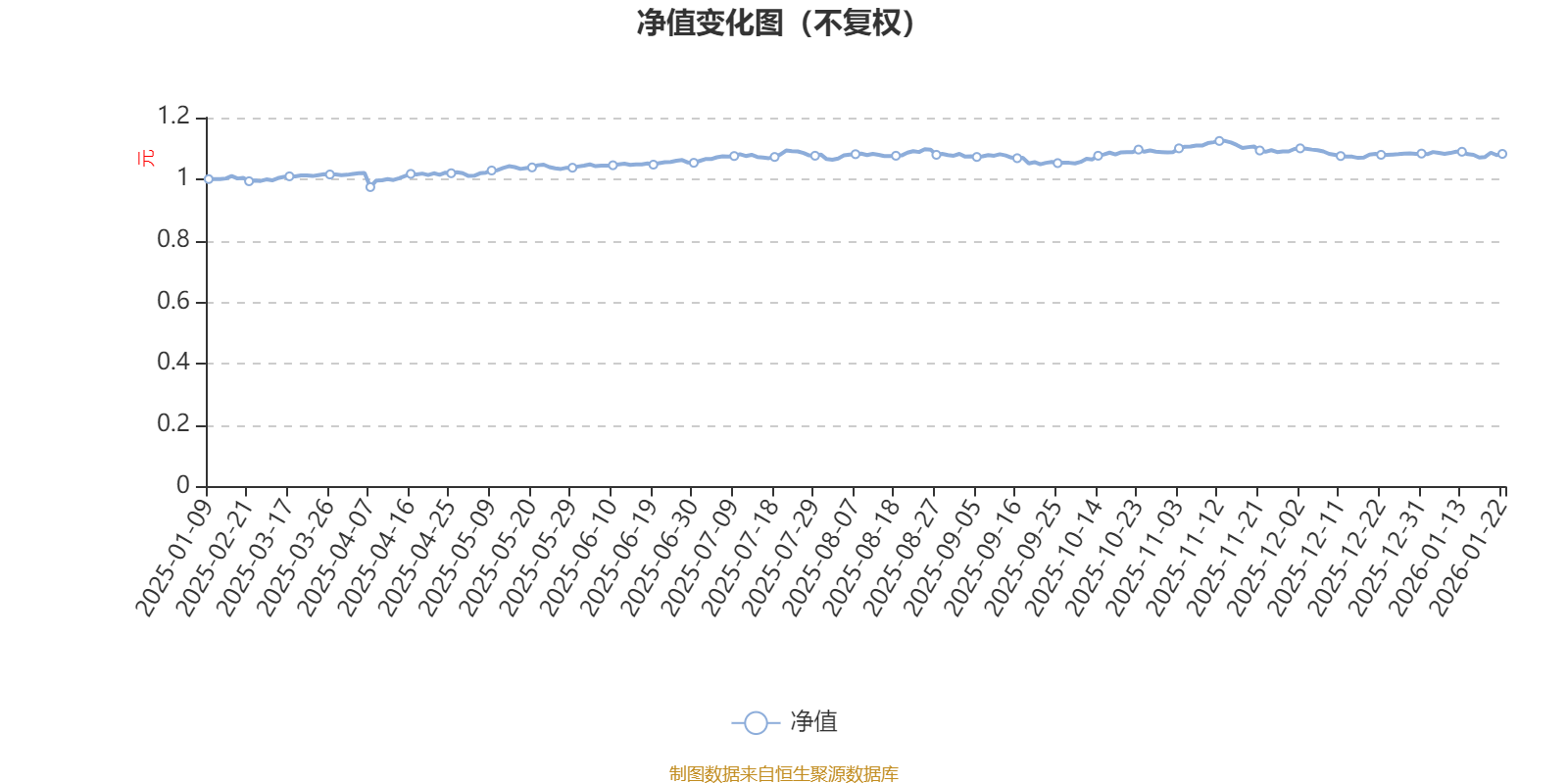
AI基金兴证资管国企红利优选混合发起式A(023169)披露2025年四季报,第四季度基金利润73.2万元,加权平均基金份额本期利润0.0321元。报告期内, 基金净值增长率为3.03%,截至四季度末,基金规模为2458.93万元。 该基金属于偏股混合型基金。截至1月22日,单位净值为1.082元。基金经理是刘懿。 基金管理人在四季报中表示,投资组合上,维持绝多数持仓股票来自基准指数中证国企红利指数成分股,力争跟上产品业绩基准。同时在一定维度上利用量 化模型优化持仓权重,力求实现基金资产的长期增值。 截至1月22日,兴证资管国企红利优选混合发起式A近三个月复权单位净值增长率为-0.52%,位于同类可比基金638/689;近半年复权单位净值增长率 为-1.01%,位于同类可比基金667/689;近一年复权单位净值增长率为8.24%,位于同类可比基金647/673。 截至12月31日,基金成立以来夏普比率为0.1459。 据定期报告数据统计,成立以来平均股票仓位为79.26%,同类平均为84.04%。2025年三季度末基金达到91.75%的最高仓位,2025年一季度末最低,为 60%。 截至2025年四季度末,基 ...

天弘红利智选混合A:2025年第四季度利润105.99万元 净值增长率1.84%
Sou Hu Cai Jing· 2026-01-23 04:39
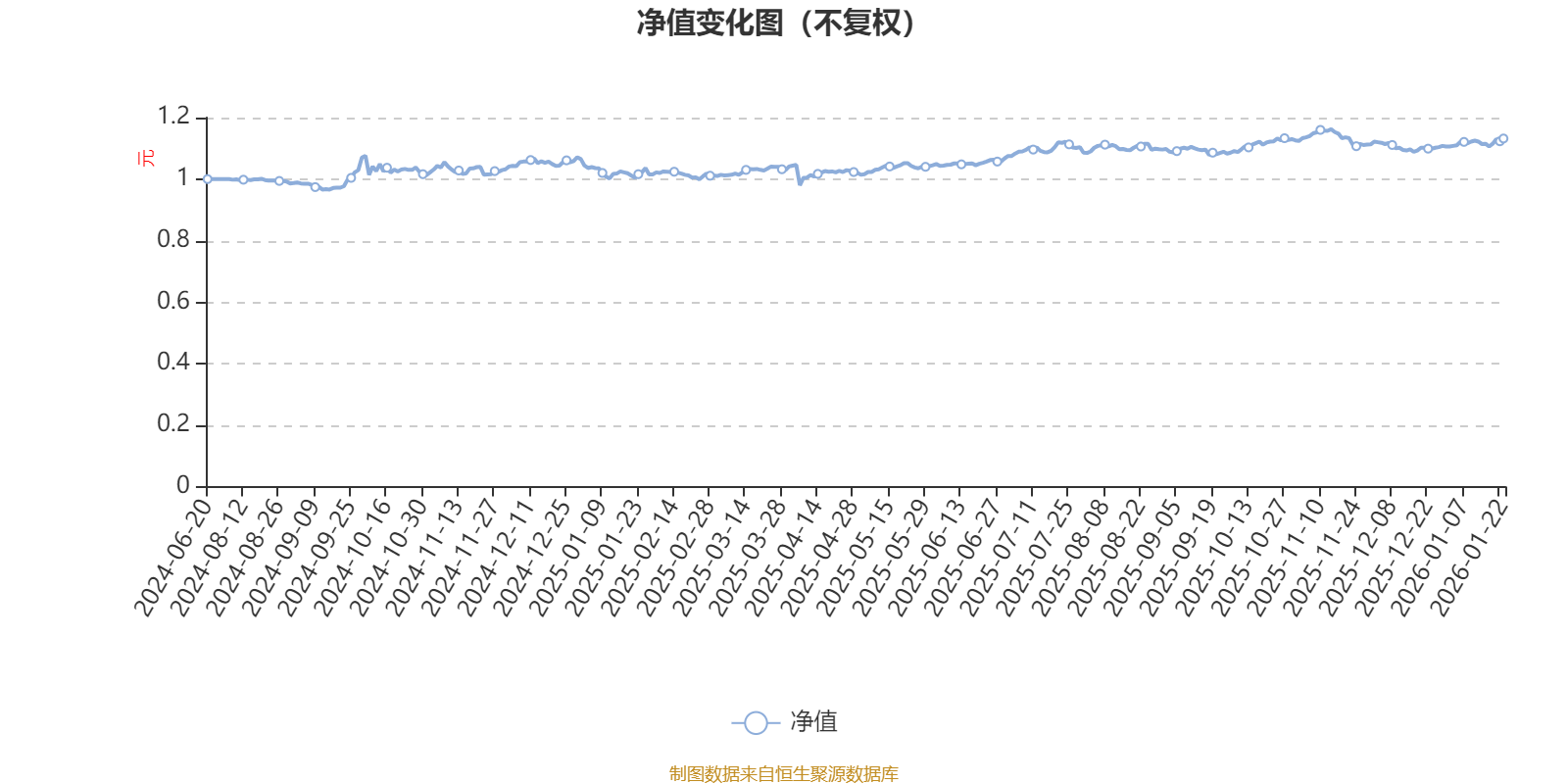
AI基金天弘红利智选混合A(020799)披露2025年四季报,第四季度基金利润105.99万元,加权平均基金份额本期利润0.0144元。报告期内,基金净值增长 率为1.84%,截至四季度末,基金规模为8161.46万元。 基金管理人在四季报中表示,本基金作为一只投资于红利主题的、主要依据量化方法进行组合构建的主动投资基金,基金管理人将在严格控制风险的前提 下,追求超越业绩比较基准的投资回报,力争实现基金资产的长期稳健增值。 截至1月22日,天弘红利智选混合A近三个月复权单位净值增长率为0.84%,位于同类可比基金572/621;近半年复权单位净值增长率为1.11%,位于同类可比 基金594/621;近一年复权单位净值增长率为12.64%,位于同类可比基金585/613。 通过所选区间该基金净值增长率分位图,可以观察该基金与同类基金业绩比较情况。图为坐标原点到区间内某时点的净值增长率在同类基金中的分位数。 截至12月31日,基金成立以来夏普比率为0.7357。 该基金属于偏股混合型基金。截至1月22日,单位净值为1.132元。基金经理是杨超,目前管理9只基金。其中,截至1月22日,天弘国证2000指数增强A近 ...
金辉集团(00137):撤销有关出售一艘船舶的主要交易
智通财经网· 2026-01-23 04:15
Core Viewpoint - Jinhui Shipping has notified Jinhui Group that a sales agreement for a vessel, valued at $14.4 million, has been canceled due to a failure to meet a timely delivery clause [1] Group 1 - The sales agreement was originally established on December 2, 2025, for the sale of the vessel [1] - The agreement was officially revoked on January 23, 2026 [1] - A deposit of $1.44 million, which was delivered to the escrow agent, will be refunded to the buyer [1] Group 2 - The board believes that the cancellation of the vessel sale will not have any significant adverse impact on the financial condition and operations of the group [1]
航运衍生品数据日报-20260123
Guo Mao Qi Huo· 2026-01-23 03:16
Report Summary 1. Report Industry Investment Rating No relevant information provided. 2. Core View of the Report The market is trending with a slight upward bias in the short - term, but the overall situation remains weak. The strategy is to short - allocate off - season contracts. Specifically, the short - selling cost - effectiveness is decreasing in the short - term, and investors should focus on shorting off - season contracts 04 and 10 on price rebounds [9][10]. 3. Summary by Relevant Catalogs 3.1 Shipping Derivatives Data - **Freight Index**: The current values of Shanghai Export Container Freight Index (SCFI), China Export Container Freight Index (CCFI), SCFI - US West, SCFIS - US West, SCFI - US East, SCFI - Northwest Europe, SCFIS - Northwest Europe, and SCFI - Mediterranean are 1574, 1210, 2194, 1305, 3163, 1676, 1954, and 2983 respectively. The previous values were 1647, 1195, 2218, 1323, 3128, 1719, 1956, and 3232 respectively. The corresponding percentage changes are - 4.45%, 1.25%, - 1.08%, - 1.36%, 1.12%, - 2.50%, - 0.10%, and - 7.70% [6]. - **Spot Prices**: - **OCEAN Alliance**: CMA CGM's price is 3693/FEU, relatively stable; COSCO Shipping's is 3325/FEU; Evergreen Marine's is 3030 - 3130/FEU, down about 400 from the previous period; Orient Overseas' is 2880/FEU, down 150 from the previous period. The overall FAK central value is about 2700 - 3300/FEU [7]. - **GEMINI Alliance**: Maersk's price in Week 4 (1.20 - 1.26) was 1695/2730 (20 '/40'), dropping to 1510/2420 in Week 5, with non - European base ports as low as 2400/FEU; Hapag - Lloyd's is 1585/2535 (20'/40'), and the February quote remains unchanged. The overall FMK central value is about 2400 - 2700/FEU [7]. - **PREMIER Alliance + MSC**: MSC's price is 1580/2640 (20'/40'); Ocean Network Express (ONE)'s is 1680/2635 (20'/40'), with the February price the same; Yang Ming Marine's is about 2600/FEU, relatively stable; HIM's is 1433/2436 (20'/40') [7]. 3.2 Market Logic Maersk's European line spot freight rates have been reduced with an expanding decline. Before the Spring Festival, shipping companies need to arrange in - festival capacity to cope with reduced demand, and the current high capacity has increased the pressure to attract cargo. The PA Alliance is likely to follow suit in price cuts, and the spot quotes in early February may continue to decline. Some CMA CGM routes that were originally planned to resume through the Suez Canal have returned to circumnavigate the Cape of Good Hope, which may drive up the sentiment of far - month contracts, but the market has not fully priced in the resumption. The supply - demand situation in 2026 is weakening [9]. 3.3 Strategy The short - selling cost - effectiveness is decreasing in the short - term. Investors should focus on shorting off - season contracts 04 and 10 on price rebounds [10].
节前现货价格偏弱,资金提前博弈节后涨价预期
Hua Tai Qi Huo· 2026-01-23 03:13
1. Report Industry Investment Rating - No information provided in the given content 2. Core Viewpoints of the Report - The spot price was weak before the festival, and funds were betting on the post - festival price increase in advance [1] - The delivery pressure of ultra - large vessels in 2026 is relatively small, while the annual delivery volume of 17000 + TEU vessels in 2027, 2028, and 2029 exceeds 40 ships [3] - The 02 contract fluctuates, and the 04 contract has a bearish drive. The cancellation of the VAT export tax rebate policy for products such as photovoltaic may disrupt the off - season attribute of the 04 contract, and the fluctuation of the 04 contract is expected to increase. The attempt of Maersk to resume sailing through the Red Sea and the Suez Canal will disrupt the expectations of more distant contracts [4][5] 3. Summary According to Relevant Catalogs 3.1 Futures Prices - As of January 22, 2026, the total open interest of all contracts of the container shipping index (European line) futures was 60,133.00 lots, and the single - day trading volume was 24,650.00 lots. The closing prices of EC2602, EC2604, EC2606, EC2608, EC2610, and EC2612 contracts were 1707.60, 1137.70, 1399.10, 1498.40, 1086.40, and 1350.00 respectively [6] 3.2 Spot Prices - Online quotes from different shipping companies for the Shanghai - Rotterdam route are provided, including quotes from Gemini Cooperation, MSC + Premier Alliance, Ocean Alliance, etc. For example, Maersk's WEEK5 price for Shanghai - Rotterdam was 1520/2440, and WEEK6 was 1275/2030 [1][2] - The SCFI (Shanghai - Europe route) price announced on January 16 was 1676 US dollars/TEU, the SCFI (Shanghai - US West route) was 2194 US dollars/FEU, and the SCFI (Shanghai - US East) was 3165 US dollars/FEU. The SCFIS (Shanghai - Europe) on January 19 was 1954.19 points, and the SCFIS (Shanghai - US West) was 1305.27 points [6] 3.3 Container Ship Capacity Supply - Static supply: As of December 31, 2025, 268 container ships with a total capacity of 2.155 million TEU were delivered in 2025. The delivery expectations for 12000 - 16999TEU and 17000 + TEU ships from 2026 - 2029 are also provided. For example, 12000 - 16999TEU ships are expected to deliver 781,200 TEU (53 ships) in 2026 [3] - Dynamic supply: The average weekly capacity in January was 342,200 TEU, in February was 273,700 TEU, and in March was 289,700 TEU. There were 2 TBNs and 8 blank sailings in February and 5 blank sailings and 3 TBNs in March [4] 3.4 Supply Chain - Due to the complex and uncertain international situation, CMA CGM has decided to divert ships on the FAL 1, FAL 3, and MEX routes via the Cape of Good Hope instead of the Suez Canal [2] 3.5 Demand and European Economy - The cancellation of the VAT export tax rebate for products such as photovoltaic may disrupt the shipping rhythm of related industries and the pricing strategies of shipping companies. Attention should be paid to whether the cargo volume from the Far East to Europe in February and March can increase significantly and whether the actual freight rates will be stronger than in normal years [5]
金融期货早评-20260123
Nan Hua Qi Huo· 2026-01-23 02:31
Group 1: Macro - The current macro - environment features global geopolitical turmoil reshaping the order, domestic structural differentiation, and precise policy - driven stable growth. The old US - led global system is accelerating towards a fragmented end, with the failure of multilateral order and intensified great - power competition becoming the norm [1]. - The US and Europe's game over Greenland has escalated, with the US threatening tariffs on 8 European countries and the EU responding with counter - lists and freezing trade agreements. Swedish and Danish pension funds have cleared US bonds, impacting the traditional safe - haven status of US bonds [1]. - The US core PCE物价指数 in November 2025 met market expectations, indicating no significant rebound in inflation. The Fed is likely to maintain the current interest rate in the January meeting, and may keep rates stable until Powell's term ends in May 2026 [1]. - Japan's central bank policy is highly concerned. It is expected to maintain the current interest rate and hawkish tone, and Governor Ueda may explain this as an assessment of last year's interest - rate hikes [1]. - China's economy in 2025 ended with a pattern of "strong supply, stable external demand, and weak domestic demand". In 2026, the GDP growth target is expected to be 4.5% - 5%, and expanding domestic demand is the core of stable growth [1]. Group 2: RMB Exchange Rate - Overseas, the strong US economic data boosts market risk appetite and depresses interest - rate cut expectations, but the US dollar index lacks upward momentum due to factors like Nordic pension funds' withdrawal [2]. - Domestically, the central bank's unexpected 900 billion yuan MLF operation and the indication of room for reserve - requirement ratio cuts and interest - rate cuts in the year push up the US dollar - RMB exchange rate in the short term, but the expected high corporate settlement willingness may lead to a subsequent decline [2]. - In the future, the RMB has a solid foundation for trend - based appreciation. Its appreciation space depends on the US dollar index and the central bank's exchange - rate control orientation [2]. - Short - term strategy: Export enterprises can lock in forward settlement at around 7.01, and import enterprises can adopt a rolling purchase strategy at the 6.93 level [3]. Group 3: Stock Index - The previous trading day saw a differentiated performance in the stock index. The large - cap index was weak in the morning and fluctuated in the afternoon, while the small - and medium - cap index fluctuated throughout the day. Except for the Shanghai 50 index, other indices closed up [4]. - Short - term, the index is in an adjustment phase with significant style differentiation, but the medium - and long - term bullish logic remains unchanged. Small - and medium - cap indices are expected to outperform [4]. Group 4: Treasury Bonds - The previous trading day, the bond market was lackluster and oscillated. The trading - oriented funds retreated, and the market is cautious about the short - term bond market space [5]. - The central bank will conduct a 900 billion yuan MLF operation, and attention should be paid to whether the capital interest rate will decline and stabilize at a low level [5]. - Medium - term, hold long positions; short - term, stay on the sidelines [5]. Group 5: Container Shipping to Europe - The container shipping index (Europe line) futures market showed a differentiated trend, with near - month contracts under pressure and far - month contracts relatively resilient [5][6][7]. - Bullish factors for far - month contracts include the uncertainty of the Red Sea route's full resumption and potential rush - shipping demand in March [6]. - Bearish factors include the decline in spot freight rates and the reduced risk of short - term trade frictions [6]. - Strategy: Trend traders can conduct range operations, short near - month contracts at the upper end of the range and go long at the lower end, and be cautious about chasing far - month contracts [7]. Group 6: Commodities - New Energy Lithium Carbonate - The main lithium carbonate futures contract closed up, with increased trading volume and open interest. The spot market showed general performance, with rising prices of lithium ore and lithium salts [10]. - The addition of new registered brands on the GZEX is expected to strengthen the basis of lithium carbonate spot and narrow the spread between contracts [10]. - Before early February, consider going long on dips; before the Spring Festival, reduce positions to avoid risks [10][11]. Industrial Silicon and Polysilicon - The main industrial silicon and polysilicon futures contracts showed different trends. The industrial silicon spot market was general, while the photovoltaic industry chain spot market weakened [11][12][14]. - In April, the rush - export market in the photovoltaic and organic silicon fields is expected to drive up the demand for industrial silicon. For polysilicon, the industry is mainly focused on destocking [14]. - Strategy: Go long on industrial silicon on dips and short polysilicon on rallies. Reduce positions before the Spring Festival [14]. Group 7: Commodities - Non - ferrous Metals Copper - The copper price fluctuated narrowly at a key level. The inventory of copper in major exchanges showed different changes, and the spot market had general trading [16][17]. - The capital inflow into the chemical and agricultural product sectors was obvious, and the non - ferrous sector was weak. The copper price faced resistance at 100,000 yuan [18]. - Strategy: Do not open new positions above 100,000 yuan; hold existing long positions in the 90,000 - 95,000 yuan range, and adjust positions flexibly in the 95,000 - 100,000 yuan range [19]. Aluminum - The aluminum price showed a certain degree of volatility. The supply of aluminum increased, and the demand weakened before the Spring Festival, with inventory accumulation [20][21]. - Short - term, the aluminum price will oscillate; medium - and long - term, it is expected to be strong. Pay attention to dips for entry [21]. Zinc - The zinc price oscillated narrowly during the day and was strong at night. The supply was expected to be loose, and the demand was weak, with inventory accumulation [22]. - Short - term, it will oscillate weakly. Aggressive investors can try short positions lightly, and holders can sell call options [23]. Nickel - Stainless Steel - The nickel - stainless steel market oscillated at night. The supply of nickel ore was affected by the rainy season, and the demand for stainless steel was supported by inventory reduction [24]. - Be cautious about the high - level callback of stainless steel [24]. Tin - The tin price oscillated widely during the day and was strong at night. The supply was affected by the slow resumption in Myanmar and Indonesia, and the demand was in the off - season [25]. - It will maintain high - level wide - range oscillation. Be cautious about entering the market [25]. Lead - The lead price oscillated narrowly. The supply was stimulated by high prices, and the demand lacked new drivers, with inventory changes [25]. - It will oscillate, and selling options to collect premiums is recommended [25]. Group 8: Commodities - Oils and Fats and Feeds Oilseeds - The external soybean market is expected to continue to be weak, while the domestic soybean meal market may stop falling at a low valuation. The potential improvement in Sino - Canadian trade relations may change the pricing of rapeseed meal [27][28]. - Strategy: Reduce short positions in rapeseed meal [28]. Oils and Fats - The domestic oils and fats market showed a short - term weakening trend at night, but the overall upward trend remained. Pay attention to small - scale corrections [28]. - Palm oil is the strongest in the sector, and the spread between rapeseed oil and palm oil may narrow [28][30]. Group 9: Commodities - Energy and Oil and Gas Fuel Oil - The high - sulfur fuel oil supply tension is easing, and the demand is mainly concentrated in the bunkering market. The long - term downward trend remains, but there is short - term support [31][32]. Low - Sulfur Fuel Oil - The supply pressure of low - sulfur fuel oil is increasing, and the demand is not significantly boosted. The crack spread remains low [33]. Asphalt - The asphalt market oscillated. The spot price was stable, and the futures price was affected by geopolitical factors. The supply and demand were weak, and the inventory increased [34]. - Strategy: Pay attention to positive spreads, 03 basis, and crack spread long positions [34]. Group 10: Commodities - Precious Metals Platinum and Palladium - The prices of platinum and palladium rose at night. The market is affected by international political uncertainty, geopolitical conflicts, and challenges to the Fed's independence [36][37]. - In the medium - and long - term, the bull market foundation for platinum and palladium remains. Be vigilant about the opening gap [38]. Gold and Silver - The prices of gold and silver reached new highs. The market is affected by the weakening of the US dollar system and geopolitical risk aversion [38]. - The precious metals market is in a bullish pattern. Gold has support at 4650, and silver has support at 86.5. Consider long positions on dips [39]. Group 11: Commodities - Chemicals Pulp - Offset Paper - The pulp and offset paper futures prices oscillated strongly at night. The pulp price is affected by spot market conditions, port inventory, and European inventory [40]. - Strategy: Observe or go long on dips, and close short positions [40][41]. LPG - The LPG futures price rose. The supply was moderately low, and the demand was weakening, especially in the PDH sector. The inventory was changing [41][42]. - Be cautious about the upward risk [42]. PTA - PX - The PX and PTA futures prices rose strongly. The PX supply is expected to remain high, and the PTA supply is affected by device shutdowns. The demand for polyester is weakening [43][44][45]. - The PTA processing fee is expected to rise, but the space is limited. Wait for dips to go long [45]. MEG - Bottle Chips - The ethylene glycol futures price oscillated strongly. The supply is increasing, and the demand is weakening due to the decline in terminal orders. The inventory is at a certain level [46][47]. - The market is under pressure, and the long - term surplus expectation remains [47]. PP - The polypropylene futures price rose. The short - term supply is reduced due to device maintenance, and the demand has some support, but it is expected to decline seasonally [48][49]. - The short - term fluctuation is dominated by macro - sentiment and cost [49]. PE - The polyethylene futures price rose. The supply is expected to increase after device restart, and the demand will face seasonal decline [50][51]. - The short - term fluctuation is dominated by macro - sentiment and cost [51]. Pure Benzene - Styrene - The prices of pure benzene and styrene rose. The supply of pure benzene decreased and the demand increased, and the inventory showed changes. The supply of styrene was affected by unplanned maintenance and inventory reduction [51][52]. - Pay attention to the export increment of styrene, crude oil fluctuations, and the downstream's acceptance of high - priced raw materials [52]. Urea - The urea futures price rose. The supply is in an over - capacity stage, and the price is supported by export policies. The 05 contract may have a price increase expectation [52][53]. - Hold long positions [53]. Glass - Soda Ash - The soda ash futures price rose. The supply is expected to increase, and the demand has limited elasticity. The inventory is at a high level [54]. - The glass futures price rose. The supply and demand are weak, and the inventory needs to be digested [55]. Propylene - The propylene futures price rose. The supply decreased and the demand increased this week, and the price was supported by cost and supply - demand factors [55][56][57]. - Pay attention to geopolitical and device - related changes [57]. Group 12: Commodities - Black Metals Rebar and Hot - Rolled Coil - The rebar and hot - rolled coil futures prices oscillated at a low level. The production recovery is slowing, the consumption of rebar is fluctuating, and the inventory is in a certain state. The cost end has both support and pressure [57][58][59]. - The short - term price will oscillate, with the rebar 2605 contract in the 3050 - 3200 yuan range and the hot - rolled coil 2605 contract in the 3200 - 3350 yuan range [57]. Iron Ore - The iron ore price recovered. The iron - making production is affected by safety inspections, the inventory is increasing, and the supply and demand are in a certain state [57][58][59]. - The price has fallen to release the premium, and the downward space is not extremely pessimistic [59]. Coking Coal and Coke - The coking coal and coke futures prices rose. The coking coal production is increasing, the import is changing, and the coking enterprises' profits are shrinking. The steel production may be affected by an accident [59][60][61]. - The coking coal price may face downward pressure in the medium - and long - term if certain conditions are met [61]. Ferrosilicon and Silicomanganese - The ferrosilicon and silicomanganese futures prices rebounded. The supply and demand are weakening, and the inventory is changing. The price is supported by cost [61][62]. - They will oscillate at a low level [62]. Group 13: Commodities - Agricultural and Soft Commodities Live Pigs - The live pig futures price rose. The spot price is changing, with the supply being strong and the demand being weak. The second - fattening may support the price at a low level [64]. - The 03 contract may oscillate upward [64]. Cotton - The cotton futures price showed different trends. The domestic cotton supply is increasing moderately, and the demand is supported by spinning capacity expansion. The price is affected by the internal - external spread [64][65][66]. - The cotton price is likely to rise, but be cautious about chasing high. Wait for dips to go long [66]. Sugar - The sugar futures price rose. The international sugar price is affected by the Brazilian sugar - making ratio, and the domestic sugar supply and demand are in a certain state. The spot price is falling [66][67][68]. - The domestic sugar price may fall if the international sugar price drops [68]. Eggs - The egg futures price rose. The supply is sufficient, and the demand for pre - festival stocking is weakening [68][69]. - The near - month contract may continue to rise before the stocking period ends [69]. Apples - The apple futures price rose. The spot price is stable, the pre - festival stocking is improving, and the inventory is decreasing [70][71]. - The price may rise further if the demand continues to improve and the inventory decreases more than expected [71]. Red Dates - The red date market is focused on demand. The supply is sufficient, and the demand is mainly for rigid replenishment. The price is likely to oscillate at a low level [72]. - Pay attention to the pre - festival procurement [72]. Logs - The log futures price rebounded with reduced positions. The spot price is changing, and the inventory is at a certain level. The market sentiment is affecting the price [72][73][74]. - Conduct range operations and pay attention to the 3 - 5 positive spread opportunity [74].
博道红利智航股票A:2025年第四季度利润736.12万元 净值增长率3.1%
Sou Hu Cai Jing· 2026-01-23 01:41
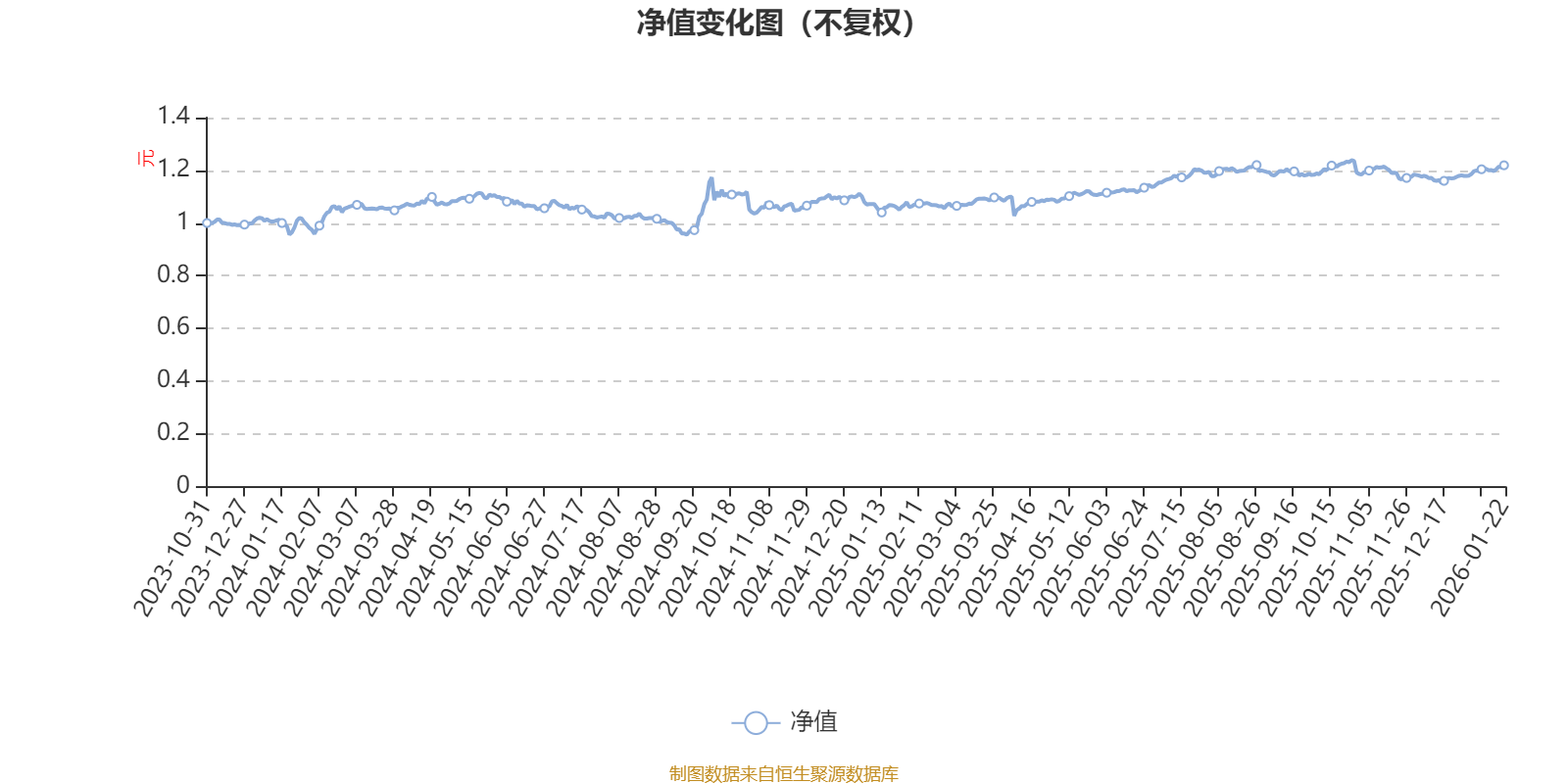
Core Viewpoint - The AI Fund Baodao Dividend Zhihang Stock A (019124) reported a profit of 7.3612 million yuan for Q4 2025, with a weighted average profit per fund share of 0.0309 yuan. The fund's net value growth rate was 3.1%, and the total fund size reached 306 million yuan by the end of Q4 2025 [3][15]. Fund Performance - As of January 22, the unit net value of the fund was 1.219 yuan. The fund managers, Liu Weiming and Liu Zhaoyang, have managed two funds that both achieved positive returns over the past year. The highest growth rate for Baodao Consumer Zhihang A was 32.25%, while Baodao Dividend Zhihang Stock A had a minimum growth rate of 20.06% [3]. - The fund's net value growth rates over different periods are as follows: 2.83% over the last three months (ranked 142 out of 167), 4.83% over the last six months (ranked 152 out of 167), and 20.06% over the last year (ranked 147 out of 165) [3]. Investment Strategy - The fund maintained a multi-factor stock selection model based on the CSI Dividend Index during the reporting period. Looking ahead to 2026, the fund anticipates a positive policy environment and a potential recovery in nominal GDP, which may lead to improved corporate earnings [3]. Risk Metrics - The fund's Sharpe ratio since inception is 0.8772, indicating a favorable risk-adjusted return [7]. The maximum drawdown since inception is 14.13%, with the largest quarterly drawdown occurring in Q3 2024 at 11.76% [10]. Portfolio Composition - The average stock position since inception has been 91.39%, compared to the industry average of 88.27%. The fund reached its highest stock position of 92.29% at the end of Q3 2025 and its lowest of 89.6% at the end of 2024 [13]. - As of Q4 2025, the top ten holdings of the fund include China COSCO Shipping, Zhonggu Logistics, Western Mining, Lu'an Environmental Energy, Shanxi Coal International, Yanzhou Coal Mining, Shanghai Bank, Youngor Group, CITIC Bank, and Junxin Shares [18].
集运早报-20260123
Yong An Qi Huo· 2026-01-23 01:38
Report Summary 1. Industry Investment Rating No information provided. 2. Core Views - For the EC2604 contract, attention should be paid to the spot market and actual cargo rush. Spot price drops may suppress the futures market, but the post - Chinese New Year cargo rush may slow down the price decline in March. The current valuation of EC2604 fluctuates within a reasonable range, and it is advisable to watch for potential correction opportunities, such as buying at low prices during the spot market's bottom - finding process [3]. - Export tax - rebate adjustments are negative for far - month contracts. However, far - month contracts are greatly affected by geopolitical factors. It is generally recommended to adopt a positive spread trading strategy and consider shorting the EC2610 contract at high prices (the current valuation of EC2610 is neutral with limited downside) [3]. 3. Summary by Relevant Catalogs Contract Information - **Contract Prices and Changes**: The closing prices of EC2602, EC2604, EC2606, EC2608, and EC2610 on the previous trading day were 1707.6, 1137.7, 1399.1, 1498.4, and 1086.4 respectively, with daily changes of 0.02%, 0.71%, 1.53%, 0.83%, and 1.09% [2]. - **Trading Volume and Open Interest**: The trading volumes of EC2602, EC2604, EC2606, EC2608, and EC2610 on the previous trading day were 748, 19477, 3227, 128, and 1037 respectively, and the open interests were 4681, 40770, 4883, 1353, and 8318 respectively, with open interest changes of - 4.25, - 529, 826, 6, and - 29 [2]. - **Month - to - Month Spreads**: The spreads of EC2502 - 2604 and EC2504 - 2606 on the previous day were 569 and - 261.4 respectively, with daily changes of - 7.6 and - 13.1, and weekly changes of - 19.6 and - 71.2 [2]. Spot Market Information - **Spot Indexes**: The spot index (OCEAN LINE) on January 12, 2026, was 1956.39 points, with a month - on - month increase of 8.94%. The SCFI (OCEAN LINE) on January 16, 2026, was 1676 dollars/TEU, with a month - on - month decrease of 2.50% [2]. - **European Line Spot Quotes**: From Week 4 to Week 6 in February, the central quotes of European line spot prices were 2630, 2540, and 2300 dollars respectively, equivalent to 1840, 1780, and 1600 points on the futures market. Some shipping companies adjusted their February freight rates, such as YML reducing its special - offer rate from 2100 to 2000, and EMC reducing its price to 2400 [4]. Relevant News - Israeli President Herzog stated that Hamas still holds hostages in Gaza, and the real test of the second - stage cease - fire lies in Hamas' withdrawal from Gaza. Hezbollah is trying to reorganize, and the Houthi rebels are still active [5]. - Trump said that only small - scale conflicts remain in ending the Gaza conflict. If Hamas does not fulfill its promise and lay down its arms, it will be finished. He also called for action against Hezbollah and Lebanon [5]. - The Iranian Speaker announced that all cities in Iran have returned to peace [5].
2026年集运市场的核心变量是?
Xin Lang Cai Jing· 2026-01-22 23:36
Core Viewpoint - The shipping market in 2026 will revolve around two key variables: the concentration of exports before the exit of the export tax policy and the reopening of the Red Sea shipping route [2][7]. Demand Factors - The most significant short-term variable on the demand side is the export tax policy, which will see the cancellation of export tax for solar products starting April 1, 2026, and for battery products in 2027. This policy is expected to lead to a surge in exports in the first quarter of 2026, potentially overstretching future demand and negatively impacting freight rates in the second quarter and beyond [2][7]. - In the medium to long term, demand growth in the shipping market is anticipated to slow down significantly, with growth primarily driven by European restocking needs, the cost advantages of Chinese manufacturing, and structural opportunities arising from changes in the trade environment. Key growth areas are expected to be in electric vehicles, textiles, and home appliances [2][7]. Supply Factors - The core variable on the supply side is whether the Red Sea shipping route will resume operations, which will be crucial in determining the capacity landscape for 2026. If the current detour around the Cape of Good Hope continues, capacity growth will be relatively moderate. Due to a slowdown in new ship deliveries and some new capacity being redirected to emerging markets in Asia, South America, and Africa, the capacity growth on the European route is expected to be around 4%, matching demand growth [3][8]. - If the Red Sea reopens, it could release a significant amount of effective capacity in a short time, leading to structural shocks in the supply chain. In this scenario, total capacity on the European route could increase by approximately 8% compared to current levels, which may disrupt the supply-demand balance and continue to suppress freight rates during peak seasons [3][9]. Market Outlook - Overall, the European shipping market in 2026 is expected to exhibit a complex pattern of "short-term support and long-term uncertainties." In the short term, the first quarter will benefit from the "export rush," with relatively full cargo volumes, compounded by potential congestion at ports in Western and Northern Europe during winter, providing strong support for freight rates [4][9]. - In the long term, the central tendency and volatility of freight rates will largely depend on the status of the Red Sea reopening. If it does not reopen, the market supply and demand will likely remain balanced, leading to seasonal fluctuations in freight rates. Conversely, if the Red Sea reopens, there will be a need to be cautious of the risks of overcapacity leading to downward pressure on freight rates [4][9].

大摩优享六个月持有期混合A:2025年第四季度利润942.15万元 净值增长率2.98%
Sou Hu Cai Jing· 2026-01-22 15:16
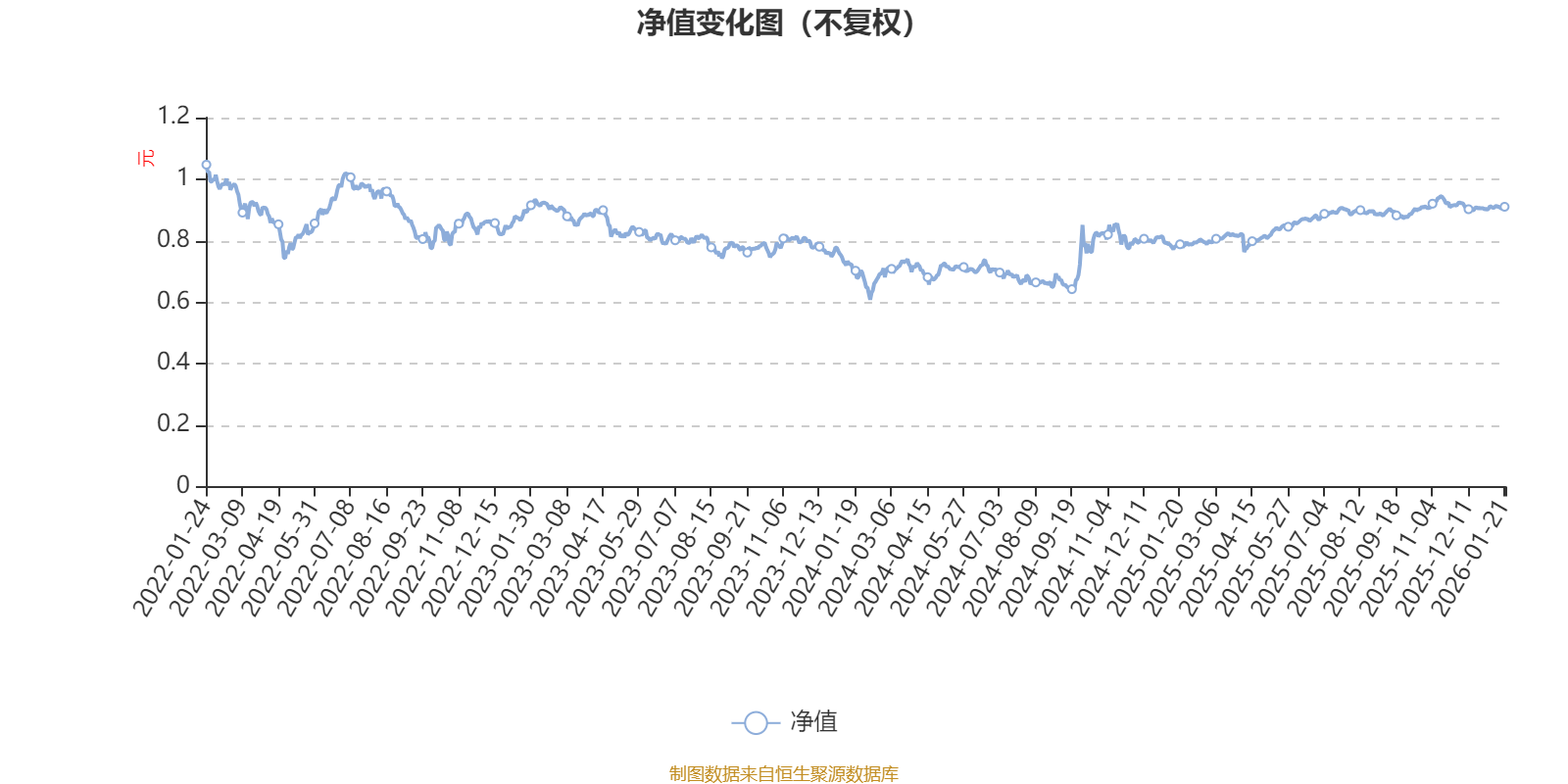
AI基金大摩优享六个月持有期混合A(012368)披露2025年四季报,第四季度基金利润942.15万元,加权平均基金份额本期利润0.0276元。报告期内,基金 净值增长率为2.98%,截至四季度末,基金规模为2.97亿元。 该基金属于偏股混合型基金。截至1月21日,单位净值为0.91元。基金经理是余斌和缪东航。 基金管理人在四季报中表示,本基金长期看好低波红利板块,目前中国的经济发展日趋成熟,经济增速将出现一定程度的放缓,因此未来中国企业的利润增 长速度也将跟随经济放缓。企业产能扩张的需求减少,企业将减少资本开支,自由现金流将大幅改善,企业将提升分红以回报投资者。 十年期国债收益率目前仍然处于低位,低波红利指数的股息率平均而言显著高于十年期国债收益率,这将有利于红利板块的估值提升。即便红利板块的估值 由于市场风格原因未能提升,我们认为持有高红利股票获得稳定分红,也能让基金获得显著高于国债收益率的回报。 截至1月21日,大摩优享六个月持有期混合A近三个月复权单位净值增长率为0.93%,位于同类可比基金557/621;近半年复权单位净值增长率为1.05%,位于 同类可比基金598/621;近一年复权单位净值增长 ...