动力电池

Search documents
年产20万套电池模组 华京智晟项目张家港开工
起点锂电· 2025-09-07 10:23
Core Insights - The project with a total investment of 400 million yuan for the Suzhou Huajing Zhisheng Energy headquarters and power battery module production base has commenced in Zhangjiagang Economic Development Zone [2] - The project focuses on the research and production of lightweight battery trays and chassis products, including battery trays and magnesium-aluminum alloy brackets [2] - The introduction of a foreign academician team has led to breakthroughs in battery tray welding technology and the development of new power battery modules, achieving high stability and energy density [2] - The new project aims to establish an industry-leading power battery module production base and technology transformation center, with an annual production capacity of 200,000 battery modules [2] - The project is expected to be completed and put into operation in the first quarter of 2026, with an annual revenue exceeding 500 million yuan upon reaching full production [2] Industry Developments - Seven major lithium iron phosphate projects have been launched [2] - Hecent Energy has secured a 3GWh energy storage cooperation [2] - The first forum on household storage and portable energy storage battery technology will be held on September 26 in Shenzhen [2] - The first international summit and exhibition on sulfide all-solid-state batteries is scheduled for November 8 in Guangzhou [2]

强势反包!下周,稳了
Sou Hu Cai Jing· 2025-09-05 10:58
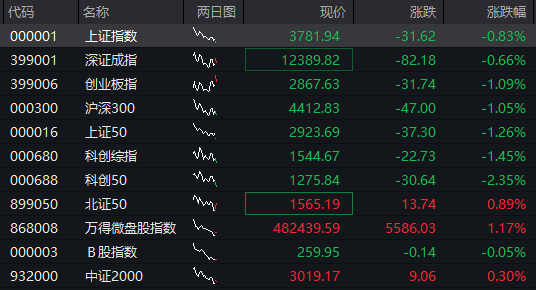
Core Viewpoint - The A-share market experienced a strong rebound on September 5, with the ChiNext Index surging 6.55%, indicating a shift in market sentiment from panic to optimism, particularly in the new energy sector and technology growth stocks [1][2]. Market Performance - The Shanghai Composite Index rose 1.24% to close at 3812.51 points, while the Shenzhen Component Index increased by 3.89% [2]. - The ChiNext Index, driven by new energy stocks, saw a significant rise of 6.55%, marking its largest single-day gain since January 2022 [2]. - The total number of rising stocks reached 4857, with 108 stocks hitting the daily limit up, reflecting widespread profit-making opportunities [2]. - In the Hong Kong market, the Hang Seng Index rose 1.43% to 25417.98 points, with the Hang Seng Technology Index increasing by 1.95% [2]. Industry Hotspots and Driving Logic - The new energy sector saw a surge, with the power battery index skyrocketing by 9.64%, driven by strong production expansion expectations and breakthroughs in solid-state battery technology [3]. - The photovoltaic inverter index rose by 8.31%, supported by policies aimed at reducing industry competition and restoring valuations [3]. - The wind power equipment sector also experienced gains, buoyed by improved industry conditions and profit margins [3]. - In the Hong Kong market, the solar energy index surged by 8.35%, driven by ongoing policy support for the new energy sector [3]. Underperforming Sectors and Driving Logic - Defensive sectors in the A-share market saw capital outflows, with the banking sector declining by 0.99% as funds shifted towards growth sectors [4]. - The consumer sector showed mixed performance, with the liquor index down 1.57% amid cautious sentiment towards discretionary spending [4]. Investment Strategy Recommendations - The market is expected to enter a new phase characterized by a return to growth and a strengthening of main lines, with a focus on the new energy sector and technology stocks [5][6]. - Investors are advised to hold core positions in the new energy sector, particularly in lithium batteries, photovoltaics, and wind power, which are expected to continue their upward trajectory [6]. - There is an emphasis on identifying undervalued stocks with strong performance support and avoiding overbought speculative stocks [6].
A股科技“四大天王”集中爆发,宁德时代、工业富联表现抢眼
Quan Jing Wang· 2025-09-05 08:25
Core Viewpoint - The A-share technology sector is experiencing a significant surge, with leading stocks like CATL, Industrial Fulian, BYD, and Cambricon being referred to as the "Four Kings" of A-share technology, collectively driving the sector's momentum [1] Group 1: Company Highlights - CATL, as the global leader in the power battery sector, boasts a market capitalization of 1.4 trillion, achieving breakthroughs in battery technology, including the rapid-charging battery that can provide 400 km of range in just 10 minutes [2] - Industrial Fulian, valued at 1.1 trillion, has established itself as a key player in AI computing power, leveraging its strong manufacturing capabilities and partnerships with major companies like Apple and NVIDIA [3] - BYD, with a market cap nearing 1 trillion, leads the new energy vehicle market through continuous technological innovation, including the development of the Blade Battery, which has become a benchmark in the industry [4] - Cambricon, valued at 530 billion, is a prominent player in the domestic AI chip sector, focusing on the development of high-performance chips and contributing to the establishment of a domestic computing power ecosystem [5] Group 2: Market Impact - The robust performance of these four technology giants not only generates substantial returns for investors but also plays a crucial role in advancing China's technology industry and promoting high-quality economic development [5]

电池龙头ETF(159767)强势涨停!新能源赛道股全线大涨,天华新能、先导智能20%涨停
Xin Lang Cai Jing· 2025-09-05 07:03
电池龙头ETF(159767)紧密跟踪国证新能源车电池指数,国证新能源车电池指数反映沪深北交易所中新 能源车电池产业上市公司的市场表现。 数据显示,截至2025年8月29日,国证新能源车电池指数(980032)前十大权重股分别为宁德时代、比亚 迪、亿纬锂能、三花智控、华友钴业、赣锋锂业、国轩高科、先导智能、格林美、欣旺达,前十大权重 股合计占比65.1%。 动力电池企业出海布局持续推进,成为行业增长的重要支撑。交银国际指出,当前全球新能源汽车市场 持续增长,中国动力电池企业凭借技术进步和成本优势,加速拓展海外市场,为行业带来新的增长点。 随着本地化生产推进,海外市场的收入贡献有望进一步提升。同时,固态电池因其更高的能量密度和安 全性,被视为下一代动力电池的重要方向。随着技术不断成熟和成本逐步下降,固态电池商业化落地有 望加速,成为动力电池行业新的竞争高地。 华创证券数据显示,2025年上半年社保基金持续增持电力设备行业,持仓市值占比提升,显示出中长期 资金对新能源板块的配置偏好。与此同时,基本养老金也在2025年第二季度重仓持有电力设备相关企 业,进一步印证了该板块在机构投资者中的吸引力。社保基金和养老金作为 ...

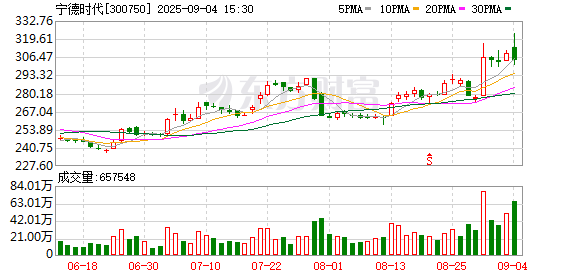
宁德时代、美的集团领衔!深市回购增持潮持续升温 传递市场积极信号
Zheng Quan Shi Bao Wang· 2025-09-04 15:23
Group 1 - Since 2025, companies and shareholders in the Shenzhen market have actively engaged in share buybacks and increases, with a total of 355 related plans launched as of September 3, including 251 buyback plans with a maximum repurchase amount of 70.773 billion yuan and 104 increase plans with a maximum increase amount of 31.29 billion yuan [2] - Leading companies such as CATL and Midea Group have taken the lead in buyback actions, demonstrating strong confidence in their future development and injecting positive sentiment into the market [2][3] - CATL has announced a new buyback plan of 4 billion to 8 billion yuan after completing a previous buyback of 2.71 billion yuan, with a total buyback amount of 2.131 billion yuan as of the end of August [3] Group 2 - Midea Group has also been active in buybacks, announcing a plan of 5 billion to 10 billion yuan, with over 70% allocated for cancellation, and has cumulatively repurchased 4.43 billion yuan as of the end of August [4] - Weichai Power and Wen's Food have also made notable progress in their buyback plans, with Weichai Power repurchasing 596 million yuan and Wen's Food repurchasing 900 million yuan as of the end of August [4][5] - In addition to buybacks, there has been a surge in increase plans, with shareholders showing confidence in long-term investment value through substantial investments [6] Group 3 - Qingdao Bank's major shareholder announced plans to increase holdings by 233 million to 291 million shares, while Shanxi Expressway's actual controller plans to increase holdings by 30 million to 60 million yuan [6] - Changan Automobile and DaDaQian have also disclosed increase plans, with Changan's management planning to increase holdings by at least 5.7 million yuan [6] - Overall, the buyback and increase actions by companies and shareholders in the Shenzhen market play a crucial role in optimizing capital structure and sending positive signals to the market, contributing to the stability and development of the capital market [7]


宁德时代、美的集团领衔!深市回购增持潮持续升温,传递市场积极信号
Zheng Quan Shi Bao Wang· 2025-09-04 15:14
Core Viewpoint - Since 2025, companies and shareholders in the Shenzhen market have actively engaged in share buybacks and increases, with a total of 355 plans launched as of September 3, including 251 buyback plans with a maximum repurchase amount of 70.773 billion yuan and 104 increase plans with a maximum increase amount of 31.29 billion yuan, reflecting strong confidence in future development from leading companies like CATL and Midea Group [1][2]. Group 1: Buyback Actions - Leading companies such as CATL and Midea Group have taken the lead in share buybacks, with CATL announcing a new buyback plan of 4 billion to 8 billion yuan after completing a previous buyback of 2.71 billion yuan, demonstrating confidence in future growth [1]. - Midea Group has also been active in buybacks, with a previously disclosed plan of 5 billion to 10 billion yuan, of which over 70% is for cancellation, and an additional plan of 1.5 billion to 3 billion yuan for employee stock ownership plans, having repurchased a total of 4.43 billion yuan by the end of August [2]. - Other companies like Weichai Power and Wens Foodstuff have also made notable buyback progress, with Weichai Power repurchasing 596 million yuan and Wens Foodstuff repurchasing 900 million yuan by the end of August [2]. Group 2: Increase Plans - In addition to buybacks, there has been a surge in increase plans, with shareholders showing confidence in long-term investment value through substantial financial commitments [3]. - Qingdao Bank's shareholder plans to increase shares by 233 million to 291 million, while Shanxi Expressway's actual controller plans to increase shares by no less than 30 million yuan and no more than 60 million yuan [3]. - Companies like Changan Automobile and DaDaQian have also disclosed increase plans, with Changan's management planning to increase shares by no less than 5.7 million yuan and DaDaQian's major shareholder planning to increase shares by 50 million to 100 million yuan [3]. Group 3: Overall Market Impact - The overall buyback and increase actions by Shenzhen companies and shareholders play a crucial role in optimizing capital structure and establishing long-term incentive mechanisms, continuously sending positive signals to the market and helping to maintain investment value and enhance shareholder returns [4].
动力电池“出海”,如何避开雷区
Zhong Guo Qi Che Bao Wang· 2025-09-04 10:28
Core Viewpoint - The Chinese power battery industry is facing dual challenges of market pressure and intellectual property barriers as it seeks to expand internationally, particularly in the context of recent competitive moves by South Korean companies and legal setbacks for domestic firms [2][8]. Group 1: Market Dynamics - The international market is becoming the next battleground for the Chinese electric vehicle supply chain, with overseas investments projected to reach $16 billion in 2024, surpassing domestic investments of $15 billion for the first time [3]. - Leading Chinese battery manufacturers, such as CATL, are accelerating their overseas expansion, with significant investments in factories across Europe and Southeast Asia [3][4]. - By mid-2025, Chinese companies are expected to occupy six of the top ten global power battery manufacturers, holding a combined market share of 68.7% [4]. Group 2: Competitive Landscape - Chinese companies are leveraging their complete supply chain and cost control advantages to compete effectively in the mid-to-low-end market, while also investing in technology research and development [5]. - Despite the rising market share of Chinese firms, established international players like LG Energy and Panasonic still maintain advantages in high-end technology and brand recognition [5]. Group 3: Challenges in International Expansion - Chinese battery companies face significant policy barriers and intellectual property risks when entering international markets, particularly in the U.S. and Europe [8][9]. - The U.S. has implemented restrictive policies that limit the participation of Chinese suppliers in its market, while European policies are more cautious, leading to slower expansion for Chinese firms [8][9]. - Legal challenges, such as the patent dispute involving XINWANDA and LG Energy, highlight the vulnerabilities of Chinese companies in navigating international intellectual property laws [8][9]. Group 4: Strategic Recommendations - To overcome these challenges, Chinese battery companies need to seek national support to address discriminatory policies and create a fair competitive environment [11]. - Companies should focus on markets with favorable policies, such as Southeast Asia and countries involved in the Belt and Road Initiative, to build operational experience and expand their presence [12]. - Continuous investment in technological innovation, particularly in next-generation technologies like solid-state batteries, is essential for maintaining a competitive edge and achieving a transition from "product export" to "technology export" [13].
沪指跌近1%,科创50跌超2%,AI硬件股集体下跌、寒武纪跌超7%,国债上涨,商品下跌
Hua Er Jie Jian Wen· 2025-09-04 02:01
Market Overview - A-shares experienced a downward trend with all three major indices declining, the Shanghai Composite Index falling below 3800 points, and the ChiNext Index dropping over 1% after previously rising more than 1.5% [1] - The Hong Kong market also saw fluctuations, with the Hang Seng Index and Hang Seng Tech Index both turning negative [2][3] - In the bond market, government bond futures continued to rise, with the 30-year main contract increasing by 0.3% [1][4] Sector Performance - The new energy industry chain, including power batteries, lithium batteries, and energy storage, remained active, while AI hardware stocks such as CPO and GPU collectively declined [1][10] - Domestic commodity futures continued their downward trend, with coking coal dropping nearly 3% and other commodities like aluminum and glass also experiencing declines [1][5] Notable Stocks - In the AI hardware sector, stocks like Zhongji Xuchuang, Tianfu Communication, and Xinyi Sheng all fell over 10% [10][11] - Conversely, in the power battery sector, stocks such as Tianhong Lithium Battery surged, with a notable increase of 30% [10][11] - Solid-state battery concepts saw significant gains, with stocks like Dongfang Zirconium and Tianji Co. both hitting the daily limit [10][11] Bond Market Activity - Government bond futures opened higher across the board, with the 30-year main contract rising by 0.36% [12][13] - The central bank conducted a reverse repurchase operation of 212.6 billion yuan at a fixed rate, with a net withdrawal of 203.5 billion yuan for the day [13]

西部证券晨会纪要-20250904
Western Securities· 2025-09-04 01:22
Macro Insights - The report suggests that the stock and bond markets are likely to gradually "decouple," with the market pricing in profit recovery and capital inflow expectations [1][7] - There is a reallocation logic in assets due to anticipated Fed rate cuts, leading to a weaker dollar cycle and global capital reallocation [1][7] - Short-term sentiment has not reached extreme levels, but there is a focus on style rebalancing driven by micro trading congestion, with narratives shifting towards consumption, non-ferrous metals, and innovative industries [1][8] Defense and Aerospace - The report on Xirui (2507.HK) indicates that the company is gradually expanding its production capacity and service network, with expected net profits of $170 million, $210 million, and $260 million for 2025, 2026, and 2027 respectively, corresponding to PE ratios of 14.0, 11.2, and 9.2 [2][10] - The demand for private jets is increasing, driven by a growing high-net-worth population and improved flight infrastructure, benefiting leading companies like Xirui [9] Electronics - Shengke Communication (688702.SZ) is expected to achieve revenues of 1.353 billion, 1.776 billion, and 2.195 billion yuan from 2025 to 2027, with year-on-year growth rates of 25.1%, 31.3%, and 23.6% respectively, maintaining a "buy" rating [3][13] - The company is focusing on high-end switch chip products to meet the demands of large-scale data centers and cloud services [12] Computer Industry - Ruijun Power (301236.SZ) is projected to achieve revenues of 365 billion, 424 billion, and 493 billion yuan from 2025 to 2027, with net profits of 3.84 billion, 5.18 billion, and 7.81 billion yuan respectively, maintaining a "buy" rating [4][16] - The company is deepening its soft-hard integration strategy, with significant growth in revenue from computing products and smart electronics [15][17] Power Equipment - Guoxuan High-Tech (002074.SZ) reported a revenue of 19.394 billion yuan for the first half of 2025, a year-on-year increase of 15.48%, with net profits of 367 million yuan, up 35.22% [22][24] - The company is expanding its international presence and has successfully launched its first experimental line for solid-state batteries, enhancing its competitive edge [24] Automotive - Li Auto (02015.HK) achieved a revenue of 30.25 billion yuan in Q2 2025, with a net profit of 1.1 billion yuan, maintaining a stable gross margin of 20.1% [30][32] - The company is expanding its sales and service network, with plans to increase the number of supercharging stations significantly [31][32] - The report on Seris (601127.SH) indicates a revenue of 62.402 billion yuan for the first half of 2025, with a net profit growth of 81.03%, driven by strong sales of its high-end models [38][39] Tire Manufacturing - Linglong Tire (601966.SH) reported a revenue of 11.812 billion yuan for the first half of 2025, a year-on-year increase of 13.80%, despite a decline in net profit [41][42] - The company is expanding its global footprint with a new production base in Brazil, aiming to enhance its international competitiveness [42][43]




靠补贴来“补血”,国轩高科电池毛利率10年大降70%
阿尔法工场研究院· 2025-09-04 00:06
Core Viewpoint - The core issue facing Guoxuan High-Tech is the continuous decline in the gross margin of its core products, which is more severe than its reliance on government subsidies for profitability [4][12]. Group 1: Company Overview - Guoxuan High-Tech, established in 2006, transitioned from real estate to become a leading player in the lithium iron phosphate battery sector, listing on the A-share market in 2015 [8]. - The company has successfully established itself in both the power battery and energy storage sectors, ranking fourth in domestic power battery installation market share at 5.18% as of the first half of 2025 [11]. - Revenue has shown rapid growth, surpassing 100 billion, 200 billion, and 300 billion yuan from 2021 to 2023, with a revenue of 193.94 billion yuan in the first half of 2025, reflecting a year-on-year growth of 15.48% [11]. Group 2: Financial Performance - Despite revenue growth, the company's core business profitability remains weak, heavily reliant on government subsidies, with non-recurring gains significantly inflating net profits [12][16]. - From 2019 to 2022, while revenue increased, the company faced a cumulative loss of over 1.4 billion yuan in non-recurring net profits, with the core business contributing less than 20% to overall profitability [14][16]. - In the first half of 2025, the company reported a net profit of 312 million yuan, with only 73 million yuan from recurring operations, indicating a heavy reliance on non-recurring gains, particularly government subsidies amounting to 400 million yuan [16]. Group 3: Margin Decline - The gross margin of Guoxuan High-Tech's power batteries has plummeted from 48.17% in 2016 to 14.24% in the first half of 2025, a decline of over 70% [20]. - The overall gross margin has also decreased from 47% to 16.42%, with the company consistently setting new historical lows in margins [20]. - The decline in margins is attributed to a misstep in technology strategy, where the company failed to pivot to higher energy density batteries in time, losing market share and profitability [21]. Group 4: Stock Performance and Future Prospects - Guoxuan High-Tech's stock price surged by 120% over five months, reaching a market capitalization of 72.6 billion yuan, with a dynamic P/E ratio nearing 100 [22]. - The introduction of the solid-state battery technology has generated market enthusiasm, but the company faces significant challenges in cost control and achieving commercial viability [25][26]. - The optimism surrounding solid-state batteries may not be sufficient to resolve the company's underlying profitability issues unless it can reduce its dependency on subsidies and enhance its core business capabilities [28].