
零食

Search documents
再冲港股,三只松鼠能否重讲“宏大叙事”?
3 6 Ke· 2025-06-11 10:23
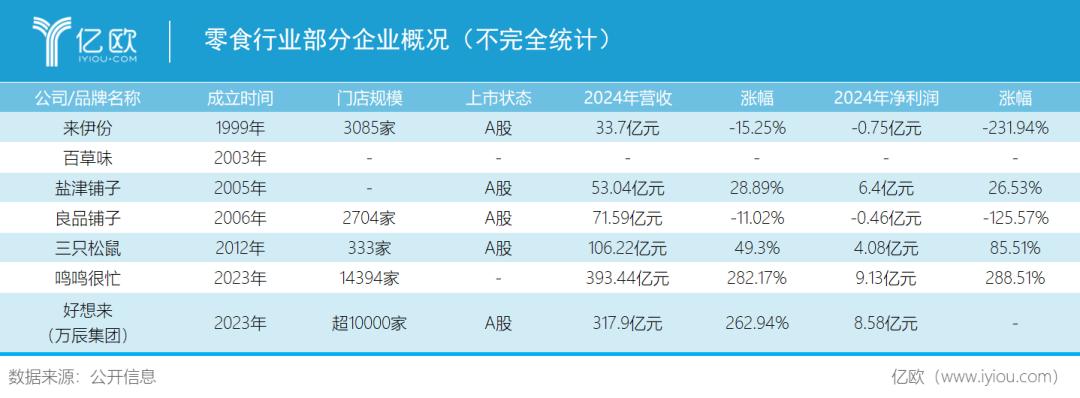
Core Viewpoint - The article highlights the resurgence of the snack industry, particularly focusing on companies like Three Squirrels, which has successfully navigated challenges and achieved significant revenue growth, while traditional consumer brands struggle with stagnation [1][2]. Company Performance - Three Squirrels reported a revenue of 10.622 billion yuan in 2024, marking a 49.3% year-on-year increase, and a net profit of 408 million yuan, up 85.51% [1][2]. - The company aims to achieve a dual listing (A+H) on the stock market, potentially becoming the first in the industry to do so [2]. - After a period of decline, Three Squirrels has rebounded, with a strategic focus on supply chain efficiency and new sales channels, particularly through social media platforms like WeChat [10][11]. Industry Trends - The snack industry is experiencing a bifurcation, with some companies like Three Squirrels and Mingming Hen Mang showing significant growth, while others like Liangpinpuzi and Laiyifen face substantial declines [14][17]. - The competitive landscape is shifting towards companies that prioritize supply chain efficiency, digital operations, and innovative marketing strategies [17][19]. - The global snack market is projected to reach $835.8 billion by the end of 2033, with a compound annual growth rate of 5.1% over the next decade, prompting companies to explore international markets [18]. Strategic Initiatives - Three Squirrels has implemented a "high-end cost-performance" strategy to enhance competitiveness and has successfully leveraged new traffic platforms for growth [10][11]. - The company has expanded its product offerings beyond nuts to include coffee, beverages, baked goods, and pet food, reflecting a broader market strategy [18]. - The industry is witnessing a trend towards digitalization, with companies like Mingming Hen Mang leading in digital management capabilities, enhancing their operational efficiency [16].


玛氏全球媒介业务重磅更换:阳狮集团接棒,WPP再失一城
Jing Ji Guan Cha Bao· 2025-06-11 08:58
Core Insights - Mars has awarded its global media agency rights to Publicis Groupe, marking a significant shift in the advertising agency landscape and representing WPP's third major client loss in 2025 after Coca-Cola and Paramount [1][6][9] Group 1: Media Agency Transition - Publicis Groupe will establish a dedicated team named "OneMars" to oversee the global communication ecosystem for Mars, which includes media, production, e-commerce, social paid, and KOL marketing [1][2] - The media agency transition follows a competitive pitch that lasted nearly six months, involving major players like Publicis, Omnicom, and WPP, with Publicis emerging victorious [1][2][3] - Mars' previous media business was managed by WPP's EssenceMediacom, which had a four-year contract valued at $1.7 billion [3] Group 2: Strategic Context - The global pitch was initiated after Mars announced its acquisition of Kellanova for $35.9 billion in August 2024, significantly expanding its snack product portfolio [2][3] - The aim of the pitch was to integrate marketing resources, enhance communication efficiency, and create a unified global communication system, particularly for Mars' snack and pet food segments [3][6] Group 3: Implications for WPP - WPP has faced a series of client losses, including Coca-Cola's North American media account worth $700 million and Paramount's media business, which ended a 20-year partnership without a formal pitch [6][9] - WPP's CEO Mark Read is set to step down in December 2025 amid ongoing performance challenges, with a 5% year-over-year revenue decline reported in Q1 2025 [6] - The loss of Mars signifies a broader industry shift towards integrated and experience-driven communication strategies, challenging WPP's current restructuring efforts [6][7][8]
两次品类重做冲击百亿!100位企业家走进卫龙,学到了什么?
Sou Hu Cai Jing· 2025-06-11 00:36
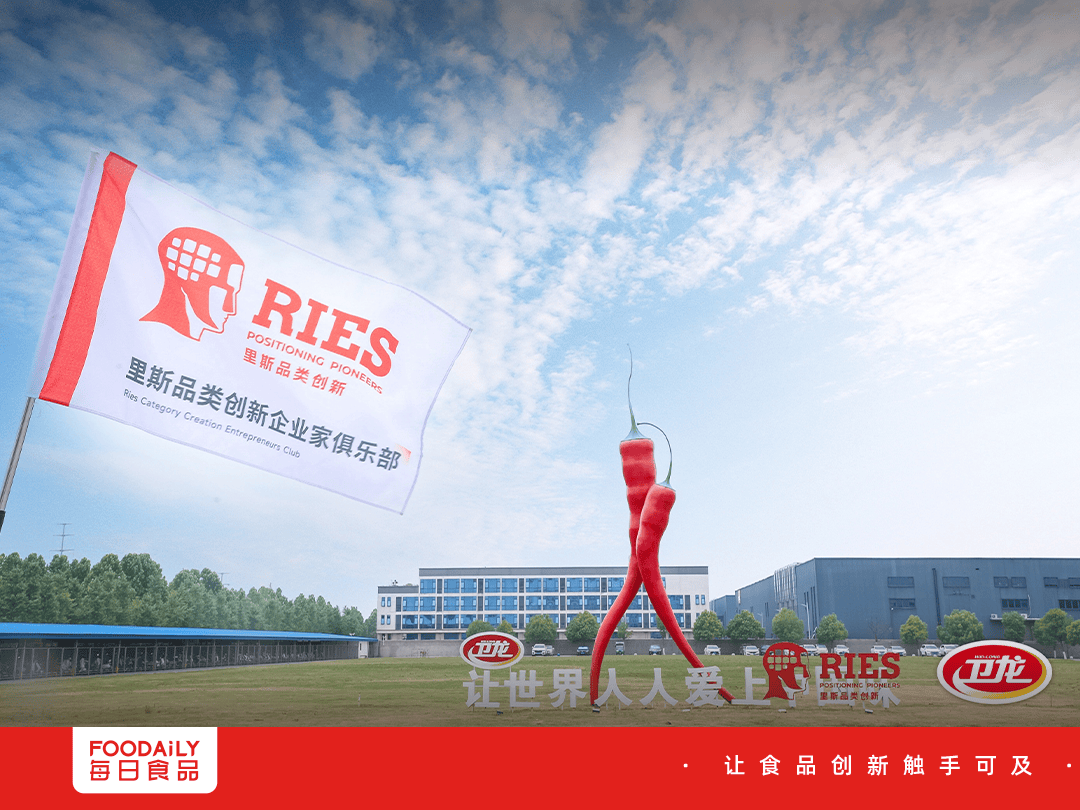
Core Insights - The food and beverage industry is experiencing intense competition, leading to stagnation or negative growth in several segments, yet Wei Long has achieved significant growth through its core products, spicy strips and konjac snacks [2][4] - The event hosted by the Riss Category Innovation Entrepreneur Club attracted over 100 industry leaders to explore how Wei Long has successfully navigated the market and achieved a billion-scale business through category innovation [2] Group 1: Industry Challenges and Wei Long's Strategy - The industry is facing extreme competition, with companies struggling to find growth as channels and content become saturated [4] - Wei Long has differentiated itself by not only dominating the spicy strip category but also strategically positioning itself in the health-oriented konjac category, leading to a 59.1% year-on-year revenue increase in konjac products, reaching 3.371 billion yuan [4][8] - The company has established a dual growth model with both spicy strips and konjac snacks driving revenue, showcasing a successful second growth curve [4][8] Group 2: Category Innovation and Market Positioning - Wei Long's success is attributed to its focus on category selection and mental anchoring, moving beyond mere product innovation to redefine consumer perceptions [7][8] - The company has transitioned from a broad category approach to a more focused strategy, emphasizing differentiation over mere improvement of existing products [9][10] - The strategic choice of categories must align with consumer trends, as seen with konjac products that cater to health-conscious consumers, thus creating a new market segment [10][12] Group 3: Strategic Growth Paths - Riss Category Innovation outlines three strategic growth paths for brands: enhancing mental representation, expanding market reach, and creating new categories [14] - The first path, enhancing mental representation, involves becoming synonymous with a specific category, as demonstrated by Wei Long's konjac snacks [15] - The second path focuses on market expansion through new usage scenarios and sales channels, which Wei Long has achieved by broadening its consumer base [16] - The third path emphasizes category creation through innovative product positioning, which can lead to significant industry growth opportunities [21] Conclusion - The key takeaway from Wei Long's approach is that growth stems from category innovation rather than tactical improvements, urging brands to reassess their market positioning and category relevance [21]
界面·财经号优质稿件TOP20|2025年5月榜
Xin Lang Cai Jing· 2025-06-10 08:13
Group 1 - The sanitary napkin industry faces a trust crisis after issues were exposed on CCTV's 315 Gala, leading to Huang Zitao's rapid development and launch of the Duowei brand, achieving sales of 40 million in its first live stream, priced at less than 60% of traditional brands [2] - The beauty industry remains strong, with Proya surpassing Shanghai Jahwa with a revenue of 10.778 billion, marking a significant shift as the top ten companies now require a minimum revenue of 2.569 billion, and R&D investments have surged, with companies like Shiseido and Giant Bio seeing over 40% growth in R&D spending [2] - The cruise industry is attempting to recover from a price collapse in the summer of 2024, with some routes seeing price drops of 60%, leading companies like Royal Caribbean and Aida Cruises to introduce cultural crossover themes to attract customers, resulting in a record of 30,000 people entering and exiting Shanghai Port in a single day during the May Day holiday [2] Group 2 - The value of intellectual property (IP) is being reaffirmed, as Light Media's "Nezha: The Devil's Child" grossed 15 billion at the box office, with a net profit increase of 374.79% to 2.016 billion in the first quarter, despite concerns over the film industry's reliance on single IPs [3] - Consumer-facing IP commercialization is booming, with brands like Liangpinpuzi and Qiaqia collaborating over 50 times, generating 7.1 billion in revenue; the Palace Museum's dining experience has become a trend with an average spending of 500 per person, showcasing the overwhelming success of cultural IP in driving consumer behavior [3] - The traditional employment relationship is evolving, as seen in the live stream featuring Dong Mingzhu and Meng Yutong, highlighting a shift from loyalty to a more flexible employment approach among younger generations [3]
食品饮料周报(25年第23周):白酒淡季需求延续压力,啤酒、饮料进入需求旺季
Guoxin Securities· 2025-06-10 00:45
Investment Rating - The report maintains an "Outperform" rating for the food and beverage sector [5][4]. Core Views - The report highlights that the demand for high-end liquor continues to face pressure during the off-season, while beer and beverages are entering a demand peak [11][1]. - The liquor index has decreased by 0.9%, indicating ongoing short-term fundamental pressures [13]. - The report suggests three investment themes in the liquor sector: 1) Leading companies with proven risk resilience such as Kweichow Moutai, Shanxi Fenjiu, and Wuliangye; 2) Companies like Luzhou Laojiao that are showing positive feedback from digital initiatives and are undervalued; 3) Brands like Jinsiyuan and Yingjia Gongjiu that still have market share growth potential [12][13]. Summary by Sections 1. Liquor - The report notes that high-end liquor prices have slightly declined, with Kweichow Moutai's stock buyback and international product launches indicating a strategic shift [2][11]. - Luzhou Laojiao plans to focus on expanding its market presence and enhancing brand image [2][11]. - The report emphasizes the importance of consumer engagement and market health for liquor companies moving forward [12]. 2. Consumer Goods - The beer industry is expected to enter a peak sales phase, with potential for good performance due to low comparative bases from the previous year [14]. - The snack food sector is experiencing a trend of differentiation, with leading companies driving efficiency across the supply chain [15]. - The report recommends focusing on companies with new product launches and channel breakthroughs, such as Wei Long and Yihai International [15]. 3. Key Company Earnings Forecasts - Kweichow Moutai is projected to have an EPS of 75.28 in 2025, with a PE ratio of 20.0 [4]. - Wuliangye is expected to have an EPS of 8.44 in 2025, with a PE ratio of 14.8 [4]. - Luzhou Laojiao's forecasted EPS is 9.64 for 2025, with a PE ratio of 12.1 [4]. 4. Market Trends - The food and beverage sector saw a decline of 0.65% this week, underperforming the Shanghai Composite Index by 1.78 percentage points [20]. - The report indicates that the beverage sector is entering a peak season, with expectations for continued growth in segments like sugar-free tea and energy drinks [19].





『悦己消费』对话 『悦人消费』:如何看待细分赛道空间与投资机会?
2025-06-09 15:30
Summary of Conference Call Records Industry Overview - The conference call discusses the food and beverage industry, focusing on various segments including alcoholic beverages, dairy products, snacks, and health products. Key Points and Arguments Alcoholic Beverages - The liquor sector, particularly the baijiu segment, shows strong resilience despite price fluctuations due to alcohol bans and online activities. Leading companies maintain price stability through channel power and policy adjustments, warranting attention to marginal fundamental changes in baijiu [1][4] - Other alcoholic beverages like beer, yellow wine, and pre-mixed drinks also exhibit high gross margins, typically between 40% to 60% [5] - The market share of pre-mixed drinks, such as those from Baijiu Holdings, has increased despite fierce competition, currently reaching 80% to 90% [6] Dairy Products - The dairy industry faces challenges due to reduced demand for social visits during the pandemic, leading to a lack of consumption scenarios. An increase in dairy cow inventory has resulted in oversupply, with smaller brands capturing market share through lower prices [7] - Price wars are intensifying, with retail prices for fresh milk and yogurt declining since 2021. Major brands like Yili and Mengniu maintain high margins on premium products, but ordinary products see margins drop to 20%-30% [7] Snack Industry - The snack sector is evolving with the rise of offline snack chains and online platforms like Douyin, creating new opportunities. However, consumers are highly price-sensitive, leading to reduced willingness to pay premiums [8] - Companies with high industrial efficiency and low costs, such as Salted Fish and Three Squirrels, are gaining market share by focusing on cost-effectiveness [8][9] Health Products - The health product sector is competitive, with customers willing to pay premiums for innovative products. Brands with new formulations and strong marketing capabilities can achieve higher premiums, while traditional brands like Tongrentang face challenges due to limited innovation [12] Consumer Behavior and Pricing - Consumers exhibit a willingness to pay higher prices for premium products in both self-satisfying and social contexts. Brands in the liquor sector, such as Moutai and Wuliangye, maintain high gross and net profit margins despite market fluctuations [4] - The willingness to pay for premium products is decreasing in the snack and health sectors, prompting leading companies to adapt their strategies [11] Investment Opportunities - Investment in the liquor sector is recommended, particularly in companies like Baijiu Holdings and Kweichow Moutai, which are currently undervalued [15] - The snack sector shows high growth potential, with companies like Wei Long and Salted Fish expected to maintain strong growth rates [15][16] - In the dairy sector, companies like New Dairy and Yili are highlighted for their innovative products and expected margin improvements [16] Emerging Trends - The pet economy is rapidly growing, with significant contributions from younger generations. Companies are expanding their presence in this market through new store openings and product offerings [17] - Health and personal care products are increasingly focusing on safety and health attributes, with brands like Weigao Medical leading in market share [18] Other Important Insights - The differentiation between "self-satisfying" (悦己消费) and "social" (悦人消费) consumption is emphasized, with the former relying on emotional needs and high-frequency repurchase, while the latter depends on cultural IP and seasonal demand [14][22] - Companies are encouraged to leverage technology and consumer trends to enhance user retention and product value [22]
食品饮料周报(25年第23周):白酒淡季需求延续压力,啤酒、饮料进入需求旺季-20250609
Guoxin Securities· 2025-06-09 11:40
Investment Rating - The report maintains an "Outperform the Market" rating for the food and beverage sector [4][5]. Core Views - The report highlights that the demand for high-end liquor continues to face pressure during the off-season, while beer and beverages are entering a demand peak [2][11]. - The liquor index has decreased by 0.9%, indicating ongoing short-term fundamental pressures [13]. - The report suggests three investment themes: 1) Leading liquor companies with proven risk resilience such as Kweichow Moutai, Shanxi Fenjiu, and Wuliangye; 2) Luzhou Laojiao, which is showing signs of digital transformation and valuation recovery; 3) Companies like Jinsiyuan and Yingjia Gongjiu that have potential for market share growth [2][13]. Summary by Sections 1. Liquor - The report notes that high-end liquor prices have slightly declined, with Kweichow Moutai's stock buyback and international product launches being significant developments [2][11]. - Luzhou Laojiao plans to focus on expanding its market presence and improving brand image [2][11]. - The report emphasizes the importance of consumer engagement and channel management for liquor companies [2][11]. 2. Consumer Goods - The beer industry is expected to enter a peak sales phase, benefiting from a low base from the previous year [14][15]. - The snack food sector is experiencing a trend of differentiation, with leading companies enhancing efficiency across the supply chain [15]. - The report recommends focusing on companies with new product launches and channel breakthroughs, such as Wei Long and Yihai International [15]. 3. Key Company Earnings Forecasts - Kweichow Moutai is projected to have an EPS of 75.28 in 2025, with a PE ratio of 20.0 [4]. - Wuliangye is expected to have an EPS of 8.44 in 2025, with a PE ratio of 14.8 [4]. - Luzhou Laojiao's EPS is forecasted at 9.64 for 2025, with a PE ratio of 12.1 [4]. 4. Market Trends - The food and beverage sector saw a decline of 0.65% this week, underperforming the Shanghai Composite Index by 1.78 percentage points [20]. - The report indicates that the beverage sector is entering a peak season, with expectations for continued growth in segments like sugar-free tea and energy drinks [19].
消费还能 “生钱”?这届商家太会玩,真相竟是……
Sou Hu Cai Jing· 2025-06-09 07:50
Core Insights - The article discusses the emerging trend of "consumption appreciation," where consumers can earn rewards and benefits from their purchases, challenging the traditional notion of spending as a loss [2][4][5] Group 1: Consumer Perspective - Consumers are shifting from being seen as "big spenders" to "investors" through reward systems that allow them to earn points, cash back, and even participate in profit-sharing [7] - Some consumers report significant benefits, such as redeeming points for valuable items or cash, while others express frustration over complex point systems that may lead to increased spending [7][9] - The concept of "consumption appreciation" is reshaping consumer behavior, encouraging more engagement with brands and platforms [15] Group 2: Business Perspective - Businesses are leveraging consumption appreciation strategies to boost sales and customer loyalty, with some brands experiencing a threefold increase in sales through promotional activities [9] - However, some businesses face challenges with rising costs associated with these promotional strategies, leading to concerns about profitability [9] - Traditional industries are also adapting to this trend, implementing point redemption systems that enhance customer experience and engagement [11] Group 3: Platform Perspective - Platforms are utilizing data and financial technology to enhance consumer engagement and retention through consumption appreciation models [5][6] - While platforms benefit from increased user retention and revenue, there are complaints from users about the diminishing value of points and perceived deceptive practices [9][15] - The article highlights the need for platforms to balance user incentives with sustainable business practices to avoid backlash [13]

国泰海通大消费-新消费的空间和持续性
2025-06-09 01:42
Summary of Conference Call Records Industry Overview - The conference call discusses the new consumption sector, focusing on industries such as daily chemicals, personal care, and health products, which are entering a product upgrade cycle with strong sustainability [1][5]. Key Points and Arguments - **New Consumption Drivers**: The current wave of new consumption is driven by product renewal and innovation rather than relying on traffic purchases. Companies need stronger content marketing capabilities and market insight, making innovation a key competitive factor [1][3]. - **Market Characteristics**: The new consumption market is characterized by a shift from functional needs to emotional value needs, with traditional products being revamped to meet these new demands [4][5]. - **Market Volatility**: Recent fluctuations in the new consumption market are considered normal after significant growth phases. The current cycle is less elastic compared to the previous one, with a focus on replacing and upgrading existing products [3][6]. - **Valuation Metrics**: Most new consumption companies have a PEG ratio between 1 and 1.3, indicating they may be slightly overvalued. However, there is potential for valuation recovery as risk appetite increases [7]. - **Impact of Shareholder Actions**: Shareholder sell-offs do not necessarily indicate a peak in stock prices, as they can be influenced by various factors. As long as risk appetite remains stable and innovation cycles continue, the new consumption sector still has growth potential [8]. Industry Trends - **Sustained Innovation**: Industries such as beauty, snacks, gold and jewelry, trendy toys, and tea drinks are expected to maintain high-frequency innovation, while stable categories like daily chemicals and personal care are entering a more robust upgrade cycle [5][9]. - **Investment Recommendations**: Traditional growth companies in sectors like beverages and beer are recommended for investment due to their lower valuations and higher cost-effectiveness. Emerging growth companies like Ruoyuchen and Jingbo Biological are also highlighted for their innovative capabilities [2][10]. Potential Investment Opportunities - **Specific Companies**: In the cosmetics sector, companies like Juzhi Biological and Runben Co. are noted for their stability and growth potential. In the food and beverage sector, companies such as Yanjinpuzi and Weilong Food are performing well, with others like Bailong Chuangyuan and Three Squirrels also identified as promising investments [11]. Conclusion - The new consumption sector may experience a consolidation phase, but this does not imply an end to growth. Traditional growth companies may outperform during this period, suggesting a need for dynamic adjustments in investment strategies to optimize returns [12].

大摩闭门会-中国消费动态:“新旧、快慢” 有轮转吗?
2025-06-09 01:42
Summary of Conference Call Records Industry Overview - The overall consumer market in China is weak, with significant deflationary pressures. The 618 promotional event highlighted insufficient demand, and the growth rate for the Dragon Boat Festival did not show significant improvement, with per capita consumption down approximately 12% compared to pre-pandemic levels [1][4]. Key Insights and Arguments - **Stock Selection Strategy**: The strategy focuses on companies in distress reversal, emerging high-growth sectors, and those with reasonable valuations and excellent operations. Recommended stocks include dairy companies (Mengniu, Yili), jewelry (Chow Tai Fook), emerging consumption (Pop Mart, Giant Bio), sports brands (Yum China, Anta), and Bosideng [1][6]. - **Food Sector Performance**: The snack food category has seen significant revenue growth, benefiting from new channels and health awareness. For instance, Wei Long's konjac products have exceeded expectations [1][7]. - **Sports Sector Sales**: Sales in the sports sector were affected in April but improved in May due to promotional activities, although discounts deepened. Brands like Li Ning and Anta increased discounts, leading to higher inventory levels and decreased sales [1][11]. - **Lululemon's Growth**: Lululemon's China operations maintained over 30% growth, while high-end niche brands are growing rapidly, reflecting changes in consumer lifestyles [1][12]. - **Airline Industry Outlook**: The airline industry is expected to be one of the first to emerge from the deflation trap due to supply-side constraints and improved pricing power. The industry has seen a 5% year-on-year increase in ticket prices, indicating effective price control [1][20]. Additional Important Content - **Consumer Behavior**: The disparity between new and traditional consumption sectors is evident, with new consumption stocks in Hong Kong rising nearly 150% year-to-date, while traditional consumer stocks have only increased about 9% [2]. - **Market Dynamics**: The overall consumer market remains relatively weak, with no significant improvement observed. The increase in discount rates across various sectors indicates a need for price incentives to stimulate demand [3]. - **Future Expectations**: The next few months may see continued imbalance in the consumer market, with traditional sectors like liquor and beer remaining weak, while beverages and home appliances may perform better due to seasonal effects and government subsidies [5]. - **Jewelry Sector Trends**: The jewelry sector, particularly brands like Chow Tai Fook, is focusing on traditional gold craftsmanship, which has led to improved profit margins and sales performance [17]. - **Export Challenges**: Export companies, especially in textiles and footwear, face high uncertainty and volatility due to tariff fluctuations and low order visibility, which may impact overall economic conditions [24][25]. This summary encapsulates the key points from the conference call records, highlighting the current state of various sectors within the consumer market and the strategic recommendations for investment.