
新兴消费

Search documents
2025年我国数字经济占GDP比重约35%
Xin Lang Cai Jing· 2026-01-21 10:25
Core Viewpoint - The Chinese government aims to achieve a strong start for the "14th Five-Year Plan," with the digital economy's added value expected to reach 49 trillion yuan by 2025, accounting for approximately 35% of GDP [1][8]. Group 1: Economic Structure and Development - By 2026, China's economic structure is projected to continue improving, with new development drivers emerging and overall growth trends remaining positive [3][11]. - The new quality productivity is expected to develop steadily, releasing significant growth potential across consumption, investment, technology, industry, urban-rural, and regional areas [3][11]. Group 2: New Economic Growth Points - New technologies, products, and scenarios are gaining momentum, with sectors like new energy, new materials, aerospace, quantum technology, and biomanufacturing poised for growth [5][13]. - The installed capacity of new energy storage has surpassed 100 million kilowatts, accounting for over 40% of the global total [5][13]. - The "Artificial Intelligence +" initiative is enhancing China's vast scenario advantages, driving explosive growth in high-end manufacturing, emerging consumption, and new business models [5][13]. Group 3: Integration of Innovation and Talent - China possesses a complete industrial system and a massive market of over 1.4 billion people, with more than 5 million graduates in science, technology, engineering, and mathematics each year [5][13]. - The digital economy, including digital consumption and trade, is integrating innovation, industry, and talent, creating a clustered development environment [5][13]. Group 4: Innovation Clusters and Regional Development - China has 24 of the world's top 100 innovation clusters, ranking first globally for three consecutive years, with the "Shenzhen-Hong Kong-Guangzhou" cluster now the world's leading cluster [6][14]. - The government is establishing three international science and technology innovation centers in Beijing, Shanghai, and the Guangdong-Hong Kong-Macau Greater Bay Area, supported by newly set up regional funds to enhance innovation [6][14]. - The focus is on transforming potential into new momentum and technological flow into economic growth, ensuring a successful start to the "14th Five-Year Plan" [6][14].

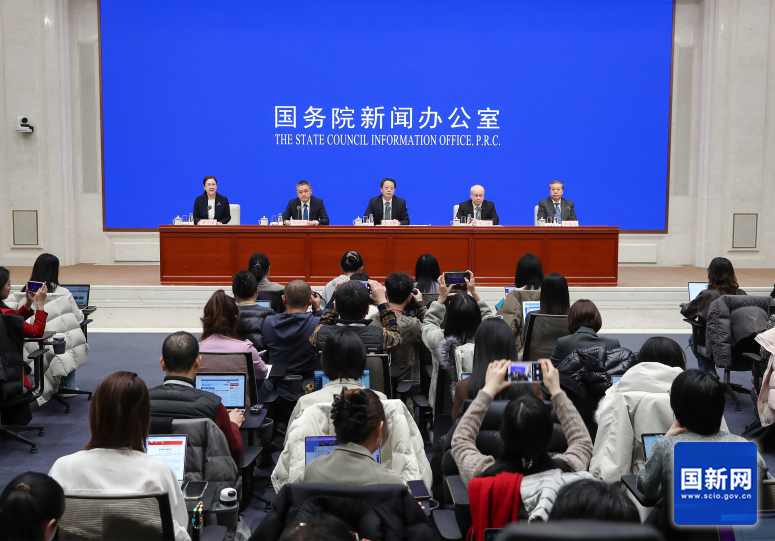
多措并举推动经济高质量发展再上新台阶
Jin Rong Shi Bao· 2026-01-21 02:09
Group 1 - The core viewpoint of the news is the comprehensive deployment of economic development strategies by the National Development and Reform Commission (NDRC) to promote high-quality economic growth and address issues of insufficient demand and supply in China [1][4][6] - The NDRC plans to implement a series of new policies, including advancing significant high-tech industry projects, establishing a national-level merger fund, and formulating a strategy for expanding domestic demand from 2026 to 2030 [1][2][3] - The NDRC emphasizes the importance of integrating investment in physical and human capital to enhance overall investment efficiency and stimulate domestic demand [5][6] Group 2 - The NDRC highlights the need for structural policies to support consumer spending and improve living standards, including the continuation of the "old for new" consumption policy and the implementation of a plan to increase urban and rural residents' income [4][5] - The NDRC aims to strengthen the innovation ecosystem by fostering the integration of innovation chains, industry chains, and talent chains, leveraging China's large market and talent pool to drive new productivity [2][3] - The NDRC is committed to maintaining stable prices for essential goods while promoting a moderate recovery in overall prices, with the Consumer Price Index (CPI) showing signs of recovery [6][7]
权威数读丨这三个维度,释放2026年中国经济发展潜能
Xin Hua Wang· 2026-01-20 13:22
Group 1 - The core viewpoint is that China's economy is expected to reach a total volume of 140 trillion yuan by 2025, maintaining a growth rate of 5%, which positions it among the leading global economies [1] - In 2026, there is a focus on fully unleashing development potential to create new economic momentum and growth, setting a strong foundation for the "14th Five-Year Plan" [1] Group 2 - New economic growth points are emerging, particularly in sectors such as new energy, new materials, aerospace, quantum technology, biomanufacturing, and intelligent wearable technology [2] - The installed capacity of new-type energy storage has surpassed 100 million kilowatts, accounting for over 40% of the global total [2] - Artificial intelligence is projected to drive explosive growth in high-end manufacturing, emerging consumption, and new business models [2] - The added value of high-tech manufacturing is expected to exceed 17% of the industrial output above designated size [2] Group 3 - China possesses a complete industrial system and a vast market of over 1.4 billion people, along with the world's largest and most diverse talent resources [4] - There is a full-chain advantage in pushing innovation results from "shelf" to "market" [4] - By 2025, the added value of the digital economy is anticipated to reach 49 trillion yuan, accounting for approximately 35% of GDP [4] - The integration of digital consumption, digital trade, and micro-short dramas is expected to foster concentrated development in innovation, industry, and talent [4]

广发证券纺织服饰行业:纺织服装与轻工行业数据周报1.12-20260118
GF SECURITIES· 2026-01-18 08:06
Core Insights - The textile and apparel industry is experiencing a positive outlook due to rising wool prices and a tight supply-demand balance, with recommendations to focus on leading companies exploring new product lines for growth [5][6] - The report highlights the potential of companies like Li Ning, which is expected to benefit from its partnership with the Chinese Olympic Committee for the 2025-2028 period, leveraging the upcoming Los Angeles Olympics to enhance brand and performance [5] - The report also emphasizes the growth opportunities in the home textile sector, particularly for companies like Luolai Life and Mercury Home Textile, which are capitalizing on the rising sleep economy [5] Textile and Apparel Industry Review - During the period from January 10 to January 16, the Shanghai Composite Index fell by 0.45%, while the ChiNext Index rose by 1.29%. The textile and apparel sector (SW) decreased by 0.38%, ranking 22nd among 31 primary industries [13][15] - The report indicates that the latest PE (TTM) for the textile and apparel industry is 20.75X, with historical highs and lows of 57.80X and 14.44X, respectively [15][16] Key Company Valuation and Financial Analysis - Companies such as Mercury Home Textile (closing price: 20.25 CNY, target price: 23.08 CNY), and Nanshan Zhishang (closing price: 18.54 CNY, target price: 27.61 CNY) are highlighted for their strong growth potential [6] - The report provides detailed financial metrics for various companies, including EPS, PE ratios, and ROE, indicating a generally favorable investment outlook across the sector [6] Light Industry Manufacturing Review - The light industry sector is showing signs of recovery, with improved sales driven by real estate policy changes and consumer upgrades [5] - The report notes that the paper industry is expected to benefit from reduced production by leading companies, leading to a rebound in paper prices [5] Data Tracking in Textile and Apparel - The report tracks significant price movements in key materials, such as PA66 and PA6, with PA66 priced at 14,833 CNY/ton, reflecting a year-on-year decrease of 13.64% [5] - It also highlights the decline in textile exports from China, with a 4.10% drop in textile export value and a 10.10% drop in apparel export value in December 2025 [5]
全球格局重构与“十五五”战略新机遇 - 2026年资本市场年度策略展望
2025-12-08 00:41
Summary of Key Points from Conference Call Records Industry and Company Overview - The conference call discusses the global economic landscape, focusing on the implications of U.S. monetary policy, U.S.-China relations, and the technology sector's development in 2026 [1][2][4]. Core Insights and Arguments U.S. Monetary Policy - The Federal Reserve is expected to maintain a passive easing policy, with potential impacts on liquidity influenced by Trump's announcement of the next Fed chair, which could benefit tech stocks but with limited sustainability [1][2]. - A key focus is on the timing of the Fed's shift to active easing, which historically has been favorable for U.S. equities [3]. U.S.-China Relations - 2026 is highlighted as a pivotal year for U.S.-China relations, with significant events such as Trump's potential visit to China and the need for a trade agreement by September to gain support from key voter demographics [5][6]. - The Chinese government is likely to implement policies to guide long-term capital into the market and support technological development in response to U.S. competition [4]. Domestic Policy Directions - China's domestic policies will become more proactive in addressing international competition, focusing on developing new productive forces and reducing reliance on high technology [7][11]. - The emphasis will be on enhancing the value of domestic industries and addressing the challenges posed by U.S. policies [11][12]. Investment Opportunities - Key investment opportunities in 2026 include sectors related to AI applications, AR technology, humanoid robotics, consumer electronics, and innovative pharmaceuticals [13]. - The focus on new energy supply chains, including critical materials like lithium and silicon, is emphasized as a strategic area for investment [12][37]. Risks and Market Dynamics - The Nasdaq's current valuation is noted to be significantly lower than during the Obama administration, despite higher ROE, indicating potential for recovery as the Fed shifts to active easing [3]. - The technology sector is experiencing volatility not primarily due to AI issues but rather due to market share shifts among companies, which could lead to increased investment and technological advancement in the long term [3]. Other Important but Potentially Overlooked Content Economic Indicators - The Shanghai Composite Index and the RMB/USD exchange rate are identified as critical indicators for monitoring China's economic health and policy effectiveness [8]. - The anticipated annual increase in the Shanghai Composite Index is projected to be between 10% and 20%, with a focus on maintaining a low volatility environment [8]. Housing Market Outlook - The housing market is expected to remain in a correction phase, with rental yields significantly lower than mortgage rates, making renting more attractive than buying [16]. Consumer and Fiscal Policies - China's consumer and fiscal policies are designed to ensure social stability amid geopolitical tensions, with limited scope for aggressive consumer spending initiatives [14][15]. Structural Changes in the Economy - The ongoing structural changes in China's economy, particularly in the real estate sector, are leading to a decline in disposable income growth and consumer sentiment, impacting overall economic stability [23]. Strategic Focus Areas - The conference highlights the importance of focusing on industries that can enhance China's competitive edge in global markets, particularly in technology and energy sectors [27][34]. This summary encapsulates the key points discussed in the conference call, providing insights into the strategic directions and investment opportunities within the context of the evolving global economic landscape.
长城基金曲少杰:继续看好科技互联网行业与中国新消费龙头
Xin Lang Ji Jin· 2025-10-24 07:56
Group 1 - Recent market fluctuations have been influenced by a combination of "market wait-and-see sentiment and external news catalysts," leading to a pullback in the technology sector, with funds shifting from high-performing tech growth stocks to defensive sectors like banking and coal [1] - The Deputy General Manager of the International Business Department at Great Wall Fund, Qu Shaojie, remains optimistic about investment opportunities in the technology internet sector, particularly the application of artificial intelligence in China [1] - Qu Shaojie highlights that China's past successes in sectors like new energy vehicles, online shopping, short videos, and electronic payments demonstrate the country's strong innovation capabilities and willingness to adopt new technologies, suggesting that AI applications may follow a similar trajectory [1] Group 2 - Qu Shaojie also expresses confidence in certain leading companies within China's emerging consumer sector, which includes cultural consumption forms such as the "grain economy," figurines, and IP consumption [1] - Some outstanding domestic IP products have gained popularity overseas, reflecting China's cultural export and soft power, while also providing significant growth opportunities for related companies due to the overseas expansion logic [1] - The focus will continue on China's emerging consumer industry, which is expected to show robust performance and growth potential [1]
逾六成私募将重仓过节
证券时报· 2025-09-30 04:35
Core Viewpoint - The article discusses the positioning of private equity funds ahead of the National Day holiday, indicating a general optimism about the market's performance post-holiday, with a significant majority opting for high exposure levels [2][5][6]. Group 1: Private Equity Fund Positioning - Over 65% of private equity funds are choosing to hold heavy or full positions (over 70% exposure) during the holiday, believing that external market disturbances will be limited and that domestic fundamentals and policy environments provide a solid safety margin [5][6]. - 17.31% of private equity funds are adopting a moderately heavy position (50% to 70% exposure), citing the presence of uncertainties during the holiday but still recognizing structural opportunities in individual stocks [5]. - Only 5.77% of private equity funds are opting for light positions (less than 30% exposure), reflecting a cautious stance due to significant market gains prior to the holiday and potential for adjustments post-holiday [5][6]. Group 2: Market Outlook Post-Holiday - 70.19% of private equity funds are optimistic about the A-share market's performance after the holiday, viewing pre-holiday market fluctuations as a consolidation phase, with expectations for gradual recovery driven by policy and capital [8][12]. - 62.50% of private equity funds anticipate a balanced market style post-holiday, with rotations among technology growth, value blue chips, and high-quality stocks [8][9]. - The focus on technology growth remains strong, with 59.62% of private equity funds favoring sectors such as AI, semiconductors, and innovative pharmaceuticals, which are seen as key drivers for future economic transformation [9][12]. Group 3: Investment Strategies and Themes - The article highlights a consensus among private equity funds that the investment focus will remain on technology growth, with 23.08% firmly optimistic about sectors like AI and semiconductors continuing to perform well [9][10]. - 21.15% of private equity funds are looking at the valuation recovery of the new energy and real estate sectors, expecting these low-valuation areas to provide rebound opportunities as industry policies clarify [9][10]. - The article also notes that 14.42% of private equity funds foresee a "high-low switch" in the market, where previously lagging traditional industries and high-dividend blue chips may experience a resurgence [9].

“现在是很好的投资机会”
Zheng Quan Shi Bao· 2025-08-21 18:31
Group 1 - The interest of South Korean residents in the Chinese stock market has significantly increased this year, with various professionals, including university professors and financial workers, showing strong interest [1] - A veteran investor, Yuan Guodong, has shifted focus from the Korean market to overseas markets, particularly Chinese stocks listed in Hong Kong, due to perceived undervaluation and growth potential in the Chinese market [1] - Yuan's investment strategy emphasizes three sectors: the new energy and electric vehicle industry, technology and consumer electronics, and emerging consumption and healthcare, highlighting companies like BYD, CATL, and Xiaomi [1] Group 2 - Yuan has achieved a return of approximately 15%-20% on his Chinese stock investments, outperforming the average returns of local Korean stocks [2] - The long-term outlook for the Chinese stock market is optimistic, driven by the global competitiveness of companies in new energy, AI, and consumer sectors, with many high-quality Chinese firms being undervalued compared to their US counterparts [2] - Yuan plans to increase the allocation of Chinese assets in his portfolio from around 20% to 30%-35%, aiming for a balanced core asset allocation alongside US stocks [2]





恒生消费ETF(513970)冲击4连涨!泡泡玛特市值突破4000亿港元
Xin Lang Cai Jing· 2025-08-20 06:27
Group 1 - The Hang Seng Consumption Index (HSCGSI) increased by 0.97%, with significant gains from stocks such as Pop Mart (09992) up 11.47% and Lao Pu Gold (06181) up 8.14% [1] - The Hang Seng Consumption ETF (513970) experienced a 1.08% rise, marking its fourth consecutive increase, with an active trading volume of 1.81 billion yuan [1] - Pop Mart's stock price surged to 305 HKD per share, reaching a market capitalization of over 400 billion HKD, driven by a strong financial performance with a revenue of 13.88 billion yuan, up 204.4%, and a net profit of 4.71 billion yuan, up 362.8% [1] Group 2 - Debon Securities highlighted that supply-side innovations in the consumer sector are creating demand, suggesting a more sustainable growth compared to traditional demand-side policies [2] - Shanghai Securities noted that the rise of domestic IP and the Z-generation's self-indulgent consumption are driving demand growth, with a shift from Japanese-led industries to domestic competition [2] - The Hang Seng Consumption ETF tracks an index that excludes liquor stocks, featuring both traditional and emerging consumer leaders, with Pop Mart being the largest component at 11.22% weight [2]
瑞士百达:美股部分行业估值仍具向上空间 看好人工智能、国防及银行
智通财经网· 2025-08-13 07:57
Group 1 - The core viewpoint is that U.S. stock valuations currently reflect fundamental factors but have not reached excessively high levels, with certain stocks still having upward revaluation potential [1] - The "Terrific 20" stocks are driving the current U.S. market valuation, following the "Magnificent Seven," while many sectors, such as banking, are not overvalued [1] - In the second half of the year, micro factors are deemed more important than macro factors, and stock selection should be based on industry and investment themes [1] Group 2 - In the Asian market, Chinese stocks in robotics, electric vehicles, and emerging consumer sectors are viewed positively, with additional opportunities in the tech supply chains of Japan and South Korea [1] - There is an expectation that Japanese stocks will perform well in the second half of the year, following the positive trend of South Korean stocks [1] - Investment opportunities in AI are highlighted, with the U.S. excelling in R&D from scratch, while Chinese companies outperform in technology applications [1] Group 3 - Some institutional investors are returning to risk markets after previously withdrawing due to trade tensions, while retail investors remain cautious [2] - As the U.S. lowers interest rates, leading to reduced returns on fixed deposits and money market funds, it is anticipated that funds will flow back into risk markets in pursuit of higher returns [2]