半导体

Search documents
英特尔先进封装,叫板台积电
半导体芯闻· 2026-03-17 10:45
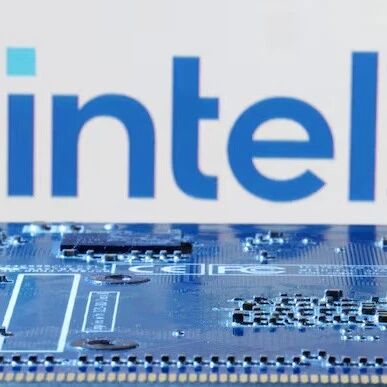
Core Viewpoint - Intel is launching advanced packaging technology for large-size AI semiconductor chips to strengthen its foundry competitiveness and challenge the market leaders TSMC and Samsung [1][2]. Group 1: Packaging Technology - Intel plans to upgrade its AI semiconductor chip packaging technology significantly this year, focusing on a "large-size" packaging solution of 120×120 mm, which can accommodate more components compared to the current standard of 100×100 mm [1][2]. - The new 120×120 mm packaging will allow for at least 12 HBM chips, while the 100×100 mm packaging typically supports only 8 HBM chips [2]. - Intel aims to introduce a 120×180 mm packaging by 2028, targeting the capacity to house up to 24 HBM chips, with a long-term vision of expanding packaging sizes to 250×250 mm due to the increasing demand for AI chips [2]. Group 2: Technology and Strategy - Intel's unique EMIB (Embedded Multi-Die Interconnect Bridge) packaging technology is central to enhancing its foundry competitiveness, enabling interconnection between different chips within the package [2]. - The company has optimized the EMIB-T architecture for the upcoming HBM4 memory technology, focusing on providing stable power supply for AI chips [2]. - Intel's strategy involves diversifying packaging sizes and technologies to capture customer demand, moving from primarily using advanced technology for its own chips to opening up to external clients [3].


韩国巨头警告:内存将缺货至2030年!
半导体芯闻· 2026-03-17 10:45
Core Viewpoint - The global shortage of memory chips is expected to persist for 4 to 5 years due to long-term structural limitations in semiconductor production, as stated by the chairman of SK Group [1]. Group 1: Industry Insights - SK Hynix's CEO, Choi Tae-won, indicated that despite expansion efforts by leading companies like SK Hynix, full capacity to meet demand may not be achieved until around 2030 [1]. - The supply of basic wafers for chip manufacturing is currently over 20% short of demand across the industry [1]. - The memory chip supply is dominated by SK Hynix, Samsung Electronics, and Micron Technology, which have shifted production capacity towards specialized memory for AI acceleration chips, resulting in a shortage of traditional storage chips [1]. Group 2: Market Impact - The ongoing shortage is impacting corporate profits, disrupting development plans, and increasing prices across various products, including laptops, smartphones, automobiles, and data centers [1]. - Market sentiment suggests that the shortage will worsen before it improves [1]. - SK Hynix is preparing to announce measures to stabilize prices, although specific details have not been disclosed [1]. Group 3: Stock Market Reactions - On Tuesday, SK Hynix's stock price rose by as much as 3.7% in the Seoul stock market [2]. - Samsung Electronics' stock also increased following the announcement that it would utilize its 4nm process to create AI inference chips based on the Groq architecture [2].



满仓率创新高
第一财经· 2026-03-17 10:39
Market Overview - The three major A-share indices collectively declined, with the Shanghai Composite Index briefly supported around 4050 points but ultimately closing at 4049.91 points, breaking below the 5-day and 10-day moving average support, indicating a clear bearish signal in the short term [4]. - The total trading volume of the two markets was 2 trillion yuan, down 5.05%, reflecting a continuous decrease in market activity and a decline in risk appetite among investors [5]. Fund Flow Analysis - There was a net outflow of 2.01 billion yuan from institutional funds, while retail investors saw a net inflow of 302 million yuan, indicating a divergence in investment behavior between institutions and retail investors [6]. - Institutions are focusing on rational portfolio adjustments and defensive allocations, taking profits from previously high-performing technology growth sectors and increasing positions in undervalued defensive sectors such as banks and securities [7]. Investor Sentiment - Retail investors displayed a contrarian approach, actively participating in the market during the adjustment phase, focusing on low-position layouts and maintaining their holdings, which contrasts with the more cautious stance of institutional investors [7]. - The overall sentiment among retail investors remains relatively positive, as they seek structural allocation opportunities despite the market downturn [7]. Sector Performance - The market exhibited a broad decline in individual stocks, with a poor profit-making effect. However, sectors such as insurance, precious metals, and banking showed gains, while real estate was active. In contrast, sectors like CPO, communication equipment, and semiconductors experienced declines [10].

10亿加持!5家企业攻坚硬科技“卡脖子”领域
是说芯语· 2026-03-17 10:26
Group 1 - Langxi Technology has completed nearly 80 million RMB in Pre-A round financing, attracting top investment institutions in the hard technology and semiconductor fields, laying a solid foundation for future industrial resource integration [2] - The company focuses on high-capacity silicon capacitors, overcoming traditional capacitor performance limitations in high-frequency, high-temperature, and high-stability scenarios, making it suitable for AI servers and high-speed communication hardware [2] - The funds from this round will be allocated to three core areas: enhancing core technology R&D for high-capacity silicon capacitors, optimizing automated production lines, and deepening the high-end passive components and advanced packaging materials sector [3] Group 2 - Blue Star Guangyu has announced nearly 500 million RMB in C round financing, with participation from several well-known investment institutions, highlighting its core value in the aerospace laser communication field [5] - The company has developed a complete product matrix covering "air, space, and sea" laser communication solutions, filling domestic technology gaps in laser communication terminals [5] - The financing will focus on expanding production capacity and continuous R&D, aiming to upgrade production lines to meet the market demand for low-cost, high-performance laser communication terminals [6] Group 3 - Micro Chong Semiconductor has successfully completed several million RMB in strategic financing, focusing on non-linear optical detection technology for semiconductor front-end processes [8] - The company aims to break the foreign monopoly in this niche by providing advanced semiconductor measurement solutions, significantly improving wafer detection efficiency and precision [8] - The funds will be used for core technology R&D, market expansion, and team building to strengthen technical barriers and accelerate domestic substitution [9] Group 4 - Xulun Technology has completed over 100 million RMB in A3 and A4 round strategic financing, with investments from notable industry funds, reflecting strong recognition of its core competitiveness in semiconductor materials [11] - The company specializes in advanced packaging materials for semiconductors, breaking the long-standing monopoly of Japanese firms in high-end semiconductor adhesive films [12] - The financing will be directed towards upgrading production lines and supporting systems, while continuing to invest in R&D and talent development to enhance competitiveness [13] Group 5 - Logic Bit Technology has completed two rounds of financing totaling several hundred million RMB, focusing on superconducting quantum computing and aiming for practical technology breakthroughs [15] - The company, incubated from a top superconducting quantum computing team at Zhejiang University, has developed a complete technology system for quantum computing [16] - The funds will be used to accelerate the development of quantum computing chips and systems, addressing key technical challenges such as scalability and quantum error correction [16]
存储芯片+昇腾+算力租赁,这家公司获净买入
摩尔投研精选· 2026-03-17 10:18
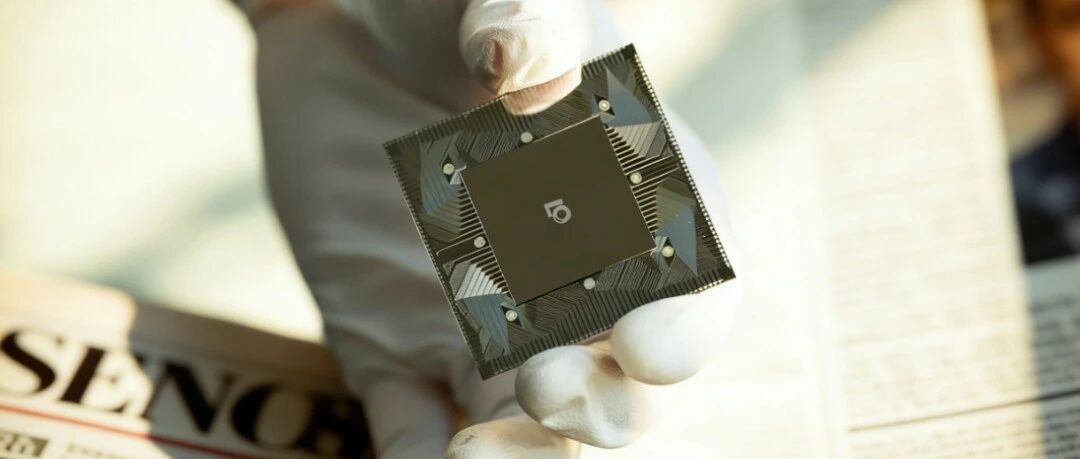
Market Overview - The market experienced fluctuations throughout the day, with the Shenzhen Component Index falling over 1% and the ChiNext Index dropping over 2% [1] - Trading volume shrank, with the total turnover of the Shanghai and Shenzhen markets at 2.21 trillion, a decrease of 117.5 billion compared to the previous trading day [1] - Over 4,500 stocks in the market declined, indicating a weak rotation of market hotspots [1] Sector Performance - The financial sector showed resilience, with insurance and banking stocks leading the gains. Notable performers included Aijian Group hitting the daily limit, and China CITIC Bank, New China Life Insurance, and China Pacific Insurance all closing higher [1] - The chemical sector was also active, with Chitianhua achieving three consecutive limit-ups, and Sanfangxiang, Jinzhengda, and Luhua Technology all hitting the daily limit [1] - The real estate sector saw a slight increase, with Zhongzhou Holdings and Jingneng Real Estate both reaching the daily limit [1] Declining Sectors - The computing hardware and semiconductor sectors faced significant declines, with the CPO concept stocks collectively adjusting downwards. Stocks such as Changguang Huaxin, Dekeli, Robotec, and Guangku Technology experienced substantial drops [1] Institutional Activity - Institutional participation remained consistent with the previous day, with 26 stocks having net buy/sell amounts exceeding 10 million. There were 14 net buys and 12 net sells [2] - Notable net purchases included Langke Technology at 230 million, Xinghuan Technology at 119 million, and Xiangming Intelligent at 7.719 million. Conversely, significant net sells included Zhaoyan Pharmaceutical at 202 million, Zhongci Electronics at 76.24 million, and Zhongfu Shenying at 67.82 million [2]





30亿,阳泉高新技术产业开发区战新母基金招GP
FOFWEEKLY· 2026-03-17 10:05
Core Viewpoint - Shanghai Yangquan Private Fund Management Co., Ltd. is publicly selecting sub-fund management institutions to collaborate with its parent fund, the Yangquan High-tech Industry Development Guidance Venture Capital Fund Partnership (Limited Partnership) [1][3]. Group 1: Sub-fund Types and Investment Focus - The sub-funds will focus on the investment scope and requirements of the parent fund, with specific types including: - New Energy and New Materials Industry Fund, targeting key enterprises in lithium batteries, sodium batteries, and energy storage applications to promote deep integration and development of the new energy battery industry [1]. - Strategic Emerging Industry Fund, investing in high-quality enterprises in sectors such as information technology, semiconductors, big data, optoelectronics, photovoltaics, carbon-based new materials, special metal materials, bio-based new materials, advanced rail transit equipment, intelligent manufacturing equipment, smart connected new energy vehicles, general aviation, modern biomedicine, and environmental protection [2]. Group 2: Fund Structure and Investment Limits - The sub-fund organization must adopt a limited partnership or corporate structure, with a duration not exceeding the remaining duration of the parent fund. The parent fund's investment in a single enterprise or specific sub-fund cannot exceed 20% of the parent fund's subscribed scale and must not exceed 20% of the total assets of the parent fund throughout its lifecycle. Additionally, the parent fund's investment in other sub-funds cannot exceed 50% of the subscribed scale of those sub-funds [2]. Group 3: Parent Fund Details - The parent fund, Yangquan High-tech Industry Development Guidance Venture Capital Fund Partnership (Limited Partnership), has a total scale of 3 billion and 1 million (30.01 billion) yuan, established in July 2024, with a duration of 10 years. It focuses on investing in key industries that align with the development needs of the Yangquan High-tech Zone, supporting the 14 strategic emerging industries outlined in the Shanxi Provincial Government's "14th Five-Year Plan" [3].
英伟达龙虾登场!黄仁勋暴论频出,「人车家天地芯」冲击万亿收入
36氪· 2026-03-17 09:47
Core Insights - The article emphasizes the transition towards "Agentic AI," highlighting that all developments in AI are now focused on creating agents that can perform tasks autonomously rather than just providing information [6][11][31]. Group 1: AI Development and Architecture - NVIDIA has introduced the Vera Rubin architecture, which is specifically designed for Agentic AI, significantly enhancing processing capabilities with a new CPU that is twice as efficient as traditional CPUs and offers a 50% speed increase [16][17]. - The architecture includes seven chips and five rack systems, with the Rubin GPU capable of handling vast amounts of memory, making it suitable for large language models [19][20]. - NVIDIA's new NVLink technology has doubled the bandwidth to 260TB/s, facilitating unprecedented interconnectivity among GPUs [20]. Group 2: Performance and Efficiency - The combination of Vera Rubin architecture and a new software called Dynamo has resulted in a 35-fold increase in performance for high-end inference tasks, showcasing the potential for significant efficiency gains in AI operations [26][30]. - NVIDIA's cuDF and cuVS libraries are designed to handle structured and unstructured data, respectively, allowing for a dramatic increase in processing speed and a reduction in costs for companies like Nestlé [61][62]. Group 3: Open Source and Ecosystem - The introduction of OpenClaw, an agent operating system, is positioned as a transformative tool for businesses, akin to Linux in its impact [28][32]. - NVIDIA is building a comprehensive ecosystem around Agentic AI, collaborating with various partners to enhance localized AI capabilities and ensure security through the NeMoClaw architecture [35][39]. Group 4: Market Impact and Future Projections - NVIDIA predicts that its Blackwell and Rubin chips will generate at least $1 trillion in revenue by the end of 2027, driven by the increasing demand for AI inference capabilities [68][71]. - The company is positioning itself as a leader in the AI space, with a focus on integrating its algorithms into cloud services, effectively making cloud providers part of its extensive ecosystem [62][67]. Group 5: Industry Applications - NVIDIA's partnerships with major automotive companies for autonomous driving technology indicate a significant shift towards AI integration in various industries, including transportation and manufacturing [86][88]. - The company's advancements in AI are not limited to traditional sectors but extend to innovative applications in entertainment, as seen with the integration of AI in Disney's theme parks [91].
黄仁勋凌晨发布英伟达版龙虾,特意提及中国龙虾热,Rubin Ultra算力较前代提升35倍
Xin Lang Cai Jing· 2026-03-17 09:27
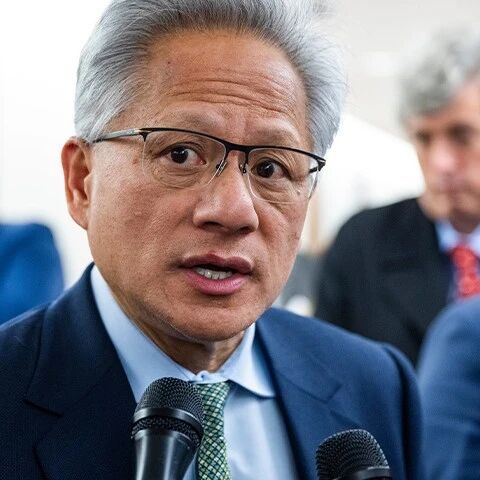
Core Insights - The article highlights the significant impact of OpenClaw in China, showcasing its rapid popularity and adoption, surpassing Linux's achievements in just weeks [4] - NVIDIA's CEO Jensen Huang introduced several new AI platforms and technologies, including the Nemo Claw enterprise AI platform, emphasizing the integration of hardware and software in AI development [3][6] Group 1: OpenClaw and Nemo Claw - OpenClaw has become the most popular open-source project in history, demonstrating remarkable growth and ease of use for creating intelligent agents [4][6] - Nemo Claw, developed in collaboration with "Lobster Father" Peter Steinberg, integrates OpenShell for security, ensuring safe operation of intelligent agents within enterprise networks [8] Group 2: Vera CPU and Rubin Platform - The Vera CPU, designed for data centers, is expected to become a multi-billion dollar business, offering unmatched single-thread performance and efficiency [11] - The Rubin platform achieves a tenfold performance improvement over previous models, enabling data centers to generate significantly higher revenue [14] Group 3: Future Technologies and Models - The Feynman architecture is set to be NVIDIA's next-generation computing platform, designed to meet future demands for both copper and optical devices [20] - Six new open models were released, including Nemo Tron for language understanding and BioNemo for drug discovery, all positioned at the forefront of their respective fields [21][23]
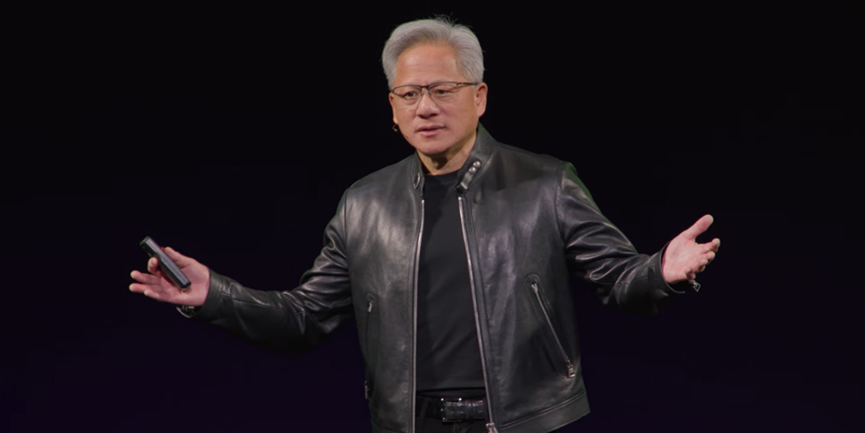
黄仁勋GTC演讲全文:推理时代到来,2027营收至少万亿美元,龙虾就是新操作系统
硬AI· 2026-03-17 09:11
Core Insights - NVIDIA's CEO Jensen Huang positions the company as a builder of "AI factories," predicting a demand of at least $1 trillion by 2027 [6][8][64] - The concept of "Token Factory Economics" is introduced, emphasizing that performance per watt is crucial for commercial monetization [15][71] - Huang asserts that Agents will replace traditional SaaS models, with a new workplace standard of "salary + token budget" emerging [26][29] Group 1: Performance and Demand - The global AI computing demand has exploded exponentially over the past two years, with significant increases in computational consumption as models evolve [7][64] - Huang previously forecasted a high-confidence demand of $500 billion, which has now been revised to at least $1 trillion for 2027 [8][64] - NVIDIA's systems are claimed to be the "lowest cost infrastructure" globally, with 60% of business coming from the top five cloud service providers [13][66] Group 2: Token Factory Economics - Future data centers will function as "factories" for producing tokens, shifting from mere storage facilities [71] - Huang categorizes future AI services into four commercial tiers based on token generation speed and pricing, with the highest tier priced at approximately $150 per million tokens [16][74] - The architecture of NVIDIA allows for high throughput at the free tier while achieving a 35-fold performance increase at the highest value inference tier [18][68] Group 3: Technological Innovations - The introduction of the Vera Rubin system, which has achieved a 350-fold increase in token generation speed over two years, is highlighted [21][82] - NVIDIA's acquisition of Groq aims to enhance inference performance through a unique combination of hardware and software [22][78] - The company is also developing a space-based data center, Vera Rubin Space-1, to extend AI computing capabilities beyond Earth [30][88] Group 4: Software and Ecosystem Transformation - The emergence of Agents is set to transform SaaS companies into AaaS (Agent-as-a-Service) providers, with a focus on specialized AI agents [28][94] - OpenClaw is introduced as a pivotal open-source project that enables the management of resources and execution of tasks by intelligent agents [27][90] - The future workplace will require engineers to have an annual token budget, reflecting a significant shift in employment structures within the tech industry [29][94]

突袭!油价瞬间暴涨5%!超4500股飘绿!黄仁勋重磅演讲后,算力板块为何全线回调?
雪球· 2026-03-17 08:25
Market Overview - The A-share market experienced a collective pullback, with the Shanghai Composite Index down 0.85% to 4049.91 points, the Shenzhen Component down 1.87% to 14039.73 points, and the ChiNext Index down 2.29% to 3280.06 points [2] - The trading volume in the Shanghai and Shenzhen markets was 2.22 trillion yuan, a decrease of 115.4 billion yuan compared to the previous day [2] - Most industry sectors declined, with insurance, chemical fiber, and real estate services showing the largest gains, while sectors like communication equipment, electronic chemicals, and power equipment faced the most significant losses [2] Oil Market Reaction - WTI crude oil futures rebounded significantly, rising over 5% to $98.28 per barrel, while Brent crude oil futures also increased nearly 5% to $104.84 per barrel [4] - The oil and gas service sector in A-shares saw a recovery in the afternoon, with stocks like Renji Co. hitting the daily limit and others like Tongxin Co. rising nearly 5% [5] Geopolitical Impact on Oil Prices - A report indicated that an oil tanker in the Oman Gulf was attacked, causing minor structural damage but no injuries [9] - The geopolitical tensions in the Middle East are expected to have a significant impact on oil markets, with Goldman Sachs noting that the current conflict could lead to the largest oil market shock in history, affecting products like aviation fuel and diesel more than crude oil itself [10][11] Financial Sector Resilience - The financial sector emerged as a safe haven amid the market downturn, with insurance stocks leading the way. New China Life Insurance rose 3.08%, China Pacific Insurance increased by 2.27%, and Ping An Insurance gained 2.25% [14] - The recent "14th Five-Year Plan" emphasizes risk prevention and high-quality development, which is expected to open up more space for insurance capital allocation [16] Technology Sector Decline - The technology sector faced significant pressure, with semiconductor stocks leading the decline. The ChiNext 50 index fell over 2%, and companies like Tianfu Communication and New Yisheng saw substantial drops [20][26] - The Nvidia GTC conference revealed new products, but the lack of unexpected details led to a sell-off in related stocks, as the market had already priced in long-term growth expectations [26]