
医药

Search documents
【固收】信用债发行量环比上升,各行业信用利差涨跌互现——信用债周度观察(20251222-20251226)(张旭/秦方好)
光大证券研究· 2025-12-28 00:20
Group 1: Primary Market - In the week from December 22 to December 26, 2025, a total of 267 credit bonds were issued, with a total issuance scale of 427.70 billion, representing a week-on-week increase of 15.42% [4] - Among the issued bonds, industrial bonds accounted for 117 issues with a scale of 219.26 billion, a week-on-week increase of 34.26%, making up 51.26% of the total issuance [4] - City investment bonds totaled 110 issues with a scale of 71.36 billion, a week-on-week decrease of 18.87%, representing 16.69% of the total issuance [4] - Financial bonds had 40 issues with a scale of 137.08 billion, a week-on-week increase of 14.92%, accounting for 32.05% of the total issuance [4] - The average issuance term for credit bonds was 2.74 years, with industrial bonds averaging 2.36 years, city investment bonds 3.25 years, and financial bonds 2.35 years [4] - The overall average coupon rate for credit bonds was 2.26%, with industrial bonds at 2.12%, city investment bonds at 2.41%, and financial bonds at 2.23% [4] Group 2: Secondary Market - The total trading volume of credit bonds was 1782.75 billion, reflecting a week-on-week increase of 28.47% [7] - The top three categories by trading volume were commercial bank bonds, corporate bonds, and medium-term notes, with commercial bank bonds at 630.89 billion (up 38.88%), corporate bonds at 521.31 billion (up 15.93%), and medium-term notes at 347.64 billion (up 40.63%) [7] - In terms of credit spreads, the largest increase for AAA-rated industries was in pharmaceuticals, up 5.1 basis points, while the largest decrease was in real estate, down 1.3 basis points [6] - For AA+ rated industries, the largest increase was in household appliances, up 6.4 basis points, and the largest decrease was in textiles and apparel, down 9.8 basis points [6] - The AAA-rated credit spread increased the most in Gansu, up 8.7 basis points, while the largest decrease was in Jilin, down 2.9 basis points [6]


坚持“三个办”,助力大健康产业高质量发展
Xin Hua Ri Bao· 2025-12-27 19:55
今年以来,泰州市医保局深入贯彻落实市委市政府"三个大抓"、服务"四重"决策部署,坚持医保既是民 生部门也是经济部门的发展理念,统筹医保工作和经济社会发展,通过主动上门办、部门协同办、医保 赋能办等务实举措,有效助力全市大健康产业高质量发展。 部门协同办,全面优化发展环境。全方位交流协商。牵头搭建泰州市"三医"协同发展和治理交流协商平 台,邀请卫健、科技、工信等8部门参与,先后开展"走进医药企业""走进医疗机构"等5期17次活动。全 周期优化服务。出台医保优化营商环境16条,坚持"企业点题、部门答题",深入了解医药企业发展现 状、现实需求和意见建议,协同发改、工信、卫生健康、市场监管等部门完善问题诉求的搜集、流转、 交办、督查、反馈工作闭环,有效形成部门服务企业工作合力。全流程质量监管。与市场监管部门、定 点医疗机构加强联动,建立集采药品质量联合监管、闭环监测和管控体系,确保群众用上质优价宜 的"放心药"。 主动上门办,切实破解发展难题。送政策上门。深化"医保服务医药企业直通车"内涵,开展"局长讲政 策"等系列活动16场次,解读医保惠企政策、共商创新发展思路、促进企业医院对接,为医药产业高质 量发展把脉开方、纾 ...
2025年终经济观察丨破除卡点堵点 纵深推进全国统一大市场建设
Xin Hua Wang· 2025-12-27 13:31
Core Viewpoint - The construction of a national unified market is essential for establishing a new development pattern and has made significant progress over the past year, enhancing the internal driving force and vitality of China's economy [1][11]. Group 1: Market Development and Integration - The national unified electricity market has accelerated, with cross-regional electricity transactions increasing, exemplified by the first delivery of green electricity from Qinghai to Northeast China [2]. - Various regions are implementing measures to facilitate the efficient flow of resources, such as the launch of a technology achievement trading platform in Hunan and a talent sharing mechanism in Zhengzhou [3]. - The marketization of land resources is being optimized, with significant reductions in the time required for enterprises to acquire land, as seen in the case of Henan [2]. Group 2: Breaking Down Barriers and Local Protectionism - Local governments are encouraged to adopt long-term strategies to prevent closed-off local economies, with initiatives in Shandong and Henan aimed at improving investment quality [6]. - Efforts to streamline business operations across regions have been implemented, such as remote processing of business migration applications in the Yangtze River Delta [6]. - The removal of local protectionist barriers is crucial for ensuring a smooth domestic economic cycle, as emphasized by experts [6]. Group 3: Competition and Market Regulation - The government is actively addressing "involution" in competition, with new pricing mechanisms introduced in the pharmaceutical sector to prevent abnormal pricing [7]. - Regulatory measures are being strengthened to maintain fair competition, including the implementation of the Fair Competition Review Regulations [9]. - Industries are encouraged to shift from cost competition to value creation, with examples of companies investing in innovation to enhance their competitive edge [10][11].
华金证券:明年1月春季行情可能延续 科技成长和部分周期行业占优
Zhi Tong Cai Jing· 2025-12-27 11:01
Core Viewpoint - The spring market rally is likely to continue in January, with A-shares expected to show a strong upward trend, driven by technology growth and certain cyclical industries [1][2]. Group 1: Market Trends and Influences - Historical data indicates that when the spring market rally starts early, A-shares tend to perform strongly in January, influenced by policies, external events, and liquidity [2]. - Key factors affecting A-share performance in January include positive policies and external events, which can lead to an increase in the Shanghai Composite Index, as seen in past instances like the easing of US-China trade tensions in 2019 and the optimization of pandemic policies in 2023 [2]. - Liquidity plays a crucial role in January's A-share performance; a loose liquidity environment may lead to an increase in A-shares, while tight liquidity could result in weaker performance [2]. Group 2: Economic and Policy Outlook - Positive policy expectations are anticipated to rise in January, with potential announcements of provincial "14th Five-Year" plans and consumer stimulus measures [3]. - Global central banks are expected to continue easing, and the relationship between China and the US is likely to remain stable, with limited external risks [3]. - Economic recovery is expected to continue, albeit weakly, with corporate profit growth likely to improve, particularly in technology and cyclical sectors [3]. Group 3: Sector Performance Expectations - Technology growth and certain cyclical industries are expected to outperform in January, driven by upward trends in the technology sector, particularly in artificial intelligence, and demand for non-ferrous metals and chemicals [4]. - Historical analysis shows that when the spring market rally begins early, technology growth sectors tend to perform relatively better in January [4]. - The upcoming themes in January, such as commercial aerospace and controllable nuclear fusion, are expected to catalyze market interest [4]. Group 4: Investment Recommendations - A balanced allocation strategy is recommended for January, focusing on technology growth, cyclical sectors, and consumer industries [5]. - Specific sectors suggested for investment include machinery (robots), military (commercial aerospace), new energy (nuclear fusion, energy storage), electronics (semiconductors, AI hardware), and media (AI applications, gaming) [5]. - There is potential for recovery in brokerage firms and consumer sectors (food, retail, and social services) that may see marginal improvements in fundamentals [5].

约印医疗基金顾问委员会主席姒亭佑:医疗投资需要保持耐心
Sou Hu Cai Jing· 2025-12-27 02:50
Group 1 - The "2025 Financial Annual Conference" held in Beijing focused on high-quality development of listed companies, emphasizing resilience and growth through cycles, with participation from over 200 listed companies and various industry leaders [1] - The "Golden Intelligence Award" recognized over 140 companies, including Haier Smart Home and Dongpeng Beverage, from more than 8,000 A-share, Hong Kong stock, and Chinese concept stock companies, highlighting their exemplary high-quality development [1] - A roundtable discussion on "New Era of Medicine" addressed key industry trends, including the localization of high-end medical equipment and global development paths, featuring insights from industry leaders and investment representatives [1] Group 2 - The development of the medical industry is an evolving process, with no definitive "best opportunity," and investments should be made with a forward-looking approach rather than chasing trends [3] - The historical context of the domestic pharmaceutical market shows a shift from generics to a focus on innovation, with policy changes impacting company strategies and emphasizing the need to address unmet market demands [3] - Future development directions in the pharmaceutical industry include research on drug resistance, enhancing drug efficacy, improving medication safety, and increasing patient adherence [4] Group 3 - The Chinese pharmaceutical industry is transitioning towards independent innovation, moving away from imitation and rapid following, which has increased market competition risks [5] - Global pharmaceutical companies have established comprehensive innovation ecosystems, and Chinese companies are beginning to adopt similar models, enhancing their innovation capabilities and global market influence [5] - The collaboration models between domestic and international pharmaceutical companies are evolving, reflecting the continuous improvement of China's biopharmaceutical innovation capacity [5] Group 4 - The pace of development in the medical industry remains constant, with changes occurring in market participants and innovation models across different stages [6]

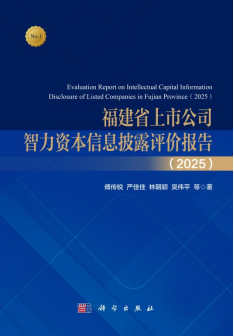
福州大学发布《福建省上市公司智力资本信息披露评价报告(2025)》
Zhong Guo Jin Rong Xin Xi Wang· 2025-12-26 12:21
Core Insights - The "Fujian Province Listed Companies Intellectual Capital Information Disclosure Evaluation Report (2025)" was released, marking a significant research achievement by Fuzhou University [1] - The report indicates an improvement in the overall intellectual capital and human capital disclosure levels of A-share listed companies in Fujian from 2022 to 2024, although disparities in disclosure levels among different companies have widened [1] Group 1 - The report constructs an intellectual capital information disclosure index to measure and evaluate the disclosure levels of listed companies in Fujian [1] - A total of 123 companies were rated based on the intellectual capital information disclosure index in 2024, with 9 companies rated A+, 9 rated A, 19 rated B+, 15 rated B, 33 rated C+, and 38 rated C [2] - Companies rated A+ include Sansteel Minguang, Kaiying Network, Shengxing Co., Jihong Co., Qingsong Co., Ningde Times, Pianzaihuang, Longgao Co., and Tebao Biological [2] Group 2 - Companies such as Pianzaihuang, Xingtong Co., Sankeshu, Longgao Co., Kaiying Network, and Ningde Times have maintained an A-level or above rating for three consecutive years [2] - The event was organized by Fuzhou University and supported by various research centers and financial innovation laboratories [2]
跨年布局窗口期,关注成长和周期板块
Sou Hu Cai Jing· 2025-12-26 11:32
Market Review - The Shanghai Composite Index recorded a seven-day winning streak, indicating improved visibility for the year-end market, with a rebalancing of capital allocation [1] - The non-ferrous metals sector continues to show strong performance, driven by the "commercial aerospace" concept, while power equipment stocks are boosted by rising lithium battery material prices [1] - Domestic CSP manufacturers are increasing capital expenditure plans, with reports indicating a leading internet company plans to raise its AI capital expenditure from 150 billion yuan in 2025 to nearly 160 billion yuan in 2026, focusing on AI infrastructure and semiconductor chip procurement [1] - The demand for liquid cooling solutions is rising due to significant power consumption increases from NV chips, providing opportunities for domestic manufacturers amid rapid technological iterations [1] - A lithium battery materials company has announced a price adjustment for lithium carbonate, driven by supply contraction pushing prices back to reasonable levels [1] Overseas Macro - U.S. GDP for Q3 2025 grew at an annualized rate of 4.3%, exceeding market expectations, primarily driven by private consumption and investments in AI-related equipment [2] - Traditional sectors like construction and real estate continue to show weak investment, leading to increased economic internal differentiation [2] - The recent GDP data has somewhat suppressed expectations for interest rate cuts, suggesting the Federal Reserve may maintain current rates in the short term, with potential delays in future rate cuts [2] - Gold prices have surpassed previous highs, supported by the Fed's recent rate cuts and ongoing fiscal deficits, which have raised concerns about debt risks and the independence of the Fed [2] Commodity Market - The recent escalation of U.S. sanctions on Venezuelan oil exports and ongoing geopolitical tensions have increased demand for safe-haven assets like gold [3] - Silver has seen significant price increases due to both its financial and industrial demand, with growth in sectors such as photovoltaics and electric vehicles tightening supply [3] Market Outlook - The year-end market phase is supported by policy backing and industrial catalysts, with expectations for increased fiscal measures during the 2026 Two Sessions [4] - The end of the year is a period when long-term funds, such as insurance capital, tend to increase allocations, potentially bringing new capital into the market [4] - Growth and cyclical sectors are expected to be key areas of focus, with themes likely to exhibit elasticity during this period [4] Investment Directions - Focus on large technology growth sectors and resource/manufacturing sectors benefiting from cyclical reversals and global economic recovery [4] - Specific areas of interest include AI applications, robotics, energy storage, and innovative pharmaceuticals, as well as resources and manufacturing sectors like non-ferrous metals and engineering machinery [4]
2025年11月处方药销售全景洞察:数据驱动,精准破局
EqualOcean· 2025-12-26 11:13
Group 1 - The report focuses on advanced data collection technologies to ensure the authenticity, timeliness, and comprehensiveness of sales information, aiming to extract valuable industry trends and consumer insights from vast data for stakeholders in the pharmaceutical industry [4][5] - The data covers over 135,000 pharmacies nationwide, creating a large sample database that represents various regions, types, and scales of pharmacies, providing a broad basis for analysis [4] - The report analyzes data from over 14 million prescription drug purchase orders, reflecting market dynamics and consumer demand [4] Group 2 - From January to November 2025, the order volume of prescription drugs in offline pharmacies showed a fluctuating upward trend, with the order index reaching 23.7 in November, indicating a strong growth momentum [5][14] - There are significant regional differences in order distribution, with provinces like Guangdong, Sichuan, and Shandong leading in order volume, while western provinces like Tibet and Qinghai have much lower shares, reflecting disparities in drug demand and healthcare resource allocation [5][20] Group 3 - In November 2025, the proportion of consumers aged 56 and above purchasing both Western and traditional Chinese medicine slightly increased, with female consumers also showing a slight rise [6][29] - The peak purchasing times for Western medicine are around 10 AM and 7 PM, while for traditional Chinese medicine, it peaks around 11 AM, indicating higher daytime purchasing activity [34] Group 4 - The report highlights that the proportion of consumers purchasing Western medicine for influenza significantly increased, particularly among the under-18 demographic, while traditional Chinese medicine consumers primarily presented with Yin deficiency syndromes [6][39] - The report identifies a rising trend in the use of specific Western medicines such as Oseltamivir and Amlodipine, with regional variations in popular products across provinces [7][20] Group 5 - The analysis of prescription drug consumers reveals that the proportion of consumers aged 56 and above has increased for both Western and traditional Chinese medicines, indicating a growing demand among older demographics [29][46] - The report provides insights into the disease patterns among different age groups, with influenza being the most prevalent among younger consumers, while chronic conditions like hypertension and diabetes are more common in older age groups [39][46] Group 6 - The report indicates that the disease composition among prescription drug consumers varies significantly by province and changes over time, with influenza and acute respiratory infections being common in regions like Chongqing and Guizhou, while hypertension is more prevalent in Sichuan [50][54] - The analysis of traditional Chinese medicine consumers shows that the most common syndromes include Yin deficiency and blood deficiency, reflecting diverse health concerns among consumers [57][71]
12个月,他们投向医疗30亿
3 6 Ke· 2025-12-26 10:55
Core Insights - The investment landscape in the innovative pharmaceutical sector has significantly improved in 2025, with a notable resurgence in market activity and valuations, particularly in Hong Kong's stock market, where the biotech index surged over 100% [1][7] - The strategic decision by Qiming Venture Partners to continue investing in innovative drugs and medical devices during a downturn has proven to be a successful move, leading to substantial returns and a growing portfolio of successful investments [1][6] Investment Activity - Qiming Venture Partners invested in over 30 projects in the medical innovation sector in 2025, with total investments exceeding 30 billion yuan, including decisions made in the latter half of 2024 [2][6] - Notable investments include Cornerstone Robotics, a Hong Kong-based surgical robot company, which has raised over 30 billion yuan and is positioned to compete with imported brands [2][3] Market Trends - The IPO landscape for biotech companies has become increasingly vibrant, with nearly 10 companies submitting applications in November alone, and the number of successful biotech IPOs in Hong Kong doubling compared to the previous year [7][8] - International investors are shifting their focus back to Chinese innovative drug companies, recognizing their clinical data and potential for collaboration with global pharmaceutical leaders [7][9] Future Outlook - The global influence of Chinese medical innovation is on the rise, with projections indicating that approximately 40% of new drug projects licensed in by major global pharmaceutical companies will come from Chinese biotech firms by 2025 [9][10] - Qiming Venture Partners is committed to supporting the globalization of Chinese pharmaceutical companies, facilitating partnerships with international firms and helping navigate global regulatory environments [10]
收评:沪指8连阳,锂电概念爆发,海南自贸概念等活跃
Zheng Quan Shi Bao Wang· 2025-12-26 07:41
Market Performance - The stock indices in both markets experienced fluctuations and rose, with the Shanghai Composite Index recording its eighth consecutive day of gains, and the total trading volume in the A-share market exceeding 2 trillion yuan [1] - As of the market close, the Shanghai Composite Index increased by 0.1% to 3963.68 points, the Shenzhen Component Index rose by 0.54%, the ChiNext Index gained 0.14%, and the SSE 50 Index was up by 0.41% [1] Sector Performance - Sectors such as paper, liquor, semiconductors, banks, and pharmaceuticals saw declines, while the non-ferrous metals sector surged, and steel, brokerage, and oil sectors also experienced gains [1] - Active sectors included Hainan Free Trade Zone, lithium batteries, and commercial aerospace concepts [1] Investment Outlook - Pacific Securities anticipates that the upcoming year-end market rally will commence with a broad-based increase, noting that the volatility of major stock index options remains at a low level, suggesting a steeper upward trend in the future [1] - Technology is expected to remain the main focus for generating excess returns due to its greater elasticity [1] - Recent trends indicate a shift towards bullish sentiment in commodities, with expectations for a rally in precious metals, non-ferrous metals, chemicals, steel, and pig farming [1] - Major financial sectors such as insurance and banking are projected to continue their upward trajectory as stabilizers [1] - The consumer sector is expected to become a new target for rebound as policy positioning deepens, with the Hainan Free Trade Zone anticipated to maintain its strong momentum as a key policy focus [1]