奢侈品

Search documents
欧洲奢侈品行业进入寒冬
第一财经· 2025-08-15 05:03
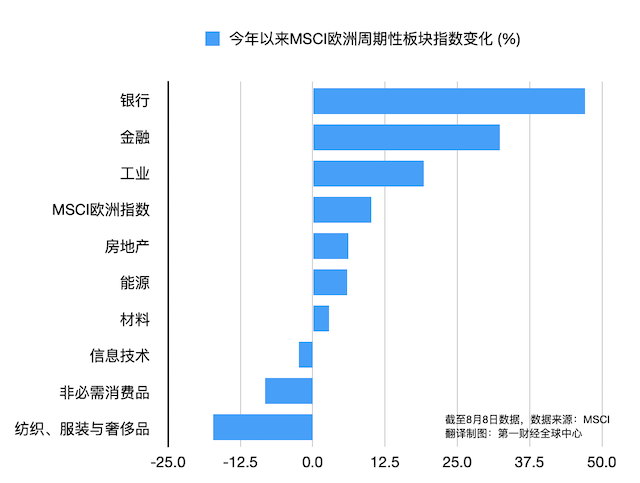
Core Viewpoint - The European luxury goods industry is facing significant challenges due to currency fluctuations and tariff policies, leading to a decline in stock prices for major luxury groups and a slowdown in market growth [3][4][7]. Group 1: Market Performance - Major luxury groups such as LVMH, Hermès, Richemont, and Kering have seen stock price declines of 26.31%, 17.98%, 19.84%, and 13.33% respectively over the past six months [3]. - The MSCI Europe Textile, Apparel, and Luxury Goods Total Return Index has dropped 17% year-to-date, underperforming the broader market by 27% [3]. - NDR's report indicates that the luxury goods sector's growth is slowing, partly due to the fading benefits of favorable exchange rates and the impact of U.S. tariff policies on global consumer confidence [3][4]. Group 2: Financial Results - LVMH reported a 4% decline in revenue and a 22% drop in net profit for the first half of the year, with recurring operating profit down 15% [7]. - Kering's second-quarter sales fell 15% to €3.7 billion, with Gucci's sales down 25% to €1.46 billion [7]. - Hermès experienced an 8% sales growth in the first half, significantly lower than the 15% growth reported in the previous year [7]. Group 3: Structural Challenges - The luxury goods sector is facing deeper structural challenges, including weak consumer confidence and brand value dilution, leading to a loss of approximately 50 million consumers over the past two years [11][12]. - The Z generation has seen a 7% decline in sales, equating to a loss of $5.7 billion in consumption, marking the largest drop among all generations [11]. - High-net-worth individuals are becoming more discerning in their luxury purchases, focusing on value and personalized services [11]. Group 4: Future Outlook - Bernstein has revised its global luxury goods revenue growth forecast for 2025 from an increase of 5% to a decrease of 2% [12]. - UBS estimates that luxury brands have increased prices by an average of 33% from 2019 to 2023, which may have overstretched market tolerance [12]. - Following a trade agreement between the U.S. and Europe, a 15% baseline tariff on luxury goods imported from Europe is expected to raise prices in the U.S. by an average of 2% and globally by about 1% [12].


美团启动“堂食提振”;快手联名蜜雪冰城;拉夏贝尔任命董事长
Sou Hu Cai Jing· 2025-08-15 02:25
Group 1: Dairy Industry - French dairy giant Lactalis has been granted exclusivity in acquisition negotiations with Fonterra, indicating a significant strategic decision to divest its consumer brands business [3] - This exclusivity suggests that Lactalis is likely to become the final buyer of Fonterra's consumer brands [3] Group 2: Retail Industry - Seven & i Holdings announced a growth strategy for fiscal year 2030, planning to invest 300 billion yen to add 1,000 new convenience stores in Japan and renovate 5,000 existing stores [5] - The initiatives include store renovations, introduction of the "Seven Cafe" series, and expansion of the delivery service "7NOW," aiming to increase sales from 12 billion yen in fiscal year 2024 to 120 billion yen by fiscal year 2030 [5] Group 3: Food Delivery Industry - Meituan has launched a "Dine-in Boost" plan, distributing in-store consumption vouchers to all members, aiming to support struggling small restaurants amid ongoing competition in the food delivery sector [7] - The initiative currently covers 100,000 physical stores, with plans for further expansion [7] Group 4: Fashion Industry - S&P Global has downgraded the credit outlook for French luxury group Kering from "stable" to "negative," citing a significant sales decline expected in the first half of 2025, particularly in the Asia-Pacific and Chinese markets [17] - Kering's revenue in the Asia-Pacific region fell by 22% year-on-year, with core brand Gucci's sales decreasing by approximately 25% [17] Group 5: Corporate Governance - Tims Coffee announced the resignation of board member Meizi Zhu, who was the only Tencent representative on the board, following Tencent's investment in the company [20] - The company does not plan to fill Zhu's vacancy on the board [20] Group 6: Corporate Leadership Changes - Julee Co., a New Third Board listed company, announced that Chairman Tong Enwen is temporarily unable to fulfill his duties due to health reasons, with Gao Zhaohui appointed as acting chairman [22] - This change occurs against the backdrop of the founder's advanced age and the company's critical IPO period [22] Group 7: Corporate Restructuring - La Chapelle appointed Wang Guoliang as the new chairman following the resignation of Zhao Jinwen, with Wang controlling 65% of the company's shares [25] - This appointment aims to ensure the synchronization of restructuring negotiations, asset disposal, and delisting processes [25]




与普京见面前,特朗普抛出预期;国务院:新增K字签证;多所高校明确不实行 “非升即走”
Di Yi Cai Jing Zi Xun· 2025-08-15 00:54
美股涨跌互现 美国股市周四涨跌不一,标普500指数微升0.03%续创收盘新高,道指和纳指则几乎持平,高于预期的 通胀数据抑制了投资者对美联储年内降息幅度的预期,压制了股市上行动能。 截至收盘,道琼斯指数微跌0.02%报44911.26点;标普500指数涨0.03%报6468.54点;纳斯达克指数跌 0.01%报21710.67点。标普500指数11个板块中七个下跌。 CFRA Research首席投资策略师萨姆·斯托瓦尔(Sam Stovall)称,按远期市盈率计算,标普500当前估 值较20年均值高出近四成,PPI数据的超预期让投资者对降息前景更为犹豫。 美国劳工部数据显示,7月生产者价格指数(PPI)环比上涨0.9%,为三年来最大单月升幅,远高于市 场预期的0.2%;同比升幅3.3%,亦超出预期的2.5%。剔除食品和能源后的核心PPI环比涨幅0.9%,同 比上涨3.7%,大幅高于前一个月2.6%的同比增长。数据反映,服务和商品成本齐升,通胀回落进程可 能面临阻力。 受此影响,伦敦证交所集团(LSEG)数据显示,市场对美联储今年下半年降息的押注从63个基点降至 56.7个基点,但仍完全消化9月降息25个基点 ...

特朗普预测:与普京会晤失败的可能性为25%;金建希受讯,什么都没说;多所高校不实行 “非升即走”
第一财经· 2025-08-15 00:23
Group 1 - The meeting between US President Trump and Russian President Putin is set to take place on August 15, with Trump estimating a 25% chance of failure in the discussions [2][19] - The South Korean special investigation team reported that Kim Geon-hee exercised her right to remain silent during questioning, with a follow-up scheduled for August 18 [3] - Several Chinese universities have adopted a multi-dimensional evaluation system for high-level talent recruitment, moving away from the "non-promotion means exit" policy [5] Group 2 - The State Council of China announced the introduction of a new K visa for foreign young technology talents, effective from October 1, 2025 [6] - The Chinese Ministry of Foreign Affairs indicated that direct flights between China and India may resume as early as next month, enhancing personnel exchanges [7] - The Supreme People's Court of China has defined the legal responsibilities regarding the online sale of personal information, establishing a precedent for prosecution [8] Group 3 - The National Data Bureau reported that China's computing power ranks second globally, with significant advancements in digital infrastructure during the 14th Five-Year Plan [9] - The National Forestry and Grassland Administration projected that the number of eco-tourism visitors in China will reach 2.761 billion by 2024 [11] - The People's Bank of China announced a net injection of 300 billion yuan through reverse repos to maintain liquidity in the banking system [12] Group 4 - JD.com reported a revenue increase of 22.4% year-on-year for Q2, with its food delivery service playing a crucial role in this growth [22][23] - The European luxury goods sector is facing challenges, with major companies experiencing significant stock price declines due to currency fluctuations and tariff policies [25] - The US stock market showed mixed results, with Intel shares rising by 7.38%, while several Chinese companies listed in the US faced declines [26]



国务院:新增K字签证,发给入境的外国青年科技人才;俄美会晤倒计时,普京称美方积极努力,特朗普给出谈崩概率;多所高校明确不实行 “非升即走”丨早报
Di Yi Cai Jing· 2025-08-15 00:09
Group 1 - The State Council of China has introduced a new K visa for foreign young technology talents, effective from October 1, 2025 [2] - The visa aims to attract skilled individuals to enhance technological development in China [2] Group 2 - The National Bureau of Statistics reported that China's computing power ranks second globally, with significant advancements in digital infrastructure during the 14th Five-Year Plan [7] - By June 2025, the number of 5G base stations is expected to reach 4.55 million, and the number of gigabit broadband users is projected to be 226 million [7] Group 3 - The National Forestry and Grassland Administration forecasts that the number of eco-tourism visitors in China will reach 2.761 billion in 2024, indicating a robust growth in the eco-tourism sector [8] - The sector has developed four trillion-level industries, employing over 60 million people [8] Group 4 - JD.com reported a revenue of 356.7 billion yuan for Q2, a year-on-year increase of 22.4%, with its food delivery business playing a crucial role in this growth [21] - During the 618 shopping festival, JD's food delivery service achieved a daily order volume exceeding 25 million [21] Group 5 - The European luxury goods sector is facing challenges, with major companies like LVMH, Hermès, Richemont, and Kering experiencing significant stock price declines, ranging from 13.33% to 26.31% [23] - The decline is attributed to currency fluctuations and tariff policies impacting the industry's profitability [23] Group 6 - The China Aviation Transport Association has released a self-regulatory charter aimed at curbing unhealthy competition in the airline ticket sales market [12] - The charter includes strict adherence to pricing laws and prohibits predatory pricing practices [12]
中产开始省钱后,比你还狠
Sou Hu Cai Jing· 2025-08-14 15:06
Group 1 - The consumption behavior of the middle class is shifting from blind pursuit of luxury to a more rational approach, focusing on discounts and value for money [1][6] - The popularity of luxury discount sales is evident, with platforms like Vipshop showing significant growth in active users and sales contributions from their Super VIP segment [3][5] - The introduction of more luxury brands and deeper discounts for Super VIP users at Vipshop indicates a strategic move to attract price-sensitive consumers [5] Group 2 - The change in consumption patterns reflects a broader trend where middle-class consumers prioritize internal experiences over external status symbols [6][8] - This shift is not indicative of a decline in living standards but rather a more mature approach to spending, emphasizing smart allocation of resources [8] - The emerging consensus among the middle class is to return to the essence of consumption, viewing it as a tool for enhancing life rather than a status symbol [8]
美股异动|Tapestry一度跌超18% 或创下自2020年3月以来最大单日跌幅
Ge Long Hui· 2025-08-14 14:27
公司预计美国进口关税将带来1.6亿美元的冲击,目前预计2026财年每股收益将在5.3至5.45美元之间, 而分析师预期为5.49美元。(格隆汇) Coach母公司Tapestry(TPR.US)一度跌超18%,最低触及92.64美元,或创下自2020年3月以来最大单日跌 幅。 消息面上,Tapestry第四财季营收同比增长8%至17.23亿美元,超过分析师平均预期的16.81亿美元。其 中,Coach品牌的销售额同比增长14%至14.25亿美元,超过预期的13.8亿美元。期内调整后每股收益 1.04美元,高于预期的1.02美元。 ...

邀请函|国泰海通证券2025消费品年会-上海
国泰海通证券研究· 2025-08-14 13:29
Core Viewpoint - The article discusses the upcoming 2025 Consumer Goods Annual Conference organized by Guotai Junan Securities, focusing on future consumption trends, opportunities in various sectors, and the impact of demographic changes on consumer behavior [3][7]. Group 1: Conference Agenda Highlights - The conference will feature a keynote speech on future consumption trends from a demographic perspective by a population expert [7]. - Sessions will cover topics such as the resurgence of domestic beauty brands, the era of functional health products, and the jewelry industry in the new consumption era [7]. - A roundtable forum will discuss opportunities in the beauty industry, emphasizing growth and policy support [7]. Group 2: Industry Insights - The conference will address the high demand and technological innovations in the cleaning appliance sector, highlighting the interplay of policy, technology, and consumer needs [10]. - The luxury goods industry will be analyzed for trends and brand differentiation, providing insights into market dynamics [11]. - The pet economy's growth will be explored, identifying potential leading companies in this sector [11].

欧洲奢侈品行业进入寒冬!汇率波动与关税政策下,行业繁荣何时重启?
Di Yi Cai Jing· 2025-08-14 11:31
Core Viewpoint - The European luxury goods sector is facing significant challenges, with major companies experiencing double-digit stock price declines over the past six months due to currency fluctuations and tariff policies [2][5]. Group 1: Stock Performance - The stock prices of the four major European luxury groups—LVMH, Hermès, Richemont, and Kering—have dropped by 26.31%, 17.98%, 19.84%, and 13.33% respectively [2]. - The MSCI Europe Textiles, Apparel & Luxury Goods Total Return Index has decreased by 17% year-to-date, underperforming the broader market by 27% [2]. Group 2: Economic Factors - The luxury goods market's growth slowdown is attributed to the fading benefits of favorable exchange rates and the impact of U.S. tariff policies on global consumer confidence [2][3]. - The euro's appreciation has pressured exports to the U.S., contributing to a weak performance in European stock markets [3]. Group 3: Company Financials - LVMH reported a 4% decline in revenue and a 22% drop in net profit for the first half of the year, with a 15% decrease in recurring operating profit [5]. - Kering's second-quarter sales fell by 15% to €3.7 billion, with Gucci's sales down 25% to €1.46 billion [6]. Group 4: Consumer Behavior - The luxury sector has lost approximately 50 million consumers over the past two years, representing one-eighth of the global high-end consumer base [8]. - The Z generation's spending decreased by 7% in 2024, equating to a loss of $5.7 billion, marking the largest decline among all age groups [8]. Group 5: Future Outlook - Bernstein has revised its growth forecast for the luxury goods industry, projecting a 2% decline in global luxury revenue by 2025, down from a previous estimate of 5% growth [9]. - UBS estimates that luxury prices have increased by an average of 33% from 2019 to 2023, with new tariffs potentially raising prices in the U.S. by an average of 2% [10].
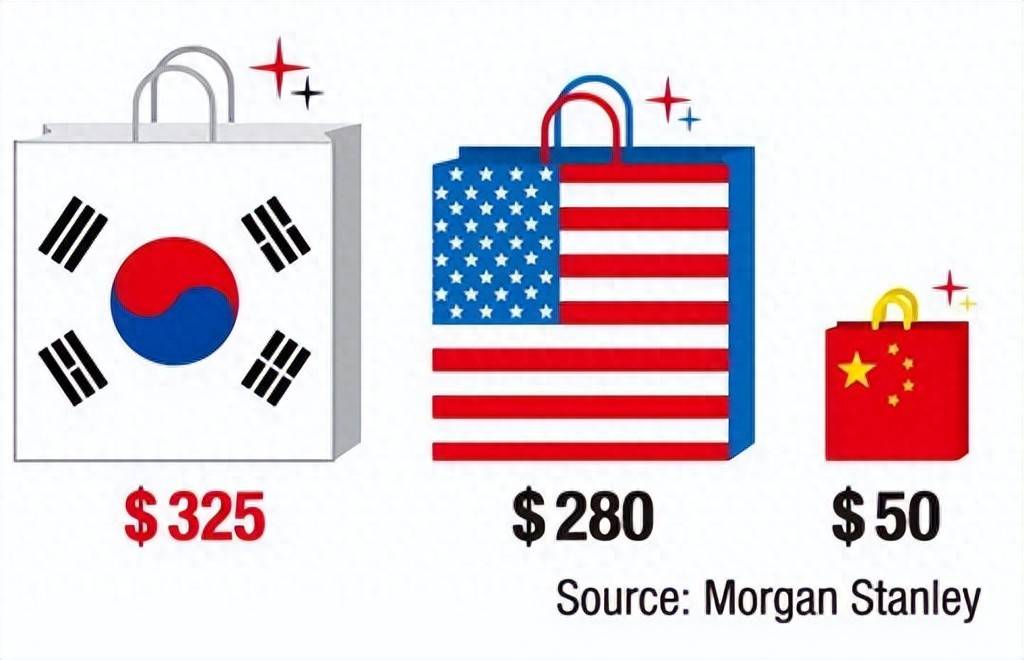
买奢侈品这件事:韩国青年vs中国青年,差距在哪?
Sou Hu Cai Jing· 2025-08-14 00:16
Group 1 - South Korean consumers have the highest per capita luxury goods spending globally at approximately $325, with many young individuals resorting to loans for purchases [1][3] - A report from the Korea Financial Institute indicates that 18% of the debt among individuals aged 20 to 39 is spent on luxury goods, and about 17% of young workers in Seoul actively take loans to buy luxury items [3] - The cultural context in South Korea drives luxury consumption, where luxury items are seen as status symbols in job markets and social circles, exacerbated by high living costs and limited job opportunities [3] Group 2 - In contrast, the Chinese luxury market is experiencing a shift towards rational consumption, with a projected sales decline of 18%-20% in 2024, prompting major brands like LVMH and Kering to adjust their strategies [5] - The shift in consumer behavior in China reflects a transition from "symbolic consumption" to "value consumption," with discount channels becoming the preferred choice for entry-level luxury goods [5][7] - Young Chinese consumers are increasingly prioritizing value over brand logos, leading to a more mature approach to luxury spending, as evidenced by the popularity of discount platforms offering significant savings on luxury items [6][7]