
铁矿石

Search documents
中国不想再当“卑微甲方”
Hu Xiu· 2025-10-10 04:13
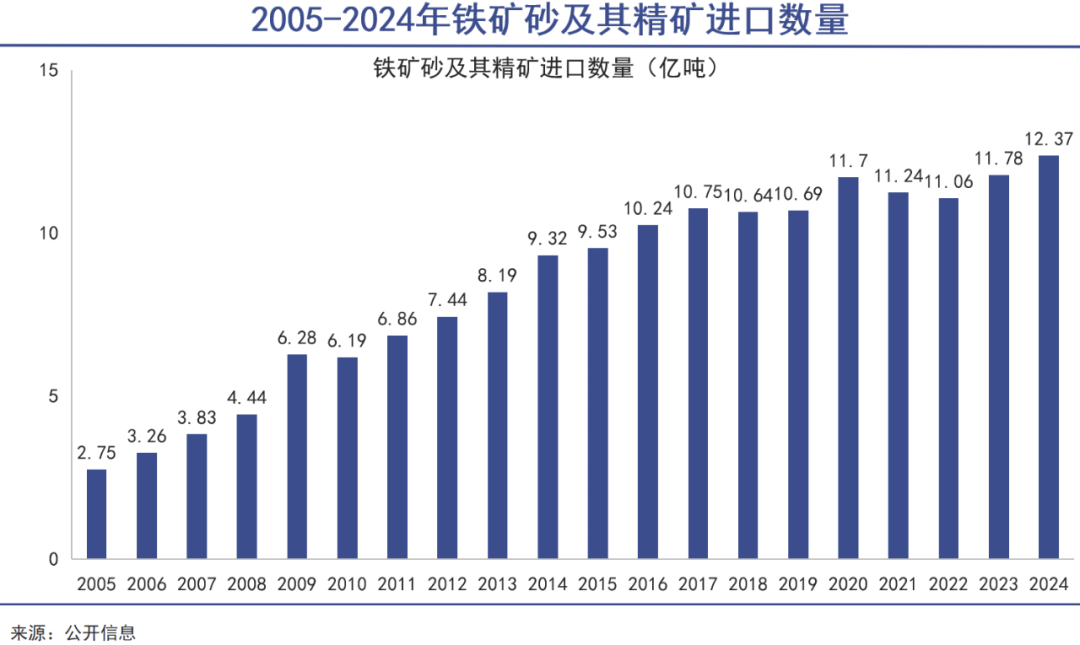
Core Viewpoint - Recent actions by China regarding strategic mineral resource management have garnered significant attention, indicating a potential shift in its pricing strategy in the global commodities market [1][7]. Group 1: China's Actions in Mineral Resource Management - On September 30, 2023, it was reported that China Mineral Resources Group requested domestic buyers to suspend purchases of BHP's iron ore cargo priced in USD, causing a stir in international raw material markets [2][4]. - On October 9, 2023, China's Ministry of Commerce announced export controls on rare earth-related technologies and items, further emphasizing its strategic approach to resource management [5]. Group 2: China's Position in the Global Market - China is the largest consumer of iron ore globally, importing 1.237 billion tons in the previous year, which is nearly five times the amount imported two decades ago, accounting for approximately 75% of global seaborne iron ore imports [8][9]. - Despite being a major buyer, China has historically lacked pricing power, often forced to accept prices set by suppliers, particularly Australian mining giants [9][11]. Group 3: Historical Context of Pricing Power - From 2003 onwards, China has been the largest buyer of Australian iron ore but has been subjected to unfavorable pricing mechanisms, such as the "first-mover-follow" pricing strategy employed by major mining companies [11][12]. - Significant price increases have been imposed on China, with instances of price hikes reaching as high as 96.5% in 2008, reflecting the lack of negotiation power [13][16]. Group 4: Industry Consolidation Efforts - The fragmentation of Chinese enterprises in the commodities market has contributed to its weak pricing power, prompting the establishment of the China Mineral Resources Group in 2022 to consolidate procurement efforts [21][24]. - The group has initiated centralized procurement for iron ore, representing a significant shift from the previously fragmented purchasing approach of over 600 steel companies [25][26]. Group 5: Future Outlook and Global Infrastructure - China's pursuit of global pricing power in commodities is not aimed at economic hegemony but rather to secure fair benefits for its economic development, especially in light of a new global infrastructure cycle [34][40]. - The anticipated infrastructure investments in the Middle East and emerging economies present opportunities for China to leverage its position in the iron ore and rare earth markets, which are critical for construction and new energy projects [35][39].




大快人心!中国发起冷酷复仇,全球紧盯这张最后通牒
Sou Hu Cai Jing· 2025-10-10 04:08
Core Viewpoint - The request from China's mineral resources group for domestic buyers to halt dollar settlements for BHP's iron ore and switch to renminbi reflects significant geopolitical and economic shifts, indicating a transformation in the global order [1] Group 1: China's Iron Ore Imports and Strategy - China imports over 1.1 billion tons of iron ore annually, with more than 60% sourced from Australia, making it the largest iron ore importer globally [3] - The West African Simandou iron ore project, which China plans to start production in November, is expected to yield 12 million tons annually, providing China with leverage in international negotiations [3] - China's strategic intent extends beyond price reduction to gaining a dominant position in the global settlement system, particularly in currency settlements [3] Group 2: Impact of Brazil's Shift to Renminbi - Following the election of leftist leader Lula in Brazil, over 40% of iron ore and soybean transactions with China are now settled in renminbi, significantly enhancing the currency's role in international commodity trading [4] - Brazil's acceptance of renminbi settlements is expected to influence the Simandou project, further pressuring BHP to adapt to changing global trade dynamics [4] Group 3: China's Centralized Purchasing Power - The establishment of the China Mineral Resources Group in 2022 has consolidated iron ore import demands, allowing for unified negotiations and reducing the historical premium paid by Chinese steelmakers [6] - This consolidation has empowered China to demand BHP to change its settlement currency, marking a shift in negotiation power [6] Group 4: Geopolitical Context - Australia's reliance on the U.S. for security is increasingly questioned, especially in light of U.S. President Trump's comments on reviewing security agreements, prompting Australia to reassess its geopolitical stance [6] - China's naval activities in the region have heightened Australia's sensitivity to China's rise, placing it in a complex geopolitical position [6] Group 5: Future Implications for Global Trade - The likelihood of BHP accepting renminbi settlements is reported to be 75%, indicating a growing influence of China in the international monetary system [7] - As renminbi usage in global trade increases, the dominance of the U.S. dollar is threatened, with potential shifts in settlements for oil, gas, and other commodities to renminbi [7] Group 6: Australia's Dilemma - Australia faces a critical choice between aligning with the U.S. or adapting to China's growing influence, with commercial and geopolitical pressures shaping its decision [8]
河钢资源跌2.03%,成交额8.95亿元,主力资金净流出2574.51万元
Xin Lang Cai Jing· 2025-10-10 03:24
Core Viewpoint - The stock price of Hebei Steel Resources has experienced significant fluctuations, with a year-to-date increase of 44.03% and a recent decline of 2.03% on October 10, 2023, indicating volatility in investor sentiment and market conditions [1][2]. Group 1: Stock Performance - As of October 10, 2023, the stock price is reported at 19.30 CNY per share, with a trading volume of 895 million CNY and a turnover rate of 7.26%, leading to a total market capitalization of 12.598 billion CNY [1]. - Year-to-date, the stock has risen by 44.03%, with a 23.72% increase over the last five trading days, a 30.76% increase over the last 20 days, and a 36.78% increase over the last 60 days [2]. Group 2: Financial Performance - For the first half of 2025, Hebei Steel Resources reported operating revenue of 2.822 billion CNY, a year-on-year decrease of 13.33%, and a net profit attributable to shareholders of 262 million CNY, down 45.11% year-on-year [2]. - The company has distributed a total of 1.298 billion CNY in dividends since its A-share listing, with 914 million CNY distributed over the past three years [3]. Group 3: Shareholder Information - As of June 30, 2025, the number of shareholders is reported at 30,300, a decrease of 4.99% from the previous period, with an average of 20,721 circulating shares per shareholder, an increase of 5.25% [2]. - Among the top ten circulating shareholders, Hong Kong Central Clearing Limited holds 9.6596 million shares, a decrease of 1.1018 million shares from the previous period, while HSBC Jintrust Small Cap Stock is a new entrant holding 4.8318 million shares [3].

钢矿月度报告:淡旺季转换在即,黑色或维持弱势运行-20251010
Zheng Xin Qi Huo· 2025-10-10 02:52
1. Report Industry Investment Rating - Not provided in the document 2. Core Views of the Report Steel - Spot prices continued to decline, and the futures market showed weak performance [4]. - Blast furnace operations first decreased and then increased, while electric furnace production continued to decline [4]. - The de - stocking speed of building materials was slow, and the inventory of plates accumulated more than expected [4]. - The demand for building materials increased month - on - month, while the domestic demand for plates was weak and the external demand was strong [4]. - Both finished products and raw materials prices fell, leading to a continued contraction of profits [4]. - The basis widened significantly, and all long - short arbitrage positions were closed [4]. - In September, blast furnace operations first decreased and then increased, pig iron production declined, and electric furnace production decreased significantly. Overall supply tightened month - on - month. In terms of varieties, electric furnace production decreased significantly, rebar production declined, and hot - rolled coil production increased. In terms of demand, the demand for rebar increased month - on - month, while the manufacturing industry actively reduced raw material inventories, and the domestic demand for plates remained weak. In terms of inventory, the de - stocking speed of building materials was slow, and the inventory of plates accumulated more than expected. Currently, the supply of the black metals sector is increasing month - on - month, and demand is expected to gradually slow down. Some short positions at low prices in the futures market have stopped profiting, showing obvious resistance to decline. In terms of strategies, it was previously suggested to reduce short positions and take profits before the holiday, wait for short - selling opportunities in the second half of the month, and pay attention to the rebound space brought by policy expectations [4]. Iron Ore - Spot ore prices decreased slightly, and the futures market showed a volatile trend [4]. - Global shipments decreased month - on - month, and the arrival of resources also declined [4]. - Pig iron production declined, but it may remain at a high level in the future [4]. - Port inventories increased significantly, and the pre - holiday restocking efforts were large [4]. - Shipping prices both increased [4]. - There was no trading space for the futures price spread, and attention should be paid to the arbitrage opportunity of shorting the rebar - to - iron ore ratio for the 01 contract [4]. - In September, global shipments decreased month - on - month, and the arrival of resources also decreased. Overall supply tightened. In terms of demand, blast furnace operations at steel mills declined in September, and pig iron production first decreased and then increased. Currently, the profits of some blast furnace varieties are still good, and the short - term demand for iron ore remains resilient. There may be maintenance pressure in the later period of the fourth quarter. In terms of inventory, port inventories increased, and steel mill inventories increased significantly. Overall, in September, both supply and demand were weak, and the fundamentals were poor. The demand side will remain stable in the later period. Attention should be paid to the incremental supply from Simandou. A short - selling strategy should be maintained for single - sided trading, and attention should be paid to the operation opportunity of shorting rebar and going long on iron ore [4]. 3. Summary by Directory Steel Monthly Market Tracking 1.1 Price - In September, rebar continued to decline after falling in August. The 01 contract of rebar futures fell 88 to 3072, and the price of hot - rolled coil futures fell 93 to 3253. In the spot market, the price of Shanghai rebar was 3230 (down 20), and the price of hot - rolled coil was 3310 (down 60). The spot prices of finished products decreased synchronously in September, but the spot prices were stronger than the futures prices. As the peak season approached, the improved demand for building materials supported the relatively strong performance of spot prices [11]. 1.2 Supply - The production of blast furnaces first decreased and then increased, and the supply of electric furnaces tightened. The blast furnace operating rate of 247 steel mills in China was 84.45%, a month - on - month increase of 0.47 percentage points and a year - on - year increase of 6.22 percentage points. The daily average pig iron production was 242.36 tons, a month - on - month increase of 1.34 tons. In September, blast furnace production first decreased and then increased, reaching a four - month high in operating rate. Due to the near - full production of blast furnaces, the room for production increase was limited, and the pig iron production in September still hovered around 240 tons [14]. - The short - process supply of rebar continued to decline, and the long - process production also declined, but it was relatively stable. As of the end of September, the average capacity utilization rate of 90 independent electric arc furnace steel mills in China was 50.83%, a month - on - month decrease of 1.23 percentage points and a year - on - year increase of 6.12 percentage points. Although the demand for building steel increased, the increase was late. Against the background of the weakening of finished product prices throughout the month, combined with the tight supply of scrap steel, the profits of electric furnaces continued to narrow, forcing steel mills to reduce production, and the short - process operating rate continued to decline [20]. - In September, the weekly production of national building steel decreased slightly. As of September 26, the weekly production of rebar was 206.46 tons, a month - on - month decrease of 14.1 tons and a year - on - year increase of 1 ton. The average weekly production of hot - rolled coils in September was 322 tons, a month - on - month increase of 2 tons. The supply increased slightly, mainly due to the profit difference. The profit of building materials remained low, while the profit of hot - rolled coils was relatively high, and the supply increased more significantly [24]. 1.3 Demand - In terms of building materials demand, in September, the market trading volume improved month - on - month, and the average daily trading volume of traders increased slightly by 4.3% compared with the previous month, but the year - on - year decline was still around 16.4%. As of the third week of September, the national cement delivery volume was 2.5905 million tons, a month - on - month decrease of 5.59% and a year - on - year decrease of 18.32%. The direct supply of infrastructure cement was 1.56 million tons, a month - on - month decrease of 2.5% and a year - on - year decrease of 6.02%. Overall, the demand for building materials increased month - on - month in September, but the year - on - year decline was still obvious [27]. - In September, China's Manufacturing Purchasing Managers' Index was 49.8%, an increase of 0.4 percentage points from August. The manufacturing industry showed a continuous improvement trend. The production side remained resilient and showed a moderate expansion. The external demand for hot - rolled coils increased as the domestic - foreign price difference widened again due to the weak domestic prices. However, although the terminal production was good, new orders were still weak, and the intention to actively reduce raw material inventories remained unchanged. The terminal procurement profit was weak, resulting in a slow release of hot - rolled coil demand. Coupled with the withdrawal of subsidies for automobiles and home appliances, the demand for plates was expected to decline significantly month - on - month [30]. 1.4 Profit - Since September, the prices of raw materials showed a slight downward trend, but the prices of finished products weakened more significantly, leading to a further weakening of blast furnace profits. The price of iron ore decreased by 1 yuan/ton month - on - month, the price of coke remained unchanged month - on - month, the price of scrap steel decreased by 10 yuan month - on - month, and the average price of rebar decreased by 65 yuan/ton month - on - month. The profitability of blast furnace steel mills decreased slightly month - on - month. In the short - process sector, the decline in scrap steel prices was also lower than that of finished products, and the profits of electric furnaces shrank significantly. As of the 30th, according to research data, 25.62% of steel mills had small profits, 49.59% of steel mills broke even, and 24.79% of steel mills suffered losses [35]. 1.5 Inventory - As of September 26, the social inventory of rebar was 4.7189 million tons, a month - on - month increase of 181,200 tons and a year - on - year increase of 1.8456 million tons. The de - stocking of rebar in September was later than in previous years, mainly due to the late start of demand and the impact of typhoons in the South China region, which led to weak market purchasing power [39]. - As of September 25, the national social inventory of hot - rolled coils was 2.988 million tons, and the month - on - month increase widened to 130,200 tons, a year - on - year decrease of 171,800 tons. The inventory of hot - rolled coils increased significantly in September, partly due to the increase in supply month - on - month and the weak start of demand, resulting in a more - than - seasonal accumulation of inventory [42]. 1.6 Basis - In August, the basis of rebar showed a volatile widening trend. At the end of September, the basis was 90, and on September 30, it was 138, a monthly increase of 48. For hot - rolled coils, the basis widened from 24 to 57. Currently, the discount of the two varieties was relatively neutral. Considering the weakening of spot prices, the room for further widening of the basis was limited [45]. 1.7 Inter - period Spread - In September, the inversion of the 10 - 1 spread of rebar continued, and the reverse arbitrage position widened from - 48 to - 76. The main reasons for the failure to repair the inversion were the short - term pressure of warehouse receipts and the slower - than - expected recovery of demand. The expectation for the far - month contract was stronger than that for the near - month contract [49]. 1.8 Inter - variety Spread - The spread between hot - rolled coils and rebar on the futures market narrowed significantly, from 256 to 181, and the spot spread narrowed from 120 to 100. The spread on both the futures and spot markets contracted synchronously. In September, the demand for building materials increased month - on - month, resulting in a narrowing of the spread between hot - rolled coils and rebar. Considering the significant weakening of the demand for building steel in the later period of October, attention should be paid to the opportunity for the spread between hot - rolled coils and rebar to widen [52]. Iron Ore Monthly Market Tracking 2.1 Price - In September, the price of iron ore showed a trend of rising first and then falling. After pre - trading the pre - holiday restocking, the futures market began to correct, showing a volatile continuation trend. The 01 contract fell 7 to 780.5, and the price of PB fines at Rizhao Port fell 2 to 787 yuan/ton [57]. 2.2 Supply - Global shipments of iron ore decreased month - on - month in September, and the overall supply tightened. The daily average shipment volume was 4.6 million tons, a month - on - month decrease of 90,000 tons and a year - on - year decrease of 60,000 tons. The daily average shipment from Australia increased by 220,000 tons month - on - month and 10,000 tons year - on - year, while the daily average shipment from Brazil decreased by 220,000 tons month - on - month and 100,000 tons year - on - year [60]. - The weekly average shipment volume from Australia was 19.419 million tons, a month - on - month increase of 1.52 million tons and a year - on - year increase of 90,000 tons. The weekly average shipment volume from Brazil was 7.514 million tons, a month - on - month decrease of 1.54 million tons and a year - on - year decrease of 730,000 tons. From the perspective of cumulative shipments this year, the cumulative global shipments of iron ore increased by 8.83 million tons year - on - year. Among them, the cumulative shipments from Brazil increased by 11.05 million tons year - on - year, the cumulative shipments from Australia increased by 5.47 million tons year - on - year, and the cumulative shipments from non - mainstream regions decreased by 7.68 million tons year - on - year [63]. - The total arrival volume at 47 ports in September decreased month - on - month, but it was at a high level in the same period in the past three years. The daily average arrival volume was 3.67 million tons, a month - on - month decrease of 41,000 tons and a year - on - year increase of 117,000 tons. The increase in resources mainly came from Australia, and the arrival from Brazil decreased month - on - month. The cumulative year - on - year decrease in the pre - unloading volume at the two ports of the 47 ports shrank from 17.999 million tons at the beginning of September to 13.758 million tons. The arrival of resources decreased month - on - month but increased year - on - year [66]. 2.3 Demand - In September, the blast furnace operating rate first decreased and then increased, and the overall demand decreased slightly. According to Mysteel statistics, the daily average pig iron production of 247 steel mill samples in September decreased by 23,000 tons month - on - month to 238,200 tons/day, and the cumulative year - on - year increase for the whole year was 88,000 tons [69]. - In terms of downstream procurement, the daily average spot trading volume of iron ore at major Chinese ports by traders was 1.04 million tons/day, a month - on - month increase of 66,000 tons. The spot trading volume at ports increased significantly, mainly due to the centralized pre - holiday restocking by steel mills [73]. 2.4 Inventory - In September, the inventory of iron ore at 47 ports in China showed an increasing trend. As of now, the total inventory of iron ore at 47 ports was 145.51 million tons, an increase of 1.63 million tons from the end of last month, a decrease of 10.6 million tons compared with the beginning of this year, and 1 million tons lower than the inventory in the same period last year. The increase in port inventory was mainly affected by the decline in pig iron production [76]. - As of September 29, the total inventory of imported iron ore in national steel mills was 97.36 million tons, a month - on - month increase of 7.292 million tons. Steel mills started restocking earlier and with a larger scale before the holiday, resulting in a significant increase in inventory [79]. 2.5 Shipping - In September, the shipping prices from Western Australia to Qingdao and from Brazil to Qingdao both increased slightly. The price from Western Australia to Qingdao increased by 0.37 US dollars/ton, and the price from Brazil to Qingdao increased by 1.27 US dollars/ton. The overall fluctuations were not large [82]. 2.6 Spread - In September, the basis of iron ore showed a volatile widening trend. The 01 contract was at a discount of 23, and the current basis was relatively low. Attention should be paid to the opportunity for it to widen. The 1 - 5 spread narrowed from 24 to 19.5. Currently, the spread was at a medium level and still had no obvious trading value [85]. - In September, the rebar - to - iron ore ratio closed at 3.92, basically unchanged from the previous month. The futures market showed a synchronous trend of rising first and then falling, with no obvious overall change. The coke - to - iron ore ratio increased slightly to 2.12, mainly due to the relatively strong price of coking coal in September and the low inventory of coke. Currently, attention should be paid to the opportunity for the rebar - to - iron ore ratio to narrow in the off - season, and the direction of the coke - to - iron ore ratio was not clear [88]. Strategy Recommendation - For single - sided trading of iron ore, pay attention to the opportunity to short on rebounds. - Continue to pay attention to the operation opportunity of shorting rebar 01 and going long on iron ore 01 for arbitrage. - In the spot - futures market, it is recommended that industrial customers close all previous long - short arbitrage positions. If there is inventory pressure, actively pay attention to the opportunity to establish short positions on the futures market during the rebound in October for hedging [5].
黑色建材日报-20251010
Wu Kuang Qi Huo· 2025-10-10 02:41
1. Report Industry Investment Rating No relevant content provided. 2. Core Viewpoints of the Report - The steel market shows a weak reality in the short - term, but the market's expectation for the recovery of steel demand is rising with the macro - environment turning loose. Steel prices still have a downward risk from the fundamental perspective, and policy signals and the Fourth Plenary Session trends need to be focused on [2]. - For iron ore, short - term iron ore prices may adjust if the finished steel situation weakens after the holiday. Attention should be paid to the "Silver October" performance after restocking [5]. - The black - building materials sector may first decline and then rise, similar to the situation in 2023. The market is expected to be driven by policies, and the black - building materials sector may gradually have the cost - effectiveness of long - position allocation in the long - term [10]. - Industrial silicon is expected to be mainly volatile in the short - term, and attention should be paid to the improvement of the supply - demand structure after the holiday [15]. - For polysilicon, the price may be supported if leading enterprises carry out maintenance in November, and attention should be paid to policy changes [17]. - Glass is recommended to be viewed more positively in the short - term, and attention should be paid to policy trends. Soda ash is expected to continue the volatile consolidation pattern in the short - term [20][22]. 3. Summary by Related Catalogs Steel Market Quotes - The closing price of the rebar main contract was 3096 yuan/ton, up 24 yuan/ton (0.781%) from the previous trading day. The registered warehouse receipts decreased by 10110 tons, and the main contract positions increased by 34297 lots. The spot prices in Tianjin and Shanghai increased by 10 yuan/ton [1]. - The closing price of the hot - rolled coil main contract was 3286 yuan/ton, up 33 yuan/ton (1.014%) from the previous trading day. The registered warehouse receipts remained unchanged, and the main contract positions increased by 24718 lots. The spot prices in Lecong and Shanghai increased by 10 - 20 yuan/ton [1]. Strategy Views - The steel showed a volatile and stronger trend. The real demand during the holiday was weak, but the market's expectation for demand recovery is rising. The steel price has a downward risk, and policy signals and the Fourth Plenary Session trends need attention [2]. Iron Ore Market Quotes - The main contract (I2601) of iron ore closed at 790.50 yuan/ton, up 1.28% (+10.00). The positions increased by 12200 lots to 45.96 lots. The weighted positions were 75.65 lots. The spot price of PB powder at Qingdao Port was 784 yuan/wet ton, with a basis of 42.94 yuan/ton and a basis rate of 5.15% [4]. Strategy Views - During the holiday, steel mill production was stable, and overseas ore shipments were stable. The short - term iron ore price may adjust if the finished steel situation weakens. Attention should be paid to the "Silver October" performance after restocking [5]. Manganese Silicon and Ferrosilicon Market Quotes - Manganese silicon (SM601 contract) closed up 0.17% at 5768 yuan/ton. The spot price in Tianjin was 5670 yuan/ton, with a basis of 92 yuan/ton. Ferrosilicon (SF511 contract) closed down 0.40% at 5472 yuan/ton. The spot price in Tianjin was 5700 yuan/ton, with a basis of 228 yuan/ton [9]. Strategy Views - The black - building materials sector may first decline and then rise. Manganese silicon may be driven by manganese ore disturbances if the black - building materials sector strengthens. Ferrosilicon is likely to follow the black - building materials sector with low operation cost - effectiveness [10][11]. Industrial Silicon Market Quotes - The main contract (SI2511) of industrial silicon closed at 8640 yuan/ton, with no change. The weighted positions increased by 8057 lots to 407790 lots. The spot prices of different grades remained unchanged, with bases of 660 yuan/ton and 260 yuan/ton respectively [13]. Strategy Views - Industrial silicon is expected to be mainly volatile in the short - term. If production cuts occur in the southwest during the dry season and demand remains stable, the far - month contract valuation may increase. Attention should be paid to the improvement of the supply - demand structure after the holiday [14][15]. Polysilicon Market Quotes - The main contract (PS2511) of polysilicon closed at 50765 yuan/ton, down 1.16% (-595). The weighted positions increased by 7663 lots to 234012 lots. The spot prices of different grades remained unchanged, with a basis of 1785 yuan/ton [16]. Strategy Views - The current polysilicon price lacks upward drive. If leading enterprises carry out maintenance in November, the fundamentals may improve, and attention should be paid to policy changes [17]. Glass and Soda Ash Market Quotes - Glass: The main contract closed at 1218 yuan/ton, up 0.66% (+8). The inventory increased by 346.9 million boxes (+5.84%). The long positions of the top 20 increased by 91284 lots, and the short positions increased by 131962 lots [19]. - Soda ash: The main contract closed at 1250 yuan/ton, down 0.40% (-5). The inventory decreased by 10.41 million tons. The long positions of the top 20 increased by 41693 lots, and the short positions increased by 27467 lots [21]. Strategy Views - Glass: The terminal demand is weak. It is recommended to view it more positively in the short - term and pay attention to policy trends [20]. - Soda ash: The domestic soda ash market is generally stable. It is expected to continue the volatile consolidation pattern in the short - term [22].
文字早评2025/10/10星期五:宏观金融类-20251010
Wu Kuang Qi Huo· 2025-10-10 01:34
Report Industry Investment Rating No relevant content provided. Core Viewpoints of the Report - After continuous gains, high - flying sectors like AI have shown divergence recently, while sectors such as nuclear fusion, chips, and non - ferrous metals have emerged. Although short - term index fluctuations have increased, the long - term strategy is to go long on dips due to policy support for the capital market [4]. - In the fourth quarter, the supply - demand pattern of the bond market may improve. The market is likely to remain volatile under the intertwined bull - bear background of weak domestic demand recovery and improved inflation expectations. Pay attention to the stock - bond seesaw effect [7]. - With the weakening of the US dollar credit and the expectation of the Fed's interest rate cut, maintain a medium - term bullish view on precious metals. However, there is a significant risk of price correction in the short term [9]. - For most metals, factors such as supply - demand changes, cost fluctuations, and market sentiment affect their prices. For example, copper is supported by supply tightening and Fed rate - cut expectations; aluminum is expected to be volatile and strong; zinc is expected to be strong in the short term; and nickel may have a short - term downward exploration but is supported in the long term [12][14][16][18]. - For black building materials, although the current real - world demand for steel is weak, the market's expectation of demand recovery is rising. The price of iron ore may adjust if the downstream situation weakens. Glass is recommended to be treated bullishly in the short term, and soda ash is expected to be range - bound [31][33][35]. - For energy and chemical products, rubber is recommended to go long on dips; for crude oil, wait and see in the short term; methanol and urea can be considered for short - term long positions after a decline; and for some chemical products like PVC and ethylene glycol, the supply - demand situation is weak, and short - term waiting and seeing is recommended [53][55][56][58]. - For agricultural products, the prices of live pigs and eggs are expected to be weak in the short term; soybean meal is expected to be weak and volatile; oils are expected to be strong; sugar is recommended to be shorted on rallies; and cotton is likely to be weak in the short term [77][79][82][84][87][89]. Summary by Relevant Catalogs Macro - financial Category Stock Index - **Market News**: The Ministry of Commerce and the General Administration of Customs have imposed export controls on certain items; some foreign entities have been included in the unreliable entity list; some securities firms have adjusted the margin conversion ratios of certain stocks; and the price of spot gold remains high, with some banks adjusting their related businesses [2]. - **Basis Ratio of Stock Index Futures**: The basis ratios of IF, IC, IM, and IH in different contract periods are provided [3]. - **Strategy Viewpoint**: After the previous continuous rise, the high - flying sectors have shown divergence, and the short - term index fluctuations have increased. However, the long - term strategy is to go long on dips [4]. Treasury Bonds - **Market News**: The prices of TL, T, TF, and TS main contracts have changed; the daily average sales revenue of the national consumption - related industries during the National Day and Mid - Autumn Festival holidays has increased year - on - year; and export controls have been imposed on some medium - heavy rare earth - related items [5]. - **Liquidity**: The central bank conducted 6120 billion yuan of 7 - day reverse repurchase operations, with a net withdrawal of 14513 billion yuan on the day [6]. - **Strategy Viewpoint**: The manufacturing PMI has rebounded, but the follow - up social financing and money growth may be under pressure. The bond market is expected to be volatile, and pay attention to the stock - bond seesaw effect [7]. Precious Metals - **Market News**: The prices of Shanghai gold and silver have declined, while the prices of COMEX gold and silver have increased. The US government shutdown has affected the release of economic data, and the Fed's meeting minutes show differences in the outlook for interest rates [8][9]. - **Strategy Viewpoint**: Maintain a medium - term bullish view on precious metals, but pay attention to short - term price corrections [9]. Non - ferrous Metals Category Copper - **Market News**: After the National Day, the copper price continued to be strong. The LME copper inventory increased, and the domestic electrolytic copper social inventory also increased. The spot import loss expanded, and the scrap copper substitution advantage increased [11]. - **Strategy Viewpoint**: Supply tightening and Fed rate - cut expectations support the copper price, but the short - term upward pace may slow down [12]. Aluminum - **Market News**: On the first day after the National Day, non - ferrous metals generally strengthened. The LME aluminum price rose, and the domestic aluminum inventory increased. The market atmosphere was warm, but the trade situation was still volatile [13]. - **Strategy Viewpoint**: The aluminum price is expected to be volatile and strong [14]. Zinc - **Market News**: The Shanghai zinc index rose, and the LME zinc price fell. The domestic social inventory increased slightly, and the zinc export window opened [15]. - **Strategy Viewpoint**: The Shanghai zinc is expected to be strong in the short term [16]. Lead - **Market News**: The Shanghai lead index rose, and the LME lead price also rose. The domestic social inventory decreased slightly [17]. - **Strategy Viewpoint**: The Shanghai lead is expected to be in a wide - range low - level shock in the short term [17]. Nickel - **Market News**: The nickel price rose significantly. The nickel ore price was stable, the nickel iron price was stable, and the MHP coefficient price increased slightly [18]. - **Strategy Viewpoint**: The short - term nickel price may decline, but it is supported in the long term. It is recommended to wait and see in the short term and go long on dips [18]. Tin - **Market News**: The tin price was strong. The supply was expected to increase slightly, and the demand in the traditional consumer electronics and home appliance sectors was still weak [21]. - **Strategy Viewpoint**: The tin price is expected to be high - level volatile in the short term. It is recommended to wait and see [21]. Carbonate Lithium - **Market News**: The carbonate lithium price was stable. The social inventory decreased, and a company obtained mining rights [22]. - **Strategy Viewpoint**: The supply - demand mismatch has led to a decrease in inventory. Pay attention to the supply and demand situation and the market atmosphere [22]. Alumina - **Market News**: The alumina index rose. The domestic and overseas prices changed, and the import window opened [23]. - **Strategy Viewpoint**: The alumina market is expected to be volatile. Wait and see for the macro - mood resonance [24]. Stainless Steel - **Market News**: The stainless steel price rose. The raw material prices were stable, and the social inventory decreased slightly [25]. - **Strategy Viewpoint**: The stainless steel price is expected to be range - bound. Pay attention to the RKAB approval progress [26]. Cast Aluminum Alloy - **Market News**: The cast aluminum alloy price rose. The trading volume increased, and the inventory increased slightly [27]. - **Strategy Viewpoint**: The downstream consumption is in the peak season, but the delivery pressure of the near - term contract is large, and the upside space is limited [28]. Black Building Materials Category Steel - **Market News**: The prices of rebar and hot - rolled coil rose. The inventory of rebar decreased, and the inventory of hot - rolled coil remained unchanged [30]. - **Strategy Viewpoint**: The current real - world demand for steel is weak, but the market's expectation of demand recovery is rising. Pay attention to policy signals [31]. Iron Ore - **Market News**: The iron ore price rose. The overseas shipment decreased, and the domestic arrival increased. The steel mill's profit rate continued to decline [32]. - **Strategy Viewpoint**: The iron ore price may adjust if the downstream situation weakens. Pay attention to the "Silver October" performance after restocking [33]. Glass and Soda Ash - **Market News**: The glass price rose, and the inventory increased. The soda ash price fell, and the inventory decreased [34][36]. - **Strategy Viewpoint**: Glass is recommended to be treated bullishly in the short term, and soda ash is expected to be range - bound [35][37]. Manganese Silicon and Ferrosilicon - **Market News**: The manganese silicon price rose slightly, and the ferrosilicon price fell slightly. The prices are in a shock range [38]. - **Strategy Viewpoint**: The black sector may first decline and then rise. Manganese silicon and ferrosilicon are likely to follow the black sector's trend [39][40][41]. Industrial Silicon and Polysilicon - **Market News**: The industrial silicon price was stable, and the polysilicon price fell. The supply and demand of industrial silicon changed little, and the polysilicon inventory was limited [42][44]. - **Strategy Viewpoint**: Industrial silicon is expected to be range - bound in the short term, and polysilicon may improve if the leading enterprises conduct maintenance [43][46]. Energy and Chemical Category Rubber - **Market News**: The rubber price stabilized. The tire production rate decreased, and the inventory decreased slightly. The spot price changed [48][50][52]. - **Strategy Viewpoint**: Go long on dips and partially build a hedging position [53]. Crude Oil - **Market News**: The crude oil price fell, and the inventories of related products changed. The US EIA data showed inventory changes [54]. - **Strategy Viewpoint**: Wait and see in the short term and verify the OPEC's export - price - support intention [55]. Methanol - **Market News**: The methanol price fell, and the inventory increased. The supply was high, and the demand was weak [56]. - **Strategy Viewpoint**: Consider short - term long positions after a decline [56]. Urea - **Market News**: The urea price fell, and the inventory increased. The supply was high, and the demand was weak [57]. - **Strategy Viewpoint**: Consider long positions at a low price [58]. Pure Benzene and Styrene - **Market News**: The pure benzene price was stable, and the styrene price fell. The supply and demand changed, and the inventory increased [59]. - **Strategy Viewpoint**: The styrene price may stop falling due to the seasonal peak season [60]. PVC - **Market News**: The PVC price fell, and the inventory increased. The supply was strong, and the demand was weak [61]. - **Strategy Viewpoint**: The PVC market is bearish in the medium term. Consider short positions [63]. Ethylene Glycol - **Market News**: The ethylene glycol price fell, and the inventory increased. The supply was high, and the demand was weak [64]. - **Strategy Viewpoint**: Wait and see in the short term [65]. PTA - **Market News**: The PTA price fell, and the inventory increased. The supply was affected by maintenance, and the demand was stable [66]. - **Strategy Viewpoint**: Wait and see in the short term [67]. Para - Xylene - **Market News**: The para - xylene price rose, and the inventory increased. The supply was high, and the demand was affected by PTA maintenance [68]. - **Strategy Viewpoint**: Wait and see in the short term and pay attention to the terminal and PTA valuation [69]. Polyethylene (PE) - **Market News**: The PE price fell, and the inventory decreased. The supply was limited, and the demand was expected to increase [70]. - **Strategy Viewpoint**: The PE price may rise in the long term [71]. Polypropylene (PP) - **Market News**: The PP price fell, and the inventory was high. The supply was large, and the demand was weak [72]. - **Strategy Viewpoint**: The PP market is in a weak supply - demand situation, and the inventory pressure is high [74]. Agricultural Products Category Live Pigs - **Market News**: The live pig price continued to fall. The slaughtering and sales situation was not good [76]. - **Strategy Viewpoint**: The live pig price is expected to be weak in the short term. Short the near - term contract and conduct reverse hedging [77]. Eggs - **Market News**: The egg price generally fell. The supply was greater than the demand, and the market confidence was low [78]. - **Strategy Viewpoint**: The egg price is expected to be weak in the short term. Wait for the bottom - building [79]. Soybean and Rapeseed Meal - **Market News**: The CBOT soybean price fell slightly. The domestic soybean meal price was stable, and the import cost was affected by multiple factors [80][81]. - **Strategy Viewpoint**: The domestic soybean meal supply pressure is large. It is expected to be weak and volatile in the short term [82]. Oils - **Market News**: Indonesia is promoting the B50 biodiesel plan. The domestic oil price rose, and the inventory may decrease [83]. - **Strategy Viewpoint**: The oil price is expected to be strong. Go long on dips [84]. Sugar - **Market News**: The sugar price rebounded slightly. The Brazilian sugar production data was released, and the port waiting quantity increased [85][86]. - **Strategy Viewpoint**: The sugar price is expected to be bearish in the long term. Short on rallies in the fourth quarter [87]. Cotton - **Market News**: The cotton price rebounded slightly. The spot price fell, and the acquisition price was lower than last year [88]. - **Strategy Viewpoint**: The cotton price is likely to be weak in the short term. There is cost support at the bottom [89].


《黑色》日报-20251010
Guang Fa Qi Huo· 2025-10-10 01:06
Report Industry Investment Ratings - No industry investment ratings are provided in the reports. Core Views Steel Industry - During the holiday, steel prices were stable, and rebounded slightly after the holiday. Steel production decreased slightly, and inventory increased significantly due to stagnant demand. The supply - demand gap narrowed at the end of September. In October after the holiday, demand is expected to recover seasonally, and inventory is expected to decline seasonally. The steel export volume remained high on the 6th, and short - term supply and demand are basically balanced with little inventory pressure. The prices of rebar and hot - rolled coil in January contracts should focus on the support levels of 3050 and 3200 respectively. Unilateral trading has no obvious driver. For arbitrage, reverse spreads on monthly differentials should be considered when they are high, and the spread between hot - rolled coil and rebar should converge [3]. Iron Ore Industry - On the first trading day after the holiday, iron ore prices fluctuated and rose, mainly due to the peak - season expectation in October, high iron - making water production, and concerns about Australian ore supply. There are many disturbances on the supply side, but the overseas iron ore swap prices follow the domestic trend. Iron ore has the driving force to rebound, but the upward space depends on steel prices to give steel mills profits. Attention should be paid to the actual arrival volume of BHP shipments [5]. Coke and Coking Coal Industry - After the holiday, coke and coking coal futures rebounded from the bottom, showing a divergence between futures and spot prices. The coke market is expected to have another round of price increases, but may face downward pressure due to falling steel prices and compressed steel mill profits. The coking coal market is expected to be weak, but futures have advanced the rebound expectation due to supply - side disturbances. For trading strategies, long positions can be taken at low prices for coking coal 2601, reverse spreads can be considered for coke 1 - 5, and out - of - the - money call options for coke 2601 can be bought at low prices [8][9]. Summary by Related Catalogs Steel Industry Prices and Spreads - Rebar spot prices in East, North, and South China are 3240, 3210, and 3320 yuan/ton respectively. The spot prices of hot - rolled coil in East, North, and South China are 3350, 3290, and 3320 yuan/ton respectively [2][4]. Cost and Profit - The billet price is 2960 yuan/ton, up 10 yuan; the slab price is 3730 yuan/ton, unchanged. The profits of hot - rolled coil in East, North, and South China are 66, 16, and 46 yuan/ton respectively, down 30, 20, and 20 yuan/ton [3]. Supply - The daily average iron - making water production is 241.5 tons, down 0.3 tons (- 0.1%); the production of five major steel products is 863.3 tons, down 3.8 tons (- 0.4%); the rebar production is 203.4 tons, down 3.6 tons (- 1.7%) [3]. Inventory - The inventory of five major steel products is 1600.7 tons, up 127.9 tons (8.7%); the rebar inventory is 659.6 tons, up 57.4 tons (9.5%); the hot - rolled coil inventory is 412.9 tons, up 32.3 tons (8.5%) [3]. Demand - The building materials trading volume is 12.0 tons, up 3.9 tons (49.0%); the apparent demand for five major steel products is 751.4 tons, down 153.4 tons (- 17.0%) [3]. Iron Ore Industry Prices and Spreads - The spot prices of different types of iron ore at Rizhao Port increased slightly, with an increase of about 0.7% - 0.8%. The 5 - 9 spread increased by 7.9%, the 9 - 1 spread remained unchanged, and the 1 - 5 spread decreased by 7.1% [5]. Supply - The 45 - port weekly arrival volume is 2608.7 tons, up 248.2 tons (10.5%); the global weekly shipping volume is 3279.0 tons, down 196.4 tons (- 5.7%); the national monthly import volume is 10522.5 tons, up 61.5 tons (0.6%) [5]. Demand - The weekly average daily iron - making water production of 247 steel mills is 241.5 tons, down 0.3 tons (- 0.1%); the weekly average daily 45 - port ore - unloading volume is 0.0 tons, down 336.4 tons (- 100.0%); the national monthly pig - iron production is 6979.3 tons, down 100.5 tons (- 1.4%); the national monthly crude - steel production is 7736.9 tons, down 229.0 tons (- 2.9%) [5]. Inventory - The 45 - port inventory decreased by 0.2% week - on - week; the imported ore inventory of 247 steel mills increased by 3.1%; the inventory available days of 64 steel mills decreased by 16.0% [5]. Coke and Coking Coal Industry Prices and Spreads - The price of Shanxi quasi - first - grade wet - quenched coke (warehouse receipt) increased by 3.4%, and the price of Rizhao Port quasi - first - grade wet - quenched coke (warehouse receipt) decreased by 2.7%. The prices of coke and coking coal futures contracts in January and May increased. The coking profit decreased, while the sample coal mine profit increased by 7.4% [9]. Supply - The daily average coke production of all - sample coking plants remained unchanged, and that of 247 steel mills decreased by 0.2%. The weekly production of raw coal in Fenwei sample coal mines decreased by 3.6%, and the production of clean coal products decreased by 4.4% [9]. Demand - The weekly iron - making water production of 247 steel mills decreased by 0.1%, and the daily average coke production of all - sample coking plants remained unchanged, while that of 247 steel mills decreased by 0.2% [9]. Inventory - The total coke inventory decreased by 1.1%, the coke inventory of all - sample coking plants increased by 2.5%, and that of 247 steel mills decreased by 1.9%. The coking coal inventory of Fenwei coal mines increased by 14.5%, while that of all - sample coking plants and 247 steel mills decreased [9]. Supply - Demand Gap - The coke supply - demand gap increased slightly by 3.2% [9].
铁矿石早报-20251010
Yong An Qi Huo· 2025-10-10 00:33
Group 1: Report Core Information - The report is an iron ore morning report from the research center's black team dated October 10, 2025, with data sourced from MYSTEEL [1] Group 2: Spot Market Data Australian Mainstream Iron Ore - Newman powder: latest price 779, daily change +4, weekly change -13, discounted to the futures price 833.5, import profit -40.33 [1] - PB powder: latest price 784, daily change +6, weekly change -11, discounted to the futures price 831.6, import profit -22.02 [1] - Mac powder: latest price 775, daily change +7, weekly change -11, discounted to the futures price 846.5, import profit -9.93 [1] - Jinbuba: latest price 754, daily change +6, weekly change -12, discounted to the futures price 847.4, import profit -3.99 [1] - Mixed powder: latest price 750, daily change +7, weekly change -12, discounted to the futures price 880.8, import profit 5.85 [1] - Super special powder: latest price 712, daily change +6, weekly change -15, discounted to the futures price 929.9, import profit 15.79 [1] - Carraway concentrate: latest price 910, daily change +4, weekly change -12, discounted to the futures price 933.8 [1] - Roy Hill powder: latest price 771, daily change +14, weekly change -3, discounted to the futures price 848.7, import profit 3.48 [1] Brazilian Mainstream Iron Ore - Brazilian mixed: latest price 821, daily change +6, weekly change -9, discounted to the futures price 836.3, import profit -15.39 [1] - Brazilian coarse IOC6: latest price 788, daily change +6, weekly change -11, discounted to the futures price 864.4 [1] - Brazilian coarse SSFG: latest price 793, daily change +6, weekly change -11 [1] Other Types of Iron Ore - Ukrainian concentrate: latest price 910, daily change +4, weekly change -12, discounted to the futures price 992.7 [1] - 61% Indian powder: latest price 743, daily change +6, weekly change -12 [1] - KUMBA powder: latest price 843, daily change +6, weekly change -11, discounted to the futures price 834.3 [1] - 57% Indian powder: latest price 645, daily change +9, weekly change -12 [1] - Atlas powder: latest price 745, daily change +7, weekly change -12 [1] - Domestic ore (Tangshan iron concentrate): latest price 1007, daily change +5, weekly change +5, discounted to the futures price 894.0 [1] Group 3: Futures Market Data Dalian Commodity Exchange Contracts - i2601: latest price 790.5, daily change +10.0, weekly change -15.0, monthly spread -40.0, latest value 41.1, daily change -3.4, weekly change +2.9 [1] - i2605: latest price 771.0, daily change +11.5, weekly change -14.5, monthly spread 19.5, latest value 60.6, daily change -4.9, weekly change +2.4 [1] - i2609: latest price 750.5, daily change +10.0, weekly change -14.5, monthly spread 20.5, latest value 81.1, daily change -3.4, weekly change +2.4 [1] Singapore Exchange Contracts - FE01: latest price 101.51, daily change +0.17, weekly change +0.27, monthly spread -3.79, latest value -31.6, daily change -7.1, weekly change -7.0 [1] - FE05: latest price 99.73, daily change +0.20, weekly change +0.27, monthly spread 1.78, latest value -37.1, daily change -7.4, weekly change -9.1 [1] - FE09: latest price 97.72, daily change +0.24, weekly change +0.28, monthly spread 2.01, latest value -106.6, daily change -2.4, weekly change -19.1 [1]
定价权决战,中国停采购美元铁矿石,助力外汇稳定与产业自主
Sou Hu Cai Jing· 2025-10-09 20:05
Core Viewpoint - The Chinese government has suspended the purchase of Australian iron ore priced in USD, significantly impacting the iron ore market and creating a shift in pricing dynamics towards domestic and alternative sources [1][10][12] Group 1: Market Impact - The suspension of Australian iron ore purchases has led to immediate disruptions at Chinese ports, with vessels unable to unload their cargo [1] - The price discrepancy between the Platts index and actual transaction prices has resulted in substantial financial losses for Australian exporters, estimated in the hundreds of billions of RMB [3] - The Chinese steel industry is facing a decline in demand, with imports down 6% year-on-year, prompting concerns about future procurement strategies [8] Group 2: Strategic Shifts - The Chinese government has consolidated procurement power among state-owned steel enterprises, aiming to negotiate better terms and reduce reliance on foreign suppliers [5] - Plans are in place to increase domestic iron ore production and utilize scrap steel, with targets set for 2025 to reach 370 million tons domestically and 220 million tons from overseas rights [5] - New pricing indices focused on domestic transactions in RMB have been introduced, challenging the dominance of the Platts index and reflecting a shift in market dynamics [10][12] Group 3: Future Outlook - The upcoming production of the Mangu iron mine in Guinea is anticipated to significantly contribute to China's iron ore supply, although potential operational challenges remain [5][7] - The relationship between China and Australian suppliers is under strain, with Australian companies exploring alternative financing and pricing arrangements to maintain competitiveness [10][12] - The iron ore market is poised for a transformation, with ongoing discussions about the potential for digital currencies in commodity trading and the future of international financial relations [12][13]

产销双升 广东明珠前三季度净利润同比预增858.45%到1071.44%
Zhong Zheng Wang· 2025-10-09 13:28
Group 1 - The core viewpoint of the news is that Guangdong Mingzhu (600382) is expected to achieve significant profit growth in the first three quarters of 2025, with net profit projected between 215 million to 263 million yuan, representing a year-on-year increase of 858.45% to 1071.44% [1] - The net profit attributable to the parent company, excluding non-recurring gains and losses, is also expected to be between 215 million to 263 million yuan, reflecting a year-on-year growth of 428.49% to 545.93% [1] - The increase in profit is driven by the subsidiary Mingzhu Mining's expansion project, which has led to a significant rise in iron concentrate production and sales, with a year-on-year increase of approximately 212.49% [1] Group 2 - The iron ore industry experienced a rebound in the third quarter, contributing to the explosive growth in Guangdong Mingzhu's performance [1] - Analysts from Guangfa Futures noted that iron ore futures saw a strong upward trend in July, supported by policies and a tight supply-demand balance, which continued into August and September [2] - The positive sentiment in the steel industry, driven by slight growth in terminal steel demand and steel mills replenishing raw material inventories, has bolstered iron ore prices [2]
