
价格反弹

Search documents
国际油气价格迎来阶段性反弹
Zheng Quan Ri Bao· 2026-01-26 16:29
Group 1: Natural Gas Market - Recent surge in natural gas prices attributed to extreme cold weather, leading to a significant price rebound after a prolonged decline in late 2025 [1][2] - Henry Hub futures rose from $3.006 to $5.434 per million British thermal units (MMBtu) between January 15 and January 23, marking an increase of over 80% [1] - China's LNG average transaction price reached 3829.25 yuan per ton as of January 23, reflecting a 3.78% increase from January 15, driven by heightened demand for heating and gas supply [2] Group 2: Oil Market - Recent rebound in international crude oil prices influenced by ongoing geopolitical tensions [3] - Long-term outlook suggests a supply surplus in the global oil market, making sustained price increases unlikely [4] - Current market trends indicate that high-value commodities are experiencing stronger price increases compared to low-value ones, with oil being viewed more as a hedge asset rather than a primary investment [4]
南华期货煤焦产业周报:关注下月矿山复产节奏-20251226
Nan Hua Qi Huo· 2025-12-26 14:28
Group 1: Report Industry Investment Rating - Not provided Group 2: Core Views of the Report - The core contradiction lies in the current situation where both Steel Union and Fenwei-caliber mines have reduced production and accumulated inventory. Downstream coke enterprises only maintain rigid demand procurement, and large-scale winter storage replenishment has not started yet. The coking coal inventory structure continues to deteriorate. The import pressure may ease in January, but the price trend depends on the resumption rhythm of domestic mines and the production increase elasticity of downstream steel mills [2]. - The price ranges are predicted as follows: JM2605 for coking coal is expected to trade between 1040 - 1150, and J2605 for coke between 1650 - 1760. The trend is expected to be a volatile consolidation [10][12]. Group 3: Summary by Relevant Catalogs 1. Core Contradiction and Strategy Suggestion - **Core Contradiction**: This week, mines reduced production and accumulated inventory, downstream coke enterprises only met rigid demand, and winter storage has not begun. The coking coal inventory structure worsened. Import pressure may ease in January. The price trend depends on the resumption rhythm of domestic mines and the production increase elasticity of downstream steel mills [2]. - **Market Positioning**: The price ranges are JM2605 (1040 - 1150) for coking coal and J2605 (1650 - 1760) for coke. The current volatility and historical percentile of volatility are also provided [10]. - **Basic Data Overview**: Data on coking coal and coke supply, inventory, and price differences are presented, showing a decrease in coking coal production and an increase in inventory [10][13]. 2. This Week's Important Information and Next Week's Attention Events - **This Week's Important Information**: There are both positive and negative factors. Positive factors include environmental protection policies, housing policy adjustments, and infrastructure construction plans. Negative factors are the third - round price cut of coke and the high inventory at the port due to high - volume customs clearance of Mongolian coal [21][23]. - **Next Week's Attention Events**: Attention should be paid to the US initial jobless claims, the Fed's monetary policy meeting minutes, and China's official manufacturing PMI [24][25]. 3. Disk Interpretation - **Price, Volume, and Capital Interpretation**: Technically, the coking coal main contract rebounded. The 05 contract for coking coal is expected to trade between 1040 - 1150, and for coke between 1650 - 1760. The 1 - 5 positive spread of coking coal strengthened, and the 1 - 5 spread of coke oscillated at a low level. The basis of coking coal is neutral, and for coke, if the disk continues to rebound and is at a premium to the spot, industrial customers with open positions are advised to sell for hedging [26][30][33]. 4. Valuation and Profit Analysis - **Upstream and Downstream Profit Tracking**: This week, the theoretical profit of coking coal mines shrank, the immediate coking profit was under pressure, and the profitability of downstream steel mills improved [38]. - **Import and Export Profit Tracking**: At the end of the year, Mongolian coal customs clearance increased. The long - term contract trade profit first rose and then fell. The overseas demand for coking coal is strong, and the theoretical import profit has expanded [41][46]. 5. Supply, Demand, and Inventory Deduction - **Coking Coal Supply - side Deduction**: Considering the "good start" of mines in January, the coking coal supply is expected to increase. The weekly average import volume may drop to about 2.5 million tons. The theoretical iron - water balance point in January is expected to be 241 - 242 tons per day [60]. - **Coke Supply - side Deduction**: The fourth - round price cut of coke is likely to be implemented. The coke production is expected to be about 7.66 million tons per week in January, and the average weekly export is expected to be 150,000 tons. The theoretical iron - water balance point is 231 - 232 tons per day [64]. - **Demand - side Deduction**: Iron - water production is expected to stabilize in the short term, and the demand for coking coal and coke is expected to improve marginally. The average daily iron - water production in January is expected to be 2.3 - 2.31 million tons per day [68]. - **Supply - Demand Balance Sheet Deduction**: Tables show the weekly balance sheets of coking coal and coke, including production, net import, total supply, theoretical iron - water equivalent, actual iron - water, inventory, and the difference between theoretical and actual iron - water [70].
略为坚强的小螺纹
Xin Lang Cai Jing· 2025-11-24 11:34
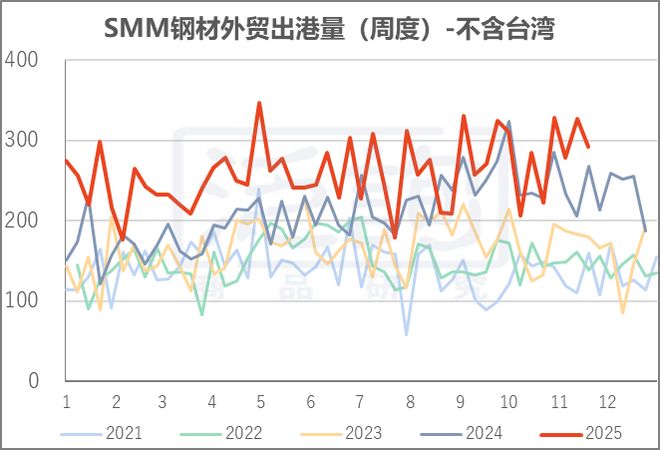
Core Viewpoint - The recent performance of rebar indicates a trend where, in the absence of macroeconomic stories, fundamentals significantly influence futures prices. The current fundamentals for rebar are relatively strong, with good inventory reduction and stable prices across the country [1][4]. Group 1: Market Fundamentals - Steel inventory reduction is performing well, contributing to a relatively strong fundamental backdrop, which helps black commodities resist declines during overall commodity downturns. It is expected that steel inventory reduction will continue this week [1]. - National prices for steel are holding firm, with northern regions experiencing specification shortages due to actual production cuts by steel mills. Eastern China is also facing specification shortages, although it is not the highest-priced region nationally [1][4]. - The overall inventory is flowing towards higher-priced areas, indicating a market adjustment based on price levels [1]. Group 2: Export Performance - Steel exports remain robust, with total outbound shipments showing a week-on-week decline but a year-on-year improvement. The total outbound shipments were 305.3 million tons, down 26.46 million tons week-on-week, and 292.04 million tons when excluding two ports in Taiwan, down 34.82 million tons [4]. - The outbound shipments from 28 major foreign ports continue to rise week-on-week, with a narrowing of year-on-year negative values [4]. Group 3: Price Trends and Market Sentiment - The main rebar futures contract (2601) has shown a fluctuating upward trend, closing higher but facing significant resistance, indicating a lack of confidence among bulls and an overall weak oscillating pattern [5]. - The coal market, particularly coking coal, is under pressure due to the increasing losses among steel mills, with the profitability ratio of steel mills dropping to 38.96%, continuing a 14-week decline. This has led to reduced procurement of coking coal by steel mills [5]. - The price of rebar in Changzhou is reported at 3160 yuan/ton, while the price for wire rod is 3390 yuan/ton, reflecting the current market conditions [6][7].

黑色金属数据日报-20251029
Guo Mao Qi Huo· 2025-10-29 08:49
1. Report Industry Investment Rating - The report does not provide an overall investment rating for the industry [4] 2. Core Viewpoints of the Report - The steel market shows a pattern of futures prices rising and then falling, with spot prices slightly increasing. There are positive factors in the macro - level, but the industry faces challenges such as high production and insufficient demand. The resolution of high - production issues requires time to accumulate contradictions [4] - The rebound space of ferrosilicon and silicomanganese is limited, and the prices tend to fluctuate. They are affected by factors such as downstream demand, supply - demand balance, and cost [4] - For coking coal and coke, the spot procurement sentiment has slowed down, and the futures are challenging the "anti - involution" trading high. The supply - demand tightness may ease in the future [4] - For iron ore, industrial contradictions are gradually accumulating, and it is necessary to pay attention to the overall sentiment of commodities. There may be an oversupply situation in the fourth quarter [4] 3. Summary by Related Catalogs Steel - Futures prices rose and then fell on Tuesday, with spot prices slightly increasing and trading volume shrinking. The macro - level has positive factors, and the industry is in a seasonal destocking phase. However, demand lacks explosive power, and it will take time to resolve high - production problems. It is recommended to take a wait - and - see or oscillatory approach for single - side trading, and observe the opportunity to go long on the spread between hot rolled coils and rebar when the 01 - contract spread is below 150 for arbitrage. Also, perform rolling stop - profit for cash - and - carry arbitrage [4] Ferrosilicon and Silicomanganese - Due to weak downstream demand, the black sector is under pressure. Although they rebounded under factors such as good supply - demand, cost support, low valuation, and a warm macro - environment, the rebound space is narrowing. The prices may fluctuate in the short term, and it is recommended to wait and see [4] Coking Coal and Coke - On the spot side, the trading atmosphere is average, and a northwest coking enterprise has initiated the third price increase, but the mainstream coking enterprises have not responded. The procurement sentiment has slowed down. On the futures side, the sector is oscillating, and the prices of coking coal and coke on the disk are weakening. The supply - demand tightness may ease in the future. It is recommended to wait and see, and industrial customers can consider selling hedging for part of the spot when the coke disk is at a premium [4] Iron Ore - There are many trade disputes, and it is necessary to pay attention to the impact of negotiation results on commodities. The supply side has no major problems, but there may be an oversupply situation in the fourth quarter. It is recommended to wait and see [4]
《黑色》日报-20251010
Guang Fa Qi Huo· 2025-10-10 01:06
Report Industry Investment Ratings - No industry investment ratings are provided in the reports. Core Views Steel Industry - During the holiday, steel prices were stable, and rebounded slightly after the holiday. Steel production decreased slightly, and inventory increased significantly due to stagnant demand. The supply - demand gap narrowed at the end of September. In October after the holiday, demand is expected to recover seasonally, and inventory is expected to decline seasonally. The steel export volume remained high on the 6th, and short - term supply and demand are basically balanced with little inventory pressure. The prices of rebar and hot - rolled coil in January contracts should focus on the support levels of 3050 and 3200 respectively. Unilateral trading has no obvious driver. For arbitrage, reverse spreads on monthly differentials should be considered when they are high, and the spread between hot - rolled coil and rebar should converge [3]. Iron Ore Industry - On the first trading day after the holiday, iron ore prices fluctuated and rose, mainly due to the peak - season expectation in October, high iron - making water production, and concerns about Australian ore supply. There are many disturbances on the supply side, but the overseas iron ore swap prices follow the domestic trend. Iron ore has the driving force to rebound, but the upward space depends on steel prices to give steel mills profits. Attention should be paid to the actual arrival volume of BHP shipments [5]. Coke and Coking Coal Industry - After the holiday, coke and coking coal futures rebounded from the bottom, showing a divergence between futures and spot prices. The coke market is expected to have another round of price increases, but may face downward pressure due to falling steel prices and compressed steel mill profits. The coking coal market is expected to be weak, but futures have advanced the rebound expectation due to supply - side disturbances. For trading strategies, long positions can be taken at low prices for coking coal 2601, reverse spreads can be considered for coke 1 - 5, and out - of - the - money call options for coke 2601 can be bought at low prices [8][9]. Summary by Related Catalogs Steel Industry Prices and Spreads - Rebar spot prices in East, North, and South China are 3240, 3210, and 3320 yuan/ton respectively. The spot prices of hot - rolled coil in East, North, and South China are 3350, 3290, and 3320 yuan/ton respectively [2][4]. Cost and Profit - The billet price is 2960 yuan/ton, up 10 yuan; the slab price is 3730 yuan/ton, unchanged. The profits of hot - rolled coil in East, North, and South China are 66, 16, and 46 yuan/ton respectively, down 30, 20, and 20 yuan/ton [3]. Supply - The daily average iron - making water production is 241.5 tons, down 0.3 tons (- 0.1%); the production of five major steel products is 863.3 tons, down 3.8 tons (- 0.4%); the rebar production is 203.4 tons, down 3.6 tons (- 1.7%) [3]. Inventory - The inventory of five major steel products is 1600.7 tons, up 127.9 tons (8.7%); the rebar inventory is 659.6 tons, up 57.4 tons (9.5%); the hot - rolled coil inventory is 412.9 tons, up 32.3 tons (8.5%) [3]. Demand - The building materials trading volume is 12.0 tons, up 3.9 tons (49.0%); the apparent demand for five major steel products is 751.4 tons, down 153.4 tons (- 17.0%) [3]. Iron Ore Industry Prices and Spreads - The spot prices of different types of iron ore at Rizhao Port increased slightly, with an increase of about 0.7% - 0.8%. The 5 - 9 spread increased by 7.9%, the 9 - 1 spread remained unchanged, and the 1 - 5 spread decreased by 7.1% [5]. Supply - The 45 - port weekly arrival volume is 2608.7 tons, up 248.2 tons (10.5%); the global weekly shipping volume is 3279.0 tons, down 196.4 tons (- 5.7%); the national monthly import volume is 10522.5 tons, up 61.5 tons (0.6%) [5]. Demand - The weekly average daily iron - making water production of 247 steel mills is 241.5 tons, down 0.3 tons (- 0.1%); the weekly average daily 45 - port ore - unloading volume is 0.0 tons, down 336.4 tons (- 100.0%); the national monthly pig - iron production is 6979.3 tons, down 100.5 tons (- 1.4%); the national monthly crude - steel production is 7736.9 tons, down 229.0 tons (- 2.9%) [5]. Inventory - The 45 - port inventory decreased by 0.2% week - on - week; the imported ore inventory of 247 steel mills increased by 3.1%; the inventory available days of 64 steel mills decreased by 16.0% [5]. Coke and Coking Coal Industry Prices and Spreads - The price of Shanxi quasi - first - grade wet - quenched coke (warehouse receipt) increased by 3.4%, and the price of Rizhao Port quasi - first - grade wet - quenched coke (warehouse receipt) decreased by 2.7%. The prices of coke and coking coal futures contracts in January and May increased. The coking profit decreased, while the sample coal mine profit increased by 7.4% [9]. Supply - The daily average coke production of all - sample coking plants remained unchanged, and that of 247 steel mills decreased by 0.2%. The weekly production of raw coal in Fenwei sample coal mines decreased by 3.6%, and the production of clean coal products decreased by 4.4% [9]. Demand - The weekly iron - making water production of 247 steel mills decreased by 0.1%, and the daily average coke production of all - sample coking plants remained unchanged, while that of 247 steel mills decreased by 0.2% [9]. Inventory - The total coke inventory decreased by 1.1%, the coke inventory of all - sample coking plants increased by 2.5%, and that of 247 steel mills decreased by 1.9%. The coking coal inventory of Fenwei coal mines increased by 14.5%, while that of all - sample coking plants and 247 steel mills decreased [9]. Supply - Demand Gap - The coke supply - demand gap increased slightly by 3.2% [9].
鲸鱼48小时狂扫20亿DOGE:0.245美元抄底点燃反弹,800%涨幅目标1.30美元?
Sou Hu Cai Jing· 2025-09-25 10:09
Group 1 - The core viewpoint is that significant whale buying activity in Dogecoin (DOGE) suggests a potential price rebound, with predictions of an 800% increase if historical patterns repeat [1][3][13] - Whales accumulated approximately 2 billion DOGE, valued at around $490 million, when the price briefly dropped to $0.245, mirroring previous accumulation patterns that led to price increases in July and September [3][10] - The TD sequential indicator showing a red "9" candle signals a potential price reversal, indicating that whale behavior has been a reliable precursor to DOGE rebounds this year [5][10] Group 2 - Analysts note that DOGE is currently trading at a critical intersection of two trend lines, with $0.246 acting as a significant support level [6][8][9] - Historical data suggests that price movements starting from the $0.246 area often lead to sustained upward trends, reinforcing its importance as a support level [8][9] - If DOGE maintains support at $0.246, it could retest the $0.30 resistance level, potentially initiating a rebound [11][15] Group 3 - Historical cycles indicate that DOGE has the potential for a price increase of 195% to over 800%, with target price ranges between $0.739 and $1.30 [10][14] - Recent price movements show that DOGE has experienced previous increases of 300% and 500%, suggesting a pattern that could lead to another significant rise if the current cycle continues [14] - A confirmation of bullish momentum would require increased trading volume alongside a breakout above $0.30, while a drop below $0.246 would indicate a weakening trend [15][16]

对二甲苯:短期有反弹,中期仍偏弱,PTA:短期有反弹,中期仍偏弱;MEG:1-5 月差反套
Guo Tai Jun An Qi Huo· 2025-09-24 06:30
Report Summary 1) Report Industry Investment Rating No specific industry investment rating is provided in the report. 2) Core Views of the Report - PX: Short - term rebound due to oil price support, but mid - term trend remains weak. Hold short positions and maintain reverse calendar spreads [6]. - PTA: Short - term cost support is strong, but mid - term unilateral trend is weak. Implement 1 - 5 reverse calendar spreads [7]. - MEG: Unilateral trend is bearish due to large supply pressure. Short on rallies and hold reverse calendar spreads [7][8]. 3) Summary by Related Catalogs Market Dynamics - **Crude Oil**: Due to the instability of the Russia - Ukraine situation and potential escalation of US sanctions on some oil - producing countries, international oil prices rose. NYMEX crude futures contract 11 rose $1.13/barrel (+1.81% month - on - month), and ICE Brent crude futures contract 11 rose $1.06/barrel (+1.59% month - on - month) [3]. - **PX**: On September 23, PX price declined. The Asian PX price dropped month - on - month as market sentiment and buying interest weakened. The 10 - month MOPJ was estimated at $586/ton CFR. The PX valuation on September 23 was $803/ton, a $5 decrease from September 22 [3][4]. - **PTA**: The spot price dropped to 4470 yuan/ton, with a mainstream basis of 01 - 79 [5]. - **MEG**: The spot price this week and next week was around 4325 yuan/ton (high) and 4270 yuan/ton (low), with a daily average of 4297 yuan/ton. The planned arrival at major ports from September 22 - 28 was about 7.3 tons [5]. - **Polyester**: On September 23, the sales of polyester yarn in Jiangsu and Zhejiang were generally weak, with an average sales rate of just over 30% by 3:30 pm. The sales of direct - spun polyester staple fibers were average, with an average sales rate of 44% by 3:00 pm [6]. Trend Intensity - The trend intensity of PX, PTA, and MEG is 0, indicating a neutral trend [6]. Fundamental Data | Futures | Yesterday's Closing Price | Change | Change Rate | Month Spread | Yesterday's Closing Price | Previous Day's Closing Price | Change | | --- | --- | --- | --- | --- | --- | --- | --- | | PX Main | 6530 | - 6592 | - 0.94% | PX11 - 1 | 4 | 18 | - 14 | | PTA Main | 4556 | - 30 | - 0.65% | PTA11 - 1 | - 22 | - 20 | - 2 | | MEG Main | 4212 | - 28 | - 0.66% | MEG1 - 5 | - 67 | - 54 | - 13 | | PF Main | 6250 | - 24 | - 0.38% | PF11 - 12 | 40 | 34 | 6 | | SC Main | 473.1 | - 9.9 | - 2.05% | SC11 - 12 | - 0.5 | - 0.2 | - 0.3 | | Spot | Yesterday's Price | Previous Day's Price | Change | | --- | --- | --- | --- | | PX CFR China ($/ton) | 803.33 | 808.33 | - 5 | | PTA East China (yuan/ton) | 4468 | 4515 | - 47 | | MEG Spot | 4292 | 4342 | - 50 | | Naphtha MOPJ | 597.5 | 595.62 | 1.88 | | Dated Brent ($/barrel) | 68.41 | 66.75 | 1.66 | | Spot Processing Fee | Yesterday's Price | Previous Day's Price | Change | | --- | --- | --- | --- | | PX - Naphtha Spread | 218.92 | 227.29 | - 8.38 | | PTA Processing Fee | 174.72 | 189.33 | - 14.61 | | Short - Fiber Processing Fee | 237.89 | 220.08 | 17.81 | | Bottle - Chip Processing Fee | 67.94 | 40.17 | 27.78 | | MOPJ Naphtha - Dubai Crude Spread | - 6.01 | - 6.01 | 0 | [2]
广发期货日评-20250923
Guang Fa Qi Huo· 2025-09-23 02:50
Industry Investment Ratings No investment ratings are provided in the report. Core Viewpoints - After the Fed cut interest rates by 25bp as expected, the market quickly digested the expectation and shifted to a volatile state. The technology sector still dominates the market. With the holiday approaching, capital activity has declined [2]. - Without incremental negative factors, 1.8% may be the high point for the 10 - year Treasury yield, but in the absence of strong positive factors, the short - term downward movement of the yield is also limited, with resistance around 1.75% [2]. - Gold remains in a high - level volatile state, and its volatility may rise again. Silver has high upward elasticity driven by突发事件 but the sentiment fades quickly [2]. - The EC futures contract continues to decline, and the main contract is weakly volatile [2]. - Steel exports support the valuation of the black commodity sector, and the spread between hot - rolled and rebar contracts is narrowing [2]. - The decline in iron ore shipments, the rebound in molten iron production, and the restocking demand support the strong price of iron ore [2]. - Coal prices at production areas are stable with a slight upward trend, and downstream restocking demand supports the upward trend of coal futures [2]. - The copper market is in a volatile consolidation phase, and the spot trading volume is good below 80,000 [2]. - There are more supply - side disturbances in Guinea for aluminum, and it is expected to fluctuate widely around the bottom of 2900 in the short term [2]. - The supply of tin ore imports remained low in August, providing fundamental support [2]. - Concerns about marginal increases in oil supply have led to a downward shift in short - term oil prices, but geopolitical factors still provide some support [2]. - The high supply pressure of urea persists, and the progress of urea factory orders before the National Day needs attention [2]. - The supply - demand outlook for PX has further weakened, and the cost side is also weak, putting short - term pressure on prices [2]. - The supply - demand situation of PTA has improved slightly but remains weak in the medium term, with limited driving forces [2]. - The short - fiber market has no obvious short - term drivers and follows the raw material price fluctuations [2]. - The demand for bottle - grade polyester chips has improved temporarily, but the supply - demand pattern remains loose, with limited upside for processing fees [2]. - The new ethylene glycol plant commissioning expectation and the weak terminal market put pressure on the upside of MEG [2]. - With the holiday approaching, the mid - stream of caustic soda is in a wait - and - see mode, and the spot price is under pressure [2]. - The spot procurement enthusiasm for PVC is average, and the market is in a volatile state [2]. - The supply - demand outlook for pure benzene has weakened, and the price driving force is limited [2]. - The weak oil price expectation puts pressure on the absolute price of styrene [2]. - The cost and supply - demand drivers for synthetic rubber are limited, and it may follow the trends of natural rubber and other commodities [2]. - The sentiment in the LLDPE spot market has weakened, and the basis remains stable [2]. - The number of PP plant overhauls has increased, and the trading volume is average [2]. - The port inventory of methanol has been accumulating, and the price is weak [2]. - After Argentina取消 the export tax, the two -粕 market is under pressure again [2]. - The pig slaughter pressure is high, and the spot price is unlikely to improve before the National Day [2]. - Under the bearish expectation, the corn futures price continues to decline [2]. - The Sino - US talks did not release incremental positive factors, and the oilseed market is in a volatile adjustment phase [2]. - The overseas sugar supply outlook is broad [2]. - With new cotton gradually coming onto the market, the supply pressure is increasing [2]. - The local domestic sales in the egg market still provide some support for demand, but the long - term trend is bearish [2]. - The early Fuji apples are traded at negotiated prices, and the sales volume is acceptable [2]. - The spot price of red dates fluctuates slightly, and the futures market is in a volatile state [2]. - The overall sentiment in the soda ash market has declined, and the price is trending weakly [2]. - The production and sales of glass have weakened, and the futures price has declined [2]. - Affected by typhoon weather, the rubber price is strongly volatile in the short term [2]. - The market sentiment for industrial silicon has weakened, and the price has declined [2]. - Affected by fundamental sentiment, the polysilicon price has dropped significantly [2]. - With no new news, the market sentiment for lithium carbonate is temporarily stable, and the fundamentals are in a tight balance during the peak season [2]. Summaries by Categories Equity Index Futures - Recommend selling short - term put options on the IF2509, IH2509, IC2509, and MO2511 contracts near the strike price of 6600 when the index pulls back to collect option premiums [2]. Treasury Futures - The T2512 contract is expected to fluctuate between 107.5 and 108.35. For single - side strategies, investors are advised to trade within the range, and consider going long lightly when the price pulls back to the low level if the market sentiment stabilizes, but should pay attention to taking profits in time. For the spot - futures strategy, the basis of the TL contract is oscillating at a high level, and investors can appropriately participate in the basis narrowing strategy [2]. Precious Metals - For gold, consider buying at low levels or buying out - of - the - money call options instead of going long. For silver, sell out - of - the - money put options when the price is high [2]. Freight Index Futures (EC) - Consider the spread arbitrage between the December and October contracts [2]. Black Commodities - For steel, try to go long on pullbacks and narrow the spread between the January hot - rolled and rebar contracts. For iron ore, go long on the 2601 contract at low levels, with the reference range of 780 - 850, and consider a long - iron - ore short - hot - rolled strategy. For coking coal, go long on the 2601 contract at low levels, with the reference range of 1150 - 1300, and consider a long - coking - coal short - coke strategy. For coke, go long on the 2601 contract at low levels, with the reference range of 1650 - 1800, and consider a long - coking - coal short - coke strategy [2]. Non - ferrous Metals - For copper, the main contract reference range is 79,000 - 81,000. For aluminum, the main contract reference range is 20,600 - 21,000. For aluminum alloy, the main contract reference range is 20,200 - 20,600. For zinc, the main contract reference range is 21,500 - 22,500 [2][3]. Energy and Chemicals - For crude oil, temporarily observe on the single - side, with the support range of WTI at [60, 61], Brent at [63, 64], and SC at [467, 474]. For urea, wait for the implied volatility to rise and then narrow it. For PX, short on rebounds following the crude oil trend and pay attention to the support around 6500. For PTA, short on rebounds following the crude oil trend, pay attention to the support around 4500, and consider a rolling reverse spread strategy between the January and May contracts. For short - fiber, the single - side strategy is the same as PTA, and the processing fee oscillates between 800 - 1100. For bottle - grade polyester chips, the single - side strategy is the same as PTA, and the processing fee is expected to fluctuate between 350 - 500. For ethylene glycol, sell call options on rallies and consider a reverse spread strategy between the January and May contracts. For caustic soda, adopt a short - selling strategy. For PVC, observe. For pure benzene, it will follow the benzene - ethylene and oil price fluctuations in the short term. For benzene - ethylene, short on absolute price rebounds and widen the spread between the November benzene - ethylene and November pure - benzene contracts. For synthetic rubber, pay attention to the support around 11,400. For LLDPE, observe near the previous low. For PP, observe in the short term. For methanol, observe as the downward space is currently limited [2]. Agricultural Products - For soybeans and rapeseed meal, adjust weakly in the short term. For live pigs, pay attention to the reverse spread opportunities between the January - May and March - July contracts. For corn, it is in a weak trend. For oils, the main palm oil contract adjusts weakly in the short term. For sugar, hold short positions. For cotton, adopt a short - selling strategy in the short term. For eggs, control the short - position size. For apples, the main contract runs around 8300. For red dates, it is bearish in the medium - to - long term. For soda ash, observe. For glass, observe. For rubber, observe. For industrial silicon, the main price fluctuation range is expected to be between 8000 - 9500 yuan/ton. For polysilicon, observe temporarily. For lithium carbonate, the main contract is expected to run between 70,000 - 75,000 [2].
益生股份:二季度业绩环比改善 关注三季度价格反弹
Ge Long Hui· 2025-08-02 17:46
Group 1 - The company reported a revenue of 1.32 billion yuan in the first half of 2025, a year-on-year decrease of 3.98%, and a net profit attributable to shareholders of 6 million yuan, down 96.6% year-on-year [1] - In Q2 2025, the company achieved a revenue of 698 million yuan, a year-on-year increase of 1.42%, while the net profit attributable to shareholders was 19 million yuan, a decrease of 73.75% year-on-year [1] - The company estimated the sales of commodity broiler chicks in Q2 2025 to be approximately 160 million, an increase of 14% year-on-year, with an average selling price of 2.4 yuan per chick, up about 0.1 yuan from Q1 2025 [1] Group 2 - The sales of 909 chicks in Q2 2025 were approximately 21 million, a year-on-year decrease of 5%, with an average selling price of 0.8 yuan per chick, which declined compared to Q1 2025 [2] - The company sold about 24,000 breeding pigs in Q2 2025, a year-on-year increase of 361%, with an average selling price of 2,471.3 yuan per pig, indicating a continuous release of breeding pig capacity [2] - Due to the low prices of chicks, the company has adjusted its profit forecast, expecting net profits attributable to shareholders of 200 million, 570 million, and 590 million yuan for 2025-2027, representing year-on-year changes of -60.2%, +186.3%, and +2.6% respectively [2]

【期货热点追踪】库存连降刺激价格反弹,铁矿石期货为何屡次冲击720元关口无功而返?
news flash· 2025-04-22 04:25
Core Viewpoint - The article discusses the recent fluctuations in iron ore futures prices, particularly the repeated attempts to breach the 720 yuan per ton mark, which have been unsuccessful despite a continuous decline in inventory levels [1] Group 1: Price Trends - Iron ore futures prices have been experiencing volatility, with multiple attempts to reach the 720 yuan threshold failing [1] - The decline in inventory levels has been a significant factor influencing price movements, suggesting a potential for price recovery [1] Group 2: Inventory Dynamics - Continuous reduction in iron ore inventories has been observed, which typically supports price increases [1] - The relationship between inventory levels and price trends indicates that while lower inventories can lead to higher prices, other market factors may be at play [1]