家用电器

Search documents
“申”挖数据 | 资金血氧仪
申万宏源证券上海北京西路营业部· 2025-07-02 02:00
Group 1 - Main capital outflow in the last two weeks totaled 138.204 billion, with net inflows in the home appliance and coal industries, while the top three industries for net outflows were computer, basic chemicals, and national defense [2] - Current margin trading balance is 1,838.493 billion, up 0.94% from the previous period, with financing balance at 1,826.553 billion and securities lending balance at 11.940 billion [2] - In the last two weeks, the number of rising stocks exceeded the number of falling stocks, with the top three industries in terms of growth being communication, computer, and electronics, while the top three industries with declines were beauty care, oil and petrochemicals, and pharmaceuticals [2] Group 2 - The overall A-share strength analysis score is 5.97, with the CSI 300 score at 5.83, the ChiNext score at 6.28, and the STAR Market score at 6.40, indicating a neutral range [2] - The Shanghai Composite Index has broken through the March high, but there is still a gap to a bull market initiation, with short-term indices possibly reaching higher levels but unlikely to achieve significant long-term increases [3] - Future focus on opportunities in robotics and national defense industries, with a recommendation to pay attention to Hong Kong stock opportunities [3]


美国新政策生效,欧盟公布反制手段,彻底撕破脸了,信号强烈
Sou Hu Cai Jing· 2025-07-01 14:23
Group 1 - The United States implemented a new tariff policy on June 23, imposing a 50% tariff on eight categories of steel household appliances, including refrigerators, dryers, and washing machines [1][3] - This policy is part of a series of protectionist measures aimed at creating a favorable environment for domestic industries and encouraging manufacturing to return to the U.S. [3][5] - The European Union responded swiftly by announcing a package of tariffs on $950 billion worth of U.S. products, covering various sectors such as civil aircraft, automobiles, medical devices, agricultural products, and alcoholic beverages [3][5] Group 2 - The EU's response is driven by long-standing trade imbalances and concerns over the impact of U.S. policies on EU industries and employment [5][8] - The trade conflict between the U.S. and EU is expected to disrupt global supply chains, affecting raw material supply, component production, and product sales [5][8] - The ongoing trade tensions are likely to hinder global economic growth, as increased tariffs raise product prices and suppress consumer demand [5][8] Group 3 - In the short term, the trade conflict will exacerbate tensions between the U.S. and EU, leading to higher costs for businesses and consumers [8] - Long-term implications may include the EU pursuing greater strategic autonomy, reducing reliance on the U.S. market and technology, and enhancing its own defense capabilities [8]

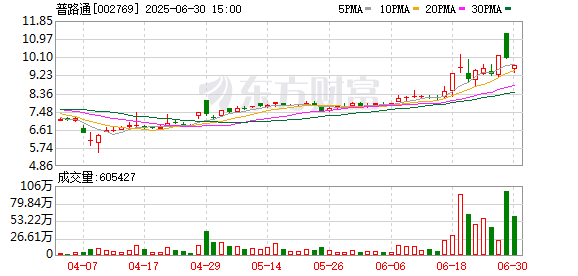
交通运输行业资金流出榜:普路通等6股净流出资金超3000万元
Zheng Quan Shi Bao Wang· 2025-06-30 09:20
Market Overview - The Shanghai Composite Index rose by 0.59% on June 30, with 28 out of the 31 sectors experiencing gains, led by the defense and military industry with a rise of 4.35% and the media sector with an increase of 2.82% [2] - The non-bank financial sector, banking, and transportation sectors were the biggest losers, with declines of 0.77%, 0.34%, and 0.09% respectively [2] Capital Flow Analysis - The net outflow of capital from the two markets was 1.613 billion yuan, with 10 sectors seeing net inflows [2] - The defense and military sector had the highest net inflow of 3.315 billion yuan, followed by the media sector with a net inflow of 1.441 billion yuan [2] Transportation Sector Performance - The transportation sector saw a slight decline of 0.09%, with a net capital outflow of 276 million yuan [3] - Out of 125 stocks in the transportation sector, 50 stocks rose, including one that hit the daily limit, while 60 stocks fell [3] - The top three stocks with the highest net inflow in the transportation sector were Shentong Metro with 121.43 million yuan, Baoshui Technology with 66.98 million yuan, and China Merchants Shipping with 46.91 million yuan [3] Top Gainers in Transportation Sector - Shentong Metro had a gain of 10.06% with a turnover rate of 6.98% and a net capital inflow of 121.43 million yuan [4] - Baoshui Technology increased by 4.51% with a turnover rate of 14.25% and a net inflow of 66.98 million yuan [4] - China Merchants Shipping saw a slight increase of 0.16% with a net inflow of 46.91 million yuan [4] Top Losers in Transportation Sector - Pulutong experienced a decline of 3.39% with a net outflow of 52.30 million yuan [5] - Sanyangma fell by 1.31% with a net outflow of 41.65 million yuan [5] - China National Airlines decreased by 0.75% with a net outflow of 39.32 million yuan [5]

2025年7月A股及港股月度金股组合:中报季将至,关注业绩线索-20250630
EBSCN· 2025-06-30 07:12
Group 1 - The A-share market showed signs of recovery in June, with major indices generally rising, particularly the ChiNext Index which increased by 6.1% [1][8] - The performance of various sectors was mixed, with telecommunications, non-bank financials, banks, and non-ferrous metals performing well, while consumer sectors like food and beverage, beauty care, and home appliances lagged [1][8] - The Hong Kong stock market also experienced a rebound, with the Hang Seng Index and other indices showing increases of 5.0%, 4.8%, and 4.4% respectively by June 26, 2025 [1][12] Group 2 - The report anticipates that the A-share index will maintain a volatile trend, with external risks potentially easing but still requiring vigilance regarding U.S. policies [2][16] - The upcoming earnings season is expected to highlight sectors with strong performance, particularly steel, computers, electric equipment, and defense industries, which are projected to have relatively high growth rates [2][18] - Stable assets such as high-dividend stocks and gold are recommended for attention, as they have historically performed well during uncertain market conditions [2][18] Group 3 - The Hong Kong market is expected to continue its volatile trend, influenced by liquidity constraints and uncertainties in U.S.-China relations [3][23] - Long-term investment strategies should focus on a "barbell" approach, emphasizing technology growth and high-dividend stocks, particularly in sectors like telecommunications, utilities, and banking [3][23] - The report identifies several key stocks for July 2025 in both A-shares and Hong Kong markets, including Newguang, Gree Electric, Tencent Holdings, and Xiaomi Group, among others [3][29][32]






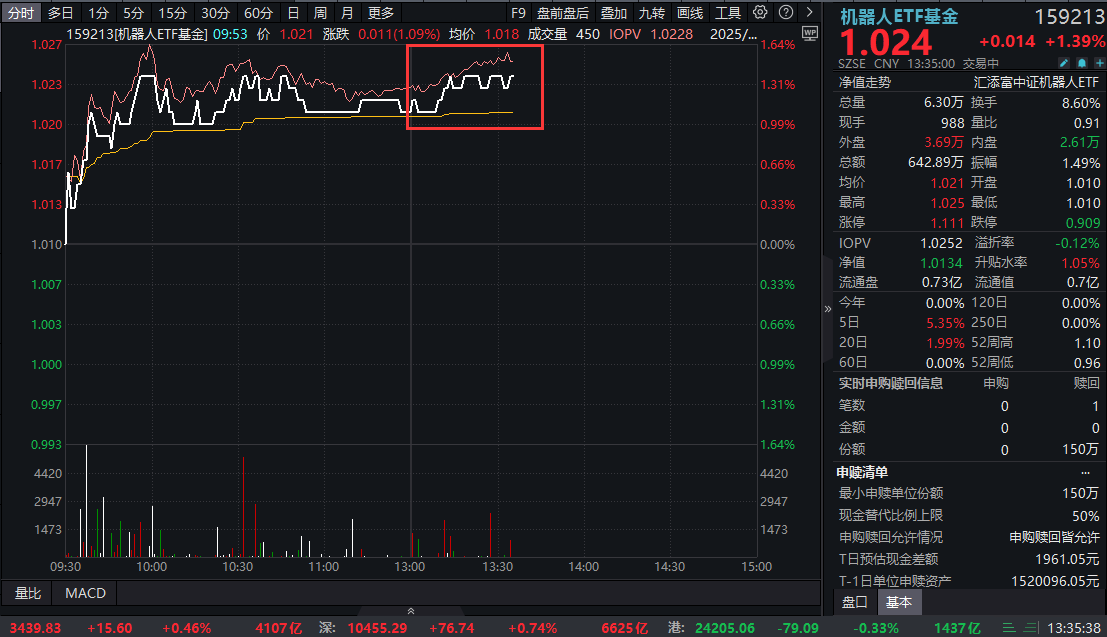
脑机接口+外骨骼机器人,马斯克再出重磅消息!机器人ETF基金(159213)涨1.39%,有望终结两连阴!
Xin Lang Cai Jing· 2025-06-30 05:56
Group 1 - The core viewpoint of the news is that the A-share market is experiencing a recovery, with the Robot ETF Fund (159213) showing a rise of 1.39%, indicating a potential end to its two-day decline [1] - The majority of the index component stocks of the Robot ETF Fund have seen significant gains, with notable increases in defense and military stocks, such as Jingpin Special Equipment rising over 15%, and other companies like Ecovacs and Unisplendour also showing strong performance [3][4] Group 2 - The external market for wearable exoskeleton robots is projected to grow from $2.49 billion in 2025 to $30.56 billion by 2032, with a compound annual growth rate (CAGR) of 43.1% [7] - The Chinese exoskeleton robot market has seen substantial growth, increasing from 0.03 million yuan in 2016 to 440 million yuan in 2021, with a CAGR of 171.19%, and is expected to reach 4.2 billion yuan by 2025 [7] - The application of exoskeleton robots spans military, medical, and civilian sectors, enhancing capabilities in various fields such as rehabilitation for the disabled and elderly, as well as improving soldiers' operational efficiency [6][7] Group 3 - Human-shaped robots are anticipated to have a market potential exceeding one trillion yuan, with applications in diverse tasks such as logistics, maintenance, and elder care [9][12] - The demand for human-shaped robots is expected to reach over 100 million units in the long term, corresponding to a market space exceeding 15 trillion yuan by 2025 [12][13] - The integration of brain-machine interface technology with exoskeleton robots is seen as a significant advancement, enabling precise control and enhancing rehabilitation processes for patients [6][9]

机器学习因子选股月报(2025年7月)-20250630
Southwest Securities· 2025-06-30 04:35
Quantitative Factor and Model Analysis Quantitative Models and Construction 1. **Model Name**: GAN_GRU Model **Model Construction Idea**: The GAN_GRU model combines Generative Adversarial Networks (GAN) for generating realistic price-volume sequential features and Gated Recurrent Units (GRU) for encoding these sequential features into predictive signals for stock selection [2][9]. **Model Construction Process**: - **GRU Component**: - Input features include 18 price-volume features such as closing price, opening price, turnover, and turnover rate [10][13]. - Training data consists of the past 400 trading days' features, sampled every 5 trading days, forming a 40x18 feature matrix to predict the cumulative return over the next 20 trading days [14]. - Data preprocessing includes outlier removal and standardization at both time-series and cross-sectional levels [14]. - The GRU network consists of two layers (GRU(128, 128)) followed by an MLP (256, 64, 64), with the final output being the predicted return (pRet) [18]. - **GAN Component**: - The generator (G) uses an LSTM model to preserve the sequential nature of the input features, while the discriminator (D) employs a CNN to process the two-dimensional price-volume feature "images" [29][32]. - The generator's loss function is: $$ L_{G} = -\mathbb{E}_{z\sim P_{z}(z)}[\log(D(G(z)))] $$ where \( z \) represents random noise, \( G(z) \) is the generated data, and \( D(G(z)) \) is the discriminator's output probability [20][21]. - The discriminator's loss function is: $$ L_{D} = -\mathbb{E}_{x\sim P_{data}(x)}[\log D(x)] - \mathbb{E}_{z\sim P_{z}(z)}[\log(1-D(G(z)))] $$ where \( x \) is real data, \( D(x) \) is the discriminator's output for real data, and \( D(G(z)) \) is the output for generated data [23][25]. - Training alternates between updating the discriminator and generator parameters until convergence [26]. **Model Evaluation**: The GAN_GRU model effectively captures both sequential and cross-sectional price-volume features, leveraging the strengths of GANs and GRUs for stock selection [2][9][29]. --- Quantitative Factors and Construction 1. **Factor Name**: GAN_GRU Factor **Factor Construction Idea**: The GAN_GRU factor is derived from the GAN_GRU model's output, representing the encoded price-volume sequential features as a stock selection signal [2][9]. **Factor Construction Process**: - The factor is derived from the predicted return (pRet) output of the GAN_GRU model [18]. - The factor undergoes industry and market capitalization neutralization, followed by standardization [18]. **Factor Evaluation**: The GAN_GRU factor demonstrates strong predictive power across various industries, with consistent performance in both IC and excess returns [36][40]. --- Model Backtest Results 1. **GAN_GRU Model**: - **IC Mean**: 11.54% - **ICIR**: 0.89 - **Turnover Rate**: 0.83 - **Recent IC**: 8.34% - **1-Year IC Mean**: 11.09% - **Annualized Return**: 37.71% - **Annualized Volatility**: 24.95% - **IR**: 1.56 - **Max Drawdown**: 27.29% - **Annualized Excess Return**: 24.95% [36][37]. --- Factor Backtest Results 1. **GAN_GRU Factor**: - **IC Mean**: 11.54% - **ICIR**: 0.89 - **Turnover Rate**: 0.83 - **Recent IC**: 8.34% - **1-Year IC Mean**: 11.09% - **Annualized Return**: 37.71% - **Annualized Volatility**: 24.95% - **IR**: 1.56 - **Max Drawdown**: 27.29% - **Annualized Excess Return**: 24.95% [36][37].





耐用消费产业行业周报:新消费创造成长主线,结构性牛市曙光已现-20250629
SINOLINK SECURITIES· 2025-06-29 13:46
Investment Rating - The report emphasizes a strong hold on high-conviction new consumption leaders, focusing on themes such as emotional consumption, functional value, channel transformation, and brand expansion abroad [2][8] Core Insights - The new consumption sector is expected to see a rise, with a focus on both established leaders and traditional companies adopting new consumption strategies [2][8] - The report suggests that Q3 will present structural opportunities, while Q4 is anticipated to see leading companies reaching new highs [2][8] - The light industry manufacturing sector is highlighted for its growth potential, particularly in new tobacco products and the home goods market [3][16] - The textile and apparel industry is advised to focus on differentiated companies with high growth potential [5][20] - The beauty and personal care sector remains robust, with recommendations for high-value stocks [5][21] - The home appliance sector shows strong performance in sales, particularly during the 618 shopping festival [5][22][23] - The retail sector is experiencing a shift, with online sales stabilizing and offline stores undergoing significant transformations [5][24][25] Summary by Sections New Consumption - Focus on holding high-conviction new consumption leaders and exploring traditional companies with new consumption mindsets [2][8] - Q3 is seen as a period for structural opportunities, while Q4 may bring valuation shifts for leading companies [2][8] Light Industry Manufacturing - New tobacco products are on an upward trend, with significant market expansion expected [3][16] - The home goods market is stabilizing, with a focus on companies showing signs of recovery [3][16] Textile and Apparel - The sector is advised to prioritize companies with unique advantages and high growth potential [5][20] Beauty and Personal Care - The sector remains high in demand, with recommendations for companies showing strong performance and recovery potential [5][21] Home Appliances - The sector has shown excellent sales performance, particularly during promotional events, with a notable increase in production [5][22][23] Retail Sector - The online retail landscape is stabilizing, with significant changes in offline retail strategies [5][24][25]
413股获杠杆资金大手笔加仓
Zheng Quan Shi Bao Wang· 2025-06-27 01:42
Market Overview - On June 26, the Shanghai Composite Index fell by 0.22%, while the total margin balance in the market reached 1.838493 trillion yuan, an increase of 9.259 billion yuan compared to the previous trading day [1] Margin Balance by Market - As of June 26, the margin balance in the Shanghai market was 928.631 billion yuan, up by 3.383 billion yuan; in the Shenzhen market, it was 904.095 billion yuan, up by 5.695 billion yuan; and in the Beijing Stock Exchange, it was 5.767 billion yuan, up by 0.181 billion yuan [1] Industry Analysis - Among the industries tracked by Shenwan, 27 industries saw an increase in margin balance, with the electronics sector leading with an increase of 1.703 billion yuan, followed by the computer and communication sectors with increases of 1.339 billion yuan and 1.260 billion yuan, respectively [1] Individual Stock Performance - A total of 2,094 stocks experienced an increase in margin balance, accounting for 56.90% of the total. Among these, 413 stocks had a margin balance increase of over 5% [1] - The stock with the largest increase in margin balance was Tonghui Information, with a latest margin balance of 7.3965 million yuan, reflecting an increase of 87.58% from the previous trading day, and its stock price rose by 13.79% [1] - Other notable stocks with significant margin balance increases included Keshine New Materials and Honghai Technology, with increases of 60.29% and 52.59%, respectively [1] Top 20 Stocks by Margin Balance Increase - The average increase in stock prices among the top 20 stocks by margin balance increase was 4.94%, with notable gainers including Patel and Youji Co., with increases of 30.00% and 28.96%, respectively [2][3] Stocks with Decreased Margin Balance - In contrast, 1,586 stocks saw a decrease in margin balance, with 188 stocks experiencing a decline of over 5%. The stock with the largest decrease was Ruixing Co., with a margin balance of 1.5274 million yuan, down by 34.44% [4][5]
奥普科技: 上海锦天城(杭州)律师事务所关于奥普科技2025年限制性股票激励计划之法律意见书
Zheng Quan Zhi Xing· 2025-06-25 19:45
Group 1 - The company is implementing a 2025 restricted stock incentive plan to attract and retain talent, aligning the interests of shareholders, the company, and core team members for long-term development [6][8][25] - The plan includes a total of 617,000 restricted shares, with 497,000 shares for initial grants and 120,000 shares reserved, representing 1.58% of the company's total share capital [10][11][25] - The initial grant price for the restricted shares is set at 5.30 yuan per share, which is below the average trading price prior to the announcement [17][18][25] Group 2 - The incentive plan is designed for 17 specific individuals, including directors, senior management, and core personnel, excluding independent directors and significant shareholders [9][22][25] - The plan outlines a vesting schedule where shares will be released from restrictions after 12, 24, and 36 months, with specific percentages released at each interval [12][13][25] - The company has fulfilled necessary legal procedures for the plan, including board and supervisory committee reviews, and is awaiting shareholder approval to proceed [20][21][25] Group 3 - The company confirms that it will not provide financial assistance to incentive recipients, ensuring compliance with relevant regulations [23][25] - The supervisory committee has expressed that the incentive plan will not harm the interests of the company or its shareholders [24][25] - The plan requires disclosure of the incentive recipients' names and positions, with a public notice period of at least 10 days before the shareholder meeting [22][25]

主力资金丨尾盘抢筹券商龙头,净流入8.8亿元
Zheng Quan Shi Bao Wang· 2025-06-25 10:50
Group 1 - Non-bank financial, computer, defense, and home appliance industries received significant capital inflows, with the non-bank financial sector leading at a net inflow of 5.688 billion yuan [1] - The A-share market saw a substantial increase, with the Shanghai Composite Index reaching a new high for the year and the ChiNext Index rising over 3% [1] - Among 31 industries, only 6 experienced net capital inflows, while 9 industries, including power equipment and pharmaceuticals, saw significant outflows exceeding 1 billion yuan [1] Group 2 - Financial technology stocks gained attention, with 63 individual stocks receiving net inflows exceeding 100 million yuan [2] - Dongfang Caifu topped the net inflow list with 3.759 billion yuan, marking a new high since October 18, 2024, and accumulating a total net inflow of 5.147 billion yuan over three days [3] - Ningde Times followed with a net inflow of 763 million yuan, with its stock price increasing by 3.65% [4] Group 3 - The financial sector continued to strengthen, with the financial technology index rising for the third consecutive day, and several financial technology stocks, including Dongfang Caifu, receiving significant capital inflows [5] - The People's Bank of China is planning to develop a new stage financial technology development plan to promote digital transformation in finance [5] - Major capital outflows were noted in stocks like Wanma Technology, which saw a net outflow of 593 million yuan, and Zhongji Xuchuang with 509 million yuan [6][7] Group 4 - At the end of the trading session, there was a notable capital inflow into Dongfang Caifu, amounting to 1.736 billion yuan, with the non-bank financial sector receiving the highest end-of-day inflow of 1.317 billion yuan [8] - The trading volume for Dongfang Caifu reached 33.235 billion yuan, setting a new record for the year and making it the top stock in the A-share market [8] - Other stocks with significant end-of-day inflows included Ningde Times and BYD [8]