咖啡

Search documents
皮爷咖啡大规模关店,“星巴克之父”怎么了?
新浪财经· 2025-08-17 07:59
Core Viewpoint - Peet's Coffee, known as the "father of Starbucks," is facing challenges in the Chinese market, leading to the closure of several stores, including its first store in South China, due to profitability issues and high operational costs [3][10][12]. Store Closures - Peet's Coffee has closed multiple locations in key urban areas, including its first store in Guangzhou and several others in Beijing and Hangzhou, indicating a trend of store closures in response to financial performance [3][16]. - The South China flagship store in Shenzhen, which opened in September 2021, closed after nearly four years of operation, with staff citing low profitability as a reason [6][10]. Financial Performance and Cost Structure - The monthly operating cost for a Peet's Coffee store in high-end malls is estimated at around 300,000 yuan, requiring sales of approximately 450 cups daily to break even, which is increasingly difficult in the current competitive environment [11][19]. - Despite a reported 19% organic sales growth in China for Peet's Coffee in 2021 and 2023, the company has slowed its expansion, opening only 51 new stores in 2024 compared to 98 in 2023 [13][15]. Market Trends and Consumer Preferences - A significant shift in consumer preferences has been observed, with nearly 80% of consumers now favoring drinks priced between 10-20 yuan, while only 4% are willing to pay over 25 yuan for a single cup [4][19]. - The rise of low-cost coffee brands like Luckin Coffee, which offers regular promotions at 9.9 yuan, has disrupted traditional pricing perceptions and increased competition for premium coffee brands [19][20]. Industry Challenges - The overall coffee market in China is nearing saturation, with a reported closure of 52,000 coffee shops in the past year, highlighting the intense competition faced by high-end coffee brands [18][20]. - Peet's Coffee's operational challenges reflect broader industry trends, where premium brands are struggling to maintain profitability amid rising costs and changing consumer preferences [20].

2025“爽爽贵阳·世界风味嘉年华”暨“爽爽贵阳·咖啡飘香”系列活动启幕
Zhong Guo Xin Wen Wang· 2025-08-17 02:11
Group 1 - The event "2025 'S爽贵阳·World Flavor Carnival'" and "S爽贵阳·Coffee Aroma" aims to promote Guizhou's culinary culture and coffee industry, enhancing the city's brand as a food paradise [1][2] - The event features a variety of activities including gourmet dining, coffee culture promotion, and competitions, running from August 16 to August 17 [1][2] - The "S爽贵阳味·Summer Fire" dining event showcases local delicacies and aims to enhance the cultural value and historical significance of Guizhou's cuisine [1][2] Group 2 - The "S爽贵阳·Coffee Aroma" event includes the 2025 Guizhou (International) All-round Barista Competition and a coffee market, attracting over 50 leading coffee brands [2] - Guizhou's coffee consumption is growing at an annual rate of 18%, making it one of the fastest-growing cities in China, with over 3,000 coffee shops currently operating [2] - The establishment of the Guizhou Coffee Industry College and the signing of six projects during the event are expected to inject new momentum into the local coffee industry [2] Group 3 - The event employs a "1+3" matrix model, integrating main and sub-venues, as well as offline and online platforms to create a collaborative environment across different districts [3] - The initiative aims to showcase Guizhou's premium coffee and gourmet food while attracting global culinary brands, thereby stimulating market activity and consumer potential [3]
海外需求推动2025年上半年迪拜多种商品交易中心新增逾1100家企业
Shang Wu Bu Wang Zhan· 2025-08-15 14:41
Core Insights - In the first half of 2025, the Dubai Multi Commodities Centre (DMCC) added over 1,100 companies, bringing the total membership close to 26,000, with significant contributions from Chinese, Turkish, and British enterprises [1] - The growth is attributed to new licensing options for Special Purpose Vehicles (SPVs) and holding companies, with active participation from technology and blockchain firms [1] - The number of members in the crypto center surpassed 700, marking a 38% year-on-year increase, while the total number of technology companies exceeded 3,300 [1] Industry Developments - The real estate sector is rapidly developing, with new dining brands entering the market [1] - Commodities trading is thriving, with coffee prices reaching new highs and diamond trading remaining stable [1] - DMCC has introduced digital assets backed by water resources, promoting innovation within the industry [1] Company Ecosystem - Many companies cite DMCC's comprehensive ecosystem, advanced infrastructure, and specialized industry centers as key reasons for their decision to establish operations there [1]
北京星巴克基金会五年投入超4100万元,宣布升级公益项目
Xin Jing Bao· 2025-08-15 09:23
Core Insights - The Beijing Starbucks Foundation has invested over 41 million yuan in public welfare initiatives over the past five years, benefiting approximately 200,000 people [1] - The foundation's first public welfare project, "Exhibition Heart Plan," will receive an additional donation of 2.4 million yuan over the next three years to support employment opportunities for youth with intellectual disabilities [1] - The foundation aims to integrate social and commercial value, focusing on rural revitalization in Yunnan and urban community development [1] Group 1 - The foundation was established in July 2020 and is registered with the Beijing Civil Affairs Bureau [1] - It has created a public welfare network that covers both rural and urban areas, addressing various social issues such as aging, disabilities, and environmental concerns [1] - The foundation has developed a long-term revitalization strategy in Yunnan, focusing on industry support, talent cultivation, and cultural heritage [1] Group 2 - The "Exhibition Heart Plan" project has successfully assisted over 2,000 youth with intellectual disabilities in obtaining career transition services, with more than 200 securing internships and jobs [2] - The upgraded phase of the project will collaborate with the Haidian District Family Support Center for Individuals with Intellectual Disabilities, aiming to benefit over 6,500 individuals [2] - The project will focus on building a collaborative system among schools, enterprises, communities, and government, and will develop specialized training courses for roles such as baristas and pastry chefs [2]

“奶茶爆改小蛋糕”引发全网挑战!我发现一个新风口
东京烘焙职业人· 2025-08-15 08:33
Core Viewpoint - The beverage industry is experiencing a creative transformation where consumers are repurposing drinks like milk tea and coffee into desserts, indicating a trend towards "beverage + dessert" innovation [22][31][33]. Group 1: Consumer Trends - Consumers are creatively using leftover drinks to make desserts, such as turning milk tea into cakes, which has gained significant popularity on social media [5][10][12]. - The trend of "everything can be milk tea" has emerged, with various recipes combining milk tea with food, leading to a surge in user-generated content [18][24]. - The DIY approach not only reduces waste but also provides a unique and enjoyable consumer experience [28]. Group 2: Brand Engagement - Brands like Xiangpiaopiao are actively participating in this trend by promoting user-generated content and sharing recipes, which enhances brand visibility and consumer engagement [12][29]. - The trend has led to a low-cost, high-exposure marketing opportunity for brands, as consumers share their creative uses of beverages online [29][41]. Group 3: Industry Implications - The beverage industry's shift towards dessert-like products is becoming more pronounced, with major brands exploring this crossover to attract consumers [30][35]. - The success of transforming classic beverage flavors into baked goods suggests a high potential for new product development in the beverage sector [34][39]. - This trend is expected to drive increased beverage consumption, benefiting physical stores as well [41].


累计投入超4100万元 北京星巴克基金会成立五周年
Bei Jing Shang Bao· 2025-08-15 08:15
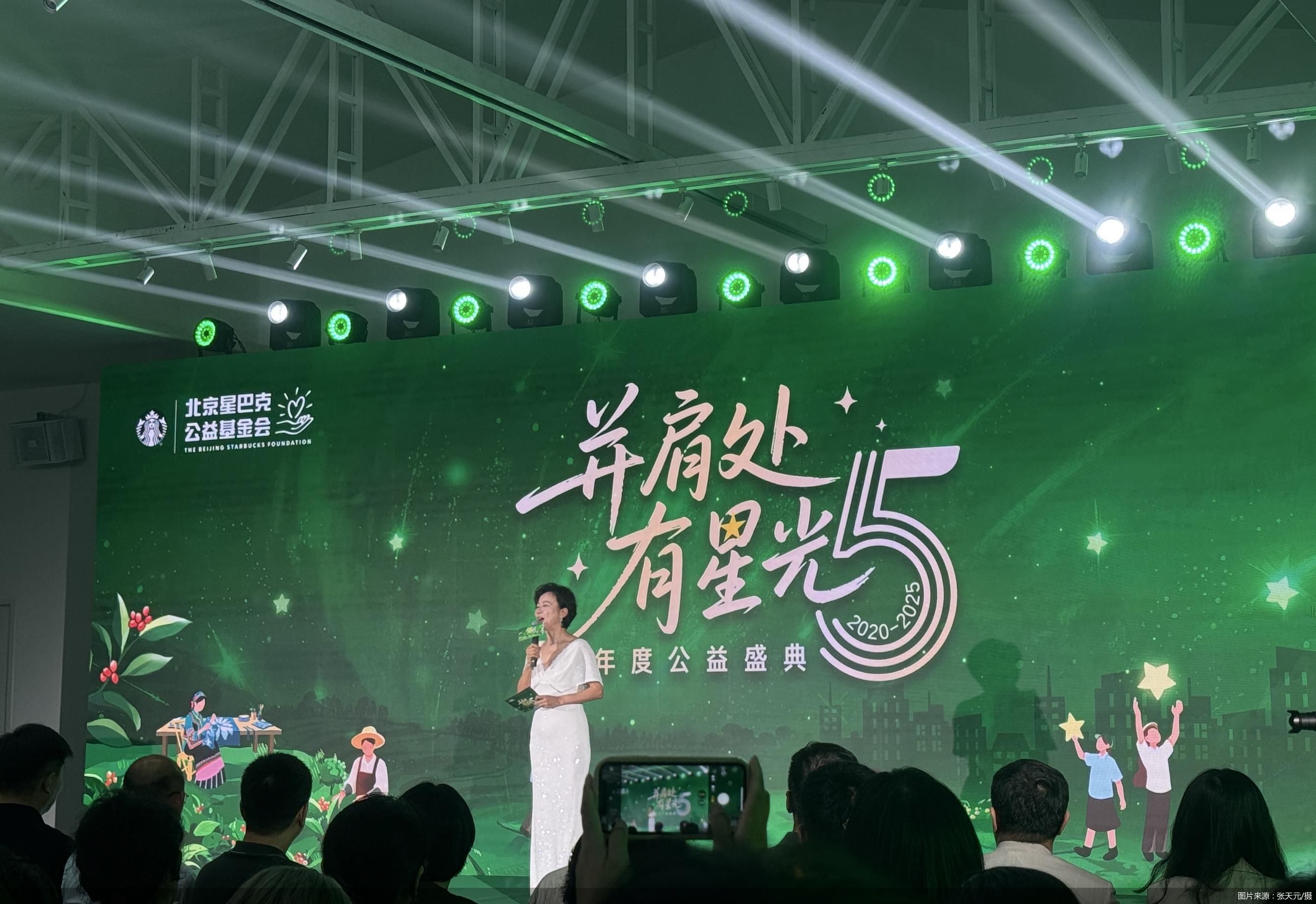
北京商报讯(记者 张天元)8月15日,北京商报记者了解到,北京星巴克公益基金会迎来五周年庆典。通过聚焦云南乡村振兴与非遗传承,探索城市社区发 展和残障融合,基金会已累计投入超4100万元公益资金,直接惠及约20万人。庆典活动上,基金会的首个公益项目"展心计划"迭代升级,未来三年基金会将 捐赠240万元,继续为心智障碍青年(心青年)点亮求职之路。 据介绍,早在基金会成立前,星巴克就开启了招募残障伙伴、开设手语门店的探索。2021年,星巴克基金会发起首个公益项目"展心计划",聚焦心智障碍青 年就业领域,一期项目通过从零构建起覆盖特校、企业、社会组织、政策倡导的"融合就业"全链条支持体系,成功帮助2000多位心青年获得职业转衔服务, 其中200多人走上实习和就业岗位。展心计划二期项目将再度与北京市海淀区融爱融乐心智障碍者家庭支持中心合作,聚焦和深化"校-企-社-政"协同体系, 继续深化建设咖啡师、面点师等特校实训课程,开发企业"融合岗位",探索社区就近灵活就业新机会等。 成立五年来,北京星巴克公益基金会聚焦"生机社区""融合社区""韧性社区"三大领域。截至目前,未来星社区项目已覆盖200多个社区,带动超30万居民参 ...
北京星巴克基金会五周年 累计投入超4,100万元 惠及20万人
Zhong Guo Shi Pin Wang· 2025-08-15 06:33
Core Insights - The Beijing Starbucks Foundation celebrated its fifth anniversary, having invested over 41 million yuan in public welfare, benefiting approximately 200,000 people [1][12] - The foundation's first public welfare project, the "Exhibition Heart Plan," has been upgraded, with a commitment to donate 2.4 million yuan over the next three years to support employment for youth with intellectual disabilities [1][8] - The foundation aims to create a sustainable public welfare model that integrates urban and rural community development, focusing on various social issues including aging, disability, and environmental concerns [6][12] Group 1 - The foundation has established a public welfare network that covers both rural and urban areas, focusing on cultural heritage and community support [6][12] - The "Exhibition Heart Plan" has successfully helped over 2,000 youth with intellectual disabilities transition into employment, with plans to expand its reach to over 6,500 beneficiaries in the next phase [8][12] - The foundation's projects have engaged over 300,000 residents in community welfare initiatives, demonstrating a strong commitment to social responsibility [12] Group 2 - Starbucks has been actively promoting inclusive employment for individuals with disabilities, having initiated recruitment and training programs even before the foundation's establishment [7][12] - The foundation has received recognition as a 4A-level social organization, reflecting its commitment to social value and community development [16] - Future initiatives will continue to focus on creating replicable and scalable public welfare models that support both rural and urban community prosperity [12][16]

从云南乡村到城市社区:星巴克公益新图景持续延展
Hua Xia Shi Bao· 2025-08-15 06:31
Core Insights - The Beijing Starbucks Foundation has made significant contributions to social welfare over the past five years, focusing on rural revitalization in Yunnan and the integration of individuals with disabilities into the workforce, with a total investment exceeding 41 million yuan benefiting around 200,000 people [1][2] Employment Integration Initiatives - The foundation's "Zhanxin Plan" aims to support youth with intellectual disabilities by building a comprehensive employment ecosystem, addressing barriers such as inadequate pre-employment education and insufficient job opportunities [2][3] - The first phase of the "Zhanxin Plan" successfully assisted over 2,000 youth in transitioning to employment, with more than 200 securing internships and jobs [2] - The second phase of the project will expand its collaboration with local support centers, focusing on creating training programs and flexible job opportunities, with an expected reach of over 6,500 beneficiaries [3] Rural Revitalization Efforts - The foundation has committed nearly 45 million yuan to support coffee-growing communities in Yunnan, directly benefiting over 10,000 coffee farmers through various initiatives [4] - The "Shared Value Seeking Beans Yunnan" project aims to enhance local talent development and cultural revitalization in ten coffee villages over three years, fostering community engagement and sustainable development [4][5] - The "Xingxiu Future" project will empower rural women and promote intangible cultural heritage, with an additional donation of 5 million yuan planned for the next three years [5]
北京星巴克基金会五周年:累计投入超4100万元、惠及20万人
Xin Lang Ke Ji· 2025-08-15 02:59
今年6月,星巴克中国咖啡公使刘咪与顾心成参加了星巴克首届全球咖啡师大赛,每人取得了优异成 绩,并获得了1万美元公益奖金。在庆典上,两位伙伴分别将奖金投入"未来星社区"和"星绣未来"项 目,他们也将在未来深度参与公益共创。 据悉,2020年7月,星巴克发起的北京星巴克公益基金会在北京市民政局注册成立, 8月15日,北京星巴克公益基金会举行五周年庆典。通过聚焦云南乡村振兴与非遗传承,探索城市社区 发展和残障融合,基金会已累计投入超4100万元公益资金,直接惠及约20万人。庆典活动上,基金会的 首个公益项目"展心计划"迎来迭代升级,未来三年基金会将捐赠240万元,继续为心智障碍青年(心青 年)点亮求职之路。 2023年,基金会首次参加社会组织等级评估,被评为4A级社会组织。基金会围绕生机社区、融合社 区、韧性社区三大领域发起了十二个公益项目,包括灾害救助、乡村振兴、残障融合就业、推广非遗文 化和友好社区共建等。截至目前,未来星社区项目已覆盖200多个社区,带动超30万居民参与家门口的 公益,星绣未来项目则覆盖了1350位乡村女性。云南乡村振兴项目已在三十余个咖啡村庄,助力10000 多名咖农过上好生活。 2021年 ...

美团启动“堂食提振”;快手联名蜜雪冰城;拉夏贝尔任命董事长
Sou Hu Cai Jing· 2025-08-15 02:25
Group 1: Dairy Industry - French dairy giant Lactalis has been granted exclusivity in acquisition negotiations with Fonterra, indicating a significant strategic decision to divest its consumer brands business [3] - This exclusivity suggests that Lactalis is likely to become the final buyer of Fonterra's consumer brands [3] Group 2: Retail Industry - Seven & i Holdings announced a growth strategy for fiscal year 2030, planning to invest 300 billion yen to add 1,000 new convenience stores in Japan and renovate 5,000 existing stores [5] - The initiatives include store renovations, introduction of the "Seven Cafe" series, and expansion of the delivery service "7NOW," aiming to increase sales from 12 billion yen in fiscal year 2024 to 120 billion yen by fiscal year 2030 [5] Group 3: Food Delivery Industry - Meituan has launched a "Dine-in Boost" plan, distributing in-store consumption vouchers to all members, aiming to support struggling small restaurants amid ongoing competition in the food delivery sector [7] - The initiative currently covers 100,000 physical stores, with plans for further expansion [7] Group 4: Fashion Industry - S&P Global has downgraded the credit outlook for French luxury group Kering from "stable" to "negative," citing a significant sales decline expected in the first half of 2025, particularly in the Asia-Pacific and Chinese markets [17] - Kering's revenue in the Asia-Pacific region fell by 22% year-on-year, with core brand Gucci's sales decreasing by approximately 25% [17] Group 5: Corporate Governance - Tims Coffee announced the resignation of board member Meizi Zhu, who was the only Tencent representative on the board, following Tencent's investment in the company [20] - The company does not plan to fill Zhu's vacancy on the board [20] Group 6: Corporate Leadership Changes - Julee Co., a New Third Board listed company, announced that Chairman Tong Enwen is temporarily unable to fulfill his duties due to health reasons, with Gao Zhaohui appointed as acting chairman [22] - This change occurs against the backdrop of the founder's advanced age and the company's critical IPO period [22] Group 7: Corporate Restructuring - La Chapelle appointed Wang Guoliang as the new chairman following the resignation of Zhao Jinwen, with Wang controlling 65% of the company's shares [25] - This appointment aims to ensure the synchronization of restructuring negotiations, asset disposal, and delisting processes [25]