
债券

Search documents
市场信心不足,日本国债遭投资者抛售
Sou Hu Cai Jing· 2025-11-19 01:16
由于市场担忧日本首相高市早苗提出的扩张性财政政策会导致财政状况进一步恶化,日本国债遭投资者 抛售,长期利率持续上升。 此前一天,日本股债汇遭"三杀"。日本东京股市日经225指数18日收于48702.98点,大跌3.22%,跌幅为 今年4月初以来最大。同一天,日本国债也遭抛售,日元汇率下挫。 △日本央行总部(资料图) 当地时间19日,日本新发10年期国债收益率升至1.76%,为2008年6月以来新高。 来源:央视新闻客户端 ...

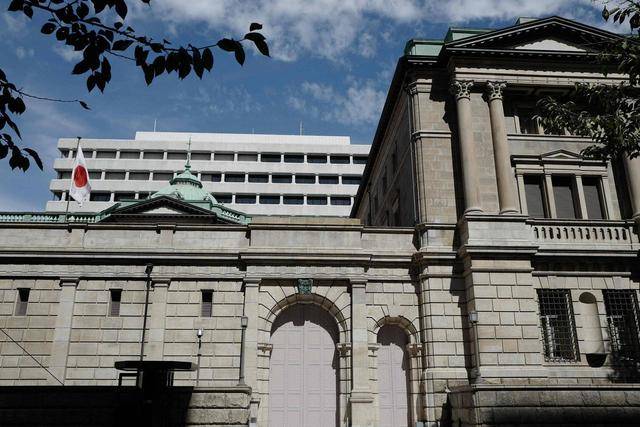
市场信心不足 日本国债遭投资者抛售
Sou Hu Cai Jing· 2025-11-19 01:16
Core Viewpoint - Japan's 10-year government bond yield has risen to 1.76%, the highest level since June 2008, driven by concerns over the expansionary fiscal policy proposed by Prime Minister Fumio Kishida, which may worsen the fiscal situation [1] Group 1: Market Reactions - The rise in bond yields has led to a sell-off of Japanese government bonds by investors, resulting in a continuous increase in long-term interest rates [1] - On the previous day, Japan's stock, bond, and currency markets experienced significant declines, with the Nikkei 225 index dropping 3.22%, marking the largest decline since early April of this year [1] - The same day, the Japanese yen also depreciated as a result of the bond sell-off [1]
“债冷股热”背后:全球资金“落子”中国新棋局
Shang Hai Zheng Quan Bao· 2025-11-18 18:42
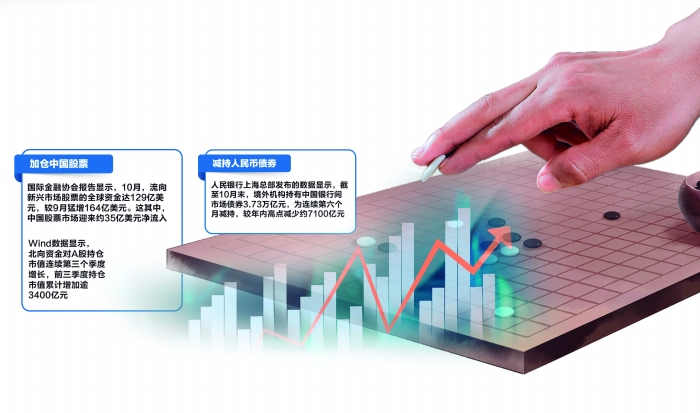
Core Insights - The global investment landscape for RMB assets is showing a divergence, with foreign institutional investors reducing their holdings in RMB bonds while showing increased enthusiasm for Chinese equities [2][3] - The shift from bonds to stocks is driven by various factors including interest rate differentials, stock market trends, and declining foreign exchange returns [5][6] Group 1: Investment Trends - International investors have significantly increased their allocation to emerging market stocks, with a notable inflow of $12.9 billion in October, marking a $16.4 billion increase from September [3] - The Chinese stock market has attracted approximately $3.5 billion in net inflows, continuing to be a key destination for global funds since the beginning of the year [3][5] - In contrast, foreign holdings of Chinese interbank market bonds have decreased for six consecutive months, totaling 37.3 trillion RMB, down approximately 710 billion RMB from the year's peak [3][5] Group 2: Factors Influencing Investment Decisions - The decline in interest in RMB bonds is attributed to factors such as interest rate spreads, stock market enthusiasm, and reduced foreign exchange returns [5][6] - The stock market's appeal is bolstered by breakthroughs in technology sectors and supportive capital market policies, with indices like MSCI China and Hang Seng showing around 30% gains year-to-date [5][8] - The current environment has led to a rotation of funds from the bond market to the stock market, influenced by a bearish trend in the bond market [5][6] Group 3: Future Outlook - International investors are expected to adopt a more rational and layered approach to allocating Chinese assets, focusing on both short-term factors like interest rates and long-term value [6][7] - The investment structure is anticipated to diversify, with increased attention on growth sectors such as technology, renewable energy, and high-end manufacturing [6][7] - Despite short-term pressures on capital outflows, the Chinese bond market remains attractive for long-term investment due to its scale, depth, and low correlation with global markets [7]
国家买进40亿美元主权债,极可能是一场改写规则的高端金融博弈
Sou Hu Cai Jing· 2025-11-18 18:39
Core Viewpoint - The issuance of up to $4 billion in sovereign bonds by the Chinese government in Hong Kong is not merely a borrowing action but a strategic move to rewrite the rules of the financial system and test systemic pressures against the backdrop of international relations and financial dynamics [1] Group 1: Strategic Implications - The issuance represents a significant step in establishing a "China Dollar Curve," allowing for a new pricing framework for Chinese dollar-denominated bonds, which could reduce reliance on U.S. Treasury benchmarks [1] - By issuing bonds with a strong credit rating and no default history, China is positioning itself as a credible alternative in the global fixed income market, potentially altering the demand dynamics for U.S. Treasuries [1][5] Group 2: Financial Mechanics - The Chinese government holds $3.2 trillion in foreign reserves, with approximately $1 trillion in long-term U.S. Treasuries, and the issuance of short-term dollar bonds is a strategy to manage interest rate risk by introducing "negative duration" on the liability side [3] - The raised funds will be directed towards countries in need of foreign currency, creating a closed loop of "dollar assets—commodities—RMB settlement," enhancing the offshore RMB's liquidity and credit premium [3] Group 3: Geopolitical Context - The ongoing weaponization of currencies, particularly in the context of the Russia-Ukraine conflict, has led China to establish a high-credit, traceable record of transactions in the dollar system, which could serve as a reference point for international investors in extreme scenarios [4] - The issuance sends a strong signal of confidence in China's growth and currency management, contrasting with the rising fiscal deficit in the U.S., which could reshape the perception of safe assets in the long term [5] Group 4: Market Dynamics - The Federal Reserve's decision to increase the balance sheet reduction to $95 billion per month has created a structural shortage of offshore dollars, making the issuance of dollar bonds a strategic move to "repatriate" offshore dollars without depleting foreign reserves [6] - This action could mitigate the risks of currency depreciation among emerging markets due to dollar shortages, reinforcing the narrative of the RMB as a regional stabilizing anchor [6]
资产配置全球跟踪2025年11月第3期:资产概览:美联储降息预期出现逆转
GUOTAI HAITONG SECURITIES· 2025-11-18 14:10
Group 1: Asset Overview - The Federal Reserve's interest rate cut expectations have reversed, leading to volatile movements in gold and silver prices during the week of November 10-14, with the Nasdaq experiencing significant sell-offs [1] - The Brazilian IBOVESPA index has seen a monthly increase of 10% [1] Group 2: Investment Highlights - As of the week ending November 14, commodities have outperformed equities and bonds, with COMEX silver and Shanghai gold leading in gains. Oil prices have also risen, while global stock market performance has shown significant divergence [6][19] - The correlation between A-shares and Hong Kong, US, and Indian stocks has marginally decreased, indicating a weakening relationship [6][7] - The risk premium of A-shares relative to 10-year government bonds has increased, while the risk premium of US stocks relative to 10-year US Treasuries has decreased [9][12] Group 3: Equity Market Performance - Hong Kong and Brazilian stocks continue to rise, with the IBOVESPA up 10% over the past month. The global stock market overall increased by 0.4% as of November 14, with developed markets showing slight rebounds [19][24] - In emerging markets, A-share indices generally declined, with the ChiNext 50 and the ChiNext index experiencing the most significant pullbacks of -3.8% and -3.0%, respectively [19][24] Group 4: Bond Market Analysis - The Chinese bond market is characterized by a "bull steep" yield curve, with the 10Y-2Y yield spread widening. The 10-year yield remains stable at 1.81% [37][39] - In contrast, the US bond market exhibits a "bear flat" yield curve, with the probability of a December rate cut by the Federal Reserve dropping to 44.4% from 66.9% [37][39] Group 5: Commodity and Currency Trends - Silver and copper have led commodity gains, with the CRB commodity index rising by 0.5%. The dollar index has decreased by 0.3%, while major currencies like the euro and pound have appreciated against the dollar [6][12] - The gold-to-oil ratio has increased, while the gold-to-silver and gold-to-copper ratios have decreased, indicating changing dynamics in the precious metals market [12][18]
【笔记20251118— 债市:心如止水、古井无波、买即成佛】
债券笔记· 2025-11-18 14:05
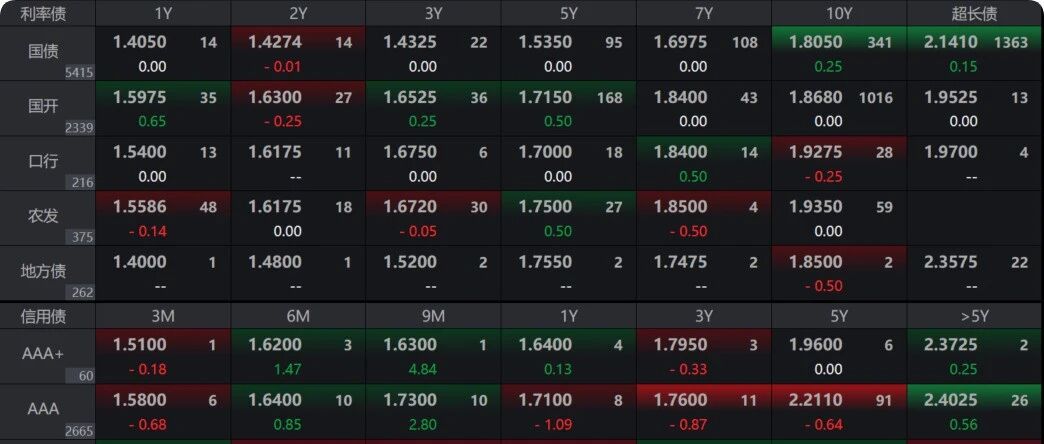
Group 1 - The bond market shows a slight upward trend in long-term bond yields, with the central bank conducting a 407.5 billion yuan reverse repurchase operation, resulting in a net injection of 3.7 billion yuan [3][4]. - The interbank funding rates remain stable, with DR001 around 1.53% and DR007 around 1.52%, indicating a marginal contraction in the funding environment [4][6]. - The stock market is performing weakly, with a slight decline of 0.81% in the A-share market, while the Nikkei 225 index dropped by 3.22%, influenced by rising Japanese bond yields [6][7]. Group 2 - The 10-year government bond yield opened at 1.80% and fluctuated around 1.805%, reflecting a stable sentiment in the bond market despite external pressures [6][7]. - The trading volume in the repo market shows a significant decrease, with R001 at 62.2 billion yuan and R007 at 6.96 billion yuan, indicating a contraction in market activity [5][6]. - The overall market sentiment is described as calm, with no significant news impacting the trading environment, leading to a stable bond market despite the weak stock performance [3][6].
2.3%以上的债还有多少?
SINOLINK SECURITIES· 2025-11-18 13:59
Group 1: Overall Situation of Credit Bonds - As of November 17, 2025, private enterprise real estate bonds and industrial bonds in the stock credit bonds have higher overall valuation yields and spreads than other varieties [2][8]. - Compared with last week, the yields of most non - financial and non - real estate industrial bonds have declined. In particular, the yields of 1 - year - within public perpetual and 3 - 5 - year private non - perpetual bonds of private enterprise varieties have decreased by 11.2BP and 5.4BP respectively; more than half of the real estate bond varieties have seen a decline in yields, with the 2 - year - within state - owned private non - perpetual bonds declining by more than 2.5BP, while the public non - perpetual bonds of the same term have adjusted [2][3][8]. Group 2: Urban Investment Bonds Public Urban Investment Bonds - In public urban investment bonds, the weighted average valuation yields of Jiangsu and Zhejiang provinces are both below 2.5%; urban investment bonds with yields exceeding 4.5% are found in district - level areas of Guizhou; in other regions, the spreads in Yunnan, Gansu and other places are also relatively high [2][15]. - Compared with last week, the yields of more than half of the public urban investment bonds have declined, with the average decline of 3 - 5 - year varieties reaching 1.2BP. Specifically, the varieties with relatively large declines in yields include 3 - 5 - year non - perpetual bonds in district - level areas of Henan, 3 - 5 - year non - perpetual bonds in district - level areas of Guizhou, and 1 - year - within and 2 - 3 - year perpetual bonds in district - level areas of Guangxi [2][15]. Private Urban Investment Bonds - In private urban investment bonds, the weighted average valuation yields of coastal provinces such as Shanghai, Zhejiang, Guangdong, and Fujian are below 2.85%; varieties with yields higher than 3.5% are found in prefecture - level and district - level areas of Yunnan and Guizhou, as well as district - level areas of Gansu; the spreads in other regions such as Guangxi and Qinghai are also relatively high [2][23]. - Compared with last week, the yields of private urban investment bonds have generally declined, with the average decline of 3 - 5 - year varieties reaching 2.6BP. Specifically, the varieties with relatively large declines in yields include 1 - year - within perpetual bonds in prefecture - level areas of Fujian, 2 - 3 - year perpetual bonds in prefecture - level areas of Hebei, 2 - 3 - year non - perpetual bonds in district - level areas of Shanxi, and 1 - 2 - year non - perpetual bonds in prefecture - level areas of Ningxia, with corresponding declines of 8.6BP, 9.3BP, 12.6BP, and 22.7BP respectively [2][23]. Group 3: Financial Bonds - In financial bonds, the varieties with relatively high valuation yields and spreads include capital replenishment tools of urban and rural commercial banks and leasing company bonds [4][8]. - Compared with last week, the overall yields of financial bonds have declined, but there are differences among terms. Specifically, the yields of 2 - 3 - year and 3 - 5 - year private non - perpetual leasing bonds have decreased by more than 3.5BP, while the yields of 2 - year - within private and 1 - year - within public non - perpetual varieties have increased slightly; the trading sentiment of bank sub - bonds has improved, especially the yields of 1 - 2 - year rural commercial bank and 1 - year - within urban commercial bank perpetual bonds have decreased by 8.2BP and 6.6BP respectively; the yields of commercial financial bonds have also mainly declined, among which the 1 - 2 - year varieties of joint - stock banks and urban commercial banks have yield declines of 3.4BP and 2.9BP respectively; in addition, the performance of ordinary bonds of securities companies is stronger than that of sub - bonds, and the yields of private non - perpetual bonds over 1 year have all declined significantly [4][8].
债市日报:11月18日
Xin Hua Cai Jing· 2025-11-18 08:52
Core Viewpoint - The bond market continues to show strength, with government bond futures rising across the board, indicating a stable demand for long-term bonds over short-term ones [1][2]. Market Performance - Government bond futures closed higher, with the 30-year main contract up 0.06% at 116.53, the 10-year contract up 0.03% at 108.5, the 5-year contract up 0.03% at 105.92, and the 2-year contract up 0.01% at 102.49 [2]. - The interbank market showed mixed performance in major interest rate bonds, with the 30-year government bond yield down 0.35 basis points to 2.136% and the 10-year policy bank bond yield down 0.2 basis points to 1.866% [2]. International Market Trends - In North America, U.S. Treasury yields were mixed, with the 2-year yield up 0.63 basis points to 3.608% and the 10-year yield down 0.78 basis points to 4.137% [3]. - In Asia, Japanese bond yields saw a rise in the long-term segment, with the 10-year yield up 1.7 basis points to 1.746% [4]. Primary Market - The China Development Bank's financial bonds had successful bids with yields of 1.5240% for 2-year, 1.7081% for 5-year, and 1.8859% for 10-year bonds, indicating strong demand with bid-to-cover ratios of 2.82, 3.16, and 3.7 respectively [5]. Funding Conditions - The central bank conducted a 4075 billion yuan reverse repurchase operation at a fixed rate of 1.40%, resulting in a net injection of 37 billion yuan for the day [6]. - Short-term Shibor rates mostly increased, with the overnight rate rising by 1.7 basis points to 1.525% [6]. Institutional Insights - Citic Securities noted that the banking system's liabilities are relatively stable, and the reliance on bond allocation through the financial market remains high, providing solid support for the bond market [7]. - Huatai Securities highlighted that the tightening supply of convertible bonds has led to increased valuations, suggesting a shift towards quality new bonds or underlying stocks for investors [8].



跌势持续 日经225指数收盘下跌3.22%
Sou Hu Cai Jing· 2025-11-18 07:22
Core Viewpoint - The Tokyo stock market experienced significant declines on the 18th, with both major indices falling sharply, reflecting concerns over Japan's fiscal situation under the current administration [2] Group 1: Stock Market Performance - The Nikkei 225 index closed at 48,702.98 points, down 1,620.93 points, a decrease of 3.22% from the previous trading day [2] - The Tokyo Stock Exchange Price Index closed at 3,251.1 points, down 96.43 points, a decline of 2.88% from the previous trading day [2] Group 2: Bond Market Trends - The yield on the 10-year newly issued government bonds rose to 1.755%, the highest level since June 2008 [2] - The yield on 30-year government bonds reached a historical high, indicating increased selling pressure in the bond market [2] - Market analysts attribute these trends to concerns that Japan's fiscal situation may worsen under the current administration, leading to increased bond sell-offs [2]

两只“黑天鹅”,突袭
Zheng Quan Shi Bao· 2025-11-18 06:51
Group 1: Market Overview - Global market sentiment has rapidly deteriorated, with significant declines across major indices including a drop of over 3% in the Nikkei 225 and more than 2% in the MSCI Asia-Pacific index [1] - The cryptocurrency market has also been severely impacted, with Bitcoin falling below $90,000 and Ethereum dropping below $3,000 [1] Group 2: U.S. Interest Rate Expectations - Market expectations have shifted from anticipating no rate cuts in December to a belief that there will be no cuts in the first half of next year, influenced by internal disagreements within the Federal Open Market Committee (FOMC) [3] - The likelihood of a rate cut in December is now estimated at 50%, with inflation risks remaining a primary concern for the Federal Reserve [3] Group 3: Japan's Economic Impact - Japan's 10-year government bond yield has surged above 1.75%, nearing its highest level since 2008, due to expectations of a large-scale fiscal stimulus plan from Prime Minister Fumio Kishida [5][7] - Kishida's proposed stimulus plan could exceed 17 trillion yen, raising concerns about Japan's already high public debt levels [7] - Japan's economy contracted by 1.8% in the third quarter, marking its first negative growth in six quarters, primarily due to a decline in exports influenced by U.S. tariffs [7] Group 4: Global Liquidity Concerns - The rise in Japanese government bond yields is closely linked to global liquidity, affecting capital flows and potentially leading to increased global borrowing costs [8] - Analysts warn that sustained increases in Japanese bond yields could lead to a "global financial apocalypse," tightening liquidity and dragging global growth down to 1% [8]
