
电信

Search documents
香槟开早了大半年!GDP超日本“坐四望三”,印度还是太超前
Di Yi Cai Jing· 2025-06-03 14:11
Core Viewpoint - India's GDP is projected to surpass Japan, positioning it as the fourth-largest economy globally, with aspirations to enter the top three within the next few years [1][3][4]. Economic Growth and Projections - The CEO of the National Transformation Council, B. V. R. Subrahmanyam, announced that India's economy has reached $4 trillion, surpassing Japan [3]. - According to the IMF, India's GDP for the fiscal year 2025 is estimated at $41,870.17 billion, slightly exceeding Japan's projected $41,864.31 billion [4]. - India's economic growth has been robust, while Japan has faced stagnation, with a mere $2,000 billion increase in output from 2000 to 2019 [4]. Challenges and Concerns - Despite the growth in GDP, there are concerns regarding the concentration of wealth, with the top 1% of the population holding over 40% of the nation's wealth [5]. - India's per capita GDP is projected to be around $2,800 in 2025, ranking approximately 140th globally, indicating a need for improvement in average income levels [5]. - The Modi government has emphasized the importance of transitioning from a service-oriented economy to a more balanced structure that includes a robust manufacturing sector [8][9]. Manufacturing Sector Initiatives - The "Production Linked Incentive" (PLI) scheme was introduced to boost manufacturing in various sectors, but progress has been slow, with only 37% of the target achieved by 2024 [9]. - Challenges in attracting manufacturing investments include difficulties in finding suitable labor, despite India's young population [9][10]. Future Aspirations - Prime Minister Modi has set ambitious goals for India's economic development, aiming to position the country as a developed nation by 2047 [8]. - Economic experts emphasize the need for improvements in education and job creation to fully leverage India's demographic potential [10].


数智赋能烟火气:太原抱鼓巷打造“文化 + 科技”夜经济新标杆
Zhong Guo Jin Rong Xin Xi Wang· 2025-06-03 12:11
Group 1 - The first "5G+AR full-scene digital commercial street" project in Shanxi Province, located in Taiyuan's Xiaodian District, was officially launched, integrating cutting-edge technology with traditional commerce to enhance the night economy [1][2] - The project aims to deeply integrate traditional street areas with modern consumption through immersive interactive experiences, thereby revitalizing the night economy in Taiyuan and Shanxi [1][2] - The project is a collaboration between Xiaodian District, Shanxi Baogu Lane Commercial Management Co., and China Telecom Taiyuan Branch, utilizing advanced technologies such as visual recognition positioning and cloud rendering [2] Group 2 - Three innovative application scenarios have been developed: digitalization of cultural landmarks, intelligent interactive experiences, and ecological resource integration [2] - The digitalization of cultural landmarks involves high-precision modeling to transform historical buildings and cultural symbols into interactive AR scenes, allowing visitors to experience Jin liquor culture [2] - The project aims to create a consumption ecosystem that benefits the government, enterprises, and citizens, promoting a win-win situation through enhanced consumer engagement and economic growth [2] Group 3 - Xiaodian District plans to use the Baogu Lane project as a pilot to address the challenges of digital transformation in traditional commercial areas and to explore replicable models for digital transformation in commercial districts [2] - The initiative aligns with trends in "night economy" and "experience economy," aiming to provide practical examples for the development of the night economy and digital economy in the province [2]
ETF日报:在地缘政治冲突前景不明、美元持续走弱的大背景下,黄金仍有长期配置的价值,可关注黄金基金ETF
Xin Lang Ji Jin· 2025-06-03 11:13
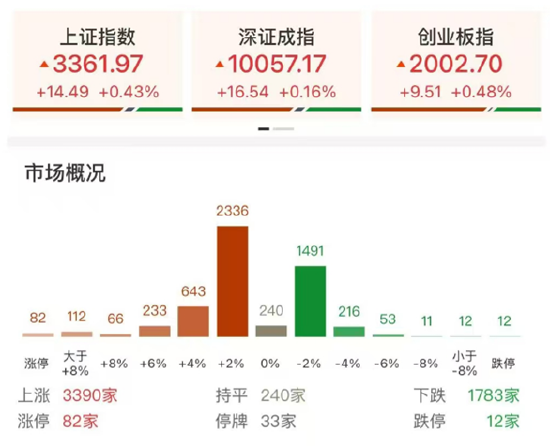
Market Overview - The market experienced a rebound with slight increases in the three major indices, with the Shanghai Composite Index rising by 0.43% and the Shenzhen Component Index by 0.16% [1] - The total trading volume in the Shanghai and Shenzhen markets reached 1.14 trillion yuan, an increase of 22.3 billion yuan compared to the previous trading day [1] - The market focus was on the pharmaceutical and consumer sectors, with over 3,300 stocks rising [1] A+H Listing Trend - There has been an acceleration in the trend of mainland companies planning to list in Hong Kong, supported by policy measures and market recovery [3] - Since September last year, 8 A-share companies have listed in Hong Kong, raising a total of 981.1 billion HKD, with nearly 50 more A-share companies planning to follow suit [3] - The estimated liquidity demand for future listings is between 1,500 to 1,800 billion HKD, which is approximately 0.7 times the average daily trading volume of the Hong Kong main board since the beginning of the year [3] Hong Kong Market Structure Improvement - The entry of quality companies into the Hong Kong Stock Exchange is expected to improve the market structure and create a positive cycle between enterprises and capital [5] - The long-standing issue of a high proportion of "old economy" sectors like finance and telecommunications in the Hong Kong market may be alleviated, enhancing market attractiveness [5] Gold Investment Outlook - In the context of geopolitical uncertainties and a weakening dollar, gold is seen as a valuable long-term investment [6][9] - The U.S. trade policy remains uncertain, with potential adjustments that could impact the market, including tariffs and export controls [6] - Investors are encouraged to consider low-cost entry into gold funds and ETFs [6][9] Gaming Industry Growth - The Chinese gaming market is projected to reach 273.51 billion yuan by April 2025, with a year-on-year growth of 21.93% [10] - The mobile gaming sector is expected to grow to 204.24 billion yuan, reflecting a 28.41% increase [10] - The approval of 144 new game titles by the National Press and Publication Administration is expected to boost industry confidence and accelerate the release of quality content [10][11] Film and Television Sector Resilience - The Dragon Boat Festival box office saw a 30% year-on-year increase, indicating strong demand resilience [12] - Upcoming summer releases are expected to drive further growth, with a robust lineup of films scheduled for release [12] - Cinema chains are diversifying revenue streams by enhancing non-ticket sales and developing IP-related products [12]
固定收益周报:股债性价比转向债券之后-20250602
Huaxin Securities· 2025-06-02 10:04
1. Report Industry Investment Rating Not mentioned in the provided content. 2. Core Viewpoints of the Report - In the contraction cycle, the cost - performance ratio of stocks to bonds is trending towards bonds, and the equity style is trending towards value. Currently, long - term bonds have a slightly better cost - performance ratio than value - type equity assets. If equity - type value assets continue to decline, there may be a good entry window. This week, the report recommends the Dividend Index (40% position), the Shanghai Composite 50 Index (40% position), and the 30 - year Treasury Bond ETF (20% position) [6][22]. - The Chinese economy is in a state of marginal balance sheet contraction. The liability growth rate of the real - sector and the government sector is expected to decline. The asset - side physical quantity data weakened in April, and it is necessary to focus on the duration of this economic marginal weakening [16][18]. - The US economic situation is similar to that during the bursting of the Internet bubble in 2001. It is necessary to focus on whether and when the quarterly real GDP year - on - year growth rate in the US will fall below the trend level [6][22]. 3. Summary According to Relevant Catalogs 3.1 National Balance Sheet Analysis - **Liability Side** - In April 2025, the liability growth rate of the real sector was 9.0%, up from 8.7%. It is expected to stabilize around 9.0% in May and then return to balance sheet contraction. By the end of the year, it is expected to drop to around 8% [16]. - Last week, the net reduction of government bonds was 295 billion yuan, significantly lower than the planned net increase of 137.4 billion yuan. This week, the planned net increase is 128.3 billion yuan. The government liability growth rate at the end of April 2025 was 14.8%, up from 13.9%. It is expected to stabilize around 14.8% in May and then decline, reaching around 12.5% by the end of the year [17]. - The money market tightened marginally last week. The one - year Treasury bond yield was around 1.46% at the weekend. The lower limit of the one - year Treasury bond yield is estimated to be around 1.3%, the lower limit of the ten - year Treasury bond yield is around 1.7%, and the lower limit of the thirty - year Treasury bond yield is around 1.9% [2][17]. - **Asset Side** - The physical quantity data in April was weaker than that in March. The full - year real economic growth target in 2025 is around 5%, and the nominal economic growth target is around 4.9%. It is necessary to observe whether 5% will become the central target for China's nominal economic growth in the next 1 - 2 years [3][18]. 3.2 Stock - Bond Cost - Performance Ratio and Stock - Bond Style - Last week, the money market tightened marginally, stocks fell while bonds were flat, and the style shifted to growth dominance. The cost - performance ratio of stocks to bonds shifted towards bonds. The ten - year Treasury bond yield decreased by 5 basis points to 1.67%, the one - year Treasury bond yield increased by 1 basis point to 1.46%, and the 30 - year Treasury bond yield increased by 1 basis point to 1.90% [5]. - Since the two sessions in 2025, the balance sheet of the real and government sectors is expected to return to contraction after reaching a high in April - May. The cost - performance ratio of stocks to bonds will trend towards bonds in the contraction cycle, and the equity style will trend towards value [6][22]. 3.3 Industry Recommendation - **Industry Performance Review** - This week, the A - share market declined with shrinking trading volume. The Shanghai Composite Index fell 0.03%, the Shenzhen Component Index fell 0.91%, and the ChiNext Index fell 1.4%. Among the Shenwan primary industries, environmental protection, pharmaceutical biology, national defense and military industry, agriculture, forestry, animal husbandry and fishery, and computer had the largest increases, while automobile, power equipment, non - ferrous metals, comprehensive, and food and beverage had the largest declines [29]. - **Industry Crowding and Trading Volume** - As of May 30, the top five crowded industries were pharmaceutical biology, computer, electronics, mechanical equipment, and automobile, while the bottom five were comprehensive, coal, steel, petroleum and petrochemical, and social services. - The top five industries with the largest increase in crowding this week were computer, pharmaceutical biology, environmental protection, agriculture, forestry, animal husbandry and fishery, and national defense and military industry, while the top five with the largest decrease were automobile, non - ferrous metals, electronics, power equipment, and household appliances. - The daily average trading volume of the whole A - share market decreased from 1.17 trillion yuan last week to 1.09 trillion yuan this week. Environmental protection, computer, power equipment, food and beverage, and pharmaceutical biology had the highest year - on - year growth rates in trading volume [32][33]. - **Industry Valuation and Profit** - This week, among the Shenwan primary industries, environmental protection, pharmaceutical biology, national defense and military industry, media, and agriculture, forestry, animal husbandry and fishery had the largest increases in PE(TTM), while automobile, power equipment, non - ferrous metals, comprehensive, and food and beverage had the largest declines. - As of May 30, 2025, industries with high full - year profit forecasts in 2024 and relatively low current valuations compared to history include petroleum and petrochemical, non - ferrous metals, transportation, pharmaceutical biology, and consumer electronics [36][37]. - **Industry Prosperity** - In terms of external demand, there were mixed trends. The global manufacturing PMI fell from 50.3 in April to 49.8, and most of the disclosed PMIs of major economies in May rebounded. The CCFI index rose 0.92% week - on - week. South Korea's export growth rate rose to 3.7% in April and then fell to - 1.3% in May, while Vietnam's export growth rate rose from 13.2% in March to 21% in April. - In terms of domestic demand, the second - hand housing price fell last week, and the quantitative indicators showed mixed trends. The highway truck traffic volume declined. The capacity utilization rate of ten industries in March rose to a relatively high level, fell significantly in April, and rebounded slightly in May. The automobile trading volume was at a relatively high level in the same period of history, new - house sales were at a historical low, and second - hand house sales were still at a high level compared to the historical seasonality [41]. - **Public Fund Market Review** - In the fourth week of May (May 26 - 30), most active public equity funds outperformed the CSI 300. As of May 30, the net asset value of active public equity funds was 3.4 trillion yuan, slightly lower than 3.66 trillion yuan in Q4 2024 [57]. - **Industry Recommendation** - In the contraction cycle, the cost - performance ratio of stocks to bonds is only slightly favorable to equities, and the value style is more likely to dominate. The recommended A + H dividend portfolio includes 20 A + H stocks, and the A - share portfolio includes 20 A - shares, mainly concentrated in industries such as banking, telecommunications, petroleum and petrochemical, and transportation [7][63].
Here's How Many Shares of AT&T You Must Own to Make $5,000 in Annual Dividend Income
The Motley Fool· 2025-06-01 08:50
Core Viewpoint - AT&T is a significant player in the telecommunications sector, with over 100 million American consumers and nearly 2.5 million businesses relying on its products and services, making it a popular choice for income investors seeking reliable dividend income [1]. Dividend Calculation - The recent quarterly dividend payment for AT&T's common stock is $0.2775 per share, leading to an annualized dividend payment of $1.11 per share [4]. - To achieve an annual dividend income of $5,000, an investor would need to own approximately 4,504.5 shares of AT&T at the current dividend level [5]. - Investors can choose to buy 4,504 shares for slightly less than $5,000, purchase fractional shares to reach exactly 4,504.5, or round up to 4,505 shares for a little over $5,000, costing around $123,031 at the current share price [6]. Dividend Stability and Future Outlook - AT&T's dividend payout has historically been stable, with a 36-year streak of increases until a 46% cut following the spinoff of its entertainment unit in 2022 [8]. - Future dividend payouts may fluctuate, requiring more shares to maintain the same income level if dividends are cut again, or potentially allowing for an increase if the company decides to enhance its dividend to attract income investors [9][10]. - The current dividend payout ratio is approximately 68%, indicating sufficient financial flexibility to maintain dividends at current levels [11]. - In Q1 2025, AT&T paid around $2.03 billion in dividends while generating free cash flow of $3.1 billion, resulting in a payout ratio based on free cash flow of about 65.5%, suggesting the company can sustain its dividend payments without cuts [12]. Conclusion - Overall, AT&T's dividend appears relatively secure, allowing investors to potentially earn at least $5,000 in annual dividend income by investing in 4,505 shares [13].


新华财经早报:6月1日
Zhong Guo Jin Rong Xin Xi Wang· 2025-06-01 01:04
Group 1: Manufacturing and Economic Indicators - The manufacturing PMI for May is reported at 49.5%, an increase of 0.5 percentage points from the previous month, indicating an improvement in manufacturing sentiment [1] - Large enterprises have a PMI of 50.7%, up 1.5 percentage points, while medium-sized enterprises have a PMI of 47.5%, down 1.3 percentage points, and small enterprises have a PMI of 49.3%, up 0.6 percentage points [1] Group 2: Agricultural Developments - As of May 30, 1.29 million acres of summer wheat have been harvested nationwide, with over 30% of the harvest completed [1] Group 3: Telecommunications and Digital Economy - The APT ICT Ministerial Meeting in Tokyo resulted in the "Tokyo Declaration," focusing on six pillars for regional cooperation, including connectivity and sustainable development [1] Group 4: Support for SMEs - The National Small and Medium Enterprises Service Month will take place in June, focusing on eight key areas to promote high-quality development of SMEs [1] Group 5: Tax Policies and Economic Support - In the first four months of the year, tax reductions and refunds for private enterprises and individual businesses reached 351.88 billion yuan, accounting for 64.6% of the total benefits from tax policies [1] Group 6: Transportation and Travel - On May 31, the first day of the Dragon Boat Festival holiday, the national railway is expected to send 17.8 million passengers, with 1,029 additional trains planned [1] Group 7: Film Industry - The box office for the first day of the Dragon Boat Festival holiday reached 147 million yuan [1] Group 8: Financial Regulations - Hong Kong's Stablecoin Ordinance has officially become law, requiring licenses for issuing stablecoins pegged to the Hong Kong dollar [1] Group 9: Private Equity Developments - In 2024, Shenzhen's private equity and venture capital industry saw a total of 1,954 exit projects, the highest in three years, with exit principal amounting to 43.069 billion yuan [1] Group 10: Corporate Leadership Changes - China First Heavy Industries Group and China National Nuclear Corporation announced leadership changes, with new appointments for chairman and party secretary [1] Group 11: Steel Tariff Implications - The European Commission expressed strong regret over the U.S. decision to raise steel tariffs from 25% to 50%, indicating potential retaliatory measures [2] Group 12: Oil Production Increase - OPEC+ announced an increase in production by 411,000 barrels per day starting in July, marking the third consecutive month of such increases [2] Group 13: Corporate Announcements - Several companies, including China Construction Bank and Baili Tianheng, announced fundraising plans for various projects, with amounts ranging from 1.5 billion to 37.64 billion yuan [3]

36氪出海·中东|卡塔尔埃米尔出席东盟-中国-海合会峰会
3 6 Ke· 2025-05-30 10:44
Group 1 - The second GCC-ASEAN summit and the first ASEAN-China-GCC summit commenced in Kuala Lumpur, Malaysia, highlighting Qatar's commitment to strengthening partnerships with Gulf and ASEAN countries [2] - Qatar's relationship with Asian countries has been solidifying, driven by extensive cooperation with Asian and international organizations, focusing on sustainable development and improving the quality of life [2] - Qatar officially joined the Treaty of Amity and Cooperation in Southeast Asia in August 2022, accelerating its relations with ASEAN countries and laying the groundwork for multi-faceted cooperation [2] Group 2 - Qatar's Emir attended the GCC-ASEAN summit in Riyadh, meeting with leaders from ASEAN countries, indicating a deepening of economic and investment cooperation [3] - Qatar is a major investor in ASEAN, with investments spanning energy, finance, real estate, telecommunications, agriculture, hospitality, and healthcare [3] - The 2024-2028 GCC-ASEAN cooperation framework provides a pathway for Qatar to enhance regional collaboration in various sectors, including renewable energy, climate change, and sustainable development [3] Group 3 - China supports Southeast Asian infrastructure projects through the Belt and Road Initiative and is making significant investments in renewable energy in the Gulf region, creating a sustainable development cooperation framework among ASEAN, China, and the GCC [4] - ASEAN countries are increasingly investing in Qatar across sectors such as oil and gas, hospitality, ICT, construction, and retail, contributing to Qatar's food security goals as part of its 2030 National Vision [4]
印媒:第四大经济体,给印度带来什么?
Huan Qiu Shi Bao· 2025-05-29 23:07
Group 1 - The core argument of the article emphasizes that rapid GDP growth in India does not necessarily translate into improved living standards for its citizens, raising questions about the true benefits of economic growth [1][2]. - According to IMF projections, India's GDP is expected to reach $4.19 trillion by 2025, surpassing Japan and becoming the fourth-largest economy globally, but this growth masks underlying structural issues [1][2]. - Despite the impressive rise from the 10th to the 5th largest economy in the past decade, India's per capita GDP is projected to be only $2,800 in 2025, ranking 140th globally and the lowest among BRICS nations [2][3]. Group 2 - The concentration of wealth in India is alarming, with the richest 1% owning over 40% of the country's wealth, and the remaining population's average income drops to $1,130 when excluding the top 5% [2][3]. - India's Human Development Index (HDI) score of 0.685 in 2023 places it 130th globally, indicating significant lag in education, healthcare, and social welfare compared to other BRICS countries [3][4]. - The article highlights the regional disparities in HDI and income, with southern and western regions performing better than central and eastern areas, showcasing the challenge of achieving inclusive growth [3][4]. Group 3 - India's demographic advantage, with a median age of under 30, could become a burden if not matched with adequate education, skills training, and job creation [4]. - The labor force participation rate remains low, particularly among women, and millions of youth enter the job market annually without sufficient employment opportunities in the formal sector [4]. - The article calls for a shift in focus from merely pursuing GDP figures to investing in job creation, public health, quality education, and a robust social security system to ensure that economic growth benefits all citizens [4].
相得益彰,下好区域协调发展“一盘棋”(高质量发展故事汇·第7期)
Ren Min Ri Bao· 2025-05-29 22:21
Core Viewpoint - The article emphasizes the importance of promoting regional coordinated development in China as a means to address the imbalance in economic growth and to achieve high-quality development and common prosperity. Group 1: Importance of Regional Coordinated Development - Promoting regional coordinated development is a crucial approach to solving the contradiction between the growing needs of the people for a better life and the unbalanced and insufficient development [6][7][8] - The essence of modern economic development requires openness, division of labor, and cooperation, necessitating consideration of both equalization and differentiation in regional development [6][7] - Regional coordinated development is essential for enhancing national comprehensive strength and responding to complex external environments [8][9] Group 2: Strategies for Regional Development - The article outlines several major regional strategies, including the coordinated development of Beijing-Tianjin-Hebei, the Yangtze River Economic Belt, the Guangdong-Hong Kong-Macao Greater Bay Area, and the integration of the Yangtze River Delta [8][9][10] - It highlights the need for effective collaboration between different regions to leverage comparative advantages and promote resource allocation [10][11] Group 3: Case Studies of Regional Development - The Deep-Shan Special Cooperation Zone has transformed from an economic underdeveloped area into a modern coastal new district, with GDP growth from 3.895 billion to 24.215 billion from 2018 to 2024 [20][21] - The Ningxia region is leveraging its natural advantages to develop a digital economy, with a focus on data centers and cross-regional cooperation, enhancing high-quality development [21][22] Group 4: Government and Enterprise Relations - The article discusses the relationship between government and enterprises, emphasizing the need for government to create a conducive environment for innovation while enterprises should focus on market competition and innovation [11][12]
澳门统计暨普查局:4月跨境汽车流量同比增加23.6%
智通财经网· 2025-05-29 09:14
Group 1: Vehicle Registration and Traffic Flow - As of the end of April 2025, the total number of registered vehicles in Macau reached 252,697, representing a year-on-year increase of 1% [1] - In April, cross-border vehicle traffic increased by 23.6% year-on-year, totaling 880,495 vehicle trips, with light vehicle traffic rising by 25.6% to 832,247 trips [2] - The number of newly registered vehicles in April decreased by 5.7% year-on-year to 884, with electric vehicles accounting for 36.4% of new registrations [1][2] Group 2: Transportation and Flight Statistics - The number of ferry services in April decreased by 1.2% year-on-year to 6,494 trips, while commercial flights at Macau International Airport fell by 7.2% to 4,515 flights [1][2] - For the first four months of 2025, cross-border vehicle traffic totaled 3,435,867 trips, showing a year-on-year increase of 23.1%, while ferry services slightly increased by 0.5% [2] Group 3: Telecommunications and Internet Usage - By the end of April 2025, the number of fixed-line telephone users decreased by 6.7% to 79,751, while mobile phone users increased by 4% to 1,461,297 [3] - Internet registration users rose by 5.1% year-on-year to 778,821, with internet usage hours slightly increasing by 0.5% to 150 million hours in April [3]