电动汽车

Search documents
PayPal黑帮,从支付颠覆者到资本与政治的合流
3 6 Ke· 2025-11-21 02:59
Core Insights - The "PayPal Mafia" represents a group of former PayPal employees who have significantly influenced various industries in Silicon Valley, creating companies with a combined valuation exceeding one trillion dollars and impacting billions of lives globally [2][11]. Group 1: PayPal's Founding and Culture - PayPal was founded in 1998 during the internet boom, initially as a secure software company before pivoting to online payments due to the inefficiencies of traditional payment methods [3][4]. - The company was characterized by a non-traditional culture, favoring unconventional thinkers over typical MBA graduates, and promoting transparency and efficiency within its operations [7][9]. - PayPal's rapid adaptability allowed it to transition from a handheld device platform to a leading online payment service within months, showcasing its agility in a competitive market [9][10]. Group 2: The Evolution of the "PayPal Mafia" - After PayPal's acquisition by eBay for $1.5 billion in 2002, its core members maintained close ties and ventured into various sectors, forming a network that would drive innovation across multiple industries [10][11]. - Notable figures like Peter Thiel and Elon Musk emerged as key players, with Thiel making a landmark investment in Facebook that yielded over a thousandfold returns, while Musk founded SpaceX and Tesla, reshaping their respective industries [12][13]. Group 3: The Impact of the "PayPal Mafia" - The "PayPal Mafia" has been instrumental in the creation of several unicorn companies, including SpaceX, LinkedIn, and YouTube, which have collectively transformed sectors such as aerospace, social networking, and media [12][17]. - Their success can be attributed to a shared culture of challenging traditional norms and a robust mutual support network that facilitates collaboration and resource sharing among members [18][20]. Group 4: Political Engagement and Influence - Since 2010, the "PayPal Mafia" has increasingly intertwined with political power, exemplified by Peter Thiel's Palantir, which provides data analysis services to government agencies, and Musk's SpaceX, which collaborates with NASA [22][26]. - The group's political involvement has grown, with significant financial contributions to candidates aligned with their interests, particularly during the Trump administration, which has resulted in favorable policies for their businesses [27][30]. Group 5: Ethical Concerns and Future Challenges - The "PayPal Mafia" faces scrutiny over the implications of their technological advancements and political influence, raising questions about privacy, governance, and the potential for capital to overshadow public interest [32][33]. - As they continue to shape both the tech landscape and political discourse, the balance between innovation and social responsibility remains a critical challenge for the future [33][34].



美国目的终于达成,西方逐渐统一对我们立场,企图联手对中国工业实施打压
Sou Hu Cai Jing· 2025-11-20 13:40
Core Viewpoint - The ongoing trade conflict between the United States and China, particularly in the renewable energy sector, reflects the U.S.'s efforts to maintain its global dominance amid China's rapid industrial rise [1][3]. Group 1: U.S. Trade Actions - In 2024, the U.S. imposed punitive tariffs of up to 100% on electric vehicles from China, along with 25% and 50% tariffs on lithium batteries and solar cells, respectively [5]. - The European Union followed suit in October 2024, announcing additional tariffs ranging from 17% to 45% on Chinese electric vehicles, indicating a coordinated effort among Western nations to limit China's industrial exports [5][8]. Group 2: G7's Stance - The G7 emphasized concerns over China's trade practices in multiple meetings throughout 2024 and 2025, agreeing to monitor "non-market policies and practices" that target China's industrial subsidies [7][8]. - By 2025, G7 leaders committed to establishing a joint fund to support domestic industry transformation and introduced specific metrics such as minimum tax refund requirements and subsidy caps [7][8]. Group 3: Impact on Global Trade - Despite the tariffs, China's electric vehicle and solar product exports accounted for over 50% of the global market in 2024, demonstrating the resilience of China's green industry [13]. - Following the implementation of EU tariffs, Chinese electric vehicle exports to Europe dropped by 20%, but the market quickly shifted to emerging markets like Vietnam and Indonesia, leading to a record export surplus of $1.2 trillion for China in 2025 [13][17]. Group 4: Internal Challenges in the West - The EU's economy showed signs of decline in 2025, with Germany experiencing four years of stagnation, partly due to supply chain disruptions caused by tariffs [13]. - France's efforts to achieve strategic autonomy were constrained by U.S. influence, despite contributing to a G7 fund aimed at supporting domestic battery production [13][11]. Group 5: Future Outlook - The G7's approach evolved from scattered responses in 2023 to a comprehensive suppression strategy by 2025, including punitive measures like retroactive tariffs and minimum price commitments [14]. - The ongoing confrontation between Western nations and China highlights the need for cooperation rather than conflict to foster global economic development [17].
马斯克黄仁勋对谈:AI会让你更忙,人形机器人将成为有史以来最大的产业
美股IPO· 2025-11-20 13:09
Core Insights - AI will not lead to unemployment but will increase workload, resulting in more tasks piling up for companies [4][21] - Humanoid robots are expected to become the largest industry or product in history, surpassing smartphones and other technologies [3][11] - A significant investment in AI infrastructure was announced, including a 500 MW AI data center in collaboration with xAI and Nvidia [30][31] Group 1: Innovation and AI Development - The focus of innovation is on creation rather than disruption, exemplified by SpaceX's reusable rockets [3][8] - The shift from "retrieval-based" to "generative" computing necessitates the establishment of AI factories globally to produce real-time content [13][14] - AI and humanoid robots are seen as solutions to poverty, with the potential to make everyone wealthy [4][11] Group 2: Future of Work - Future work will become optional, akin to a hobby, where individuals can choose to work if they desire [5][16] - Increased productivity from AI will lead to more ideas and projects, making individuals busier rather than less so [21][22] - The role of radiologists has evolved positively with AI, leading to increased hiring rather than job losses [22] Group 3: AI in Space and Infrastructure - Space-based AI is deemed inevitable, with solar-powered satellites expected to become the most cost-effective method for AI computation within five years [40][41] - The collaboration between xAI and Saudi Arabia aims to build a substantial AI data center, marking a significant step in AI infrastructure development [30][31] Group 4: Transition in Computing - A fundamental shift from general computing to accelerated computing is underway, with a notable decrease in CPU usage in favor of GPU-based systems [46][47] - The end of Moore's Law has led to increased demand for accelerated computing resources, particularly in data-intensive tasks [46][47] - The rise of generative AI represents a third major opportunity in the evolution of AI technologies [47]


美国学者:如果能在美国买到小米汽车,我一定会买一辆
Bei Jing Ri Bao Ke Hu Duan· 2025-11-20 10:34
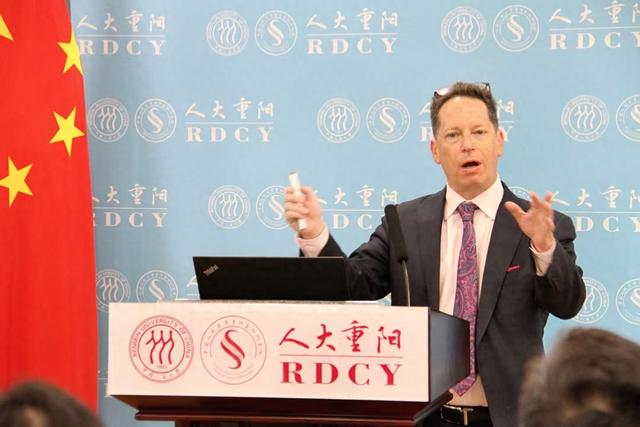
Core Insights - The speaker, Scott Kennedy, highlighted the impressive advancements in China's technology sector, particularly in electric vehicles, emphasizing the significant increase in R&D investment and innovation capabilities over the past decade [3][4]. Group 1: China's Technological Advancements - China has made substantial progress in R&D investment, moving its innovation capability ranking from around 40th to 10th place globally [3]. - Key indicators such as the number of patents, innovation quality, and manufacturing output reflect a significant leap in China's technological strength [3]. - The export of electric vehicles has surged, with China becoming the world's largest exporter, moving from negligible exports in 2018 to over a million vehicles annually [4]. Group 2: Electric Vehicle Market - The Xiaomi SU-7 Ultra was specifically mentioned as a notable Chinese electric vehicle, indicating its appeal in international markets [4]. - The evolution of U.S. government policies towards China has influenced China's technological investments and self-sufficiency efforts, impacting the electric vehicle sector [4]. Group 3: U.S.-China Relations in Technology - The speaker discussed the shifts in U.S. technology policy from the Obama administration's rule-making to the Biden administration's "de-risking" strategy, which has prompted China to enhance its technological capabilities [4]. - Despite restrictions in sensitive areas, there remains potential for cooperation between the U.S. and China in sectors like artificial intelligence and electric vehicles [4].
Stellantis整合特斯拉充电系统,有何深意?
Zhong Guo Qi Che Bao Wang· 2025-11-20 05:27
Core Viewpoint - The collaboration between Stellantis and Tesla marks a significant shift towards breaking barriers and accelerating development in the electric vehicle (EV) industry, allowing Stellantis users to access over 28,000 Tesla Supercharger stations starting in 2026 in North America and 2027 in Japan and South Korea [2][3]. Charging Infrastructure - Charging infrastructure has been a critical factor in the development of the EV industry, with many automakers historically building their own networks, leading to fragmentation and user inconvenience [3]. - The adoption of the North American Charging Standard (NACS) by Stellantis allows for hardware compatibility with Tesla's Supercharger stations, facilitating interconnectivity among different brands [3][4]. Market Dynamics - The focus in the EV market has shifted from vehicle performance and pricing to the overall service ecosystem, with charging infrastructure becoming a core consideration for consumers [5]. - Stellantis currently has about 5,000 charging stations in North America, significantly fewer than Tesla's approximately 20,000, which has impacted the market competitiveness of Stellantis vehicles [5][6]. Strategic Advantages - By partnering with Tesla, Stellantis can quickly enhance its charging network, increasing available charging resources for users by over five times, thus improving user experience and brand strength [6][9]. - This collaboration is seen as a "borrowed network" strategy, allowing Stellantis to save billions in infrastructure investments and focus on electric technology development [8]. Brand Image and Differentiation - The partnership with Tesla enhances Stellantis's brand image by associating it with Tesla's technological leadership in the EV sector, potentially increasing consumer recognition and acceptance [9]. - The collaboration provides Stellantis's upcoming electric models with a unique charging service advantage, crucial for differentiation in a crowded market [9]. Industry Evolution - The Stellantis-Tesla partnership reflects a broader trend in the EV industry towards ecosystem development, where electric vehicles evolve into energy storage and distribution nodes, contributing to sustainable transportation [10][11].


这一地首条无线充电公路测试成功,边走边充能带来什么?
Zhong Guo Qi Che Bao Wang· 2025-11-20 03:27
Core Viewpoint - The successful testing of wireless charging for electric vehicles on the A10 highway near Angervilliers, France, presents a promising solution to the "charging anxiety" and "range anxiety" faced by electric vehicle users [2][3]. Group 1: Technology and Implementation - The test road features a complex energy transmission network with approximately 900 high-power induction coils powered by the grid, allowing electric vehicles to charge wirelessly while in motion, even at speeds exceeding 100 km/h [3]. - France plans to deploy dynamic wireless charging lanes on 75% of its highways, potentially allowing electric vehicles to operate with smaller battery packs, thus reducing costs and improving energy efficiency [3][4]. - The dynamic wireless charging technology can significantly benefit commercial vehicles, enabling continuous charging during transit, which enhances operational efficiency and reduces costs [4]. Group 2: Challenges and Limitations - Despite the promising outlook, wireless charging technology faces technical challenges, including lower charging efficiency compared to traditional wired methods, with static wireless charging at around 90% efficiency and dynamic wireless charging at approximately 85% [5]. - High costs associated with wireless charging infrastructure, which can be about twice the cost of traditional charging stations, pose a significant barrier to widespread adoption [5][6]. - The need for effective grid load management and road reconstruction to accommodate wireless charging systems presents additional challenges, including potential disruptions to traffic and high construction costs [6]. Group 3: Future Prospects - The development of metamaterial coil technology and AI algorithms is expected to enhance the efficiency of wireless charging systems, enabling smarter energy distribution and reducing energy waste [7]. - Industry forecasts suggest that high-end vehicles will be the primary adopters of wireless charging technology between 2025 and 2030, with a gradual increase in static wireless charging stations in public areas [8]. - By 2035, wireless charging is anticipated to become a mainstream energy replenishment method, integrating with renewable energy sources to support the goal of "zero-carbon travel" [8][9].

欧媒:将欧洲的意志强加给中国,几百年的祖宗之法,为什么不灵了
Sou Hu Cai Jing· 2025-11-20 00:43
英国金融时报首席外交事务评论员吉迪恩·拉赫曼2025年11月17日发了一篇专栏,直截了当把标题起成《欧洲的争夺才刚刚开始》。文章开篇就扔出一句狠 话:几个世纪以来,欧洲把自己的意志强加给全世界,现在轮到全世界开始把意志强加给欧洲了。这句话一出,欧洲政界炸锅,中国这边也刷屏,因为这基 本把欧盟这几年想对中国摆谱却老吃瘪的现实全扒出来了。 现在轮到西巴尔干,情况更直白。这六个国家排队入欧盟的国家,理论上候选成员,等了十几年。结果中国路桥、铁路、电站项目满地开花。匈塞铁路塞尔 维亚段2024年已经通车,黑山南北高速、波黑火电站工地全是中文标牌。俄罗斯在能源上插手,土耳其在文化和基建上掺和。欧盟每年援助加起来不到20亿 欧元,中国一带一路项目一年合同额轻松超80亿,还工期短见效快。塞尔维亚总统武契奇接待中国领导人、俄罗斯外长、土耳其总统排队,欧盟特使往往排 在后面。布鲁塞尔开出的条件是先改法治、反腐,中国和俄罗斯开出的条件是先修路通电,哪个更吸引人一目了然。 拉赫曼点名最典型的例子就是欧盟对中国电动汽车的反补贴关税。从2023年9月冯德莱恩宣布启动调查,到2024年10月29日最终关税正式落地,整整折腾了 一年多。欧 ...

林伯强:能源清洁低碳转型是新质生产力︱能源思考
Di Yi Cai Jing· 2025-11-19 13:02
Core Viewpoint - The continuous iteration of green low-carbon clean energy technologies will provide stronger support for low-carbon transition development, driven by new productive forces that are inherently green [1][7]. Group 1: Energy Transition and New Productive Forces - The energy clean low-carbon transition accelerates the formation and development of new productive forces through three main channels: enhancing energy utilization efficiency, electrification of end-use energy, and constructing a new power system centered on clean electricity [2]. Group 2: Enhancing Energy Utilization Efficiency - Improving energy utilization efficiency is essential for achieving clean low-carbon transition goals, with energy conservation being a key pathway for carbon reduction. Continuous technological innovation is crucial for developing more efficient energy utilization technologies and core equipment [3]. - The systematic enhancement of energy efficiency relies on the large-scale promotion of energy-saving technologies and products, driving the rapid rise of the energy-saving industry, which includes three sub-sectors: large-scale manufacturing of energy-saving equipment, specialized energy management services, and integration of intelligent control systems [3]. Group 3: Electrification of End-Use Energy - The electrification of end-use energy is crucial for low-carbon transition, with renewable energy and electric vehicles emerging as key growth areas. The future energy system in China needs to focus on clean low-carbon renewable energy, making electricity the core power source for various production and living scenarios [4]. Group 4: New Power System Construction - In the process of energy clean low-carbon transition, wind and solar power will become the core growth drivers of clean energy, supported by energy storage technology, digital technology, and smart grids. The development of energy storage technology is essential for stabilizing the future power system [5]. Group 5: Challenges in Coupling New Productive Forces and Energy Transition - The need for stable energy supply for economic development may conflict with the short-term impacts of low-carbon transition on energy-intensive industries. High-energy-consuming industries, while injecting vitality into the supply chain, also pose environmental challenges [11]. - The application of low-carbon technologies faces bottlenecks and cost pressures, with the current pace of energy storage development lagging behind the growth of renewable energy installations [12]. - The explosive growth of AI technology impacts the power supply-demand landscape, as the energy consumption for AI model training and large computing centers increases significantly [13]. Group 6: Collaborative Pathways for Dual Breakthroughs - To alleviate the conflict between industrial competitiveness and low-carbon transition, it is necessary to enhance renewable energy development and advance the electrification of high-energy-consuming industries through supportive policies and technologies [16]. - A diversified electricity market trading mechanism should be established to facilitate the integration of renewable energy and carbon markets, enhancing the overall efficiency of energy supply and demand [17]. - Accelerating the development of clean energy industries is vital for solidifying the green foundation of new productive forces, focusing on key technology research and the establishment of AI data centers linked to renewable energy projects [18].
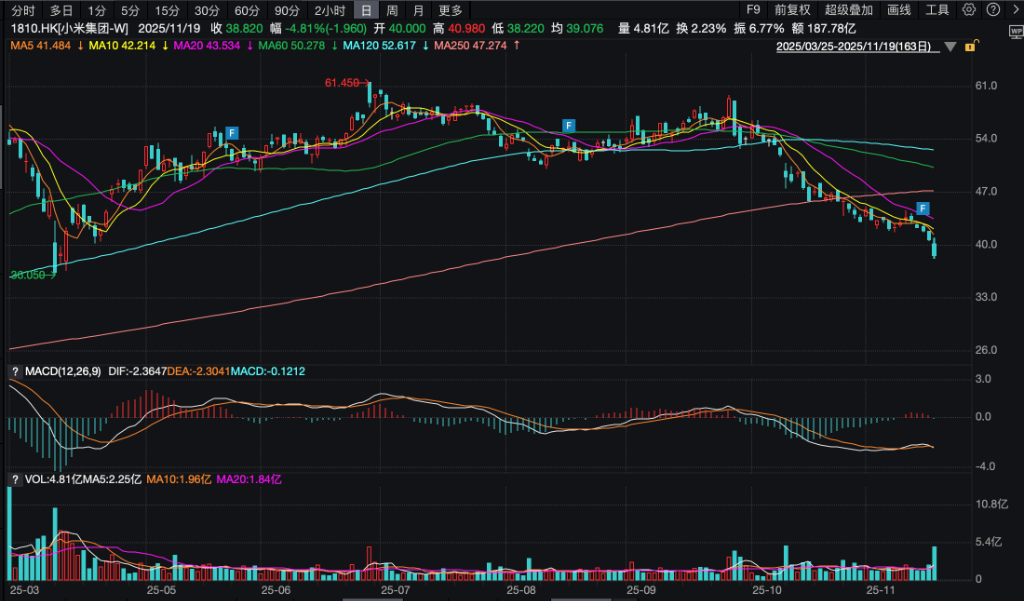
华尔街点评小米财报:Q3业绩整体超预期,内存涨价将压制手机毛利率,关键变量在于汽车交付和新车型进展
美股IPO· 2025-11-19 12:52
Core Viewpoint - Xiaomi's Q3 net profit reached a historic high of 11.3 billion RMB, exceeding Wall Street expectations, but the stock price fell nearly 5% post-announcement due to concerns over rising memory costs and the potential impact of the 2026 electric vehicle tax subsidy withdrawal [1][3]. Financial Performance - Xiaomi's adjusted net profit for Q3 was 11.3 billion RMB, a year-on-year increase of 81%, surpassing Wall Street forecasts [3]. - The electric vehicle and AI innovation segments reported operational profits of 700 million RMB for the first time [3]. Analyst Ratings and Price Targets - Major Wall Street firms, including Citigroup, Goldman Sachs, and Morgan Stanley, maintained "buy" or "overweight" ratings, but their target prices varied significantly [3]. - Citigroup lowered its target price from 65 HKD to 50 HKD, while Goldman Sachs reduced its target from 56.5 HKD to 53.5 HKD, and Morgan Stanley kept its target at 62 HKD [3]. Smartphone Business Challenges - Analysts agree that rising memory chip prices driven by AI demand pose a long-term structural challenge, suppressing overall industry profits [5]. - Xiaomi's strategy to prioritize market share over short-term margins has received broad support from analysts [5]. - The company aims to lock in memory supply by 2026 and focus on increasing average selling prices (ASP) while targeting 30 million high-end device shipments by 2030 [5]. Electric Vehicle Business Growth - The electric vehicle segment achieved a significant milestone with operational profits of 700 million RMB in Q3, marking it as a new growth engine for Xiaomi [7]. - Q3 revenue from the electric vehicle business reached 29 billion RMB, a year-on-year increase of 199.2% and a quarter-on-quarter increase of 36% [9]. - The delivery volume for the quarter was 108,800 units, with October alone reaching 48,600 units [9]. Diverging Predictions on Future Performance - Citigroup has lowered its smartphone shipment forecasts for 2025-2027 to 170 million, 160 million, and 166 million units, with corresponding gross margin predictions adjusted downward [8]. - Goldman Sachs also warned of margin pressures, predicting a smartphone gross margin of 8.8% for 2026, down about 1 percentage point [8]. - Morgan Stanley noted that the increase in terminal prices can only partially offset rising memory costs, indicating a reliance on product mix optimization and cost control measures [8]. Market Sentiment and Future Outlook - Despite differing predictions, all three major investment banks maintain a positive outlook on Xiaomi's electric vehicle business, with Citigroup highlighting new model releases and consumer subsidy updates as catalysts [9]. - Goldman Sachs believes the risk-reward ratio remains favorable for investors, while Morgan Stanley emphasizes that news about new models in the next 3-6 months will be crucial for stock price movements [9].
华尔街点评小米财报:Q3业绩整体超预期,内存涨价将压制手机毛利率,关键变量在于汽车交付和新车型进展
Hua Er Jie Jian Wen· 2025-11-19 12:47
Core Insights - Xiaomi's Q3 adjusted net profit reached 11.3 billion RMB, marking a historical high with an 81% year-on-year increase, exceeding Wall Street expectations [1] - The company's electric vehicle and AI innovation segments reported operational profits of 700 million RMB for the first time, indicating a significant milestone [1] - Despite strong financial results, Xiaomi's stock price fell nearly 5% the day after the earnings report [1] Smartphone Business - Analysts agree that rising memory prices driven by AI demand pose a long-term structural challenge, suppressing overall industry profits [3] - Xiaomi's management strategy prioritizes market share over short-term margins, which has received widespread analyst support [3] - The company is locking in memory supply through 2026 and aims to increase average selling prices (ASP) while expanding market share, with a target of 30 million high-end model shipments by 2030 [3] Electric Vehicle Business - All three major investment banks show consensus on the electric vehicle segment becoming a new growth engine for Xiaomi, with Q3 operational profit of 700 million RMB being a significant achievement [4] - The electric vehicle segment's revenue reached 29 billion RMB, a 199.2% year-on-year increase, with a quarterly delivery of 108,800 vehicles [4] - There is a divergence in predictions regarding the impact of the 2026 vehicle purchase tax subsidy policy, affecting long-term gross margin forecasts among analysts [4][5] Analyst Predictions - Citigroup has lowered its smartphone shipment forecasts for 2025-2027 to 170 million, 160 million, and 166 million units, with corresponding gross margin reductions [5] - Goldman Sachs has also warned of margin pressures, predicting a smartphone gross margin of 8.8% for 2026, down approximately 1 percentage point [5] - Morgan Stanley emphasizes that Xiaomi will rely more on product mix optimization and cost control to mitigate the impact of rising memory costs [5]