汽车制造业等

Search documents
浙江新增38家制造业质量标杆企业
Xin Hua Wang· 2025-12-14 01:44
Group 1 - The core viewpoint of the article highlights the recognition of 38 manufacturing enterprises in Zhejiang as quality benchmarks, with 6 provincial-level enterprises upgraded to national-level status, showcasing the province's commitment to quality management in manufacturing [1][2] - The selected benchmark enterprises demonstrate significant advancements in quality management through technological, managerial, and business model innovations, serving as exemplary cases for others in the industry [1][2] - Zhejiang's initiative to establish manufacturing quality benchmarks is part of a broader strategy to enhance the province's manufacturing quality and brand, aiming to cultivate enterprises with superior products, strong brands, and modern governance [2][3] Group 2 - The provincial government plans to strengthen support and promotion for quality benchmark enterprises that show significant application results and value, encouraging other companies to adopt best practices in quality management [3] - The focus will be on building a gradient system from provincial to national levels, empowering the development of world-class manufacturing clusters and enhancing competitiveness [2][3] - The initiative aligns with the implementation of the "Quality Brand Enhancement Plan" in Zhejiang, aiming to elevate the overall quality standards in the manufacturing sector [2][3]




深圳市启鼎盛精密技术有限公司成立 注册资本20万人民币
Sou Hu Cai Jing· 2025-12-12 05:21
Company Overview - Shenzhen Qiding Sheng Precision Technology Co., Ltd. has been established with a registered capital of 200,000 RMB [1] - The legal representative of the company is Lin Rongxin [1] Business Scope - The company engages in the manufacturing and sales of rubber products and plastic products [1] - It also involves wholesale and retail of hardware products, automotive parts, and molds [1] - Additional services include professional design, domestic trade agency, import and export of goods and technology, and industrial design [1] - The company is involved in the sales of electronic products, mobile terminal devices, and communication equipment [1] - It provides maintenance services for electronic and mechanical equipment, as well as sales of various mechanical parts and tools [1]
广州启烨精密工业有限公司成立 注册资本10万人民币
Sou Hu Cai Jing· 2025-12-02 06:44
Company Overview - Guangzhou Qiya Precision Industry Co., Ltd. has been established with a registered capital of 100,000 RMB [1] - The legal representative of the company is Luo Miaoliang [1] Business Scope - The company is engaged in various manufacturing and processing activities, including window and door manufacturing, plastic products sales, and hardware retail [1] - It also specializes in the manufacturing of metal forming machine tools, fasteners, and metal cutting and welding equipment [1] - Additional services include technology import and export, environmental consulting, and property management [1] - The company is involved in the manufacturing of industrial robots and automotive parts and accessories [1]
前10月陕西经济运行平稳向好
Shan Xi Ri Bao· 2025-11-19 00:16
Economic Overview - The economic operation of Shaanxi province remains generally stable and shows a positive development trend, with production supply overall stable and domestic demand potential continuously released [1] Industrial Production - The industrial added value of enterprises above designated size increased by 8.1% year-on-year. The mining industry saw a growth of 9.9%, manufacturing increased by 6.4%, and the production and supply of electricity, heat, gas, and water rose by 4.2% [1] - Key sectors such as coal mining and washing increased by 11.4%, while oil and gas extraction grew by 4%. Equipment manufacturing saw a significant increase of 9.9%, with electrical machinery and equipment manufacturing up by 34.1% and automobile manufacturing up by 23.8% [1] - Production volumes for automobiles increased by 5.9%, solar cell production rose by 9.4%, and engine production surged by 49.3% [1] Fixed Asset Investment - Fixed asset investment grew by 0.6% year-on-year, with industrial investment showing significant growth of 15.5%, surpassing the overall investment growth rate by 14.9 percentage points [2] - Manufacturing investment increased by 16.6%, and industrial technological transformation investment rose by 28.5%. Private investment also showed vitality, growing by 7.4%, with manufacturing private investment up by 14.3% [2] - Notable growth in private investment was observed in information transmission, software, and IT services at 30.4%, and in transportation, warehousing, and postal services at 40% [2] Consumer Market - Retail sales of consumer goods in enterprises above designated size increased by 8.2% year-on-year, with commodity retail sales up by 8.8% and catering revenue increasing by 1.6% [2] - The "old-for-new" effect in consumer goods was significant, with sales of household appliances and audio-visual equipment rising by 42.2%, and sales of energy-efficient products (grades 1 and 2) increasing by 73.2% [2] - Online retail saw rapid growth, with retail sales through public networks increasing by 25.3%, accounting for 23% of total retail sales in enterprises above designated size [2] Trade Performance - The total value of goods import and export reached 420.95 billion yuan, a year-on-year increase of 12.2%. Exports amounted to 291.621 billion yuan, growing by 15.3%, while imports were 129.329 billion yuan, up by 5.7% [3] - The export structure continued to optimize, with high-tech product exports increasing by 15.4%, and computer and communication technology exports rising by 24.7% [3] - The "new three samples" products saw a 26.8% increase in exports, with lithium-ion batteries growing by 120% and electric vehicles increasing by 67.7% [3]
积极发挥票据功能作用,助力“十五五”制造业发展
Zheng Quan Shi Bao Wang· 2025-11-14 13:23
Group 1 - The manufacturing industry is the foundation of the national economy, and China has become the world's largest manufacturing country, but it still faces challenges in independent innovation and reliance on foreign technology [1][2] - The "14th Five-Year Plan" emphasizes high-quality development of the manufacturing sector, focusing on transformation towards high-end, intelligent, and green manufacturing [2][3] - Acceptance bills are a crucial financing tool for manufacturing enterprises, with over 30% of the total bill issuance in 2024 coming from the manufacturing sector [2][3] Group 2 - In 2024, the total amount of acceptance bills issued reached 38 trillion yuan, with the manufacturing sector accounting for 11.7 trillion yuan, indicating a continuous upward trend [3] - Small and medium-sized enterprises (SMEs) are significantly benefiting from the acceptance bill market, with 93.2% of bill issuers being SMEs [3][4] - Acceptance bills provide a flexible financing option for SMEs, which often struggle to access traditional financing methods [4][5] Group 3 - The twelve major manufacturing industries in China include electronics, machinery, automotive, and chemical manufacturing, all of which are adapting to new business models and enhancing their digital capabilities [7][8] - Acceptance bills can effectively match the cash flow cycles of these industries, reducing capital occupation and expanding commercial credit [7][8] Group 4 - The promotion of receivables bill financing is essential for alleviating liquidity pressures faced by manufacturing enterprises, especially SMEs [8][9] - The integration of technology, such as big data and AI, into the bill financing process can enhance service efficiency and reduce transaction costs for manufacturing enterprises [15][16] Group 5 - The development of green bills is aligned with China's carbon neutrality goals, providing financial support for green projects within the manufacturing sector [10][11] - Financial institutions are encouraged to support the acceptance, discounting, and re-discounting of green bills to facilitate the transition towards sustainable manufacturing practices [11][12] Group 6 - The current macroeconomic environment presents challenges for credit access among SMEs, necessitating a focus on enhancing the efficiency of bill financing processes [13][14] - The central bank's re-discount policy can be leveraged to support manufacturing enterprises, particularly those with strong credit profiles [14][16]
A股投资策略周报告:CPI由降转涨,PPI降幅收窄-20251110
CHINA DRAGON SECURITIES· 2025-11-10 11:04
Group 1 - The report indicates that the CPI has shifted from a decline to an increase, with a month-on-month rise of 0.2%, which is 0.1% higher than the previous month and slightly above seasonal levels. This change is attributed to rising service prices, higher food price increases, and stable industrial consumer goods prices [19][5][6] - The PPI has also shown signs of improvement, with a month-on-month increase of 0.1%, marking the first rise of the year. Year-on-year, the PPI decreased by 2.1%, but the decline has narrowed by 0.2% compared to the previous month [19][5][6] - The report highlights that the trade of goods has maintained a steady growth trend, with a 3.6% increase in imports and exports over the first ten months of the year. Notably, exports of electromechanical products reached 13.43 trillion yuan, growing by 8.7% and accounting for 60.7% of total exports [22][5][6] Group 2 - The market outlook remains stable, with major indices showing positive performance. The Shanghai Composite Index had a fluctuation range of 1.08%, while the CSI 300 and Wind All A Index showed fluctuations of 0.82% and 0.63%, respectively. This stability is supported by effective domestic demand policies and resilient external demand [24][5][6] - The report emphasizes the importance of industry and thematic allocation, particularly in technology and advanced manufacturing sectors, which continue to show high levels of prosperity. Areas such as AI, autonomous control, humanoid robots, low-altitude economy, and national defense are highlighted as key focus areas [25][5][6] - The report also notes the ongoing effects of "anti-involution" policies, which are expected to catalyze market movements, particularly in sectors like electric equipment and basic chemicals that are aligned with policy-driven growth [25][5][6]
国家统计局:中国1-8月固定资产投资同比增长0.5%
Guo Jia Tong Ji Ju· 2025-09-15 02:02
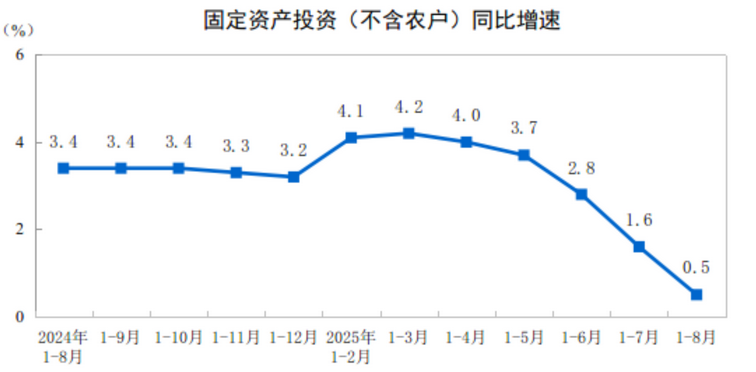
Core Insights - National fixed asset investment (excluding rural households) reached 32,611.1 billion yuan from January to August 2025, showing a year-on-year growth of 0.5% [1] - Private fixed asset investment experienced a year-on-year decline of 2.3% [1] Investment by Industry - Investment in the primary industry totaled 646.1 billion yuan, with a year-on-year increase of 5.5% [3] - Investment in the secondary industry reached 11,824.6 billion yuan, growing by 7.6% [3] - Investment in the tertiary industry was 20,140.4 billion yuan, reflecting a decline of 3.4% [3] - Within the secondary industry, industrial investment grew by 7.7%, with mining investment increasing by 3.0%, manufacturing investment rising by 5.1%, and investment in electricity, heat, gas, and water production and supply surging by 18.8% [3] Infrastructure Investment - Infrastructure investment (excluding electricity, heat, gas, and water production and supply) in the tertiary industry grew by 2.0% year-on-year [3] - Notable growth in specific sectors includes water transportation investment increasing by 15.9%, water conservancy management investment rising by 7.4%, and railway transportation investment growing by 4.5% [3] Regional Investment Trends - Eastern region investment declined by 3.5% year-on-year, while the central region saw a growth of 2.5% and the western region increased by 2.3% [4] - The northeastern region experienced a decline of 6.0% [4] Investment by Registration Type - Domestic enterprises' fixed asset investment grew by 0.5% year-on-year, while investment from Hong Kong, Macau, and Taiwan enterprises increased by 2.3% [4] - Foreign enterprises' fixed asset investment saw a significant decline of 15.4% [4] Detailed Investment Metrics - Overall fixed asset investment (excluding rural households) showed a year-on-year growth of 0.5% [6] - State-owned enterprises' investment increased by 2.3%, while private investment decreased by 2.3% [6] - Specific categories include a 14.4% increase in equipment and tool purchases, while construction and installation projects saw a decline of 2.2% [6]

2025年1-7月工业企业利润分析:利润增速磨底,“反内卷”略见成效
Yin He Zheng Quan· 2025-08-27 09:47
Profit Trends - From January to July 2025, industrial enterprises achieved a total profit of CNY 40,203.5 billion, a year-on-year decrease of 1.7%[1] - The operating revenue for the same period was CNY 78.07 trillion, reflecting a year-on-year growth of 2.3%[1] - In July, profits decreased by 1.5% year-on-year, a significant improvement from the previous month's decline of 4.3%[1] Production and Margins - Industrial production showed resilience with a 5.7% year-on-year increase in July's industrial added value, despite a 1.1 percentage point decline from the previous month[1] - The Producer Price Index (PPI) showed marginal improvement, with a year-on-year decline of 3.6% in July, the same as the previous month, but with a reduced month-on-month decline[1] - The profit margin for January to July was recorded at 5.15%, remaining stable compared to the previous value, with a year-on-year decline of 0.25 percentage points[1] Inventory and Costs - As of July, finished goods inventory reached CNY 6.67 trillion, with a year-on-year growth of 2.4%, indicating a slowdown in nominal inventory growth[1] - The cost per CNY 100 of operating revenue was CNY 85.57, an increase of CNY 0.24 year-on-year, while expenses decreased by CNY 0.08 to CNY 8.38[1] Sector Performance - High-tech manufacturing saw a profit increase of 18.9% in July, reversing a 0.9% decline in June, with aerospace manufacturing profits soaring by 40.9%[2] - Consumer manufacturing sectors, such as paper and textiles, experienced negative growth, with the automotive manufacturing sector also seeing a profit decline in July after a recovery in June[2] Future Outlook - Future profit trends will depend on the continuation of domestic demand expansion policies and the effectiveness of "anti-involution" measures in manufacturing[2] - The report highlights the importance of monitoring external demand and geopolitical risks, particularly in the context of US-China trade negotiations[2]
兴业证券:“反内卷”下 哪些细分行业已经改善?
智通财经网· 2025-08-01 08:33
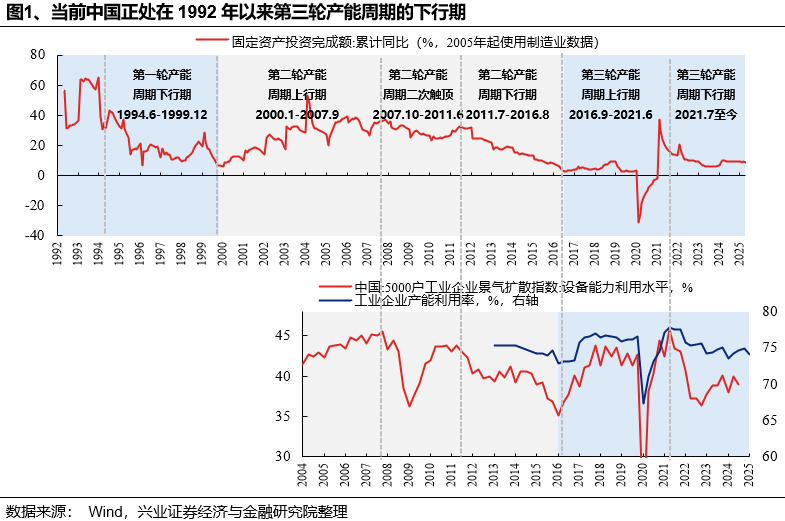
Core Viewpoint - The report from Industrial Securities emphasizes the importance of regulating low-price disorderly competition in enterprises as a key focus of recent "anti-involution" policies, highlighting the negative impact of excessive competition on prices, as evidenced by the persistent negative Producer Price Index (PPI) since October 2022 [1][23]. Group 1: Current Economic Conditions - China's current economic environment is characterized by a third round of capacity cycle downturn, having declined for approximately four years since the previous peak, with significant industry differentiation due to factors such as the pandemic and trade friction [2][8]. - The industrial capacity utilization rate has been on a downward trend since June 2021, reflecting a weakening in fixed asset investment growth in the manufacturing sector [2][8]. Group 2: Price and Capacity Dynamics - The report indicates that the current supply-side state shows clear differentiation among industries, with black metals and non-metallic minerals experiencing low capacity, output, and price levels, while emerging sectors like electrical machinery and automotive manufacturing still maintain relatively high capacity and output levels despite low price indicators [12][20]. - The "anti-involution" policy aims to break the negative cycle of "price for volume" and guide industries back to a normal capacity cycle, with two potential paths: either a slight price increase leading to natural demand decline or significant demand stimulation with substantial price increases [21][23]. Group 3: Recent Price Trends - Recent data shows that low-priced goods below historical median prices have seen significant price increases, particularly in sectors such as black metals (coking coal, steel), new energy (polysilicon, lithium), and chemicals [28][29]. - Specific price changes include coking coal increasing by 36.6% over the past month and polysilicon rising by 23.2%, indicating a recovery in certain sectors [29]. Group 4: Policy Implications - The report outlines recent policy measures aimed at preventing low-cost competition, including the introduction of a price law amendment and the emphasis on market regulation to maintain fair competition and quality standards [25][23]. - The focus on price mechanisms and the establishment of benchmark costs in key industries is expected to support the recovery of prices and stabilize market conditions [23][25].

详解中国经济年中答卷:工业增速大幅加快,内需出现回落
Di Yi Cai Jing· 2025-07-15 06:26
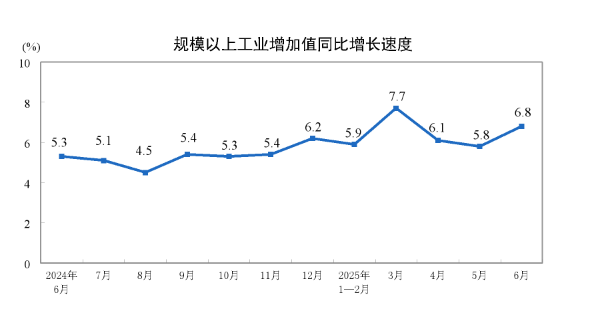
Economic Overview - China's GDP grew by 5.3% year-on-year in the first half of the year, with a 5.2% growth in the second quarter and a quarter-on-quarter growth of 1.1% in Q2 [2] - The industrial added value for large-scale industries increased by 6.4% year-on-year in the first half, with mining, manufacturing, and electricity sectors showing growth rates of 6.0%, 7.0%, and 1.9% respectively [4] - Fixed asset investment (excluding rural households) reached 248,654 billion yuan, growing by 2.8% year-on-year, with a notable decline in real estate investment by 11.2% [10] Industrial Performance - In June, the industrial added value increased by 6.8% year-on-year, accelerating by 1 percentage point from the previous month [2] - Advanced manufacturing and high-tech industries are driving the industrial growth, with equipment manufacturing growing by 10.2% and high-tech manufacturing by 9.5% [4] - The industrial production momentum may weaken in the second half due to export constraints, with expectations of a gradual slowdown in industrial growth [5] Consumer Market - The retail sales of consumer goods in June grew by 4.8% year-on-year, a decrease of 1.6 percentage points from the previous month [7] - The total retail sales for the first half reached 245,458 billion yuan, with a year-on-year growth of 5.0%, indicating a positive trend supported by various consumption policies [7][8] - The growth in service consumption and the emergence of new consumption models are notable trends in the consumer market [8] Investment Trends - The investment structure is improving, with manufacturing investment growing by 7.5% and accounting for 25.2% of total fixed asset investment [10] - Despite a nominal decline in investment growth, the actual growth rate remains stable when adjusted for price factors [10][11] - The government is expected to enhance investment through special bonds and long-term treasury bonds to support infrastructure projects [11][12]