
汽车制造等

Search documents
2026年1-2月工业企业利润点评:开年工业企业利润:超预期的含金量
Guolian Minsheng Securities· 2026-03-27 05:27
Profit Growth Overview - In January-February 2026, industrial enterprises achieved a total profit of 10,245.6 billion yuan, marking a year-on-year increase of 15.2%[6] - The profit growth rate surged from 5.3% in December 2025 to 15.2% in the first two months of 2026, indicating a significant improvement in industrial profitability[6] Industry Performance - Profit recovery showed clear industry differentiation: upstream industries saw a profit increase of 34.3%, midstream industries 26.4%, while downstream industries faced a decline of 11.4%[3] - Upstream profit improvements were primarily driven by price support, particularly in non-ferrous metal smelting and mining, which experienced nearly triple-digit growth[3][4] Midstream and Downstream Insights - Midstream profit growth was attributed to accelerated production, with the electronics manufacturing sector seeing a remarkable profit increase of 203.5% year-on-year[4] - Downstream industries, particularly furniture manufacturing (-40.0%) and automotive manufacturing (-30.2%), showed significant profit declines, reflecting consumer caution towards durable goods and large expenditures[4][7] Cost and Efficiency Factors - The revenue profit margin for enterprises improved significantly, with a notable decrease in the cost-to-revenue ratio, likely due to equipment upgrades and ongoing tax reductions[3] - The increase in finished goods inventory growth in January-February indicated early signs of proactive restocking, although sustainability depends on demand recovery[4][7] Risk Considerations - Future profit sustainability is contingent on the recovery pace of end-user demand, with current downstream profits indicating that demand has not fully stabilized[7] - Potential risks include policy outcomes not meeting expectations, unexpected changes in the domestic economic landscape, and fluctuations in export dynamics[7]
中国第二个5万亿城市来了,北京多项部署
21世纪经济报道· 2026-01-23 06:04
Core Viewpoint - Beijing is set to achieve a regional GDP of 52,073.4 billion yuan by 2025, marking its transition to a "5 trillion city" alongside Shanghai, under strict constraints of "reduction development" and focusing on innovation-driven growth [1][4]. Group 1: Economic Growth and Industry Contribution - In 2025, the information transmission, software, and IT services industry, along with the financial sector, contributed over 70% to Beijing's economic growth [2][11]. - The GDP growth rate for Beijing in 2025 is projected at 5.4% year-on-year, with the industrial added value for large-scale industries increasing by 6.5% [4]. Group 2: Policy Support and Investment - Beijing plans to invest over 1.5 billion yuan in the first batch of high-precision industry development projects and support for small and medium-sized enterprises, covering over 25 policy support directions [3][4]. - The focus areas for investment include integrated circuits, biomedicine, material energy, information software, and the digital economy [4][5]. Group 3: Future Industry Development - The "Create Winning Future" growth plan will focus on six future industries: future information, future health, future manufacturing, future energy, future materials, and future space [7]. - The plan aims to support innovative products in robotics, integrated circuits, and new materials, addressing challenges in R&D and market validation [5][7]. Group 4: Digital Economy and Consumption - Beijing aims to stimulate digital consumption and cultivate 2-3 leading AIGC digital content companies with revenues exceeding 10 billion yuan [2][12]. - The city will promote the integration of ultra-high-definition audio-visual technology with cultural tourism, expanding smart retail and reverse customization applications [12][13]. Group 5: Computing Power and Infrastructure - By 2027, Beijing plans to build a computing power scale of approximately 200,000 P, enhancing its computing resource supply [8][9]. - The city will optimize the "Galaxy Computing Corridor" project to establish a collaborative computing power supply system, supporting the development of the AI industry [9].


增长5.5% 全省经济运行稳中有进
Si Chuan Ri Bao· 2026-01-22 00:22
Group 1: Agricultural Production - The overall grain production reached 36.625 million tons, an increase of 0.8% compared to the previous year [2][3] - The total number of pigs slaughtered was 62.48 million, reflecting a growth of 1.6% year-on-year [2] Group 2: Industrial Economy - The industrial added value above designated size grew by 6.5% year-on-year, with a product sales rate of 96.1% [2][4] - Among 41 major industries, 33 reported an increase in added value [2] - Key industrial products showed significant growth: natural gas production increased by 10.9%, industrial robots by 45.9%, lithium-ion batteries by 45.1%, automobiles by 29.6%, LCD screens by 21.6%, integrated circuits by 15.4%, and smartwatches by 9.2% [2] Group 3: High-Tech Industry - The added value of high-tech manufacturing above designated size increased by 12.3% year-on-year [3] - Notable growth in specific sectors: electronic and communication equipment manufacturing increased by 20.2%, and aerospace and equipment manufacturing grew by 19.0% [3] Group 4: Service Industry - The added value of the service industry grew by 6.1% year-on-year [3] - Growth in specific service sectors: leasing and business services increased by 14.4%, information transmission, software, and IT services by 9.8%, wholesale and retail by 7.0%, financial services by 6.2%, and accommodation and catering by 5.3% [3] Group 5: Consumer Market - The total retail sales of consumer goods reached 2,913.54 billion yuan, an increase of 5.1% year-on-year [4] - Breakdown of retail sales: catering revenue was 402.67 billion yuan (up 3.7%), and commodity retail was 2,510.87 billion yuan (up 5.4%) [4] - Significant growth in specific product categories: telecommunications equipment retail increased by 50.8%, gold and jewelry by 32.6%, grain and food by 12.4%, automobiles by 8.9%, cosmetics by 8.3%, and pharmaceuticals by 5.8% [4]
政策东风劲吹!蓝凌AI+方案,赋能制造企业智变升级
Jiang Nan Shi Bao· 2026-01-16 12:45
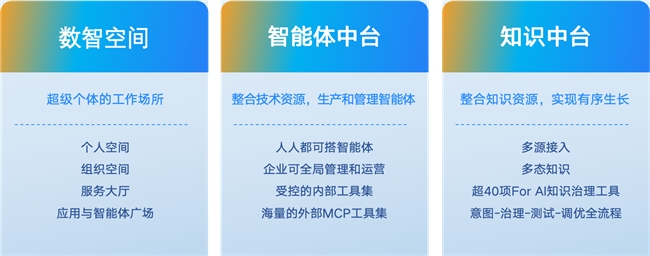
Group 1 - The Ministry of Industry and Information Technology and other departments have launched the "AI + Manufacturing" initiative, aiming to establish a globally leading AI + manufacturing ecosystem by 2027, including the creation of 100 high-quality industrial datasets and 1,000 high-level industrial intelligent entities [1] - Key industries such as raw materials, equipment manufacturing, consumer goods, and electronic information are highlighted for their transformation paths, with specific requirements for sectors like steel and consumer electronics [1] - The initiative is expected to accelerate the intelligent transformation of manufacturing enterprises, although challenges remain in areas such as process experience, inter-departmental workflows, and data interoperability [1] Group 2 - BlueLing offers a series of products, including AI intelligent platforms, aiOA, aiBPM, and aiKM, to assist manufacturing enterprises in their intelligent transformation [1][2] - The AI intelligent platform addresses fragmentation issues in AI upgrades by integrating various resources and facilitating collaboration between humans and intelligent entities [1][2] - aiOA enables real-time information sharing and collaboration across multiple scenarios, enhancing office efficiency with built-in intelligent agents [2] Group 3 - aiKM helps enterprises build knowledge platforms to manage and utilize knowledge resources, turning R&D experiences and production skills into organizational assets [2] - aiBPM streamlines the entire process from R&D to marketing services, significantly improving operational efficiency through end-to-end collaboration [2] - BlueLing has developed mature solutions across various manufacturing sectors, serving leading companies like Dongfeng Group and CATL to achieve digital transformation [2] Group 4 - Saisir, a technology-driven enterprise focused on electric vehicles, has established a comprehensive knowledge management system supported by BlueLing, achieving 95% employee coverage and accumulating over 21,000 knowledge entries [3][4] - Xinwangda has utilized BlueLing's intelligent BPM to create a unified process platform, enhancing operational efficiency for over 50,000 employees and achieving a 30% global market share in mobile batteries [5] Group 5 - The ongoing initiative is expected to propel the intelligent transformation of manufacturing enterprises into a "fast lane," with BlueLing committed to deepening the integration of AI and manufacturing scenarios to support high-quality development [7]
金融工程日报:A 股延续上涨,商业航天、机器人题材双线爆发-20251225
Guoxin Securities· 2025-12-25 15:25
- The report does not contain any quantitative models or factors for analysis[1][2][3]
江苏最新工资价位发布!
Sou Hu Cai Jing· 2025-12-24 13:40
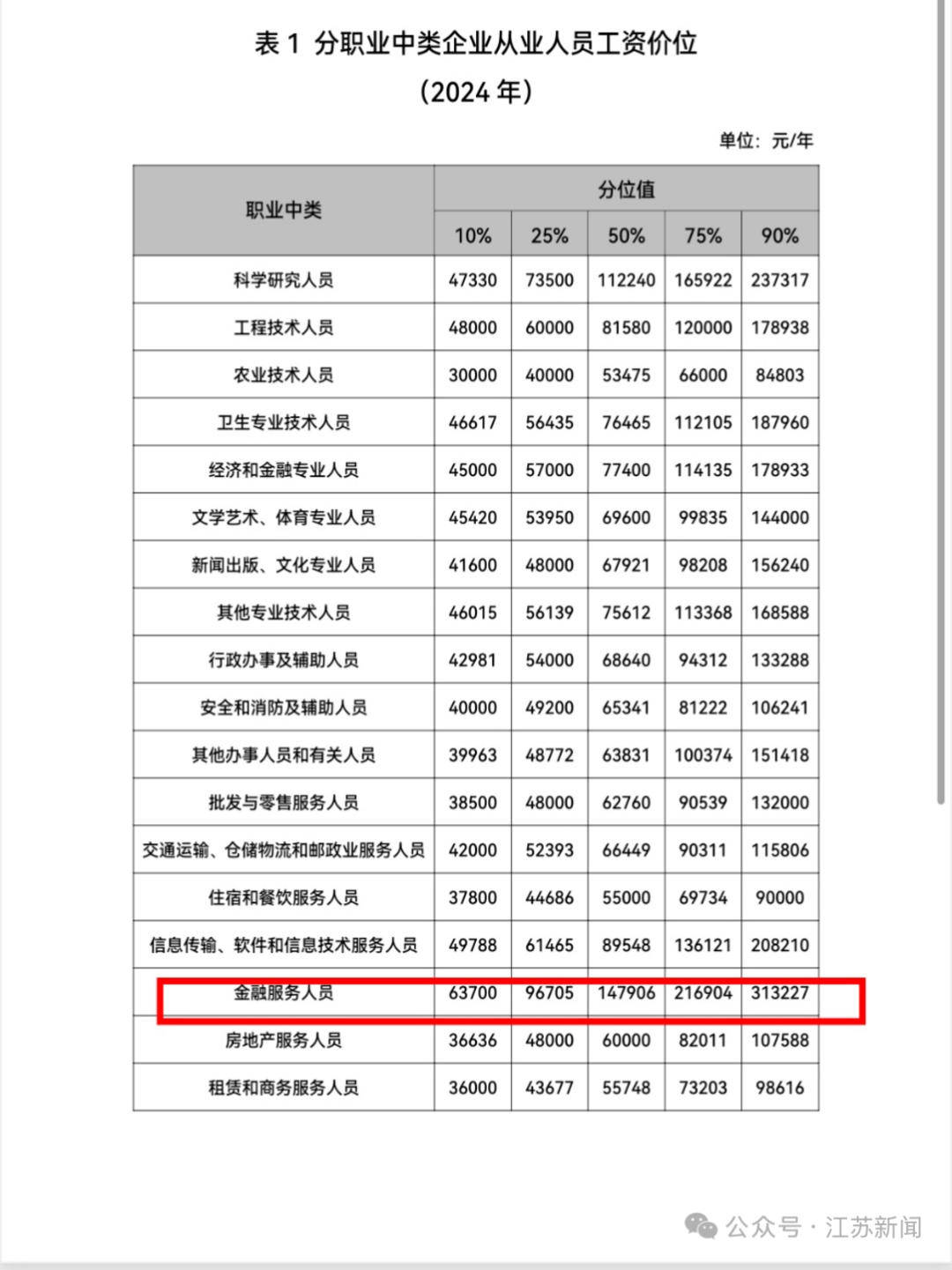
Core Insights - The digital economy sector is the most lucrative in terms of salary, with employees in this industry receiving high compensation [1] - The report provides salary data for various professions, indicating that financial service personnel have the highest salary at the 90th percentile [1] Salary Data by Profession - Financial service personnel earn an annual salary of 313,227 yuan at the 90th percentile [3] - Other high-paying professions include: - Engineering technicians with a 90th percentile salary of 178,938 yuan [3] - Scientific researchers with a 90th percentile salary of 237,317 yuan [3] - Information technology service personnel with a 90th percentile salary of 208,210 yuan [3] Salary Data by Digital Economy Professions - Specific roles within the digital economy show significant salary ranges: - Software engineering technicians can earn up to 272,644 yuan at the 90th percentile [8] - Data analysis engineers can earn up to 200,600 yuan at the 90th percentile [9] - Artificial intelligence engineering technicians can earn as much as 530,260 yuan at the 90th percentile [8] Salary Data by Industry Skill Level - The report categorizes salary data by industry skill levels, with advanced skills in the information transmission and software services sector yielding a 90th percentile salary of 284,676 yuan [12] - In the transportation and warehousing sector, advanced skills can lead to a 90th percentile salary of 164,709 yuan [12]
48页|A股上市公司ESG评级分析报告2025
Sou Hu Cai Jing· 2025-12-11 23:47
Core Insights - The report focuses on the ESG performance of A-share listed companies in China, highlighting significant improvements in environmental responsibility and corporate governance in recent years [2][6][8] - There are notable disparities in ESG development across different industries, with high-risk sectors like finance and energy facing greater challenges [2][7] - The report anticipates continued investment in ESG initiatives by A-share companies, driven by policy support and increasing market attention [2][7] Group 1: ESG Ratings and Trends - As of 2024, 760 A-share companies achieved an ESG rating of A- or above, representing 14.13% of the total, an increase from 8.24% in 2022 [8][9] - The number of companies rated B+ or above reached 1,804, accounting for 33.55%, with an increase of over 11 percentage points year-on-year [8][9] - The overall ESG ratings of A-share companies have significantly improved, with a marked reduction in the proportion of companies rated C+ or below [9][30] Group 2: ESG Disclosure and Compliance - The ESG report publication rate among A-share companies continues to rise, with the disclosure rate and quality of ESG indicators showing accelerated improvement [30][31] - Nearly 80% of companies in the CSI 800 index have integrated ESG into their board or executive responsibilities, with 27% linking ESG performance to executive compensation [30][31] - The regulatory framework for ESG disclosure in China is evolving, with mandatory guidelines set to enhance compliance and reporting standards [23][25] Group 3: Sector-Specific ESG Performance - The average ESG performance varies significantly by industry, with the top-performing sectors including water management, healthcare, and automotive manufacturing [50][54] - Conversely, industries such as mining and real estate exhibit the lowest ESG performance, indicating a need for improvement [50][54] - The gap between high-performing and low-performing sectors is narrowing, suggesting a gradual overall enhancement in ESG practices across industries [50][54]
人大重阳王文:企业家要不断学习,报培训班都被打“掼蛋”强
Xin Lang Cai Jing· 2025-12-09 03:47
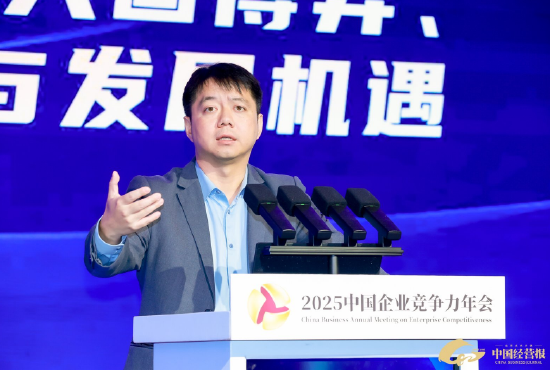
Core Insights - The "2025 China Enterprise Competitiveness Conference" highlighted the increasing uncertainty in the international environment and the intensifying great power competition, which poses various challenges for enterprises, including supply chain disruptions, market access restrictions, technological decoupling pressures, and rising compliance costs [1][5] Group 1: Short-term Strategies - Companies need to strengthen risk defense and adopt flexible response strategies, including establishing supply chain backup mechanisms to avoid "putting all eggs in one basket" and promoting compliance upfront while enhancing legal literacy and learning capabilities [3][7] Group 2: Long-term Strategies - In the long term, companies should focus on independent innovation and global integration, laying out strategies for technological autonomy, global operations, international standards, and ecosystem co-construction to uncover deeper development opportunities [3][7] Group 3: Personal Development Recommendations - Individuals should develop the ability to "go out and integrate into key nodes of the global value network." The speaker noted that labor costs in regions like Africa and Southeast Asia are significantly lower, with some companies successfully relocating low-value-added industries there [3][7] - Continuous skill enhancement is crucial, especially in the AI era, where past leisure activities are deemed insufficient for modern entrepreneurs [4][8] - Investment diversification is essential, not only in expanding industrial scope but also in achieving a diversified asset allocation to enhance risk resilience [4][9]
纳斯达克100指数将重新平衡 苹果、微软等市场头部企业股价应声下跌
Xin Lang Ke Ji· 2025-11-26 07:56
Group 1 - Major U.S. companies like Apple and Microsoft experienced stock price declines due to Nasdaq's announcement of a special rebalancing of the Nasdaq 100 index to address "over-concentration" issues [1] - Apple's stock fell by 1.1%, bringing its market capitalization to $2.967 trillion, after previously surpassing the $3 trillion mark on June 30 [1] - Other companies such as Alphabet and Amazon saw declines of over 2%, while Microsoft and Tesla dropped more than 1% [1] Group 2 - The Nasdaq's special rebalancing will be based on the outstanding shares as of July 3, with changes to be announced on July 14 and taking effect before the market opens on July 24 [1] - The Nasdaq 100 index includes the 100 largest companies traded on the Nasdaq exchange, and the changes will require investment funds tracking the index to adjust their portfolios by selling stocks of companies with reduced weights [1] - The most valuable companies on Wall Street have been the biggest winners in the U.S. stock market recovery this year, with their weights in the Nasdaq 100, Nasdaq Composite, and S&P 500 indices increasing [1] Group 3 - Year-to-date, the S&P 500 index has risen by 15%, while Nvidia's stock surged by 189% and Tesla's stock more than doubled [2] - Microsoft, Amazon, and Apple's stock prices have increased between 38% and 51% this year [2]


“豫见大湾区”青年企业家交流活动在郑举行
Zheng Zhou Ri Bao· 2025-11-21 00:48
Core Insights - The "Yujian Greater Bay Area" youth entrepreneur exchange event took place in Zhengzhou from November 16 to 19, showcasing the economic and trade potential of the region [1] - A delegation of young entrepreneurs from the Guangdong-Hong Kong-Macao Greater Bay Area visited Zhengzhou to explore various industries and engage in discussions [1] Industry Overview - The delegation explored key industrial sectors in Zhengzhou, including advanced materials, modern food production, and aerospace industries, highlighting the city's robust industrial foundation and vibrant growth prospects [1] - Companies such as Hanwei Technology, Sanquan Foods, and Zhengzhou Nissan were part of the tour, demonstrating the diverse industrial landscape [1] Entrepreneurial Exchange - A roundtable dialogue was held where local business representatives promoted Zhengzhou's industrial layout, business environment, and preferential policies, laying a solid foundation for future cooperation [1] - Entrepreneurs shared insights and experiences, fostering collaboration and knowledge exchange between the two regions [1] Cultural Engagement - The delegation also visited the Henan Drama Fantasy City, enhancing emotional connections through immersive cultural experiences that showcased the rich cultural heritage of the Central Plains [1]