
生鲜

Search documents
新春走基层·驻外记者回乡手记丨这座西南小城何以吸引世界目光
Xin Hua Wang· 2026-02-27 02:51
Group 1 - Yibin is transforming its economy from traditional industries like liquor and coal to new engines represented by digital economy and green energy, specifically in the battery industry [6] - The battery industry in Yibin has become a significant sector, with the city hosting major companies like CATL and Kaiyi Auto, contributing to the local economy's upgrade [6] - Yibin is recognized globally for its battery production, with one in ten batteries worldwide produced in the city, highlighting its importance in the global supply chain [6][7] Group 2 - The logistics infrastructure in Yibin has improved significantly, with highways, high-speed rail, and expanded airport routes facilitating the distribution of local agricultural products [4] - The local economy is benefiting from increased visibility and business opportunities, particularly in the new energy vehicle sector, which has seen a surge in demand and investment [6] - The rise of the battery industry in Yibin reflects broader trends in China's economic development, showcasing the integration of inland cities into the global economy [7]


“万店巨头”赚钱的秘密,藏在这三个字里
3 6 Ke· 2026-02-21 03:41
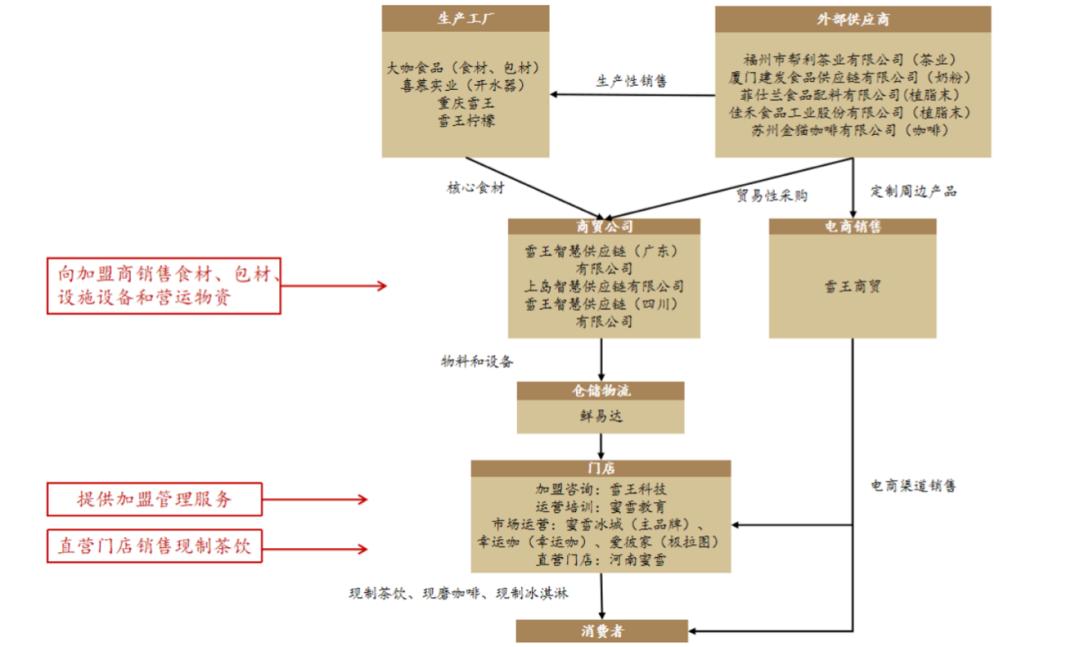
Core Insights - The Chinese consumer market has seen a surge in capitalized consumption brands, with companies like Mixue Ice City and others going public, highlighting a trend towards B2B supply chain models rather than traditional retail [1][2][3] Group 1: Business Model Transformation - Leading consumer brands are shifting their focus from direct consumer sales to B2B supply, with significant revenue coming from supplying franchisees [3][5] - For instance, Mixue Ice City reported that over 90% of its revenue comes from selling ingredients and equipment to franchisees, with only a small fraction from franchise fees [3][5] - Other brands like "Mingming Hen Mang" and "Gu Ming" also show similar revenue structures, with over 99% and 95% of their income derived from franchisee sales, respectively [5][12] Group 2: Supply Chain and Infrastructure - Successful brands have built robust supply chains, investing heavily in logistics, production, and digital systems to maintain competitive advantages [7][8] - Mixue Ice City has developed a comprehensive supply chain, including self-sourced ingredients and a logistics network that covers over 90% of county-level administrative regions in China [7][8] - The establishment of modern warehousing and distribution centers has enabled brands like "Mingming Hen Mang" to achieve efficient nationwide delivery [10][12] Group 3: Market Dynamics and Challenges - As the number of franchise stores increases, individual store profitability is under pressure, leading to longer payback periods for franchisees [13][16] - The saturation of stores in certain areas has resulted in increased competition among franchisees, causing dissatisfaction and financial strain [14][16] - The focus is shifting from merely expanding store numbers to enhancing supply chain efficiency and maintaining profitability for franchisees [17][18]
诺普信签署蓝莓新品种许可协议,前三季度净利润增长18.03%
Jing Ji Guan Cha Wang· 2026-02-13 01:51
Company Developments - The company announced a licensing agreement with MOUNTAIN BLUE ORCHARDS PTY LTD for blueberry variety intellectual property, allowing its subsidiary to cultivate and commercialize the licensed varieties in designated areas, aimed at optimizing its variety resource structure and supporting long-term growth in the blueberry business [2] Stock Performance - On the same day of the announcement, the company's stock price increased by 2.03%, closing at 11.56 CNY per share with a trading volume of 135 million CNY, although there was a net outflow of 4.54 million CNY from major funds. Year-to-date, the stock has risen by 9.16%, but has decreased by 9.12% over the past 60 days, indicating a divergence in short-term market sentiment [3] Capital Increase Plan - The company released a plan on November 26, 2025, to issue shares to specific investors, aiming to raise no more than 1.45 billion CNY, primarily for the expansion of blueberry bases and the construction of a research and development center. This plan may involve issues related to equity dilution, and the subsequent approval and implementation progress will be closely monitored [4] Financial Performance - As of September 30, 2025, the company reported a revenue of 4.086 billion CNY for the first nine months of 2025, representing a year-on-year increase of 4.92%. The net profit attributable to the parent company was 576 million CNY, up 18.03% year-on-year. The revenue from fresh consumer goods accounted for 49.14% of total revenue, becoming a major growth driver [5]

护航新春消费!青岛市场监管通报5起典型案件
Qi Lu Wan Bao· 2026-02-11 11:00
Core Viewpoint - The Qingdao Municipal Market Supervision Administration is intensifying efforts to ensure a safe and orderly consumption environment during the upcoming Spring Festival, focusing on key areas such as pricing, food safety, and small catering businesses, while exposing five typical illegal cases to warn against dishonest business practices [1][2] Group 1: Regulatory Actions - The market supervision department has taken legal action against the involved businesses for various violations, including price fraud, false advertising, food safety issues, and trademark infringement [2] - The five typical cases highlighted include violations from different sectors such as restaurants, fresh food, and supermarkets, indicating a broad scope of enforcement [1][2] Group 2: Specific Violations - Qingdao Xiaobao Catering Management Co., Ltd. was found to illegally charge extra fees beyond the marked prices, constituting price fraud [1] - A dumpling shop in Shibei District misled consumers with false advertising claiming to be a "CCTV recommended brand" [1] - A meat shop in Laoshan District sold beef containing "lean meat powder," violating food safety regulations [1] - A store in Huangdao District sold Laoshang beer with altered label information, breaching food labeling management rules [1] - A supermarket in Jimo District was found selling liquor that infringed on registered trademark rights [1] Group 3: Consumer Protection and Awareness - The market supervision department emphasizes the importance of consumer rights and encourages consumers to retain shopping receipts and transaction records during the Spring Festival [2] - Consumers are advised to report any violations through the 12315 hotline or other platforms to help create a safe and comfortable consumption environment [2]
细数2025年广州外贸“十大”亮点
Sou Hu Cai Jing· 2026-01-28 10:40
Core Insights - In 2025, Guangzhou's foreign trade achieved a total import and export value of 1.24072 trillion yuan, marking a growth of 10.4%, with exports reaching 825.65 billion yuan, a 17.8% increase, positioning it among the top ten foreign trade cities in China [1] Group 1: Cross-Border E-commerce - In 2025, Guangzhou's cross-border e-commerce import and export total exceeded 210 billion yuan, with a year-on-year growth of over 15.7%, driven by multi-dimensional innovations and efficient services [5] - The city implemented a special work plan for cross-border e-commerce, enhancing customs clearance efficiency and reducing operational costs for businesses [5] Group 2: Automotive Exports - Guangzhou introduced the "Guangzhou-Hong Kong Automotive Export Fast Track" to streamline the export process for domestic electric vehicles, significantly reducing waiting times and storage costs [7] - The city also adopted a "special indicator" model to facilitate the parallel export of fuel vehicles, resulting in a 163.15% year-on-year increase in second-hand vehicle exports [15] Group 3: Fresh Produce Logistics - A "Fresh Produce Fast Track" was established to enhance the efficiency of air cargo for fresh goods, achieving a 1x faster customs clearance time compared to other airports [10] - The initiative led to a significant increase in the import of fresh produce, with durian imports growing over seven times in the third quarter [10] Group 4: Market Procurement - Guangzhou developed a new export model for pre-packaged food and cosmetics through market procurement, achieving over 200 million yuan in export scale in 2025 [13] Group 5: Smart Port Development - The city secured 30 million yuan in special bond funding for the construction of a smart port and digital trade hub, marking a significant step in upgrading its logistics infrastructure [25] - Guangzhou's port expansion project successfully passed national acceptance, enhancing its capacity and operational efficiency [28] Group 6: Customs and Regulatory Innovations - A new mechanism involving "two lists and one pilot" was established to streamline customs processes for high-tech products, reducing clearance times by over 90% [22]

消费市场活力足 年货“鲜”到家
Yang Shi Wang· 2026-01-25 21:27
Group 1 - The article highlights that there are more than 20 days left until the Spring Festival, and seasonal aquatic products, fruits, and fresh vegetables are now abundantly available, enriching the dining tables of the public [1]
生鲜软商品板块日度策略报告-20260121
Fang Zheng Zhong Qi Qi Huo· 2026-01-21 02:30
1. Report Industry Investment Rating No relevant information provided. 2. Core Viewpoints of the Report - For the soft commodity sector, the overall supply of sugar is relatively abundant, and the Zhengzhou sugar futures may continue to be weak in the near term. The upward space of pulp is limited, and there is support at the bottom. The upward space of double - offset paper futures is also restricted, and cotton prices are expected to rise in the medium - term with short - term adjustments. - For the fresh fruit sector, the apple futures may experience high - level adjustments in the short - term and support in the medium - term. The jujube futures may have a short - term bottom - support and a transition to a supply - demand balance situation [2][9][10]. 3. Summary According to the Directory 3.1 First Part: Sector Strategy Recommendation - **Apple 2605**: Recommend to reduce long positions. The support from factors such as new - season output, good - fruit rate, and peak - value decline year - on - year still exists, but the suppression of insufficient consumption growth has increased. The support range is 8800 - 8900, and the pressure range is 11000 - 11500 [20]. - **Jujube 2605**: Recommend short - term buying on dips. The expected reduction in production may gradually be reflected in the far - month contracts, and the spot inventory has started to decline seasonally. The support range is 8700 - 9000, and the pressure range is 9500 - 9800 [20]. - **Sugar 2605**: Recommend short - term short positions with a light position. The international and domestic sugar supplies are relatively abundant. The support range is 5070 - 5100, and the pressure range is 5270 - 5300 [20]. - **Pulp 2605**: Recommend short positions within the range. Although there are still positive factors in supply and warehouse - receipt cost increase, the downstream performance has been average recently, which may put pressure on the market. The support range is 5200 - 5300, and the pressure range is 5550 - 5600 [20]. - **Double - offset paper 2605**: Recommend range - bound operations. The spot market is stable, and the basis has expanded to support the market temporarily. However, the subsequent publication orders may weaken, and the price increase is limited due to low capacity utilization. The support range is 4000 - 4100, and the pressure range is 4300 - 4350 [20]. - **Cotton 2605**: Recommend to reduce long positions. The foreign market is operating at a low level, while the domestic market has positive expectations. The far - end positive expectations are strong, but the short - term sentiment has retreated, and the price may be adjusted. The support range is 13500 - 13600, and the pressure range is 15400 - 15500 [20]. 3.2 Second Part: Market News Changes 3.2.1 Apple Market - **Fundamental Information**: In November 2025, the export volume of fresh apples was about 121,600 tons, a month - on - month increase of 51.28% and a year - on - year increase of 12.42%. As of January 15, 2026, the cold - storage inventory of apples in the main producing areas was 655,570 tons, a week - on - week decrease of 178,000 tons and a year - on - year decrease of 488,000 tons [21]. - **Spot Market**: The prices in Shandong and Shaanxi production areas are stable. In Shandong, the sales volume has slightly increased, and in Shaanxi, the cold - storage packaging volume is acceptable during the Spring Festival stocking period [21][22]. 3.2.2 Jujube Market As of January 11, the physical inventory of 36 sample points was 15,300 tons, a week - on - week decrease of 349 tons, a month - on - month decrease of 2.23%, and a year - on - year increase of 41.27%. The acquisition in the production areas has basically ended, and the market is expected to enter a peak sales period with the approaching of the Lunar New Year [23]. 3.2.3 Sugar Market - In December 2025, the average sugarcane yield in the central - southern region of Brazil was 73.4 tons per hectare, a year - on - year increase of 26.6%. From January 1 to 20, 2026, Brazil exported 1.4366 million tons of sugar and molasses, a year - on - year increase of 9.09%. - As of January 13, 2026, the non - commercial net long position of ICE sugar was - 165,711 contracts, indicating strong bearish sentiment. As of January 15, 2026, the sugar production in India reached 15.885 million tons, higher than the same period last year. From the 2025/26 sugar - crushing season to January 17, 2026, the sugar production in Thailand decreased by 16.09% year - on - year [25]. 3.2.4 Pulp Market The Chinese pulp market demand has significantly slowed down. The futures market fluctuations have made traders and investors cautious. The price of NBSK has dropped, and traders expect further price declines and have raised the forward resale quotes [29]. 3.2.5 Double - offset Paper Market As of Thursday this week, the inventory days of double - offset paper decreased by 2.05% compared with last Thursday, and the decline rate narrowed month - on - month. The industry's overall inventory - reduction speed has decreased, and the operating load rate was 57.43%, with a marginal increase [30]. 3.2.6 Cotton Market - In December 2025, China's cotton cloth imports increased year - on - year and month - on - month in terms of meters, weight, and amount. The export volume and amount of cotton yarn decreased year - on - year but increased month - on - month. - In December 2025, India's textile exports decreased year - on - year, while clothing exports increased. Japan's cotton imports reached the highest level since September 2024. As of January 15, 2026, the new - season seed - cotton listing volume in Pakistan was basically the same as the previous year [31]. 3.3 Third Part: Market Review 3.3.1 Futures Market Review - Apple 2605 closed at 9371, up 26 or 0.28% [32]. - Jujube 2605 closed at 8700, down 115 or 1.30% [32]. - Sugar 2605 closed at 5183, down 61 or 1.16% [32]. - Pulp 2605 closed at 5376, up 14 or 0.26% [32]. - Cotton 2605 closed at 14525, down 20 or 0.14% [32]. 3.3.2 Spot Market Review - The spot price of apples was 4.45 yuan per catty, with no month - on - month change and a year - on - year increase of 0.45 yuan [40]. - The spot price of jujubes was 9.40 yuan per kilogram, a month - on - month decrease of 0.10 yuan and a year - on - year decrease of 5.30 yuan [40]. - The spot price of sugar was 5330 yuan per ton, a month - on - month decrease of 20 yuan and a year - on - year decrease of 600 yuan [40]. - The spot price of pulp (Shandong Yinxing) was 5400 yuan, with no month - on - month change and a year - on - year decrease of 1180 yuan [40]. - The spot price of double - offset paper (Taiyang Tianyang - Tianjin) was 4350 yuan, a month - on - month decrease of 100 yuan and a year - on - year decrease of 600 yuan [40]. - The spot price of cotton was 15856 yuan per ton, a month - on - month decrease of 24 yuan and a year - on - year increase of 1076 yuan [40]. 3.4 Fourth Part: Basis Situation No specific numerical analysis content is provided, only relevant charts are mentioned, including the basis of Apple 5 - month, Jujube main contract, Sugar main continuous contract, Pulp main continuous contract, and Cotton 5 - month [51][54][57]. 3.5 Fifth Part: Inter - month Spread Situation - **Apple 5 - 10 spread**: The current value is 1249, a month - on - month decrease of 121 and a year - on - year increase of 1769. It is expected to fluctuate strongly, and the recommended strategy is to buy on dips [59]. - **Jujube 5 - 9 spread**: The current value is - 240, with no month - on - month change and a year - on - year increase of 90. It is recommended to wait and see [59]. - **Sugar 5 - 9 spread**: The current value is - 17, a month - on - month decrease of 1 and a year - on - year decrease of 149. It is expected to fluctuate, and the recommended strategy is to wait and see [59]. - **Cotton 5 - 9 spread**: The current value is - 175, a month - on - month decrease of 10 and a year - on - year decrease of 10. It is expected to fluctuate weakly, and the recommended strategy is to sell on rallies [59]. 3.6 Sixth Part: Futures Positioning Situation No specific numerical analysis content is provided, only relevant charts are mentioned, including the top 20 long and short positions, trading volume, and net long and short position changes of apples, jujubes, sugar, pulp, and cotton [66][70][77]. 3.7 Seventh Part: Futures Warehouse - receipt Situation - The warehouse - receipt volume of apples is 0, with no month - on - month or year - on - year change [91]. - The warehouse - receipt volume of jujubes is 3298, with no month - on - month change and a year - on - year decrease of 706 [91]. - The warehouse - receipt volume of sugar is 14439, a month - on - month increase of 313 and a year - on - year decrease of 9692 [91]. - The warehouse - receipt volume of pulp is 139554, a month - on - month decrease of 30 and a year - on - year decrease of 201310 [91]. - The warehouse - receipt volume of cotton is 9647, a month - on - month decrease of 11 and a year - on - year increase of 3167 [91]. 3.8 Eighth Part: Option - related Data No specific numerical analysis content is provided, only relevant charts are mentioned, including the trading volume, open interest, put - call ratio, and historical volatility of apple, sugar, and cotton options [94][101][108].
2025年零售圈十大收购事件发布
Tai Mei Ti A P P· 2026-01-06 13:14
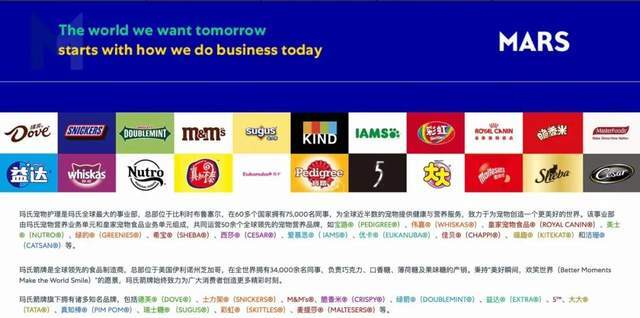
Core Insights - The retail industry experienced a significant wave of mergers and acquisitions in 2025, indicating a major capital reshuffle within the sector [1][27] - Major companies are either divesting non-core assets to focus on their main businesses or acquiring new brands to expand their portfolios [1][27] - Private equity firms are playing a crucial role in driving brand transformation and expansion in the retail sector [1][27] Group 1: Major Mergers and Acquisitions - Alibaba divested its stake in Suning and Intime Retail, marking a strategic shift to optimize resource allocation [3][26] - Mars, Incorporated completed the acquisition of Kellanova for approximately $35.9 billion, creating a global snack empire [5][7] - KKR acquired an 85% stake in Vista International, which is linked to the domestic beverage brand Da Yao, enhancing its control over the Chinese soda market [9][10] Group 2: Strategic Adjustments and Performance - After KKR's acquisition, Gao Xin Retail reported a revenue of 71.55 billion yuan, with a net profit of 386 million yuan, marking a turnaround from previous losses [4] - The acquisition of Kellanova by Mars is one of the largest in the packaged food sector in the last decade, highlighting the trend of consolidation among food giants [7][8] - CPE Yuanfeng's acquisition of Burger King China aims to accelerate local expansion with a commitment to invest $350 million [16][17] Group 3: Industry Trends and Future Outlook - The retail sector is shifting from scale expansion to lean operations, focusing on supply chain and brand value [2][27] - The relationship between brands and capital is evolving from mere financial support to active operational involvement, indicating a search for sustainable growth [27] - The ongoing mergers and acquisitions signal a re-evaluation of the value of physical retail, with supply chain and product strength becoming central to competition [27]


2026年中小企业的破局之策:借势而上,向精而生
Sou Hu Cai Jing· 2026-01-02 07:13
Core Insights - The article emphasizes the challenges faced by small and medium-sized enterprises (SMEs) in 2026, including financing difficulties, compliance pressures, and competition from larger companies, while highlighting the importance of focusing on core competencies for sustainable development [1][19]. Group 1: Leveraging Policy Benefits - The issuance of long-term special government bonds is expected to reach 1.3 trillion yuan by the end of 2025, providing crucial funding for the real economy [4]. - SMEs must adopt a methodical approach to benefit from policy incentives, focusing on "precise alignment, early preparation, and compliance implementation" to convert policy benefits into tangible assets [5][6]. - Key changes include reduced application thresholds for funding, expanded support areas, and optimized approval processes, allowing more SMEs to participate in significant national projects [5][6]. Group 2: Product Focus - The market has shifted from "growth driven by trends" to "competition based on core capabilities," necessitating SMEs to concentrate on niche markets and build differentiated advantages [7]. - SMEs should avoid blindly chasing trends and instead focus on their strengths, ensuring that product development aligns with market needs [8]. - Successful product strategies involve identifying specific customer needs and establishing rapid iteration mechanisms to respond to market feedback [8][9]. Group 3: Digital Efficiency - Digital transformation is essential for SMEs, focusing on low-cost, high-impact solutions that address core business pain points [9][10]. - Implementing lightweight digital tools can significantly enhance operational efficiency, such as using sensors for equipment management and no-code platforms for production tracking [10][11]. - Marketing strategies should leverage low-cost digital channels and customer relationship management tools to improve customer acquisition and retention [11][12]. Group 4: Embracing AI - SMEs can utilize lightweight AI solutions to enhance efficiency and reduce costs, with applications in customer service, production data integration, and sales analysis [13][14]. - The article advises SMEs to adopt AI incrementally, focusing on specific business areas to validate effectiveness before broader implementation [14]. Group 5: Financing and Risk Management - Financing remains a significant challenge for SMEs, particularly in the tech sector, necessitating the development of diversified financing strategies [14][15]. - Innovative financing options include intellectual property pledges and collaborative financing models that combine equity investment with bank credit [15][16]. - Effective risk management strategies should address labor shortages and supply chain disruptions, emphasizing flexible workforce solutions and diversified supplier relationships [16][17]. Group 6: Building Resilience - SMEs should focus on strengthening their internal capabilities, including cash flow management and talent acquisition, to ensure long-term sustainability [18]. - Establishing a robust cash flow management system and leveraging government support for financing can help mitigate financial risks [18]. - Building resilience in supply chains through collaboration with larger enterprises and optimizing internal processes is crucial for maintaining operational efficiency [18].

当种草不再“靠感觉”,消费品牌如何养成“概率思维”?
Sou Hu Cai Jing· 2025-12-29 03:16
Core Insights - The article emphasizes the shift from an "experience era" to a "probability era" in business decision-making, driven by data analytics [2][3] - Companies like Luckin Coffee and Huawei are leveraging data to enhance product development and marketing strategies, leading to successful product launches [6][8] Group 1: Data-Driven Decision Making - Luckin Coffee utilizes a data-driven R&D system to predict the success of new products based on nationwide order data, resulting in the launch of a new product every three days [2] - The concept of "probability" in decision-making is highlighted, indicating that businesses must rely on real-time user feedback rather than past experiences to understand current consumer needs [3] Group 2: Marketing and Consumer Insights - The "grass-planting" strategy has evolved into a comprehensive brand management topic, where data drives understanding of consumer preferences at every stage of product and content development [5] - Companies are increasingly focusing on emotional insights derived from user-generated content (UGC) to better understand consumer motivations and enhance product design [8] Group 3: Regional and Demographic Targeting - Brands like Kelong are employing regional segmentation in their marketing strategies, tailoring messages to specific user demographics based on their unique preferences and usage scenarios [12][10] - The use of platforms like Xiaohongshu's "Lingxi System" allows brands to gain deeper insights into consumer behavior, enhancing the effectiveness of targeted marketing campaigns [13] Group 4: Channel Strategy and Optimization - The case of "Yike Da" illustrates how a brand can successfully penetrate high-end markets by understanding its target audience and leveraging data for effective channel negotiations [16][18] - The integration of online and offline data creates a feedback loop that enhances channel operations and marketing strategies, leading to improved sales performance [20][21] Group 5: Future Implications - The article concludes that brands that master data-driven strategies will not only succeed on platforms like Xiaohongshu but will also enhance their overall business performance across various channels [22][23]
