
宽基指数基金

Search documents
一年前投资1000美元白银交易所交易基金,如今价值几何
Xin Lang Cai Jing· 2026-01-16 16:04
Group 1 - Silver prices surged to a historic high of $93 per ounce earlier this week, stabilizing around $90 as of Friday morning [2][6] - The increase in silver prices is attributed to strong industrial demand and growing investor interest, driven by uncertainties in trade policies, inflation, and interest rate outlooks [2][6] - Since January 2025, silver spot prices have risen approximately 210%, from around $30 per ounce to the recent peak [2][6] Group 2 - Over half of global silver demand comes from the manufacturing sector, with significant applications in electronics, solar panels, and electrification [2][6] - The U.S. Mint may temporarily suspend certain silver coin products to reassess pricing due to the surge in silver prices, a measure previously taken during similar price spikes [2][6] Group 3 - The industrial demand for silver has reached historical highs, linked to the acceleration of investments in renewable energy, electric vehicles, and grid upgrades [7] - Silver's unique properties, such as high conductivity and corrosion resistance, make it irreplaceable in various technology sectors, directly correlating its demand with the development of clean energy and advanced manufacturing [7] Group 4 - The Invesco Silver Trust (SLV), one of the most actively traded silver ETFs, has seen its shares increase by approximately 200% over the past year, trading around $84 per share [9] - Investors typically view silver as a means of portfolio diversification, although its price volatility and lack of yield differentiate it from stocks [9][10] - Financial professionals emphasize the importance of cross-asset diversification rather than concentrating funds in single stocks or commodity-linked ETFs [9][10] Group 5 - Historical investment returns for $1,000 in silver ETFs show a 208% increase over the past year, a 254% increase over five years, and a 507% increase since the fund's inception in April 2006, with current values of $3,083, $3,537, and $6,071 respectively [8][11]


50万亿天量存款即将到期
21世纪经济报道· 2026-01-16 14:01
Core Viewpoint - The upcoming maturity of approximately 50 trillion yuan in fixed deposits by 2026 poses significant challenges for the banking sector in managing liabilities and may lead to a reallocation of household assets [3][4][5]. Group 1: Scale of Maturing Deposits - The maturity of fixed deposits is expected to reach around 50 trillion yuan in 2026, with a notable increase of about 10 trillion yuan from 2025 [4]. - The majority of this maturity will come from two- and three-year deposits, each exceeding 20 trillion yuan, while five-year deposits will be around 5-6 trillion yuan [4]. - Different research institutions estimate the total maturity of fixed deposits to be between 59 trillion and 75 trillion yuan, indicating a significant impact on the banking sector [5][6]. Group 2: Potential Directions for Maturing Funds - A substantial portion of the maturing funds is likely to remain within the banking system, as the deposit retention rate is high, around 96% [7]. - Consumers are expected to optimize their deposits by moving funds to banks offering higher interest rates, as seen in the case of a consumer moving funds from a state-owned bank to a city commercial bank [7]. - Consumer spending is projected to be a major outlet for these funds, with anticipated household consumption reaching 53 trillion yuan in 2025 [8]. Group 3: Investment Trends and Preferences - There is a growing trend towards reallocating funds into bank wealth management products, which are expected to see a net increase of approximately 3.7 trillion yuan in 2025 [8]. - Insurance products are also gaining popularity, particularly among high-net-worth individuals seeking long-term investment options [9]. - Some investors are diversifying their portfolios by allocating funds into bonds and stock-enhanced funds, indicating a shift in investment strategies [9]. Group 4: Market Dynamics and Bank Strategies - The banking sector is likely to face a re-pricing of a large volume of funds, with interest rates on large deposits declining significantly [16][17]. - The People's Bank of China has indicated potential for further interest rate cuts, which could help banks reduce their interest expenses and stabilize net interest margins [16]. - Banks are actively trying to optimize their liability structures by encouraging shorter-term deposits and promoting wealth management and insurance products [17][18].

50万亿天量存款即将到期
2 1 Shi Ji Jing Ji Bao Dao· 2026-01-16 13:27
Core Insights - A significant wave of 50 trillion yuan in fixed-term deposits is set to mature in China by 2026, raising concerns among depositors about asset allocation strategies as interest rates decline [1][3][4] - The term "caged tiger" is used to describe the potential impact of this massive capital shift on the market, with various experts weighing in on how these funds might be reallocated [3][4] Group 1: Deposit Maturity and Market Impact - The upcoming maturity of fixed-term deposits is expected to create substantial pressure on banks' liability management, with estimates suggesting that around 50 trillion yuan will mature in 2026, marking a 10 trillion yuan increase from 2025 [5][6] - Different research institutions have provided varying estimates of the total amount of maturing deposits, with a consensus that the impact on banks and asset allocation will be significant [6][8] - The majority of maturing deposits will come from long-term fixed deposits, with state-owned banks facing the largest volume of maturing funds [5][6] Group 2: Potential Fund Allocation - The reallocation of maturing funds is a key concern, with expectations that a significant portion will remain within the banking system rather than flowing into capital markets [8][9] - Current trends indicate that depositors are likely to seek higher interest rates, leading to competitive rate offerings from smaller banks to attract funds [9][10] - Consumer spending, housing repayments, and bank wealth management products are anticipated to be primary destinations for the reallocated funds [9][10] Group 3: Market Conditions and Future Projections - The current environment of declining interest rates and the potential for further monetary easing by the People's Bank of China may influence banks' ability to manage their liabilities effectively [19][20] - Analysts predict that the pressure on banks' net interest margins will ease starting in the second half of 2025, potentially leading to improved revenue and profit growth for the banking sector [20] - The overall strategy for banks will involve optimizing their liability structure while encouraging a gradual release of maturing funds into the market [20]

50万亿“笼中虎”何处去?
2 1 Shi Ji Jing Ji Bao Dao· 2026-01-16 12:53
Core Viewpoint - The upcoming maturity of approximately 50 trillion yuan in fixed-term deposits in China by 2026 is creating significant uncertainty among depositors regarding asset allocation strategies, as interest rates have declined from 3.1% to around 1.5% [1][2]. Group 1: Scale of Maturing Deposits - The discussion around the 50 trillion yuan in maturing fixed-term deposits has gained traction since the end of 2025, highlighting the challenges banks will face in managing liabilities [2]. - The surge in maturing deposits can be traced back to 2022-2023, when funds flowed back into fixed-term deposits due to a downturn in the real estate market and volatility in the stock and bond markets [3]. - Estimates from various research institutions indicate that the total maturing fixed-term deposits in 2026 will significantly impact banks' liabilities and residents' asset allocation [4][5]. Group 2: Potential Directions for Maturing Funds - The maturing funds are expected to be reallocated, but it is important to note that not all funds will leave the banking system; many will be optimized within it [6]. - Consumer spending is anticipated to be a primary outlet for these funds, with projected household consumption reaching 53 trillion yuan in 2025 [8]. - A portion of the funds will also be directed towards repaying mortgages, with an estimated 3 trillion yuan expected for early mortgage repayments in 2025 [8]. Group 3: Banking Strategies and Market Dynamics - Banks are currently engaged in competitive strategies to attract deposits, including raising interest rates on fixed-term deposits [7]. - The trend of "funds moving" within the banking system is evident, as depositors seek higher interest rates offered by smaller banks [6][7]. - The overall environment suggests that while some funds may flow into the stock market, the majority will likely remain within the banking system, reflecting a cautious approach among depositors [10][12]. Group 4: Impact on Banking Sector - The upcoming wave of maturing deposits presents a unique opportunity for banks to reprice their liabilities, potentially reducing annual costs by approximately 1.5 trillion yuan [14][16]. - The People's Bank of China has indicated that there is still room for interest rate cuts, which could further stabilize banks' interest margins [15][16]. - Banks are focusing on optimizing their liability structures, encouraging a shift from long-term to short-term deposits while promoting financial products to manage funds effectively [17][18].

好书推荐:《长期复利的简单方法》
点拾投资· 2026-01-11 11:00
Group 1 - The core viewpoint of the article emphasizes the importance of long-term investment strategies, particularly the power of compound interest and the benefits of index funds over active trading [1][37] - The article discusses the dual drivers of market optimism: "policy expectations" and "technology cycles," which have led to a more solid foundation for market growth compared to previous years [1] - It highlights the common pitfalls of emotional trading and frequent strategy changes among individual investors, suggesting that a simple buy-and-hold strategy in broad index funds often yields better results [1][19] Group 2 - The article introduces the concept of compound interest as a powerful yet often misunderstood phenomenon, illustrating how significant wealth is typically generated in the later stages of investment [6][37] - It presents the "Rule of 72" as a practical tool for estimating how long it will take for an investment to double based on its annual return [8] - The discussion includes the importance of saving as a means of prioritizing future financial security, framing it as a trade-off for greater future utility [10][11] Group 3 - The article notes a fundamental shift in investment dynamics over the past fifty years, with over 90% of market transactions now conducted by professional institutional investors, making it increasingly difficult for individual investors to outperform the market [21][22] - It emphasizes the need for individual investors to adopt a strategy of owning the market at the lowest cost, primarily through index funds and exchange-traded funds (ETFs) [24][25] - The article warns against the high costs associated with active management and highlights the behavioral advantages of index funds, which help mitigate emotional decision-making [25][26] Group 4 - The article advocates for a comprehensive financial planning approach that goes beyond traditional asset allocation rules, encouraging investors to consider their entire financial ecosystem [28][29] - It suggests that investors should limit major investment decisions to about 20 throughout their lifetime to enhance long-term returns [32] - The article concludes with nine key principles of investing, emphasizing the importance of understanding compound interest, saving, and the evolving market structure [37][40]

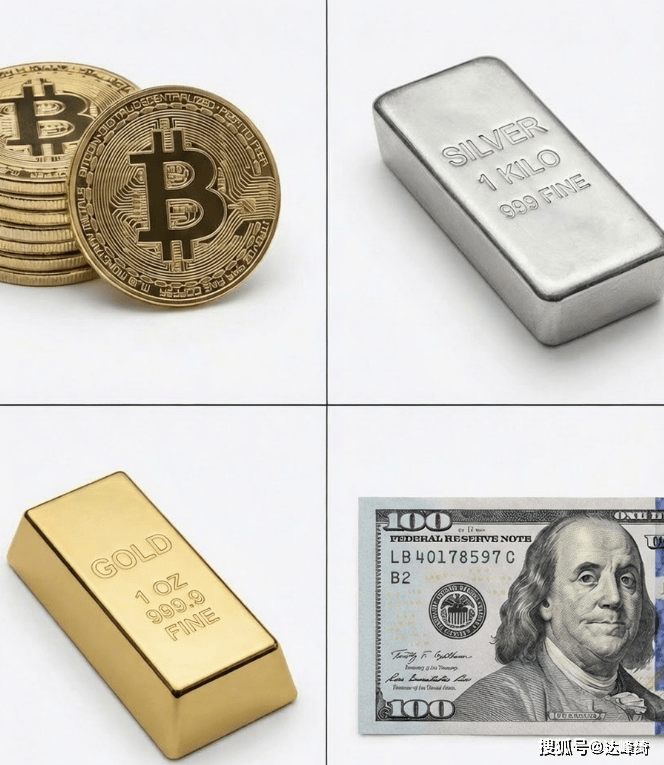
从比特币、黄金、白银和美元中选择一个判断哪个会贬值,未来最值钱的是哪一个?
Sou Hu Cai Jing· 2026-01-09 11:12
Core Insights - The article discusses the potential depreciation of various assets, including Bitcoin, gold, silver, and the US dollar, emphasizing that no asset is guaranteed to appreciate indefinitely, but rather a diversified approach is necessary for wealth preservation and growth [4][11]. Group 1: Asset Analysis - Bitcoin is characterized as a high-risk investment rather than a stable store of value, with its price driven by market sentiment rather than intrinsic utility [6][4]. - Gold is viewed as a traditional safe haven asset, providing stability during crises, but it is not expected to yield significant appreciation [7][8]. - Silver has both financial and industrial attributes, leading to higher volatility compared to gold, making it a less stable investment option [9]. - The US dollar is currently strong due to Federal Reserve interest rate hikes, but its long-term value is questioned due to increasing national debt and inflationary pressures [10]. Group 2: Wealth Preservation Strategy - A three-tiered pyramid approach is proposed for wealth preservation: - The base layer focuses on capital preservation and inflation resistance [11]. - The middle layer aims for value appreciation through investments in broad market index funds and personal skill development [13]. - The top layer involves high-risk investments for potential future gains, such as Bitcoin and silver [13][17]. Group 3: Actionable Steps - Individuals are encouraged to assess their current asset distribution and begin diversifying their investments according to the proposed pyramid structure [19]. - The first step involves acquiring physical gold as a foundational asset, followed by regular investments in index funds to build wealth over time [17][19]. - Emphasis is placed on developing personal skills to create additional income streams, which are considered valuable assets in their own right [20].
内行人建议:多余存款换成这“4样”,不出5年,你会感谢我的!
Sou Hu Cai Jing· 2026-01-08 11:01
Core Viewpoint - The article emphasizes the importance of diversifying investments beyond traditional savings accounts due to declining interest rates and the new normal of low growth and low rates in the economy [3][5]. Group 1: Current Financial Landscape - Interest rates for three-year fixed deposits have fallen below 2%, significantly reducing the returns on savings compared to three years ago when rates were above 3% [1]. - The trend indicates that interest rates may remain low for an extended period, reflecting a broader economic shift towards a "low growth + low interest" environment [3]. Group 2: Investment Recommendations - It is advised not to keep all savings in "current + fixed deposits" but to consider reallocating a portion of long-term unused savings into four recommended asset types for better future returns [5]. - The first recommended asset is government bonds or "quasi-government" assets, which should constitute about 30%-40% of a household's investments, providing a stable foundation [15][17]. - The second recommendation is to invest in broad-based index funds through a systematic investment plan (SIP), which helps average out costs over time [25][28]. - The third suggestion is to allocate a small portion (5%-10%) of assets into gold or gold ETFs as a hedge against economic uncertainty [36][39]. - The final recommendation is to invest in personal development, including health, skills, and financial literacy, which can yield the highest long-term returns [47][50].
1.8犀牛财经早报:2026年铜价或开启新一轮上涨行情
Xi Niu Cai Jing· 2026-01-08 01:40
Group 1 - The new regulations for public fund sales have been implemented, allowing for more flexibility in bond fund redemption fees and refined adjustments to subscription fees, which may lead to increased allocation of equity funds by financial institutions [1][3] - The FOF (Fund of Funds) market is experiencing a surge in demand, with several funds selling out quickly, indicating a competitive landscape driven by customer demand and product transformation [1][2] - The Hong Kong IPO market is expected to raise over 300 billion HKD in 2026, with technology and A to H listings being the main themes driving this growth [2] Group 2 - Samsung Electronics reported a record operating profit of 20 trillion KRW (approximately 964 million RMB) for Q4 2025, marking a 208.2% year-on-year increase [7] - Green City China announced a total contract sales amount of approximately 251.9 billion RMB for 2025, with significant sales activity in December [7] - Berkshire Hathaway has increased the salary of its new CEO Greg Abel to 25 million USD, significantly higher than Warren Buffett's long-standing salary [6] Group 3 - The insurance market for robots is emerging, with companies like Ping An and PICC developing customized insurance products to meet the growing demand in the robot rental market, projected to reach 10 billion RMB by 2026 [5] - Standard Chartered Bank recommends investors to overweight Chinese stocks and gold, focusing on technology, healthcare, and communication sectors in China for 2026 [4]
基金销售新规落地:理财“加权益”与公募“强适配”时代开启
Zhong Guo Zheng Quan Bao· 2026-01-08 00:16
Group 1 - The core viewpoint of the news is that the newly released regulations on the management of sales fees for publicly offered securities investment funds have relaxed the redemption fee constraints for bond funds, which is expected to enhance the role of bond ETFs in liquidity management and trading for financial institutions [1][2] - The adjustment in redemption fees allows fund managers to set different standards for institutional investors who hold bond fund shares for more than thirty days, which is a significant change from the previous draft [2] - The fine-tuning of subscription fees, particularly the significant reduction in fees for index equity funds, is anticipated to increase the allocation of financial resources to equity funds [3] Group 2 - Financial institutions are expected to increase their allocation to equity funds, particularly broad-based index funds and low-volatility "fixed income plus" products, as a response to the new fee structures [1][3] - The collaboration between public funds and financial institutions is deepening, with public funds optimizing their product lines to better meet the changing allocation needs of financial resources [4][5] - The introduction of refined fixed-income product lines, such as credit bond products categorized by duration, aims to provide financial institutions with effective asset allocation tools [4][5]
基金销售新规落地:理财“加权益”与公募 “强适配”时代开启
Xin Lang Cai Jing· 2026-01-07 23:22
Core Viewpoint - The newly released formal regulations on the management of sales fees for publicly offered securities investment funds have relaxed the redemption fee constraints for bond funds and refined the subscription fee rates, indicating a shift in the investment landscape [1] Group 1: Regulatory Changes - The formal version of the "Regulations on the Management of Sales Fees for Publicly Offered Securities Investment Funds" has been issued, which differs from the previous draft by easing restrictions on redemption fees for bond funds [1] - Adjustments have been made to the subscription fee rates for funds, allowing for more precise management [1] Group 2: Market Implications - Industry experts believe that bond ETFs are likely to become important tools for liquidity management and tactical trading for financial institutions [1] - There is an expectation that investment in equity funds will gradually increase, with broad-based index funds and low-volatility "fixed income plus" products being particularly favored [1] Group 3: Industry Trends - Public funds are accelerating the transformation and upgrading of their product lines and service models, moving from standardized products to tailored, tool-based asset allocation solutions for financial institutions [1] - A new competitive landscape is emerging in the industry as firms adapt to these regulatory changes and market demands [1]