
能源设备

Search documents
中美决胜局开打,选哪边?美国已接到邀约,柬副首相送中国一句话
Sou Hu Cai Jing· 2026-02-11 09:27
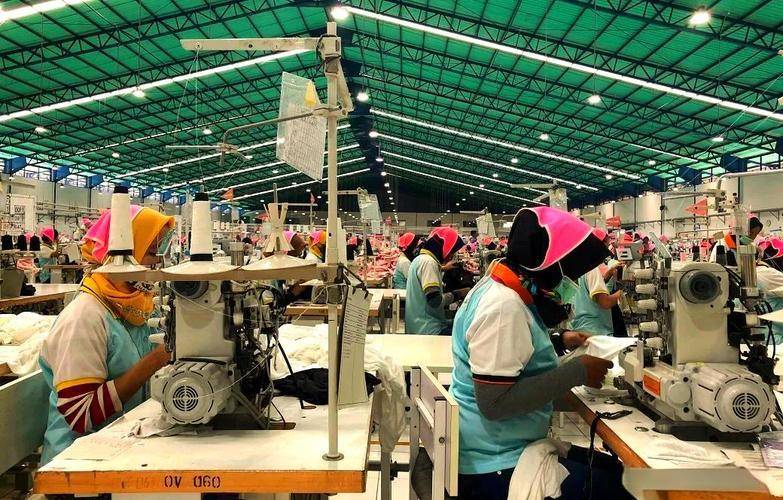
Core Viewpoint - The escalating US-China trade tensions are significantly impacting Cambodia, particularly its textile and footwear industries, which are heavily reliant on exports to the US. The imposition of high tariffs poses a risk to the Cambodian economy and employment. Group 1: Economic Impact and Government Response - The Cambodian government is in a difficult position as the textile industry supports nearly one million workers, mostly women, and potential tariffs could lead to factory closures and unemployment [3] - Prime Minister Hun Manet quickly initiated negotiations with the Trump administration, resulting in a reduction of tariffs from 49% to 19%, which temporarily stabilized the Cambodian economy [3][5] - The reliance on external markets, especially Chinese investments and raw materials, has been highlighted as a vulnerability, prompting Cambodia to seek diversification of its economic partnerships [5][9] Group 2: Diversification Efforts - Deputy Prime Minister Sun Chanthol has been actively promoting investment from the US, Canada, Japan, and South Korea to reduce dependency on China and enhance economic resilience [7][9] - The Cambodian government aims to align with US supply chain standards and capitalize on global industrial shifts, indicating a strategic pivot in its foreign investment approach [9][17] - Cambodia has engaged a US lobbying firm to attract American investors, with commitments from US companies to invest between $500 million and $1 billion in manufacturing, which is crucial for maintaining exports and employment [15][19] Group 3: Long-term Economic Strategy - The Cambodian government is focusing on reducing its public debt exposure to China, which accounts for nearly 40% of its total external debt, and is shifting towards trade and investment growth [19] - Economic forecasts indicate that Cambodia's GDP will exceed $46 billion in 2025, with an expected growth rate of nearly 6% in 2026, reflecting a positive outlook amid ongoing geopolitical challenges [19] - The government’s strategy of maintaining neutrality in the US-China rivalry while strengthening its partnerships with both nations demonstrates a pragmatic approach to safeguard its economic interests [21]

哈尔滨电气(01133):25年预计录得26.5亿元归母净利润,超预期
Guoyuan Securities2· 2026-01-27 08:06
Investment Rating - The report assigns a positive investment rating, suggesting active attention to the company due to its operational efficiency and industry improvement [4]. Core Insights - The company is expected to achieve a net profit of approximately 2.65 billion RMB for the fiscal year 2025, representing a significant year-on-year increase of about 57.2% from 1.69 billion RMB in the previous year, exceeding the forecast of 2.5 billion RMB [2][3]. - The substantial growth in net profit is attributed to increased operating revenue and improved product profitability, aligning with previous assessments regarding the release of high-value orders and potential for margin expansion [2][3]. - The company has a robust order backlog, particularly in coal power orders, which are expected to be a core profit contributor in the short to medium term, while long-term growth is anticipated from energy equipment exports and other projects [3]. Summary by Sections Financial Performance - The company forecasts a net profit of 2.65 billion RMB for 2025, a 57.2% increase from the previous year [2]. - The growth is driven by increased revenue and enhanced product profitability [2]. Order Backlog and Future Growth - The company maintains a strong order backlog, with coal power orders expected to contribute significantly to profits in the near term [3]. - Long-term growth is anticipated from energy equipment exports and other engineering projects [3]. Investment Recommendation - The report recommends active monitoring of the company due to its status as a quality state-owned enterprise and the ongoing improvement in operational efficiency within the industry [4].
刚把石油卖给中国,加拿大对华称呼就变了,还对美国实施关税豁免
Sou Hu Cai Jing· 2025-12-14 14:37
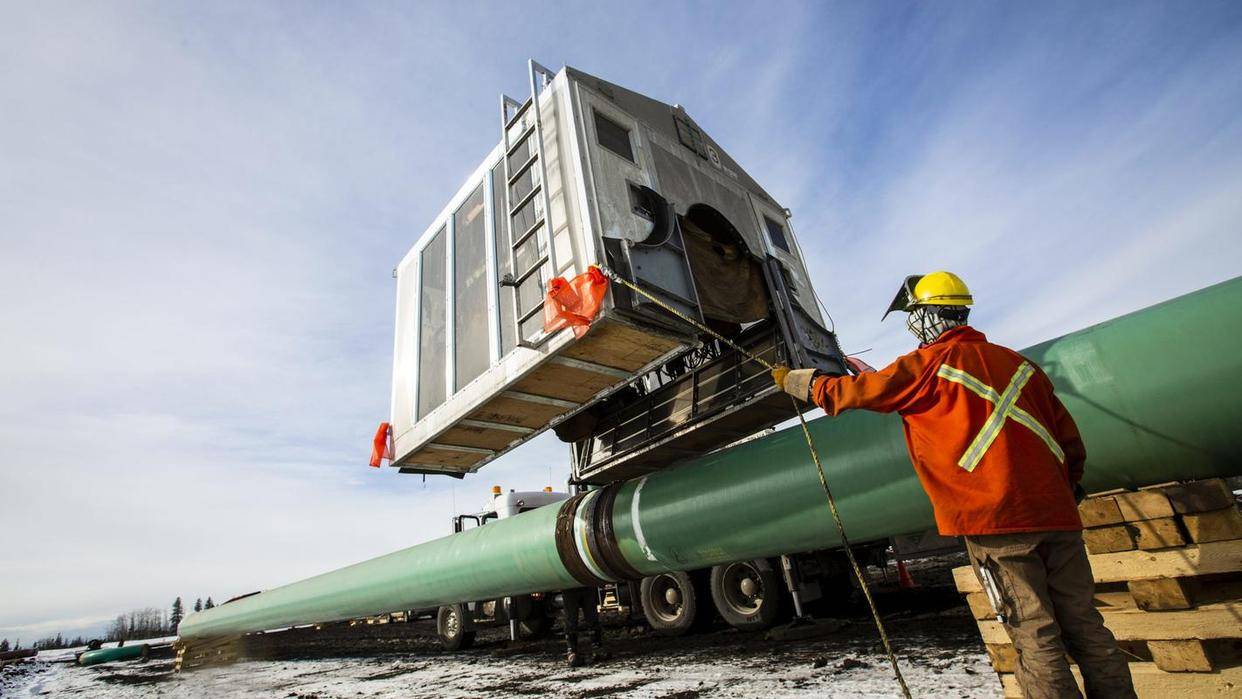
Core Insights - The Canadian oil industry has found a new market in China, with oil exports to China expected to double in 2024, reaching over $21 billion, primarily due to reduced imports from the U.S. amid trade tensions [1][3] - The expansion of the Trans Mountain pipeline has significantly increased Canada's oil export capacity, allowing for a daily output of 890,000 barrels [3] - Canadian oil companies are investing in technology upgrades to meet China's environmental standards, leading to a boost in local employment and a 20% increase in the energy sector on the Calgary stock market [5] Group 1: Oil Export Dynamics - In 2023, Canadian crude oil exports to Asia surged, with total export revenue nearing $4 billion, driven by heavy oil from oil sands [1] - By mid-2025, Canadian oil exports to China reached CAD 16 billion, a 12% increase from the previous year, with record imports occurring in October [3] - The favorable pricing of Canadian heavy crude compared to Middle Eastern oil has made it an attractive option for Chinese refineries [3] Group 2: Political and Economic Context - Despite the economic benefits from oil exports, Canadian political sentiment towards China remains cautious, with intelligence reports labeling China as a significant foreign interference threat [6][8] - Prime Minister Justin Trudeau's administration has taken a hard stance against China, citing security concerns while simultaneously benefiting from increased oil trade [8][10] - The new Prime Minister Mark Carney has continued to prioritize national security regarding China, despite attempts to ease trade tensions [10][12] Group 3: Trade Relations and Challenges - The U.S.-Canada trade relationship has faced challenges, with tariffs imposed on Canadian steel, aluminum, and automotive products, leading to a decline in manufacturing sales [14][16] - In response to U.S. tariffs, Canada has implemented countermeasures but has also begun to ease some restrictions to stabilize its economy [16][18] - The dual approach of maintaining oil exports to China while addressing U.S. trade issues has created a complex diplomatic situation for Canada [20][23] Group 4: Future Outlook - Canadian oil companies are exploring new markets to reduce dependency on China, as the geopolitical landscape remains uncertain [25] - The balance between economic gains from oil exports and the need for a stable diplomatic relationship with both China and the U.S. is critical for Canada's long-term economic strategy [25][27]
德国经济部长赖歇承诺对乌追加援助
Zhong Guo Xin Wen Wang· 2025-10-25 02:43
Core Points - Germany's Economic Minister, Katrin Reiche, has committed to providing additional aid to Ukraine, focusing on ensuring energy supply as winter approaches [1] - Ukraine is facing its fourth winter during wartime, with increased attacks on its energy system by Russia, threatening electricity and heating security [1] - Approximately 60% of Ukraine's natural gas supply facilities have been destroyed as of early October [1] - Germany will assist in rebuilding damaged energy infrastructure and has contributed about €390 million to the "Energy Support Fund," which is nearly one-third of the total fund [1] - The funds will be used by Ukraine to purchase equipment necessary for repairing its energy systems [1] - Germany will continue to provide funding for Ukraine to purchase natural gas and encourage German energy equipment manufacturers to participate in related projects [1] - Reiche's visit to Ukraine will last until October 26 and includes discussions on energy and defense industry cooperation [1] - German drone manufacturers plan to reach cooperation agreements with Ukraine during this visit [2]
国泰海通|固收:聚焦科技与涨价双主线——转债2025年中报业绩前瞻
国泰海通证券研究· 2025-07-17 14:02
Core Viewpoint - The report anticipates that convertible bonds with positive performance in Q2 2025 will be concentrated in high-end manufacturing sectors such as communication, electronics, military, automotive parts, transportation equipment, industrial control equipment, energy equipment, and electric power equipment, as well as in non-ferrous and basic chemical industries benefiting from price increases [1]. Group 1: Industry Performance Insights - The profit growth in the non-ferrous metal mining industry is expected to reach 41.7% year-on-year, driven by rising prices and increased production and sales of metals like gold, copper, zinc, and silver [2]. - The railway, shipbuilding, aerospace, and other transportation equipment manufacturing sectors are projected to see a profit increase of 56% year-on-year, benefiting from global shipping recovery and significant orders for LNG carriers and container ships [2]. - The computer, communication, and other electronic equipment manufacturing sectors, along with electrical machinery and general equipment manufacturing, are expected to maintain double-digit profit growth due to high demand for AI hardware, smart terminals, and industrial control equipment [2]. - The agricultural and sideline food processing industry is anticipated to experience a profit growth rate of 38.2%, primarily due to the demand for high-value-added products like prepared dishes and health foods [2]. Group 2: Company-Specific Performance - Among the companies that have disclosed their H1 2025 performance forecasts, 272 companies are expected to achieve a non-net profit growth of over 30% in Q2 2025, mainly in the basic chemicals, electric power equipment and new energy, machinery, electronics, and automotive sectors [3]. - In the basic chemicals sector, companies are expected to benefit from price increases in phosphates, pesticides, and refrigerants [3]. - The electric power equipment and new energy sector's high-performing companies are expected to benefit from increased overseas photovoltaic storage orders, domestic ultra-high voltage and smart grid construction, and rising domestic orders for new energy vehicles and military products [3]. - The machinery sector's growth is driven by high demand for industrial mother machines, semiconductor equipment, energy equipment, shipbuilding, and rail transit equipment [3]. - The electronics sector's growth is attributed to increased investment in AI computing power, accelerated domestic substitution of semiconductor equipment and materials, and growth in consumer electronics and smart terminal shipments [3]. - The automotive sector is expected to see high growth due to increased sales of domestic new energy vehicles and accelerated exports of commercial vehicles and automotive parts [3]. Group 3: Performance Forecast Adjustments - A list of 13 convertible bond targets has been identified, which have seen their average net profit forecasts raised by over 5% in the past three months, with more than three forecasting institutions involved, indicating potential marginal improvements in performance [4].

全球机遇,五金机电产业如何在国际市场突围?
Sou Hu Cai Jing· 2025-07-04 21:43
Core Insights - The global hardware and electromechanical industry is facing unprecedented opportunities and challenges due to profound changes in the global economic landscape [1] - China's hardware and electromechanical products export exceeded $350 billion in 2023, accounting for nearly 30% of global trade [1] Market Overview - The global hardware tools market is projected to exceed $580 billion by 2025, growing at an annual rate of 4.5% [1] - The recovery of the global market post-pandemic is uneven, with significant regional demand differentiation [2] Developed Markets - Traditional markets like Europe and the U.S. are increasingly demanding high-precision, intelligent, and environmentally friendly products, with green manufacturing and low-carbon standards becoming essential entry barriers [3] Emerging Markets - Regions such as Southeast Asia, the Middle East, and Africa are experiencing strong demand for basic hardware tools, construction machinery, and energy equipment due to accelerated industrialization [4] Supply Chain Dynamics - China's complete industrial system and cost advantages make it a preferred choice for international buyers, although competition from Southeast Asia is rising [5] Key Strategies for Breakthrough - Companies need to accurately identify target markets and align differentiated products and technological upgrades with market demands, leveraging international exhibitions for resource connections [6] Competitive Landscape - China leads in global exports of hardware and electromechanical products, particularly in electric tools, construction hardware, and mechanical parts, recognized for its manufacturing cost advantages [7] - However, challenges include insufficient technological innovation and weak brand influence, with low-cost advantages being challenged by emerging economies [7][9] Transformation Trends - Leading companies are accelerating the adoption of intelligent production and digital marketing, while small and medium enterprises are focusing on specialization in niche markets [10] Policy and Support - National policies, such as the Belt and Road Initiative and RCEP, are providing strong support for the internationalization of the hardware and electromechanical industry [12] - Local support in regions like Ningbo includes tax incentives and foreign trade subsidies to assist companies in going global [13] Exhibition Economy - International exhibitions, such as the 2025 Ningbo Hardware and Electromechanical Import and Export Fair, play a crucial role in showcasing technology and expanding international markets [18] Future Directions - The future growth of the hardware and electromechanical industry will focus on three main areas: intelligent upgrades, green transformation, and service extension [16][17] - The industry must embrace global opportunities through technological innovation and international cooperation to transition from scale expansion to value enhancement [22]
股市必读:迪森股份(300335)4月11日董秘有最新回复
Sou Hu Cai Jing· 2025-04-13 18:54
Core Viewpoint - The company, Disen Co., Ltd. (300335), is currently facing challenges with its stock price remaining low for seven years, prompting questions about potential industry risks and the need for transformation [2]. Group 1: Stock Performance - As of April 11, 2025, Disen Co., Ltd. closed at 4.67 yuan, down 1.27%, with a turnover rate of 3.91%, a trading volume of 150,100 shares, and a transaction value of 70.5645 million yuan [1]. - On the same day, the net inflow of main funds was 3.0459 million yuan, accounting for 4.32% of the total transaction value, while the net inflow of speculative funds was 3.3205 million yuan, representing 4.71% of the total transaction value. In contrast, retail investors experienced a net outflow of 6.3665 million yuan, which made up 9.02% of the total transaction value [2]. Group 2: Business Operations - The company currently does not have any plans to enter the robotics business [2]. - Disen Co., Ltd. has not undertaken any projects related to data centers or server farms [2]. - The company’s equipment is not involved in nuclear fusion applications [2]. - The company has only engaged in foreign exchange hedging business in 2024, achieving an investment income of 304,600 yuan, and has not conducted commodity futures hedging [2]. - The company’s heat pump products are not currently targeting the automotive sector [2]. - There is no separate statistical disclosure regarding the sales share of air energy heat pumps [2]. - The impact of U.S. tariffs on the company is limited, as its overseas business accounts for a small proportion of total operations, and it does not have any agricultural technology business [2].

景气趋势与盈利预期改善的交集
HTSC· 2025-03-17 03:00
Group 1: Economic Trends - The economic index for the entire industry continued to rise in February, indicating an improvement in the economic climate[1] - Key areas of improvement include midstream manufacturing, consumer goods, and certain cyclical products[1] - The real estate chain is recovering with a 32% year-on-year increase in housing sales in 30 major cities in February[4] Group 2: Midstream Manufacturing - Significant improvement in midstream manufacturing, driven by demand in sectors like construction machinery, automation, and specialized equipment[2] - Excavator sales in January-February increased by 27.2% year-on-year, indicating strong demand[2] - Prices for photovoltaic materials and battery components have rebounded, suggesting a recovery in supply-demand dynamics[2] Group 3: Consumer Demand - Domestic consumption is showing signs of recovery, particularly in dairy products and travel services, benefiting from the Spring Festival[3] - The average daily passenger volume for civil aviation in February showed positive year-on-year growth, reflecting improved demand[3] - The price decline for milk has narrowed, indicating a potential price recovery in consumer goods[3] Group 4: Price Trends in Cyclical Products - Precious metals prices continued to rise, with COMEX gold prices increasing year-on-year[4] - Energy metals like cobalt and nickel are experiencing price strength, while lithium resources are showing short-term weakness[4] - Chemical products such as PVC and urea have seen price improvements, indicating a positive trend in the chemical sector[4] Group 5: Risks and Considerations - Risks include the possibility of domestic economic recovery falling short of expectations and external demand not meeting projections[6] - There is a potential risk of model failure, which could impact forecasts and investment strategies[6]