
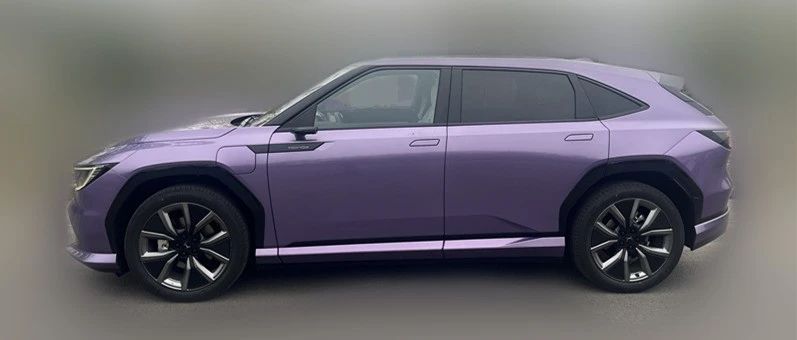
铂智4X

Search documents
20城、3000车、收入翻3倍:单车盈利转正之后,小马智行2026年三大目标浮出水面
Ge Long Hui· 2026-03-30 01:01
Core Insights - The global autonomous driving industry is entering a critical year of "de-bubbling" and "pragmatic commercialization" in 2025, with the focus shifting from testing mileage and financing scale to examining unit economics and cash flow quality [1] Group 1: Financial Performance - In 2025, the company reported total revenue of 629 million RMB, a year-on-year increase of 20%, marking four consecutive years of growth [1] - The core Robotaxi business saw a significant surge, with revenue increasing by 129% to 116 million RMB, and passenger fare income growing nearly 400% [1] - In Q4 2025, Robotaxi revenue reached 46.6 million RMB, a 160% year-on-year increase, with passenger fare income rising over 500% [2] Group 2: Business Model Evolution - The company has transitioned from a model of owning and operating vehicles to a "co-built fleet" model, which enhances capital efficiency and allows for rapid expansion [3] - The co-built fleet model enables the company to act as a "technology and operations enabler," sharing operational revenue with partners while minimizing asset acquisition costs [3] - The company aims to triple Robotaxi revenue by 2026 and expand its fleet to over 3,000 vehicles, leveraging partnerships to reduce financial pressure [3] Group 3: Market Expansion Strategy - The company has established a complete and replicable business capability in the domestic market, with the seventh-generation autonomous taxi being a key component [4] - As of March 25, 2026, the fleet size exceeded 1,400 vehicles, making it one of the largest autonomous operators globally [5] - The company plans to expand its operational footprint to over 20 cities globally by the end of 2026, with nearly half of these in overseas markets [6] Group 4: Technological Advancements - The seventh-generation autonomous driving suite has significantly reduced material costs and improved operational efficiency through partnerships with major automotive manufacturers [2] - The company has become the first to offer fully autonomous L4 services in all four first-tier cities in China, demonstrating its capability in complex urban environments [5] Group 5: Conclusion - The company has successfully transformed from a technology-focused autonomous driving developer to a scalable commercial platform, positioning itself at a critical juncture in the commercialization of autonomous driving [7]
丰田在中国再召回近1.6万辆汽车,此前刚召回近10万辆
Xin Lang Cai Jing· 2026-01-23 12:19
Core Viewpoint - Toyota has initiated a large-scale recall due to improper settings in the multimedia screen system control program, affecting multiple vehicle models and raising safety concerns [1][2]. Group 1: Recall Details - The recall plan includes 10,922 units of the RAV4 produced between December 5, 2025, and January 13, 2026, by FAW Toyota [1]. - GAC Toyota will recall 5,056 units of the Wildlander produced between December 11, 2025, and January 12, 2026 [1]. - The vehicles may experience a black screen upon startup, which could hinder the defrosting and defogging functions, potentially affecting driving visibility [1]. Group 2: Previous Recalls - This is Toyota's second large-scale recall in just over a month, with nearly 100,000 vehicles recalled in December due to issues with the panoramic monitoring system [2][5]. - The previous recall involved 93,882 vehicles, where the panoramic image display could malfunction, impacting the driver's judgment of the surrounding environment [5]. Group 3: Market Performance - According to data released by Toyota China, the company expects to sell over 1.78 million vehicles in the Chinese market in 2025, showing a slight increase from 1.776 million in 2024 [6]. - Toyota is the only foreign multinational automotive group in China to achieve sales growth, while other Japanese automakers like Nissan and Honda have reported declines in sales [6].


广汽丰田转型进行时:油电双驱稳基盘 自研破局待提速
Zhong Guo Zheng Quan Bao· 2025-12-11 22:30
Core Viewpoint - The Chinese automotive market has entered a phase of competition between hybrid and pure electric vehicles, with new energy vehicles accounting for 51.6% of total new car sales in October 2023, marking a significant shift in market dynamics [2] Group 1: Market Dynamics - In the first 11 months of 2023, GAC Toyota achieved cumulative sales of 704,000 vehicles, employing a strategy of "leading with hybrids and following with pure electric" [2] - The sales structure shows signs of imbalance, reflecting common challenges faced by traditional giants amid industry transformation [2] Group 2: Product Performance - The hybrid model, particularly the Camry Hybrid, has seen an increasing sales share, supported by Toyota's fifth-generation hybrid technology [3] - However, competition from domestic plug-in hybrid technologies, such as BYD's Han DM-i, poses significant pressure, as GAC Toyota's hybrid models lack advantages in electric range and policy incentives [3] Group 3: Consumer Preferences - Consumer demand is shifting towards pure electric range and smart features, highlighting weaknesses in GAC Toyota's hybrid offerings [3] - In response, GAC Toyota launched a comprehensive upgrade plan in September, enhancing models like the Highlander and Sienna with improved technology and reduced prices [3] Group 4: Fuel Vehicle Challenges - The fuel vehicle segment is facing a passive situation of "exchanging price for volume," with significant price reductions leading to minimal profit margins [4][5] - Dealers report that reliance on price cuts to maintain sales is compressing profit margins and undermining brand perception [5] Group 5: Electric Vehicle Strategy - GAC Toyota is leveraging resource integration for rapid breakthroughs in the pure electric segment, with the launch of the Platinum 3X model achieving sales of 10,010 units in November 2023 [6] - The model combines GAC Aion's powertrain with Huawei's HarmonyOS, but concerns about technological hollowing arise due to reliance on partnerships [6] Group 6: Future Development - GAC Toyota plans to initiate a "China Self-Research 2.0 Era" in 2025, focusing on developing new energy platforms compatible with various powertrain types [7] - The strategy aims to enhance competitiveness by accelerating the development of proprietary technologies and addressing gaps in the hybrid product line [7] - Industry experts emphasize the need for GAC Toyota to convert its manufacturing experience and local R&D capabilities into competitive products while shortening technology iteration cycles [7]
广汽丰田转型进行时: 油电双驱稳基盘 自研破局待提速
Zhong Guo Zheng Quan Bao· 2025-12-11 22:24
Core Insights - The Chinese automotive market has entered a phase of "hybrid and pure electric dual-line competition," with new energy vehicles (NEVs) accounting for 51.6% of total new car sales in October 2023, marking a significant milestone for the industry [1] - GAC Toyota has adopted a strategy of "hybrid first, pure electric follow-up," achieving cumulative sales of 704,000 units in the first 11 months of the year, but faces challenges related to sales structure imbalance and the path of new energy transformation [1] Group 1: Market Dynamics - GAC Toyota's hybrid models, particularly the Camry Hybrid, have seen an increase in sales, supported by Toyota's fifth-generation hybrid technology, but face competition from rapidly evolving domestic plug-in hybrid technologies [2] - The Camry's fuel consumption of 4.1L/100km is competitive but lacks advantages in "green plate" policies and does not meet consumer demands for pure electric driving scenarios [2] - GAC Toyota has initiated a comprehensive renewal plan to enhance the intelligence of its models, including price reductions for the Highlander and Sienna, to maintain market share amid rising competition [2] Group 2: Challenges in Fuel Vehicle Segment - The fuel vehicle segment is experiencing a passive situation of "price for volume," with significant price reductions for models like the锋兰达 and 威兰达, yet sales remain stagnant [3] - Dealers report minimal profit margins on fuel vehicles, relying on after-sales services for revenue, which undermines the brand's reputation for durability and reliability [3] Group 3: Electric Vehicle Strategy - GAC Toyota has achieved rapid breakthroughs in the pure electric segment, with the launch of the铂智3X, which sold over 10,000 units in November 2023, leveraging a combination of GAC Aion's powertrain and Huawei's smart cockpit [4] - However, the self-developed pure electric platform model, the铂智4X, lacks competitive advantages in the market, and the upcoming high-end pure electric sedan, the铂智7, has not met market expectations due to the absence of mature domestic powertrain technology [4] Group 4: Future Development Plans - In response to market challenges, GAC Toyota plans to launch a "China Self-Research 2.0 Era" in 2025, focusing on developing new energy platforms compatible with multiple powertrain types and enhancing hybrid technology [5] - The speed of implementing this strategy needs to be accelerated, as only two models have been launched so far, and the sixth-generation hybrid technology is still under development [5] Group 5: Industry Perspective - Industry experts highlight GAC Toyota's advantage in combining Toyota's century-long manufacturing experience with local R&D capabilities, but emphasize the need to shorten technology iteration cycles to enhance product competitiveness [6] - The automotive market competition has shifted from price wars to value wars, and GAC Toyota's hybrid foundation, channel advantages, and quality reputation are seen as core assets that need to be leveraged for faster development of plug-in hybrid models and upgrades to its pure electric platform [6]
丰田召回 bZ4X、进口 RZ 等纯电汽车超 3.7 万辆
Bei Jing Shang Bao· 2025-09-19 06:25
Core Points - The National Market Supervision Administration of China announced a recall plan involving multiple Toyota brands due to safety concerns related to vehicle software and design issues [1][2][3] Group 1: Recall Details - From September 22, 2025, a total of 7,945 units of the domestic bZ4X produced between November 15, 2022, and August 24, 2023, will be recalled [1] - From September 22, 2025, a total of 7,211 units of the domestic Platinum 4X produced between December 4, 2023, and August 28, 2025, will be recalled [1] - From September 26, 2025, a total of 8,909 units of imported RZ vehicles produced between August 12, 2022, and June 5, 2024, will be recalled [2] - From September 22, 2025, a total of 8,268 units of the domestic bZ4X produced between September 6, 2022, and July 15, 2023, will be recalled [2] - From September 22, 2025, a total of 647 units of the domestic C-HR EV produced between July 19, 2021, and February 21, 2022, will be recalled [2] - From September 26, 2025, a total of 3,254 units of imported UX vehicles produced between August 5, 2021, and December 1, 2022, will be recalled [3] - From September 22, 2025, a total of 1,288 units of the domestic Yize E hybrid vehicles produced between July 16, 2021, and July 27, 2022, will be recalled [3] Group 2: Safety Issues - The recalled vehicles have a software issue in the air conditioning control unit that may lead to a failure in defogging and defrosting performance, posing a safety risk [2] - The design flaw in the electric heating water heater may cause the heating element to fail, affecting the vehicle's heating and defogging capabilities, which also presents a safety hazard [3] Group 3: Remedial Actions - Toyota companies will provide free upgrades to the air conditioning control computer's internal program for the affected vehicles to eliminate safety risks [2] - Affected vehicles with the heating element issue will receive free replacements of the improved electric heating water heater [3]
合资电车现在卖得怎么样?都是哪些人在买?
车fans· 2025-07-25 00:29
Group 1: Industry Trends - The feedback from joint venture brands has evolved, with many adopting strategies similar to new energy vehicle (NEV) companies, indicating a shift in market approach [1] - There is a growing recognition among joint venture brands that to succeed in the electric vehicle market, they must embrace younger customers and ensure transparent pricing [4][5] Group 2: Company Insights - FAW-Volkswagen's ID4 has limited sales, averaging about 2 units per month, with a customer base primarily consisting of older, loyal Volkswagen owners [3] - Nissan's N7 is performing well, with a diverse customer demographic, including both young and older buyers, who appreciate its comfort and driving experience [6][7] - Buick's electric models, such as the Weilan 6 and E5, are primarily targeted at family and business users, with a strong emphasis on brand trust and safety [9][10] - GAC Toyota's electric models, particularly the Platinum 3X, are selling better than the 4X, with a focus on quality and safety appealing to a customer base aged 30-50 [15] - GAC Honda's P7 has recently introduced cash incentives for loyal customers, but struggles to convert interest into sales due to competition from other brands [17][18]
日企在华投资悄然转向服务业;丰田章男从未爱过电动汽车
Sou Hu Cai Jing· 2025-05-16 07:28
Group 1: Japanese Companies in China - Japanese companies are seizing opportunities in China's service industry due to rising consumer demand for high-quality services alongside goods [1][2] - Non-manufacturing Japanese enterprises' investment in China has increased from 26.1% in 2020 to 49% in 2023, with the wholesale and retail sector alone accounting for 21% of Japan's total direct investment in China in 2023 [1] - The aging population in China presents a significant market for elder care services, with projections indicating the silver economy will reach 19.1 trillion yuan by 2035, representing 27.9% of total consumption [2] Group 2: Toyota's Electric Vehicle Strategy - Toyota has launched several electric vehicle models in China, signaling a shift towards electrification, although its global electric vehicle sales remain low at 3% of total sales in 2024 [3][4] - Toyota's CEO expresses skepticism about the widespread adoption of electric vehicles, citing infrastructure challenges in regions with limited electricity supply [3] - In 2024, the average electricity price per kilowatt-hour in China is significantly lower at $0.075 compared to Japan's $0.258, which may influence electric vehicle adoption [3] Group 3: Mitsubishi Electric's Market Strategy - Mitsubishi Electric has introduced a sub-brand "Lingling" targeting the Chinese market with a 30%-40% price reduction on its products to compete with local brands [5][6] - The company is optimizing its local supply chain to reduce delivery times and enhance service responsiveness, indicating a strategic shift to maintain competitiveness [6] Group 4: Panasonic's Restructuring Efforts - Panasonic plans to restructure its operations, including a global workforce reduction of 10,000 employees, which is about 4% of its total workforce [6][7] - The company is exiting or selling its television business and reorganizing its home appliance divisions due to declining sales in key product areas like air conditioning and refrigeration [6][7] - Panasonic is increasingly relying on brand licensing for its products in China, which has led to quality control issues and a diluted brand image [7]


丰田调整在华策略,南北丰田工厂齐减产
晚点LatePost· 2024-04-28 10:41
以下文章来源于晚点Auto ,作者晚点团队 晚点Auto . 从制造到创造,从不可能到可能。《晚点LatePost》旗下汽车品牌。 编辑丨 宋玮 3 月 21 日,一汽丰田泰达工厂第三生产线进入休假状态,原因是工厂有工事计划。这次假期持续一 个月,多位工厂员工称,三线工厂计划在 4 月 23 日前后复工。 超过一个月的假期,在泰达工厂很少见。成立 21 年的泰达工厂,是天津一汽丰田规模最大的生产基 地,威驰、皇冠、锐志、卡罗拉等一汽丰田最为畅销的车型先后在此投产。 2022 年,泰达基地整车产能 62 万辆,占一汽丰田整车总产能的 66%。但转入 2023 年,泰达工厂 全年产能约 20.4 万辆,仅为上一年的 1/3。 大背景是燃油车在中国汽车市场的份额下滑。 2023 年初,泰达工厂第 2 生产线被传将出售给比亚迪。此前,比亚迪与丰田成立合资公司,计划共 同开发纯电动车型。一汽丰田虽予以否认,但确认第 2 生产线会在同年 5 月暂时关停,关停期将持 续一年半。 于是过去一年,泰达第 2 生产线人员陆续向泰达工厂第 3 生产线、新一工厂、新能源工厂及成都工 厂转移。2023 年 4 月,一汽丰田威驰正式停产 ...