Xiao Fei Ri Bao Wang

Search documents
“谷子”背后的消费牵引力
Xiao Fei Ri Bao Wang· 2025-06-27 02:49
Core Insights - The "Guzi" economy, driven by anime IPs, is reshaping offline consumption ecosystems, attracting young consumers and revitalizing commercial areas [1][2][3] - By 2029, the market size of China's "Guzi economy" is expected to exceed 300 billion yuan, becoming a new driver for regional consumption and urban renewal [1][2] - The appeal of "Guzi" products lies not in their functional attributes but in their emotional and cultural significance, resonating with the Z generation's desire for identity and community [2][3] Industry Trends - Recent consumer events have highlighted the growing trend of "Guzi" activities, with significant sales figures reported, such as over 300 million yuan in sales of related products from the animated film "Nezha 2" within a month [2] - Major cities are witnessing a surge in "Guzi" pop-up events and stores, with long queues and rapid sell-outs becoming commonplace [2][3] - The high engagement of cultural consumption is transforming the operational logic of offline shopping districts, with increased foot traffic reported in locations featuring "Guzi" stores [2][3] Market Dynamics - The "Guzi economy" is expanding into lower-tier cities, with events like anime conventions stimulating local consumption [3] - Brands are leveraging limited releases and collaborations to create a sense of novelty, enhancing customer engagement and extending their stay in stores [3] - Local governments are increasingly linking cultural resources with IPs to achieve dual goals of cultural revitalization and consumption transformation [3] Challenges and Future Directions - Some "Guzi" stores face challenges due to over-reliance on single IPs and lack of content updates, leading to a decline in foot traffic post-peak [4] - Issues such as scalping and counterfeit products are undermining consumer trust, indicating a need for sustainable development in the "Guzi economy" [4] - To unlock the long-term value of the "Guzi economy," there is a need for cities and businesses to shift from merely chasing trends to building platforms that enhance local cultural identity and provide immersive consumer experiences [4]
从社交到悦己 :情绪消费助推“微醺”潮流
Xiao Fei Ri Bao Wang· 2025-06-27 02:49
Core Insights - A new consumption trend characterized by "moderate intoxication" is emerging among young consumers, transforming drinking into a form of emotional release and lifestyle expression [1] Group 1: DIY Cocktail Trend - Convenience stores are becoming popular venues for DIY cocktails, allowing consumers to create drinks quickly and affordably, with prices for a homemade cocktail often under 50 yuan compared to 50-100 yuan in bars [2] - The trend is particularly appealing to the "Z generation," with significant engagement on social media platforms like Douyin and Xiaohongshu, where DIY cocktail content has garnered billions of views [2] - Major convenience store chains are adapting by creating dedicated "moderate intoxication" sections, offering cocktail kits and popular mixing guides [2] Group 2: Enhanced Experience and Brand Engagement - Brands are expanding offline experiences, such as pop-up bars that offer interactive cocktail-making opportunities, blending emotional consumption with social sharing [3] - The integration of social media and experiential marketing is driving engagement, with consumers encouraged to share their creations online [3] - New brands are also launching summer-themed cocktail kits and accessories, priced between 20 to 60 yuan, which are gaining popularity both online and offline [3] Group 3: Growth in Home Delivery and Convenience - The trend has extended to delivery platforms, with a nearly 40% increase in sales of cocktail kits since May, catering to consumers who prefer the convenience of home preparation [4] Group 4: Market Potential and Consumer Behavior - The rise of DIY cocktails reflects a shift towards "instant gratification" and "emotional healing," with young consumers seeking controlled relaxation rather than social integration [5] - There are approximately 490 million potential drinkers aged 18 to 30 in China, with an annual consumption scale exceeding 400 billion yuan, indicating significant market potential for low-alcohol beverages [5] - New product categories, such as tea-flavored cocktails and low-alcohol craft beers, are emerging, highlighting the growth potential of the "moderate intoxication" trend [5] Group 5: Challenges and Future Outlook - Despite the popularity, there are concerns about product homogeneity and a lack of genuine innovation in taste and experience, which may affect consumer retention [6] - Regulatory issues, such as underage drinking prevention and storage regulations, are becoming increasingly important as the market grows [6] - The "moderate intoxication" trend is evolving into a multi-dimensional consumption ecosystem, integrating with cultural and culinary industries, which may unlock further commercial opportunities in the future [6]

提速职业资格认证 助力旅拍师规范发展
Xiao Fei Ri Bao Wang· 2025-06-27 02:49
然而,在旅拍与文旅融合快速发展的背后,也隐藏着深层矛盾,其中最突出的问题便是文化表达的浅表 化倾向。部分商家为了追求短期利益,将地域文化简单地理解为"服饰+地标"的拼贴。在一些热门旅游 城市,游客穿着千篇一律的古装在仿古街道拍照,拍摄内容缺乏文化内涵和创意,仅仅是形式上的模 仿。再如某些古镇,商家提供的旅拍服务只是让游客穿上民族服饰在固定场景拍照,没有对当地民族文 化的历史背景、独特内涵进行任何讲解和呈现,使得旅拍沦为空洞的拍照打卡行为。这种浅表化的文化 表达,不仅无法展现地域文化的精髓,还可能导致游客对当地文化产生误解,不利于文化的传承与发 展。 此外,在小红书等社交平台上,也不乏游客吐槽旅拍乱收费的情况。有的游客反映,商家在拍摄前未明 确告知额外收费项目,拍摄结束后却要求支付高额的选片费、加修费等;有的游客遭遇服装租赁加价、 妆造质量与宣传不符却仍被收取高价费用等问题,这些乱象严重影响了游客的旅拍体验。 要解决上述问题,推动旅拍与文旅产业的高质量融合,需要多方协同发力。旅拍从业者应主动深入挖掘 地域文化,将当地的历史故事、民俗风情等元素巧妙融入拍摄内容,打造出具有深厚文化底蕴和鲜明特 色的旅拍产品。例如在 ...
旅拍定制师纳入新职业 为行业升级按下“加速键”
Xiao Fei Ri Bao Wang· 2025-06-27 02:49
Core Viewpoint - The travel photography industry is rapidly growing, driven by consumer demand for personalized travel experiences and the emergence of the profession of "travel photography customizer" [3][4][6]. Market Overview - In 2024, the travel photography market is expected to generate nearly 40 billion yuan, with over 25 million consumers [3]. - The profession of "travel photography customizer" has been officially recognized, indicating a shift towards a more professional and standardized industry [3][4]. Professional Development - Travel photography customizers differentiate themselves from traditional photographers by offering personalized route designs, makeup services, and storytelling through images [4]. - Industry professionals are transitioning from discovering opportunities by chance to developing a deep passion for their work, enhancing the value they provide [4][6]. Consumer Trends - Young consumers are becoming the main force in travel photography, seeking unique and personalized photo experiences rather than standard tourist photos [6]. - The demand for diverse themes, such as ethnic minority styles in Yunnan and traditional costumes in Beijing, is driving travel photography shops to expand their service offerings [6]. Business Model Evolution - The market is witnessing the emergence of diverse revenue streams, including clothing rentals, professional makeup, and Vlog video services [6][7]. - Travel photography businesses are leveraging social media for marketing, creating a multi-dimensional online presence to attract customers [6][7]. Competitive Landscape - To stand out in a competitive market, businesses are adopting differentiated strategies, such as developing smart delivery systems and focusing on local cultural themes [7]. - The industry is facing challenges from price wars, which threaten profitability and consumer trust, leading to a call for professionalization and standardization [8][9]. Industry Transformation - The recognition of "travel photography customizer" as a formal profession is expected to lead to improved training and standardized processes, enhancing service quality [9]. - The evolution of the travel photography profession reflects a broader shift in the cultural tourism industry from hardware-driven to content-driven experiences [9].


互联网企业发力稳就业
Xiao Fei Ri Bao Wang· 2025-06-26 03:15
Group 1 - The scale of new college graduates in China is expected to reach 12.22 million this year, an increase of 430,000 from the previous year, marking a historical high [1] - Tencent has launched its largest employment plan to date, aiming to create 28,000 new internship positions over the next three years, with 10,000 of those positions specifically for 2025 [1] - The company emphasizes the importance of talent as its most valuable asset and has recruited 16,000 talents through campus recruitment over the past five years [1] Group 2 - Tencent's workforce includes over 55,000 employees, with more than 40,000 in technology roles, representing 73% of the total, and over 27,000 directly involved in technology research and development [2] - The company is increasing recruitment for technology positions, particularly in AI, big data, and cloud computing, with technical roles making up over 60% of new hires [2] - Tencent's "Qingyun Plan" aims to recruit top global talent in ten technology fields, including AI and big data, and has over 160 technical projects to support youth involvement in cutting-edge technology [2] Group 3 - Tencent focuses on high-quality employment, emphasizing long-term talent development and value realization rather than just job quantity [3] - The company collaborates with universities and research institutions to enhance talent cultivation through initiatives like the "Rhino Bird" program and the "Qingpeng Plan" [3] - Tencent provides comprehensive career development support and lifelong learning opportunities for new graduates, including training systems and resources [3] Group 4 - Interns in Tencent's CSIG cloud and smart industry group are trained in a multifaceted role that requires market insight, product knowledge, and project management skills [4] - The training program offers practical experience through real-world projects, allowing interns to learn and grow in a supportive environment [4] Group 5 - Tencent leverages its digital ecosystem, including WeChat and mini-programs, to create numerous employment opportunities, contributing to over 50 million direct and indirect job opportunities [5] - The company has developed services like the "Gig Market" and "Micro Worker Card" to enhance employment flexibility and protect the rights of gig workers [5]

河北邯郸:“道”通兴文旅 “留住”八方客
Xiao Fei Ri Bao Wang· 2025-06-26 03:08
Core Insights - The article highlights the successful integration of multiple business formats in the "6 streets and 16 alleys" consumer market at Handan Road, which has transformed the area into a vibrant cultural and tourism hub [1][2] - The Handan Road historical cultural district aims to create a one-stop experience for visitors, enhancing tourism vitality and establishing itself as a super cultural tourism commercial cluster in Handan [2] Group 1 - The Handan Road historical cultural district is built around the core concept of "culture as the soul, tourism as the axis, and commerce as the foundation" [2] - Since its operation, the district has attracted a significant number of visitors through its well-designed night scenes, diverse performances, and unique cuisine, injecting new vitality into the city [2] - During the 2025 Spring Festival, the district achieved an average daily foot traffic of over 200,000, showcasing its popularity through immersive experiences [2] Group 2 - The flourishing scene at Handan Road reflects the revitalization of this historical cultural city in the new era [6] - Future plans for Handan Road include optimizing business formats and accelerating the construction of supporting projects, guided by its overall positioning as a historical cultural memory display area, cultural tourism boutique area, urban landscape and management landmark area, and urban consumption center [6]

“清洁即损伤”? 鞋类清洁或将不再有痛点
Xiao Fei Ri Bao Wang· 2025-06-26 03:08
Core Viewpoint - The introduction of the group standard "T/ZGXX 0022-2025 Shoe Cleaner" by the China Washing Products Industry Association aims to address consumer pain points and standardize the shoe cleaning industry, which currently faces challenges in product effectiveness and safety [1][4]. Industry Overview - The shoe cleaning agent market in China is experiencing rapid growth, with a compound annual growth rate (CAGR) of approximately 12% from 2018 to 2023, significantly outpacing the global average. The market size is expected to reach 16 billion RMB by 2025 [4]. - The industry is transitioning from "rough cleaning" to "scientific care," focusing on innovations in material-specific cleaning, integrated cleaning and care solutions, and environmentally friendly ingredients [4]. Consumer Insights - Consumers are increasingly willing to invest in shoe cleaning products, but face difficulties in selecting effective options due to the wide variety of products available, with prices ranging from a few yuan to several hundred yuan [2]. - A survey by the Heilongjiang Consumer Association revealed significant differences in cleaning performance, safety, and user comfort among 40 tested shoe cleaning agents [3]. Product Standards and Recommendations - The newly established group standard emphasizes safety and universality, setting strict safety indicators and basic requirements for cleaning power, color protection, and shape retention. It also introduces hard indicators to prevent damage during cleaning [4]. - Consumers are advised to choose products with mild ingredients, such as bioenzymes or plant extracts, and to prefer packaging that allows for better control of usage to avoid waste and potential damage to shoes [5].
轻工业数据里的消费密码:稳住基本盘,破局靠“新”招
Xiao Fei Ri Bao Wang· 2025-06-26 03:08
Core Insights - The industrial added value in May increased by 5.8% year-on-year, indicating a positive development trend and potential for further exploration in the light industry sector [1] Group 1: Industry Performance - The light industry sectors showed robust growth, with the agricultural and sideline food processing industry increasing by 7.6%, beverage and refined tea manufacturing by 4.1%, and textiles by 0.6%, reflecting stable basic consumer demand [1] - The growth in the agricultural and sideline food processing industry is driven by consumer demand for convenient and healthy food options, leading to continuous product innovation [1] - The beverage and refined tea manufacturing growth indicates a shift towards quality and enjoyment in consumer spending, with emphasis on brand culture and packaging design [1] - The textile industry's growth, although modest, reflects an upgrade in consumer demand from basic functionality to fashion design, comfort, and eco-friendly materials [1] Group 2: Product Output and Market Dynamics - Ethylene production increased by 14.4%, which will boost the production of downstream light industrial products like plastics and rubber, indicating a positive trend in the light industry supply chain [2] - The sales rate of products from industrial enterprises was 95.9%, down by 0.8 percentage points year-on-year, suggesting potential inventory issues and unfulfilled market demand [2] - The decline in cement production by 8.1% and crude oil processing by 1.8% indicates weakened demand in related sectors like real estate, which indirectly affects light industrial product sales [2] Group 3: Recommendations for Growth - Companies need to enhance innovation and improve product quality and added value to meet diverse consumer needs [3] - Strengthening brand building and increasing brand awareness can enhance consumer loyalty [3] - Government policies should promote consumption upgrades, such as subsidies for green and smart light industrial products, and enhance market regulation to ensure fair competition [3]
提升包容性服务 宠物友好餐厅破解“携宠就餐”难题
Xiao Fei Ri Bao Wang· 2025-06-26 02:55
Core Insights - The rise of pet-friendly restaurants addresses the growing demand for dining options that accommodate pets, creating new social experiences for pet owners and their companions [1][3] Group 1: Market Trends - The "pet economy" is gaining momentum, leading shopping malls to implement pet-friendly policies, enhancing the dining experience for pet owners [2][3] - Pet-friendly malls, such as the Bund Financial Center, feature over 30 pet-friendly restaurants and 90 pet-friendly shops, providing designated spaces for pets [2] Group 2: Operational Insights - Restaurant managers, like Wang Minglei, report that their establishments see over 40 tables of pet-owning customers weekly, primarily during weekends [2] - To ensure food safety, restaurants currently focus on providing a space for pets to accompany their owners rather than offering specialized pet meals [2][4] Group 3: Customer Experience - Pet owners seek a peaceful dining experience with their pets, prompting restaurants to create designated "pet zones" that are well-ventilated and distanced from regular dining areas [4][6] - Restaurants implement strict cleaning protocols and guidelines for pet behavior to maintain a comfortable environment for all customers [4][6] Group 4: Service Innovations - The introduction of "off-peak pet dining" services helps manage peak dining times, reducing stress for pets and ensuring a pleasant experience for all diners [5][6] - The focus on customer service quality is increasingly important, with pet-friendly restaurants aiming to balance the needs of pet owners and other diners [6][7] Group 5: Community Engagement - Positive interactions with returning customers, such as the story of a customer who left a pet behind, highlight the importance of attentive service and community building in pet-friendly dining [7] - The evolution of the restaurant industry emphasizes the need for inclusive environments that respect the experiences of all diners, not just pet owners [7]
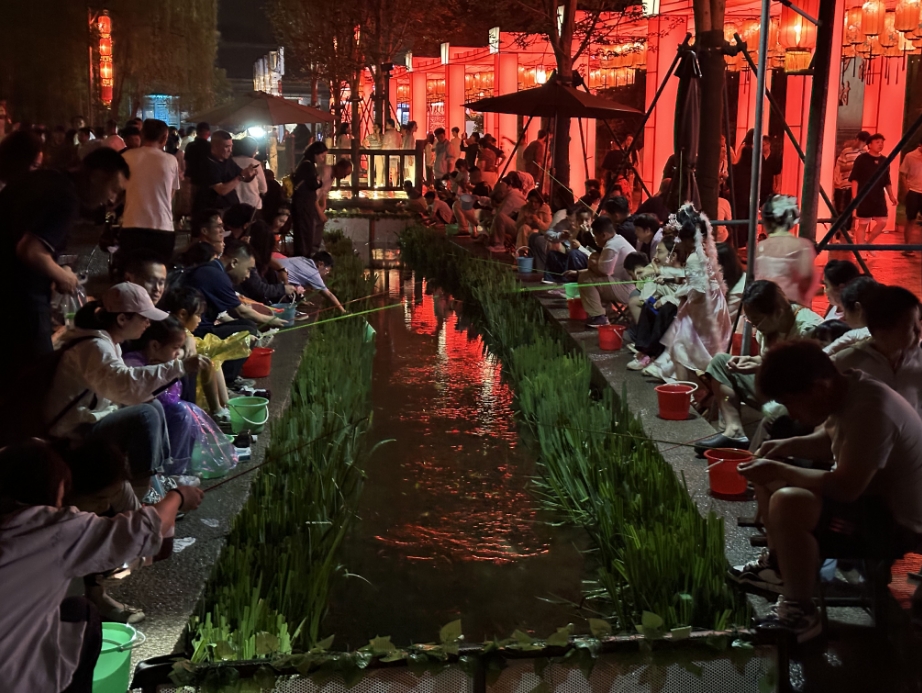
“千人千钓” “轻垂钓”成年轻人心头好
Xiao Fei Ri Bao Wang· 2025-06-25 02:33
Core Viewpoint - The rise of "light fishing" as a new trend in angling, characterized by lower equipment, venue, time, and physical demands, is attracting a diverse group of enthusiasts, particularly among younger and female demographics [1][6]. Equipment and Trends - "Light fishing" typically requires basic gear such as rods, lines, bait, and hooks, which can be assembled for a few dozen yuan, making it accessible for beginners [3]. - There is a growing trend among anglers to prioritize aesthetic and design in their fishing gear, with many opting for stylish and colorful equipment that can also serve as decorative items [3][4]. - The market has seen an increase in demand for high-quality, visually appealing products, particularly for children, as parents seek attractive gifts for occasions like Children's Day [3][4]. DIY Culture - The DIY aspect of "light fishing" is gaining popularity, with enthusiasts creating custom floats and gear, reflecting personal style and creativity [4][5]. - The involvement of art students in designing fishing gear indicates a broader cultural trend where fishing is not just a sport but also a form of artistic expression [5]. Demographics and Market Growth - Recent data shows that 46% of the fishing population in China is aged between 25 and 44, with a notable increase in female and child participants in "light fishing" [5][6]. - The primary demographics engaging in "light fishing" include women, beginners, families, and young people, highlighting a shift in the traditional fishing community [5][6]. Lifestyle Shift - "Light fishing" is evolving from a mere sport into a lifestyle choice, reflecting a societal trend towards slower-paced living and recreational activities [6]. - The market for "light fishing" is still in its early stages, with potential for growth through integration with other outdoor activities like camping and travel [6].