
Xin Hua Cai Jing

Search documents
中车齐车公司斩获高铁救援起重机首个市场订单
Xin Hua Cai Jing· 2026-01-22 14:36
Group 1 - The core point of the article is that CRRC Qiche Company has successfully won a bid for the construction of three high-speed railway rescue cranes for China Railway Chengdu Group, marking the first market sale of high-speed railway rescue cranes by the company [1] - The NSG1256 model high-speed railway rescue crane is specifically designed for rescue operations in cases of overturning or derailment of high-speed railway trains, suitable for various working conditions including bridges, tunnels, slopes, curves, and under contact networks [1] - The equipment integrates several breakthrough technologies such as multi-leg and wheel joint load-bearing, swing-type telescopic heavy iron, automatic leveling on curves, and a new generation intelligent safety control system, offering high intelligence, simple operation, and short preparation time for operations [1] Group 2 - CRRC Qiche Company has developed a product series of over 10 types of railway cranes, ranging from 15 tons to 160 tons, including new 160-ton and high-speed railway-specific rescue cranes, holding over 80% market share in the domestic market [1] - The company is recognized as the largest railway crane research and manufacturing enterprise in Asia, with products exported to multiple countries including Brazil, Nigeria, Sri Lanka, and Angola [1]
新消费派丨936万人次外国游客入境上海,如何“愿意来、留得住、还想来”?
Xin Hua Cai Jing· 2026-01-22 14:36
Core Insights - Shanghai's inbound tourism market is expected to experience a significant growth milestone in 2025, with an estimated 9.36 million inbound tourists, representing a 40% year-on-year increase [1] Group 1: Growth Drivers - The implementation of visa-free policies is a key driver for the growth of inbound tourism in Shanghai, with 3.286 million foreign travelers entering through visa exemptions, accounting for 58% of total inbound travelers [2] - The overall inbound and outbound passenger flow at Shanghai ports reached 42.846 million, a 17.9% increase year-on-year, with foreign tourists accounting for 5.661 million, reflecting a 39.7% growth [2] - Online travel platform data shows that overseas users' flight bookings to Shanghai have increased by nearly six times, solidifying Shanghai's position as the top inbound tourism destination [2] Group 2: Visitor Demographics - The number of South Korean tourists reached 909,100, a staggering increase of 103.62% year-on-year, while Russian tourists totaled 385,100, up 59.23% [3] - Tourists from Thailand, Indonesia, and Italy also saw significant growth rates of 70.16%, 62.13%, and 52.43% respectively, indicating a diverse visitor demographic [3] - Traditional source countries like Singapore, Malaysia, and Australia maintained steady growth, with visitor increases exceeding 30% [3] Group 3: Experience and Cultural Integration - Foreign tourists are increasingly seeking immersive local experiences, moving beyond traditional tourist spots to engage with Shanghai's unique culture and lifestyle [4][5] - The integration of high-end brands and cultural experiences is creating new consumption patterns, enhancing the appeal of Shanghai as a global tourism hub [4] - Medical tourism is emerging as a popular segment, with foreign visitors attracted by China's efficient healthcare system and cost-effectiveness [5][6] Group 4: Market Challenges and Recommendations - Despite rapid growth, Shanghai's inbound tourism faces challenges such as digital barriers, cultural differences, and talent shortages [7] - Recommendations include optimizing payment and transportation services for foreign visitors, enhancing tourism products with cultural elements, and improving the training and evaluation of tour guides [8] - These measures aim to create a positive cycle of inbound tourism, encouraging visitors to return and recommend Shanghai as a destination [8]
央行持续加量续作“麻辣粉” 新年首月净投放达7000亿元
Xin Hua Cai Jing· 2026-01-22 14:32
三是春节临近,居民集中提现规模会有季节性显著增加,而在人民银行刚刚推出一系列结构性支持政策 之后,短期内通过降准应对节前资金面波动的可能性不大。 新华财经北京1月22日电(记者翟卓)为保持银行体系流动性充裕,中国人民银行22日公告,将于1月23 日以固定数量、利率招标、多重价位中标方式开展9000亿元中期借贷便利(MLF)操作,期限为1年 期。 鉴于本月将有2000亿元MLF到期,1月加量续作规模为7000亿元,也是连续第11个月保持加量续作。再 综合考虑此前人民银行已通过买断式逆回购净投放3000亿元,本月中期流动性净投放总量为10000亿 元,较上月增加7000亿元。 在东方金诚首席宏观分析师王青看来,本月中期流动性净投放规模较此前明显加大,背后或主要有以下 原因:一是为保障重点领域重大项目资金需求,今年新增地方政府债务限额已提前下达,这意味着1月 或有一定规模的政府债券开闸发行。 二是去年10月5000亿元新型政策性金融工具投放完毕后,还会继续带动今年1月配套贷款较大规模投 放,放大信贷"开门红"效应。 "由此,人民银行在1月显著加大中期流动性投放,能够有效应对潜在的流动性收紧态势,引导资金面处 于较为 ...
欧央行利率决议会议纪要:维持利率不变 2026年降息预期彻底消散
Xin Hua Cai Jing· 2026-01-22 14:32
欧元区三季度GDP环比增长0.3%,消费和投资成为主要拉动力,劳动力市场稳健(失业率6.4%接近历 史低位)。通胀方面,2025年HICP平均2.1%,预计2026-2027年降至2%以下,2028年将因欧盟碳排放 交易体系二期(ETS2)启动回升至目标水平;核心通胀逐步下行,但服务业通胀粘性较强,三季度雇 员薪酬增速超预期(4%)是主要驱动因素。 风险提示:外部挑战犹存金融稳定需警惕 利率决议显示,欧元区经济面临地缘政治冲突、全球贸易碎片化等外部风险;金融稳定方面,需关注美 国科技股估值过高、非银金融机构对美资产敞口过高、私人信贷领域杠杆累积等问题,谨防全球市场波 动的溢出效应。 政策决策:利率长期维稳无预设路径 利率决议决定维持关键利率不变,这一决策基于对通胀中期回归2%目标的信心。利率委员会强调,货 币政策将继续遵循数据依赖、逐次评估原则,不预设未来利率路径,需密切监测服务业通胀、薪资增长 及政策传导效果。 市场预期:降息预期归零加息时点存分歧 受经济韧性较强、服务业通胀粘性超预期影响,市场已完全排除2026年降息可能。关于首次加息时点, 利率市场预期为2027年,而调查数据则推迟至2028年;同时,政 ...
日债收益率在央行公布利率决议前短暂回落 机构报告称外国投资者大幅削减持仓
Xin Hua Cai Jing· 2026-01-22 14:21
Group 1 - The core viewpoint of the articles indicates that Japanese government bond yields have recently experienced fluctuations, with a notable decline from historical highs, as investors await the Bank of Japan's interest rate decision and potential hawkish statements from Governor Kazuo Ueda [1][2][3] - The 10-year Japanese government bond yield fell by 4 basis points to 2.24%, while the 30-year yield decreased by 10 basis points to 3.67%, reflecting a rebound after excessive selling earlier in the week [1] - UBS reports that the rise in Japanese bond yields is primarily driven by market expectations of future interest rate increases and an increase in term premiums, with the 30-year yield rising over 40 basis points since the beginning of the year [2] Group 2 - Foreign investors have significantly reduced their holdings in the Japanese bond market, nearly halving their investments as global yields rise, while the Bank of Japan's share of outstanding bonds has fallen below 50% for the first time in eight years [2] - UBS suggests that if the Bank of Japan responds hawkishly to fiscal expansion, the yield curve for 10 to 30-year bonds may flatten, potentially providing better entry points for investors after uncertainties surrounding elections and monetary policy are resolved [3] - Sumitomo Mitsui Trust Bank plans to double its domestic sovereign debt holdings once market yields stabilize, currently holding approximately 10.6 trillion yen (about 67 billion USD) [3]


欧洲央行目前并不急于调整政策 官员担忧金融稳定风险
Xin Hua Cai Jing· 2026-01-22 14:21
Core Viewpoint - The European Central Bank (ECB) maintains a cautious stance on interest rates due to stronger-than-expected economic resilience in the Eurozone and ongoing inflation concerns, while also being vigilant about rising financial stability risks [1][2]. Group 1: Economic Outlook - The ECB's latest monetary policy meeting minutes indicate a high level of uncertainty in the current environment, with differing views among committee members regarding inflation risk, suggesting a lack of consensus on the direction of risk [1]. - The ECB has raised its economic growth forecasts, projecting a growth rate of up to 1.2% in 2026, 1.4% in 2027, and maintaining 1.4% in 2028 [2]. Group 2: Inflation and Price Trends - The core inflation rate in the Eurozone remains above the 2% target, with food prices increasing by approximately 2.5% and service prices rising significantly by 3.4% [1]. - Overall inflation is expected to average 1.9% in 2026, 1.8% in 2027, and 2.0% in 2028, indicating a high threshold for any further easing of monetary policy [2]. Group 3: Financial Stability Concerns - ECB officials express concerns about high financial stability risks, with warnings about the fragility of economic recovery and potential downward shifts in inflation expectations [2]. - The ECB emphasizes the importance of strong domestic demand for the Eurozone to address external challenges, indicating a policy shift towards boosting internal demand rather than relying on export-driven growth [2].
美国至1月10日当周续请失业金人数184.9万人
Xin Hua Cai Jing· 2026-01-22 13:54
Group 1 - The number of people continuing to claim unemployment benefits in the U.S. as of January 10 is 1.849 million, which is lower than the expected 1.9 million [1] - The previous value of continuing claims was revised from 1.884 million to 1.875 million [1]
美的与长安汽车共探“人-车-家”价值融合
Xin Hua Cai Jing· 2026-01-22 12:41
Core Viewpoint - Midea Group and Changan Automobile have signed a strategic cooperation agreement to focus on the "human-vehicle-home" smart ecosystem, aiming to enhance the interconnectivity between smart homes and smart cars, facilitating comprehensive collaboration from consumer scenarios to enterprise production [1]. Group 1: Strategic Cooperation - The partnership aims to leverage Changan's extensive vehicle lineup and production capacity of nearly 3 million units annually to enhance data and service systems for the "human-vehicle-home" ecosystem [1]. - Midea has previously established collaborations with leading automotive companies such as BYD and Changan since launching its "human-vehicle-home" ecosystem strategy in August of the previous year [1]. Group 2: Industry Trends - The concept of "human-vehicle-home" is evolving from mere remote control of devices to a seamless smart experience across various life scenarios, with vehicle-home interconnectivity becoming a necessity [2]. - Midea is attempting to create new value by focusing on connection, scenarios, and services, rather than just adding functionalities [2]. Group 3: Technological Integration - Midea provides standardized open interfaces and development tools to partners, allowing them to utilize Midea's comprehensive smart home services without being "tied down," thus lowering the psychological barriers and costs for partners to join the ecosystem [2]. - The integration of AI and proactive service capabilities is expected to enhance user experience, such as automatically entering "home mode" when a vehicle approaches within one kilometer of the home [2]. Group 4: Ecosystem Development - Midea is building a more inclusive and sustainable smart ecosystem through open collaboration with partners like Changan, transforming various lifestyle concepts into reality [3].


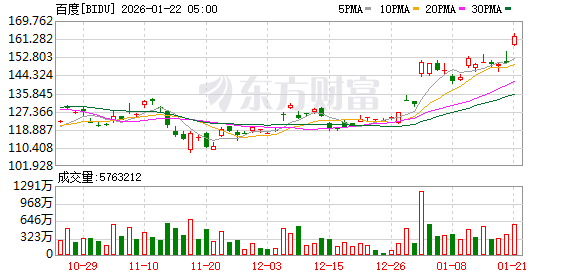
百度文心大模型5.0正式发布 千帆平台累计开发Agent超130万个
Xin Hua Cai Jing· 2026-01-22 12:41
Core Insights - Baidu officially launched the Wenxin large model version 5.0, featuring 2.4 trillion parameters and utilizing a native multimodal unified modeling technology that supports various forms of information input and output, including text, images, audio, and video [2] Group 1: Model Features - Wenxin 5.0 employs a unified autoregressive architecture for native multimodal modeling, allowing for joint training of text, images, video, and audio within the same model framework, enhancing the integration and optimization of multimodal features [2] - Despite having a high parameter count, Baidu implemented a sparse activation strategy, activating less than 3% of parameters to address inference cost issues associated with large models [2] - Official tests indicate that Wenxin 5.0's language and multimodal understanding capabilities are on par with leading international models such as Gemini-2.5-Pro and GPT-5-High [2] Group 2: Application and Development - Baidu has developed a matrix model and specialized models based on the Wenxin foundational large model, with the matrix model aimed at rapid deployment in product-level applications and general scenarios, including Wenxin Lite, video, and voice models [3] - Specialized models target industry applications and vertical scenarios, including search lightning models, e-commerce steam engine models, Wenxin digital human models, and industry-specific large models [3] - The Baidu Qianfan platform has developed over 1.3 million agents, indicating a significant push towards the industrial application of large models [4] Group 3: Industry Context - The global AI industry is entering a new fast track after several years of rapid development, with chatbots primarily based on dialogue or text input remaining the mainstream form in AI applications [4] - Baidu aims to support various intelligent applications with its models and continues to explore AI solutions that empower industries [4]


日本维持谨慎的经济展望 并警告美国贸易政策带来的风险
Xin Hua Cai Jing· 2026-01-22 09:19
关于物价,报告指出,食品价格上涨(通胀的主要驱动因素)增速放缓,政府将密切关注物价上涨放缓 的迹象是否持续。然而,自去年10月以来日元的大幅贬值,使得人们对于成本推动型物价上涨压力是否 会像央行所预期的那样平稳缓解产生了更多疑虑。 (文章来源:新华财经) 新华财经北京1月22日电日本政府周四发布的经济报告基本维持了对经济的谨慎乐观态度,同时警告美 国贸易政策带来的下行风险。内阁府在1月的月度经济评估报告中重申,作为世界第四大经济体的日本 经济正在温和复苏,但强调了美国政策可能对日本汽车行业造成的影响。报告还强调需要密切关注市场 动向。 报告维持了对占经济总量一半以上的私人消费的展望,并称其连续第五个月"回升"。经济评估中唯一的 重大变化是贸易和服务收支平衡,从"逆差"修正为"大致平衡"。 ...