
Hua Er Jie Jian Wen

Search documents
又一大厂退出手机市场
Hua Er Jie Jian Wen· 2026-01-19 13:05
In t e 45 6 . > . 8 / k A r . . . A / . 1. s / A 1. Q / P 编辑 | 周智宇 2026年伊始,在华硕年末联欢晚会上,华硕集团董事长施崇棠的表态,为这家PC巨头近23年的手机征程正式画上了句点。 施崇棠直言,华硕Zenfone、ROG Phone双品牌从2026年起停止推出新机,不再增加新机种。 他表示,华硕此举目的在于更合理地配置研发资源,重点聚焦 PC 以及各类实体 AI(Physical AI)设备等关键领域。 在技术飞速发展的齿轮下,不少手机品牌都掉队或退场了,海外有诺基亚、黑莓、爱立信、LG、西门子、夏普等,国内则有美图手机、夏新、金立、锤子 手机、乐视手机等。 尽管在细分市场表现尚可,但华硕手机业务营收占比逐年下滑(2016年约18%,2023年仅1%),且始终未能盈利,逐渐被主流市场边缘化。2018年第四季 度,华硕曾因手机部门计提超过62亿新台币的巨额损失,导致当年整体盈利大幅下滑。 据IDC数据,2025年,华硕手机全年出货只有十几万部,且市场有一半集中在亚太区域。 十几万部是什么水平?作为对比,去年全年,中国市场排名第五的OPPO也有超 ...


特朗普的新目标?继军工和房地产商之后,华尔街巨头或面临回购禁令
Hua Er Jie Jian Wen· 2026-01-19 13:05
Core Viewpoint - The Trump administration is shifting focus from the defense and real estate sectors to broader economic areas, increasing regulatory pressure on major U.S. banks, raising concerns among investors about potential restrictions on capital return plans [1][2]. Group 1: Regulatory Pressure on Banks - Major banks may become the next target for regulatory actions following Trump's pressure on defense contractors and homebuilders to limit stock buybacks, leading to heightened concerns about policy risks for bank stocks [1][2]. - The government's direct intervention tools over the banking sector are more pronounced compared to other industries, as banks' dividend payments and stock buyback capabilities are already constrained by regulatory limits and capital adequacy requirements [1][5]. - The potential restriction on buybacks could directly impact investor return expectations, as buybacks are a key reason many investors favor bank stocks due to their ability to return capital and support share prices [1][6]. Group 2: Historical Context and Precedents - The significant scale of stock buybacks by major banks, totaling over $500 billion in the past decade, makes them susceptible to populist policies, with political pressure mounting against such capital return behaviors [3]. - Trump's recent actions demonstrate a willingness and capability to intervene in corporate capital allocation, as seen with his executive order prohibiting defense contractors from paying dividends or repurchasing stock until they meet production standards [4]. - Similar pressures are being applied to the real estate sector, with scrutiny on homebuilders' buyback activities amid record profits, indicating a broader trend of regulatory tightening across industries [4]. Group 3: Federal Reserve's Role and Uncertainty - The Federal Reserve's regulatory authority over major banks provides Trump with a significant leverage point to disrupt capital plans, as banks' ability to pay dividends and conduct buybacks is contingent on regulatory capital rules [5][6]. - Trump's disregard for the independence of the Federal Reserve could enhance his influence over regulatory policies, potentially leading to shifts in the regulatory landscape that could affect banks' capital return strategies [6]. - Historical data shows that banks like Goldman Sachs and Morgan Stanley have achieved annualized returns of 22% from stock buybacks over the past decade, but these past performance metrics are now facing unprecedented policy challenges due to potential regulatory changes [6].


水井坊:2025年净利润暴跌71%,主动控货策略能否缓解渠道压力?
Hua Er Jie Jian Wen· 2026-01-19 12:20
Financial Performance - The company expects a net profit of 392 million yuan in 2025, a dramatic decline of 71% compared to 1.341 billion yuan in 2024, with revenue dropping from 5.217 billion yuan to 3.038 billion yuan, a decrease of 42% [1][2] - The non-recurring net profit is also projected to be 381 million yuan, reflecting a 71% decline, indicating that the performance drop is due to core business challenges rather than one-off losses [2] Industry Context - The company attributes its performance decline to a deep adjustment in the liquor industry, influenced by macroeconomic cycles, industry adjustments, and policy changes, with traditional business dining scenarios recovering slowly and high inventory levels persisting [2][3] - The high inventory levels suggest significant pressure on channels, as distributors face excess stock, which limits the company's ability to ship products, explaining why revenue decline (42%) is greater than net profit decline (71%) due to the dual pressure on gross margins and expense ratios [2] Inventory and Channel Management - The company has implemented a series of inventory control measures, including moderating shipment pace, optimizing inventory structure, and ensuring channel financial safety, prioritizing channel health [3] - While these measures may improve channel inventory quality and stabilize pricing, there are concerns about whether they can restore channel confidence during an industry downturn [3][4] Strategic Investments - Despite the significant drop in performance, the company emphasizes maintaining investments in brand building, terminal expansion, product innovation, and organizational capabilities while also optimizing expense efficiency [5] - The rising expense ratio is inevitable given the 42% revenue decline, suggesting that the effectiveness of the company's expense optimization efforts may be limited [5] Future Outlook - The company stresses the importance of laying a healthy foundation for future growth, but investors are concerned about the timeline for recovery [6] - Key uncertainties include when the industry cycle will bottom out, how long it will take to digest channel inventory, the stability of the pricing system, and the challenges of regaining lost market share [6][7][8] Investor Considerations - Investors should monitor the company's first-quarter performance, channel inventory data, pricing stability, changes in competitive dynamics, and trends in expense ratios to gauge the effectiveness of the company's adjustments [9]

日本大选前对冲基金猛增日元空头,单周增幅创近十年之最
Hua Er Jie Jian Wen· 2026-01-19 12:01
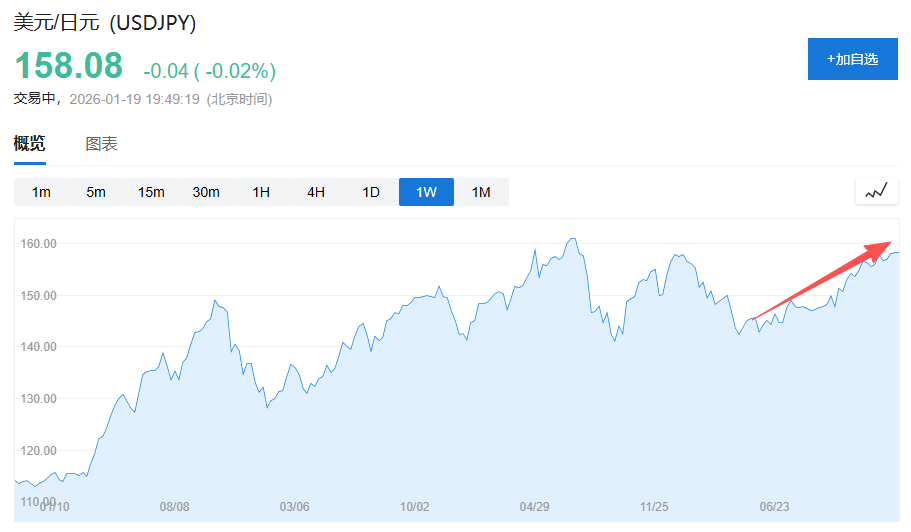
Group 1 - Hedge funds have significantly increased their short positions on the Japanese yen ahead of the upcoming elections, marking the largest increase in ten years, reflecting investor bets on the election outcome and its impact on fiscal policy [1][4] - According to the Commodity Futures Trading Commission, leveraged funds increased their net short positions on the yen by 35,624 contracts in the week ending January 13, the largest weekly increase since May 2015 [1] - The yen recently fell to its weakest level since July 2024, primarily influenced by the prospects of the Japanese temporary elections [1] Group 2 - Traders are betting on Prime Minister Fumio Kishida's potential victory in the elections, as his administration advocates for more aggressive fiscal stimulus measures, which may lead to a further widening of Japan's fiscal deficit [4] - Expectations of looser fiscal policies have diminished the yen's attractiveness, prompting hedge funds to increase their short positions [4] - The depreciation of the yen has raised market concerns about potential intervention by Japanese authorities, especially as the yen approaches the critical level of 160 yen per dollar, where previous interventions occurred [4]
精准跑路?特朗普威胁对欧加税前夕,对冲基金已提前做空欧元
Hua Er Jie Jian Wen· 2026-01-19 11:48
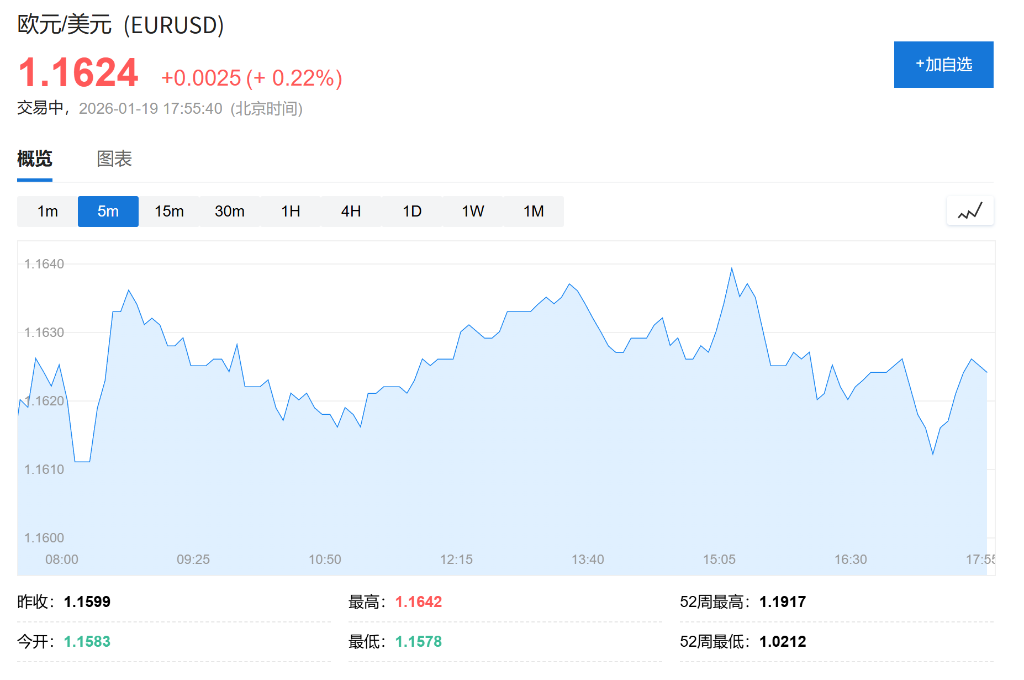
Core Viewpoint - Hedge funds have preemptively exited bullish positions on the euro ahead of geopolitical tensions related to President Trump's threats of new tariffs on European countries regarding Greenland, indicating a shift in market sentiment towards risk aversion [1] Group 1: Market Sentiment and Positioning - According to the CFTC, leveraged funds shifted to a slight net short position on the euro for the first time since late November, reflecting a significant change in market sentiment [1] - The announcement of potential tariffs has heightened concerns about a renewed trade war, prompting investors to reassess the potential impact on European economic growth [1] - Following the tariff announcement, the euro initially fell by 0.2% before rebounding by 0.4% to $1.1641, while the Bloomberg Dollar Spot Index declined by 0.2% [1] Group 2: Technical Indicators and Future Outlook - The shift in positioning coincides with a deterioration in technical indicators, as the euro's long-term momentum signal turned negative for the first time in nearly a year, ending a 43-week bullish trend [5] - Analysts suggest that while a reversal in momentum signals does not guarantee a sell-off, it often indicates significant downside risks if the signals persist [5] - Market strategists predict that the euro may test a support level of 1.1499 due to the ongoing tensions, with expectations that the trade dispute may escalate before it cools down [5] Group 3: Geopolitical Effects and Capital Flows - The geopolitical situation presents a double-edged sword; if it evolves into a broader issue affecting the dollar, the euro may receive some support [6] - There is a potential for capital repatriation that could limit the euro's downside, despite a weakening confidence in the euro's upward potential among traders [6]
红杉资本:2026将是AGI元年,编程智能体已经打响了第一枪!
Hua Er Jie Jian Wen· 2026-01-19 11:41
Core Insights - General Artificial Intelligence (AGI) is no longer a distant future but has become a reality with the emergence of Long-horizon agents, marking 2026 as a pivotal year for AGI [1] - The transition from conversational AI to Long-horizon agents signifies a shift from mere dialogue to actual task execution, fundamentally altering business and investment landscapes [1][7] Technological Developments - The capabilities of agents, particularly coding agents, have crossed critical thresholds, with their ability to handle complex tasks doubling approximately every seven months [2] - AGI is defined functionally as the ability to autonomously solve problems, focusing on the outcome rather than the technical definitions [3] - Long-horizon agents possess the ability to hypothesize, test, and adjust strategies in ambiguous environments, although they still face challenges such as generating hallucinations [4] Methodologies - Two primary technological paths are driving the development of Long-horizon agents: reinforcement learning and agent architectures [5][6] - Reinforcement learning focuses on maintaining long-term attention through iterative training, while agent architectures involve designing frameworks to overcome known limitations of models [6] Business Implications - The emergence of specialized agents across various sectors, such as pharmaceuticals and legal fields, indicates a significant paradigm shift for entrepreneurs [7] - The future of AI applications will transition from being mere tools to becoming "digital employees," prompting founders to rethink task delegation and pricing strategies based on outcomes rather than tools [7] - The potential for agents to handle extensive workloads, such as analyzing vast clinical trial data or reconstructing complex legal codes, is becoming increasingly feasible, transforming ambitious plans into actionable business strategies [7]
受益投资改善与税收政策红利,中国太平2025年净利预增215%以上
Hua Er Jie Jian Wen· 2026-01-19 11:41
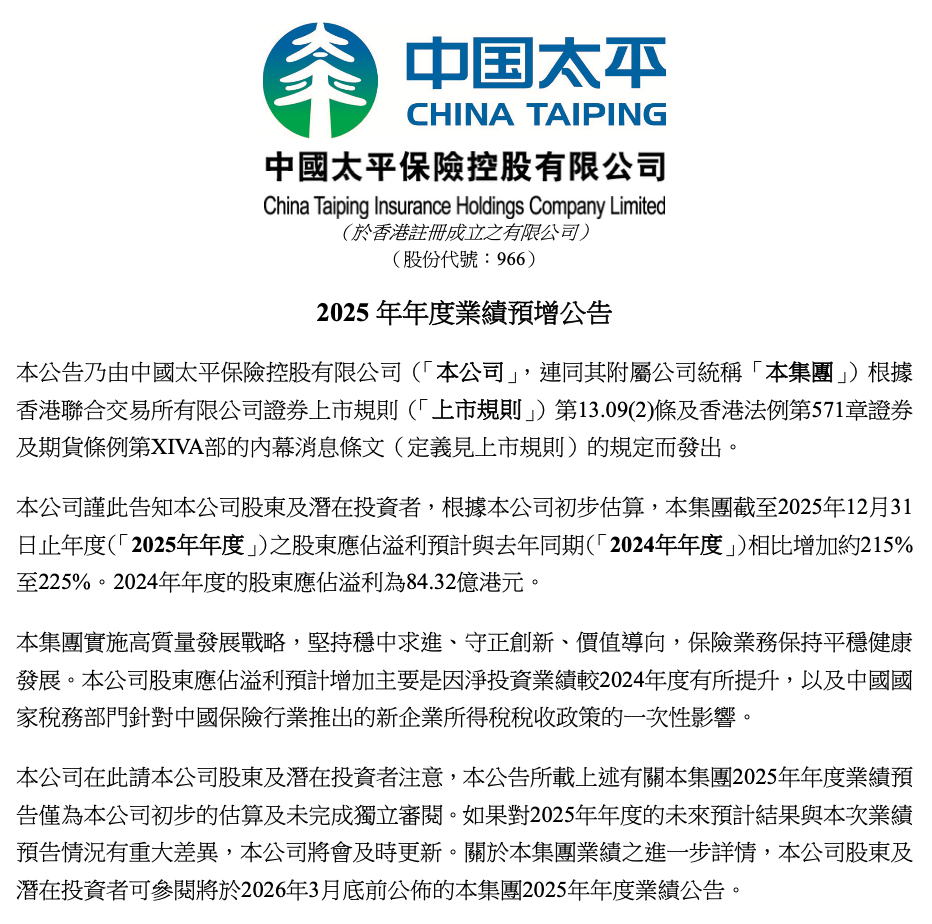
1月19日,中国太平抛出了上市险企中的首份业绩预告。 该公司2025年度净利润预计同比大幅增长215-225%,以2024年的84.32亿港元为基数推算,其2025年的净利润将跃升至266-274亿港元区间。 对于一家总资产规模庞大的老牌险企而言,净利润在一年内实现超两倍的翻番,无疑是资本市场上的一剂强心针。 不过,在惊人的增长数字之外,更值得投资者细究的是这份业绩的构成逻辑。 中国太平方面表示,利润激增主要得益于两个维度的共振:一是净投资业绩的改善,二是中国税务部门针对保险行业新税收政策的一次性影响。 这也说明,中国太平本轮增长的实质并非单纯源于负债端保费收入的爆发,而是资产端回暖与政策红利叠加的结果。 另一大关键变量在于税务政策。公告明确提及了"新企业所得税税收政策的一次性影响"。这通常涉及保险责任准备金税前扣除标准的调整或递延所得税资产 的确认; 这类政策性调整带来的利润释放虽然合规且立竿见影,但具有显著的"一次性"特征,并不代表公司经常性经营能力的同比例跃升。 对于投资者而言,中国太平这份成绩单无疑是积极的,它证明了在资本市场回暖和政策扶持的双重利好下,头部险企的盈利弹性正在迅速释放。 如果说集团层面 ...

AI网络超级周期杀到2026年,最大赢家从“易中天”变成“中天太长”?
Hua Er Jie Jian Wen· 2026-01-19 11:07
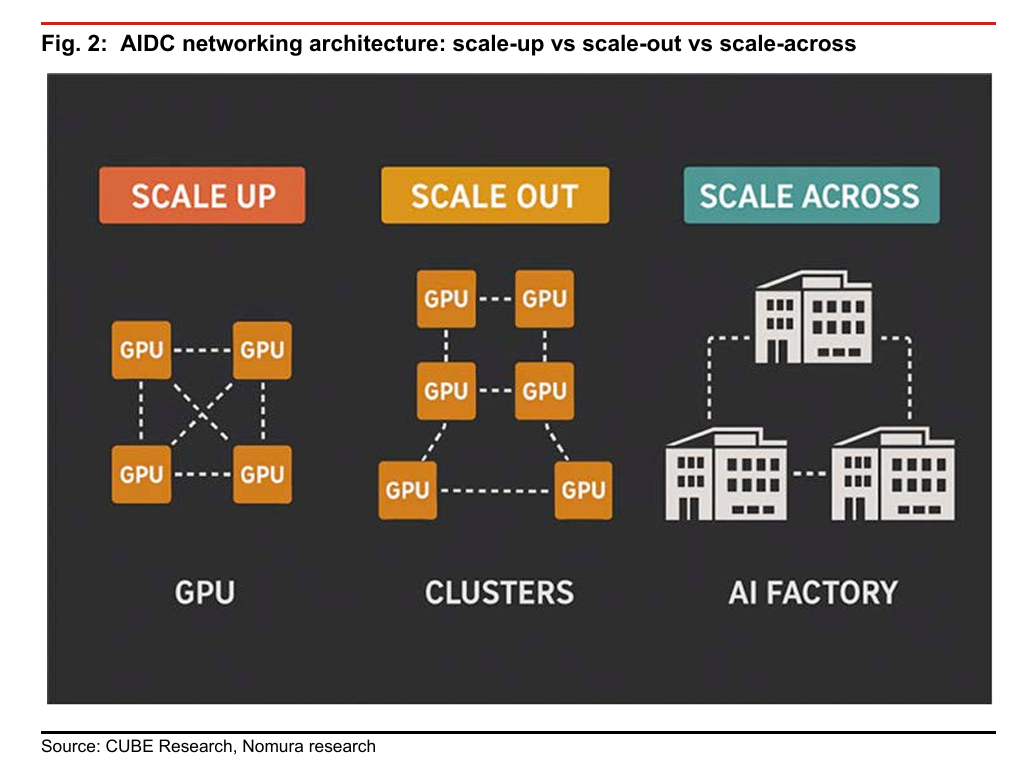
Core Insights - The global AI infrastructure investment is entering a new super cycle, driven by technology upgrades and supply shortages in key components, with significant growth expected in the AI network market until 2026 or 2027 [1] Group 1: Market Growth and Projections - The shipment of 800G optical modules is projected to increase from 20 million units in 2025 to 43 million units in 2026, while 1.6T optical module shipments are expected to surge from 2.5 million units to 20 million units [1] - The penetration rate of silicon photonics (SiPh) technology in the 800G/1.6T market is anticipated to reach 50-70% [1] - The optical module market is experiencing structural growth opportunities, with Ethernet optical module market revenue expected to surge by 93% in 2024, followed by 48% and 35% growth in 2025 and 2026, respectively [12] Group 2: Supply Chain Dynamics - Supply chain bottlenecks are expected to strengthen the competitive advantage of leading companies, with advanced optical chip production capacity projected to grow over 80% by 2026, yet still lagging behind demand by 5-15% [2] - Major players like Zhongji Xuchuang and Tianfu Communication are positioned to maintain significant market shares in the 800G/1.6T optical module market, with Zhongji Xuchuang expected to hold 25-30% and 35-40% shares, respectively [12] Group 3: Technological Advancements - The evolution of technology is critical, with AI giants like NVIDIA, Google, Meta, and Amazon AWS actively upgrading their network architectures through various technological paths, including SiPh, Co-Packaged Optics (CPO), and Optical Circuit Switching (OCS) [1] - CPO technology is expected to accelerate commercialization starting in 2026, with penetration rates projected to rise from 3% in 2026 to 20% by 2030, and market size expected to grow from $1.6 billion to $13.1 billion during the same period [14] Group 4: Market Segmentation and Trends - The optical fiber and cable market is showing a bifurcated trend, with strong demand from AI data centers, where AI application optical cable demand is expected to grow by 138% in 2024 and 77% in 2025 [13] - The Ethernet switch market is experiencing robust growth, with a 35.2% year-on-year increase in revenue in Q3 2025, and a significant rise in 800G switch revenue by 91.6% [17]




瑞派冲击港股IPO:宠物医疗十年整合,仍未走出“人力困局”
Hua Er Jie Jian Wen· 2026-01-19 10:09
Core Insights - The article discusses the recent submission of a prospectus by "Ruipai Pet Hospital," a national chain of pet medical service providers, to the Hong Kong Stock Exchange, marking a significant move into the pet medical market [2] - The domestic pet medical market is projected to have a CR5 of 15.4% by 2024, with Ruipai holding a 4.8% market share, ranking second [2] - Despite the industry's rapid expansion, challenges remain regarding profitability and standardization, raising questions about the maturity of the pet medical chain model [3][8] Market Overview - The pet medical sector is characterized by high consumer spending, with average treatment costs for cats and dogs at 2390 yuan and 2786 yuan respectively [4] - Ruipai's revenue from pet health management contributes approximately 90% of its income, with a gross margin slightly above 20% [5] - The industry has been in a "land grab" phase for over a decade, but fundamental issues regarding the viability of the pet medical chain model persist [3][12] Financial Performance - Ruipai's projected revenues for 2024 and the first half of 2025 are 1.76 billion yuan and 960 million yuan, with adjusted net profit margins of 4% and 7.7% respectively [3] - The average single visit expenditure increased from 409.3 yuan to 442.2 yuan in the first half of 2025, with gross margins rising from 23% to 24.8% [9] Operational Challenges - The pet medical industry lacks widespread insurance coverage, leading to direct consumer payment for most services [6] - High labor costs, which can account for nearly 50% of Ruipai's operational expenses, pose a significant challenge [10] - The industry faces a structural shortage of qualified veterinarians, impacting service quality and operational efficiency [10] Expansion Strategy - Ruipai has adopted a cautious approach to expansion, with a decrease in the number of hospitals from 580 to 538 in 2023 [15] - Future expansion will focus on small chain systems with integration potential, network supplements in core urban areas, and initial entries into untapped cities [15] - The company plans to encourage internal doctors to establish new clinics through an "elite entrepreneurship plan" and is considering a franchise model [15] Industry Dynamics - The pet medical market in China has a chain rate of 21.8%, which is close to the 30% in mature markets like the U.S., but the CR5 concentration is only 6.5% [14] - The industry is still in a developmental phase regarding revenue systems and standardized pricing, leading to significant variability in profitability [8][14] - The potential for growth exists in lower-tier cities, where the demand for systematic and chain-operated pet hospitals remains largely unmet [14]
日本首相高市早苗宣布将于23日解散众议院。(新华社)
Hua Er Jie Jian Wen· 2026-01-19 09:03
风险提示及免责条款 日本首相高市早苗宣布将于23日解散众议院。(新华社) 市场有风险,投资需谨慎。本文不构成个人投资建议,也未考虑到个别用户特殊的投资目标、财务状况或需要。用户应考虑本文中的任何 意见、观点或结论是否符合其特定状况。据此投资,责任自负。 ...