Guan Cha Zhe Wang

Search documents
“黄仁勋本月又要来华”
Guan Cha Zhe Wang· 2026-01-21 07:28
【文/观察者网 齐倩】 1月21日,彭博社援引消息称,英伟达公司首席执行官黄仁勋计划于1月底访问中国。 据一名知情人士透露,黄仁勋将参加英伟达中国在春节前举办的年会活动。黄仁勋预计还将前往北京, 但目前尚不清楚他是否会与中方官员会面。 该人士补充说,黄仁勋的行程仍可能根据潜在会晤安排而变化。英伟达方面拒绝置评。 当地时间21日,黄仁勋计划出席瑞士达沃斯世界经济论坛,并接受媒体采访。 据报道,就在约半年前,去年7月,黄仁勋刚刚访问中国。去年1月,黄仁勋还选择在英伟达深圳分公司 与员工共度春节,而非出席美国总统特朗普的就职典礼。 近期,黄仁勋每次公开露面,说来说去,话题都离不开中国。1月5日,黄仁勋接受采访时称,英伟达 H200人工智能(AI)芯片期待来自中国的采购者,并称其Blackwell和新一代Rubin芯片将"及时"在中国 市场推出。他还说:"H200在市场上具有竞争力。但它不会永远具有竞争力。" 从拜登政府到特朗普政府,为围堵打压中国科技发展,美国实施了一系列芯片出口限制措施,且不断收 紧。英伟达不想丢失庞大的中国市场,一直游说特朗普放松管制。 去年12月8日,美国总统特朗普宣布,将允许英伟达对华出口其 ...



用“非遗”逻辑打造全动力兼容架构,长城归元平台亮相
Guan Cha Zhe Wang· 2026-01-21 07:21
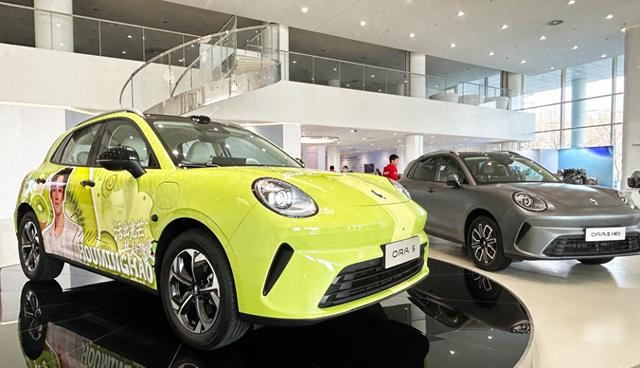
Core Insights - The Chinese automotive industry is projected to achieve record production and sales figures by 2025, with production reaching 34.53 million vehicles and sales at 34.40 million vehicles, marking year-on-year growth of 10.4% and 9.4% respectively [1] - The new energy vehicle (NEV) sector is expected to surpass 16 million units in annual production and sales by 2025, highlighting the industry's resilience and internal momentum [1] - The shift towards electrification and intelligence in the automotive sector is no longer a future trend but a current competitive battleground, with globalization becoming a strategic necessity for survival [1] Industry Trends - The future of the automotive industry will focus on user needs, emphasizing safety, reliability, convenience, and enjoyable travel experiences rather than just technical specifications [1] - Long-term trends indicate that the Chinese automotive market is transitioning from incremental competition to stock competition, with increasing importance on overseas business for Chinese automakers [13] Company Developments - Great Wall Motors has unveiled its new "Guiyuan" platform, which is compatible with five powertrain types: gasoline, diesel, pure electric, hybrid (HEV/PHEV), and hydrogen fuel [3][5] - The "Guiyuan" platform aims to simplify vehicle design and manufacturing by adopting a modular approach, allowing for flexible combinations to meet diverse consumer needs [5][10] - The platform is designed to meet the highest global safety standards, ensuring that all vehicle designs prioritize safety regardless of the powertrain used [10] Global Strategy - Great Wall Motors plans to launch over 50 global models across various categories, including sedans, SUVs, and MPVs, leveraging the "Guiyuan" platform to enhance global production efficiency and meet regional demands [11] - The company is experiencing rapid growth in overseas markets, with a projected total sales volume of 45.41 million vehicles in 2024, accounting for nearly 37% of total sales, and an export increase of 44.61% compared to 2023 [13] - By 2030, it is anticipated that the overseas sales of Chinese brand vehicles will approach 10 million units, reflecting the increasing competitiveness of Chinese automakers in the global market [13][14]
工信部:5G-A覆盖330城,开源鸿蒙装机近12亿台
Guan Cha Zhe Wang· 2026-01-21 06:52
Core Viewpoint - The digital industry in China is rapidly developing, significantly contributing to the integration of the real economy and the digital economy, and enhancing new productive forces during the "14th Five-Year Plan" period [1] Group 1: Scale and Growth - By the end of 2025, China's digital industry revenue is expected to reach approximately 38.3 trillion yuan, with profits of 3.1 trillion yuan, representing cumulative growth of about 39.5% and 48.4% compared to the end of the "13th Five-Year Plan" [3][4] - Major provinces such as Guangdong, Jiangsu, Beijing, and others are projected to contribute over 90% to the national digital industry revenue growth [3] Group 2: Innovation and New Drivers - The software industry is experiencing continuous innovation, with the Harmony operating system installed on nearly 1.2 billion devices, and the artificial intelligence sector is thriving with numerous innovative products emerging [4] - New digital products in emerging fields are driving a new round of consumption upgrades, becoming a new growth point for economic development [4] Group 3: Empowerment and Application - The industrial internet has achieved full coverage across major industrial categories, with over 100 million industrial devices connected to key platforms [4] - High-level 5G factories have shown an average capacity increase of 25%, product quality improvement of 21%, and operational cost reduction of 19% [4] - Support for 101 pilot cities for small and medium-sized enterprises' digital transformation has led to 45,000 enterprises engaging in digital upgrades [4] Group 4: Infrastructure and Connectivity - China has built the world's largest and most advanced information infrastructure, with 4.838 million 5G base stations and 65.9% of mobile phone users being 5G users [6][8] - The number of gigabit broadband users has reached 240 million, accounting for 34.5% of all broadband users [8] Group 5: Future Development and Technology - The Ministry of Industry and Information Technology has completed the first phase of 6G technology testing and has initiated the second phase, with over 300 key technology reserves [9] - Future plans include upgrading networks, accelerating technology iterations, and deepening applications across various sectors such as agriculture, transportation, and healthcare [9]

为什么C919一定要拿到这张欧洲适航证?
Guan Cha Zhe Wang· 2026-01-21 05:40
Core Viewpoint - The C919 aircraft is undergoing EASA certification testing, which is crucial for its international market acceptance, despite domestic production challenges and skepticism from the public regarding its capacity to meet demand [1][3]. Group 1: Certification Importance - EASA's certification is essential for C919 to operate internationally, as it allows for broader market access beyond China [3][4]. - While C919 has received certification from the Civil Aviation Administration of China (CAAC), obtaining EASA certification is necessary for registration with foreign airlines [3][6]. - The certification process involves a thorough evaluation, and the C919 is currently in the critical assessment phase with EASA [6]. Group 2: Production and Supply Chain Challenges - The projected production capacity for 2025 is 75 aircraft, but this figure represents design capacity rather than actual delivery targets, with only 15 expected to be delivered [10][11]. - The supply chain for C919 includes many components from Western suppliers, particularly from the U.S., which complicates production due to regulatory scrutiny and potential delays [10][11]. - The geopolitical landscape affects the availability of critical components, as U.S. suppliers must comply with government regulations, impacting the production timeline [11][14]. Group 3: Market Dynamics and Political Factors - The certification process is not solely a technical issue; it also involves political considerations that can act as barriers to market entry for foreign aircraft [8][10]. - Historical examples show that regulatory changes can be influenced by market protectionism, affecting the competitiveness of foreign aircraft like the C919 [8][10]. - The reliance on foreign components for C919 is driven by the current state of China's aviation industry, which lacks the maturity and reliability of Western counterparts [14][15].

近5万亿大行换掌门,关文杰“空降”北京银行任党委书记,霍学文到龄卸任
Guan Cha Zhe Wang· 2026-01-21 05:28
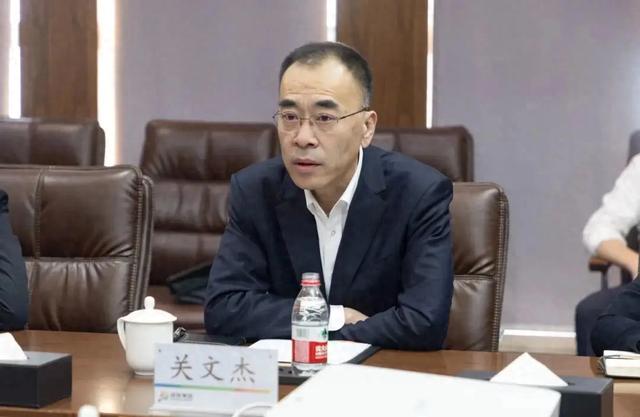
【文/羽扇观金工作室】 1月20日下午,北京银行召开干部大会,任命关文杰为北京银行党委书记,按照惯例,在履行人事任命 流程后,他将出任北京银行董事长。北京银行原党委书记,董事长霍学文到龄卸任。 关文杰 公开资料显示:出生于1970年的关文杰是银行业资深老将,履历覆盖国有大行、股份行、农商行等多类 机构。其职业生涯起步于建设银行,曾任建行青岛市分行台东区办事处财会科副科长、铁路专业支行会 计科科长、财会科科长。 霍学文 另一方面,即将卸任的霍学文出生于1965年9月,已年满60周岁。霍学文熟悉经济金融工作,在学界、 政界和业界均有任职经验。霍学文早期曾在南开大学经济学院任教,后进入中国证监会工作。 2001年11月,霍学文出任中共北京市委金融工委副书记,并先后担任北京市国资委副主任、北京市发展 改革委副主任、北京市地方金融监督管理局(北京市金融工作局)局长等职。2022年2月,霍学文调任 北京银行党委书记,2022年3月被选举为北京银行董事长,直至此次卸任。 据去年三季报披露的数据,北京银行最大股东为荷兰商业银行,持股13.03%,北京市国有资产经营有 限责任公司(简称"北京国资公司")和北京能源集团有限责任公 ...

超越客服:当电商社区进化为“产品共创中枢”
Guan Cha Zhe Wang· 2026-01-21 02:23
Core Insights - The article discusses how leading brands are transforming user engagement from passive feedback to active co-creation, exemplified by Dongfang Zhenxuan's "Product Co-Creation Community" in its independent app [1][2][3] Group 1: User-Centric Transformation - The shift from traditional customer service feedback to deeper user involvement in product development is highlighted as a key challenge for brands [1][2] - Dongfang Zhenxuan's community aims to integrate users into the product lifecycle, allowing them to become active contributors rather than passive consumers [2][3] - This model signifies a transformation from merely collecting user demands to co-creating them, enhancing brand loyalty and trust [2][3] Group 2: Quality Control and Demand Radar - The community serves as a real-time quality control network, enabling users to act as "grassroots quality inspectors" [3][4] - Feedback from users can lead to immediate adjustments in product quality, preventing larger issues from arising [3][4] - The case of the "刺梨复合果汁气泡水" (Sour Pear Sparkling Juice) illustrates how user demand can directly influence product availability and decisions [4][5] Group 3: Organizational Culture and Role Redefinition - Dongfang Zhenxuan's approach requires a cultural shift within the organization, where product managers become active listeners and communicators with users [6][7] - The emphasis is on genuine interaction rather than mechanical responses, fostering a culture of trust and transparency [7][8] - This transformation leads to a more agile and open organizational structure, enhancing responsiveness to user feedback [6][7] Group 4: Building Emotional Connections - The community initiative transcends mere transactional relationships, fostering deeper emotional connections between users and the brand [8][9] - As users feel heard and respected, their relationship with the brand evolves from simple transactions to partnerships in co-creation [8][9] - Dongfang Zhenxuan envisions a trust-based community where both the brand and users collaboratively maintain product quality and brand reputation [8][9]
美丽田园2025年盈利预告:预计净利润同比增长不少于34%
Guan Cha Zhe Wang· 2026-01-21 02:19
Core Viewpoint - Meili Tianyuan Medical Health (02373.HK) has released a positive profit forecast for the fiscal year 2025, expecting revenue of at least 3 billion yuan, a growth of no less than 16% compared to 2024, and an adjusted net profit of at least 380 million yuan, representing a year-on-year increase of no less than 40% [1][3]. Group 1: Revenue and Profit Forecast - The company anticipates a revenue of no less than 3 billion yuan for 2025, which is an increase of at least 16% from the previous year [1]. - Adjusted net profit is expected to be no less than 380 million yuan, reflecting a year-on-year growth of at least 40% [1]. - The net profit is projected to be no less than 340 million yuan, indicating a year-on-year increase of at least 34% [1]. Group 2: Factors Influencing Performance - The company attributes its performance to two main factors: external acquisitions and organic business growth [3][4]. - The acquisition of the second-largest brand in the Chinese beauty industry, Nairui'er, has expanded the company's business coverage and improved its adjusted net profit margin from 6.5% to 10.4% in the first half of 2025 [3]. - The company has also completed the acquisition of the third-largest beauty service brand, Siyuanli, further consolidating its position in the industry [3]. Group 3: Business Strategy and Future Outlook - The company is focusing on high-end female consumer groups in major cities, responding to the growing "self-indulgent consumption" demand, which has boosted same-store revenue [4]. - In November 2025, the company announced three strategic directions: "Super Brand," "Super Chain," and "Super Digitalization," aimed at exploring the high-end beauty service sector [5]. - The company plans to continue its dual-driven strategy of "organic growth + external acquisitions" and deepen its "dual beauty + dual healthcare" business model [5].

2026答案秀·思想者春晚|业界对谈:供应链赋能全球,中国产业的出海打法正在变
Guan Cha Zhe Wang· 2026-01-21 01:53
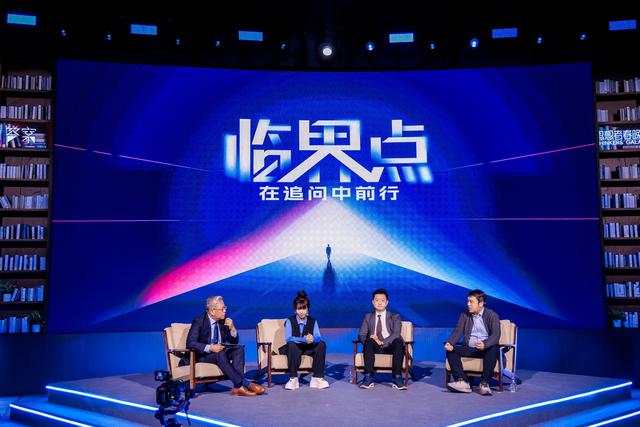
Core Insights - The discussion highlights the disparity in product pricing between the U.S. and China, emphasizing the role of supply chains, brand premiums, and consumer psychology in this phenomenon [1] - The conversation revolves around how Chinese manufacturing can transition from domestic competitiveness to global empowerment, especially in the context of geopolitical tensions and supply chain fragmentation [1][2] Group 1: Chinese Manufacturing and Global Empowerment - The panelists discuss the importance of digitalizing the manufacturing supply chain to better connect with global markets and meet international demands [2][3] - The concept of a "digital capacity map" is introduced, which aims to provide detailed insights into the capabilities and cost structures of Chinese factories [5][7] - The need for understanding local markets and consumer preferences is emphasized, suggesting that success in international markets requires more than just high-quality products [10][11] Group 2: Industry Perspectives - The CEO of 66 Degrees Expeditions discusses the potential for Chinese companies to enter niche markets like polar tourism, leveraging lessons from the manufacturing sector [16][17] - The discussion includes the role of platforms like JD.com in enhancing supply chain efficiency and addressing the challenges faced by manufacturers in both domestic and international markets [24][27] - The importance of standardization in industrial procurement is highlighted, with JD.com aiming to streamline the purchasing process for manufacturers [28][35] Group 3: Challenges and Opportunities - The impact of geopolitical tensions and trade barriers on business operations is acknowledged, with companies adapting their strategies to navigate these challenges [39][40] - The conversation points out the increasing importance of understanding non-Western markets and the need for Chinese manufacturers to adapt to diverse cultural and economic contexts [39] - The potential for "import substitution" is discussed, suggesting that challenges can lead to new opportunities for growth and innovation within the Chinese manufacturing sector [40]
谷歌前CEO:欧洲不投钱,就用中国的喽
Guan Cha Zhe Wang· 2026-01-21 01:36
【文/观察者网 齐倩】 在欧洲焦虑于人工智能(AI)落后中美之际,谷歌公司前首席执行官、Alphabet公司前执行董事长埃里 克·施密特在瑞士达沃斯世界经济论坛期间给欧洲上强度。 施密特资料图 彭博社指出,在AI科技竞赛中,欧洲基本被美国和中国甩在身后。法国Mistral AI初创公司在欧洲领 先,去年在一轮融资中估值达到137亿美元,但这与OpenAI超5000亿美元的估值相比只是零头。 据彭博社消息,当地时间1月20日,施密特表示,欧洲必须投资建设自己的开源AI实验室,并解决不断 飙升的能源价格,否则将很快发现自己依赖中国模型。 "在美国,大多数公司正转向闭源,这意味着它们将被购买、授权等,"施密特在论坛上说,相较之 下,"中国企业则主要采用开放权重、开源的方式"。他表示,这意味着,"除非欧洲愿意为欧洲AI模型 投入巨资,否则欧洲最终会使用中国模型"。 施密特随后暗戳戳使坏,称若真如此,"这对欧洲来说可能不是好结果"。 彭博社介绍称,许多美国AI模型,如谷歌Gemini和OpenAI的ChatGPT,都是闭源的,这意味着开发公 司不会公开底层代码供下载或审查。虽然这能为用户提供更流畅、更统一的体验,但通常 ...

美股三大指数集体收跌,英特尔逆涨3.41%、网飞盘后跌超5%
Guan Cha Zhe Wang· 2026-01-21 01:25
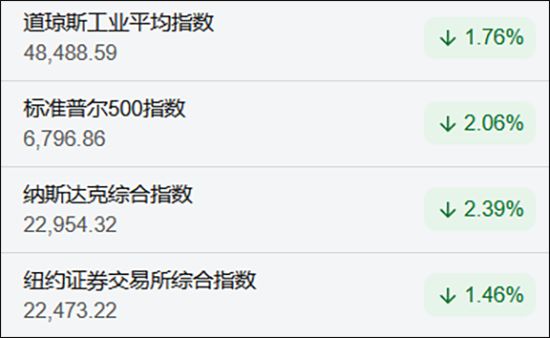
受美国总统特朗普就格陵兰岛问题向欧洲多国发出关税威胁影响,当地时间1月20日,美股市场全线重 挫,三大股指集体深度回调。截至收盘,纳斯达克综合指数领跌全场,跌幅达2.39%,报22954.32点; 标准普尔500指数收跌2.06%,报6796.86点;道琼斯工业平均指数亦下跌1.76%,报48488.59点。此外, 纽约证券交易所综合指数同步承压,收报22473.22点,跌幅1.46%。 | 道琼斯工业平均指数 | ↓ 1.76% | | --- | --- | | 48,488.59 | | | 标准普尔500指数 | J 2.06% | | 6.796.86 | | | 纳斯达克综合指数 | ↓ 2.39% | | 22,954.32 | | | 纽约证券交易所综合指数 | J 1.46% | | 22.473.22 | | 美股三大指数集体下跌谷歌财经 相比之下,存储与传统芯片板块展现出较强韧性,英特尔逆市上扬3.41%,报收48.56点,美光科技也在 此次调整中维持了微弱涨势。 英特尔涨幅3.41%谷歌财经 中概股方面,纳斯达克中国金龙指数跌1.45%,哔哩哔哩跌超6%,小鹏汽车、蔚来跌超3%,拼多多 ...