Hua Xia Shi Bao

Search documents
降温组合拳火速出手,解码四万亿天量
Hua Xia Shi Bao· 2026-01-16 13:16
Core Viewpoint - The recent regulatory measures in the A-share market aim to cool down speculative trading and maintain market stability, guiding the market towards a "slow bull" trend in the medium to long term [2][5]. Market Performance - On January 16, the three major A-share indices experienced a collective decline, with the Shanghai Composite Index down by 0.26%, Shenzhen Component down by 0.18%, and ChiNext down by 0.2% [2]. - The trading volume in the Shanghai and Shenzhen markets decreased from nearly 4 trillion yuan to over 2 trillion yuan, indicating a significant reduction in market activity [2]. Regulatory Actions - The financing margin ratio for new financing contracts was raised from 80% to 100% to curb excessive speculation and leverage risks [4][5]. - Major stocks, including招商银行 (China Merchants Bank) and 贵州茅台 (Kweichow Moutai), saw significant sell orders, interpreted as a clear intention to cool the market [4]. Investor Sentiment - The market's recent surge has been attributed to improved domestic economic fundamentals and increased foreign capital inflow, with the A-share market being viewed as an attractive investment destination [6][7]. - Analysts suggest that the influx of new capital is driven by domestic institutional investors, retail investors through funds, and foreign investments due to market openness [7]. Future Outlook - The market is expected to continue its upward trend, supported by favorable macroeconomic policies and corporate earnings growth, despite potential uncertainties such as geopolitical risks and global monetary policy adjustments [8][9]. - Investment strategies should focus on sectors with strong growth potential, such as AI, semiconductors, and renewable energy, while being cautious of short-term market fluctuations [9].


2025年GDP前瞻:全年5%左右目标可完成,国务院领导密集下地方调研
Hua Xia Shi Bao· 2026-01-16 12:56
Economic Outlook - In 2025, China's economy is expected to demonstrate resilience despite complex international circumstances, with a projected growth rate of around 5% [2] - Predictions indicate that by the end of 2026, the growth rate will gradually recover from 4.5% in Q4 2025 to 5.1%, with an annual growth rate of approximately 4.8% [3] Policy Initiatives - The Chinese government is focusing on technology innovation, green transformation, and improving people's livelihoods as part of its economic strategy [2] - Significant investments are being made in infrastructure projects, with a total of 2.95 billion yuan allocated for early 2026 projects, including 2.2 billion yuan for key areas like urban underground networks and high-standard farmland [6] Consumer Demand - There is a recovery in consumer sentiment, although challenges remain due to income levels and expectations [5] - The upcoming Spring Festival is anticipated to boost service consumption, with historical data indicating that tourism revenue during this period significantly contributes to quarterly averages [5] Investment Strategies - The government is emphasizing both "investment in things" and "investment in people," highlighting the importance of human capital development alongside physical infrastructure [8] - There is a call for debt restructuring to enhance fiscal sustainability and support for people's livelihoods [7]
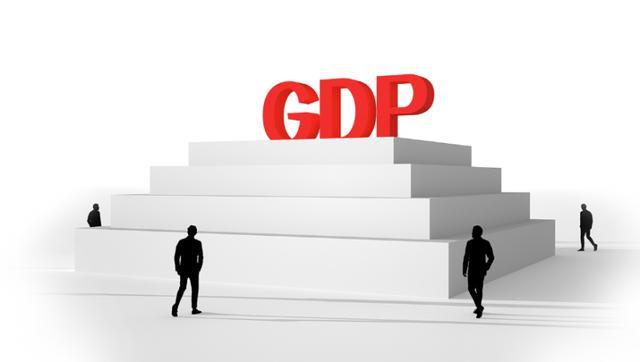
三部门联合“定调”新能源车市:告别价格战,转向技术战
Hua Xia Shi Bao· 2026-01-16 12:14
Core Viewpoint - The recent meeting held by the Ministry of Industry and Information Technology, the National Development and Reform Commission, and the State Administration for Market Regulation emphasizes the need for the entire electric vehicle industry to resist chaotic price competition and to promote a market order that values quality and fair competition [2][4]. Industry Transition - The meeting marks a fundamental shift in China's electric vehicle policy from pursuing scale expansion to focusing on quality improvement and from encouraging market penetration to guiding industrial upgrades [2][4]. - The electric vehicle industry has achieved a global leading scale advantage, but excessive price cuts and bundling sales by some companies are eroding the foundation for sustainable development [4][5]. Focus on Innovation and Quality - The three departments stressed that innovation should be the primary driving force and quality the lifeline of enterprises, shifting the competition focus from price wars to technology and quality battles [3][4]. - The policy aims to encourage companies to invest in cutting-edge technologies such as solid-state batteries and silicon carbide electric drives rather than relying on simple price reductions to gain market share [5][6]. Consumer Expectations and Regulatory Measures - The emphasis on "quality first" reflects the increasing consumer demand for the quality, safety, and reliability of electric vehicles as the market expands [6]. - Regulatory bodies may enhance quality standards and evaluation systems for electric vehicles, which will positively impact reducing vehicle failures and improving user experience [6]. Market Dynamics and Future Outlook - The policy shift directly addresses the current market issues, where many companies have resorted to significant price cuts, with some models seeing reductions of over 20% [5][7]. - The automotive industry is predicted to enter a mature phase characterized by high sales but low growth, with a forecast of 19 million electric vehicles sold in 2026, representing a 15.2% year-on-year increase [7][8]. Competitive Landscape - The call for "quality over price" and the resistance to chaotic price wars is seen as a necessary choice to address multiple challenges, including rational consumer behavior and international competition pressures [8]. - The intervention by regulators is intended to define a healthy competitive landscape, steering the industry from price wars to value wars, with the year 2026 expected to be a critical turning point for the industry [8].

「港股IPO观察」净利率从3%飙至27%!金星啤酒IPO亮出“暴利底牌”:中式精酿高定价能否抵御巨头围剿
Hua Xia Shi Bao· 2026-01-16 11:49
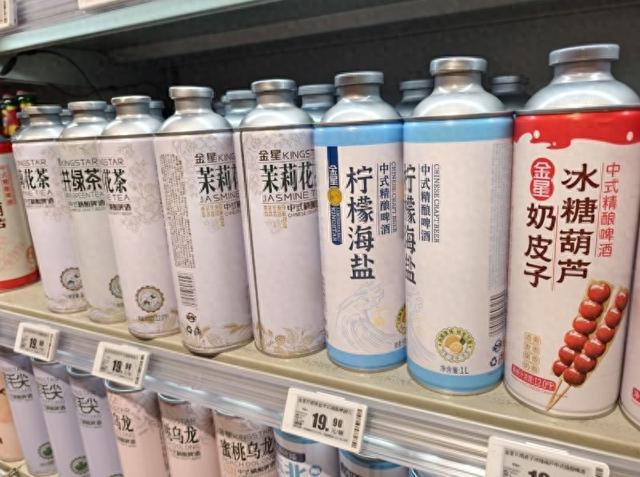
Core Viewpoint - Henan Jinxing Beer Co., Ltd. is embarking on an IPO journey in Hong Kong, aiming to enhance corporate governance, transparency, and secure capital for long-term product development and channel expansion [2][5]. Company Overview - Founded in 1982, Jinxing Beer has evolved from traditional beer to a focus on "Chinese craft beer," launching its first craft beer, Jinxing Maojian, in August 2024, which significantly boosted its performance [3][4]. - In 2023, the company reported revenues of 356 million yuan and a net profit of 12.2 million yuan, but by 2024, revenues surged to 730 million yuan, a 104.9% increase, with net profit reaching 125 million yuan, a 928% increase [3][4]. Financial Performance - For the first three quarters of 2025, Jinxing Beer achieved revenues of 1.11 billion yuan, a 191.2% increase year-on-year, and a net profit of 305 million yuan, a 1095.8% increase [3][4]. - The company has become the eighth largest in China's beer industry and the fifth largest domestic beer company, with a retail sales compound annual growth rate (CAGR) of 23.7% from 2022 to 2024 [4]. Product Pricing and Profitability - Jinxing Beer’s craft beer is priced significantly higher than traditional beers, with craft beer retail prices around 20 yuan per can (1L), compared to traditional beers priced between 2.5 yuan per can (330ml) and 6 yuan per bottle (500ml) [4]. - The gross margin has improved, with figures of 27.3%, 37.8%, and 47% for 2023, 2024, and the first three quarters of 2025, respectively, while net margins reached 3.4%, 17.2%, and 27.5% [4]. Market Position and Competition - Jinxing Beer faces increasing competition from major players like China Resources Beer and Yanjing Beer, which are expanding their craft beer offerings [6][9]. - The company relies heavily on distributors for sales, with 94.8% of its revenue coming from this channel, and has a network covering 29 provinces in China [7]. Strategic Outlook - The IPO is seen as a strategic move to strengthen Jinxing Beer’s market position amid intensifying competition, allowing for enhanced funding for innovation and brand development [5][9]. - The company aims to maintain its focus on Chinese craft beer while navigating the challenges posed by larger competitors and evolving market dynamics [8][9].
华夏时评:财政金融协同发力,精准滴灌激活内需
Hua Xia Shi Bao· 2026-01-16 11:36
Core Viewpoint - The central economic policy direction for 2026 emphasizes "quality improvement and efficiency enhancement," focusing on precise and targeted measures rather than broad monetary expansion [2][4]. Group 1: Central Bank Policies - On January 15, the central bank announced a 25 basis point reduction in the rates of structural monetary policy tools and increased support for key areas such as technological innovation, small and micro enterprises, and green low-carbon projects [2][3]. - The central bank will merge and increase the quota for re-loans and rediscounting for agriculture and small enterprises by 500 billion, with a total quota of 1 trillion specifically for private enterprises [3]. - The re-loan quota for technological innovation and technical transformation will be raised from 800 billion to 1.2 trillion, including support for private small and medium enterprises with high R&D investment [3]. Group 2: Fiscal Policies - The Ministry of Finance held a national video conference on January 13 to deploy a package of policies aimed at promoting domestic demand through fiscal and financial collaboration [2][4]. - The emphasis on fiscal-financial collaboration was reiterated, highlighting the importance of simplifying processes and strengthening execution to ensure effective policy implementation [2][4]. Group 3: Policy Implications - The combination of fiscal and monetary policies in early 2026 reflects a new macroeconomic management approach that balances moderate monetary easing with precise structural optimization to boost domestic demand [4]. - The focus on "quality improvement and efficiency enhancement" suggests that future policies will continue to prioritize structural adjustments while maintaining the capacity for further monetary easing if total demand fluctuates [4]. - The effectiveness of policy implementation will depend on breaking down departmental barriers and local protectionism to ensure that policies effectively support the real economy [4].

「AI新世代」百川智能再“问医”,王小川放不下的AI梦
Hua Xia Shi Bao· 2026-01-16 11:15
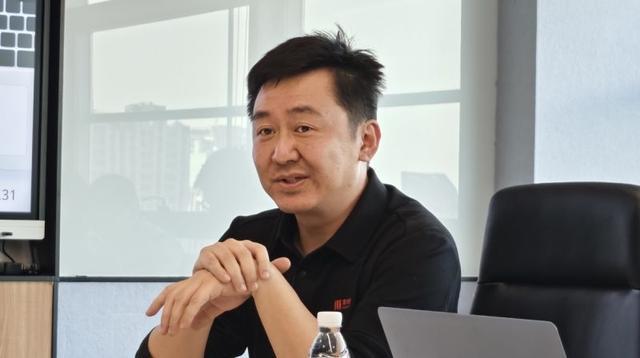
Core Viewpoint - Baichuan Intelligent, led by founder Wang Xiaochuan, is re-entering the spotlight with the launch of its new medical model Baichuan-M3, amidst growing competition in the AI healthcare sector, particularly from Ant Group's AI health assistant, Aifu [2][4]. Company Developments - Baichuan Intelligent has officially open-sourced its new medical model, Baichuan-M3, and Wang Xiaochuan has outlined the company's development roadmap and plans for an IPO, potentially in 2027 [2][3]. - The company claims to have 3 billion yuan in cash reserves, but has not disclosed recent revenue figures since its last funding round in July 2024 [3][6]. Market Context - The AI healthcare market in China is projected to grow from 8.8 billion yuan in 2023 to 315.7 billion yuan by 2033, with a compound annual growth rate (CAGR) of 43.1% [5]. - Globally, the AI healthcare market is expected to increase from approximately 26.65 billion USD in 2024 to about 505.59 billion USD by 2033, with a CAGR of 38.8% [5]. Competitive Landscape - Baichuan Intelligent is facing significant competition from major players like OpenAI and Google, which have launched their own healthcare AI models [4][5]. - Wang Xiaochuan emphasizes that Baichuan Intelligent's focus is on serious medical applications, differentiating it from competitors like Ant Group, which targets a broader health concept [6]. Product Capabilities - Baichuan-M3 has achieved a score of 65.1 in the HealthBench evaluation, ranking it first globally, and surpassing GPT-5.2 in medical decision-making capabilities [6]. - The model is designed to facilitate in-depth medical reasoning and has demonstrated superior questioning abilities compared to average human doctors [6]. Future Plans - Baichuan Intelligent plans to enter the consumer market in the first half of this year with two new products, initially offering them for free before implementing a paid model [7]. - The company aims to bridge the gap between doctors and patients, advocating for patient empowerment in health decisions while adhering to regulatory requirements [7]. Challenges and Considerations - There are concerns regarding the company's ability to generate sufficient revenue to support its IPO ambitions, as it has not provided recent financial updates [3][8]. - The company recognizes the need for significant advertising and physician endorsement to build consumer trust in the C-end market [7][8].
2025金融数据收官:总量保持合理增长,货币政策发力传递积极信号
Hua Xia Shi Bao· 2026-01-16 10:39
Core Viewpoint - The People's Bank of China (PBOC) reported significant support from monetary policy for the real economy in 2025, with a focus on stabilizing investment and promoting economic growth [2]. Financial Data Summary - In December 2025, new RMB loans increased by 910 billion yuan, a year-on-year decrease of 80 billion yuan, while the total social financing scale was 22,075 billion yuan, down by 646.2 billion yuan year-on-year [2][3]. - As of the end of December, broad money (M2) grew by 8.5% year-on-year, accelerating by 0.5 percentage points from the previous month, while narrow money (M1) grew by 3.8%, a decrease of 1.1 percentage points from the previous month [2][6]. - For the entire year of 2025, new RMB loans totaled 16.27 trillion yuan, a decrease of 1.82 trillion yuan compared to the previous year [5]. Loan Structure Analysis - The loan structure showed a strong performance from enterprises, with corporate loans increasing by 580 billion yuan in December, while household loans decreased by 441.6 billion yuan [3][4]. - The overall weak credit performance in December was attributed to insufficient demand for loans, particularly from households, while corporate loan demand was supported by policy measures and year-end inventory needs [4]. Monetary Policy Outlook - The PBOC introduced a series of structural monetary policy tools, including a 25 basis point reduction in the interest rates of these tools and an increase in the quota for targeted loans [7][8]. - Analysts expect stable growth in social financing and credit in 2026, with social financing growth projected at around 8% and credit growth at over 6% [2][7]. - The focus of monetary policy will be on promoting economic growth and reasonable price recovery, with expectations of further reserve requirement ratio cuts and interest rate reductions in 2026 [8].

延续实施公共租赁住房税收优惠政策,部分项目免征城镇土地使用税 | 快讯
Hua Xia Shi Bao· 2026-01-16 10:39
又一房地产支持政策延续实施。1月16日,财政部、税务总局发布公告,延续实施公共租赁住房税收优 惠政策。对公租房建设期间用地及公租房建成后占地,免征城镇土地使用税。在其他住房项目中配套建 设公租房,按公租房建筑面积占总建筑面积的比例免征建设、管理公租房涉及的城镇土地使用税。对公 租房经营管理单位免征建设、管理公租房涉及的印花税。 同时,在其他住房项目中配套建设公租房,按公租房建筑面积占总建筑面积的比例免征建设、管理公租 房涉及的印花税。对公租房经营管理单位购买住房作为公租房,免征契税、印花税;对公租房租赁双方 免征签订租赁协议涉及的印花税。 文/李凯旋 编辑:张蓓 近期,房地产多项税收优惠政策延续实施,有利于增强市场活力。1月14日,财政部、税务总局、住房 城乡建设部联合发布《关于延续实施支持居民换购住房有关个人所得税政策的公告》。文件明确自2026 年1月1日至2027年12月31日,对出售自有住房并在现住房出售后1年内在市场重新购买住房的纳税人, 对其出售现住房已缴纳的个人所得税予以退税优惠。 ...

没有产能却揽下宁德时代1200亿元大单,容百科技回应:合同总金额是估算得出
Hua Xia Shi Bao· 2026-01-16 09:32
Core Viewpoint - Rongbai Technology has signed a significant lithium iron phosphate procurement agreement with CATL, valued at over 120 billion yuan, which has raised questions from the Shanghai Stock Exchange regarding the company's ability to fulfill the contract [2][6]. Group 1: Contract Details - The agreement entails Rongbai Technology supplying 3.05 million tons of lithium iron phosphate cathode materials to CATL from 2026 to 2031, with a total sales amount exceeding 120 billion yuan [2][4]. - CATL will prioritize Rongbai Technology for new projects and product development, while Rongbai must meet CATL's quality and delivery requirements [3][4]. - The contract does not specify annual procurement quantities or prices, but CATL expects Rongbai to continuously optimize costs to provide competitive pricing [4][6]. Group 2: Market Context - The estimated price of the agreement is approximately 39,300 yuan per ton, which is lower than the current market price of lithium iron phosphate, indicating a favorable deal for CATL [4]. - As of mid-January 2026, lithium iron phosphate prices have risen significantly, with power-type prices increasing from 43,800 yuan per ton at the beginning of the year to 52,000 yuan per ton [4]. - The demand for lithium iron phosphate remains strong, with production rates increasing throughout 2025, reaching over 400,000 tons per month by the end of the year [4][5]. Group 3: Company Position and Challenges - Rongbai Technology currently lacks established lithium iron phosphate production lines, raising concerns about its ability to meet the contract requirements [6]. - The company has reported its first anticipated loss since data disclosure, projecting a loss of 150 to 190 million yuan for 2025, although it achieved profitability in the fourth quarter [7]. - Despite challenges, Rongbai Technology aims to become a comprehensive supplier of cathode materials, expanding its product offerings beyond high-nickel materials to include lithium manganese iron phosphate and sodium batteries [6][7].


陕西黑猫预亏近11亿元,公司回应:产品价格下滑,公司经营压力巨大
Hua Xia Shi Bao· 2026-01-16 09:32
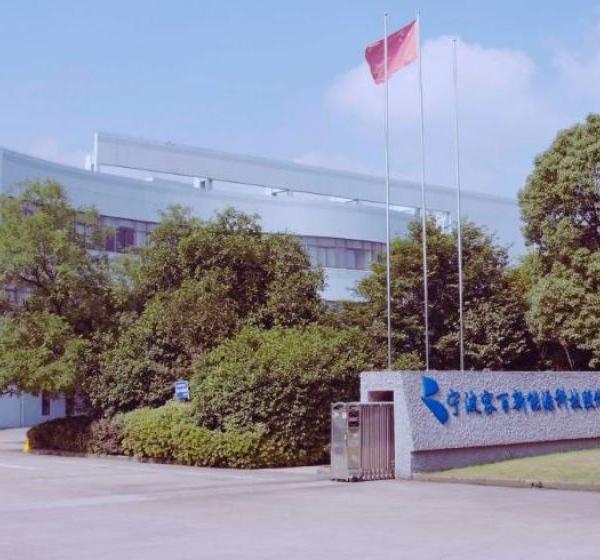
Core Viewpoint - Shaanxi Black Cat (601015.SH) is expected to continue incurring losses in 2025, with projected net losses ranging from 1.19 billion to 1.09 billion yuan, primarily due to declining sales prices of its main products and pressure from both upstream coal and downstream steel industries [2][3] Financial Performance - In 2024, Shaanxi Black Cat reported a loss of 1.158 billion yuan, and the anticipated loss for 2025 is even greater, leading to cumulative losses exceeding 2 billion yuan over the past three years [3] - As of September 30, 2025, the company's total assets decreased by 9% to 19.411 billion yuan, and shareholders' equity fell by 35% to 5.639 billion yuan compared to the end of 2022 [4] - The company's debt ratio increased from 48% at the end of 2022 to approximately 62.02% by September 2025, indicating rising financial pressure [4] Market Conditions - The average selling price of Shaanxi Black Cat's main products, particularly coke, has significantly declined, with the average price dropping by 28.15% year-on-year in Q1 2025 [6] - The price of coke rebounded in the second half of 2025, but this was primarily driven by rising raw material costs rather than increased demand from the steel industry [6][7] Strategic Response - To address the current challenges, the company plans to extend its operations upstream into the coal sector and enhance its chemical product chain, focusing on high-value products [7] - Shaanxi Black Cat is investing heavily in projects such as the Inner Mongolia Black Cat project and Xinjiang coal projects to reduce costs and improve revenue [7] Industry Dynamics - The pricing of coke is heavily influenced by the cost of coking coal and the purchasing demand from steel mills, which hold significant pricing power in the supply chain [9] - Analysts predict that the coke market will remain oversupplied in 2026, with prices continuing to fluctuate based on coking coal costs and steel mill profitability [9]