
Zhong Guo Qi Che Bao Wang

Search documents
我国智能网联汽车研发测试能力再上新台阶
Zhong Guo Qi Che Bao Wang· 2025-09-16 09:45
Core Insights - The establishment of the Intelligent Connected Technology Innovation Base by the China Automotive Technology Research Center marks a significant advancement in China's R&D and testing capabilities for intelligent connected vehicles [1][2] Value Chain Coverage - The new base focuses on four key areas: promoting industrial development, creating a forward-looking application center, leading technological innovation, and establishing an industry support digital center [1][2] - It aims to support the development of policies, standards, and collaborative innovation mechanisms across government, enterprises, and academia [1] - The base will enhance the core competitiveness and user satisfaction of China's intelligent connected vehicle industry, contributing to the high-quality development of Chinese brands [2] Technical Coverage - The center will establish advanced testing capabilities across four domains: intelligent driving, intelligent cockpit, network architecture, and information security [3] - It will create a world-class evaluation system for intelligent driving, covering active safety, driving assistance, and autonomous driving [3] - The center will develop a comprehensive testing and evaluation system for intelligent cockpits, integrating multiple sensory experiences [3] - A new automotive communication performance testing system will be developed to ensure integrated services across vehicles, roads, clouds, and networks [3] - A comprehensive information security service system will be established for the entire lifecycle of vehicles [3] Regional Coverage - The center will implement a strategic layout of "1 headquarters + 4 branch centers," with Tianjin as the strategic hub [4] - It will leverage resources from the Yangtze River Delta region to achieve comprehensive testing capabilities under various weather conditions [4] - The center is expanding its global reach by establishing laboratories and branches in Europe, Japan, and Southeast Asia to enhance its technical service capabilities [4]
赛道拥挤 留给造车新玩家的时间不多了
Zhong Guo Qi Che Bao Wang· 2025-09-16 09:30
Core Viewpoint - The automotive industry is witnessing a critical moment as new entrants like追觅科技 and云界智能汽车 are attempting to enter the market despite warnings that the "window period" for car manufacturing is closing. This indicates a potential shift in the competitive landscape of the electric vehicle sector in China [2][3][4]. Group 1: 追觅科技's Entry - 追觅科技 officially announced its entry into the automotive sector on August 28, 2023, targeting the ultra-luxury electric vehicle market with a model aimed to compete with Bugatti Veyron, set to debut in 2027 [3]. - The company has a valuation of 20 billion yuan and has been recognized in the 2024 Hurun Global Unicorn List, showcasing its strong position in the smart cleaning technology sector [3]. - 追觅科技's CEO, 俞浩, emphasized the ambition to create the fastest car in the world, indicating a long-term vision that began with a car manufacturing plan written in 2013 [3][4]. Group 2: 云界智能汽车's Formation - 云界智能汽车 was quietly registered on August 25, 2023, with a registered capital of 24.8 million yuan, and has a unique shareholder structure that includes companies with experience in the electric vehicle supply chain and robotics [3][4]. - The company aims to create an integrated land and air mobility ecosystem, aligning with trends in the industry towards flying cars, and is strategically located near major automotive manufacturers [4]. Group 3: Industry Context and Challenges - The automotive industry, particularly the electric vehicle segment, is seen as having matured, with clearer regulations and reduced exploration costs, allowing new entrants to leverage existing frameworks [5][6]. - Despite the optimistic outlook for new entrants, challenges remain, including the need for substantial capital and technological capabilities to survive in a competitive market [8][9]. - The contrasting motivations of 追觅科技 and 云界智能汽车 highlight the varied strategies within the industry, with 追觅科技 pursuing a proactive approach while 云界智能汽车 appears to be a reactive measure to salvage existing investments [9].


观车 · 论势 || “金九银十”:下沉市场的“信任投资期”
Zhong Guo Qi Che Bao Wang· 2025-09-16 09:23
Core Viewpoint - The automotive industry in China is entering a critical sales period known as "Golden September and Silver October," with a surge in new car releases and government support for consumer incentives aimed at boosting sales [1][2]. Group 1: Government Policies and Support - The National Development and Reform Commission and the Ministry of Finance have allocated 69 billion yuan in special bonds to support the "old-for-new" vehicle replacement program [1]. - A new round of automotive consumer subsidy policies has been implemented since September 1, which includes fiscal interest subsidies for personal consumption loans related to vehicle purchases [1]. - The "2025 New Energy Vehicle Going to the Countryside" initiative aims to promote electric vehicles in underdeveloped county markets, enhancing resource allocation to rural areas [2]. Group 2: Market Trends and Opportunities - The county-level market is becoming a new growth point for the automotive industry, with 7.48 billion residents living in these areas, representing 52.97% of the national population [4]. - The consumption market in county towns and villages accounts for 38% of China's overall consumption market, indicating significant potential for automotive sales [4]. - The cumulative sales of new energy vehicles in rural areas are expected to exceed 2 million units in 2024, reflecting a 45% year-on-year growth [4]. Group 3: Consumer Behavior and Challenges - Consumers in county markets exhibit high price sensitivity and a strong demand for practical, economical vehicles [4]. - Companies face unique challenges in these markets, including different channel networks, consumer perceptions, product adaptation needs, and infrastructure support [4][5]. - To succeed in county markets, companies must shift their approach to product development, user education, and after-sales service, focusing on local needs and building trust [5].
马力全开、“棕意已久”,奔腾小马“奶咖棕”新色正式上市
Zhong Guo Qi Che Bao Wang· 2025-09-16 09:02
Core Viewpoint - The launch of the new "Milk Coffee Brown" color for the 2026 model of the Bestune Pony electric vehicle aims to enhance its appeal among young consumers, combining aesthetic value with practical features [1][5][19]. Group 1: Product Features - The 2026 Bestune Pony offers a long range of 222 km, making it suitable for short-distance travel needs [13]. - The vehicle features a new "Milk Coffee Brown" color, which is designed to evoke warmth and elegance, appealing to the lifestyle of young consumers [5][19]. - The car includes advanced features such as keyless entry, Bluetooth key, and OTA smart upgrades, enhancing user experience and convenience [9]. Group 2: Market Positioning - The Bestune Pony has achieved significant market success, with over 140,000 units delivered, establishing itself as a popular choice for short-distance electric travel [14]. - The introduction of the new color is expected to attract more young consumers, further expanding its market reach [14]. - The vehicle is positioned as a versatile companion for various daily activities, appealing particularly to trendy mothers and fashionable young women [13][14].

佑驾创新发布小竹无人车,携地平线等朋友圈共创智慧运力未来
Zhong Guo Qi Che Bao Wang· 2025-09-16 07:29
Core Viewpoint - The launch of the unmanned logistics vehicle brand "Xiao Zhu" by Youjia Innovation is timely, driven by favorable policies, surging demand, and mature technology, creating a new cycle in the logistics unmanned vehicle industry [1] Product Launch - Youjia Innovation unveiled two models, T5 and T8, of the Xiao Zhu unmanned vehicle. The T5 has a cargo space of 5.5m³, a maximum load of 1000kg, and a range of 180km, targeting express delivery and retail sectors. The T8 offers 8.5m³ of cargo space, a maximum load of 1700kg, and a range of 240km, suitable for industrial logistics and specialized scenarios [3][6] Technological Advancements - Youjia Innovation leverages its extensive data from passenger vehicle production to optimize algorithms for unmanned logistics, enabling rapid development of core capabilities such as road navigation and autonomous parking [6][10] - The Xiao Zhu vehicles are equipped with a multi-sensor fusion system, including 3 LiDARs and 11 cameras, providing a 360° view for enhanced safety [6][10] Safety and Durability - The Xiao Zhu unmanned vehicles incorporate five layers of safety redundancy and undergo nine rigorous software tests to ensure reliability. Core components are automotive-grade for durability [11] - The company aims to reduce operational costs by optimizing resource management, allowing a team to manage 100 vehicles at a cost 2.5 times lower than managing 10 [14] Strategic Partnerships - Youjia Innovation has formed strategic partnerships with Shenzhen Postal and Eastern Bus to enhance urban logistics and public services. The first batch of unmanned vehicles has been delivered to clients, marking a "release and delivery" approach [16] Future Development - The next generation of Xiao Zhu vehicles will integrate advanced technologies from partners, including Horizon Robotics and other leading firms, to further enhance product capabilities [14][16] - Youjia Innovation plans to continue expanding its product matrix across various autonomous driving levels, adhering to its "Mao Zhu Spirit" of deep-rooted growth and iterative advancement [16]

十九载坚守 “商用车测试”推动行业迈向高质量新阶段
Zhong Guo Qi Che Bao Wang· 2025-09-16 04:15
Core Viewpoint - The 2026 China Commercial Vehicle Product Testing event is a significant platform for showcasing advancements in the commercial vehicle industry, emphasizing the transition towards high-quality development and technological innovation in response to market demands and environmental goals [3][4][6][16]. Group 1: Event Overview - The 2026 China Commercial Vehicle Product Testing event commenced on September 15 in Chongqing, featuring major commercial vehicle manufacturers such as China National Heavy Duty Truck Group, Foton Auman, and others [3][4]. - This event has been held for eighteen years and is recognized as the most influential and market-leading activity in the domestic commercial vehicle sector [3]. Group 2: Industry Transformation - The commercial vehicle sector is a crucial pillar of China's economy and logistics, with improvements in vehicle quality directly impacting the efficiency of the logistics industry [4][7]. - The industry is currently undergoing a significant transformation, focusing on smart and new energy vehicles, driven by technological innovations and the "dual carbon" goals [6][11][16]. - The market is experiencing a shift from traditional manufacturing to a focus on intelligent, green, high-end, and globalized products [11][13]. Group 3: Market Performance - In August, commercial vehicle production and sales reached 315,000 and 316,000 units respectively, marking a month-on-month increase of 5.9% and 3.4%, and a year-on-year increase of 16.4% and 16.3% [6]. - From January to August, production and sales totaled 2.713 million and 2.744 million units, reflecting year-on-year growth of 7.1% and 5.2% [6]. Group 4: Testing and Evaluation - The testing event aims to provide a comprehensive evaluation of vehicle performance, focusing on aspects such as energy efficiency, safety, and intelligent features, to guide industry development and enhance competitiveness [7][9][16]. - The testing procedures have been upgraded to align with the industry's shift towards intelligence, connectivity, and electrification [6][9]. Group 5: Future Outlook - The commercial vehicle industry is at a critical juncture, where companies must innovate and enhance product performance to thrive in a competitive market [16][18]. - The testing event serves as both a summary of past developments and a forecast for future technological directions, promoting the advancement of Chinese commercial vehicles on a global scale [16][18].


科技创新周启幕 法士特共绘智慧农业新蓝图
Zhong Guo Qi Che Bao Wang· 2025-09-16 02:14
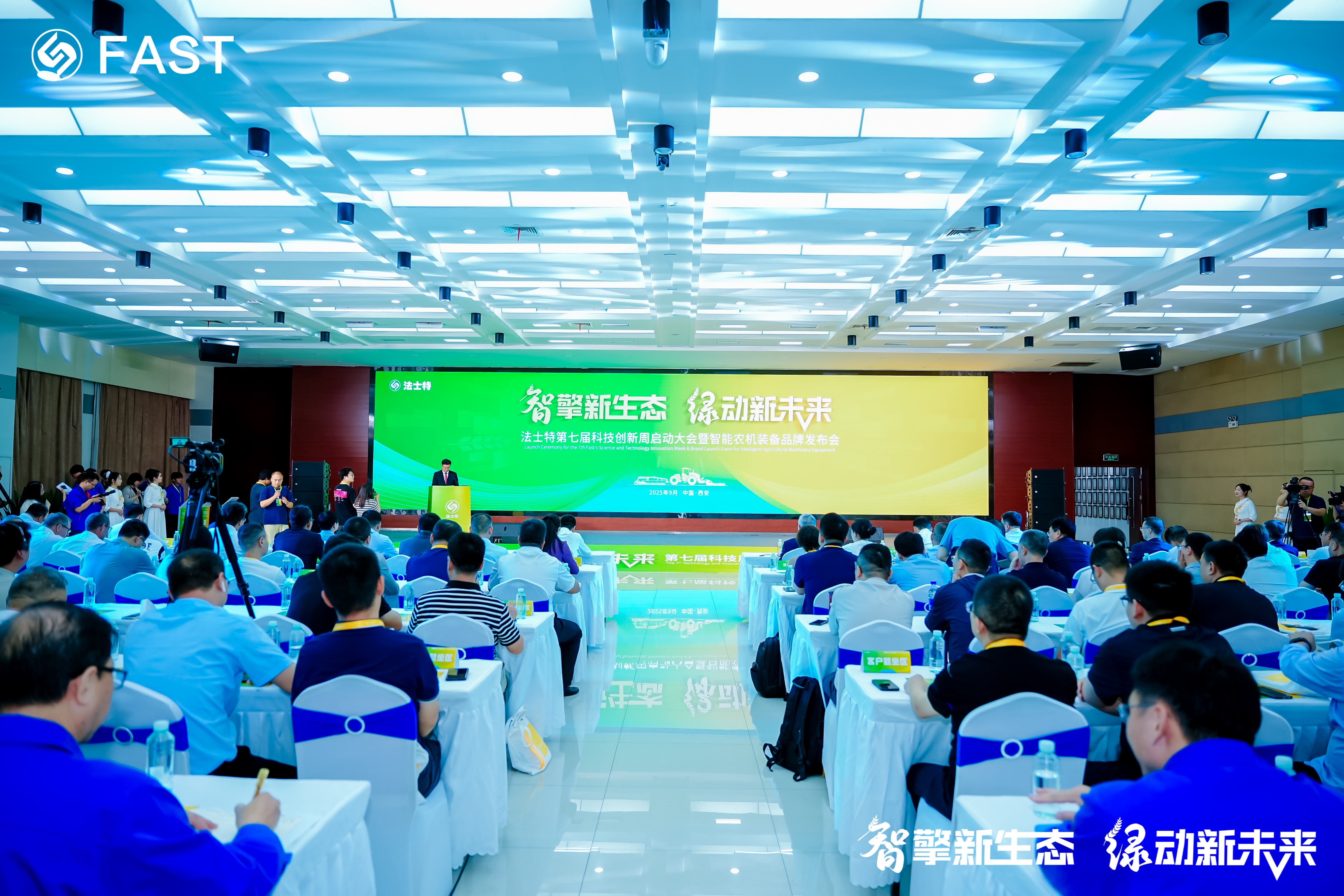
Core Insights - The event "Intelligent New Ecology, Green New Future" marks the launch of Fast Group's seventh Technology Innovation Week and the brand release of intelligent agricultural machinery, emphasizing the importance of innovation and industry transformation [3][5]. Group 1: Company Overview - Fast Group is recognized as a global leader in automotive transmission systems and high-end equipment manufacturing solutions, showcasing its technological strength and industry position [5]. - The company is entering the intelligent agricultural machinery sector, demonstrating its commitment to breaking foreign brand monopolies and promoting domestic agricultural machinery autonomy [5][9]. Group 2: Product Development - Fast Group has developed a range of intelligent agricultural machinery products designed with platform, modular, and green concepts, supporting the high-end, intelligent, and green development of agricultural equipment [9][19]. - The newly launched products include advanced power machinery and harvesting machinery, featuring high-efficiency transmission technology that enhances operational efficiency and reduces fuel consumption [21][27]. Group 3: Technological Innovations - The company has introduced several industry-leading products, including a CVT (Continuously Variable Transmission) for agricultural machinery, which achieves a 30% increase in overall efficiency and a 31.8% reduction in fuel consumption [21][24]. - Fast Group's new energy agricultural machinery power assembly utilizes advanced energy management strategies, achieving over 37% fuel savings and reducing component count by 20% [24]. Group 4: Collaboration and Research - Fast Group has established the Intelligent Agricultural Machinery Transmission Research Institute in collaboration with Xi'an Jiaotong University and Northwest A&F University, aiming to overcome key technological challenges in intelligent agricultural machinery [31][34]. - The company is actively building partnerships with various manufacturers to promote high-quality development in the agricultural machinery industry [35]. Group 5: Future Vision - Fast Group is committed to accelerating the incubation of original, leading, and forward-looking research results, contributing to the upgrade of China's automotive industry and local economic development [40].

一天之内17家车企表态:积极落实账款支付倡议!
Zhong Guo Qi Che Bao Wang· 2025-09-16 01:45
Core Viewpoint - The China Automotive Industry Association released the "Supplier Payment Norms Initiative" on September 15, urging automakers to comply with the "Regulations on Payment to Small and Medium-sized Enterprises" and to avoid exploiting their dominant positions to harm suppliers' interests, aiming to build a collaborative and win-win ecosystem in the automotive industry for high-quality development [1]. Group 1: Industry Response - A total of 17 automakers, including FAW, Dongfeng, Changan, SAIC, GAC, BAIC, Chery, Jiangqi, BYD, Geely, Great Wall, Seres, NIO, Li Auto, Xpeng, Leap Motor, and Xiaomi, have publicly committed to the payment initiative [1]. - The initiative provides clear guidance for building a collaborative ecosystem between complete vehicles and components, promoting high-quality development in the automotive industry [5][8]. Group 2: Specific Company Actions - FAW has unified the payment term for suppliers to within 60 days and optimized internal procurement and financial settlement processes to maintain a healthy market economy [3]. - Dongfeng will implement the initiative's requirements in key areas such as order confirmation, delivery, acceptance, payment, and settlement to protect supplier rights and enhance supply chain resilience [5]. - Changan has also committed to a 60-day payment term and has implemented an innovative payment process to ensure efficient cash flow for suppliers [7]. - SAIC has announced a unified 60-day payment term and will avoid using commercial acceptance bills that increase supplier financial pressure [8]. - GAC has adhered to a payment principle of not exceeding 60 days for 28 years and has established a comprehensive management system for the payment process [10]. - BAIC emphasizes equal, voluntary, fair, and honest principles in supplier relationships and opposes unreasonable payment practices [12]. - Chery has implemented measures to shorten the average payment period for suppliers and alleviate financial pressure on small and medium-sized enterprises [14]. - Jiangqi is enhancing payment efficiency and transparency while ensuring all suppliers receive fair and efficient payment experiences [15]. - BYD is focusing on key areas such as order confirmation and payment to build a collaborative ecosystem with suppliers [17]. - Geely has committed to a 60-day payment term and will not use practices that increase supplier financial pressure [18]. - Great Wall is committed to timely payments and optimizing payment processes to maintain a healthy supplier relationship [21]. - Seres calls for industry self-discipline to enhance supply chain resilience and competitiveness [23]. - NIO aims to establish long-term, mutually beneficial relationships with partners to ensure product quality and user experience [26]. - Li Auto and Xpeng both reaffirm their commitment to a 60-day payment term and efficient payment processes to support their partners [28][30]. - Leap Motor is dedicated to implementing the initiative and ensuring supply chain stability [32]. - Xiaomi emphasizes the importance of timely payments as a fundamental respect for partners and aims to enhance supply chain resilience [35].





2025泰达论坛:要以共赢、双赢的方式“走出去”
Zhong Guo Qi Che Bao Wang· 2025-09-16 01:25
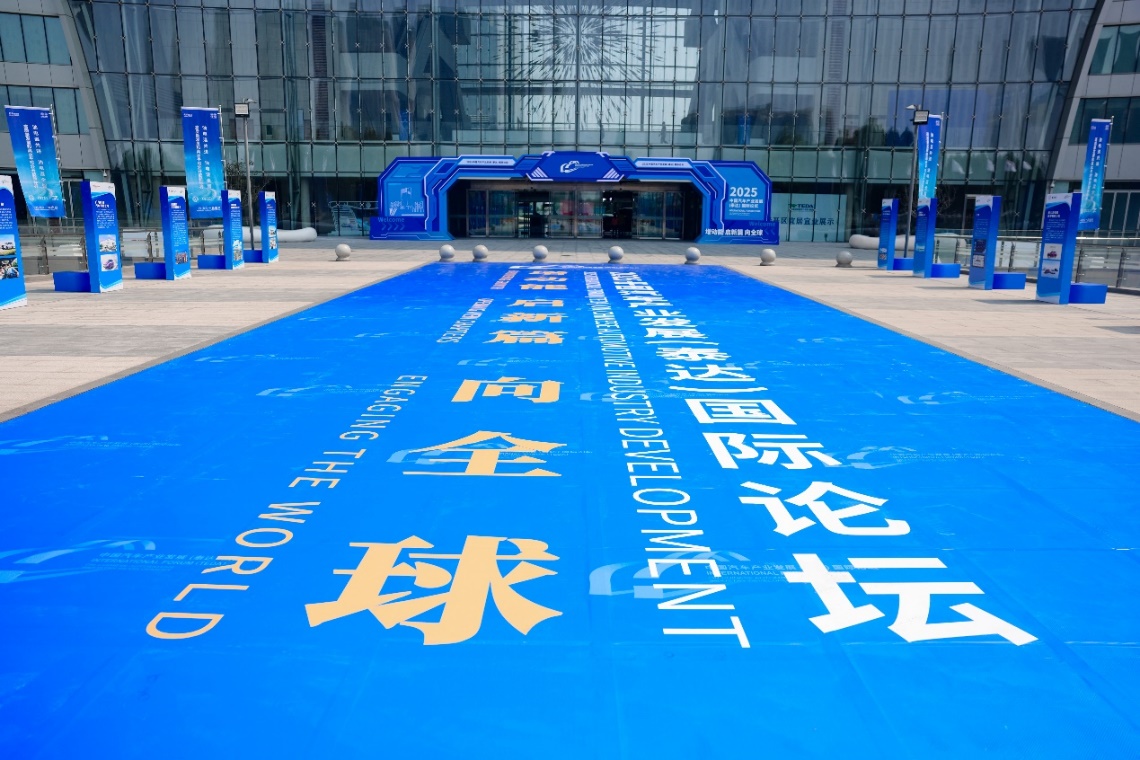
Core Viewpoint - The trend of Chinese automotive companies going global is inevitable, and experts emphasize the importance of a win-win approach in this process [1] Group 1: Challenges and Considerations for Going Global - Internal competition among Chinese brands, referred to as "involution," affects sustainable international expansion by impacting supply chain stability and overall industry health [3] - Over-reliance on price competition may lead to decreased trust from overseas consumers, hindering the establishment of a long-term, high-quality brand image [3] - Chinese automotive companies should control the speed of exports to avoid significant local disruptions, contribute to local employment, and enhance tax contributions [4] Group 2: Strategic Approaches for Internationalization - Jianghuai Automobile recognizes that internationalization is not just market expansion but a comprehensive transformation involving user insights, technology development, quality control, and brand management [6] - Great Wall Motors emphasizes the need for a shift from mere product export to a holistic approach that includes technology, brand, manufacturing, and cultural values, adapting to local regulations and consumer preferences [6][8] - The automotive industry has inherent global characteristics, and the "14th Five-Year Plan" period is crucial for Chinese brands to become global players [8] Group 3: Recommendations for Enhancing Global Competitiveness - Strengthening international cooperation and promoting global layout processes are essential for the future of the automotive industry [10] - Engaging in global governance and standard-setting, particularly in smart connectivity and carbon reduction, can enhance China's contribution to global automotive governance [10] - Supporting leading companies in establishing R&D centers and manufacturing bases overseas through technology licensing and joint R&D can foster local innovation ecosystems [10]
2026款岚图梦想家32.99万元起售,上市即交付!
Zhong Guo Qi Che Bao Wang· 2025-09-16 01:23
外观设计方面,2026款岚图梦想家延续"鲲鹏展翅"家族化设计,新增"金銮红"双拼车色,以故宫宫殿配色演绎中式豪华。内饰以"天地入怀"为理念,全 新Zebra wood斑马木纹饰板与"映山河"透光面板将东方意境与现代匠心融合;新增的紫米、玄青两种内饰配色,也营造出多种豪华氛围,2026款岚图梦想家 为用户带来属于中国人自己的豪华旗舰。 | 鲲鹏Pro | 鲲鹏Max | 2026款岚图梦想家 乾崑Pro | 乾崑Max | | --- | --- | --- | --- | | PHEV价格 32.99万元 | PHEV价格 35.99万元 EV价格 36.99万元 | PHEV价格 35.99万元 | PHEVAN 38 EV价格 39 | | | | 上市权益 价值至高 6.8 万元 | | | 现金抵扣 | 用车无忧 | 服务无忧 | 金融权益 | | 2,000元抵5,000元尾款 ADS 4高阶功能包20,000元抵扣 | 5年/10万公里整车质保 终身免费车机流量(10G/月) | 5年免费基础保养服务(5年5次) | 0首付起12-60期超低 50%首付起36期0月 | | (价值32,000元, ...
