
Zhong Guo Qi Che Bao Wang

Search documents
比亚迪2026款海豹07DM-i上市,重塑中大型轿车新标杆
Zhong Guo Qi Che Bao Wang· 2025-09-15 14:21
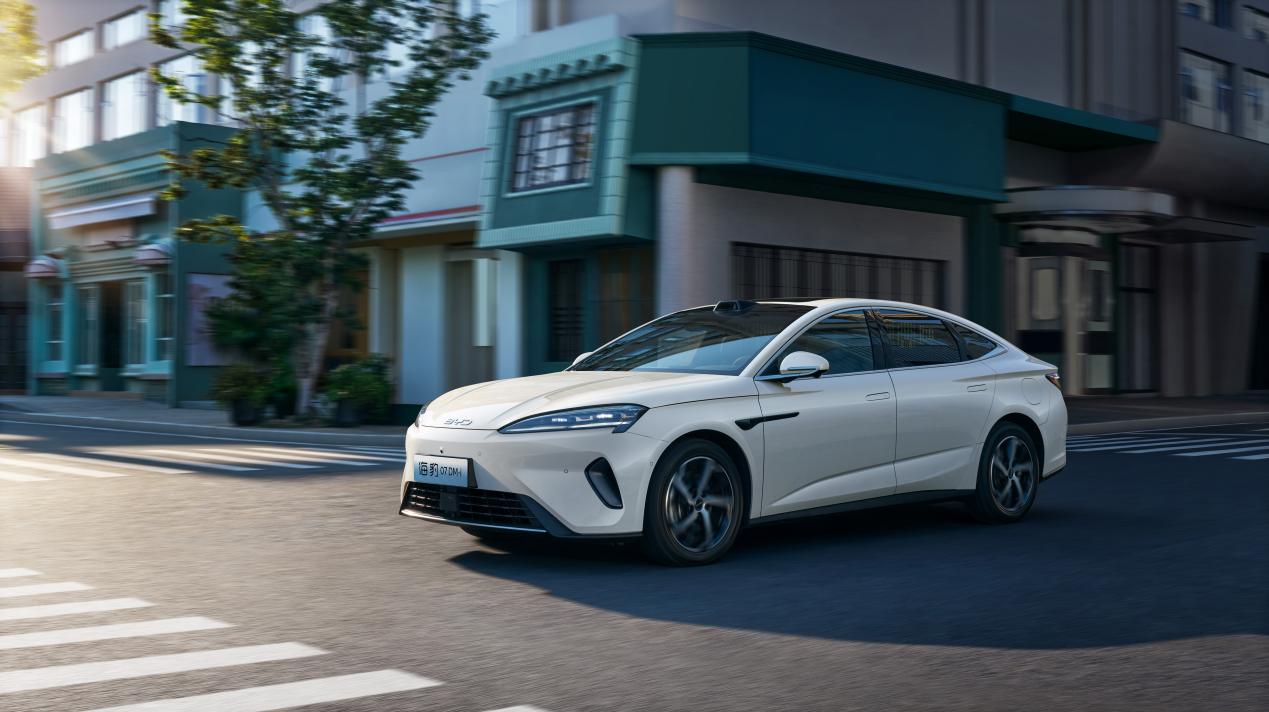
Core Insights - BYD's Ocean Network series vehicles sold over 1.39 million units from January to August this year, marking a year-on-year growth of 30.8%, with a total of over 5.6 million owners [1] - The 2026 model of the Seal 07DM-i was officially launched on September 15, featuring advancements in five key areas: intelligence, comfort, performance, aesthetics, and safety [1] Sales and Promotions - The 2026 Seal 07DM-i is available in four configurations, with official prices ranging from 149,800 to 186,800 yuan, and includes various promotional offers such as zero down payment and interest-free financing options [4] - Customers can receive up to 26,000 yuan in trade-in subsidies, including a national subsidy of up to 20,000 yuan and an additional BYD trade-in subsidy [4] Design and Aesthetics - The 2026 Seal 07DM-i features an ocean aesthetic design with a new EV-style front and a smooth body contour, available in four exterior colors [5] - The interior design follows the ocean aesthetic theme, providing a youthful and elegant atmosphere with various color options [7] Space and Comfort - The vehicle dimensions are 4995mm in length, 1900mm in width, and 1495mm in height, with a wheelbase of 2900mm, offering spacious interior and trunk space [9] - The car includes 29 storage compartments and features such as ventilated and heated front and rear seats, a smart refrigerator, and a panoramic sunroof for enhanced comfort [11] Safety Features - The 2026 Seal 07DM-i is equipped with over 30 active and passive safety features, including a high-strength safety body and 12 airbags [18] - It includes the TSC high-speed tire blowout stability control system, ensuring vehicle stability even in dangerous situations [18] Technology and Performance - The vehicle is powered by BYD's fifth-generation DM technology, achieving a low fuel consumption of 3.2L per 100km under NEDC conditions and a combined range of 1585km [20] - It supports fast charging capabilities, allowing for a 30% to 80% charge in just 20 minutes [20] Market Positioning - The 2026 Seal 07DM-i aims to meet the high-quality travel needs of mid-to-large sedans, offering luxury features at mainstream market prices [22] - The vehicle is positioned to redefine the value standards in the mid-to-large sedan market, emphasizing technological equality [22]


白犀牛首席技术官夏添:AI正在重塑末端物流生态
Zhong Guo Qi Che Bao Wang· 2025-09-15 09:56
Core Insights - The State Council's issuance of the "Opinions on Deepening the Implementation of 'Artificial Intelligence +'" serves as a strategic boost for the development of China's AI industry, marking a transition from technological breakthroughs to broad integration across various sectors, particularly in the automotive industry [1][2] Group 1: AI Integration in Automotive Industry - The automotive sector is identified as a key area for the application of AI, with significant potential for innovation and disruption, driven by advancements in technology and changing consumer experiences [1][2] - AI is transforming the automotive landscape from "point intelligence" to "system intelligence," impacting vehicle development, smart transportation, and various operational aspects [2][3] Group 2: Emerging Companies and Innovations - A range of new companies are emerging in the automotive ecosystem, focusing on areas such as Robotaxi, autonomous delivery vehicles, and smart traffic solutions, showcasing agility and innovative capabilities [2][3] - These companies represent a diverse and growing community dedicated to the integration of AI in the automotive sector, demonstrating a clear path from isolated capabilities to system-level intelligent interactions [2][3] Group 3: Advancements in Autonomous Delivery - The use of AI in autonomous delivery vehicles is rapidly developing, with significant cost reductions of 30% to 50% for delivery clients, highlighting the economic advantages of this technology [4][5] - Autonomous vehicles, such as the L4 self-driving technology from companies like White Rhino, are creating comprehensive systems that enhance safety, efficiency, and operational capabilities [4][5] Group 4: Operational Efficiency and Workforce Transformation - Autonomous delivery vehicles are designed to operate continuously, providing reliable and cost-effective logistics support, which allows human workers to focus on higher-value customer service roles [5] - The integration of autonomous vehicles into logistics is reshaping the industry, creating a new collaborative ecosystem that enhances overall delivery efficiency and service quality [5][6] Group 5: Future Development and Policy Recommendations - Continuous investment in core technologies such as algorithms, chips, and sensors is essential for the maturation of autonomous delivery vehicles, as emphasized in the "Opinions" [6] - There is a call for local governments to establish more accommodating policies to support the safe and efficient deployment of autonomous vehicles, ensuring they contribute positively to societal development [6]
主线科技合伙人王超:AI助力自动驾驶卡车多维度范式创新
Zhong Guo Qi Che Bao Wang· 2025-09-15 09:49
编前:近日,国务院印发的《关于深入实施"人工智能+"行动的意见》(以下简称《意见》),犹 如一针"强心剂",为中国人工智能产业的蓬勃发展注入战略动能与政策引力。《意见》紧扣"行业应 用"与"基础能力"双轮驱动,明确提出加快实施6大重点行动、强化8项基础支撑能力,标志着我国人工 智能的发展正式从技术突破的"奇点"探索,迈向赋能千行百业、重塑经济社会的"广度"融合新阶段。 汽车产业作为集技术密集、产业链长、消费拉动强于一体的现代化支柱产业,成为"人工智能+"颇具潜 力和颠覆性的落地场景与主要阵地。在人工智能的不断赋能下,汽车相关技术创新日新月异,产品形 态、产业格局和用户体验也正被深刻改变。"'人工智能+'汽车的产业链版图"系列报道将从洞察技术前 沿、展现产业变革、引领消费认知、解读政策风向等方向,为读者勾勒"人工智能+"为汽车产业链发展 带来的全新图景与无限可能。 随着国务院《关于深入实施"人工智能+"行动的意见》正式印发,AI与实体经济的深度融合步入战略加 速期。在汽车领域,从感知、决策到执行,从整车研发到智慧交通,AI正在重构技术架构、产品形态 与商业模式,推动产业从"单点智能"迈向"系统智能"。Robot ...
文远知行相关负责人:AI驱动自动驾驶全方位优化
Zhong Guo Qi Che Bao Wang· 2025-09-15 09:41
Group 1 - The recent issuance of the "Opinions on Deepening the Implementation of 'Artificial Intelligence +'" by the State Council serves as a strategic impetus for the development of China's artificial intelligence industry, marking a shift from technological breakthroughs to broad integration across various sectors [1][2] - The automotive industry is identified as a key area for the application of AI, with significant potential for innovation and transformation in product forms, industry structure, and user experience [1][2] - The report highlights the emergence of numerous innovative companies in the automotive sector, leveraging AI to redefine traditional boundaries and create a comprehensive landscape of "Artificial Intelligence + Automotive" [2][3] Group 2 - Companies in the automotive sector are experiencing profound changes driven by AI, focusing on scenario applications and building a new ecosystem that promotes collaboration among technology, industry, and policy [3][4] - WeRide, a leading autonomous driving technology company, is actively exploring deep applications of AI in autonomous driving, with operations in over 30 cities across 11 countries [4][5] - The end-to-end AI model developed by WeRide enhances the performance of autonomous vehicles in complex traffic environments, enabling real-time perception, intelligent judgment, and autonomous decision-making [5][6] Group 3 - WeRide's Robotaxi service utilizes intelligent scheduling systems and AI prediction models to optimize routes and improve overall travel efficiency, offering a personalized user experience that differentiates it from traditional transportation services [4][5] - The company advocates for increased safety and reliability of AI technologies in complex traffic environments, alongside government efforts to establish standards and regulations for autonomous vehicle certification and operation [5][6]

黑芝麻智能再度登陆慕尼黑车展
Zhong Guo Qi Che Bao Wang· 2025-09-15 09:10
Core Insights - The 2025 IAA Mobility exhibition in Munich showcased the advancements in smart automotive technology, with Hezhima Intelligent presenting its innovative solutions for AI-driven smart vehicles [2] - Hezhima Intelligent introduced its safety intelligent foundation solution, which utilizes the Wudang C1200 family of cross-domain integration chips to enhance vehicle safety and reduce development costs [2] - The company emphasized the importance of integrating electronic and electrical architectures to facilitate seamless upgrades from entry-level to flagship models [2] Group 1 - Hezhima Intelligent's Wudang C1200 family of chips is central to its safety intelligent foundation solution, providing hardware security isolation and compatibility throughout the product lifecycle [2] - The Wudang C1200 solution aims to significantly lower development costs and shorten development cycles for automotive manufacturers [2] - The company is collaborating with leading global automotive firms to explore the future of smart vehicles powered by AI [2] Group 2 - The Huashan A2000 chip family was highlighted for its high performance and efficiency, integrating multiple functional units for advanced AI applications [3] - The Huashan A2000 platform supports a robust driving assistance technology foundation, ensuring optimal performance and flexibility [3] - Hezhima Intelligent's Wudang C1236 and C1296 chips are recognized for their capabilities in navigation assistance and multi-domain integration, respectively [3] Group 3 - The C1296 cross-domain integration solution has gained market recognition, with plans for mass production in multiple new models from Dongfeng Motor by the end of 2025 [4] - The Huashan A1000 family also showcased a mature software ecosystem, with successful applications in various vehicle models [4] - Hezhima Intelligent's dual-driven model of chips and solutions aims to provide cost-effective and reliable driving assistance technologies for the automotive industry [4]


智能化新升级,高增长下的机遇与挑战并存
Zhong Guo Qi Che Bao Wang· 2025-09-15 09:10
Core Viewpoint - The rapid development of China's advanced driver-assistance systems (ADAS) is marked by a 62.1% growth rate in the first half of 2025, indicating a shift from laboratory research to industrial application, despite facing challenges in safety, reliability, and standardization [1][3][5]. Technological Advancements - The growth in the ADAS market is driven by significant reductions in hardware costs and breakthroughs in algorithms, with laser radar costs decreasing by up to 1000 times over the past decade and computing power increasing by 1000 times from 2014 to 2024 [3][4]. - The transition from rule-based algorithms to data-driven models using deep learning is enhancing system performance, particularly in perception, prediction, planning, and control [3][4]. Application Scenarios - City Navigation Assistance (City NOA) is becoming a competitive focal point, utilizing multi-sensor fusion and high-precision mapping to enable automated driving in complex urban environments [4]. - Despite advancements, interoperability issues among different vehicle models and systems remain a challenge, complicating cross-model and cross-regional compatibility [4]. Safety and Reliability - Safety is a critical concern, with over 90% of traffic accidents attributed to human error, and ADAS aims to mitigate these risks [5][6]. - Current systems still face reliability issues, as evidenced by incidents where systems failed to recognize traffic signs or obstacles, highlighting the need for improved user education and clearer communication of system capabilities [6][7]. Standardization and Collaboration - The industry is experiencing fragmentation due to varying regional standards and infrastructure, which hampers widespread adoption of ADAS technologies [8]. - Experts advocate for a unified "vehicle-road-cloud" standard and data exchange protocols to facilitate interoperability and reduce redundant investments [8][9]. Industry Cooperation - Collaboration among automakers, chip manufacturers, and technology providers is essential for enhancing system performance and reducing costs, with some companies already achieving total costs for urban ADAS systems below 10,000 yuan [9]. - Regulatory oversight and industry self-regulation are crucial to ensure transparency and accountability, particularly regarding safety and system limitations [9].

德系主场慕尼黑刮起中国风
Zhong Guo Qi Che Bao Wang· 2025-09-15 08:48
Core Insights - The 2025 Munich Motor Show (IAA Mobility) focuses on mobility, sustainability, and technological innovation, featuring major German automakers and a significant presence from Chinese companies [2][3]. Group 1: Event Overview - The event runs from September 8 to 14, 2025, with a theme of "It's all about mobility" [2]. - Major German automakers like Volkswagen, BMW, and Mercedes-Benz showcase new electric vehicles, while foreign companies such as Opel, Hyundai, and Lucid also participate [3][4]. - Chinese exhibitors have increased significantly, with 116 companies registered, up from 70 in 2023, making them the second-largest group after German firms [2]. Group 2: Electric Vehicle Highlights - BMW unveils the new generation iX3, set for large-scale sales in Europe starting March 2026, featuring advanced technologies [3][4]. - Mercedes-Benz launches the all-new electric GLC, boasting a range of up to 713 kilometers under WLTP conditions [3]. - Volkswagen introduces the ID.Polo, an electric successor to the classic Polo, expected to debut in May 2026 [4]. Group 3: Chinese Automakers' Expansion - Chinese brands like BYD, Xpeng, and Leap Motor showcase multiple new models, indicating strong ambitions in the European market [7][8]. - BYD announces plans to open over 1,000 stores in Europe by the end of 2023 and aims to launch several hybrid models in the next six months [8]. - Xpeng reveals its first European R&D center and emphasizes its focus on AI and robotics in automotive technology [7]. Group 4: Industry Challenges and Responses - European automakers express concerns over EU emissions regulations, with Stellantis warning that current targets may lead to a 30% market shrinkage [4][5]. - Executives from Mercedes-Benz and BMW criticize the EU's plans to phase out combustion engines by 2035, advocating for a more comprehensive emissions accounting system [5]. Group 5: Technological Innovations - Chinese component manufacturers, including CATL and Horizon Robotics, showcase advancements in battery technology and autonomous driving systems [10][11]. - Companies like Momenta and Horizon present their latest autonomous driving solutions, with Momenta announcing partnerships with over 20 global automakers [11][12]. Group 6: Competitive Landscape - The competition between Chinese and European automakers intensifies, with Chinese brands capturing 9.9% of the European electric vehicle market as of July 2023 [13]. - Collaborative efforts between companies, such as Xpeng and Volkswagen, highlight a trend of "co-opetition" in the industry, fostering innovation and market growth [15][16].

固态电池,凝聚行业未来发展新希望
Zhong Guo Qi Che Bao Wang· 2025-09-15 07:31
Core Insights - The 21st China Automotive Industry Development (Teda) International Forum was held in Tianjin from September 11 to 14, 2025, focusing on the theme "Increasing Momentum, Opening New Chapters, and Going Global" [1] - A specialized forum on "Green New Solutions: Solid-State Battery Industrialization and Next-Generation Battery Technology Layout" was conducted, where industry experts discussed technological trends and key breakthroughs [1] Group 1: Battery Technology Development - The current types of power batteries include liquid batteries, solid-liquid hybrid batteries, and all-solid-state batteries, with most vehicles using liquid or solid-liquid hybrid batteries [3] - The transition to all-solid-state batteries is seen as a significant trend, requiring innovation to address new challenges in the industry [3] - All-solid-state batteries face production challenges and high costs, with current costs being 5-10 times higher than liquid batteries, indicating a need for cost control and mass production solutions [4] Group 2: Industry Perspectives - The development of all-solid-state batteries is aligned with national strategies and customer demands, representing an important direction for technological advancement [5] - The global focus on all-solid-state battery development is increasing, with various countries and sectors pushing for multiple technological routes [5] - The application scenarios for power batteries are expanding beyond electric vehicles to include low-altitude travel and humanoid robots, necessitating higher safety standards [6] Group 3: Strategic Consensus - The "Green New Solutions Think Tank Consensus" emphasizes the need for multi-technology routes to advance key technologies in electric and hybrid vehicles [8] - It calls for strengthening core technology breakthroughs in solid-state batteries and building a collaborative industrial ecosystem [8] - The consensus also highlights the importance of supportive industrial policies to facilitate the green transformation of the automotive industry [8]


政策法规与技术协同引领,泰达论坛聚焦汽车智能化升级新路径
Zhong Guo Qi Che Bao Wang· 2025-09-15 07:31
Core Insights - The 2025 China Automotive Industry Development (Teda) International Forum focused on the theme of "Policy Regulations and Key Technological Innovations Driving Intelligent Upgrades" to discuss the development of intelligent connected vehicles in China [1] Group 1: Industry Trends - The automotive industry is transitioning from electrification to intelligentization, with a critical phase of moving from L2 to L5 levels of autonomous driving [1] - The integration of AI, chips, and data technologies is essential for this transition, but challenges remain in policy regulations, standardization, and industry collaboration [1] Group 2: Safety and Standards - Changan Automobile emphasized the importance of safety in intelligent vehicles, proposing a "human factors safety architecture" to enhance user interaction and safety [3] - The China Automotive Technology Research Center reported progress in the standardization of intelligent connected vehicles, with 31 standards in the ADAS field, of which 16 have been completed, including 4 that have transitioned to mandatory standards [4][5] Group 3: Infrastructure and Technology - The telecommunications sector highlighted the need for enhanced network capabilities to support intelligent connected vehicles, focusing on a "four-level computing system" to meet the demands of low latency and high reliability [7] - The demand for high-performance chips is rapidly increasing, with the assembly rate of L2+ and higher advanced driver assistance systems expected to double from 2023 to 2024 [7] - The required computing power for urban navigation has increased from 50-100 TOPS to 300-500 TOPS, while fully autonomous driving (Robotaxi) requires 1000-2000 TOPS [7] Group 4: Application Ecosystem - The forum served as a platform for collaboration among industry, academia, and research, showcasing China's latest achievements in intelligent connected vehicles and promoting the industry's transformation [8]

“油电”如何协同迈向绿色化,在这里寻找答案
Zhong Guo Qi Che Bao Wang· 2025-09-15 07:23
Core Insights - The 2025 (21st) China Automotive Industry Development (Tianjin) International Forum was held in Tianjin, focusing on the theme "Increasing Momentum, Opening New Chapters, Towards Globalization" [1] - The forum featured discussions on the new dynamics between oil and electricity in the global automotive market, highlighting the increasing penetration of new energy vehicles (NEVs) [3][4] Industry Trends - Global NEV sales exceeded 19 million units last year, with over 10 million units sold in the first half of this year, leading to a market penetration rate surpassing 23% [3] - The automotive industry is witnessing a diversification in technology routes, with most companies adopting a mix of pure electric, plug-in hybrid, and range-extended technologies [4][6] Technological Developments - The core technology focus remains on continuous innovation of key components and optimizing the service system to promote low-carbon development across the industry chain [4] - The trend towards multi-energy integration is expected to deepen, with various technology routes such as pure electric, plug-in, range-extended, fuel cells, and efficient zero-carbon internal combustion engines co-developing [4][8] Market Dynamics - For commercial vehicles, the trend towards electrification is irreversible, with users prioritizing cost-effectiveness and operational efficiency [7] - Different applications dictate the choice of technology, with pure electric vehicles favored for short-distance urban transport, while hybrid and traditional combustion engines are preferred for long-distance transport [6][7] Future Outlook - The current year is seen as a critical point for NEVs, with expectations that in the next 10-15 years, a dominant technology route will emerge [8] - The industry is currently in a transitional phase with multiple technology routes coexisting, but there is a strong push towards pure electric technology as a long-term strategy [8]
