
Jin Rong Shi Bao

Search documents
这年头,情绪竟成“大买卖”
Jin Rong Shi Bao· 2026-01-16 03:36
Core Insights - The rise of "emotional consumption" among the younger generation is driven by the need for emotional healing and stress relief, with a significant market potential projected to grow from 16.3 trillion yuan in 2022 to 23.1 trillion yuan in 2024, and expected to reach 27.2 trillion yuan by 2025 and exceed 45 trillion yuan by 2029 [1][2] Group 1: Emotional Consumption Trends - Emotional consumption is characterized by young consumers seeking products and services that provide immediate emotional satisfaction and companionship, such as blind boxes, emotional toys, and creative cultural products [1][3] - Over 90% of young people recognize the value of emotional consumption, with nearly 60% willing to pay for it, indicating a strong market demand [2][7] - The emotional consumption market is evolving, with physical products and experiential services becoming mainstream, as over 50% of respondents spend between 100-300 yuan monthly on physical goods [7][9] Group 2: Psychological Drivers - The core motivation for the rise in emotional consumption among youth is linked to the need for emotional management and the fulfillment of psychological needs in a high-pressure environment [3][9] - Traditional emotional support systems have weakened, leading young people to seek external products and services for emotional compensation [3][9] - The demand for emotional products is not just about material satisfaction but also about emotional expression, identity construction, and social connection [7][9] Group 3: Market Opportunities - The growth of digital and virtual emotional consumption is notable, with AI-driven products and services gaining traction, such as virtual gifts and emotional chatbots [8][9] - The market for AI toys is projected to see a significant increase, with sales expected to rise by 394.9% in 2025, highlighting the shift towards emotional companionship through technology [9][10] - Companies are encouraged to explore untapped emotional needs and expand consumption scenarios across various sectors, including health, education, and workplace environments [10]

向日葵“忽悠式重组”被立案调查 资产重组终止
Jin Rong Shi Bao· 2026-01-16 03:11
Core Viewpoint - Zhejiang Sunflower (向日葵) is under investigation by the China Securities Regulatory Commission (CSRC) for allegedly misleading statements in its restructuring plan, which has raised market concerns regarding the actual production capacity and business model of the targeted assets [1][2]. Group 1: Investigation Details - On January 14, Zhejiang Sunflower received a notice from the CSRC regarding the formal investigation due to suspected violations of information disclosure laws [2]. - The company announced the termination of its asset restructuring plan, stating it no longer meets the conditions for issuing shares to purchase assets following the CSRC's notice [2][3]. Group 2: Business Overview - Zhejiang Sunflower focuses on the pharmaceutical sector, primarily engaged in the research, manufacturing, and sales of drugs for infections, cardiovascular diseases, and digestive systems [2]. - The restructuring plan aimed to acquire 100% of Zhangzhou Xipu Material Technology Co., Ltd. and 40% of Zhejiang Beid Pharmaceutical Co., Ltd., intending to expand into the high-end semiconductor materials sector [3]. Group 3: Market Reaction and Financial Performance - Following the announcement of the investigation, Zhejiang Sunflower's stock price fell by 20%, closing at 4.96 yuan per share, with a total market capitalization of 6.385 billion yuan [5]. - The company's financial performance has been under pressure, with a reported revenue of 19.952 million yuan for the first three quarters of 2025, a year-on-year decline of 12.09%, and a net profit attributable to shareholders of 1.3062 million yuan, down 53.10% year-on-year [5].

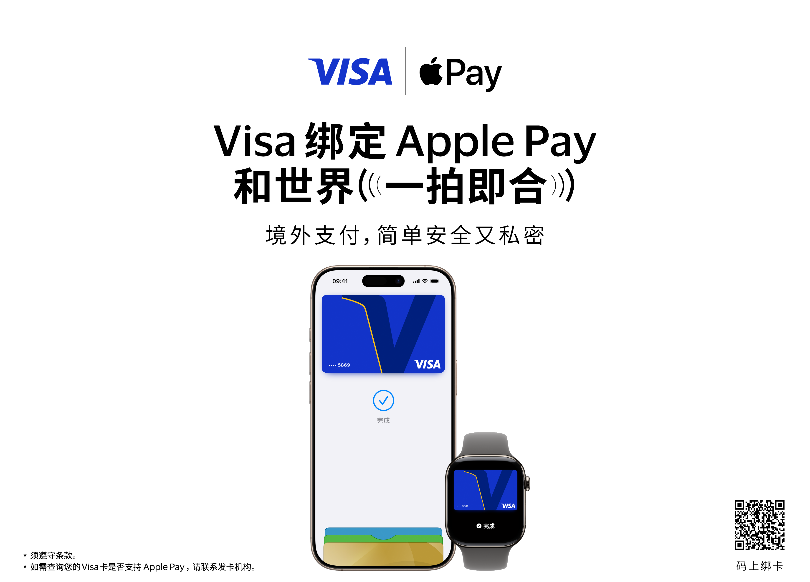
Visa 首开外卡 Apple Pay 通道,中国跨境支付“无感”升级
Jin Rong Shi Bao· 2026-01-16 02:15
Core Insights - Visa has partnered with Apple to allow Chinese cardholders to link their Visa cards to Apple Pay for seamless payments abroad, marking a significant advancement in cross-border payment solutions [1][3][12] Group 1: Payment Innovation - Visa is the first foreign card organization to enable this payment channel, facilitating a "frictionless" cross-border payment experience for Chinese consumers [3][12] - The collaboration with Apple allows users to bind their Visa cards to Apple Pay, enhancing payment convenience across various scenarios, including in-store, mobile apps, and online [1][4] - The initial launch supports eight major banks in China, with plans to expand to more banks in the future [3][4] Group 2: User Experience - Users can complete payments by simply tapping their iPhone or Apple Watch, utilizing Face ID or Touch ID for authentication, which streamlines the payment process [4][5] - The integration of Apple Pay with Visa allows users to enjoy the same rewards and benefits as with physical cards, including exclusive discounts and offers [5][6] Group 3: Security Measures - Visa's payment tokenization technology enhances security by replacing real card numbers with unique device account numbers, minimizing the risk of fraud [6][7] - The system ensures that real card numbers are not stored on devices or transmitted to merchants, providing an additional layer of protection for users [6][7] Group 4: Market Commitment - Visa's initiative reflects its nearly 40-year commitment to the Chinese market, evolving from a payment network provider to a key player in the modernization of China's payment industry [8][9] - The company has played a crucial role in the development of China's payment infrastructure, facilitating international payment solutions and enhancing cross-border commerce [9][10] Group 5: Future Developments - Visa plans to continue its innovation in payment solutions, including upgrades to dual-branded credit cards and the expansion of contactless payment methods in public transportation [10][11] - The company aims to achieve 100% payment tokenization in e-commerce transactions, further reducing fraud rates and enhancing user trust [7][11]


2025年超300家村镇银行退出市场
Jin Rong Shi Bao· 2026-01-16 02:08
Core Viewpoint - The restructuring of village banks is accelerating in 2026, with state-owned banks actively converting village banks into branch institutions, as evidenced by the approval of the acquisition of Zhejiang Anji Jiaoyin Village Bank by Bank of Communications [1][2]. Group 1: Restructuring Activities - Bank of Communications has been approved to acquire Zhejiang Anji Jiaoyin Village Bank and convert it into three branches, marking the first case of a state-owned bank's "village-to-branch" initiative in 2026 [2]. - Since 2025, over 300 village banks have exited the market, with "village-to-branch" and "village-to-subsidiary" becoming the mainstream exit strategies [1][2]. - In 2025, Bank of Communications completed similar conversions for multiple village banks in Qingdao and Sichuan, demonstrating a consistent strategy in this area [2][3]. Group 2: Industry Trends - The "village-to-branch" strategy involves the full acquisition of village banks by their parent banks, integrating them into the main banking system to enhance operational efficiency and resource allocation [4]. - The trend of state-owned banks engaging in "village-to-branch" conversions is driven by the desire to strengthen their rural financial services while minimizing risks associated with weaker village banks [4]. - Other banks, including Agricultural Bank of China and Industrial and Commercial Bank of China, have also participated in the restructuring of village banks, indicating a broader industry movement [2][3]. Group 3: Regulatory Environment - The acceleration of village bank exits is influenced by regulatory policies aimed at reforming small financial institutions, emphasizing a focus on supporting agriculture and small enterprises [7][8]. - In 2025, 310 village banks exited the market, accounting for over 70% of the total exits since 2010, highlighting the significant impact of regulatory guidance [7]. - The central government's economic work conference in late 2025 underscored the importance of "reducing quantity and improving quality" in small financial institutions, which will continue to shape the reform landscape in 2026 [8].

公募基金掀起“限购潮”
Jin Rong Shi Bao· 2026-01-16 02:04
Core Viewpoint - The recent surge in public funds implementing purchase limits is driven by a recovering market sentiment, the ongoing enthusiasm for AI and technology themes, and the rapid increase in net asset values of several high-performing funds [1] Group 1: Fund Purchase Limits - As of January 14, 2026, 26 public fund products have announced purchase limits, significantly exceeding historical levels [1] - Notable fund managers such as China Europe Fund, E Fund, and others have issued purchase limit announcements to maintain stable fund operations and protect the interests of existing investors [1] - The Debon Growth Flexible Allocation Mixed Fund became a focal point of this trend, announcing purchase limits twice in two days due to a single-day net value surge of 8.32% and a cumulative increase of 29.42% over six trading days [2] Group 2: Specific Fund Actions - China Europe Fund implemented purchase limits on three of its products, with the China Europe Small Cap Growth Mixed Fund completely suspending subscriptions and transfers due to exceeding its asset cap of 20 billion yuan [3] - The other two products from China Europe Fund adopted a more moderate approach, setting daily purchase limits at 1 million yuan [3] - The varying purchase limit strategies reflect considerations of different fund types, with active equity products facing stricter limits compared to passive index products [3] Group 3: Rationale Behind Purchase Limits - The primary reason for implementing purchase limits is to prevent the dilution of investment strategies due to rapid scale expansion and to manage operational pressures from irrational market inflows [4] - The current hot themes, such as AI and high-end equipment, have led to significant short-term inflows, making it challenging for fund managers to allocate assets quickly, which could dilute existing investors' returns [4] - The rapid growth in fund size can exceed effective management capacity, leading to strategy distortion and increased trading costs, ultimately harming long-term returns [5] Group 4: Industry Trends - The "purchase limit wave" reflects a shift in the industry from a focus on scale to a focus on investor returns, aligning with regulatory guidance [6] - Fund managers are actively limiting scale to enhance performance sustainability, prioritizing long-term interests of existing investors over short-term management fee income [6] - This trend indicates a transition from extensive growth to refined operations within the industry [6]
2025年超300家村镇银行退出市场 村镇银行“减量提质”成常态
Jin Rong Shi Bao· 2026-01-16 02:04
Group 1 - The core viewpoint of the articles highlights the acceleration of structural reorganization of village banks, with state-owned banks actively converting village banks into branch institutions as a mainstream exit strategy since 2025 [1][2][4] - The China Banking and Insurance Regulatory Commission approved the acquisition of Zhejiang Anji Jiaoyin Village Bank by Bank of Communications, marking the first case of a state-owned bank's "village-to-branch" initiative in 2026 [1][2] - Since 2025, over 300 village banks have exited the market, with "village-to-branch" and "village-to-subsidiary" becoming the primary methods for these exits [1][7] Group 2 - Bank of Communications has previously executed similar "village-to-branch" operations in Qingdao and Sichuan, acquiring multiple village banks and converting them into branches [2][3] - Other state-owned banks, including Industrial and Agricultural Banks, have also participated in the "village-to-branch" operations, with a total of 10 village banks converted by state-owned banks since 2025 [2][3] - The restructuring of village banks is seen as a strategy to enhance service capabilities and risk resistance, while also allowing acquiring banks to expand their operational scope in areas lacking existing branches [5][6] Group 3 - The acceleration of village bank exits is attributed to regulatory policies and internal demands, with 310 village banks exiting in 2025 alone, accounting for over 70% of the total exits since 2010 [7][8] - The central government's focus on "reducing quantity and improving quality" for small and medium-sized financial institutions is expected to continue, emphasizing the need for effective measures to prevent deterioration in quality during the reduction process [8]
融资保证金最低比例上调至100% 引导市场理性投资
Jin Rong Shi Bao· 2026-01-16 02:04
1月14日午间,经中国证监会批准,沪深北交易所一齐发布《关于调整融资保证金比例的通知》, 将投资者融资买入证券时的融资保证金最低比例从80%提高至100%,对应杠杆水平由1.25下降至1.00。 值得一提的是,此次调整自2026年1月19日起施行,且仅限于新开融资合约,调整实施前已存续的 融资合约及其展期仍按照调整前的相关规定执行。此举被视作监管层呵护市场平稳过渡之举。 "此次调整仅针对新开融资合约,存量合约及展期仍按原规则执行,体现了监管层'精准调控、平稳 过渡'的政策思路。"中国银河证券非银分析师张琦表示,作为资本市场高质量发展的重要举措,本次调 整恰逢市场杠杆资金扩张、交投活跃度高位攀升的关键节点,对引导市场理性投资、防范系统性风险具 有重要意义。 沪深北交易所表示,近期,融资交易明显活跃,市场流动性相对充裕,根据法定的逆周期调节安 排,适度提高融资保证金比例回归100%,有助于适当降低杠杆水平,切实保护投资者合法权益,促进 市场长期稳定健康发展。 "监管层呵护资本市场稳健发展的决心坚定、方法多元且机制日趋成熟。"在中信证券金融产业首席 分析师田良看来,无论是非理性下跌还是短期过热导致的急涨,当前监管措 ...

延续实施境外机构投资境内债券市场企业所得税、增值税政策
Jin Rong Shi Bao· 2026-01-16 02:01
Group 1 - The Ministry of Finance and the State Taxation Administration announced a temporary exemption from corporate income tax and value-added tax on interest income from bonds obtained by foreign institutions investing in the domestic bond market from January 1, 2026, to December 31, 2027 [1] - The exemption does not apply to interest income from bonds that are related to institutions or places established by foreign entities within China [1] - Additionally, a policy extending the exemption of value-added tax on interest income from foreign investments in Chinese government bonds and local government bonds issued abroad will be in effect from August 8, 2025, to December 31, 2027 [1]
2025年12月银行结汇22446亿元
Jin Rong Shi Bao· 2026-01-16 01:21
Core Insights - The State Administration of Foreign Exchange released data on bank foreign exchange settlement and sales for December 2025, indicating significant foreign exchange activity in the banking sector [1] Group 1: Bank Foreign Exchange Settlement and Sales - In December 2025, banks settled foreign exchange amounting to 22,446 billion RMB and sold 15,382 billion RMB [1] - For the entire year of 2025, banks cumulatively settled 185,227 billion RMB and sold 171,314 billion RMB [1] - In USD terms, December 2025 saw banks settle 3,180 billion USD and sell 2,179 billion USD, with cumulative settlements for the year reaching 25,949 billion USD and sales at 23,983 billion USD [1] Group 2: Bank Customer Foreign Exchange Income and Payments - In December 2025, banks recorded foreign exchange income from customers at 58,197 billion RMB and foreign payments at 50,186 billion RMB [1] - For the full year 2025, cumulative foreign exchange income from customers was 569,405 billion RMB, while cumulative foreign payments totaled 547,906 billion RMB [1] - In USD terms, December 2025's foreign exchange income from customers was 8,244 billion USD, with foreign payments at 7,109 billion USD; the annual totals were 79,725 billion USD for income and 76,704 billion USD for payments [1]
2025年末社会融资规模存量同比增长8.3%
Jin Rong Shi Bao· 2026-01-16 01:17
Core Insights - The People's Bank of China reported that by the end of 2025, the total social financing scale reached 442.12 trillion yuan, marking an 8.3% year-on-year increase [1] - The balance of RMB loans to the real economy was 268.4 trillion yuan, with a year-on-year growth of 6.3% [1] - The balance of foreign currency loans to the real economy, converted to RMB, was 1.05 trillion yuan, showing an 18% decline year-on-year [1] Financing Structure - By the end of 2025, RMB loans to the real economy accounted for 60.7% of the total social financing scale, down 1.1 percentage points year-on-year [2] - The proportion of foreign currency loans to the real economy was 0.2%, a decrease of 0.1 percentage points year-on-year [2] - Government bonds represented 21.5% of the total financing structure, an increase of 1.6 percentage points year-on-year [2] Annual Financing Increment - The total increment in social financing for 2025 was 35.6 trillion yuan, which is 3.34 trillion yuan more than the previous year [3] - RMB loans to the real economy increased by 15.91 trillion yuan, which is a decrease of 1.13 trillion yuan compared to the previous year [3] - Government bond net financing reached 13.84 trillion yuan, an increase of 2.54 trillion yuan year-on-year [3] Currency and Deposits - By the end of 2025, the broad money supply (M2) was 340.29 trillion yuan, reflecting an 8.5% year-on-year growth [3] - RMB deposits increased by 26.41 trillion yuan in 2025, with household deposits rising by 14.64 trillion yuan [4] - The total amount of cash injected into the economy in 2025 was 1.31 trillion yuan [3] Interbank Market Activity - The total transaction volume in the interbank RMB market for 2025 was 2180.31 trillion yuan, with an average daily transaction of 8.79 trillion yuan, up 2.1% year-on-year [4] - The weighted average interest rate for interbank borrowing in December 2025 was 1.36%, lower than both the previous month and the same period last year [4] Foreign Exchange Reserves - As of December 2025, the national foreign exchange reserves stood at 3.36 trillion USD, with the RMB exchange rate at 7.0288 yuan per USD [5] - The cross-border RMB settlement amount for the current account in 2025 was 17.86 trillion yuan, with goods trade accounting for 13.72 trillion yuan [5]