
Qi Huo Ri Bao Wang

Search documents
证监会主席吴清最新发声:将进一步深化投融资综合改革
Qi Huo Ri Bao Wang· 2025-10-27 11:15
Group 1 - The core viewpoint emphasizes the importance of stability and balance in asset allocation during the processes of risk repricing and asset rebalancing, highlighting the increasing value of Chinese assets such as A-shares and Hong Kong stocks [1] - The China Securities Regulatory Commission (CSRC) aims to deepen comprehensive reforms in investment and financing, enhancing the inclusiveness, adaptability, attractiveness, and competitiveness of the capital market to better serve economic and social development [1] - The CSRC plans to introduce a new registration system for the first batch of companies on the Sci-Tech Innovation Board, implementing measures such as the introduction of experienced institutional investors and pre-review processes [1] Group 2 - High-quality listed companies are deemed the cornerstone for the stable operation of the capital market, with the CSRC planning to launch a refinancing framework to support mergers and acquisitions, thereby promoting industry consolidation [2] - The CSRC has introduced the "Qualified Foreign Investor System Optimization Work Plan," which includes measures to optimize access management and improve investment efficiency for foreign investors [2] - The CSRC aims to enhance the protection of investors' rights and interests, focusing on risk prevention and regulatory enforcement against financial fraud and market manipulation [3] Group 3 - The CSRC will release several opinions to strengthen the protection of small and medium investors, introducing 23 practical measures to create a fair trading environment and improve service levels in the industry [3] - Beijing is positioned as a key window for capital market reform and opening up, with initiatives aimed at attracting high-quality industry institutions and long-term capital to enhance the capital market's capabilities [3]
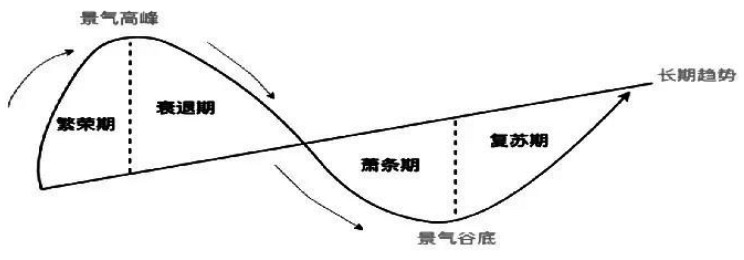
用期权策略应对商品市场的周期波动
Qi Huo Ri Bao Wang· 2025-10-27 04:50
Core Insights - The article emphasizes the increasing importance of financial derivatives, particularly options, as powerful tools for enterprises to manage risks, optimize resource allocation, and achieve strategic goals in a complex market environment [1][11] - It highlights that all enterprises, regardless of size or industry, are influenced by macroeconomic cycles, which shape their financial needs, including financing, investment, and risk management [1] Analysis of Core Products and Cycles - Most enterprises possess core products whose price fluctuations are closely tied to the company's performance [2] - The cyclical nature of core product prices leads to similar operational risks and core needs for companies during comparable cycles [4] Stages of Price Cycles and Solutions - **Stage 1: Initial Phase (End of Downturn or Start of Upturn)** - Pain Points: Core product prices remain low, leading to inventory buildup for upstream companies and cost reduction needs for downstream companies - Options Solution: Upstream companies can sell out-of-the-money call options to generate premium income, while downstream companies can sell out-of-the-money put options to hedge against price increases [6] - **Stage 2: Early Rising Phase (First Round of Increase)** - Pain Points: Core product prices begin to rise, causing concerns about low-price sales for upstream and procurement difficulties for downstream - Options Solution: Upstream companies can buy call options to hedge against unexpected price increases, while downstream companies can buy higher strike call options and sell lower strike puts to manage costs [7] - **Stage 3: Stabilization Phase (Post First Round Increase)** - Pain Points: Core prices stabilize at a fair value, requiring fundamental support for price changes - Options Solution: Upstream companies can sell higher strike calls and buy lower strike puts to protect against inventory devaluation, while downstream companies can continue to sell out-of-the-money puts for premium income [8] - **Stage 4: Main Rising Phase (Final Round of Increase)** - Pain Points: Core prices may irrationally surge, creating strong price protection needs for upstream and procurement hesitance for downstream - Options Solution: Upstream companies can buy higher strike calls to capture further gains, while downstream companies can adopt flexible options strategies to manage their inventory [10] - **Stage 5: Peak Phase (End of Upturn)** - Pain Points: Prices begin to decline, leading to inventory protection and sales needs for both upstream and downstream companies - Options Solution: Companies can buy lower strike puts to hedge against price drops and sell higher strike calls to lock in profits if prices rebound [11] Conclusion - The article concludes that understanding the cyclical nature of core products and effectively utilizing options can significantly aid enterprises in navigating the complexities of different economic cycles [11]

解码国家规划综合生产能力目标的战略逻辑
Qi Huo Ri Bao Wang· 2025-10-27 04:48
Core Insights - Energy security is a crucial component of national security and a fundamental guarantee for sustainable economic and social development [3] - The "14th Five-Year Plan" aims for a comprehensive energy production capacity of over 4.6 billion tons of standard coal by 2025, which is a key indicator of China's energy security [5][6] Energy Production Goals - Non-fossil energy generation is targeted to exceed 39% of total power generation, with nuclear power capacity reaching 70 million kilowatts and wind and solar combined capacity exceeding 1.2 billion kilowatts [4] - Coal production capacity is to be maintained at around 4.1 billion tons per year, with average coal consumption for power generation reduced to below 300 grams of standard coal per kilowatt-hour [4] - Natural gas production is expected to exceed 230 billion cubic meters, while crude oil production is to stabilize at around 200 million tons per year [4] Current Energy Production and Consumption - In 2024, China's total energy production is projected to reach 4.98 billion tons of standard coal, a 22% increase from 2020 [6] - The share of coal in primary energy production is expected to decrease to 53.2% by 2024, while non-fossil energy production's share will rise to 19.3% [7] - Energy consumption is anticipated to grow, reaching 6.16 billion tons of standard coal by 2025, with industrial sectors being the primary consumers [8] Challenges in Energy Security - China's reliance on foreign energy sources remains high, with over 70% dependence on imported oil and about 40% on natural gas [9] - The transition to a cleaner energy structure faces challenges, including high coal consumption and the need for improved energy efficiency [9] - Energy efficiency levels in China are still below international standards, leading to increased energy demand pressure [9] International Comparisons - China's energy self-sufficiency rate is over 80%, significantly lower than the U.S. (110%) and Russia (150%) [11] - The EU's energy self-sufficiency rate is only 15%, highlighting vulnerabilities in energy security, especially post-Russia-Ukraine conflict [12] Strategic Significance of Energy Security - Enhancing energy self-sufficiency is vital for national energy security and resilience against international market fluctuations [13] - A stable energy supply supports high-quality economic development and strengthens industrial foundations [15] - Transitioning to a cleaner energy structure is essential for achieving carbon neutrality goals while maintaining energy supply stability [16] Societal and Global Implications - Reliable energy supply is crucial for improving public welfare and ensuring balanced energy access across regions [17] - Strengthening the renewable energy sector enhances international competitiveness and positions China as a leader in global energy governance [18] - Achieving the energy production capacity goals outlined in the "14th Five-Year Plan" is fundamental for national economic security and sustainable development [19]

党建引领聚合力 金融活水润乡村——信达期货赴贵州省安顺市普定县深入开展乡村振兴调研活动
Qi Huo Ri Bao Wang· 2025-10-27 04:19
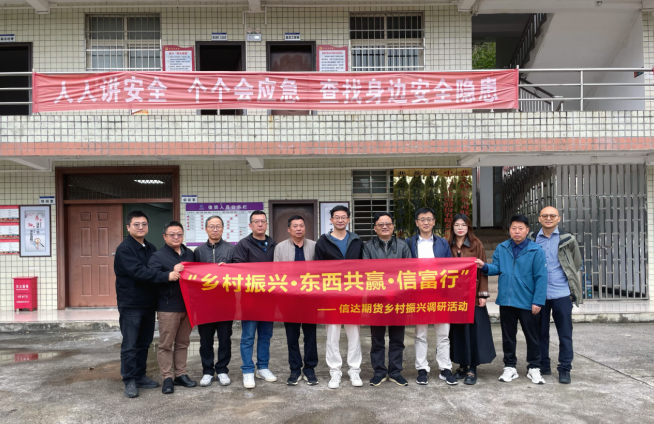
Core Insights - The article emphasizes the importance of grassroots research and practical work in ensuring the effective implementation of rural revitalization strategies in China [1][4] Group 1: Company Initiatives - Xinda Futures, a state-owned financial enterprise based in Hangzhou, Zhejiang Province, is committed to supporting national strategies and regional coordinated development [1] - On October 21, Xinda Futures conducted a practical and effective rural revitalization research and support activity in Puding County, Guizhou Province, with the support of China Cinda Asset Management Co., Ltd. [1][2] - The company aims to provide financial services and professional consulting to local pillar enterprises like Luoping Zinc and Electricity, helping stabilize industrial and supply chains [2][4] Group 2: Industry Insights - The mining industry is a key sector in Puding County, directly impacting local economic development and employment [2] - Xinda Futures highlighted the role of futures markets in price discovery, risk management, and resource allocation, emphasizing their importance for enterprises in managing market price fluctuations [2][3] - The company shared its recent achievements in supporting rural revitalization, showcasing its commitment to integrating futures market functions with local needs [4][8] Group 3: Local Government Collaboration - A meeting was held with local government officials to discuss Puding County's economic development and challenges in rural revitalization [4] - The county has implemented effective strategies such as "small cuts, big outputs" and initiatives for children's education, contributing positively to local development [4][5] - Xinda Futures expressed its intention to explore support in areas such as employment for women and children, and financial literacy [4][5] Group 4: Community Development - In Huachu Town, Xinda Futures engaged in discussions about local agricultural development and signed agreements for community support and environmental improvement [6] - The company aims to address challenges faced by local industries, such as unstable orders and insufficient processing equipment, through targeted support [6] - The signing of cooperation agreements marks a transition from research to project-based support for rural revitalization [6][8]
资金动态20251027
Qi Huo Ri Bao Wang· 2025-10-27 03:22
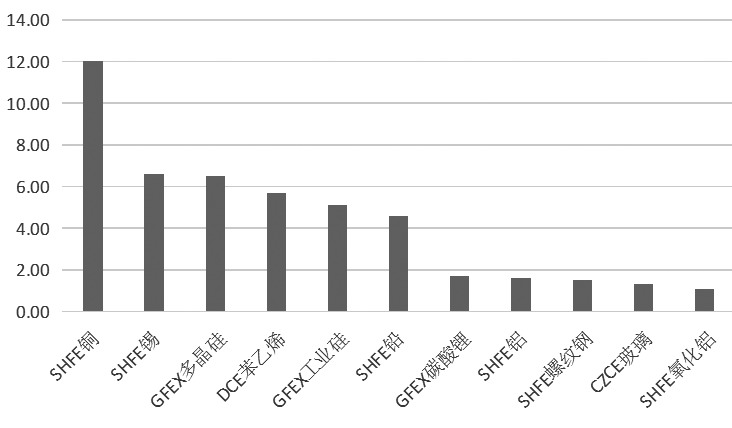
Core Insights - The article highlights significant inflows into commodity futures, particularly in copper, tin, polysilicon, styrene, and industrial silicon, with inflows of 1.202 billion, 0.661 billion, 0.652 billion, 0.568 billion, and 0.508 billion respectively [1] - Conversely, there were notable outflows in silver, gold, soybean meal, stainless steel, and rapeseed oil, with outflows of 0.220 billion, 0.146 billion, 0.096 billion, 0.095 billion, and 0.088 billion respectively [1] - Overall, the commodity futures market experienced a substantial inflow, particularly in non-ferrous metals, chemicals, and black metals, while agricultural products and financial sectors saw outflows [1] Inflow and Outflow Analysis - Major inflow commodities included copper, tin, polysilicon, styrene, rebar, and glass, indicating strong investor interest in these sectors [1] - Key outflow commodities included silver, gold, stainless steel, and PTA, suggesting a shift in investor sentiment away from these assets [1] - The agricultural sector saw significant outflows, particularly in soybean meal and rapeseed oil, while apples and live pigs experienced contrary inflows [1] Sector Focus - The non-ferrous metals, chemical, and black metal sectors are highlighted as areas of strong inflow, warranting further attention from investors [1] - The agricultural sector's outflows, especially in soybean meal and rapeseed oil, indicate potential risks or shifts in market dynamics [1] - The financial sector, particularly the CSI 1000 index futures and 30-year treasury futures, is noted for its importance in the current market landscape [1]
新型易货贸易助企业“破圈”
Qi Huo Ri Bao Wang· 2025-10-27 03:18
Core Insights - A new barter model centered on "goods for goods" is reshaping the business ecosystem in response to challenges like inventory backlog and cash flow issues [1][2] Group 1: New Barter Model - The "易得国际易货平台" (Yide International Barter Platform) allows patients to access medical services without cash, using barter credits as a payment medium, thus transforming medical services into digital assets [1] - The platform facilitates the exchange of a wide range of goods and services, from daily necessities to industrial products, through barter credits, effectively breaking down barriers between goods and services [1][2] Group 2: Government Support and Development Plans - The "14th Five-Year Business Development Plan" emphasizes the exploration of new barter trade models, with pilot programs initiated in regions like Shandong and Zhejiang [2] - The platform has expanded its reach, establishing transaction service centers in over 40 regions across 14 provinces, serving more than 70,000 enterprises, with a projected transaction value of 610 million yuan by mid-2025 [2] Group 3: Business Benefits and Economic Impact - Enterprises utilizing the Yide International Barter Platform report benefits such as inventory management, improved cash flow, reduced operational costs, and optimized resource allocation [3] - The platform is seen as a means to stimulate consumption and investment, fostering a positive interaction between supply and demand, and contributing to national economic strategies [3]
乡村振兴,金信在行动 | 以党建为笔,绘就公益温暖画卷
Qi Huo Ri Bao Wang· 2025-10-27 03:05
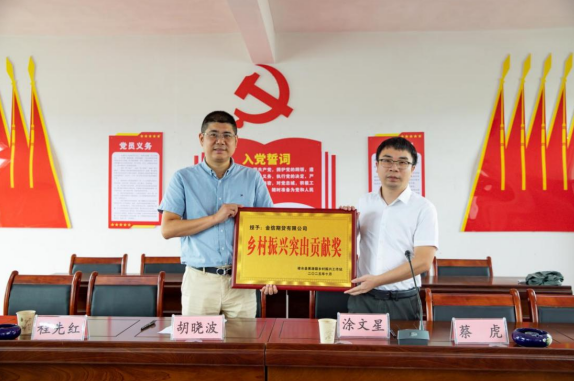
为深入贯彻落实国家乡村振兴战略,践行期货行业社会责任,10月16日,金信期货有限公司(以下简 称"金信期货")总经理胡晓波率队赴江西省九江市修水县黄港镇渎坑村开展乡村振兴项目实地考察,并 举行乡村振兴专项捐赠仪式及党建共建签约活动。此前金信期货已向渎坑村捐赠10万元专项资金,用于 支持当地生猪养殖产业发展,此次活动以党建引领推动政企协同,为乡村振兴注入新动能。 党建签约仪式现场 作为深耕期货领域三十年的老牌期货公司,金信期货始终将服务实体经济、助力共同富裕作为发展使 命。山乡秋意浓,携手启新程。从捐赠资金到党建共建,从产业扶持到长效机制,金信期货以"金融活 水"浇灌乡村振兴之花,用实际行动诠释了使命担当。未来,公司将继续发挥专业优势,携手地方政府 和村民,共同绘就产业兴、百姓富、生态美的乡村新画卷。 捐赠仪式现场 捐赠仪式上,胡晓波表示:"期货行业不仅服务于金融市场,更应成为乡村振兴的'助推器'。此次捐赠 是金信期货践行'金融向善'理念的缩影,未来将持续关注项目进展,确保资金用到实处,真正帮助村民 实现'家门口就业'和'可持续增收'。" 修水县作为著名的革命老区,中国工农革命军第一面军旗在这里设计、制作并率先 ...
国元期货“保险+期货”项目为遵义生猪产业筑起“安全垫”
Qi Huo Ri Bao Wang· 2025-10-27 02:56
Core Insights - The "Insurance + Futures" project in Zunyi, Guizhou, aims to support the local pig farming industry by covering over 1,500 tons of pigs, providing significant compensation to farming enterprises and establishing a price safety net for the industry [1][2] - Zunyi is a key area for pig farming in Guizhou, benefiting from favorable climate and resources, making the pig industry a cornerstone of the local agricultural economy [1] - The project targets leading farming enterprises with annual outputs exceeding 10,000 pigs, which play a crucial role in ensuring local pork supply and stabilizing the regional livestock industry [1] Industry Challenges - The pig farming sector faces "triple pressures," including an oversupply of pigs in 2024 leading to weak price fluctuations, high feed costs from corn and soybean meal, and increased disease prevention costs, resulting in some enterprises experiencing losses despite higher outputs [1] - There is an urgent need for enterprises to secure farming profits and move away from a passive reliance on market prices [1] Customized Solutions - The project was designed based on in-depth research into the operational characteristics of Zunyi's farming enterprises, ensuring stable income support even during price downturns [2] - The initiative has created a demonstration effect where larger enterprises lead smaller farmers, encouraging them to actively manage risks rather than passively endure them [2] Future Directions - The company aims to continue focusing on regional agricultural needs, optimizing options strategies, and shortening claims service cycles to enhance financial support for agriculture [2] - The "Insurance + Futures" model is becoming deeply integrated into the development of the pig industry in Southwest China, contributing to national food security and rural revitalization efforts [2]
第八届油商大会在浙江舟山举行 大宗产业联盟揭牌
Qi Huo Ri Bao Wang· 2025-10-27 02:36
Group 1 - The eighth Oil Merchants Conference was held in Zhoushan, Zhejiang from October 21 to 23, focusing on "Deepening Open Cooperation to Build a Green, Low-Carbon, and Sustainable Bulk Commodity Market" with 366 domestic and international companies participating [1] - Keynote speeches were delivered by representatives from renowned international companies such as Saudi Aramco, Vitol Group, BP, Honeywell, and S&P Global, discussing industry trends and opportunities in the Chinese market [1] - Representatives from the China Petroleum and Chemical Industry Federation and China Merchants Energy Shipping provided insights into the latest developments in the oil and gas and shipping sectors, aiding Chinese companies in expanding internationally and foreign companies entering the domestic market [1] Group 2 - The China (Zhejiang) Free Trade Zone Bulk Commodity Resource Allocation Hub Full Industry Chain Alliance was officially launched, with Chen Xin, Chairman of Material Zhongda Group, serving as the first president [2] - The alliance consists of over a hundred leading bulk commodity enterprises, industry associations, research institutions, and financial institutions, aiming to create a collaborative development system covering the entire industry chain of bulk commodities [2] - The initiative focuses on efficient integration of information, logistics, finance, and other resources, promoting the construction of a bulk commodity resource allocation hub in Zhejiang [2] Group 3 - A special meeting on "Financial Innovation and Spot-Futures Linkage" was held during the conference, where a report on the path to building an international bulk commodity trading center was released [3] - The Zhejiang International Bulk Commodity Trading Center signed cooperation agreements with industry partners, and several significant projects were signed during the conference, totaling approximately 64.36 billion yuan [3] - The establishment of the China Green Ship Repair International Certification Innovation Alliance and the unveiling of the International Bulk Commodity College at Zhejiang Ocean University also took place, alongside the release of the "Green Ship Fuel Development Zhoushan Declaration (2025)" [3]
“基差+点价”贸易助力中小企业高质量发展
Qi Huo Ri Bao Wang· 2025-10-27 02:36
Group A: Project Background - A company, located in Anhui Province, specializes in urea spot trading and has a downstream trading partner, B company, which signed a procurement agreement for 3,000 tons of urea to be delivered by May 2024 [1] - B company anticipates a price increase in the domestic urea market in May 2024 and plans to sign a "basis + spot price" procurement agreement with A company by the end of March 2024 [1] - A company aims to expand its business scale while being cautious about potential losses from unfavorable basis developments in Q2 2024 [1] Group B: Project Implementation Process - From April 2024, the urea futures market showed signs of stabilization, prompting A company to hedge part of its inventory based on market conditions [3] - B company completed the pricing of 3,000 tons of urea in early April 2024, purchasing in six batches at a favorable futures price [3] - A company also purchased 3,000 tons of urea in the spot market and executed a hedge of 150 contracts, achieving a reasonable overall profit despite low futures margins [3] Group C: Cost Reduction and Benefits - B company successfully reduced its procurement cost from over 2,200 yuan/ton to 1,984.89 yuan/ton by purchasing from A company in early April [4] - The "basis + spot price" model alleviated B company's liquidity pressure, allowing for flexible procurement without the hassle of traditional sourcing [5] - This model transformed absolute price volatility risks into relative changes in basis, stabilizing supply-demand expectations and business relationships [5] Group D: Effectiveness Evaluation - The basis trading model enables upstream and downstream enterprises in the bulk commodity sector to manage price volatility risks effectively, enhancing operational predictability [7] - The model has strong replicability and high social promotion value, benefiting the overall industry [7] - Futures companies can leverage this procurement method to better understand the spot market and tailor solutions to meet client needs, achieving a win-win situation [7]