Di Yi Cai Jing Zi Xun

Search documents
年轻人不可错过的三个投资机会
Di Yi Cai Jing Zi Xun· 2025-12-31 10:53
Core Insights - The event "2025 Annual Financial Thinkers Summit" highlighted macro trends, consumer behavior, and investment opportunities for 2026, featuring key speakers from various financial institutions [1] Group 1: Investment Trends - The rise of emotional value in consumer products, such as the Labubu doll, illustrates a shift towards narrative economics, where consumers pay for emotional connections rather than just production costs [2][3] - Future investment opportunities may lie in products that resonate with the emotional needs of the new generation, including virtual idols and immersive experiences in the metaverse [2] - The demand for emotional storytelling in products reflects a broader trend where young consumers seek meaningful connections through their purchases [3] Group 2: Asset Value and Stability - The concept of "trust anchors" in volatile markets emphasizes the need for assets with long-term value, such as gold, which serves as a hedge against economic instability [4][5] - Gold's current market price is nearing 1,000 yuan per gram, and its value is derived from its role as a universal collateral and safe haven rather than just price appreciation [5] - Real estate's value has shifted from a financial investment tool to a focus on living quality, emphasizing location and property quality in investment decisions [6] Group 3: Investment Strategies - Three key investment strategies are proposed: investing in personal development, addressing sustainable human development challenges, and focusing on compounding assets [7][8] - Investing in personal skills and knowledge is highlighted as a high-return strategy, especially for younger individuals facing job market changes [7] - Investments in sectors that solve real-world problems, such as renewable energy and biotechnology, are seen as stable growth opportunities [8]

国内品牌金饰单日克重价大跌超50元
Di Yi Cai Jing Zi Xun· 2025-12-31 10:20
Core Viewpoint - The trust of end consumers in the narrative of "gold as a store of value" is being tested due to recent fluctuations in gold prices and the pricing strategies of jewelry brands [2][4]. Group 1: Price Fluctuations and Consumer Behavior - On December 30, international gold prices closed at $4,340.13 per ounce, while domestic gold jewelry prices saw significant declines, with brands like Chow Tai Fook and Lao Feng Xiang dropping over 40 yuan per gram [2]. - In mid-December, brands such as Chow Tai Fook announced price increases of around 15% for their products, indicating a trend of rising prices prior to the recent drop [2]. - The volatility in international gold prices is increasingly impacting the trading dynamics of the gold jewelry market, with sales personnel often not fully disclosing the risks associated with price fluctuations [4]. Group 2: Consumer Sentiment and Market Dynamics - Consumers exhibit irrational behavior characterized by "buying high and selling low," driven by narratives of inflation resistance and risk aversion during price surges, leading to increased purchasing intentions [4]. - When prices decline, consumer sentiment shifts to a wait-and-see approach, resulting in behaviors such as order cancellations and delays in product pickup [4]. - The pricing mechanism of gold jewelry brands typically involves "raw material cost + processing fee + brand premium," leading to rapid price increases during gold price surges, while adjustments during price declines are more cautious due to inventory costs and consumer expectations [5]. Group 3: Trust Issues and Market Positioning - The price stickiness in the market can lead to consumers feeling "stuck" after purchasing at high prices, which undermines their trust in the narrative of gold as a reliable store of value [5]. - If brands continue to market gold jewelry as a value-preserving asset, a decline in gold prices could trigger a demand shrinkage and a crisis of trust among consumers [5].






十大首席经济学家展望2026:变局、挑战、突破
Di Yi Cai Jing Zi Xun· 2025-12-31 10:13
2025,全球经济在波动中寻求新的平衡。 2026,我们在挑战中寻找一些确定性。全球经济增长前景如何?中国经济有哪些新动向?美联储是否会 激进降息?中国货币政策如何继续适度宽松?财政政策怎样促进居民增收?黄金是否会续创新高?人民 币会继续升值吗?房地产市场风险能否出清?美股AI泡沫会被戳破吗?A股能否站稳4000点?科技股能 否持续带动市场? 行至岁末,挑战依旧。 带着这些问题,第一财经携手十位"年度机构首席经济学家",为你预测2026。 全球 中金公司首席经济学家、研究部负责人、中金研究院院长 第一财经:2026年全球经济增长前景如何,中国经济有哪些新动向? 彭文生:地缘竞争日益成为影响全球经济和市场的关注点,这既涉及传统的经贸,更包括人工智能等创 新领域的博弈。资源禀赋、规模经济、交易成本是国际贸易与全球产业链的三个决定因素。其中,资源 禀赋和传统理解的比较优势有关(劳动密集、资本密集、自然资源);交易成本包括运输成本、关税和 非关税保护主义措施等;对于美国关税的影响,中国的规模经济优势是一个重要因素。 在新的地缘形势下,以内部循环为主体、内外部循环相互促进的双循环呈现一些新的动向。内循环方 面,实体经济 ...

都怪特朗普!美元录得8年来最差年度走势
Di Yi Cai Jing Zi Xun· 2025-12-31 10:09
2025.12.31 本文字数:1767,阅读时长大约3分钟 2025年末,美元指数即将录得2017年以来最大的年度跌幅。 结合衍生品市场情况,市场预计,明年伴随美联储继续降息、特朗普干预美联储等因素,美元还将继续 走弱。 8年来最差年度走势 今年,衡量美元对一篮子主要货币的美元指数下跌9.5%,即将录得8年来最大年度跌幅。今年4月,美 国总统特朗普所谓的"对等关税"引发了投资者对美国经济和美元霸权地位、避险资产地位的担忧和质 疑。当时,美元指数一度下跌15%。欧元对美元汇率在主要货币中涨幅最大,年度飙升近14%,至1.17 美元以上,上一次欧元达到这一水平还是在2021年。 德意志银行的外汇研究全球主管萨瓦罗斯(George Saravelos)甚至表示:"这是美元与黄金脱钩、实施 自由浮动汇率的半个世纪多以来,美元表现最糟糕的一年。"在4月大幅下跌后,美元一度收复部分失 地,但美联储9月恢复降息,使其重新面临压力。 商品期货交易委员会(CFTC)的最新数据显示,12月9日开始,交易员就转而重新做空美元,为今年10 月以来首次做空。 期权定价也变得更加负面,期权交易员对美元的看跌程度达到三个月来最高水平。存 ...

YiwealthSMI|11月基金视频号高赞内容升级,深度解读受青睐
Di Yi Cai Jing Zi Xun· 2025-12-31 10:00
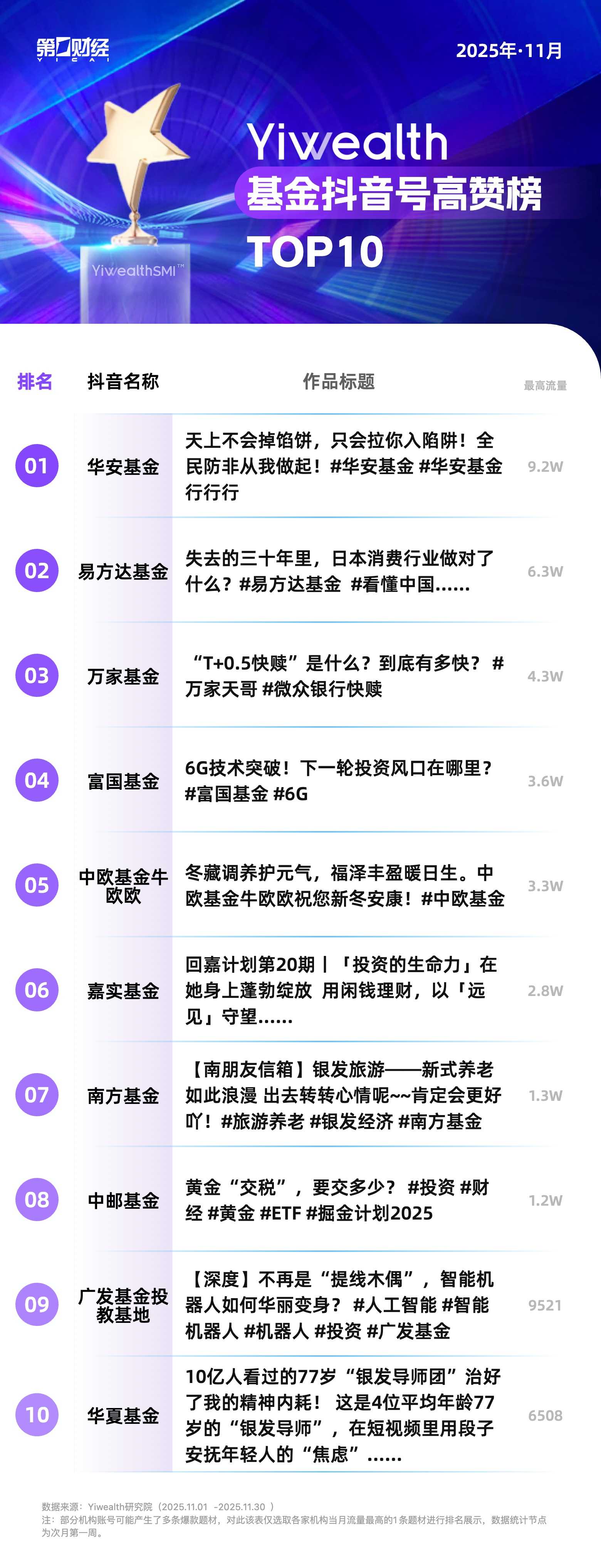
Group 1 - The top three fund companies in November are China Europe Fund, Huaxia Fund, and Fuguo Fund, with several companies like Xingzheng Global Fund and Morgan Fund making it to the top 20 list [1] - Notable educational content on Douyin includes anti-fraud warnings, practical financial knowledge, and industry hot topic analyses, which received significant user engagement [1] - Huaxia Fund's video on financial fraud received nearly 100,000 likes, while E Fund's analysis of Japan's "lost thirty years" garnered 63,000 likes, indicating a trend towards deeper, more professional content [1][6] Group 2 - The November high-view content on fund video accounts shows a trend towards lightweight, engaging formats focusing on industry insights and market outlooks [9] - The high-view live broadcasts on wealth accounts primarily revolve around market hot topics and asset allocation strategies, reflecting a consistent engagement pattern [11] - The public account rankings feature content mainly focused on promotional activities and product advertisements, highlighting a marketing-driven approach [13]
新版药品目录将于明日施行,新增“创新药”供给保障如何
Di Yi Cai Jing Zi Xun· 2025-12-31 09:21
Group 1: New Drug Listings - The new National Medical Insurance Drug List will add 114 drugs, including 50 innovative drugs, increasing the total to 3,253 drugs [1] - The Commercial Health Insurance Innovative Drug List will include 19 drugs, with 5 being CAR-T therapies [1] Group 2: Local Production Strategies - Companies like Innovent Biologics are optimistic about the market entry of their drug, "Tislelizumab," which is now covered by the national insurance [2] - Fosun Pharma has adopted different production strategies for its drugs, including "raw material reserves and flexible production" for "Luwomeitini" and a dual strategy of "short-term imports and long-term localization" for "Tianapano" [3] - Marubeni Pharma has localized production for its drugs, ensuring stable supply through hospital access and dual-channel pharmacies [3] Group 3: Accessibility Enhancements - Companies are adjusting inventory, pricing, and reimbursement information for new innovative drugs in line with national negotiation policies [4] - The "dual-channel" system allows patients to access drugs through designated medical institutions and retail pharmacies, ensuring quick prescription flow [4] - National Pharmaceutical Holdings is assisting drug companies in pricing and insurance coding for newly introduced innovative drugs in Shanghai [4] Group 4: Hospital Integration and Evaluation - Hospitals are considering various factors for integrating innovative drugs, including overall insurance funding and clinical efficacy assessments [5] - Shanghai Zhongshan Hospital is adopting a principle of "as much as possible" for including new innovative drugs in their formulary [5] - Research and monitoring of adverse reactions for newly added innovative drugs are being emphasized to ensure safety and efficacy in clinical settings [5]
Kimi杨植麟称公司有超100亿现金储备
Di Yi Cai Jing Zi Xun· 2025-12-31 09:20
记者|吕倩 编辑|瑜见 12月31日,月之暗面(Kimi)创始人、CEO杨植麟发布内部信,称公司有超100亿元人民币现金储备。 另有消息称,Kimi近期完成5亿美元C轮融资,IDG领投,阿里、腾讯、王慧文等老股东超额认购。截至 发稿,月之暗面方面暂未予以确认。 ...
今晚打车需求激增,洗浴跨年受追捧,KTV成消费“黑马”
Di Yi Cai Jing Zi Xun· 2025-12-31 09:20
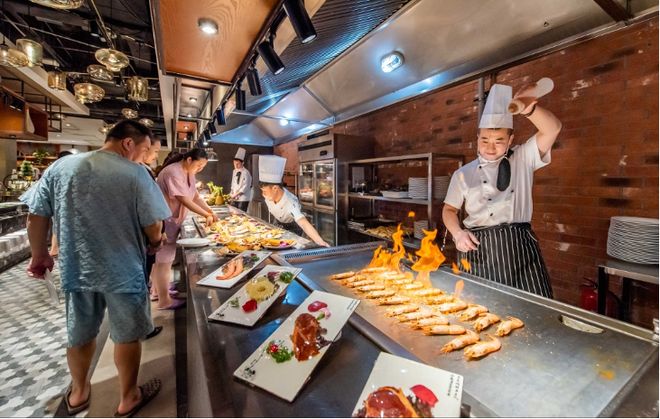
Group 1: Local Consumption Trends - The demand for local consumption and ride-hailing services is surging as the New Year holiday approaches, with Didi reporting an expected ride-hailing demand exceeding 80 million on December 31 [1] - The bathing industry is projected to experience significant growth in 2025, with search volume for keywords related to 24-hour bathing centers increasing over six times year-on-year in the week leading up to New Year [1] Group 2: Bathing Industry Insights - The general manager of Nanjing Jiuhua Hot Spring Life Hall anticipates a record high in customer flow and transaction volume during the New Year period, estimating a 40%-50% increase compared to the same period last year [3] - The core customer demographic for Jiuhua Hot Spring is primarily young individuals aged 18-35, making up over 60% of the clientele, with family customers steadily increasing to 25% [3] - The establishment has evolved from a traditional bathing service to a comprehensive urban micro-vacation destination, enhancing customer experience with amenities like free tea and gaming areas, resulting in an average stay of 10 hours [3] Group 3: KTV and Beauty Industry Performance - The KTV industry has emerged as a surprising performer during the New Year holiday, with transaction volume increasing nearly 30% year-on-year in the two weeks leading up to the holiday, particularly in Taiyuan and Changsha where growth exceeded 70% [4] - The 00s generation is the fastest-growing demographic in KTV transactions, with a year-on-year increase of over 57% [4] - The beauty industry has also seen a surge in activity, with nearly 200,000 beauty service providers on platforms experiencing close to 100% income growth year-on-year during the weekend before New Year [5] Group 4: Ride-Hailing Demand Surge - Midnight ride-hailing demand spiked as many opted to celebrate New Year outside, with Didi predicting an 11% year-on-year increase in ride requests in the half-hour leading up to midnight [5] - The demand for high-quality transportation services, such as Didi's premium and luxury car options, is expected to rise significantly, with increases of 226% and 188% respectively compared to the previous week [5]
上纬启元发布首款全身力控小尺寸人形机器人
Di Yi Cai Jing Zi Xun· 2025-12-31 08:29
12月31日下午,上纬新材旗下的机器人业务品牌上纬启元发布了全球首款全身力控小尺寸人形机器 人"上纬启元Q1"。 据了解,该机器人身高约80厘米左右,主要面向极客玩家、家庭以及科研教育等用户。 记者|乔心怡 编辑|瑜见 ...