
Zhong Guo Huan Jing Bao

Search documents
以系统治理打破“治污产污”困局
Zhong Guo Huan Jing Bao· 2025-12-31 07:28
Core Viewpoint - Pollution control has become a comprehensive effort across all production sectors, with goals such as "ultra-low emissions of flue gas," "near-zero discharge of wastewater," and "waste-free cities" being widely recognized, leading to a consensus on deep pollution treatment [1] Group 1: Challenges in Pollution Control - Deep pollution treatment can inadvertently generate secondary pollutants if not managed properly, leading to economic unsustainability [1] - Examples include excessive urea injection in coal-fired units causing ammonia escape and hazardous waste from retired catalysts, which significantly increase hazardous waste disposal costs for companies [1] - Overuse of desulfurization agents in waste incineration plants can increase fly ash volume and produce heavy metal-rich desulfurization gypsum and wastewater with excessive chloride ions, creating further industry challenges [1] Group 2: Systematic Governance Approach - Since the 18th National Congress of the Communist Party, China has shifted from addressing prominent ecological issues to a systematic governance approach, emphasizing both targeted and comprehensive solutions [1] - Pollution control has evolved to a systematic governance level, requiring coordinated management of gaseous, liquid, and solid pollutants while exploring low-cost sustainable deep treatment solutions [1] Group 3: Innovative Treatment Technologies - Technologies such as cyclone mixing flue gas treatment can achieve simultaneous removal of dust, sulfur, and nitrogen oxides, utilizing existing alkaline substances as desulfurization and denitrification agents, which is cost-effective and efficient [2] - The recent validation of transfer-type flue gas treatment technology in the waste incineration industry demonstrates its ability to transfer pollutants from flue gas to absorbent liquids, simplifying the treatment process and significantly reducing costs [2] - True depth in pollution treatment lies not in merely stacking technical solutions or increasing standard values, but in a holistic understanding of the treatment chain and optimizing material transformation for cost control and reliable environmental benefits [2]
给司机的一封信也要看看司机怎么想
Zhong Guo Huan Jing Bao· 2025-12-31 02:24
Core Viewpoint - The local ecological environment department's letter to transport companies and drivers aims to inform them about the need for compliance with vehicle emissions standards, but the tone and language used may lead to negative perceptions among drivers [1][2] Group 1: Purpose of the Letter - The letter is intended to notify truck drivers and transport companies about the importance of adhering to vehicle emissions standards, structured clearly and supported by legal provisions [1] - It acknowledges the contributions of truck drivers but predominantly uses warning language, which may create a sense of distrust and resentment among the recipients [1] Group 2: Recommendations for Improvement - To enhance the effectiveness of such communications, it is suggested that the writing style be improved by adopting a more empathetic tone that considers the drivers' perspectives [2] - The language could shift from prohibitive terms like "prohibited" to more constructive phrases such as "guidelines for proper operation" or "tips for vehicle maintenance" [2] - Introducing positive reinforcement, such as recognizing exemplary eco-friendly companies or drivers, could foster a sense of community and shared responsibility among stakeholders [2] Group 3: Importance of Communication Style - The effectiveness of a letter lies not only in its content but also in how it is communicated, emphasizing the need for emotional intelligence and wisdom in public communication [2] - A warm and engaging approach is more likely to be understood and acted upon than a cold administrative notice, highlighting the importance of tone in public messaging [2]
给企业写信是有效的生态环境执法帮扶方式
Zhong Guo Huan Jing Bao· 2025-12-31 01:16
给企业写信有利于促使企业更好落实生态环境保护主体责任。信是传递信息、表达情感、交流沟通的重 要载体。给企业的信在向企业传递执法帮扶力度的同时,能够深化生态环境部门与企业的情感交流,增 强企业对生态环境部门的信任度和认可度,让企业感受到执法帮扶是生态环境部门对本单位生态环境保 护和治理工作的关心和牵挂,引导企业自觉主动落实信中的内容。同时,还能够强化企业的生态环境意 识,激发企业治污攻坚内生动力,引导企业举一反三,加大生态环境问题隐患排查整治力度,规范生态 环境管理秩序,严格落实生态环境保护工作。 当然,生态环境部门要发挥好给企业写信的执法帮扶作用,还需要重点把握好写信的时机、信的质量、 信的格式、信送达给企业的方式等环节,并采取"线上+线下"方式,常态化收集、听取企业的意见建 议,不断完善相关工作,持续发挥好给企业写信的执法帮扶作用。 以信为载体,在生态环境部门与企业之间架起一座柔性执法帮扶的"连心桥",能够同步向企业传递执法 帮扶的力度和温度,引导企业按照信的内容与生态环境部门同频共振、同向发力、同题共答,推动执法 帮扶提质增效。 给企业写信有利于优化企业营商环境。通过信函告知企业相关生态环境政策法规标准, ...
美丽贵州建设步步高 “十五五”接续奋斗再出发
Zhong Guo Huan Jing Bao· 2025-12-31 00:56
Group 1 - The core viewpoint emphasizes the commitment of Guizhou Province to balance development and ecological protection, aiming to transform ecological advantages into developmental strengths during the "14th Five-Year Plan" period [1] - Guizhou has implemented a comprehensive pollution prevention and ecological restoration strategy, enhancing environmental monitoring and establishing a robust ecological protection framework [2][7] - The province has achieved significant improvements in environmental quality, with over 98% of air quality days rated as good and 100% compliance in major water sources [12][29] Group 2 - Guizhou's ecological initiatives have led to the establishment of national-level ecological civilization demonstration zones, showcasing successful practices in ecological protection and economic development [14][15] - The province has adopted innovative institutional reforms to enhance ecological governance, including the implementation of ecological compensation mechanisms and environmental damage liability systems [11][10] - Guizhou's green economy now accounts for 48.8% of its overall economy, reflecting the successful integration of ecological protection with economic growth [25] Group 3 - The "Three Water Coordination" strategy has been pivotal in restoring the ecological health of the Chishui River, a key tributary of the Yangtze River, through collaborative governance with neighboring provinces [27][28] - Legal frameworks have been established to regulate activities affecting the Chishui River, ensuring sustainable development and ecological protection [28] - Continuous monitoring has resulted in stable water quality improvements, with over 98% of surface water monitoring points meeting quality standards [29]


新年献词丨奋力推进美丽中国建设 绘就人与自然和谐共生新图景
Zhong Guo Huan Jing Bao· 2025-12-31 00:45
如月之恒,如日之升。走过激荡人心的2025年,迎来充满希望的2026年。站在"十五五"规划开局起步的 关键节点,回望美丽中国建设的铿锵足迹,一幅天更蓝、山更绿、水更清的生态画卷正徐徐铺展。这是 习近平总书记指引的前进方向,是亿万人民共同努力的奋斗成果,更是中国式现代化绿色底色的生动彰 显。 惟其艰巨,所以伟大;惟其艰巨,更显荣光。"十四五"以来,在以习近平同志为核心的党中央坚强领导 下,各地区各部门牢固树立和践行绿水青山就是金山银山的理念,持续深入打好污染防治攻坚战,推动 经济社会发展全面绿色转型,高质量发展的绿色底色更加鲜明。我国生态环境质量明显改善,绿色低碳 发展深入推进,生态系统质量稳步提升,生态文明体制改革成效显著,美丽中国建设迈出重大步伐, 为"十五五"时期实现新的突破奠定了坚实基础。 这些重大成就的取得,最根本在于以习近平同志为核心的党中央领航掌舵,在于习近平新时代中国特色 社会主义思想特别是习近平生态文明思想的科学指引。同时,也离不开各地区各部门的创新实践和勠力 攻坚,离不开全国生态环境系统上下团结一心和奋力拼搏。 闯关夺隘拓新局,正是扬帆搏浪时。2026年是"十五五"规划开局之年,也是中国式现 ...
实施新标准对重点行业和领域有哪些影响?丨《环境空气质量标准》与配套技术规范修订系列解读④
Zhong Guo Huan Jing Bao· 2025-12-30 23:28
Group 1: Air Quality Standards and Their Impact - The Ministry of Ecology and Environment is soliciting public opinions on the revised "Ambient Air Quality Standards" (GB 3095—2012) and related technical specifications [1] - The new standards aim to promote the construction of a new energy system in China, facilitating the safe and orderly replacement of fossil energy and the development of renewable energy sources [3][4] Group 2: Power Industry Developments - The installed capacity of wind power in China is projected to grow from 76 million kW in 2013 to 520 million kW by 2024, a 580% increase, while solar power capacity is expected to rise from 19 million kW to 890 million kW, a 4580% increase [2] - By the end of 2024, 96% of coal-fired power generation capacity will have completed ultra-low emission upgrades, significantly improving the cleanliness of coal power [2][3] Group 3: Steel Industry Transformation - The steel industry has eliminated 300 million tons of outdated capacity, with advanced equipment capacity significantly increasing, leading to a 25.4% reduction in PM2.5 concentration in ten major steel-producing cities from 2018 to 2024 [5][6] - The implementation of new air quality standards will drive the steel industry to adopt a reduction-focused development model, enhancing the competitiveness of high-quality enterprises [6][7] Group 4: Petrochemical Industry Progress - The petrochemical industry has seen a more than 20% reduction in major air pollutant emissions from 2017 to 2024, despite a 60% increase in crude oil processing capacity [9][10] - The new standards will accelerate the green and low-carbon transformation of the petrochemical industry, promoting comprehensive governance of emissions [10] Group 5: Automotive Industry Advancements - Since 2012, the implementation of air quality standards has led to a 90% reduction in nitrogen oxides and particulate matter emissions from vehicles, significantly enhancing the international competitiveness of China's automotive products [11][12] - In 2024, the sales of new energy vehicles reached 12.87 million units, with a market penetration rate of 40.9%, maintaining China's position as the global leader in this sector [11][12]
“七同七共”深化川渝跨界流域治理
Zhong Guo Huan Jing Bao· 2025-12-30 05:43
重庆市梁平区与四川省达州市相邻,铜钵河、新盛河两条拥有国控断面的河流紧密相依,因川渝两地行政管辖权属不同,且在资源分配、利益诉求上存在差 异,过去在流域治理工作上各自为政。近年来,梁平区认真贯彻《成渝地区双城经济圈建设规划纲要》,全面落实市委"一号工程",积极主动加强川渝毗邻 地区生态共建、环境共保,先后与毗邻地区签署了《梁平—开江新盛河水环境区域联动共治协议》《梁平—开江生态共建环境共保合作协议》等协议。经过 川渝两地共同努力,铜钵河上河坝、新盛河联盟桥两个国控断面水质年均值均达到或优于水环境功能区水质要求。 图为签订"七同七共"深化川渝跨界流域联防共治工作协议。 图为川渝开展联合执法。 图为治理后的铜钵河。 为构建"目标同向、措施一体、优势互补、互利共赢"的流域保护新格局,推动川渝毗邻地区生态环境保护走深走实,2025年11月28日,梁平区会同达州市达 川区、大竹县、开江县生态环境部门签订了《"七同七共"深化川渝跨界流域联防共治工作协议》,标志着川渝两地生态环境保护合作迈入系统性、机制化的 新阶段,为筑牢长江上游生态屏障注入强劲动力。 图为治理后的新盛河。 图为召开川渝跨界流域生态环境保护工作座谈会。 " ...
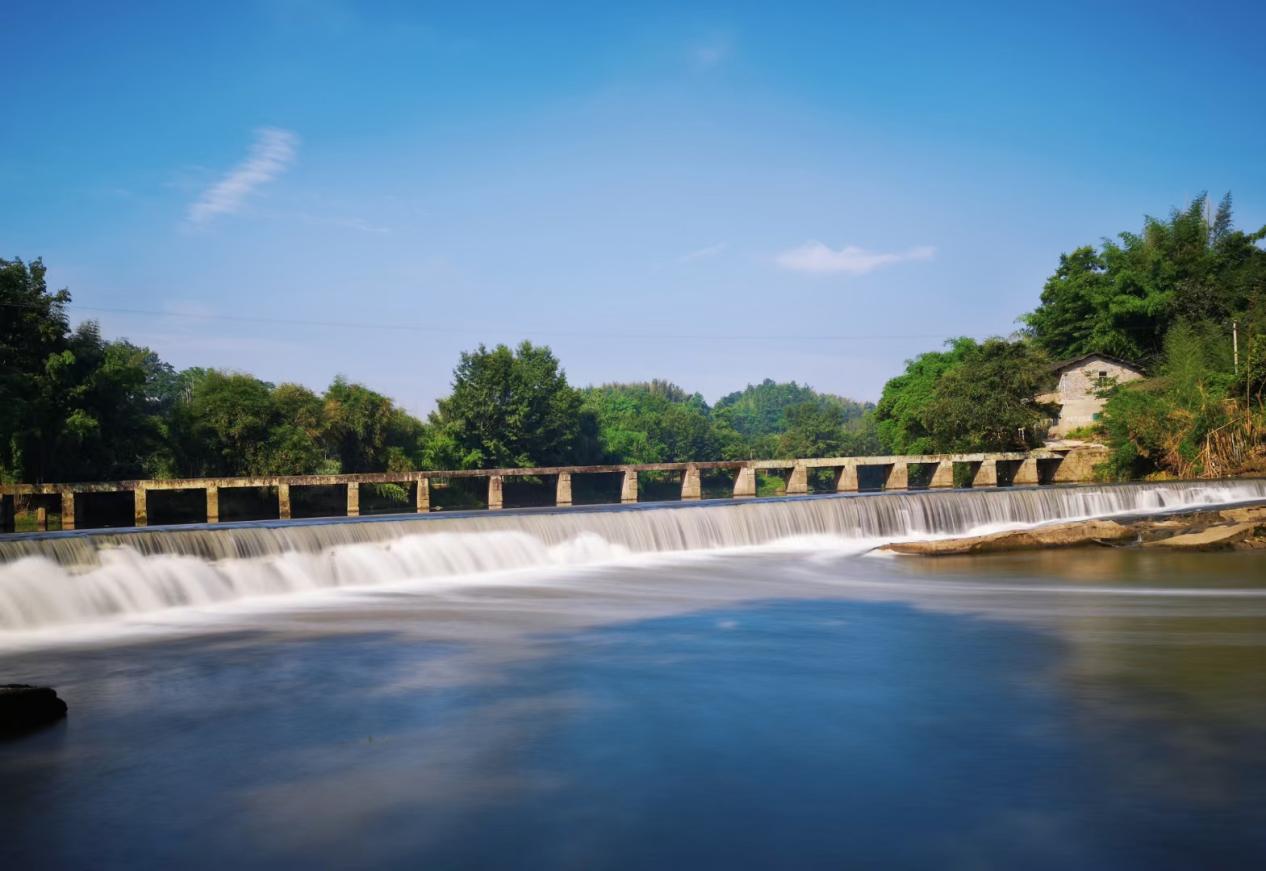
如何推动花卉产业将降碳投入转化为品牌溢价?
Zhong Guo Huan Jing Bao· 2025-12-30 01:54
Core Viewpoint - The green transformation of agriculture is crucial for ecological security, resource sustainability, rural revitalization, and achieving common prosperity, shifting from mere pollution control to a systematic change that balances ecological and economic benefits [1][2]. Group 1: Agricultural Low-Carbon Transition - The agricultural low-carbon transition is moving from pollution control to a high-quality development orientation, addressing issues like insufficient internal motivation and imperfect economic incentive mechanisms [2]. - High-value-added specialty agriculture has inherent advantages in this transition, focusing on quality, standards, and brand as core competitive elements [2]. Group 2: Yunnan Flower Industry - The Yunnan flower industry, as China's largest fresh-cut flower production base, plays a significant role in rural economies and has structural advantages for leading low-carbon transformation [3]. - The carbon emission structure of the flower industry is relatively concentrated, allowing for effective carbon footprint accounting and management [3]. Group 3: Carbon Footprint as a Key Link - Carbon footprint serves as a crucial link between low-carbon production and market premium, providing a clear and credible value transmission mechanism [4]. - Systematic accounting of carbon emissions throughout the product lifecycle enables measurable and comparable reductions, enhancing product differentiation and competitive advantage [4]. Group 4: Policy Recommendations for Low-Carbon Development - A systematic mechanism should be established to promote low-carbon development in the Yunnan flower industry, including a carbon footprint accounting system tailored to specialty agriculture [5]. - The role of leading enterprises is vital in extending low-carbon standards to production, reducing transformation costs for decentralized operators [5]. - Integrating low-carbon elements into regional public brand construction can solidify "green low-carbon" as a core identity of the Yunnan flower brand [5].
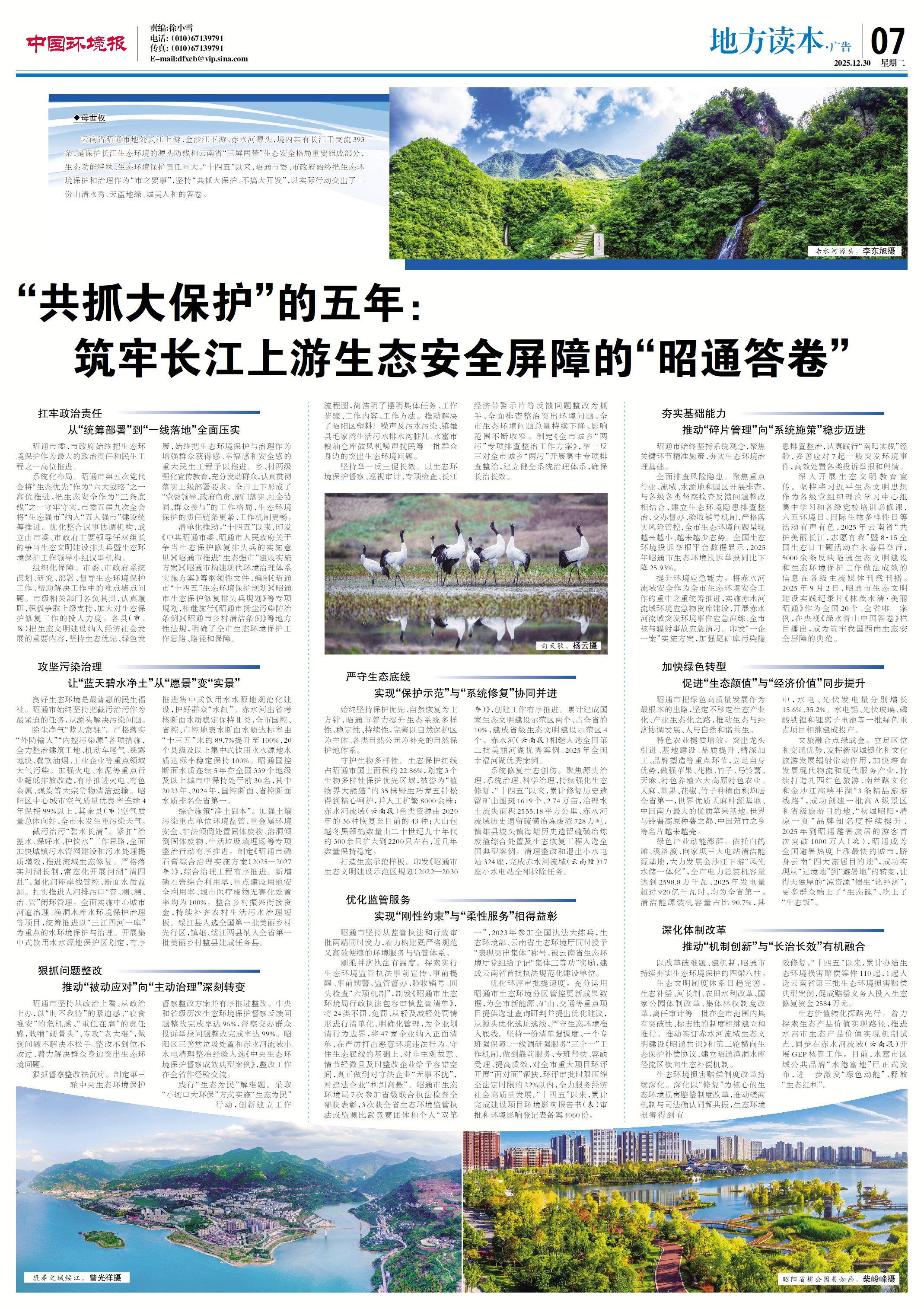
“共抓大保护”的五年:筑牢长江上游生态安全屏障的“昭通答卷”
Zhong Guo Huan Jing Bao· 2025-12-30 01:10
Core Viewpoint - The government of Zhaotong City, Yunnan Province, prioritizes ecological environment protection and governance as a key political responsibility and a major livelihood project, emphasizing "coordinated major protection, not major development" since the 14th Five-Year Plan [1][3][13]. Group 1: Political Responsibility and Organizational Structure - Zhaotong City has integrated ecological safety into its strategic framework, establishing it as one of the "three bottom lines" and a key component of the "six major strategies" [3][16]. - A leadership group for ecological civilization construction has been formed, co-chaired by the main leaders of the municipal party and government [3][16]. - The city has created a collaborative work structure involving party leadership, government responsibility, departmental implementation, social cooperation, and public participation [3][16]. Group 2: Policy Implementation and Regulatory Framework - Since the 14th Five-Year Plan, Zhaotong has issued several key documents and local regulations to clarify the ecological environment protection work, including the "Implementation Opinions on Striving to be a Leader in Ecological Protection and Restoration" [4][17]. - The city has developed specific plans for ecological environment protection and has implemented local laws such as the "Dust Pollution Prevention Regulations" and "Rural Cleanliness Regulations" [4][17]. Group 3: Pollution Control and Environmental Quality - Zhaotong has focused on pollution control, achieving a continuous air quality excellent rate of over 99% in the central urban area for four consecutive years, with no heavy pollution weather reported [8][18]. - The water quality of the red water river has maintained a stable Class II standard, with the surface water quality compliance rate increasing from 89.7% at the end of the 13th Five-Year Plan to 100% [21][20]. - The city has implemented comprehensive measures for soil pollution control, achieving a 100% rate for the safe utilization of key construction land and the harmless disposal of urban medical waste [21][22]. Group 4: Biodiversity and Ecological Restoration - Zhaotong has designated 22.86% of its land area as ecological protection red lines and has established three priority areas for biodiversity protection [26]. - The city has successfully increased the number of fish species in the red water river from 36 in 2020 to 43 currently, and the population of black-necked cranes has stabilized at around 2,200 [26]. - The city has restored 2.74 million acres of land affected by soil erosion and has completed the removal of 17 small hydropower stations in the red water river basin [26]. Group 5: Economic Development and Green Transformation - Zhaotong is committed to green high-quality development, focusing on ecological industrialization and the integration of ecology and economy [32]. - The city has become a leading area for highland characteristic agriculture, with significant production in apples, medicinal herbs, and bamboo [32]. - The total installed capacity of clean energy in Zhaotong has reached 25.988 million kilowatts, with a clean energy generation capacity accounting for 90.7% [32]. Group 6: Community Engagement and Education - The city has actively engaged in ecological civilization education, incorporating ecological concepts into various public activities and media [31]. - Zhaotong has launched initiatives to address local environmental issues, such as noise and wastewater pollution, through community involvement [22][31].
如何完善垃圾分类长效机制?浙江丽水这么做
Zhong Guo Huan Jing Bao· 2025-12-30 00:35
各地垃圾分类实施经验 自2015年启动垃圾分类工作以来,全国多地构建了垃圾分类治理体系,取得了较为显著的成效。但近 期,受财政紧张影响,浙江省丽水市部分地区停拨垃圾分类督导员经费、撤销一线指导岗位,致使"垃 圾一桶丢"现象回潮,造成治理成效下滑、设施浪费等不利影响。笔者认为,需梳理总结全国各地经验 并加以借鉴,抓紧构建垃圾分类长效机制。 构建多元经费保障体系。一是强化财政兜底。严格落实专项资金管理办法,将经费全额纳入市区两级财 政年度预算,按"每300户配备1名督导员"核定人员经费,优先保障核心小区及省级示范片区督导力量。 二是创新市场补充渠道。试点"差别化垃圾处理费"征收政策,对分类达标户减免10%—20%;引入社会 资本,通过智能设施广告投放、再生资源回收收益分成等补贴督导经费;在城乡接合部实行"居民适度 付费+政府精准补贴"。三是完善社会参与机制。推行"物业主力+志愿补充"模式,将物业督导履职与"以 奖代补"经费挂钩;扩大志愿者队伍,通过积分兑换降低人力成本。 健全全链条责任机制。一是构建四级联动统筹体系。完善市区垃圾分类工作领导小组,建立"每月调度 会+日常巡查+季度通报"制度;明确环卫中心、街道、社 ...