
Jin Shi Shu Ju

Search documents
美联储降息是市场“强心剂”?弱美元恐推翻华尔街经验
Jin Shi Shu Ju· 2025-09-17 07:41
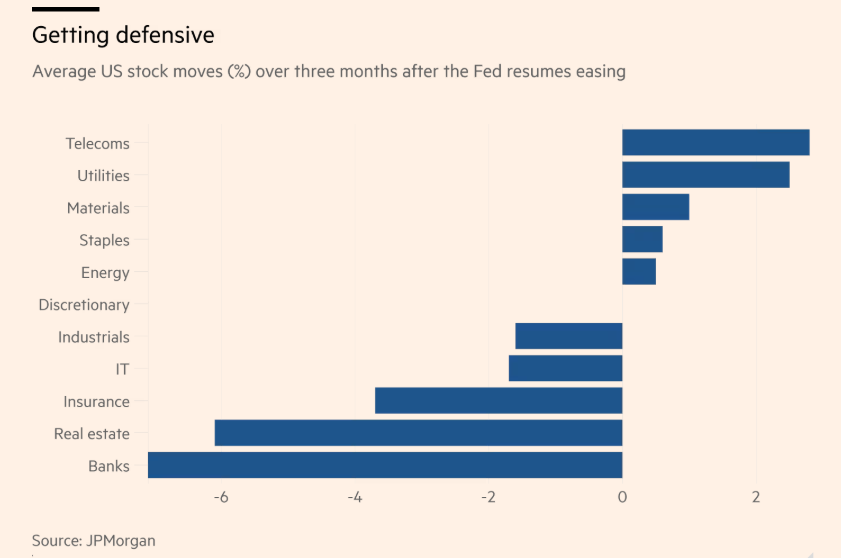
历史规律显示,当美联储在暂停数月后重启宽松并成功避免经济衰退时,标普500指数往往表现强劲。 即将到来的美联储降息让投资者翻出历史年鉴与投资箴言。那些经验表明,若宽松货币政策提振美国经济——正如美股与美债 的上涨所预示的那样——多数资产类别都将受益。不过,美元的疲软可能带来意外转折。 投资者确信美联储将于本周启动自去年12月以来的首次降息,幅度为25个基点。期货合约显示,市场预期未来六个月还将累计 降息约75个基点。股市已提前消化这一预期:标普500指数屡创新高,自7月下旬以来从未出现单周显著下跌。 美元兑以一篮子货币汇率自1月以来已贬值10%,主要受降息预期及美联储独立性风险拖累。许多分析师预计美元将进一步下 跌。 当前市场对美元疲软的担忧抑制了海外投资者的风险偏好。尽管人工智能(AI)相关股票仍受追捧,但美国银行指出,投资者 正转向"ABD"(Anything But the Dollar)交易策略,即规避美元资产,寻求其他货币或资产类别。 新兴市场可能成为主要受益者。若美联储降息支撑美国经济增长,新兴市场自身前景将改善,且它们也在同步降息。摩根大通 跟踪的21个新兴市场中,19个已开启宽松周期。对这些国 ...

美联储决议前瞻:降息大幕将启,鲍威尔将释放什么信号?
Jin Shi Shu Ju· 2025-09-17 07:15
美联储最新利率决定将于北京时间周四凌晨2:00公布,鲍威尔的新闻发布会将于凌晨2:30开始。 市场预计,美联储将降息25个基点,以支撑日益疲软的美国劳动力市场,这标志着政策转向——此前由 于担忧关税引发的通胀,美联储接连多个会议按兵不动。 这一政策转折发生在特朗普持续施压的背景下。他本周一直要求美联储进行"大幅降息"。政治戏剧性场 面也一度为本次政策会议谁将出席增添了悬念,不过在参议院确认了新任美联储理事米兰、法院的裁决 暂时允许库克留任后,阵容很可能已无变数。 除了这些"插曲"之外,投资者将密切关注主席鲍威尔的发言,并解析最新经济预测,以寻找未来几个月 利率路径的线索。 美联储观察人士预计,由于官员们在就业和通胀问题上存在分歧,他们不会承诺采取激进的降息步伐。 美国银行高级经济学家阿迪亚·博哈维(Aditya Bhave)表示:"除非劳动力市场出现持续恶化迹象,否 则每一次降息都会比前一次更困难。" 投票阵容与内部分歧 尽管央行的利率决定将是许多美联储观察人士关注的焦点,但围绕利率制定机构——联邦公开市场委员 会(FOMC)组成方面的异常情况,却在会议前主导了新闻头条。 特朗普的盟友米兰于当地时间周二上午宣 ...
美联储终于向政治压力低头?鲍威尔最好解释清楚
Jin Shi Shu Ju· 2025-09-17 06:56
对于北京时间周四凌晨美联储的利率决议,投资者的核心关注点将是"是否有政治压力影响美联储决策 过程"的迹象。 帕夫利克认为,当前美国经济并不需要降息,但他希望美联储本周启动降息——因为利率下调通常需要 时间才能传导至经济,这或有助于美国在明年避免经济放缓。 "现在就该着手应对,以免日后演变成更大问题,"帕夫利克说。但对于鲍威尔的新闻发布会,美联储的 独立性"将是核心焦点"。 市场对美联储政策前景的反应 据芝商所(CME)美联储观察工具(FedWatch Tool)显示,周二市场预期美联储今年将累计降息75个 基点,且其短期政策利率明年年底将降至2.75%-3%区间,较当前水平低150个基点。 会议前夕市场情绪紧张,尽管投资者对美联储在暂停近9个月后重启降息持欢迎态度,但标普500指数 (SPX)、道琼斯工业平均指数(DJIA)和纳斯达克综合指数(COMP)仍在历史高位附近震荡,难以 明确方向。 股市看涨逻辑包括:关税引发的通胀终将是一次性冲击、人工智能(AI)领域的巨额支出将支撑股市 持续走高,以及美联储将实现经济"软着陆"。 "通常情况下,当前局面下不该考虑降息,"法国巴黎银行(BNP Paribas)首席美 ...
美联储降息前夕,民主党急提法案剑指米兰双重任职争议!
Jin Shi Shu Ju· 2025-09-17 06:30
该法案由亚利桑那州参议员鲁本·加列戈(Ruben Gallego)提出,并有多名民主党参议员联署。法案将 禁止美联储官员同时担任另一项由总统任命的职务,即便该官员已从另一职位休假(如米兰从白宫经济 顾问委员会主席一职),也明确禁止这种双重任职行为。 白宫官员斯蒂芬·米兰(Stephen Miran)宣誓就任美联储理事数小时后,民主党人于周二在参议院提交 一项法案,旨在更明确地划分白宫与美联储之间的权力边界。 "不受政治异想天开影响的独立的美联储,是我国货币政策的基石,"加列戈在声明中表示,"米兰先生 已获得充分机会做正确的事——辞去白宫职务,但他拒绝了。" 该法案恐难成为法律,因其需在共和党控制的国会获得通过,并得到特朗普的签署。 周一晚间,米兰以48票赞成、47票反对的投票结果(投票基本按党派立场划分)获参议院确认,成为美 联储最新理事。随后他迅速宣誓就职,加入美东时间周二上午启动的美联储政策会议,预计在周三会议 结束时,美联储12人政策委员会将以多数票通过今年首次降息。 投资者热切关注,在这场市场普遍预期至少降息25个基点的会议上,米兰是否会支持特朗普提出的更大 幅度降息的要求。特朗普周一在社交媒体上发文 ...
谁将投下反对票?美联储9月会议票委立场一览
Jin Shi Shu Ju· 2025-09-17 03:04
看美联储,到 ( ) 金十数据 2025-09-17制图 美联储9月票委名单 终于定了 谁将投下反对票 ? 随着特朗普新提名的理事米兰正式登场,美联储9月会 降息节奏和力度的博弈。米兰的立场比所有人都更 次性降息50个基点。还有哪些官员可能反对降息25个 注:以下投票预测基于美联储官员近期表态作出,并不代表最终投票结果 大鸽派加入 | 只需分 ·米 哈佛大学经济学博士、特朗普第一任期担任财. 关键表态 ·将根据分析和对经济长期管理的 ·美联储的独立性对经济至关重要 ·美国商品通胀尚未偏离全球趋 支持降息50个基 9目投票预测 · 除非就业明显转弱,否则不需要降息超过25个基点 ·未来三到六个月将多次降息,降息速度取决于数据 支持降息25个基点 9月投票预测 美联储理事 关键表态 · 没有理由被解雇,也不会辞职 ·特朗普以涉嫌抵押贷款欺诈为由的解雇别有用心 9月投票预测 ) 支持降息25个基点或反对降息 具厂 /波士顿联储主席 关键表态 ·9月会议将实时决策,目前迈 ·劳动力市场可能正在恶化, 官 44 画家 鲍威尔 /美联储理事, 主席 37 E DS 真T 美键表态 美键表态 ·政策利率现在比一年前更加接近 ...

美银预警:黄金将成最大赢家,揭秘黄金25年不败纪录
Jin Shi Shu Ju· 2025-09-17 02:30
Core Viewpoint - Bank of America suggests that if the Federal Reserve lowers interest rates as expected, gold will emerge as the biggest winner, with a projected price of $4,000 per ounce by 2026 [1][2] Group 1: Economic Indicators - Despite an inflation rate of 2.9% in August, the Federal Reserve is preparing to lower funding costs [1] - Historical data shows that gold prices have never declined when the Federal Reserve loosens monetary policy amid inflation rates above 2% [1] - The annual return rate of gold during "inflationary easing" periods has averaged around 13% [1] Group 2: Market Predictions - Gold futures have already risen over 40% since the beginning of 2025, with prices surpassing $3,700 recently [1] - The demand for gold from central banks is strong, with reserves exceeding U.S. Treasury holdings [1] - The dollar has depreciated over 10% against a basket of major trading partner currencies since 2025 [1] Group 3: Investment Sentiment - There is a strong investment demand for gold, highlighting its appeal as a hedge and anchor in investment portfolios [1] - Market sentiment appears crowded, making gold susceptible to changes in Federal Reserve policy or market expectations [2] - The Bank of America team anticipates that the Federal Reserve will lower rates this week but warns that the path for future rate cuts may not be smooth [2] Group 4: Inflation Outlook - The preferred Personal Consumption Expenditures (PCE) inflation rate is expected to remain above 3% in the first half of next year, significantly higher than the 2% target [2] - This inflation backdrop may limit the extent and speed of future rate cuts by policymakers [2] - The Bank of America maintains that gold remains one of the strongest hedging tools against persistent inflation and policy missteps, with the $4,000 target unchanged [2]
金十数据全球财经早餐 | 2025年9月17日
Jin Shi Shu Ju· 2025-09-16 23:00
Economic Indicators - US retail sales for August increased by 0.6%, surpassing the forecast of 0.2% and the previous value of 0.5% [11] - The US dollar index fell to its lowest level in over 10 weeks, closing down 0.71% at 96.65 [2][5] - The yield on the benchmark 10-year US Treasury bond closed at 4.0350%, while the 2-year yield closed at 3.5120% [2] Commodity Markets - Spot gold first broke through $3700 per ounce, closing up 0.29% at $3689.46 per ounce [2][5] - WTI crude oil rose by 2.01%, closing at $64.54 per barrel, while Brent crude oil increased by 1.51%, closing at $68.50 per barrel [2][5] Stock Markets - US stock indices showed mixed results ahead of the Federal Reserve's interest rate decision, with the Dow Jones down 0.27%, S&P 500 down 0.13%, and Nasdaq down 0.07% [3] - The Hong Kong Hang Seng Index closed down 0.03% at 26438.51 points, while the Hang Seng Tech Index rose by 0.56% [3] - A-shares saw collective gains, with the Shanghai Composite Index up 0.04%, Shenzhen Component Index up 0.45%, and ChiNext Index up 0.68% [4] Sector Performance - In the Hong Kong market, the automotive parts and tourism sectors showed strong performance, while internet healthcare stocks declined [3] - In the A-share market, robotics stocks surged, with several stocks hitting the daily limit up, while the pork sector experienced significant adjustments [4]

美财长为米兰辩护:人事安排非常合规,传递的信号也很明确
Jin Shi Shu Ju· 2025-09-16 15:13
Group 1 - The U.S. Treasury Secretary defended a special arrangement for Milan, allowing him to temporarily leave his White House position while serving on the Federal Reserve Board [1] - The Senate approved Milan's nomination to the Federal Reserve Board, and he will participate in the upcoming Federal Open Market Committee (FOMC) meeting [1] - Analysts suggest that two other Fed governors, Bowman and Waller, may vote against maintaining interest rates in the upcoming September meeting due to weaker-than-expected labor market data [1] Group 2 - Democrats criticized the temporary leave arrangement as absurd and a threat to the independence of the Federal Reserve, especially following Trump's actions to dismiss a Fed governor [2] - Trump may nominate Milan for a full 14-year term in February, or he could choose another candidate [2] - If Trump does not select another candidate, Milan could potentially remain indefinitely [3] Group 3 - The Treasury Secretary had a positive meeting with potential candidate Brad for the Fed Chair position, highlighting his expertise in monetary policy and deep understanding of the Federal Reserve [3] - Brad expressed interest in the Fed Chair position, emphasizing the importance of defending the dollar's status as a reserve currency and maintaining low and stable inflation [3]
高盛警告:美股已至“金发姑娘情景巅峰”,当心买预期卖事实行情!
Jin Shi Shu Ju· 2025-09-16 14:00
Group 1 - The S&P 500 index reached a new all-time high, driven by market optimism that the Federal Reserve will implement a 25 basis point rate cut [1] - Investors expect the Fed to prefer a 25 basis point cut over a 50 basis point cut to retain future flexibility, as indicated by the phrase "the more bullets you fire, the faster you run out" [1] - Goldman Sachs referred to the current market situation as the "Goldilocks scenario peak," supported by Oracle's positive cloud revenue revision and a broader AI sector boost [1] Group 2 - The upcoming Federal Reserve meeting is expected to be tense, with Powell and Governor Cook facing accusations from the Trump administration, which may influence their decision-making [2] - Market volatility is anticipated following Powell's statements and Q&A session, with a focus on the Fed's updated macroeconomic forecasts and interest rate path [3] - The dollar has declined significantly, with a 0.87% drop in the past month and a 10.56% decrease year-to-date, attributed to expectations of rate cuts and actions by the Trump administration [3]

又想法子施压美联储,特朗普团队欲让“第三使命”重出江湖!
Jin Shi Shu Ju· 2025-09-16 13:41
Core Viewpoint - The recent nomination of Stephen Miran to the Federal Reserve has sparked discussions about a potential "third mandate" focusing on "moderate long-term interest rates," which could disrupt existing investment strategies and challenge the Fed's independence [1][2]. Group 1: Federal Reserve's Mandate - The Federal Reserve has traditionally operated under a "dual mandate" of price stability and full employment, a principle reiterated by past and current chairpersons [1]. - Miran's reference to a "third mandate" has raised concerns among market analysts about the implications for monetary policy and long-term interest rates [1][2]. - The concept of a "third mandate" is seen as a potential tool for the Trump administration to influence long-term Treasury yields, thereby undermining the Fed's historical independence [1][2]. Group 2: Market Reactions and Strategies - Analysts are cautious about the implications of a potential policy shift, with some investors already adjusting their strategies to account for possible government intervention in long-term rates [2][3]. - Strategies being discussed include the issuance of more short-term Treasuries and increased long-term Treasury buybacks, as well as the possibility of the Fed restarting quantitative easing (QE) [3][4]. - The expectation of government intervention has increased the risks associated with shorting long-term Treasuries, as any loss of Fed independence could lead to significant market disruptions [4]. Group 3: Historical Context and Comparisons - Historical precedents for government intervention in long-term rates include actions taken during World War II and the 2008 financial crisis, where the Fed employed various strategies to manage long-term yields [6]. - Current discussions around the "third mandate" are viewed as lacking justification, as the economy is not in a state of crisis that would typically warrant such measures [6][7]. - The ambiguity surrounding the definition of "moderate long-term interest rates" raises concerns about its potential use to justify various policy actions [7]. Group 4: Debt and Fiscal Implications - The U.S. national debt has reached $37.4 trillion, with rising government deficits necessitating lower interest rates to manage financing costs [8]. - The current fiscal strategy involves increasing short-term debt issuance while maintaining stable long-term debt levels, reflecting a shift in how the government approaches debt management [8]. - The administration's willingness to accept higher inflation in pursuit of lower long-term rates indicates a strategic pivot in fiscal policy [8].