Tai Mei Ti A P P

Search documents
全球手机市场半年考:美国忙囤货,华为重夺中国第一
Tai Mei Ti A P P· 2025-07-16 01:20
Group 1: Market Overview - The global smartphone market has shown signs of recovery after hitting a low point, with a slight increase in shipments in recent quarters, but the growth is now showing signs of fatigue, particularly in China [2][5] - According to IDC, global smartphone shipments reached 295.2 million units in Q2 2023, marking a 1% year-over-year increase, while Canalys reported a 1% decline, indicating a mixed outlook for the market [3][4] - The Chinese smartphone market experienced a 4% year-over-year decline in Q2 2023, dropping to 69 million units, primarily due to weakened consumer demand and the diminishing impact of government subsidies [5][8] Group 2: Brand Performance - Samsung, Apple, and Xiaomi remain the top three brands in the global smartphone market, with Samsung holding a 19.7% market share and experiencing a 7.9% year-over-year growth in shipments [4][3] - Huawei regained its position as the top brand in China, with a market share of 18.1%, despite a 3.4% decline in shipments year-over-year [8][7] - Vivo and Transsion ranked fourth and fifth, respectively, with Transsion experiencing a significant revenue drop of 25.45% and a nearly 70% decline in net profit [3][5] Group 3: Consumer Behavior and Economic Factors - The smartphone market is facing challenges due to economic uncertainties, inflation, and changing consumer spending habits, leading to a cautious approach among consumers [11][14] - There is a growing trend of manufacturers focusing on inventory clearance rather than increasing shipments, particularly in the Chinese market [5][6] - The anticipated impact of AI on consumer demand has not yet materialized, as consumers prioritize price and brand over advanced features [12][14] Group 4: Future Outlook - The global smartphone market is projected to grow by only 0.6% in 2025, reaching 1.24 billion units, reflecting ongoing economic challenges [14] - The introduction of foldable smartphones, particularly by Apple, may stimulate demand in the high-end segment, provided that pricing aligns with consumer expectations [14]




科股早知道:人形机器人运动科学联合实验室落地北京亦庄
Tai Mei Ti A P P· 2025-07-16 00:17
Group 1 - The first humanoid robot sports science joint laboratory has been established in Beijing Yizhuang through a strategic partnership between Beijing Humanoid Robot Innovation Center and Li Ning (China) Sports Goods Co., Ltd [2] - The humanoid robot industry in China is projected to reach a market size of 5.3 billion by 2025 and 38.7 billion by 2028, indicating significant growth potential [2] - The commercialization of humanoid robots is progressing, with multiple manufacturers launching mass production versions and some products already being utilized in factories, highlighting a trend towards practical applications [2] Group 2 - The 13th meeting of the China-Korea Joint Coordination Committee on nuclear fusion was held in Hefei, aiming to enhance cooperation in magnetic confinement nuclear fusion and advance the ITER project [3] - Continuous technological breakthroughs and policy implementations are expected to accelerate the engineering and commercialization processes of nuclear fusion technology, presenting investment opportunities across the entire nuclear fusion industry chain [3] Group 3 - Meta is set to invest several hundred billion dollars in artificial intelligence, with expectations to become the first to launch a 1GW+ supercluster laboratory [4] - The capital expenditure in AI data centers (AIDC) is primarily focused on power supply systems, which account for 69% of the value, followed by cooling systems at 18%, indicating a significant investment focus in these areas [4] Group 4 - CATL's subsidiary, CATL Intelligent, has signed a strategic cooperation agreement with T3 Mobility to jointly promote the development of Robotaxi based on CATL's Rock Solid skateboard chassis platform [5] - The skateboard chassis allows for high integration of modules including power, braking, steering, thermal management, and autonomous driving, which can significantly reduce development costs for automotive companies by 60%-70% [6] - CATL's position as a leading battery manufacturer, combined with its extensive downstream customer base, is expected to accelerate the penetration of CTC chassis in the market [6]




【钛晨报】中国经济下半年走势会如何?国家统计局最新发声;抖音加入酒旅大战、京东布局医美;萝卜快跑牵手Uber全球部署数千台无人驾驶汽车
Tai Mei Ti A P P· 2025-07-15 23:35
Economic Overview - China's GDP grew by 5.3% year-on-year in the first half of the year, an increase of 0.3 percentage points compared to the same period last year [2] - The unemployment rate remained stable, fluctuating between 5.0% and 5.4% throughout the year [2] - Consumer spending contributed 52% to economic growth, while capital formation contributed 16.8% and net exports contributed 31.2% [2] - The government is optimistic about consumer trends in the second half of the year, with policies aimed at boosting consumption being rolled out [2] Real Estate Market - The real estate market showed signs of stabilization, with improved transaction volumes and a narrowing decline in sales [3] - Despite ongoing declines in sales area and sales amount, the market is expected to undergo a bottoming process [3] - The government is focused on pushing for a recovery in the real estate market [3] Corporate Developments - Geely Automobile and Zeekr Technology have signed a merger agreement, with Geely acquiring all shares of Zeekr not already owned [4] - JD Health has opened its first self-operated medical beauty clinic in Beijing, with plans for a second location by September or October [5] - Pop Mart anticipates a revenue increase of no less than 200% and a profit increase of no less than 350% for the first half of the year [5] Strategic Partnerships - Roborock has partnered with Uber to deploy thousands of autonomous vehicles globally, starting in Asia and the Middle East [6] - Heng Rui Medicine plans to submit a new drug application for a dual-target weight loss drug following positive clinical trial results [7] Market Regulations - The State Administration for Market Regulation is intensifying efforts to regulate the live-streaming e-commerce industry to protect consumer rights [21] - New national standards for power banks are being developed to enhance safety and performance [17] Stock Market Insights - The Shanghai Composite Index has broken through a key resistance level, indicating a positive feedback loop of capital inflow and market growth [22] - The World Gold Council reported a 26% increase in gold prices in USD terms for the first half of 2025, driven by strong investment demand [23]





海外资产接连爆雷,日发精机溢价并购反噬难消
Tai Mei Ti A P P· 2025-07-15 11:59
Core Viewpoint - The company Rifa Precision Machinery (002520.SZ) is facing significant financial losses due to the operational crises of its overseas subsidiaries, leading to a projected net profit loss of 223 million to 333 million yuan for the first half of 2025, representing an increase in losses of 855.45% to 1323.55% year-on-year [1]. Group 1: Financial Performance - Rifa Precision Machinery's revenue has been declining since 2022, with a reported revenue of 1.804 billion yuan in 2024, down 13.4% year-on-year, and a net profit loss of 675 million yuan [3]. - Cumulatively, the company has incurred losses of approximately 3.108 billion yuan over the past three years [3]. Group 2: Overseas Subsidiaries Issues - The financial losses are primarily attributed to two overseas subsidiaries: Airwork and MCM. Airwork has been taken over by a syndicate due to ongoing operational losses, while MCM has initiated bankruptcy protection due to liquidity crises [1][2]. - Airwork's aircraft leasing business has significantly contracted, leading to a notable decline in revenue and profits compared to the previous year [1][2]. - MCM's financial situation has deteriorated, with its net assets turning negative by March 2025, amounting to -57.33 million yuan [2]. Group 3: Acquisition and Goodwill Impairment - The company has faced repercussions from high-premium acquisitions, particularly the acquisition of Airwork for 1.335 billion yuan, which resulted in a goodwill of 668 million yuan [4]. - MCM was acquired for a total of 1.104 million euros for 80% equity, leading to a goodwill of 26.256 million yuan, which has since been fully impaired due to continuous losses [5][6][7]. - The company has been involved in legal disputes regarding performance guarantees related to these acquisitions, with significant financial implications [5].

石头科技洗衣机裁员,“家电新势力“不行了?
Tai Mei Ti A P P· 2025-07-15 11:56
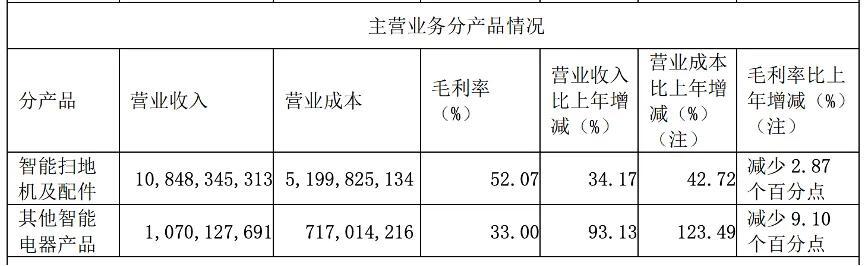
Core Viewpoint - The article discusses the recent challenges faced by Stone Technology in its washing machine division, highlighting the broader trend of home appliance companies diversifying into larger appliances and the potential difficulties they encounter in this transition [1][4]. Group 1: Company Developments - Stone Technology's washing machine division experienced significant layoffs, with over 70% of the staff affected, indicating a strategic retreat from this segment [1][4]. - The washing machine project was initially seen as a second growth curve for Stone Technology, which had invested three years into its development before launching its first model in 2023 [2][3]. - Despite the initial hype, sales from washing machines have not significantly contributed to overall revenue, with related products generating only 1.07 billion yuan in 2024, up from 550 million yuan in 2023, accounting for less than 10% of total sales [4][16]. Group 2: Market Context - The home appliance industry is witnessing new entrants like Chase and Bear, which are expanding from small appliances into larger categories such as refrigerators and washing machines [7]. - The competitive landscape is characterized by low barriers to entry and intense competition, with established players like Midea and Haier maintaining strong market positions due to their extensive distribution networks and brand recognition [13][14]. - Stone Technology's market share in the global smart vacuum cleaner segment remains strong, with a projected 16% share in 2024, but the company is increasingly reliant on overseas markets for growth, with international revenue surpassing domestic sales [15][17]. Group 3: Leadership and Strategic Direction - The founder of Stone Technology, Chang Jing, has been criticized for focusing on his automotive venture while the company's stock price has declined, leading to investor dissatisfaction [25]. - Chang Jing's recent stock sales, totaling approximately 888 million yuan, have raised concerns among investors about his commitment to Stone Technology during its strategic transition [25].

第一批AI硬件已经失败了
Tai Mei Ti A P P· 2025-07-15 11:25
Core Insights - The rise and fall of Humane's AI Pin highlights the challenges in the AI hardware sector, questioning the sustainability of the hype surrounding AI innovations [1][3][10] - The rapid decline of the AI Pin, from a highly anticipated product to a failed venture, reflects a broader trend of inflated valuations and unmet consumer expectations in the AI hardware market [2][4][6] Group 1: Product Launch and Initial Success - Humane's AI Pin was launched in April 2024, featuring innovative design and AI capabilities, leading to significant media attention and pre-sale success [1][4] - The company raised $230 million in funding, achieving a peak valuation of $850 million, attracting notable investors due to the founders' backgrounds at Apple [1][4][6] Group 2: Product Failures and Market Response - Following the launch, users reported critical issues such as poor battery life, overheating, low voice recognition accuracy, and ineffective outdoor projection [2][7] - By August 2024, the return rate for the AI Pin was alarmingly high, leading to a significant inventory backlog and ultimately resulting in the product's discontinuation [2][3] Group 3: Acquisition and Aftermath - In February 2025, Humane sold most of its assets to HP for $116 million, a stark contrast to its previous valuation, effectively marking the end of the company [2][3] - The acquisition was perceived as a move by HP to acquire Humane's patents and technology team rather than to continue the AI Pin product line [2][3] Group 4: Industry Implications and Future Outlook - The collapse of Humane serves as a cautionary tale for the AI hardware industry, prompting investors and consumers to reassess the viability of AI hardware promises [3][10] - The AI hardware market is entering a phase of "truth-seeking," with a focus on sustainable business models and proven technology rather than speculative hype [8][9][10]
对话哈啰Robotaxi首席科学家:进场第一步,打造无人出租车的聚合平台
Tai Mei Ti A P P· 2025-07-15 09:55
6月23日,哈啰宣布正式进军Robotaxi赛道。由哈啰、蚂蚁集团、宁德时代通过旗下投资主体共同发起 成立的"上海造父智能科技有限公司"在沪注册,公司注册资金12.88亿元人民币,将专注于L4级自动驾 驶技术研发、安全应用和商业化落地。 据介绍,新公司由上海云场企业管理咨询有限公司(蚂蚁集团)、上海钧哈网络科技有限公司(哈啰)、宁 波梅山保税港区问鼎投资有限公司(宁德时代)共同持股,三方首期合计出资超过30亿元。 "Robotaxi的黄金三角,包括车企、自动驾驶技术公司以及运营平台公司。哈啰作为一个出行平台,我 们希望利用出行和运维的优势,能够切入到这里面。" "在这一趋势下,哈啰进场的第一步是打造一个多层次可接入的运营平台,能够适配不同车企,以及 Robotaxi的技术合作伙伴。" Yolanda表示,基于该平台,哈啰可以和已经开展Robotaxi运营合作的伙伴,通过运力接入的方式,给乘 客提供一站式的Robotaxi用车体验。对于接入哈啰平台的公司,哈啰的线下运维体系,包括充换电、清 洁维护、停车场、维修点等资源也可以帮助合作方摊薄线下运维成本。 此外,哈啰也可以为Robotaxi公司提供底层地图的实时更 ...

德固特“蛇吞象”重组疑点:突击减持藏玄机,实控人退休年龄挑战高风险创业|并购一线
Tai Mei Ti A P P· 2025-07-15 09:02
Core Viewpoint - Degute's unexpected acquisition plan involves purchasing 100% of Haowei Cloud Computing Technology Co., Ltd., contrary to earlier market speculation of acquiring only a controlling stake of approximately 51% [2][3]. Group 1: Acquisition Details - The acquisition represents a significant cross-industry merger, with Degute being an environmental equipment provider for coal chemical and petrochemical enterprises, while Haowei is a cloud computing "unicorn" under Alibaba, with Haowei's revenue being seven times that of Degute [2]. - The transaction is viewed as a "backdoor listing" for Haowei, as the actual controller remains unchanged, and Degute claims it will successfully build a second growth curve for the company [3][4]. - Degute's financial strength is limited, with cash reserves of only 1.93 billion yuan, making the acquisition challenging. The payment will primarily be through issuing shares, cash payments, and raising matching funds [8]. Group 2: Shareholding Changes - Concurrently with the acquisition announcement, Degute's actual controller, Wei Zhenwen, plans to transfer 5% of his shares to Hangzhou Chenqi, raising speculation about his motives, especially since the acquisition will likely dilute his shareholding significantly [3][9]. - Following the share transfer, Wei's holding will decrease to 52.74%, allowing for potential further reductions in his stake, which could facilitate a smoother exit strategy for him [9][10]. Group 3: Haowei's Background - Haowei, originally a subsidiary of ZTE Corporation, was sold to Alibaba's capital in 2018 for 1.223 billion yuan, marking a significant shift in its ownership and operational strategy [4][5]. - Despite ambitions for an A-share listing and achieving a market value of 10 billion yuan within 3-5 years, Haowei has faced challenges, with its revenue fluctuating between 3.6 billion and 3.8 billion yuan in recent years [5][6].

刘靓:量化生命,AI+长寿科技助力百岁时代 | 钛资本医疗健康组
Tai Mei Ti A P P· 2025-07-15 08:15
Group 1 - The emergence of AI technology has created numerous opportunities, particularly in the field of life sciences, which has a long history of application [1] - AI is widely regarded as a tool for enhancing efficiency, especially in promoting human health and longevity [1] - The average life expectancy in Japan is 87 years for women and 81 years for men, while China's average life expectancy is approximately 74 years [2] Group 2 - The challenges to human life extension have shifted towards chronic diseases such as cardiovascular diseases, cancer, and neurodegenerative diseases [3] - There is a significant gap between average life expectancy and healthy life expectancy, with men experiencing an 8.8-year gap and women a 12-year gap [3] - The concept of "preventive medicine" is emphasized in both Western and Chinese medical practices, focusing on early intervention before disease onset [3] Group 3 - The goal of Medicine 3.0 is to extend healthy life expectancy to 90 or even 100 years through early detection and intervention of chronic diseases [4] - Research indicates that genetic factors account for only 15% of longevity, while 85% is determined by lifestyle choices [4] - The core of Medicine 3.0 is continuous health data monitoring and intervention, allowing individuals to manage their health proactively [4] Group 4 - Significant advancements in aging and longevity research have been made with the application of AI technology [5] - Aging markers have evolved from nine to twelve and are expected to expand further, revealing complex mechanisms of aging [5] - The identification of aging markers includes factors such as genomic instability and telomere shortening, which are critical in understanding aging [5] Group 5 - The anti-aging market faces challenges, including the lack of rigorous clinical validation for many products and therapies [18] - The global aging trend presents both challenges and opportunities for the health management industry, particularly in China [38] - Personalized interventions are essential for effective health management, utilizing regular health assessments and biological marker testing [40] Group 6 - The future of health management is expected to see breakthroughs through early detection and personalized interventions, potentially extending human lifespan to around 100 years [43] - The integration of AI technology in health management can facilitate the understanding and management of health by transforming complex scientific terms into accessible language [44] - The trend of quantifying health or life is gaining momentum, particularly in Silicon Valley, indicating a future direction for the industry [44]
华人工程师被疯抢,世界第一AI创业公司,走进覆灭前夜
Tai Mei Ti A P P· 2025-07-15 04:54
Core Viewpoint - OpenAI remains the leading AI startup globally but faces intense pressure from tech giants and uncertainty from Chinese tech companies, making it challenging to replicate the success of ChatGPT [1][31]. Group 1: Talent Acquisition and Competition - Elon Musk's xAI company has a significant presence of Chinese engineers, with nearly half of its founding team being Chinese, highlighting the growing influence of Chinese talent in the AI sector [2][4][10]. - Meta's aggressive talent acquisition strategy includes offering substantial compensation packages, with reports of a $300 million total compensation plan for top AI talent, including a $100 million first-year salary [5][6][10]. - OpenAI has experienced a significant talent drain, with at least eight core researchers leaving for Meta, indicating a shift in the competitive landscape [11][14]. Group 2: Internal Management Issues at OpenAI - OpenAI has faced internal turmoil, including a boardroom coup that temporarily ousted CEO Sam Altman, leading to employee unrest and a mass resignation threat [18][19][20]. - The company has struggled with management challenges, as evidenced by the turnover of key leadership positions, with only three of the original 13 founders remaining [22]. - OpenAI's shift from a non-profit to a profit-driven entity has created tension between its original ideals and the demands of the competitive market [23][24]. Group 3: Market Dynamics and Challenges - The emergence of open-source models like DeepSeek has intensified competition, challenging OpenAI's previously held market advantages [25][26]. - OpenAI's financial strategies, including significant stock-based compensation, have raised concerns about sustainability and investor returns, as compensation exceeded annual revenue [30]. - The ongoing battle for talent among major tech firms, including Google and Chinese companies, poses a significant threat to OpenAI's future prospects [27][28][29].