投资界

Search documents
商业航天投资人要上岸了
投资界· 2025-12-31 07:31
Group 1 - The core viewpoint of the article is that the commercial space industry is on the verge of a significant IPO wave, driven by recent regulatory changes that support the listing of commercial rocket companies on the Sci-Tech Innovation Board [2][3] - The Shanghai Stock Exchange has issued guidelines allowing high-quality commercial rocket companies without established revenue to go public, indicating a shift in the investment landscape for the commercial space sector [3] - Five commercial rocket companies, including Blue Arrow Aerospace and Tianbing Technology, are currently advancing their IPO processes, with expectations that the first commercial space stock will emerge soon [3][5] Group 2 - The article highlights the historical context of commercial space investment, noting that since the 2015 policy encouraging private capital in the space sector, numerous unicorns have emerged, but the long investment cycle has kept many investors waiting [7][9] - Blue Arrow Aerospace is noted as a leading candidate for IPO, having achieved significant milestones, including being the first private company to successfully launch a rocket into orbit using a self-developed liquid engine [6][11] - The article mentions that the commercial space sector is facing challenges such as high R&D costs and operational expenses, which could hinder growth despite the potential for significant market opportunities [10][11]


高瓴美团,投一个深圳团队
投资界· 2025-12-31 07:31
寻找下一个拓竹。 作者/杨文静 报道/投资界PEdaily 深 圳 南 山 大 学 城 附 近 , 电 梯 直 达 4 楼 , 映 入 眼 帘 的 是 一 个 约 1 0 0 平 米 的 展 厅 , 摆 满 了 各 色3D打印和激光雕刻作品。从展厅往里走,角落工位上是一位黑色短袖的男子,与暗 色背景融为一体。 投 资 界 见 到 了 S n a pma k e r 创 始 人 、 CEO 陈 学 栋 —— 腼 腆 、 沉 浸 、 桌 子 上 摆 放 着 各 种 研 发样品和打印模型。 这也是S n a pma k e r(快造科技)创始团队留给我们的粗略印象,跟脑海里的极客形象相 差无几。而形成反差的是,这个3D打印创业团队风头正劲,不久前完成由高瓴和美团 联合领投的数亿元B轮融资。 这一幕也成了深圳硬件创业火爆的最新写照。 一个3D打印团队爆红 "他是INTJ——建筑师人格,不善言辞,但知道自己想要什么,一旦确定就不会轻易妥 协。" S n a pma k e r联合创始人柯淑强聊起陈学栋。 陈学栋是柯淑强的泉州同乡,也是高中学长,两人均毕业于泉州七中。早在学生时代, 陈学栋就开始参加机器人竞赛,开始萌发创 ...

京东一年近300亿投向这里
投资界· 2025-12-31 07:31
Core Viewpoint - The article discusses the implementation of the "National Subsidy" policy for 2026, emphasizing the importance of optimizing fund allocation and preventing fraud in the "old-for-new" consumer goods exchange program [2][5]. Group 1: Policy Implementation - The National Development and Reform Commission and the Ministry of Finance have issued a notification for the 2026 "old-for-new" policy, focusing on systematic deployment and detailed implementation guidelines [2]. - The policy aims to enhance the efficiency of financial resources and ensure that subsidies reach consumers effectively, particularly in rural areas [5]. Group 2: Role of JD.com - JD.com has actively participated in the "old-for-new" initiatives, employing innovative subsidy models and enhancing online-offline collaboration to improve user experience and effectively utilize "National Subsidy" funds [2][3]. - The company has invested nearly 300 billion in 2025 to support the "National Subsidy" program in rural areas, focusing on product subsidies, technology development, and logistics [4]. Group 3: Risk Management and Technology - JD.com utilizes AI image detection, data verification, and location services to provide a comprehensive fulfillment and verification service for "National Subsidy" products, reducing risks of false claims and enhancing policy accessibility [3][4]. - The company has developed systematic capabilities in delivery, qualification verification, and risk control to ensure that subsidy funds are accurately and safely distributed to consumers [5].


首发|重庆固态电池黑马,又融4个亿
投资界· 2025-12-31 01:50
潜在独角兽。 作者/刘博 临近年末,一笔固态电池融资诞生。 投资界获悉,重庆太蓝新能源有限公司(下称"太蓝新能源")完成超4亿元B+轮融资。 本轮融资由两江基金、君安回天、交银投资、潜江零度共同参与,清科资本持续担任财 务顾问。 据悉,本轮资金将用于加快公司车规级固态电池产品产业化进程,加大固态电池关键技 术研发投入,推进公司首条全固态电池量产线建设,强化新阶段人才体系建设,持续巩 固公司在多场景、多维度固态电池应用的先发优势。 来自于重庆,太蓝新能源背后的掌舵者是一位海归博后——高翔。他早年曾在日本、美 国 深 造 多 年 , 怀 揣 科 技 报 国 的 想 法 , 2 0 1 8 年 回 国 创 立 太 蓝 新 能 源 , 一 路 崛 起 为 一 匹 固 态电池黑马。 崛起于重庆 海归博后带队 太蓝新能源的故事要从一位科学家说起。 高 翔 , 曾 在 中 国 科 学 院 上 海 硅 酸 盐 研 究 所 取 得 博 士 学 位 。 2 0 11 年 , 他 以 博 士 后 的 身 份 参 与 到 当 时 丰 田 汽 车 的 固 态 电 池 产 业 化 开 发 项 目 ;2 0 1 5 年 又 加 入 美 国 ...

今天,科创板第600个IPO诞生
投资界· 2025-12-30 03:06
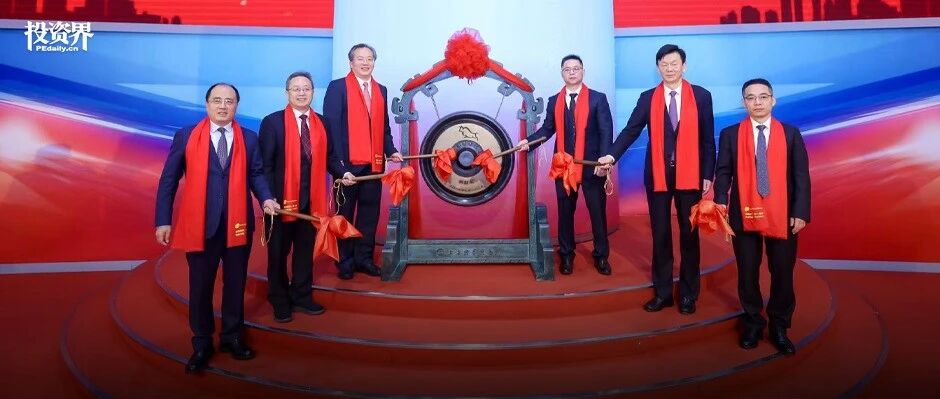
Core Viewpoint - The article highlights the successful IPO of Qiangyi Semiconductor, marking a significant milestone for the Sci-Tech Innovation Board and showcasing the potential of domestic semiconductor companies in China [2]. Group 1: Company Overview - Qiangyi Semiconductor officially listed on the Sci-Tech Innovation Board, becoming the first company in the semiconductor probe card sector and the 600th listed company on the board, with an opening price increase of over 200% and a market capitalization exceeding 33 billion [2]. - The company has achieved rapid growth, becoming the first in mainland China to possess independent design capabilities for vertical probe cards and has established a cleanroom facility with a hundred-level cleanliness standard [5]. Group 2: Investment Insights - Fengnian Capital was the first institutional investor in Qiangyi Semiconductor, investing during a time when the market was dominated by foreign companies, and has since seen returns close to three times its fund size from this investment [2][4]. - The investment from Fengnian Capital was crucial in supporting the core process validation, enabling Qiangyi Semiconductor to achieve stable mass production of 2D MEMS probe cards by the end of 2020 [5]. Group 3: Financial Performance - Qiangyi Semiconductor's revenue for 2022, 2023, and 2024 is projected to be 254 million, 354 million, and 641 million respectively, with a compound annual growth rate of 58.85% [9]. - The net profit for the same years is expected to be 15.62 million, 18.66 million, and 233 million respectively, with a forecasted profit of 355 million to 420 million for 2025, indicating a year-on-year growth of 52.30% to 80.18% [9]. Group 4: Market Potential - The global semiconductor probe card market is projected to reach 2.651 billion USD in 2024 and is expected to grow to 3.972 billion USD by 2029, indicating significant growth potential for Qiangyi Semiconductor [10]. - The company ranks ninth in the global semiconductor probe card industry in 2023 and is expected to rise to sixth place in 2024, marking it as the only domestic company to enter the top ten [9].
4位哈工大同学港股敲锣了
投资界· 2025-12-30 03:06
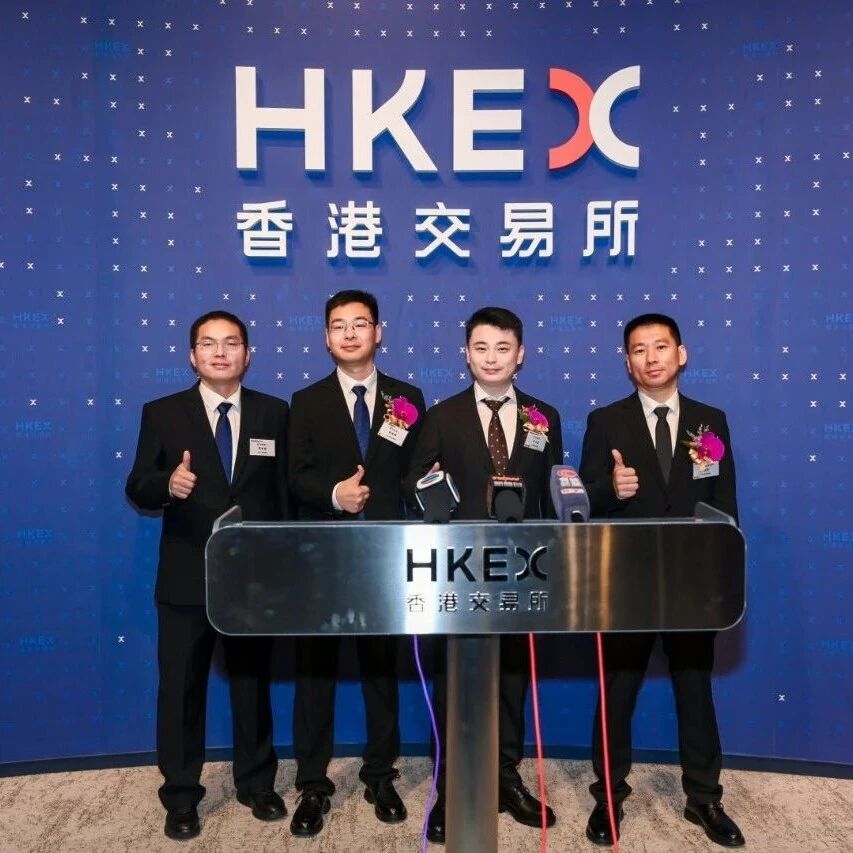
Core Viewpoint - The article highlights the successful IPO of Woan Robotics, marking it as the first publicly listed company focused on AI-driven household robots, showcasing the entrepreneurial journey of its founders from Harbin Institute of Technology to the Hong Kong Stock Exchange [2][3]. Company Background - Woan Robotics was founded in 2015 by a group of Harbin Institute of Technology alumni, including CEO Li Zhichen and CTO Pan Yang, after they participated in a design competition in Shenzhen in 2009 [5][6]. - The company aims to create a comprehensive ecosystem of household robots that can perform various tasks, emphasizing the need for robots to operate seamlessly in home environments without requiring significant modifications to existing setups [6][7]. Financial Performance - Woan Robotics has shown significant revenue growth, with revenues of RMB 274.6 million in 2022, projected to reach RMB 609.9 million in 2024, reflecting a compound annual growth rate of 49% [7][8]. - The company has also reported a reduction in losses, with a projected net loss of RMB 3.1 million for 2024, down from RMB 16.4 million in 2023 [8]. Market Strategy - The company has successfully expanded its market presence, exporting products to over 90 countries, with Japan and Europe being key markets [7][12]. - Woan Robotics has strategically invested in R&D, maintaining a research and development expense ratio of approximately 20%, to innovate and adapt its products for various international markets [13][14]. Investment and Growth - Woan Robotics has attracted a diverse group of investors, including Source Code Capital and Hillhouse Capital, and has completed multiple funding rounds since its inception [12][14]. - The company’s growth strategy includes replicating its successful market entry methods from Japan to other regions, focusing on building a sustainable business model that respects local market demands [13][16]. Industry Insights - The article discusses the broader context of hardware entrepreneurship in China, emphasizing the importance of internationalization from the outset to avoid "path dependency" and to better meet global market needs [15][16]. - Li Zhichen predicts that household robots will become the next major consumer technology after smartphones and cars, but emphasizes the need for clear role definitions among different types of robots in domestic settings [17].
退出大年来了
投资界· 2025-12-30 03:06
关关关关关注注注注注投投投投投资资资资资界界界界界视视视视视频频频频频号号号号号 做做做做做创创创创创投投投投投圈圈圈圈圈最最最最最靓靓靓靓靓的的的的的仔仔仔仔仔 ...
我去了一趟封关后的海南
投资界· 2025-12-30 03:06
Core Viewpoint - The article discusses the surge in consumer spending in Hainan following the implementation of a new duty-free policy, highlighting the significant interest in gold purchases and luxury goods among consumers [5][27][50]. Group 1: Consumer Behavior - The influx of consumers in Hainan has led to long queues at duty-free shops, with many eager to take advantage of discounts on gold and luxury items [5][7][27]. - The price of gold in Hainan's duty-free shops is significantly lower than in mainland stores, with a reported price of 1,194 yuan per gram compared to over 1,368 yuan in mainland stores, resulting in savings of over 160 yuan per gram [20][24]. - Many consumers are prioritizing gold purchases, with some stating that buying gold in Hainan is more cost-effective than traveling to Hong Kong for similar purchases [18][21]. Group 2: Economic Impact - Hainan's duty-free policy has transformed the region into a "consumer paradise," with sales in duty-free stores exceeding 100 million yuan in just four days [43]. - The article notes that the demand for luxury goods, including iPhones and designer items, has surged, with discounts on new iPhone models reaching over 2,000 yuan [30][36]. - The local economy is benefiting from this consumer spending, contributing significantly to Hainan's GDP [43]. Group 3: Investment Opportunities - Hainan is positioned as an attractive investment destination due to its low tax rates, with corporate income tax for eligible industries set at 15% compared to 25% in mainland China [50]. - The article mentions that high-end talent and critical personnel can benefit from tax exemptions, making Hainan appealing for businesses and individuals looking to relocate [50][62]. - Reports indicate that significant investments are being made in Hainan, with one company reportedly spending nearly 5 billion yuan on land acquisitions in the region [50].

毅达资本,今年收获11个IPO
投资界· 2025-12-29 09:34
Core Viewpoint - The article highlights the successful year for Yida Capital, showcasing its significant achievements in IPOs and investments in high-tech companies, emphasizing the importance of long-term investment strategies and regional focus [2][12][19]. Group 1: IPO Achievements - Yida Capital celebrated its 11th IPO in 2025, with notable companies such as Huaitong Technology and Xian Yicai successfully listed on various stock exchanges [5][6]. - The firm has returned 6 billion to LPs this year, marking a decade-long investment journey with companies like Jingchuang Electric [3][11]. - Xian Yicai's IPO in October reached a market value exceeding 1.6 trillion, demonstrating strong market support for innovative tech firms [6][7]. Group 2: Investment Strategy - Yida Capital's investment strategy is characterized by a dual focus on "industry depth" and "regional depth," allowing it to identify and nurture high-tech companies effectively [12][14]. - The firm has managed a total fund size of 120.9 billion, investing in over 1,068 projects, with 90% being small to medium-sized tech enterprises [12][14]. - The establishment of local teams and funds in Jiangsu has facilitated targeted investments, exemplified by the creation of four funds in Kunshan [16][14]. Group 3: Future Trends and Opportunities - Yida Capital identifies three key investment trends: technological self-reliance, the pervasive impact of AI across industries, and the ongoing consolidation in the economy [19][20]. - The firm aims to leverage its expertise in hard technology while exploring cutting-edge fields like quantum computing and controlled nuclear fusion [19][20]. - The focus is on nurturing innovative companies that can drive significant change, aligning with the broader national strategy for technological advancement [19][20].

AI实习生,最高月薪12w
投资界· 2025-12-29 09:34
Core Insights - The article highlights the significant increase in salaries for AI-related internships and short-term research positions, with monthly pay reaching approximately 14,000 RMB, equivalent to 7,000 - 18,000 USD, or about 49,000 - 126,000 RMB [1][2]. Group 1: Salary Trends - AI internships and research positions are now comparable to full-time research roles in terms of compensation [2]. - OpenAI's residency program offers a monthly salary of about 18,300 USD (approximately 128,000 RMB) for a six-month term, with potential for full-time employment afterward [3]. - Anthropic's AI Safety Fellow program provides a weekly stipend of 3,850 USD (around 27,000 RMB) and monthly access to computational resources valued at 15,000 USD (approximately 105,000 RMB) [4]. - Google's Student Researcher program offers annual salaries ranging from 113,000 to 150,000 USD (approximately 790,000 to 1,050,000 RMB), targeting PhD students [5]. - Meta's Research Scientist Intern program has a monthly salary between 7,650 and 12,000 USD, indicating a significant rise in compensation for top interns [6]. Group 2: Domestic Market Trends - The trend of rising salaries is not limited to international companies; domestic firms are also increasing compensation and expanding internship programs [7][10]. - ByteDance recently awarded scholarships to 20 PhD students, doubling the amount to 1 million RMB in cash and academic funding, indicating a commitment to attracting top talent [8]. - Tencent plans to add 28,000 internship positions over three years, with a focus on technical roles, reflecting the growing demand for AI talent [10]. - Alibaba Cloud and Baidu are also expanding their internship programs, with a significant focus on AI-related positions [10][11]. Group 3: Talent Acquisition Strategies - Companies are seeking candidates with verifiable research output capabilities, emphasizing the importance of producing publicly valuable research during short-term projects [12]. - There is a focus on candidates who can independently tackle long-term, complex problems, with many projects designed to assess candidates' performance in high-intensity environments [13]. - The short-term projects serve as a mechanism for companies to identify and cultivate future core researchers or technical leaders, positioning interns as "top-tier futures" [13][14].