远川研究所

Search documents
手机市场进入整活时代
远川研究所· 2025-10-29 13:12
Core Viewpoint - The article discusses the competitive landscape in the smartphone industry, highlighting how companies are innovating in product design and technology integration to maintain market share and profitability amidst stagnating growth [5][10][17]. Group 1: Product Innovations - Xiaomi's 17 series and its unique back screen design sparked mixed reactions on social media, indicating a trend of creative product features among smartphone manufacturers [5][10]. - Realme's GT8 series introduced modular camera designs, showcasing the industry's push for aesthetic and functional differentiation [6][11]. - Honor's concept of the robot phone, which integrates a mechanical arm gimbal, represents a bold innovation, although it remains in the conceptual stage with plans for mass production next year [7][9]. Group 2: Market Dynamics - The smartphone market is experiencing intense competition, leading manufacturers to explore innovative product designs as a means to create new premium pricing opportunities [10][17]. - Companies are increasingly focusing on vertical integration and self-research capabilities to gain control over core components, aiming to differentiate their products in a saturated market [18][19]. Group 3: Supply Chain and Technology Integration - The article emphasizes the shift from horizontal division of labor to vertical integration in the smartphone industry, driven by the need for manufacturers to reclaim "definition rights" over their products [26][32]. - Apple has been a leader in this trend, developing its own components like the C1 5G baseband chip and Wi-Fi chip N1, which significantly increases the proportion of self-developed parts in its products [16][33]. - The competitive landscape has forced companies to enhance their technological capabilities and redefine their relationships with suppliers, as seen in Apple's strategic moves to reduce reliance on external suppliers like Qualcomm and Sony [28][33].



躲过了施华洛世奇,没躲过潮宏基
远川研究所· 2025-10-28 13:08
Core Viewpoint - The article discusses the rise of "small weight gold jewelry" as a new trend in the jewelry market, particularly focusing on the company Chao Hong Ji, which has successfully capitalized on this trend to increase its market share and profitability. Group 1: Company Overview - Chao Hong Ji was founded in 1997 by Liao Chuang Bin and his father, initially focusing on gold processing and later establishing a brand that symbolizes the prosperity of the Chaoshan region [10]. - The company initially followed a Swarovski-like model, emphasizing high-margin fashion jewelry, but faced challenges from competitors and market shifts [12][18]. - In 2023, Chao Hong Ji pivoted to "small weight gold," which significantly increased its revenue from classic gold products from 20.24% in 2020 to 44.6% in the first half of 2023 [15]. Group 2: Market Dynamics - The jewelry market is characterized by low profit margins for traditional gold sales, with most gold retailers having gross margins below 10% [18]. - The introduction of small weight gold jewelry allows for lower price points, making gold more accessible to younger consumers with limited budgets [9][30]. - The small weight gold jewelry strategy blurs the cost structure of gold, allowing for higher profit margins by incorporating design and emotional value into the products [21][30]. Group 3: Consumer Behavior - The small weight gold jewelry appeals to consumers by lowering the purchase threshold, making it easier for them to buy gold as a gift or for personal use without significant financial pain [30]. - Chao Hong Ji's marketing strategy includes leveraging IP collaborations to create new pricing opportunities, enhancing the perceived value of their products [31]. - The company has also introduced services like free stringing for gold beads, which increases customer retention and reinforces the product's consumer-oriented attributes [35].


后外卖大战时代:创伤、修复与重建
远川研究所· 2025-10-27 13:04
Core Insights - The recent food delivery war has led to a significant decline in the restaurant industry's profitability, with 75% of new orders priced below 15 yuan, primarily in beverages, and in-store dining prices dropping to levels seen a decade ago [1][6] - The intense competition has resulted in a false sense of prosperity, with platforms heavily subsidizing orders, ultimately harming the industry and leading to a stagnation in revenue growth [1][5] Group 1: Industry Impact - The food delivery platforms collectively spent at least 300 billion yuan in the second quarter of this year, which is a conservative estimate, as the actual figure may be higher [6] - Major platforms like JD and Meituan reported significant profit declines, with JD's net profit down 50.8% and Meituan's down 89%, while marketing expenses surged [6][10] - The market has seen a split where delivery orders surged by four times, but in-store dining has drastically declined, indicating a shift in consumer behavior [7][10] Group 2: Market Dynamics - The food delivery market is characterized by limited growth potential, as consumer demand is primarily driven by necessity rather than financial incentives, leading to resource wastage [9] - The intense price competition has forced restaurants into a dilemma of choosing between maintaining order volume or preserving profit margins, with many small businesses unable to cope [9][10] - The oversaturation of the market has led to a significant increase in the closure rate of restaurants, with a projected 40% turnover in 2024 [21][24] Group 3: Future Outlook - The industry is now at a critical juncture where it must find a path back to sustainable growth, moving away from price wars and focusing on quality and service innovation [14][19] - Platforms are beginning to adjust their strategies, with a shift towards supporting quality merchants and reducing unnecessary competition [19][22] - The recent announcement of additional subsidies by Meituan aims to help quality merchants stabilize their operations and recover from the impacts of the price war [24][26]



不确定时代的“上海韧性”
远川研究所· 2025-10-26 13:08
Core Viewpoint - The article emphasizes Shanghai's resilience and strategic vision in navigating the challenges of globalization and technological advancement, particularly in the semiconductor industry and service consumption sector [4][6][19]. Group 1: Shanghai's Economic Transformation - Shanghai has evolved into China's largest financial center and the world's busiest port, contributing significantly to national fiscal revenue despite having only 0.06% of the country's land and less than 2% of its population [3]. - The city has shown remarkable growth in key industries, with manufacturing output increasing by 8.5% year-on-year, and specific sectors like integrated circuits and artificial intelligence growing by 11.3% and 12.8% respectively [19]. - Shanghai's strategic focus on high-tech industries, particularly in semiconductors, has been a long-term commitment dating back to 1998, showcasing the city's ambition and foresight [12][16]. Group 2: Innovation and Ambition - The concept of "ambition level," introduced by industry expert Lu Feng, highlights the importance of long-term vision and strategic decision-making in driving innovation, especially in complex industries like semiconductors [10][11]. - Shanghai's commitment to the semiconductor industry has led to the establishment of the Zhangjiang Microelectronics Development Zone, which has become a hub for chip production, housing half of the nation's chip capabilities [15][19]. - The success story of Cambrian, a chip company that pivoted from being a technology licensor to a smart computing system provider, illustrates the resilience and adaptability of Shanghai's tech ecosystem [18]. Group 3: Service Consumption Shift - Shanghai is transitioning from a focus on goods consumption to a service-oriented economy, with service consumption contributing nearly 60% to total retail sales, significantly outpacing goods retail [23][26]. - The city has seen a remarkable increase in per capita service consumption expenditure, which is double that of Chongqing, indicating a shift in consumer behavior towards service experiences [23][26]. - Events like the Egyptian exhibition at the Shanghai Museum have demonstrated the potential of cultural service consumption, attracting millions of visitors and showcasing the city's ability to innovate in the service sector [25]. Group 4: Resilience and Cultural Identity - Shanghai's resilience as a global metropolis is attributed to its robust industrial foundation and the harmonious coexistence of financial capital with industrial and agricultural advancements [30][31]. - The city's ability to maintain high agricultural productivity while being a major urban center reflects its unique economic structure, which combines industry and culture [31]. - The article concludes that Shanghai's future success will depend on its capacity to adapt and innovate in response to changing global dynamics, emphasizing the importance of both industrial and cultural development [28][31].

公考机构,玩不起了
远川研究所· 2025-10-26 13:08
Core Viewpoint - The article discusses the challenges faced by Zhonggong Education, highlighting its declining revenue and increasing refund liabilities due to its "agreement class" model, which has led to significant financial strain and legal issues [2][4][9]. Group 1: Company Performance - Zhonggong Education's revenue has decreased from 6.9 billion in 2021 to 2.6 billion in 2024, with a cumulative loss of 3.68 billion over the past years [2][4]. - The company reported a cash balance of 177 million, while the pending refunds reached 482 million, indicating a severe liquidity crisis [4]. - The "agreement class" model, which once accounted for 75% of the company's revenue, now contributes to 82% of its legal disputes [4][9]. Group 2: Refund Issues - A recent incident highlighted the difficulties in refunding students, with one student facing a 17-year repayment plan for a failed exam [6][8]. - The refund process has become so problematic that it has attracted attention from scammers posing as customer service representatives [8]. - The overall refund rate reached 68.46% in 2021, with only 20%-30% of students passing the written exams, leading to increased financial liabilities for the company [12][16]. Group 3: Market Dynamics - The competition in the civil service exam training market has intensified, with the number of applicants nearly doubling from 2021 to 2024, while the acceptance rate dropped from 1.6% to 1.3% [12][14]. - New entrants in the market have introduced aggressive refund policies, further complicating Zhonggong Education's position [22][23]. - The company has begun downsizing, reducing its workforce from 45,000 to 7,888 and cutting the number of direct branches from 1,669 to 681 [23]. Group 4: Strategic Shifts - Zhonggong Education is attempting to pivot towards employment services, claiming it will be a valuable market in the next decade [23][25]. - The company has also ventured into new business areas, including hardware and live streaming, although these efforts have yet to yield significant revenue [23][25]. - Despite these efforts, the revenue from new ventures remains below 3% of total income, indicating challenges in successfully diversifying its business model [25].


中国游戏,找到快乐的国际通用公式
远川研究所· 2025-10-23 13:05
Core Viewpoint - The article highlights the significant growth and global success of Chinese mobile game developers, particularly focusing on companies like Lemon Microfun and their strategies for international expansion, showcasing the industry's evolution and potential for future opportunities [2][5]. Group 1: Industry Growth and Trends - In the latest revenue rankings by Sensor Tower, Lemon Microfun ranks just behind major players like Tencent and NetEase, surpassing MiHoYo, indicating a strong position in the market [2]. - The actual sales revenue of Chinese self-developed games in overseas markets reached $18.557 billion in 2024, marking a 13.39% year-on-year growth, significantly up from $3.076 billion in 2014, illustrating over sixfold growth in a decade [2]. - In the global mobile game revenue rankings, 32 out of the top 100 companies are Chinese, reflecting the increasing influence of Chinese developers in the global gaming landscape [2][4]. Group 2: Successful Game Examples - The game "Delta Action," developed by TiMi Studio Group, quickly topped the Google Play free game charts in 125 countries, demonstrating the potential for Chinese games to resonate globally [7]. - "Genshin Impact" has generated over $9 billion in revenue globally, with nearly 70% of its income coming from overseas markets, showcasing a successful case of Chinese games achieving international acclaim [32]. Group 3: Market Dynamics and Strategies - The 4XSLG game genre has become a high-value segment for Chinese developers, contributing 86% of the global in-app purchase revenue in this category, with 19 out of the top 20 games being from Chinese companies [12][13]. - The article emphasizes the importance of content platforms like YouTube for game promotion, where 90% of gamers use the platform, and the cost-effectiveness of advertising on these channels compared to traditional methods [28][30]. Group 4: Challenges and Opportunities - Despite the successes, challenges remain for developers, including rising user acquisition costs, which have increased by over 80% for top-ranking games in the first half of the year [33]. - The article suggests that finding reliable strategic partners, such as Google for Games, can enhance operational strategies and improve return on investment for game developers [35][37].

有色牛背后的隐形大佬
远川研究所· 2025-10-22 13:15
Core Viewpoint - The article discusses the rising significance of copper in the AI era, likening it to "new oil," and highlights the wealth accumulation of key players in the resource sector amid a super cycle in commodities [6][7][9]. Group 1: Copper and Market Dynamics - Goldman Sachs' reports have significantly influenced global markets, particularly regarding copper's role in the AI era [6]. - A supply shock occurred when Indonesia's second-largest copper mine halted operations due to a landslide, leading to a surge in international copper prices [7]. - The demand for various metals, including copper, silver, and gold, has intensified, with copper being viewed as a critical resource for the future [7]. Group 2: Key Players in the Resource Sector - Yu Yong, the head of Hongshang Group, has become a notable figure in the current metals bull market, with his wealth increasing by over 40 billion yuan due to the rise in Luoyang Molybdenum's stock price [13][14]. - Yu Yong's investment strategy includes acquiring significant stakes in various mining operations globally, positioning his company as a major player in the copper and cobalt markets [17][20]. - The article highlights the strategic investments made by Yu Yong, including a series of acquisitions that have expanded Luoyang Molybdenum's global footprint [17][20]. Group 3: Investment Strategies and Trends - The article emphasizes the importance of long-term investment strategies in the resource sector, particularly in the context of the current super cycle [22]. - It notes that savvy investors like Yu Yong and others have capitalized on low points in the commodity cycle, investing billions in copper and cobalt [22]. - The article also mentions the growing trend of investing in gold, with significant profits reported by traders like Bian Ximing, who has successfully navigated the gold market [24][29].



二线电池厂,出海求生
远川研究所· 2025-10-21 13:14
Core Viewpoint - The article discusses the competitive landscape of the battery industry, particularly focusing on the dominance of CATL and BYD in the domestic market, while highlighting the challenges and opportunities for second-tier battery manufacturers in both domestic and overseas markets [5][9][10]. Group 1: Domestic Market Dynamics - The domestic battery market is primarily dominated by CATL and BYD, which together hold approximately 70% market share, leaving only 30% for other manufacturers [9][10]. - Since 2019, the installed capacity of domestic power batteries has increased more than eightfold, with CATL's market share rising from 10% in 2015 to 41% by 2018, surpassing BYD [9][10]. - The shift in subsidy policies from "supporting the weak" to "strengthening the strong" has favored manufacturers with higher energy density batteries, allowing CATL to secure significant partnerships with major automakers [9][10][13]. Group 2: International Expansion - Second-tier battery manufacturers are increasingly looking to international markets for growth due to the saturated domestic market [9][14]. - The article highlights that overseas markets, particularly in Europe, offer higher profit margins and lower market concentration compared to the domestic market, making them attractive for expansion [16][23]. - The average price of lithium battery packs in Europe is significantly higher than in China, with a reported average of $139/kWh in Europe compared to $94/kWh in China, indicating greater profit potential for manufacturers operating in Europe [19][23]. Group 3: Challenges for Second-Tier Manufacturers - Second-tier manufacturers face intense competition from CATL, which has established a strong brand presence and customer loyalty, making it difficult for others to gain market share [14][33]. - The article notes that the number of domestic battery manufacturers has increased to 49, leading to oversupply and fierce competition, while the European market remains less saturated [26][30]. - The high costs associated with establishing production facilities overseas, including labor and operational expenses, pose significant challenges for second-tier manufacturers aiming to compete with established players like CATL [33][34].



比亚迪是欧洲人的理想
远川研究所· 2025-10-17 07:06
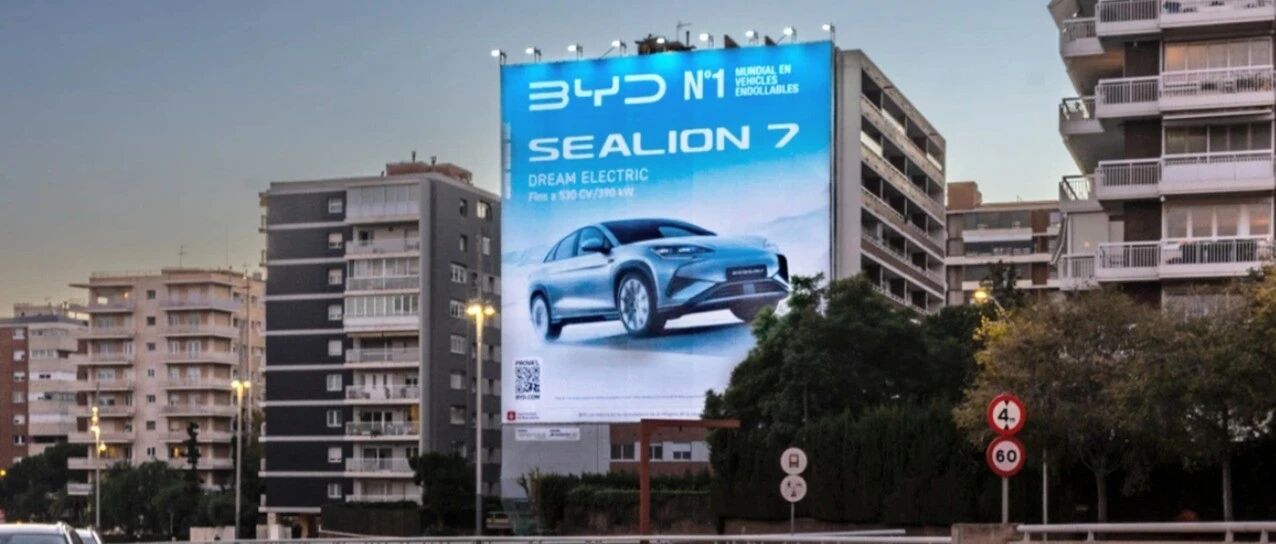
Core Insights - BYD achieved remarkable sales in the UK, selling 11,271 vehicles in September, marking an 880% year-on-year growth, making it the largest overseas market for the company [6][14] - The primary driver of this growth is the BYD SEAL U model, which has become a best-seller in Europe, with sales reaching 32,802 units in the first half of the year [8][10] - Despite the high pricing of the SEAL U in Europe, it has outperformed competitors, indicating a shift in consumer preferences towards plug-in hybrid vehicles [10][18] Sales Performance - In September, BYD ranked 15th in the UK market with a total of 11,271 units sold, while the overall market saw 312,900 units sold [6][14] - The SEAL U was the only plug-in hybrid model in the UK’s top ten best-selling cars for September, selling 5,373 units [11] - In the first eight months of the year, BYD's sales in Europe reached 95,940 units, a staggering increase of nearly 300% compared to the previous year [15][16] Market Dynamics - The overall European car market saw a slight increase of 4.7% in August, while BYD's sales surged by 215.7% [14][15] - The demand for plug-in hybrid vehicles is rising, with a 56.3% growth rate, despite tightening subsidies across Europe [20][28] - The charging infrastructure in Europe is lagging behind the growth of electric vehicles, with only 1 million public chargers available, which is about a quarter of what is available in China [23][26] Strategic Adjustments - BYD has shifted its focus to plug-in hybrid models in Europe, particularly the SEAL U, which has been well-received in the market [30] - The company has adopted a localized distribution strategy and introduced affordable models to attract younger consumers [18][30] - The success of BYD in Europe is attributed to its ability to navigate the transitional phase of the market, where plug-in hybrids are seen as a practical choice due to insufficient charging infrastructure [28][30]
死磕影像十一年:vivo探索另一种可能
远川研究所· 2025-10-16 00:07
Core Viewpoint - Apple's recent product launch indicates a shift in strategy, aligning more closely with Android competitors in terms of specifications and features, reflecting market pressures [2][4][12] Group 1: Market Dynamics - The domestic smartphone market is projected to grow only 1.5% year-on-year in 2024, indicating stagnation and increased competition among brands [4][12] - The competitive landscape is evolving, with signs of a "second consolidation" in the market, shifting from "Apple + Big 5" to "Apple + Big 3" [15][18] - Huawei leads the market with a 36% year-on-year growth, while Xiaomi and Vivo also show positive growth, contrasting with declines in other major brands [12][15] Group 2: Vivo's Strategic Focus - Vivo has established four long-term strategic areas: design, imaging, system, and performance, with a strong emphasis on imaging technology [6][20] - The company's focus on imaging is driven by consumer demand for better quality and experience, positioning it as a key differentiator in a saturated market [7][10] - Vivo's X300 series showcases advanced imaging technology, including a unique collaboration with Sony for a high-performance camera sensor [10][25] Group 3: Competitive Positioning - Vivo's strategy emphasizes a clear brand identity and product differentiation, which is crucial in a market characterized by high consumer expectations and loyalty [7][20] - The company has opted not to enter the SoC chip development space, focusing instead on its strengths in imaging technology, which aligns with user needs [20][22] - Vivo's partnerships with industry leaders like Zeiss and MediaTek enhance its technological capabilities, allowing for innovative features in its products [22][25] Group 4: Future Outlook - The smartphone market is expected to continue evolving, with a focus on high-end models and long-cycle technology investments as brands seek differentiation [16][18] - Vivo's commitment to understanding user needs and translating them into technological advancements positions it well for future growth in a competitive landscape [27][28]