半导体芯闻

Search documents
芯片关税,重创全球
半导体芯闻· 2025-08-20 11:10
Core Viewpoint - The article discusses President Trump's proposed tariffs on semiconductor imports, which could reach up to 300%, aimed at encouraging foreign companies to invest in U.S. manufacturing while potentially disrupting global supply chains [1][2]. Group 1: Tariff Details and Implications - Trump announced a plan for a 100% tariff on semiconductor imports, with potential increases to 200% or 300% [1][2]. - Companies that establish research or manufacturing facilities in the U.S. may receive tariff exemptions, but failure to fulfill investment commitments could lead to retroactive tariffs [1][2]. - The tariffs are intended to reduce U.S. dependence on imported semiconductors and strengthen the U.S. position in competition with China [2][3]. Group 2: Impact on Companies - Foreign tech giants already investing in the U.S., such as TSMC and Samsung, may be exempt from the tariffs [2]. - The tariffs could affect various sectors, including electronics, appliances, and automotive industries, depending on whether U.S.-origin chips and chips in finished products are included [4][5]. - The uncertainty surrounding the implementation of these tariffs raises concerns about their effectiveness and the lack of clear guidelines from the White House [4]. Group 3: Economic Considerations - The estimated value of semiconductor imports to the U.S. in 2024 is around $40 billion, with significant imports from countries like Taiwan, Malaysia, and China [3]. - A substantial portion of chips imported into the U.S. may be manufactured by American companies but processed overseas before being re-imported [4]. - The long-term cost implications suggest that while companies may initially absorb costs through lower profit margins, consumers are likely to bear the brunt of these costs eventually [5].


联发科新一代芯片,太猛了
半导体芯闻· 2025-08-20 11:10
如果您希望可以时常见面,欢迎标星收藏哦~ 来 源 :内容来自 technews 。 2024年发表的天玑9400 和天玑9400+ 将联发科在旗舰单芯片处理器(SoC) 领域的竞争力提升到新 的高度,而预计将于2025 年9 月份时候推出的天玑9500 处理器将延续竞争优势,成为旗舰机市场 重要杀手锏。 根据最新市场消息指出,天玑9500 单芯片处理器将导入全新NPU 架构,使得AI 算力翻倍,并透 过储存与运算整合的黑科技,为旗舰手机AI 功能再创新发展。其中,储存与运算整合的黑科技可 以达到运算与储存的高效协同,可以让运算有更快的速度,也让功耗表现大幅优化,有望成为在手 机芯片中首个储存与运算整合功能量产的产品。 现阶段多家终端设备厂商正在针对采用天玑9500 处理器的新机筹备一系列AI 新功能,包括更新一 代的系统拥有更精准的AI 能力之外,多模态AI 交互也是亮点。能透过对话开始执行应用,或是生 成文字内容等。另外,天玑9500 新机的影像能力都是重要关键,就是因为深度AI 介入而再度进 化,让拍照与影音表现更上一层楼。 除此之外,天玑9500 的GPU 能力将迎来大提升,能效相比前一代提升超过40% ...

英特尔工程师,都被挖去了三星?
半导体芯闻· 2025-08-20 11:10
Core Insights - Intel is experiencing significant talent loss due to financial constraints, layoffs, and project cancellations, prompting competitors like Samsung Electronics to aggressively recruit skilled engineers from Intel [1][2][3] - Samsung is particularly targeting engineers with expertise in advanced packaging technology, glass substrates, and backend power delivery systems, which are critical for next-generation semiconductor projects [1][2] - The ongoing layoffs at Intel, which aim to reduce the workforce by 75,000, are seen as an opportunity for Samsung to acquire top talent in the semiconductor industry [1][3] Group 1 - Intel's recent layoffs and project cancellations have led to a talent exodus, with many engineers moving to Samsung Electronics and its subsidiaries [1][2] - Samsung is focusing on hiring experienced packaging process engineers, especially in areas where it lacks expertise, such as backend power delivery and glass substrates [2] - The departure of key engineers, including Intel's chief packaging engineer Gang Duan, highlights the severity of talent loss at Intel [2] Group 2 - Industry experts predict that Intel's ongoing reduction of investment in foundry-related projects will continue to result in talent outflow [3] - Intel's CEO has acknowledged that past investments in capacity exceeded demand, indicating a shift in the company's development strategy [3] - Samsung is advised to selectively recruit talent based on actual departmental needs rather than solely on their Intel background [3]

台积电美国,提前获得2nm!
半导体芯闻· 2025-08-20 11:10
Core Viewpoint - TSMC is advancing its 2nm process technology with plans for a second fab in Arizona, aiming for an initial monthly capacity of approximately 20,000 wafers to meet strong local demand [1][2] Group 1: TSMC's Expansion Plans - TSMC's second fab in Arizona has completed construction and will utilize 3nm technology, with mass production timelines accelerated to support customer needs [1] - The third fab in the U.S. is under construction, set to employ both 2nm and A16 process technologies, driven by robust AI-related demand [1] - The timeline for establishing a mini-line at the second fab is now projected for Q2 2027, with mass production expected by Q4 2027, significantly ahead of the initial 2028 forecast [1] Group 2: 2nm Production Capacity - TSMC's 2nm production plans in Taiwan remain unchanged, with the Hsinchu Baoshan plant expected to reach a monthly capacity of 35,000 to 40,000 wafers by year-end, and the Kaohsiung plant already in production with a capacity of up to 10,000 wafers [2] - The total monthly capacity for TSMC's 2nm family (N2/N2P/N2X/A16) is estimated to reach 100,000 wafers by the end of 2026, with continued expansion through 2027-2028 [2] - Major clients for TSMC's 2nm technology include AMD, Apple, Qualcomm, MediaTek, Marvell, Broadcom, Bitmain, and Intel, indicating strong demand from leading industry players [2] Group 3: Competitive Landscape - Industry experts note that TSMC's capacity planning is flexible and adjusts based on customer demand and market conditions, ensuring that the expansion in the U.S. will not significantly detract from Taiwan's production capacity [2] - The demand for 2nm technology is high, and competitors like Samsung, Intel, and Rapidus still lag behind TSMC in yield, capacity expansion, and production stability, leaving TSMC as the primary choice for customers [2]

芯片巨头,唱衰NAND!
半导体芯闻· 2025-08-20 11:10
Group 1 - Major South Korean semiconductor companies, including Samsung Electronics and SK Hynix, are slowing down investments in advanced NAND due to high demand uncertainty and a focus on DRAM and packaging sectors [1][2] - Samsung Electronics has been transitioning investments at its P1 and Xi'an NAND factories from 6th and 7th generation NAND to 8th and 9th generation NAND, with conversion investments being more efficient and less costly than building new production lines [1] - The conversion speed for the latest NAND technology is slowing, with the 9th generation NAND conversion at the P1 factory being delayed and the Xi'an factory's X2 production line only planning to execute a minimal scale of 5,000 wafers per month [1][2] Group 2 - A semiconductor industry insider indicated that Samsung plans to continue mass production of older generation NAND on the X2 production line until at least mid-next year due to low demand for advanced NAND [2] - Samsung has decided to postpone the application of hybrid bonding technology for V9 NAND, originally intended for the Xi'an X2 production line, with plans to start using this technology from the 10th generation NAND (V10) at the earliest by mid-next year [2] - SK Hynix is also focusing its investments on advanced DRAM and HBM, with slower R&D progress for V10 NAND compared to Samsung, leading to a cautious investment approach based on downstream demand [2]
英伟达市值,有望9万亿
半导体芯闻· 2025-08-20 11:10
Group 1: NVIDIA's Market Position and Growth Potential - NVIDIA is currently the only member of the "4 trillion dollar club" and is expected to reach a market value of 9 trillion dollars by 2030, driven by its dominant position in the AI infrastructure market [1][2] - Analysts predict NVIDIA's revenue could reach 600 billion dollars by 2030, supported by a projected annual growth of 30% in AI electricity demand, which will reach 156 GW by the end of 2030 [1][2] Group 2: Developments in AI Chip Production for China - NVIDIA is evaluating new products, including a more powerful AI chip named B30A, which is based on the Blackwell architecture and is expected to be delivered for testing to Chinese customers soon [4][6] - The new chip aims to compete in the Chinese market, where NVIDIA has previously developed the H20 chip specifically for local sales [5][8] - The U.S. government has imposed restrictions on advanced chip sales to China, but NVIDIA is negotiating to sell a scaled-down version of its flagship chips, which may include significant price reductions [6][8] Group 3: Industry Dynamics and Competitive Landscape - The U.S. government has mandated that NVIDIA and AMD submit 15% of their sales revenue from China, reflecting ongoing tensions in U.S.-China trade relations [5][8] - Despite concerns over national security, NVIDIA is keen to maintain its market share in China, where it contributed 13% of its revenue last fiscal year [7][8] - Competitors like Huawei are making strides in chip development, posing a challenge to NVIDIA's market position, although analysts note that NVIDIA still leads in software ecosystem support and memory bandwidth capabilities [8][9]


听众注册|中国系统级封装大会:中兴微、环旭电子、天成先进、沛顿、AT&S、英特神斯、华大九天、KLA等SiP大咖嘉宾坐镇
半导体芯闻· 2025-08-20 11:10
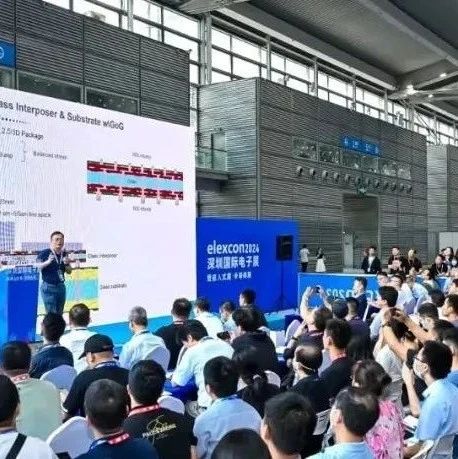
SiP China 2025 「会议日程与议题」 日在浮带参 >> 大会议程 << 主论坛: 8月26日 宏观趋势与生态共建 代文亮·创始人&总裁 主持人 芯和半导体科技(上海)股份有限公司 签到及入场 09:00-09:30 ● 智聚芯能,异构互联,共赢AI 09:30-09:55 时代机遇 代文亮·创始人&总裁 芯和半导体科技(上海) 股份有限公司 端侧Al的新趋势、新变革、 09:55-10:20 新发展 周强·创始人兼董事长 上海光羽芯辰科技有限公司 光电共封技术趋势与挑战 10:20-10:45 张阔·先进封装技术总监 中兴微电子 扇出型封装的趋势与挑战 10:45-11:10 O 李志成·工程中心處長 ASE日月光 电源管理模块与微型化 11:10-11:35 提升AI服务器效率的解决方案 沈里正 博士·微小化创新研发中心AVP TT +1 +1 7 第九届中国系统级封装大会 SiP China 2025 SiP China2025以" 智聚芯能,异构互联——AI时代先进封装与Chiplet生态创新 "为主旨, 围绕先进封 装、Chiplet技术及异构集成、高速互连等方向 ,探讨SiP与先进封装。 ...
日月光成最大赢家
半导体芯闻· 2025-08-19 10:30
Group 1 - The core viewpoint of the article highlights the strong demand for advanced packaging in the semiconductor industry, driven by AI and high-performance computing needs, as well as the ongoing effects of the "packaging and testing whitelist" that benefits leading companies like ASE Technology [1][2] - ASE Technology announced on August 11 that it will spend NT$6.5 billion to acquire a facility from Wistron in the Kaohsiung area, indicating its intent to expand its advanced packaging capacity [1][2] - The company has already raised its capital expenditure three times this year, projecting a total of US$5.5 billion, the highest in its history, with US$3 billion allocated for equipment purchases and NT$2.5 billion for facility construction [2] Group 2 - The semiconductor packaging industry in China is growing, with notable companies like Changjiang Electronics Technology and Tongfu Microelectronics, but ASE's reputation for quality and competitive pricing keeps Chinese customers returning to its facilities [1] - The overall market for consumer and automotive electronics is recovering, which further supports ASE's optimistic outlook for the second half of the year [2] - ASE's recent acquisition of a facility totaling 21,800 square meters will be dedicated to advanced packaging, reflecting the company's commitment to meeting increasing demand despite uncertain market conditions [2]
关闭六英寸晶圆厂,构成风险
半导体芯闻· 2025-08-19 10:30
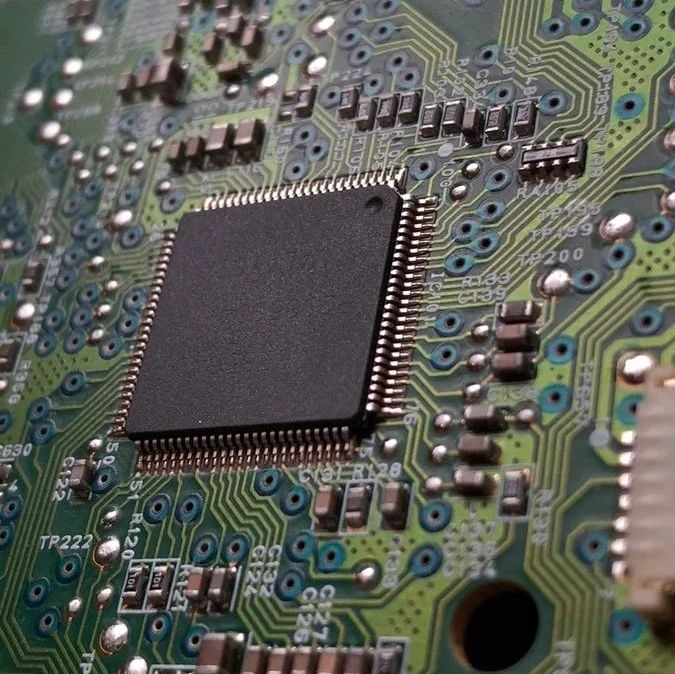
Core Viewpoint - The discontinuation of 150mm CMOS production represents not just a product change but a structural industry risk, particularly affecting manufacturers reliant on stable integrated circuit supplies in sectors like automotive, industrial, medical, and aerospace [1][11]. Group 1: Industry Challenges - The halt of 150mm wafer CMOS production marks the end of 0.6-micron and larger process nodes, posing challenges for manufacturers in various industries that still utilize these mature nodes for analog and mixed-signal ICs [1][2]. - The decline in 150mm wafer production has made the supply of direct and indirect materials more difficult and expensive, leading many foundries to cease production [5][6]. - The urgent timeline imposed by product discontinuation notifications creates significant pressure on companies to quickly assess customer needs and plan for replacements [6]. Group 2: Transition to New Technologies - Many manufacturers are not directly adopting processes below 130nm on 300mm wafers but are instead transitioning to 200mm wafers using 350nm or 180nm nodes, balancing efficiency, design simplicity, and long-term viability [7]. - The 350nm node is particularly suitable for analog ASICs, supporting high-voltage transistors and low-noise analog devices, making it ideal for mixed-signal, sensor fusion, power management ICs, and motor control applications [10]. Group 3: Market Dynamics - The global supply chain for 200mm wafers remains strong, with over 38% of monthly wafer production in Q3 2023 being for nodes larger than 90nm, ensuring continued material and equipment supply [9][10]. - The transition from 150mm to 300mm wafers is economically unfeasible for small batch production due to significantly higher development and mask costs [9][10].
安费诺,又一单收购
半导体芯闻· 2025-08-19 10:30
Core Viewpoint - Amphenol has agreed to acquire Trexon, a defense market interconnect and cable component supplier, for approximately $1 billion in cash, with expected sales of $290 million in 2025 [1][2]. Group 1: Acquisition Details - The acquisition is expected to be funded using existing cash and is anticipated to be completed by the end of the year [1]. - Trexon, headquartered in Boston, employs around 1,100 people and operates factories in the U.S. and the U.K. [2][3]. - Amphenol's CEO expressed enthusiasm about the acquisition, highlighting Trexon's high-reliability cable component product line as complementary to Amphenol's existing defense market offerings [2]. Group 2: Background on Trexon and Audax - Audax Private Equity, which managed Trexon's platform formation in 2021, has supported the company through 11 additional acquisitions [1][2]. - Trexon has experienced significant growth and transformation under Audax's leadership, focusing on core competencies and expanding capabilities through both organic initiatives and acquisitions [3]. Group 3: Company Size and Workforce - Amphenol reported having approximately 125,000 employees globally, with about 12,000 based in the U.S. [3].