半导体芯闻

Search documents
三星HBM 4,最大挑战
半导体芯闻· 2025-08-05 10:10
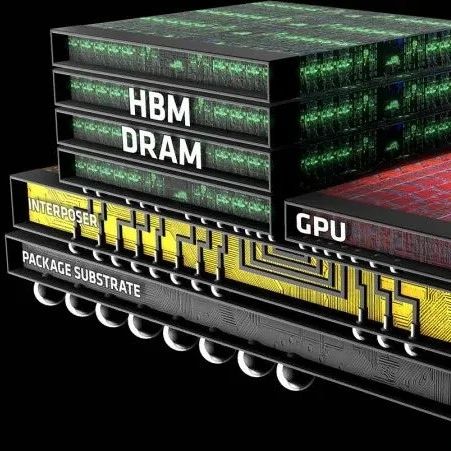
Core Viewpoint - Samsung Electronics is experiencing a recovery in its core business areas, particularly in semiconductors, following the resolution of Chairman Lee Jae-Yong's legal issues. The company has signed a significant contract worth 22 trillion KRW with Tesla, marking a turnaround for its foundry business and the System LSI department [2][3]. Group 1: Semiconductor Business Developments - The DS (Device Solutions) division of Samsung Electronics has successfully addressed two of the three major challenges it faced in the second half of the year, specifically in the memory sector with HBM and the foundry sector with 2nm technology [3]. - The Galaxy Z Flip 7, launched on September 9, features the Exynos 2500 processor, which has helped to recover from previous setbacks. Initially, the Galaxy S25 series was expected to use this chip, but the mobile division opted for Qualcomm's Snapdragon 8 instead, leading to a disappointing outcome for Exynos [3][4]. - Samsung Electronics announced a contract for 2nm semiconductor mass production worth 22.7647 trillion KRW with Tesla, a significant client that the foundry division has long sought. This contract is expected to bolster the company's position in the semiconductor industry [3][4]. Group 2: Market and Ecosystem Implications - The contract with Tesla is seen as a catalyst for industry rebound and ecosystem expansion, as it can revitalize the entire semiconductor sector by attracting more global clients and establishing a robust ecosystem involving foundries, IP, design companies, and post-processing firms [4]. - The HBM (High Bandwidth Memory) business remains a critical area for Samsung, which has made progress by confirming the supply of 12-layer HBM3E to AMD. However, it still needs to build sufficient momentum to change market perceptions that it lags behind competitors like SK Hynix [4][5]. - In the second quarter, HBM3E accounted for over 80% of Samsung's total HBM business, with expectations that this will exceed 90% in the second half of the year. The company has also completed mass production approval for HBM4 using 1c DRAM and has supplied samples to clients [4][5].

英飞凌预期,行情好了
半导体芯闻· 2025-08-05 10:10
Core Viewpoint - Infineon Technologies has raised its profit margin forecast for the current fiscal year due to increasing demand for semiconductors from the automotive, energy infrastructure, and AI data center sectors [2][3]. Financial Performance - The company expects revenue for the fiscal year ending September 30 to be approximately €14.6 billion (about $16.9 billion), slightly down from €14.96 billion in the same period last year [2]. - Adjusted gross margin is projected to be at least 40%, with profit margin around 15% [2]. - For the quarter ending June 30, sales were €3.7 billion, unchanged from the previous year, while net profit decreased from €403 million to €305 million [3]. Market Outlook - Infineon is focusing on strategic growth areas such as software-defined vehicles, AI data center power solutions, and rapidly growing energy infrastructure investments [3]. - The company is well-positioned in the semiconductor market with a product portfolio that includes power semiconductors, analog and sensors, as well as control and connectivity solutions [3]. Analyst Predictions - According to Vara Research, analysts predict the fiscal year revenue to be €14.67 billion with a segment performance margin of 16.4% [3][4]. - The expected revenue for the quarter ending September is around €3.9 billion, with segment profit margins projected to be in the low teens [5].

AMD,能威胁英伟达吗?
半导体芯闻· 2025-08-05 10:10
Core Viewpoint - NVIDIA has maintained a dominant position in the AI market since its boom in 2022, while AMD, under CEO Lisa Su, is aggressively expanding its AI product line, indicating that competition will intensify for NVIDIA [2][4]. Group 1: NVIDIA's Market Position - NVIDIA was one of the first companies to launch market-ready AI chip solutions, while competitors like AMD and Intel are still focused on CPU and GPU technologies [4]. - The launch of ChatGPT made AMD realize the vast potential of the AI market, prompting a strategic shift towards AI in 2023, but NVIDIA had already established a stronghold with its Ampere and Hopper solutions [4][6]. - NVIDIA's ecosystem is proprietary, making it difficult for AMD to gain traction as large tech companies are locked into contracts with NVIDIA, limiting their options [4][6]. Group 2: AMD's Competitive Strategy - AMD's first major AI solution, the Instinct MI300 series, is said to rival NVIDIA's popular H100, featuring double the memory and comparable memory bandwidth [5]. - Despite internal testing showing that MI300X poses a real threat to NVIDIA, the challenge lies in competing with NVIDIA's entire ecosystem rather than just its chips [5][6]. - AMD's pricing strategy is competitive, with its Instinct MI300 series typically priced 20%-30% lower than NVIDIA's equivalent products, which has attracted companies like Microsoft and OpenAI [9]. Group 3: Future Developments - AMD is set to announce its next-generation Instinct MI400 series, which will feature advanced HBM4 technology and 50% more memory than current solutions, indicating a strong competitive stance [10]. - The company is also focusing on rack-level solutions with its high-end "Helios" AI server, which is expected to compete with NVIDIA's offerings [10]. - Analysts predict that AMD's revenue will grow year-over-year, driven by the adoption of its AI technology by companies like OpenAI and demand across various segments [11].



ICTS信息展前瞻!数字蝶变·智造新生,9月相约5.2馆开启工业未来式!
半导体芯闻· 2025-08-05 10:10
Core Viewpoint - The 2025 China International Industrial Expo focuses on the theme "Digital Transformation · Intelligent Manufacturing Rebirth," highlighting the integration of new-generation information technology with the manufacturing industry [4]. Exhibition Overview - The exhibition will take place from September 23 to 27, 2025, at the National Exhibition and Convention Center (Shanghai), specifically in Hall 5.2 [3][21]. - The New Generation Information Technology and Application Exhibition (ICTS) is a key professional exhibition within the China International Industrial Expo, showcasing cutting-edge results of the deep integration of new-generation information technology and manufacturing [4][6]. Key Highlights - ICTS aligns with national development strategies and market trends, focusing on topics such as new-generation mobile communication technology, industrial internet, industrial operating systems, AI applications, IoT, edge computing, information security, new data storage and chips, digital factories, and digital supply chains [6][8]. - The exhibition serves as a benchmark event for industry professionals, featuring three main highlights: 1. "The Secret of Computing Power" showcasing breakthroughs in semiconductor industry autonomy and collaborative innovation [9]. 2. "AI's Rebellion" focusing on industrial software and AI's role in the digital transformation of manufacturing [9]. 3. "Smart Driving Disassembly" emphasizing a dual-driven model of technology and services to create a comprehensive digital service matrix for manufacturing transformation [9]. Exhibition Areas - The exhibition will include several specialized areas: 1. Integrated Circuit Exhibition Area: Featuring semiconductor manufacturing, key equipment, components, advanced packaging technology, semiconductor materials, and IC design support systems [11]. 2. Digital Technology Exhibition Area: Showcasing new-generation information technology, AI, algorithms, industrial IoT, and operating systems [11]. 3. Industrial Software Exhibition Area: Covering basic software, industry-specific software, embedded software, and trusted computing software [11]. 4. Industrial Services Exhibition Area: Including supply chain services, consulting services, testing and certification services, and education and training services [11]. 5. Application Scenarios Exhibition Area: Highlighting sectors such as equipment manufacturing, information communication, energy, transportation, logistics, and 3C electronics [11]. 6. Innovative Applications Exhibition Area: Featuring smart cockpits, low-altitude economy, embodied intelligence, and incubation acceleration [11]. Concurrent Forums - The event will host several forums, including: 1. International Industrial Internet Conference and Digital Industry Series Summit [14]. 2. Shanghai Integrated Circuit Industry Development International Summit Forum [14]. 3. Various industry seminars focusing on industrial software, AI, industrial computing power, and green development in the semiconductor sector [15][16].

台积电2nm泄密,有人被抓
半导体芯闻· 2025-08-05 10:10
Core Viewpoint - TSMC has taken legal action against employees involved in the potential leak of proprietary information related to its advanced 2nm process technology, which is expected to begin mass production in the second half of this year [2][3][4]. Group 1: Legal and Internal Investigations - TSMC has dismissed several employees suspected of attempting to acquire key proprietary information regarding the 2nm process during their employment [2][3]. - The company detected unusual access to employee files and initiated an internal investigation, leading to the discovery of potential leaks of its core technology [3][4]. - TSMC maintains a zero-tolerance policy towards violations of its trade secret protections and has implemented strict internal monitoring mechanisms [4]. Group 2: 2nm Process Technology - TSMC's 2nm process technology, which utilizes Gate-All-Around (GAA) transistors, is anticipated to significantly enhance performance and reduce power consumption, with a projected performance improvement of 10% to 15% and a power reduction of 25% to 30% compared to the previous N3E process [5][6]. - The average yield of the 256Mb SRAM module for the 2nm process has exceeded 90%, indicating that the technology is reaching maturity as mass production approaches [5][6]. Group 3: Market Applications and Future Developments - The 2nm technology is expected to support a range of upcoming products, including AMD's next-generation EPYC "Venice" CPU and various chips for Apple’s devices [5][7]. - TSMC plans to introduce enhanced versions of the 2nm process, such as N2P, which promises a 5% to 10% performance increase and a 5% to 10% reduction in power consumption compared to the standard 2nm process [7][8]. - The company is also developing N2X, an ultimate version of the 2nm process, aimed at high-end client CPUs and data center products, expected to be mass-produced by 2027 [8].


芯片的“打磨师傅”:CMP
半导体芯闻· 2025-08-04 10:37
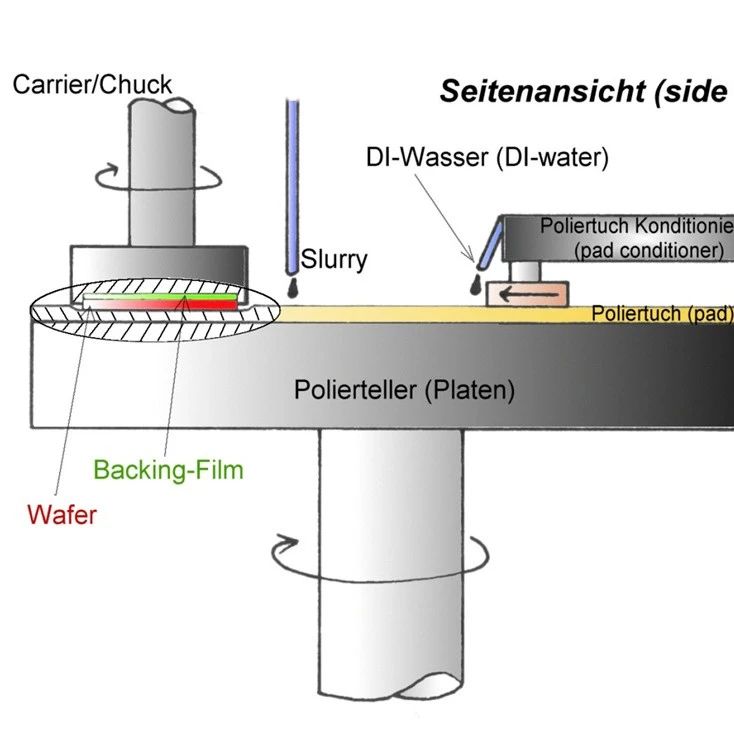
Core Viewpoint - CMP (Chemical Mechanical Polishing) is a crucial process in semiconductor manufacturing that ensures the smoothness of wafer surfaces, enabling the successful fabrication of advanced chips [2][4]. Group 1: CMP Process Overview - CMP plays a vital role in various stages of chip manufacturing, including the planarization of insulating layers, metal layers, and transitions between multiple layers [4]. - The process involves placing the wafer on a polishing pad, where a specialized slurry is applied to achieve a smooth surface through chemical reactions and mechanical polishing [2][4]. Group 2: Importance of Slurry - The quality of the slurry is essential for achieving a smooth wafer surface, with different types of slurries used based on the wafer material and desired planarization effect [4]. - Major suppliers of high-end CMP slurries include companies like Cabot Microelectronics, DuPont, Fujimi, and Showa Denko, indicating a reliance on international firms for these critical materials [4]. Group 3: Types of Abrasives - Abrasives in CMP slurries can be categorized into three main types: silica-based, alumina-based, and ceria-based, each with distinct properties affecting the polishing process [5][6]. - The shape and hardness of these abrasives influence the material removal selectivity, impacting the overall polishing precision and surface quality [6]. Group 4: Challenges and Innovations - CMP faces challenges such as the risk of damaging circuits through excessive polishing or insufficient planarization, especially as manufacturing processes advance to the nanoscale [6]. - The industry is actively developing gentler slurries, new polishing pads, and AI monitoring systems to enhance the precision and stability of the CMP process, adapting to future manufacturing needs [6].
这个国家,要实现半导体自主
半导体芯闻· 2025-08-04 10:37
如果您希望可以时常见面,欢迎标星收藏哦~ 来源 :内容编译自vietnamnews 。 越南政府总理范明政周一为半导体行业设定了一个目标,即到 2027 年,半导体行业将能够独立设 计、制造和测试关键半导体芯片。 他在河内举行的国家半导体产业发展指导委员会第二次会议上发表了讲话。 会议以线上方式与各省市、大学、高科技园区和其他利益相关方进行沟通,审查了越南半导体产业 发展战略和2030年人力资源发展计划的实施情况,并展望了2050年。 该战略概述了分配给10个部委的38个项目和任务。 到目前为止,已有 10 个项目按计划完成,24 个项目正在建设中,还有 4 个项目尚未开工。 据活动报道,正在进行的重点项目包括专用芯片开发、电子产业、人才吸引和半导体外商投资等举 措。 该战略启动十个月以来,各部委和地方积极制定法律框架、政策和规划,同时积极营造有利于实现 该战略第一阶段目标的生态系统。人力资源规划的34项任务中,已有9项完成,另有25项任务仍在 推进中,其中许多任务是年度计划,但尚未到期。 基础设施建设包括扩建越南拥有的芯片生产设施和在主要城市建设国际标准的洁净室实验室。 迄今为止,越南已吸引半导体和高科技产 ...
爱立信或收购英特尔业务
半导体芯闻· 2025-08-04 10:37
Group 1 - Ericsson is negotiating to acquire a minority stake in Intel's network and edge business, which is valued at several hundred million dollars [2] - Discussions are ongoing, and there is no guarantee that a deal will be finalized; Intel is also in talks with other companies for investment in this division [2] - Intel's NEX division, which manufactures chips for network equipment in the telecom industry, has been a topic of media attention, with reports suggesting it may be spun off into an independent company [2] Group 2 - As part of cost-cutting measures, Intel has agreed to sell part of its stake in the programmable chip business Altera to SilverLake for $4.4 billion and has announced layoffs [2] - Intel is also canceling expensive manufacturing projects in Germany and Poland and merging some assembly and testing operations to reduce expenses [2]



三安大手笔收购,LED生变
半导体芯闻· 2025-08-04 10:37
Core Viewpoint - Sanan Optoelectronics announced the acquisition of 100% equity in Lumileds Holding BV for $239 million, aiming to enhance its position in the global LED market and join a leading patent cross-licensing alliance [5][6]. Group 1: Acquisition Details - The acquisition will allow Sanan to indirectly hold 74.5% of Lumileds' equity by Q1 2026, pending necessary approvals [5]. - Lumileds is ranked among the top seven LED packaging manufacturers globally, which will strengthen Sanan's market presence [5][6]. Group 2: Market Position and Revenue - Lumileds is projected to generate approximately $600 million in revenue in 2024, focusing on automotive lighting, mobile flashlights, and high-end/niche lighting [6]. - In the automotive lighting segment, Lumileds ranks third globally, while in mobile flashlights, it is second only to Nichia [6]. Group 3: Market Dynamics and Future Outlook - The LED market is experiencing intense price competition due to economic uncertainties and tariffs, which may impact profitability [6]. - The integration of Sanan's management with Lumileds is crucial for maintaining customer relationships and optimizing costs in the competitive market [6].

美国芯片,太强了
半导体芯闻· 2025-08-04 10:37
Core Insights - The U.S. semiconductor industry is undergoing an unprecedented investment boom and strategic restructuring driven by geopolitical competition and supply chain security considerations, with over 130 major projects announced across 28 states since 2020, totaling more than $600 billion in private sector investments [2][3] - These projects are expected to create and support over 500,000 jobs, including 69,000 direct facility jobs and 122,000 construction jobs, along with 335,000 derivative jobs through industry multiplier effects [2] - The U.S. government has provided substantial support, granting $32.5417 billion in direct subsidies to 48 projects across 32 companies, along with $5.85 billion in low-interest loans [3] Industry Overview - The U.S. semiconductor ecosystem has evolved into a highly complex and finely divided system, encompassing the entire supply chain from chip design to wafer manufacturing and packaging testing, along with upstream equipment and materials suppliers and a robust R&D network [3] Fabless Companies - Fabless companies focus on chip design without engaging in manufacturing, representing the most innovative segment of the industry, primarily located in technology hubs like California, Massachusetts, and Colorado [5] - Notable fabless companies include: - **NVIDIA**: A leader in GPU technology, expanding its influence in AI, data centers, and autonomous driving [7] - **AMD**: A core player in high-performance computing, competing with Intel and NVIDIA in various sectors [8] - **Marvell**: Important for custom and communication chips, serving cloud computing and 5G markets [9] IDM (Integrated Device Manufacturers) - IDM companies control the entire process from chip design to wafer manufacturing and packaging, showcasing strong technical accumulation and industry control [22] - Key IDM players include: - **Intel**: The largest IDM in the U.S., focusing on advanced manufacturing and packaging technologies [24] - **Micron**: A major player in memory chips, with significant investments in DRAM manufacturing [25] - **Texas Instruments**: A leading manufacturer of analog and embedded processing chips, emphasizing manufacturing autonomy [26] Foundries - Foundries provide wafer manufacturing services to fabless companies and IDMs, with recent expansions driven by the CHIPS Act [40] - Major foundries include: - **TSMC**: The largest foundry globally, investing nearly $40 billion in advanced wafer manufacturing in Arizona [40] - **GlobalFoundries**: The largest domestic foundry in the U.S., focusing on mature process nodes [41] - **Intel Foundry Services**: Intel's re-entry into the foundry market, targeting high-performance computing and defense applications [42] OSAT (Outsourced Semiconductor Assembly and Test) - OSAT companies play a critical role in the semiconductor backend process, with a growing focus on advanced packaging technologies [49] - Leading OSAT firms include: - **Amkor Technology**: A top global provider of semiconductor packaging and testing services [51] - **Integra Technologies**: Specializing in military-grade and high-reliability semiconductor packaging [52] Equipment and Materials Suppliers - Equipment and materials companies are crucial for semiconductor manufacturing, leading in areas such as lithography, etching, and chemical supplies [54] - Key players include: - **Applied Materials**: The largest semiconductor equipment manufacturer, focusing on next-generation materials engineering [57] - **Lam Research**: A leader in etching and deposition equipment [58] - **Entegris**: A leading advanced materials supplier, expanding its local supply capabilities [68] IP & EDA Companies - These companies provide essential tools and infrastructure for chip design, including EDA software and IP cores [80] - Notable companies include: - **Cadence Design Systems**: A leading provider of EDA tools and semiconductor IP [80] - **Synopsys**: The largest EDA tool and IP supplier, focusing on advanced design verification technologies [81] Universities and National Labs - U.S. universities and national laboratories serve as critical innovation platforms and talent incubators for the semiconductor industry [85] - Prominent institutions include: - **MIT**: Renowned for its contributions to nanoelectronics and quantum computing [87] - **Stanford University**: Central to Silicon Valley's innovation ecosystem [88] - **Lawrence Berkeley National Laboratory**: Leading in advanced materials research [89]