半导体芯闻

Search documents
AI时代催生eSIM新机遇:紫光同芯发布新一代芯片技术路线图
半导体芯闻· 2025-06-25 10:24
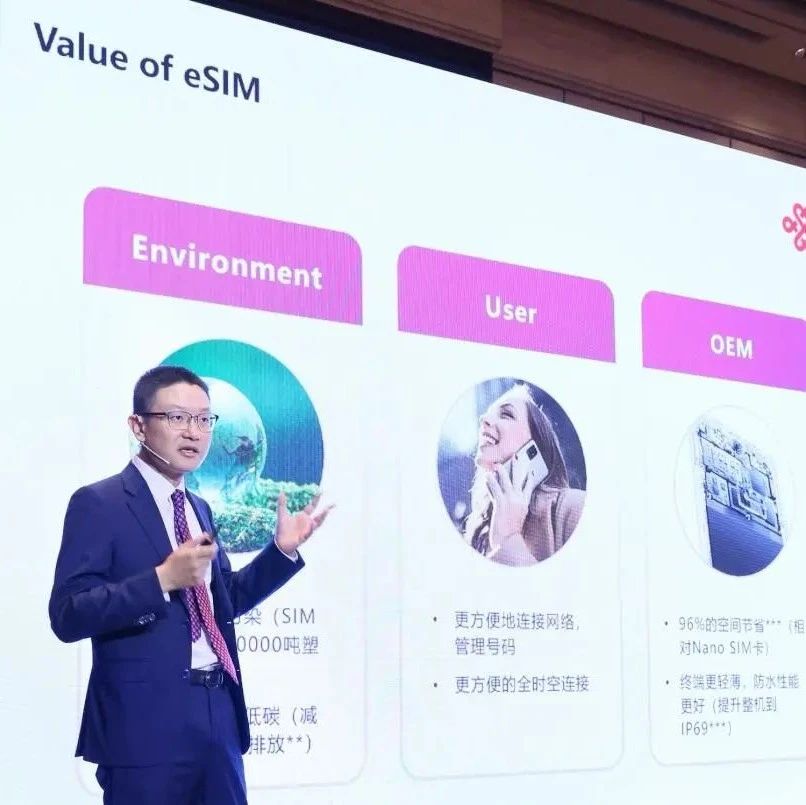
Core Viewpoint - The eSIM industry is experiencing unprecedented growth, transitioning from gradual development to explosive growth, particularly since 2022, with over 240 regional operators deploying eSIM services globally, although there is still significant room to achieve the GSMA's vision of universal eSIM support for all mobile and IoT devices [1][2]. Group 1: Consumer Awareness and Adoption - Consumer awareness and acceptance of eSIM technology are rapidly increasing, with approximately 50% of consumers aware of eSIM, and 20% knowing how to use it on their phones. In international travel scenarios, 50% of respondents expressed willingness to try eSIM for travel communication services [2]. Group 2: Value Proposition of eSIM - eSIM technology offers significant environmental benefits by reducing carbon emissions associated with traditional SIM card production and logistics. The integration of eSIM at the manufacturing stage eliminates the need for physical card distribution [3]. - From a user experience perspective, eSIM addresses many pain points associated with traditional SIM cards, allowing for online and remote switching of operators and plans, enhancing convenience [5]. - For device manufacturers, eSIM provides greater design flexibility, enabling the development of smaller devices without physical SIM slots, thus improving waterproofing capabilities [5]. Group 3: Technological Advancements - The eSIM products from a leading Chinese chip manufacturer have achieved significant commercial milestones, supporting various devices globally, including smartphones and wearables. This marks the first large-scale international commercialization of eSIM by a Chinese manufacturer [6]. - The new generation of eSIM products supports multiple profiles and certificates, allowing for dual standby functionality, which is crucial for eSIM-only devices [6][7]. - Compatibility between Chinese operator certificates and GSMA international certificates is a significant breakthrough, simplifying product development for international markets [7]. Group 4: Future Development Directions - Future eSIM products will incorporate innovative features tailored to the Chinese market, including support for multiple applications and enhanced security measures, such as national encryption algorithms and post-quantum algorithms [9]. - The vision for eSIM includes the development of an "all-time and space connection" ecosystem, integrating satellite communication and indoor WiFi access capabilities to ensure continuous connectivity [10]. Group 5: Industry Collaboration - China Unicom plays a crucial role in advancing the eSIM industry, having established partnerships with over 40 brands and 150 terminal models since launching eSIM services in 2015. Collaborative efforts include the development of dual-mode 5G eSIM products and the establishment of a joint laboratory for eSIM innovation [12]. - The "AI+5G+eSIM Industry Cooperation Initiative" launched during the 2025 MWC Shanghai aims to foster collaboration among over 50 leading companies in the industry, promoting an open and win-win AI terminal ecosystem [12]. Conclusion - eSIM is poised for explosive growth in the AI era, evolving from a single-function technology to a multi-faceted solution that addresses various needs, including device identity authentication and security. As standards and ecosystems continue to develop, eSIM will play an indispensable role in building a connected world [14].

美光印度工厂,量产在即
半导体芯闻· 2025-06-25 10:24
如果您希望可以时常见面,欢迎标星收藏哦~ 来源:内容 编译自 economictimes 。 据 《 经 济 时 报 》 ( ET ) 消 息 , 知 情 人 士 透 露 , 美 光 ( Micron ) 位 于 印 度 古 吉 拉 特 邦 萨 南 德 (Sanand)的先进工厂一期项目,已推进至洁净室验证阶段。洁净室是一种高度受控的环境,用 于最大限度减少空气中的尘埃、细菌和化学蒸汽等污染物,以免影响半导体等对洁净度要求极高的 生产流程或产品。 一位知情人士表示:"美光目前的目标是在今年下半年让这座主厂房的一期投入运营。此次的洁净 室认证正是为了实现这个时间节点。" 该 项 目 一 期 计 划 建 设 约 50 万 平 方 英 尺 的 洁 净 室 , 将 作 为 美 光 的 组 装 、 测 试 、 标 记 与 封 装 (ATMP)工厂。美光是一家总部位于美国的存储芯片制造商,计划在该项目的两个阶段共投资高 达8.25亿美元。连同印度政府等相关机构的支持,总投资将达到27.5亿美元。 根据美光2023年6月22日发布的新闻稿,该公司原计划一期项目将在2024年底部分投产,并会根 据全球市场需求逐步扩大产能。同 ...

这种AI芯片材料,被垄断!
半导体芯闻· 2025-06-25 10:24
Core Viewpoint - The article highlights the critical supply constraints of T glass, a specialized material essential for high-performance AI servers, driven by the surging demand from major tech companies like Nvidia, AMD, and Microsoft [1][5][8]. Group 1: Supply Chain Dynamics - Major tech executives have been visiting Nitto Boseki, the sole high-end glass cloth supplier, to secure T glass for AI data centers, indicating a strategic move to ensure material availability [1][5]. - The demand for T glass is surging due to its rigidity, which prevents substrate bending during advanced chip packaging, crucial for AI chip production yield [2][5]. - Nitto Boseki has committed to investing 80 billion yen (approximately 550 million USD) to expand semiconductor material production, including T glass, aiming to double its capacity in Taiwan by March 2028 [5][8]. Group 2: Market Competition and Challenges - The supply of T glass has been particularly tight since the second half of last year, with many companies unable to secure additional capacity despite increased cash offers [5][12]. - Competitors like Taiwan Glass are looking to enter the T glass market, with plans to ramp up production by the end of 2025, potentially altering the market dynamics if they succeed in certification processes [10][11]. - The article notes that while new entrants are emerging, the production of high-end T glass requires significant time and expertise, suggesting that Nitto Boseki may maintain its critical position in the supply chain for the foreseeable future [12]. Group 3: Financial Performance - Nitto Boseki reported sales of 109 billion yen in the last fiscal year, a 17% increase year-on-year, with profit margins rising from 9% to 15.1%, largely driven by AI application demand [8].


封测巨头,全力押宝先进封装
半导体芯闻· 2025-06-25 10:24
Core Viewpoint - The company is optimistic about its operations in the second half of the year, driven by the demand for advanced packaging due to the AI application boom, projecting a 10% year-on-year increase in advanced process packaging revenue for the year [1]. Group 1: Company Operations - The company plans to invest $200 million in large-size fan-out panel packaging (FOPLP) and has already begun equipment installation in the second quarter, with shipments expected by the end of the year [1]. - Advanced packaging and testing revenue is projected to reach $600 million in 2024, accounting for approximately 6% of total packaging revenue, with an additional increase of over $1 billion expected this year [1]. - The company is actively planning a testing facility in the U.S. to meet the complex packaging needs of AI chips, responding to the expansion of clients like NVIDIA [1]. Group 2: Industry Outlook - The semiconductor industry is expected to reach a global market value of $1 trillion by 2030, with the company expressing confidence that this target will be met, even if slightly delayed [2]. - AI is anticipated to drive significant changes in data centers, cloud infrastructure, and robotics, with the company emphasizing the need for Taiwan to enhance its peripheral technologies to capitalize on the upcoming AI robotics market [2].
谷歌芯片,抢先用上2nm
半导体芯闻· 2025-06-25 10:24
Core Viewpoint - Google is accelerating its upgrade of the Tensor G6 chip to TSMC's 2nm process, aiming to keep pace with competitors in the semiconductor industry [2][3]. Group 1: Chip Development Timeline - The first Tensor chip, launched in 2021 with the Pixel 6, was manufactured using Samsung's 5nm process, and the Tensor G2 followed suit the next year [2]. - The Tensor G3 was the first to utilize a 4nm process, while the current Tensor G4 is also based on this technology [2]. - Google plans to transition the Tensor G5 to TSMC's 3nm process later this year, marking a significant shift in its manufacturing strategy [2]. Group 2: Future Plans for Tensor G6 - According to reports, Google intends to use TSMC's 2nm process for the Tensor G6 in the Pixel 11 series, which is set to launch in 2026 [3]. - This move could position Google ahead of competitors, as the next Snapdragon 8 Elite chipset may still be using a 3nm process at that time [3]. - There are indications that Qualcomm may produce a 3nm version of its upcoming flagship products, while Samsung is expected to manufacture a 2nm version specifically for Galaxy devices [3]. Group 3: Features and Enhancements - Limited information is available about the Tensor G6, but a report suggests it may include AI-enhanced features [4]. - Leaks from Google's gChips division indicate that the Pixel 11 series could feature video editing tools powered by "Video Generation ML" [4]. - Additionally, there are rumors that the Tensor G6 will focus on health-related functionalities, such as monitoring breathing, sleep apnea, and gait analysis [4].

英特尔裁员,放弃汽车业务
半导体芯闻· 2025-06-25 10:24
Core Viewpoint - Intel is undergoing significant layoffs as part of a restructuring plan aimed at improving efficiency and reducing organizational complexity, with CEO Pat Gelsinger indicating that layoffs are unavoidable for the company's turnaround strategy [1][2][4]. Group 1: Layoff Details - Intel has notified California authorities about plans to lay off approximately 107 employees at its Santa Clara headquarters, in compliance with the WARN Act [2]. - The layoffs are expected to begin on July 15, with affected employees receiving either 60 days' notice or four weeks' notice along with nine weeks of pay and benefits as severance [2][3]. - Positions affected include various engineering roles, such as physical design engineers, cloud software architects, and project managers [3]. Group 2: Strategic Changes - The company aims to reduce management positions to accelerate decision-making and minimize bureaucracy, which has been identified as a significant issue [4]. - Gelsinger emphasized that future leadership will focus on achieving more with fewer resources, moving away from the previous emphasis on team size as a key performance indicator [4]. - Intel plans to outsource many marketing roles to consulting giant Accenture as part of its strategy to modernize digital capabilities and enhance service to customers [6]. Group 3: Business Focus - Intel is also planning to gradually shut down its automotive chip business, which will lead to significant job losses in that department [5][6]. - This decision is part of Gelsinger's strategy to refocus the company on its core customer and data center product offerings [6].

华为中芯被列入管制名单,国台办回应
半导体芯闻· 2025-06-25 10:24
Group 1 - The article discusses the recent inclusion of 601 entities, including Huawei and other mainland chip companies, in Taiwan's export control list, raising concerns among investors about the impact on Taiwan's semiconductor industry [1] - The spokesperson from the Taiwan Affairs Office criticized the Taiwanese authorities for their actions that harm Taiwan's economy while attempting to curry favor with the U.S. by suppressing mainland enterprises [1] - It is emphasized that the Taiwanese government's attempts to block technology will not hinder mainland China's technological innovation and industrial upgrading [1] Group 2 - The article asserts that any actions by the Taiwanese authorities that disrupt cross-strait economic cooperation will ultimately damage the competitiveness of Taiwanese enterprises and limit their economic development [1] - The conclusion drawn is that collaboration between the two sides is essential for the growth of the Chinese economy, which is presented as the correct path forward [1]

缩小基板的技术,终于量产
半导体芯闻· 2025-06-25 10:24
来源:内容 编译自 thelec 。 LG Innotek(LG电子旗下子公司)于25日宣布,成功研发了全球首个可以应用于半导体基板 的"铜柱"(Cu-Post)技术,并已开始量产应用。LG Innotek首次应用铜柱的产品是智能手机用 无 线 射 频 系 统 封 装 ( RF-SiP ) 和 翻 转 芯 片 - 芯 片 级 封 装 ( FC-CSP ) 。 在 RF-SiP 领 域 , LG Innotek位居全球第一。 如果您希望可以时常见面,欢迎标星收藏哦~ 铜柱用于连接半导体基板与主基板。在传统方法中,半导体基板需要直接贴上焊锡球(solder ball)以连接主基板,且焊锡球必须足够大才能确保稳定的连接。然而,焊锡球是球形结构,占用 空间较大,当间距过窄时,焊锡球在熔化过程中可能会相互粘连。这种方式在减少焊锡球间距、提 高电路集成度方面存在一定限制。 LG Innotek的新技术则不同,它并不直接将焊锡球连接到半导体基板,而是首先建立铜柱结构, 然后在其上放置更小的焊锡球,并将焊锡球间距缩小了20%。通过采用铜柱结构,焊锡球的面积 和尺寸得到最小化,同时使用熔点较高的铜材料,即使在高温工艺下,铜柱的 ...
一家公司,放弃AI芯片业务
半导体芯闻· 2025-06-24 10:03
Core Viewpoint - The company Canaan Inc. (CAN) is gradually abandoning its artificial intelligence (AI) semiconductor business to refocus on its core cryptocurrency operations, particularly Bitcoin mining [1][2]. Group 1: Company Strategy - Canaan's AI division is projected to generate only $900,000 in revenue for 2024, compared to total revenue of $269.3 million, indicating a misalignment with the company's long-term strategy [1]. - The CEO, Zhang Nengeng, emphasized that reinforcing the company's core strengths in cryptocurrency infrastructure and Bitcoin mining is the most strategically significant path forward [1]. - The decision to exit the AI sector follows years of attempts to enter the edge computing chip market, reflecting a shift in focus back to Bitcoin mining amid rising interest in "Made in America" Bitcoin [2]. Group 2: Financial Performance - Canaan's stock price experienced a slight decline, with a year-to-date drop of 71%, while the overall digital asset and stock markets have shown an upward trend [2]. - The Bitcoin mining ETF WGMI has also seen a decline of approximately 20% [2]. Group 3: AI Chip Development - Canaan launched its first AI chip, K210, in 2018, targeting the IoT market with capabilities in machine vision and auditory processing [3]. - The K210 chip features a RISC-V CPU and supports various applications, including real-time object detection and recognition [4]. - Canaan has developed four generations of AI chips, with the K510 being a high-precision AI edge inference chip and the K230 designed for low-power, high-performance applications in smart products [6].

又一SiC基地,投产
半导体芯闻· 2025-06-24 10:03
Core Viewpoint - The article highlights the launch of the silicon carbide semiconductor equipment and substrate production base project by Nuotian, which represents a significant investment in the semiconductor industry and aims to enhance technological innovation and production capabilities in the region [2]. Group 1: Project Overview - The Nuotian silicon carbide semiconductor equipment and substrate production base project has a total investment of approximately 150 million yuan, signed in February 2024 and located in Zhuzhou High-tech Zone [2]. - The project will produce silicon carbide semiconductor equipment and substrates, with applications in silicon carbide single crystal growth, substrate manufacturing, semiconductor material graphitization and purification, advanced ceramics, composite materials research, photovoltaic, and lithium battery high-temperature sintering [2]. Group 2: Company Background - Zhuzhou Nuotian Electric Heating Technology Co., Ltd. was established in 2014, focusing on the research, development, manufacturing, and innovation of high-end thermal equipment [2]. - The company aims to provide high-performance and reliable industrial furnace equipment and comprehensive solutions for cutting-edge fields such as semiconductors, new energy, and new materials [2]. Group 3: Future Prospects - The company is expected to become a national high-tech enterprise in 2024 and be recognized as a specialized and innovative enterprise in Hunan Province by 2025 [2]. - The project is anticipated to contribute significantly to the economic and social development of Zhuzhou and the advancement of China's electric heating industry [2].