半导体芯闻

Search documents
SK海力士,否认
半导体芯闻· 2025-11-04 09:48
Core Viewpoint - SK Hynix is not considering selling its stake in Solidigm, despite rumors of poor IPO performance, as Solidigm's current performance and future outlook are optimistic [2]. Group 1: Company Overview - Solidigm, established by SK Hynix in 2021, focuses on the planning, design, and sales of SSDs based on NAND flash technology, following the acquisition of Intel's NAND flash business for approximately $9 billion [2]. - The acquisition was completed in two phases, with the first phase finalizing in December 2021 and the second phase in mid-2023, which included the payment of around $1.9 billion for remaining assets [2]. Group 2: Product Development - Solidigm announced its SSD roadmap, planning to launch high-capacity QLC SSDs of 61.44TB and 122TB in July 2023 and November 2024, respectively, utilizing 192-layer QLC 3D NAND flash [3]. - The company aims to develop next-generation products that exceed 200 layers, addressing the competitive landscape where other NAND suppliers have surpassed 200 layers [5][8]. Group 3: Market Position and Strategy - Solidigm emphasizes the importance of storage in AI infrastructure, stating that maximizing GPU utilization is critical, and storage solutions are becoming increasingly vital [4]. - The company has established strong partnerships across various industries, securing numerous design projects, including collaborations with leading cloud and storage OEMs [4]. Group 4: Technology and Innovation - Solidigm's product lineup includes both floating-gate and charge-trap technologies, which are seen as key advantages in meeting diverse workload requirements [8]. - The company has successfully shipped over 120EB of QLC products since 2018, showcasing its expertise in this challenging technology [5]. Group 5: Future Outlook - Solidigm plans to deliver a 245TB SSD by the end of 2026, which will utilize NAND flash produced in Dalian and will incorporate its proprietary technology [9]. - The company is also exploring the potential of PLC flash technology, indicating a willingness to adapt to market demands and customer needs [9].


破局“芯”困境,西北地区首条硅光中试线正式通线
半导体芯闻· 2025-11-04 09:48
Core Insights - The article discusses the progress of Shaanxi's "Chasing Light Plan," highlighting the launch of the "8-inch Silicon Photonic Integration Technology Innovation Platform," which aims to bolster the region's photonics industry and support the development of a trillion-level photonics industry cluster [2][6][12]. Group 1: Progress of the "Chasing Light Plan" - Since its initiation in 2021, the "Chasing Light Plan" has led to significant growth in the photonics industry in Shaanxi, with the number of enterprises increasing to over 370 and the industry scale rising from 15 billion to 36.5 billion [6][7]. - The upgraded "Chasing Light Plan - Leap Action" outlines a development path with a layout of "one core, two wings + one park, three areas," positioning Xi'an High-tech Zone as the core area for photonics development [6][12]. Group 2: Establishment of the 8-inch Silicon Photonic Platform - The 8-inch Silicon Photonic Platform, with a total investment of 7.5 billion, officially commenced operations in September 2025, addressing the gap in silicon photonic chip pilot testing in the northwest region [12][14]. - The platform has introduced over 60 key core devices and is based on the 130nm silicon photonic chip process package from Belgium's IMEC, with plans to develop advanced processes above 90nm [12][14]. Group 3: Industry Challenges and Solutions - The silicon photonic technology is crucial for AI computing, smart driving, and quantum communication, but its development has been hampered by the concentration of pilot testing resources in Europe and the U.S., leading to high costs and long lead times for domestic companies [11][12]. - The establishment of the 8-inch Silicon Photonic Platform is seen as a "hardcore solution" to these challenges, enabling local companies to reduce R&D costs and shorten the time to market for new products [12][14]. Group 4: Ecosystem Development and Collaboration - The platform operates under a "1+N" flexible engineering model, where 80% of resources are allocated to support small and medium-sized enterprises, while 20% are reserved for cutting-edge innovation [14][17]. - The 6-inch compound platform has already released over 20 process design kits (PDKs) and served more than 50 clients, while the 8-inch platform has established cooperation agreements with over ten leading companies [17].

HBM 之父大胆猜测:NVIDIA 可能买存储公司
半导体芯闻· 2025-11-04 09:48
Core Insights - NVIDIA's CEO Jensen Huang visited South Korea for the first time in 15 years, meeting with key figures from Samsung and Hyundai to strengthen collaboration in memory and AI megafactories [2] - The importance of memory in the AI era is increasing, with experts suggesting that NVIDIA may consider acquiring memory companies like Micron or SanDisk to maintain its leadership in AI [2][3] - Memory bottlenecks are critical issues that need to be addressed for AI inference, with major companies focusing on solutions [3][4] Memory Demand and Types - Memory requirements for AI are categorized into HBM, DRAM, and SSD, with HBM used for real-time data storage, DRAM for short-term memory, and SSD for long-term data [4] - HBM capacity ranges from 10GB to hundreds of GB, DRAM from hundreds of GB to TB, and SSD from TB to PB [4] AI Inference Mechanism - AI inference utilizes a mechanism similar to human brain attention, which involves storing important information (Key and Value) to enhance processing speed [5] - The introduction of KV Cache allows AI models to remember previously processed information, significantly improving response times for ongoing discussions [5]


DRAM厂,大幅涨薪?
半导体芯闻· 2025-11-04 09:48
Core Viewpoint - The DRAM market is experiencing significant price increases driven by surging demand from the AI sector, leading to supply constraints and a shift in production focus among major manufacturers [2][3][6]. Group 1: Market Dynamics - DRAM prices have surged by 172% this year, with specific products like DDR5 16Gb seeing a near doubling in spot prices, reaching a record $15.50 [3][4]. - Major manufacturers, including Samsung and SK Hynix, are reallocating production capacity towards high-performance memory types like HBM and DDR5 to meet the growing demand from AI applications [4][6]. - The inventory cycle for DRAM is expected to decrease from 31 weeks in 2023 to 8 weeks by October 2025, indicating tighter supply conditions [2]. Group 2: Manufacturer Responses - Samsung has reportedly paused contract pricing for DDR5 DRAM, which may lead other suppliers to follow suit, further tightening the market [6][7]. - Micron's stock has surged nearly 5% following reports of increased demand and supply constraints, reflecting the overall bullish sentiment in the DRAM sector [6][7]. - TrendForce predicts a price increase of 18% to 23% for traditional DRAM in Q4, driven by the competitive bidding atmosphere created by supply shortages [7]. Group 3: Consumer Impact - Retail prices for memory modules have risen by 20% to 40% in recent weeks due to limited supply, impacting consumers looking to upgrade [4][6]. - The ongoing AI demand and long-term contracts between AI giants and DRAM suppliers suggest that consumers may face further price increases in the near future [4][6].

DRAM和NAND,涨疯了!
半导体芯闻· 2025-11-03 10:37
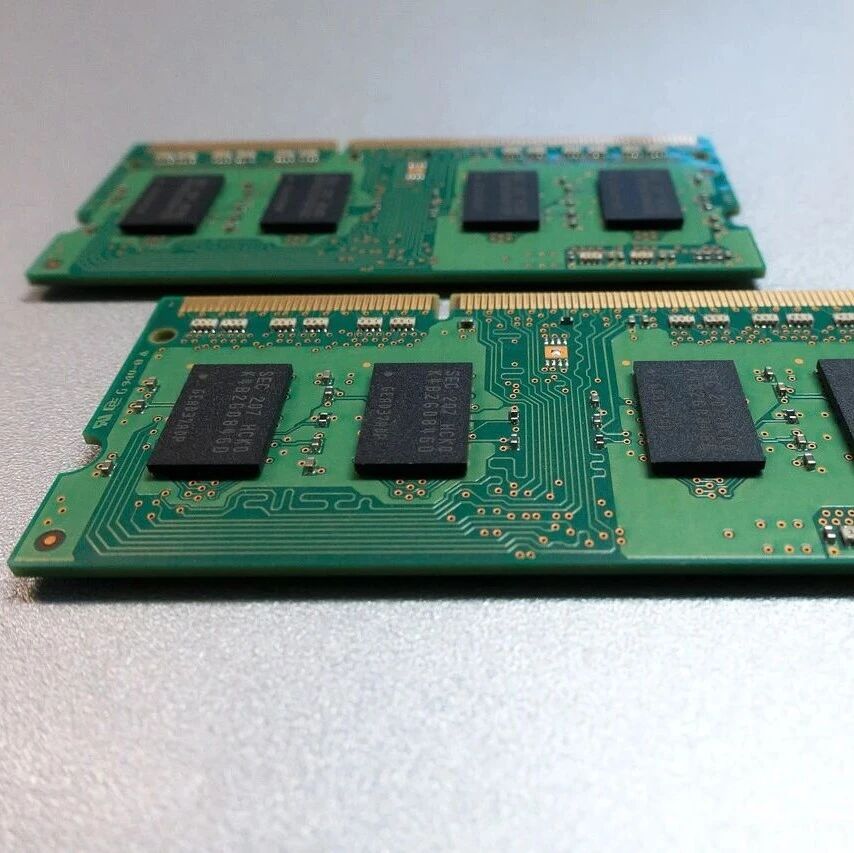
Core Insights - The article discusses the ongoing memory shortage in the DRAM market, driven by increased capital expenditures from major cloud service providers and rising demand for artificial intelligence applications [2][5]. Group 1: Market Dynamics - Major cloud service providers are increasing their capital expenditures, with Amazon raising its budget from $118 billion to $125 billion, and further increases expected in 2026 [5]. - Samsung Electronics has paused DDR5 DRAM contract pricing, leading to a ripple effect among other manufacturers, which is expected to delay contract price announcements until mid-November [2][3]. - The DRAM spot prices have surged, with DDR5 prices more than doubling since late September, resulting in a 102% increase from $7.68 to $15.5 per 16Gb chip [4]. Group 2: Price Trends - Predictions indicate that DDR5 prices will experience a "triple increase" from Q4 2025 to H1 2026, with quarterly increases expected between 30% and 50%, potentially reaching nearly $30 per 16Gb chip by early 2026 [4][6]. - DDR4 prices are also rising, with DDR4 16Gb module prices surpassing $25, and specific models reaching $27 due to limited supply [4]. Group 3: Supply Chain Implications - The memory market is shifting towards a seller's market, with significant price increases across various memory types, including a 60% monthly increase for mainstream DDR4 8Gb modules and a 40% increase for DDR3 4Gb modules [5]. - The supply chain is experiencing structural capacity shifts as suppliers prioritize high-margin products like DDR5 and high-bandwidth memory (HBM), exacerbating the supply shortage [6].
向黄仁勋汇报的英伟达36人
半导体芯闻· 2025-11-03 10:37
Core Viewpoint - The article discusses the organizational structure and strategic personnel changes at NVIDIA under CEO Jensen Huang, highlighting the importance of hardware and AI technologies in the company's future growth [3][10][13]. Group 1: Organizational Structure - Jensen Huang has 36 direct reports, divided into seven functional areas: strategy, hardware, software, AI, public relations, networking, and an executive assistant [3][6]. - Among these, nine are focused on hardware-related businesses, indicating that hardware remains the foundation of NVIDIA's operations [8][9]. - Huang's management style emphasizes a flat organizational structure, allowing for faster decision-making and information flow [72][74]. Group 2: Key Personnel - Jonah Alben, a long-time NVIDIA leader, is responsible for GPU architecture and has been with the company for 28 years [24][25]. - Dwight Diercks, who has been with NVIDIA for 31 years, oversees software development and has significantly contributed to the company's growth [32][34]. - Bill Dally, NVIDIA's Chief Scientist, has played a crucial role in evolving GPUs into general-purpose parallel computing platforms [40][42]. Group 3: New Additions - Wu Xinzhu, the only Chinese executive directly reporting to Huang, is now the Vice President of Automotive Business, focusing on strategic planning and product development [52][53]. - Wu's previous experience at Qualcomm and XPeng Motors positions him well to drive NVIDIA's automotive business, which has seen significant revenue growth since his arrival [56][64]. Group 4: Business Growth and Challenges - NVIDIA's net profit surged to approximately $29.5 billion in the 2024 fiscal year, a nearly 600% increase year-over-year [88]. - The company's workforce grew from 29,600 to 36,000 employees within a year, marking a 21.62% increase [89]. - Despite the rapid expansion, Huang's management approach may need to adapt as the organization grows, potentially moving towards a more vertical structure to manage increased complexity [99].

存储巨头,全力押注定制化!
半导体芯闻· 2025-11-03 10:37
Core Viewpoint - SK Hynix is focusing on the development of next-generation DRAM and NAND to meet the explosive growth in AI demand, aiming to become a full-stack AI memory innovator rather than just a memory supplier [2][4]. Group 1: AI Storage Solutions - SK Hynix is advancing customized HBM development to optimize AI storage solutions based on customer needs [2]. - The company is developing three innovative storage solutions: Custom HBM, AI-D (AI DRAM), and AI-N (AI NAND) [2][3]. - AI-D includes three variants: AI-D O (optimized for low power and high performance), AI-D B (large capacity and flexible memory allocation), and AI-D E (expanding applications to robotics and industrial automation) [3]. - AI-N is being developed in three directions: AI-N P (performance), AI-N B (bandwidth), and AI-N D (density) [3]. Group 2: Strategic Partnerships - SK Hynix is enhancing collaboration with key partners, including deep cooperation with NVIDIA in the HBM field and long-term collaboration with OpenAI for high-performance storage support [4]. - The company is working with TSMC to develop next-generation HBM base die chips and with SanDisk to promote international standardization of HBF [4]. - Collaboration with Naver Cloud aims to validate and optimize new AI storage products in real data center environments [4]. Group 3: Future Vision - The president of SK Hynix emphasized that competition in the AI era relies on collaboration with customers and partners to create synergies and superior products [4].

日本工程师,点出台积电致命弱点!
半导体芯闻· 2025-11-03 10:37
Core Viewpoint - The article discusses TSMC's potential vulnerabilities as highlighted by an experienced semiconductor engineer, suggesting that Japan's Rapidus could find opportunities by focusing on niche markets and customized demands rather than competing directly with TSMC and Samsung [2]. Group 1 - The engineer points out that TSMC's new leadership may be losing the customer-centric approach that characterized its previous management, raising concerns about their ability to meet seemingly minor but critical customer needs [2]. - Rapidus's success hinges not only on technological breakthroughs but also on establishing stable, long-term customer relationships, as technology alone is insufficient for survival without adoption [2]. - TSMC's competitive edge is attributed to its flexible cost management strategy, where automation is selectively implemented in cost-effective areas while relying on human labor in others, gradually scaling automation as technology and labor costs rise [2]. Group 2 - TSMC maintains a cautious approach when adopting new technologies, such as the expensive EUV lithography machines, which cost hundreds of billions of yen and are exclusively produced by ASML in the Netherlands. TSMC evaluates cost-effectiveness before making such investments [3].

特朗普:不会把Blackwell卖给中国
半导体芯闻· 2025-11-03 10:37
Core Viewpoint - The article discusses the implications of U.S. President Donald Trump's statements regarding the export of advanced AI chips from NVIDIA, specifically the Blackwell chip, emphasizing that these chips will only be available to U.S. companies and not exported to China or other countries [2][3]. Group 1: Export Restrictions - Trump stated that NVIDIA's most advanced Blackwell chips should only be supplied to U.S. customers, indicating a potential tightening of export restrictions beyond previous announcements by U.S. officials [2][3]. - The Trump administration's new AI strategy, released in July, aims to ease some environmental regulations while significantly increasing AI technology exports to allies to maintain U.S. leadership in critical technology sectors [2]. Group 2: NVIDIA's Business Operations - NVIDIA announced plans to supply over 260,000 Blackwell AI chips to South Korea and major companies like Samsung Electronics, highlighting the company's ongoing international business despite U.S. export restrictions [2]. - There has been ongoing speculation since August regarding whether Trump would allow NVIDIA to sell a downgraded version of the Blackwell chip to China, with Trump suggesting that collaboration with NVIDIA could be possible for lower-performance versions [3].
半导体性能指标,严重误差?
半导体芯闻· 2025-11-03 10:37
Core Viewpoint - Recent research from UNIST reveals that the key performance indicator for semiconductor devices, field-effect mobility, may be overestimated by up to 30 times due to structural differences in devices, necessitating new design standards to address this issue [2][3][4]. Group 1: Research Findings - The research team discovered that the measurement of charge mobility, a critical indicator of semiconductor performance, can be significantly inflated due to the phenomenon of fringe current, where current flows through the edges of electrodes rather than solely through the main channel [3]. - The team proposed a new design standard for thin-film transistors, suggesting that the channel width should be less than the electrode width, or at least 12 times smaller than the total device length (L/W ≤ 1/12), to mitigate the impact of fringe current [3][4]. - Experimental validation showed that adhering to the new design standard eliminates discrepancies between measured and actual mobility, allowing for accurate performance assessments [3]. Group 2: Recommendations and Implications - The research team recommends using Hall mobility as a cross-validation method, as it measures the inherent electrical properties of semiconductor materials and is not influenced by device geometry, thus avoiding measurement errors [4]. - Professor Kim emphasized the importance of accurate performance measurements, stating that overestimating material performance could lead to misallocation of research resources and hinder the objective development of the semiconductor industry [4]. - The findings were published in ACS Nano and received funding from various Korean governmental bodies, highlighting the significance of the research in establishing a globally applicable design standard [4].