半导体行业观察

Search documents
CPO找到了杀手级应用
半导体行业观察· 2025-11-24 01:34
Core Insights - The article discusses the challenges and advancements in power supply for data center operators, particularly in relation to the deployment of GPU servers driven by the growth of artificial intelligence [1] - Co-packaged optics (CPO) technology is highlighted as a key innovation, with NVIDIA and Broadcom leading the way in its adoption [1][5] Group 1: CPO Technology and Adoption - NVIDIA's Quantum-X Photonics CPO switch will be adopted by GPU cluster operators Lambda and CoreWeave, as well as the Texas Advanced Computing Center (TACC) [1] - CPO switches are expected to see explosive growth by 2026, driven by the need for high-speed connections in AI networks, with NVIDIA planning to achieve 1.6 Tbps port speeds with its next-generation ConnectX-9 network cards [2][5] - The integration of optical components into the switch itself reduces the need for numerous power-consuming pluggable transceivers, significantly decreasing the number from nearly 500,000 to about 128,000 for a cluster with 128,000 GPUs [2] Group 2: Reliability and Performance - One of the main barriers to CPO adoption has been concerns over reliability; a failure in a photon chip could result in the loss of multiple ports, unlike traditional switches where only one port may be affected [3] - Early tests by Broadcom and Meta indicate that CPO technology can reduce latency and improve reliability, with Meta reporting 1 million hours of jitter-free operation at 400 Gbps [3][4] - NVIDIA claims its photonic network platform has improved resilience by 10 times, allowing applications to run longer without interruption [4] Group 3: Current State and Future Developments - NVIDIA's CPO switches, including Spectrum-X and Quantum-X, feature full liquid cooling and high bandwidth capabilities, with plans for deployment by TACC, Lambda, and CoreWeave [5][6] - Broadcom is also advancing in this space, showcasing its latest generation Davisson CPO platform with a 102.4 Tbps Tomahawk 6 switch ASIC [6] - Other companies, such as Ayar Labs and Lightmatter, are exploring optical I/O integration into accelerators, with Lightmatter developing a silicon photonic intermediary layer for chip-to-chip communication [8][9]


刚刚,闻泰发声
半导体行业观察· 2025-11-23 11:21
23日晚间,闻泰科技发布《关于敦促安世荷兰切实回应沟通解决控制权问题以保障全球供应链稳定的声明》,声明全文如下: 动释放善意,明确表达了愿意与安世荷兰方 面就如何恢复闻泰科技的合法控制权、妥善 解决当前争端进行建设性沟通。我们始终相 信,通过坦诚对话解决分歧,是保障公司正 常运营和全球芯片供应稳定的切实正确途 径。 近日,我方注意到安世荷兰及其相关方的一系列单方面行为,已对全球半导体产业链的稳定构成潜在威胁。为避免局势进一步升级,维护各方合法权益, 我司特此发表声明如下: 自荷兰经济部不当干预以来,本着负责任的态度和维护全球客户利益的原则,在中国相关政府部门的大力帮助与推动下,我方已主动释放善意,明确表达 了愿意与安世荷兰方面就如何恢复闻泰科技的合法控制权、妥善解决当前争端进行建设性沟通。我们始终相信,通过坦诚对话解决分歧,是保障公司正常 运营和全球芯片供应稳定的切实正确途径。 然而,令人深感遗憾与不解的是,尽管我方展现出最大诚意, 安世荷兰方面迄今未对我方的沟通提议作出任何实质性回应。 鉴于此,我们要求安世荷兰能在切实尊重事实和法律的基础上,就如何恢复闻泰科技的合法控制权与完整股东权利,提出具有建设性且真正 ...

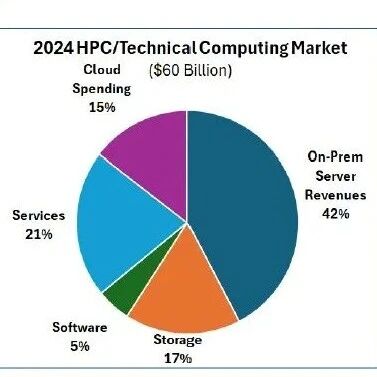
AMD Lisa Su:不担心AI泡沫,投资不够比较危险
半导体行业观察· 2025-11-23 03:37
AMD CEO Lisa Su近日在接受美国媒体访问时说,不断增长的人工智能(AI)市场是「一个巨 大的机会」,不担心AI泡沫,愿意「大胆下重注」的人正取得回报,投资不够反而比较危险。 Lisa Su相信算力需求是「永无止境的」,随着AI市场的成长,提供最好、最可靠AI基础设施的 公司将蓬勃发展,这些想法构成她的战略核心。 她说:「我并不担心AI泡沫。我真的相信,抱持这种想法的人有点太短视了。他们没有真的看 到这项技术的能耐。」她也认为科技公司对AI用途的探索,还只是触及皮毛而已。 公众号记得加星标⭐️,第一时间看推送不会错过。 来 源 : 内容来自udn 。 *免责声明:本文由作者原创。文章内容系作者个人观点,半导体行业观察转载仅为了传达一种不同的观点,不代表半导体行业观察对该 观点赞同或支持,如果有任何异议,欢迎联系半导体行业观察。 END 今天是《半导体行业观察》为您分享的第 4234 期内容,欢迎关注。 推荐阅读 ★ 一颗改变了世界的芯片 Lisa Su指出,「现在并非隔岸观火、担心自己是不是投资过度的时候。在我看来,投资不足比 投资过度要危险得多」。 Lisa Su在上周于纽约举行的投资人日演讲中说 ...


HPC市场迎来十年最快增长
半导体行业观察· 2025-11-23 03:37
Core Insights - The article discusses the significant growth in data center infrastructure spending driven by AI training and inference cluster architectures, which also positively impacts the HPC (High-Performance Computing) architecture [1][2]. HPC-AI Market Overview - According to Hyperion Research, the global HPC spending over the past three years and future five-year forecasts indicate a robust market [2]. - The HPC-AI market is projected to generate $59.93 billion in total sales in 2024, reflecting a 23.5% growth compared to 2023, with on-premises HPC-AI systems contributing $50.39 billion (up 22.9%) and cloud HPC-AI systems contributing $9.54 billion (up 4.9%) [4][5]. Future Projections - For 2025, the overall HPC-AI market is expected to bring in $58.963 billion, a 17% increase from 2024, with cloud consumption at $12.38 billion and on-premises systems at $57.75 billion [5][6]. - The growth rate is anticipated to stabilize at around 7% to 8% annually by the end of the decade, which is still double the historical average [6]. Spending Breakdown - In 2024, cloud computing consumption will account for 15.9% of the HPC-AI product spending, with 30% of cloud spending allocated to storage, compared to 21.7% for on-premises HPC-AI centers [8]. - Services constitute a significant portion of the HPC-AI budget, primarily for system installation, maintenance, and technical support, while software accounts for only 5% of the total budget [8]. Revenue by Vendor - In 2024, the leading vendors in the HPC-AI market include HPE with $7.151 billion (28.2% market share), Dell Technologies with $3.916 billion (15.5%), and Lenovo with $1.450 billion (5.7%) [13][14]. - Non-traditional suppliers, referred to as Original Design Manufacturers (ODMs), have revenue nearly equal to HPE, indicating a competitive landscape [14]. Market Segmentation - The HPC-AI market is segmented into various price ranges, with the largest share (27.9%) coming from large HPC systems priced between $1 million and $10 million, while entry-level HPC systems (under $250,000) account for 24.3% [15]. Investment Trends - Investment in HPC-AI systems is accelerating, as evidenced by new supercomputers announced by the US Department of Energy, which are expected to stabilize revenue over time due to a shift towards cloud models [17].




三星2nm产能将增长163%
半导体行业观察· 2025-11-23 03:37
Core Insights - Samsung Electronics is making significant strides in its foundry business, aiming to catch up with TSMC by stabilizing its 3nm technology and advancing towards 2nm processes [1][4] - The company is expected to achieve profitability in its foundry operations starting in 2027, driven by increased production rates at its Texas facility [4] Group 1: 2nm Capacity Expansion - Counterpoint Research predicts a 163% increase in Samsung's 2nm capacity, from 8,000 wafers per month in 2024 to 21,000 wafers per month by the end of next year [2] - The improvement in 2nm yield, estimated at 55% to 60%, has allowed Samsung to attract major clients, including a $16.5 billion contract with Tesla for AI6 chip production [2] Group 2: Competitive Positioning - TSMC holds a dominant market share of 70.2% in the foundry market, while Samsung's share is only 7.3% [3] - Samsung's introduction of Gate-All-Around (GAA) technology in its 3nm process enhances performance and power efficiency, positioning it favorably against TSMC, which will only adopt GAA in its 2nm process [3] Group 3: Flexible Pricing Strategy - TSMC's focus on major clients like NVIDIA and Apple has led to a 50% price increase for its 2nm wafers, creating an opportunity for Samsung to attract new customers with a flexible pricing strategy [3] - Samsung's foundry business is showing signs of recovery, having secured contracts with various companies, including AI semiconductor startups and major tech firms [3] Group 4: Future Outlook - Samsung anticipates a significant improvement in its financial performance as it ramps up production of 2nm technology and implements cost efficiency measures [4] - The company has reported record orders centered around advanced processes, indicating a positive trajectory for its foundry business [4]

高通与联发科明年新挑战:2nm与LPDDR6太贵
半导体行业观察· 2025-11-23 03:37
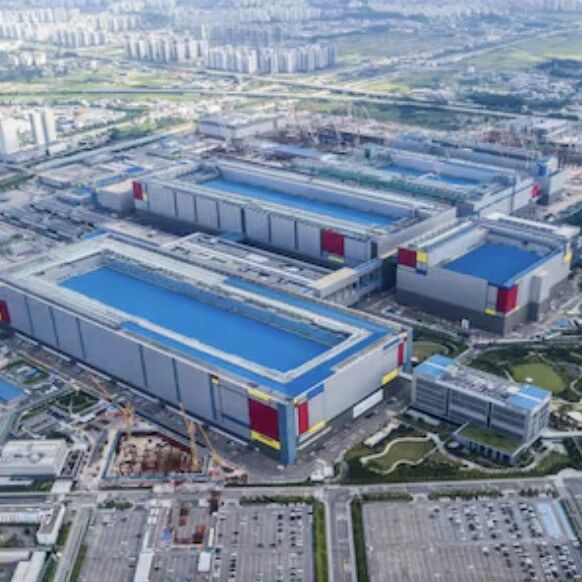
Core Insights - Qualcomm and MediaTek are preparing to launch their flagship chips, Snapdragon 8 Elite Gen 6 and Dimensity 9600, while facing rising DRAM prices, particularly for LPDDR6 RAM, which may limit its availability to only the Pro versions of these chipsets [2][3] - The increase in memory costs is expected to negatively impact flagship devices in 2026, as both companies will have to either reduce profits or push their smartphone partners to raise prices [3][4] - Qualcomm's Snapdragon 8 Elite Gen 6 will have two versions, with only one supporting LPDDR6 RAM, while MediaTek's Dimensity 9600 will have a single version [2][3] Pricing and Production Insights - The estimated cost for each wafer from TSMC's 2nm process is around $30,000, which adds to the financial pressure on Qualcomm and MediaTek [3] - There are rumors that Chinese memory manufacturers are preparing for mass production of the new DRAM technology, which could provide some pricing negotiation leverage for Qualcomm and MediaTek [2] - Memory prices are expected to stabilize starting in 2027, potentially making smartphones with Snapdragon 8 Elite Gen 7 and Dimensity 9700 more affordable [3] Performance Insights - The N2P node from TSMC offers only a 5% performance improvement over the N2 node, yet Qualcomm and MediaTek aim to gain an edge over Apple, even if it results in higher prices for their Snapdragon 8 Elite Gen 6 and Dimensity 9600 [4]

苹果M系列芯片,GPU和内存成为新焦点
半导体行业观察· 2025-11-23 03:37
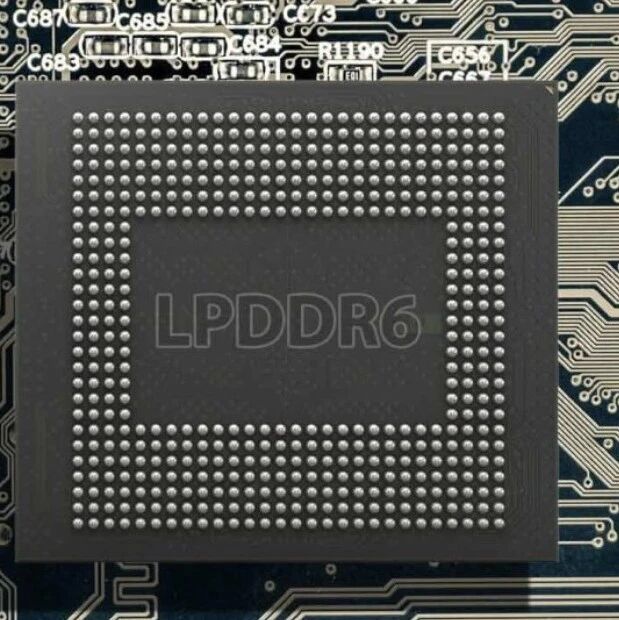
Core Insights - Apple's custom chips have rapidly evolved since the launch of the M1 processor in 2020, marking a shift away from Intel and focusing on CPU efficiency [1] - The balance of power consumption has shifted over time, with the M3 Max increasing CPU clock frequency and power limits, allocating more budget to CPU in mobile systems [1] - The upcoming M4 Max is expected to introduce Thunderbolt 5 to Macs, with CPU no longer being the primary heat dissipation consumer [1] Power Consumption Trends - The early M1 design allocated approximately 18W to 25W of its power budget to the CPU, with the remainder for graphics processing and memory bandwidth [3] - M1 Max has a total power consumption of about 115W, with the CPU core consuming only 25W; the estimated CPU consumption for M4 Max is around 48W out of approximately 70W total power [3] - The latest M5 generation, powering the new 14-inch MacBook Pro and iPad Pro, has a maximum CPU power of 15W within a total power budget of 25W [3] Performance Metrics - Multi-core CPU benchmark scores have increased from 13,188 for M1 Max to a peak of 25,000 for M4 Max, indicating moderate growth [4] - GPU performance has risen significantly from approximately 112,000 for M1 Max to over 200,000 for the anticipated M5 Max [4] - The Neural Engine has improved from 11 TOPS in the first-generation M1 to an estimated 133 TOPS in the new M5, with predictions for M5 Max reaching around 400 TOPS [4] Strategic Focus - Apple is not pursuing peak CPU output but optimizing sustained mixed workloads that combine CPU, GPU, and AI processing, reshaping perceptions of professional MacBooks [4] - The efficiency of power distribution is now more critical for creative and machine learning tasks, focusing on data movement and power balance rather than single-core speed [4] - The basic M5 chip has reached a mature efficiency point for the CPU, with the true performance cost now lying in the GPU and memory systems [4]

黄仁勋抱怨股价下滑
半导体行业观察· 2025-11-23 03:37
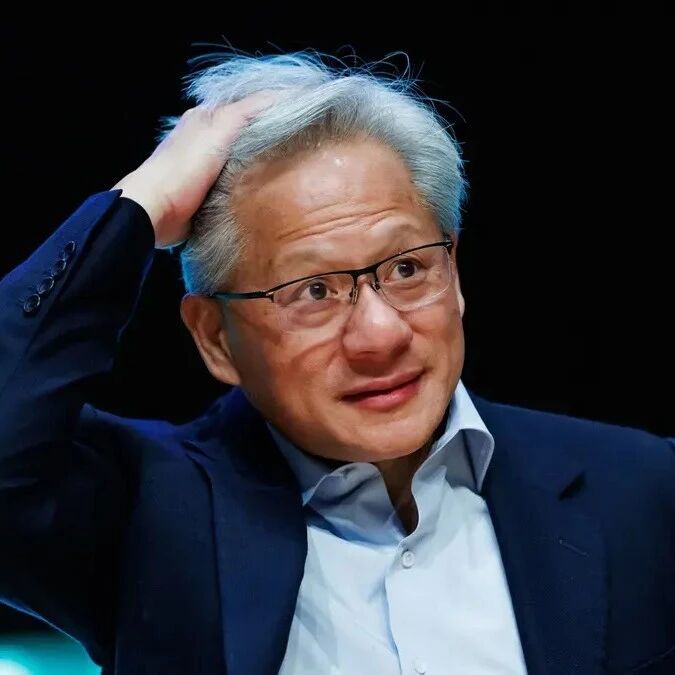
公众号记得加星标⭐️,第一时间看推送不会错过。 来 源 : 内容来自 Tom's Hardware 。 英伟达的一位发言人在一份声明中告知 Tom's Hardware:"在又一个季度实现了令人难以置信 的增长和惊人的需求之后,黄仁勋给公司的信息是保持专注,让市场顺其自然。"其余内容保持 如下文发布。 据《商业内幕》报道,英伟达首席执行官黄仁勋在一次泄露的全员会议上据称告诉英伟达员 工,尽管该公司创下了破纪录的季度业绩,但"市场并没有赏识"这家人工智能巨头。在英伟达 发布季度财报的仅仅一天后,该公司的股价就从大约 195 美元跌至 180 美元的低点,考虑到英 伟达的业绩表现,这令人感到意外。这意味着其市值从历史最高点 5.12 万亿美元跌至约 4.4 万 亿美元,该公司在仅一天的交易中就损失了约 3650 亿美元。 这一波动似乎是受到对人工智能泡沫的担忧所驱动,许多专家和分析师,包括前英特尔首席执 行官帕特·格尔辛格,都曾对此发出警告。"如果我们交出了一份糟糕的季度业绩,那就是存在 人 工 智 能 泡 沫 的 证 据 。 如 果 我 们 交 出 了 一 份 出 色 的 季 度 业 绩 , 我 们 就 是 在 ...
住友化学收购一家台湾公司
半导体行业观察· 2025-11-23 03:37
导体工艺化学品制造基地,并在美国建立第二个制造基地(与德克萨斯州的工厂一起)。 住友集团尚未透露此次交易的财务条款。 该协议也为住友化学实现其目标奠定了基础,即到 2030 财年将 2024 财年的销售额翻一番。 此举标志着该公司在深化其在全球半导体行业布局方面迈出了重要一步。这一战略举措不仅使 住友化学能够拓展其半导体相关化学品产品线,还能增强其在这一快速增长、技术驱动型行业 的竞争力。据Chemanalyst报道,此次收购符合住友化学的长期愿景,即成为下一代半导体制 造领域领先的解决方案提供商。 公众号记得加星标⭐️,第一时间看推送不会错过。 来 源 : 内容整合自网络 。 近 日 , 住 友 化 学 宣 布 , 收 购 了 台 湾 半 导 体 工 艺 化 学 品 公 司 亚 洲 联 合 电 子 化 学 股 份 有 限 公 司 (AUECC)。收购 AUECC 将使住友化学能够加强其全球影响力,并在台湾建立其第一个半 ★ 一颗改变了世界的芯片 ★ 美国商务部长:华为的芯片没那么先进 ★ "ASML新光刻机,太贵了!" ★ 悄然崛起的英伟达新对手 加星标⭐️第一时间看推送,小号防走丢 通过此次收购,住友化学 ...

芯片涨价潮,来了
半导体行业观察· 2025-11-23 03:37
Core Viewpoint - The storage chip industry is experiencing a significant price surge driven by unprecedented demand from AI applications and a supply reduction, marking a strong recovery in the sector [1][4][15]. Price Surge in Storage Chips - The price of DDR5 chips increased by 102% within a month, while DDR4 saw a rise of over 90% [1][3]. - Samsung's DDR5-5600 (16GB) DRAM price tripled from 69,000 KRW to 208,050 KRW in two months, with contract prices for server memory chips raised by 30% to 60% [3][4]. - NAND spot prices rose approximately 50% over six months, while DRAM spot prices surged by 300%, significantly exceeding the growth seen during the 2016-2018 storage cycle [3][4]. Supply and Demand Dynamics - The core reason for the price increase is the dual impact of surging demand and reduced supply, with major manufacturers reallocating capacity to higher-margin products like HBM and DDR5, resulting in a 25% reduction in traditional storage supply [4][12]. - AI server requirements are driving demand, with DRAM usage in AI servers being about eight times that of traditional servers, and NAND Flash usage three times higher [4][12]. Impact on the Semiconductor Industry - The price increase in storage chips is causing a ripple effect across the semiconductor industry, affecting GPUs, SoCs, and passive components [6][8]. - GPU prices are expected to rise as manufacturers like NVIDIA and AMD prepare to increase graphics card prices due to the rising costs of GDDR memory linked to storage chips [6][7]. - The cost of passive components is also rising, with companies like Fenghua High-Tech announcing price increases of 5% to 30% due to higher raw material costs [8][9]. Market Reactions and Adjustments - Smartphone manufacturers are delaying storage chip purchases due to soaring prices, with some companies reducing RAM specifications to manage costs [10][11]. - The low-end smartphone market may face significant challenges, potentially leading to production bottlenecks and increased losses for entry-level models [11][12]. Long-term Industry Outlook - Morgan Stanley predicts that the storage industry will enter a "super cycle" driven by AI, with global storage revenue expected to reach $200 billion by 2025 and nearly $300 billion by 2027 [15]. - The price surge is expected to create structural differentiation in the market, with high-end chips remaining in tight supply while mid-range chips may face price adjustments by 2026 [15][16].