半导体行业观察

Search documents
这条芯片赛道,大火
半导体行业观察· 2025-11-22 03:09
Core Viewpoint - The article highlights the rapid growth and significance of ASIC (Application Specific Integrated Circuit) in the semiconductor industry, particularly driven by the increasing demand for AI computing power. Unlike general-purpose GPUs, ASICs are tailored for specific applications, leading to superior performance and efficiency in AI tasks [1][4][11]. Group 1: ASIC Development and Market Dynamics - ASIC emerged in the 1980s as a response to the need for customized chips that could meet specific product requirements, breaking away from the traditional model of generic chip production [1][2]. - The introduction of TSMC and the evolution of EDA tools in the 1990s allowed system manufacturers to design chips independently, leading to the customer-owned tools (COT) model, which enhanced supply chain flexibility [3]. - The success of Google's TPU in 2016 marked a turning point, establishing ASIC as a critical component in AI infrastructure, with major tech companies recognizing the need for customized chips to optimize efficiency and cost [4][5]. Group 2: Advantages of ASIC - ASICs offer extreme performance optimization by focusing resources on specific tasks, such as matrix multiplication and convolution operations, which are essential for AI computations [7][8]. - The energy efficiency of ASICs is a significant advantage, especially in AI applications where power consumption is critical. ASICs can minimize static power loss by eliminating unnecessary components [9][10]. - The compact design of ASICs allows for powerful functionalities to be integrated into small form factors, which is increasingly important in modern devices like smartphones and IoT applications [10][11]. Group 3: Market Leaders and Financial Performance - Broadcom and Marvell have emerged as dominant players in the ASIC market, with Broadcom reporting AI business revenues exceeding $4.4 billion, a 46% year-over-year increase, and Marvell's data center revenue reaching $1.441 billion, a 76% increase [12][14]. - The combined market share of Broadcom and Marvell exceeds 60%, with Broadcom holding 55-60% and Marvell 13-15%, primarily serving top-tier cloud service providers [12][13]. - Marvell predicts that global data center capital expenditures will surpass $1 trillion by 2028, with ASIC market size expected to reach $55.4 billion, growing at a CAGR of 53% from 2023 to 2028 [14][15]. Group 4: Emerging Competitors and Strategic Moves - Traditional semiconductor companies like Intel and Qualcomm are pivoting towards ASIC markets, with Intel focusing on custom chip services and Qualcomm acquiring Alphawave to enhance its SerDes capabilities [22][24]. - MediaTek is also making strides in the ASIC space, securing contracts with major tech firms like Google and Meta for custom chip designs [29][31]. - Taiwanese companies such as Wistron and Chipone are capitalizing on the ASIC trend, leveraging their relationships with TSMC and their technical expertise to secure significant market positions [32][34]. Group 5: Future Outlook and Challenges - The ASIC market is expected to continue growing, driven by the increasing complexity of AI models and the need for efficient computing solutions [16][17]. - However, challenges remain, including the need for advanced IP design capabilities and the ability to manage complex system integrations as AI applications evolve [17][20]. - Domestic Chinese firms are also positioning themselves to capture market share in the ASIC space, despite facing challenges in IP accumulation compared to international giants [39][41].


芯片散热陷阱,何解?
半导体行业观察· 2025-11-22 03:09
Core Insights - The article discusses the thermal challenges posed by dielectric films in advanced semiconductor chips, particularly in the context of artificial intelligence data centers, where the physical size of chips is shrinking, leading to increased heat generation and cooling demands [2][3][4]. Group 1: Thermal Management Challenges - Dielectric films, essential for signal isolation and insulation, are becoming thermal traps that limit data processing speeds and increase power consumption for cooling [2][4]. - Historically, dielectric materials were optimized for electrical performance, neglecting thermal conductivity, which is now critical due to the high power densities in AI server chips [2][4][5]. - The transition to vertical stacking in logic circuits and memory introduces new thermal bottlenecks at each bonding interface or insulation layer, exacerbating heat dissipation issues [3][4]. Group 2: Material Properties and Thermal Conductivity - Low-k and ultralow-k dielectric materials, while effective in reducing capacitance, significantly hinder thermal transfer, with thermal conductivities often an order of magnitude lower than required for efficient heat dissipation [4][5]. - The presence of defects such as voids or weak interfaces in these materials can create hotspots, further complicating thermal management [4][6]. Group 3: Interface and Boundary Resistance - Thermal boundary resistance (TBR) at material interfaces is a major contributor to overall thermal resistance in advanced logic circuits, affecting heat transfer efficiency [5][11]. - Even thin diffusion barrier and liner layers can introduce measurable thermal resistance, complicating heat dissipation in high-aspect-ratio structures [6][11]. Group 4: Modeling and Simulation - Accurate thermal modeling must account for the dynamic nature of heat generation and transfer in advanced devices, as traditional steady-state models underestimate the complexity of thermal behavior [14][15]. - Multiphysics modeling that integrates electrical, mechanical, and thermal interactions is essential for predicting device reliability and performance [8][14]. Group 5: Implications for Future Materials - The understanding of dielectric materials is evolving; they are now seen as active components in thermal management rather than passive insulators [18][19]. - Future semiconductor manufacturing will require new materials that balance electrical insulation with thermal conductivity, addressing the challenges posed by increasing power densities and stacking heights [19].
又一家国产功率半导体公司,被收购
半导体行业观察· 2025-11-22 03:09
Core Viewpoint - The company intends to acquire up to 100% of the shares of Longteng Semiconductor Co., Ltd., with a proposed transaction value between HKD 4.5 billion and HKD 9 billion, aiming to expand its business in the power semiconductor market [1][2]. Group 1 - The company signed a non-binding memorandum of understanding with Xu Xichang, the largest shareholder and chairman of Longteng Semiconductor, to facilitate the acquisition [1]. - Longteng Semiconductor is a leading provider of power semiconductor devices and system solutions, recognized as a key player in China's semiconductor and integrated circuit industry [1][2]. - The proposed acquisition is seen as a strategic move to enhance the company's market share in the power semiconductor sector, which is crucial given that China accounts for nearly half of the global power semiconductor consumption market [2]. Group 2 - Longteng Semiconductor specializes in the research, design, and sales of power semiconductor products, primarily focusing on power MOSFETs [2]. - The product range of Longteng includes super junction MOSFETs, planar MOSFETs, shielded gate trench MOSFETs, and trench MOSFETs, widely used in various applications such as LED lighting, power adapters, and battery management systems [2].

这款CMOS逻辑芯片,永不消亡
半导体行业观察· 2025-11-22 03:09
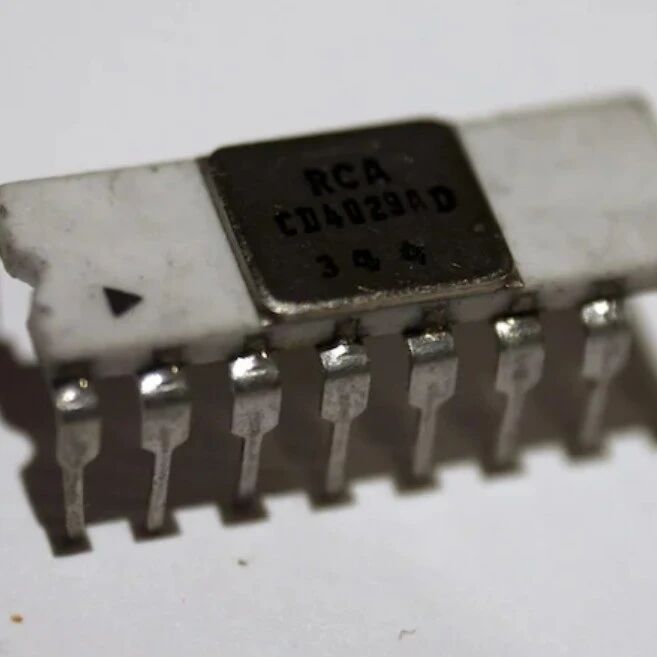
公众号记得加星标⭐️,第一时间看推送不会错过。 来 源 : 内容编译 自 allaboutcircuits,谢谢 。 55 年来,该逻辑系列产品凭借其抗噪声能力、轨道灵活性和无与伦比的持久性,实现了模拟和数字 设计的融合。 到了 20 世纪 60 年代末,TTL 电路凭借其速度、扇出能力以及日益丰富的门电路、锁存器和计数器 产品线,逐渐主导了数字逻辑电路。但它也带来了功耗高、5V 固定电压以及对模拟电路兼容性有限 的缺点。RCA 公司则另有打算。 1968年,该公司推出了CD4000 COS/MOS系列,这是首个完全采用CMOS工艺制造的商用逻辑系 列。CD4000的供电电压范围为3V至18V,输入阈值与VDD相关,静态功耗在纳安级,代表了一种新 型逻辑电路,其特点是寿命长、功耗低和抗噪声能力强。 这是RCA公司早期生产的CD4029A计数器集成电路,采用16引脚陶瓷双列直插式封装。 半个多世纪过去了,CD4000 系列器件仍在生产,并继续解决各种问题。虽然它们在开关速度上永远 无法与同类产品匹敌,但在灵活性、稳健性和与实际模拟信号的兼容性方面,它们仍然无可匹敌。它 们的寿命甚至超过了创造它们的公司以及它们诞 ...
H200将出口中国?美国正在考虑
半导体行业观察· 2025-11-22 03:09
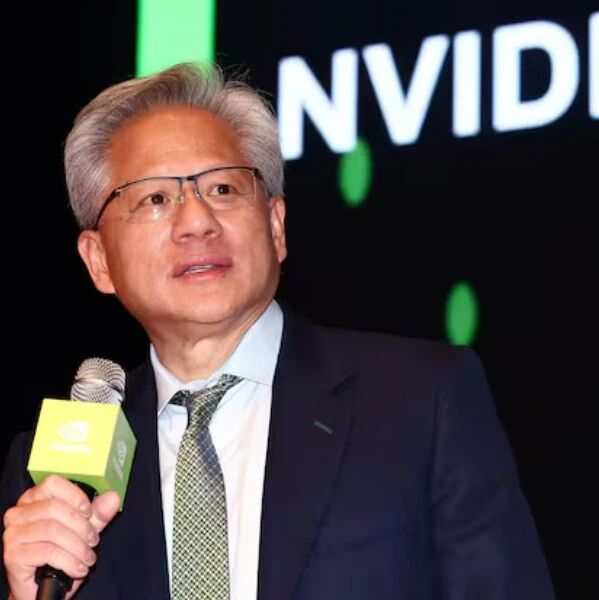
Core Viewpoint - The article discusses the potential changes in U.S. export policies regarding advanced AI chips, particularly focusing on NVIDIA's H200 GPU and its implications for the Chinese market [4][5]. Group 1: U.S. Export Policy Changes - The U.S. is considering whether to allow the export of NVIDIA's H200 GPU to China, which is more powerful than the currently permitted H20 chip [2][4]. - The H200, released in 2023, is based on the Hopper architecture and is the highest-performing AI chip in its class, although it lags behind the newer Blackwell architecture B200 [4]. - There is no final decision yet on the export approval, and discussions may not lead to actual approvals [4]. Group 2: Historical Context and Current Stance - Under the Biden administration, export controls were implemented in 2022 to restrict advanced AI chip exports to China [5]. - NVIDIA's CEO, Jensen Huang, indicated that the company's sales prospects in the Chinese market are currently "zero" and that efforts are being made to persuade both U.S. and Chinese governments to allow re-entry into the market [5]. Group 3: International Reactions - Former President Trump previously stated that while selling semiconductors to China is possible, the most advanced products should not be sold [4]. - The UK’s Chancellor of the Exchequer, Scott Benton, mentioned that Blackwell chips could only be exported to China after they are no longer considered cutting-edge technology, which could take one to two years [4]. - Recently, the U.S. has shifted its stance by allowing the export of NVIDIA's latest chips to Middle Eastern countries like Saudi Arabia and the UAE [4].

日本将量产2纳米,IPO规划曝光
半导体行业观察· 2025-11-22 03:09
公众号记得加星标⭐️,第一时间看推送不会错过。 同日,经济产业省(METI)将Rapidus公司选定为符合《信息处理促进法》财政支持条件的下一代 半导体制造商。此前,产业结构审议会下一代半导体分委会审议了Rapidus公司提交的实施计划,并 根据该计划报告做出了最终决定。根据该计划,经济产业省计划通过信息技术促进机构(IPA)从 2025财年的初始预算中拨出1000亿日元进行初步投资。 来 源 : 内容编译自 eetimes.jp,谢谢 。 2025年11月21日,经济产业大臣赤泽昭正宣布,政府计划向Rapidus投资1000亿日元。Rapidus的实 施计划也于同日公布,计划于2031财年左右上市。 Rapidus实施计划概要 目标是在2015财年下半年实现2nm工艺的量产,之后每2-3年进行新一代工艺的量产。 在提交给经济产业省(METI)的实施计划中,Rapidus概述了其中期计划,即在2027财年下半年开 始量产2nm制程的半导体。该计划还概述了此后每两到三年量产最新一代(1.4nm和1.0nm)制程半 导体的中期路线图。此外,Rapidus还提出了在2029财年左右实现正经营现金流、在2031财年左 ...
他们都想摆脱英伟达
半导体行业观察· 2025-11-22 03:09
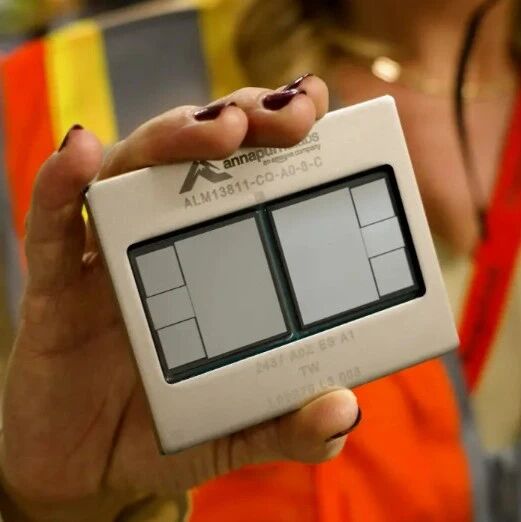
Core Viewpoint - Nvidia's performance has exceeded expectations, driven by strong demand for its GPUs in AI workloads, while custom ASIC chips are rapidly emerging as competitors in the AI chip market [3][6][12]. Group 1: Nvidia's GPU Performance - Nvidia has become the highest-valued public company globally, with approximately 6 million units of its latest Blackwell GPUs shipped in the past year [4][8]. - The sales of Nvidia's Blackwell systems have significantly surpassed expectations, indicating robust demand for GPUs in AI applications [6][9]. - Nvidia's GPUs are optimized around its proprietary software platform CUDA, which differentiates it from competitors like AMD [8]. Group 2: Rise of Custom ASIC Chips - Major tech companies like Google, Amazon, Meta, and Microsoft are developing custom ASIC chips, which are smaller, cheaper, and more efficient than traditional GPUs [3][6][12]. - Google's TPU is considered a leader in the ASIC space, with some experts believing it rivals or surpasses Nvidia's GPUs in technology [6][12]. - The initial costs for designing custom ASICs are high, but they offer long-term benefits for large cloud service providers [11][12]. Group 3: Other AI Chip Technologies - FPGAs (Field Programmable Gate Arrays) are also gaining traction, allowing for reconfiguration post-manufacturing, but they generally have lower performance and efficiency compared to ASICs and GPUs [17][19]. - Edge AI chips, such as NPUs (Neural Processing Units), are being integrated into devices to enable AI functionalities while conserving battery life and space [17][19]. - Companies like Qualcomm, Intel, and AMD are producing NPUs, while Apple has integrated neural network accelerators into its M-series chips [17][19]. Group 4: Market Dynamics and Future Trends - The demand for AI chips is expected to shift from data centers to mobile devices, vehicles, and wearables, indicating a broader application of AI technology [19]. - Despite the competitive landscape, Nvidia's established position and developer ecosystem make it challenging for new entrants to disrupt its dominance [19].
梳理 | 安世半导体控制权争端,关键节点
半导体行业观察· 2025-11-22 03:09
公众号记得加星标⭐️,第一时间看推送不会错过。 来 源 : 内容编译自na,谢谢 。 荷兰使用冷战时期法律来接管中国控股的Nexperia公司,这场争端危及全球供应链。 大约两个月前,荷兰当局接管了芯片制造商Nexperia ,导致位于奈梅亨的总部与该公司的中国大陆 分公司之间发生冲突,后者誓言要作为一家独立企业运营并履行订单。 那场争端也暴露了全球汽车供应链的脆弱性,因为Nexperia所谓的传统芯片的任何出货中断都会影响 几乎所有主要的欧洲汽车制造商,以及日本和美国的汽车制造商。 以下是Nexperia危机中的关键节点: 9月29日 美国商务部下属的工业与安全局(BIS)扩大了出口管制范围,将至少50%股权由华盛顿贸易黑名单 上的公司持有的实体纳入其中。Nexperia之所以受到美国制裁,是因为它由去年12月被列入黑名单的 闻泰科技全资拥有。 10月17日 Nexperia中国分公司告知客户,其荷兰总部通知员工,工资将停止发放,员工对公司系统的访问权限 也将被暂停。该分公司称,其面临"残酷打压"。 10月18日 9月30日 荷兰经济事务部以国家安全为由,援引一项鲜为人知的1952年法律——《货物供应法》, ...

两院院士增选结果公布,144位专家当选
半导体行业观察· 2025-11-21 01:43
中国科学院、中国工程院11月21日公布2025年院士增选结果,分别选举产生中国科学院院士73人,中国工程院院士71人。 院士是我国科学技术方面和工程科技领域的最高荣誉称号,院士制度是党和国家为树立尊重知识、尊重人才导向,凝聚优秀人才服务国家设立的一 项重要制度。本次增选后,我国院士队伍的结构进一步优化。 新当选的中国科学院院士平均年龄57.2岁,最小年龄44岁,最大年龄66岁,60岁(含)以下的占67.1%,女性科学家有5人当选。新当选的中国工程 院院士中,有6位扎根西部边远地区的专家,有8位女性科学家。 据悉,本次两院院士增选突出国家战略需求导向,突出以科技创新引领新质生产力的发展要求。增选工作中,中国科学院、中国工程院坚持院士增 选纪律严的基调,强化纪律要求和全过程监督,对候选人学术学风、道德品行、遵规守纪等方面进行了严格把关,积极接受社会监督,严防说情打 招呼,切实把好院士队伍"入口关"。 本次增选后,我国现有中国科学院院士共908人,现有中国工程院院士共1002人。 | 序号 | 姓名 | 年龄 | 工作单位 | 研究方向 | | --- | --- | --- | --- | --- | | 1 | ...

半导体公司TOP 20,最新榜单
半导体行业观察· 2025-11-21 00:58
Group 1 - The global semiconductor market is projected to reach $208 billion in Q3 2025, marking the first time it surpasses the $200 billion threshold, with a quarter-on-quarter growth of 15.8% [1] - In the first half of 2025, global semiconductor sales increased by 19% year-on-year, totaling $346 billion, driven by strong demand for AI-driven infrastructure and next-generation data centers [3] - The semiconductor industry is experiencing robust recovery across multiple regions, including the Americas, China, and Asia-Pacific, all showing double-digit growth [3] Group 2 - The top 20 semiconductor companies are showing overall positive performance, with Nvidia leading at $57 billion in revenue for Q3 2025, followed by Samsung and SK Hynix [6][7] - Memory companies are seeing significant growth, with Kioxia up 31%, Micron up 22%, and SanDisk up 21%, while MediaTek is the only company reporting a revenue decline of 5.5% [6][7] - Companies are forecasting varied revenue changes for Q4 2025, with 9 out of 14 expecting growth, while 5 anticipate declines [7] Group 3 - The semiconductor market has grown by 21.2% year-on-year in the first three quarters of 2025, significantly exceeding initial expectations, with AI being a major growth driver [7] - Analysts express uncertainty regarding the semiconductor market forecast for 2026, with predictions ranging from 12% to 18% growth, influenced by economic uncertainties and reliance on AI [12][10] - The semiconductor equipment market is expected to remain strong over the next three years, but faces risks from potential slowdowns in AI investment and changes in regional supply chains [13] Group 4 - The materials market is projected to grow by 6% in 2025, with strong demand for silicon wafers and wet chemicals, while the 300mm wafer market is expected to grow by 7% [14] - Advanced packaging is identified as a rapidly growing sector, but increasing complexity in packaging processes poses challenges for future demand [15]