半导体行业观察

Search documents
错过等一年丨半导体人年度聚会你参加了吗?
半导体行业观察· 2025-11-09 03:14
Core Insights - The ICCAD-Expo 2025 will take place on November 20-21 in Chengdu, showcasing cutting-edge technologies and innovations in the semiconductor industry [2] - The event will feature a keynote report by Professor Wei Shaojun, focusing on the current state and future direction of China's integrated circuit design industry [2][12] - The expo will gather over 300 high-quality exhibitors across the entire IC industry chain, including EDA, IP, design services, wafer manufacturing, packaging, and testing [5][13] Industry Trends - The event emphasizes a larger scale, more exhibitors, higher-level guests, and increased audience engagement compared to previous years, making it a must-attend for industry professionals [2] - The expo will include one summit forum, ten sub-forums, and one industry exhibition, focusing on frontier technologies and innovative applications in the integrated circuit sector [7] Networking Opportunities - The event is expected to attract over 8,000 industry elites, including more than 2,000 IC companies and 300 upstream and downstream service providers, with 80% of attendees being managerial level or above [12] - Participants will have the opportunity to connect with key industry players and explore potential business collaborations [12][14] Exhibitor Categories - Exhibitors will be categorized into various segments, including EDA, IP, IC design services, wafer manufacturing, packaging, testing, equipment, and materials, providing a comprehensive view of the industry [13]


光刻机大厂,不如预期
半导体行业观察· 2025-11-09 03:14
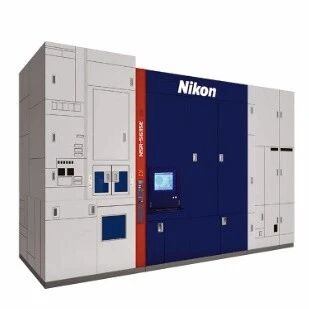
Core Viewpoint - Nikon has reported its first operating loss in five years due to a decrease in semiconductor lithography machine sales and the impact of U.S. tariffs, leading to a downward revision of its lithography machine sales forecast for the year [2][3]. Financial Performance - Nikon's consolidated revenue for the first half of the fiscal year (April-September 2025) decreased by 6.0% year-on-year to 312.915 billion yen, with an operating loss of 4.829 billion yen compared to an operating profit of 5.8 billion yen in the same period last year [2]. - The company's net profit surged by 80.7% to 5.356 billion yen, benefiting from one-time gains from the dissolution of a subsidiary [2]. Business Segments - Precision machinery segment revenue, which includes semiconductor and FPD lithography machines, fell by 14.3% year-on-year to 69.886 billion yen, while operating profit increased by 222.6% to 3.044 billion yen due to structural reforms [2]. - The imaging segment, which includes cameras, saw revenue decline by 4.4% to 145.037 billion yen, with operating profit plummeting by 47.5% to 15.143 billion yen [2]. Sales Volume - For the period of April-September, Nikon's global sales of single-lens digital cameras increased by 17% year-on-year to 480,000 units, while interchangeable lens sales rose by 3% to 670,000 units [3]. - Sales of semiconductor lithography machines were 9 units, down from 10 units last year, and FPD lithography machine sales were 15 units, down from 16 units [3]. Revised Sales Targets - Nikon has maintained its global sales target for single-lens cameras at 950,000 units for the fiscal year, representing a 12% increase, and for interchangeable lenses at 1.4 million units, a 7% increase [3]. - The sales target for semiconductor lithography machines has been revised down from 34 units to 29 units, while the target for FPD lithography machines has been adjusted from 35 units to 33 units [3]. Revenue and Profit Forecasts - Nikon has lowered its consolidated revenue forecast for the fiscal year from 700 billion yen to 680 billion yen, a decrease of 4.9%, and its operating profit forecast from 21 billion yen to 14 billion yen, an increase of 478.1% [3]. - The net profit forecast has also been reduced from 27 billion yen to 20 billion yen, an increase of 226.6% [3].
3nm,抢爆了
半导体行业观察· 2025-11-09 03:14
Core Insights - TSMC's 3nm process has officially entered a golden mass production phase, with third-quarter revenue contribution rising to 23%, surpassing the 5nm process and becoming a key driver for overall operations [2] - The demand for AI and cloud applications is driving TSMC's 3nm production lines to operate at full capacity, with utilization rates at the Tainan Fab18 facility nearing maximum [2] - NVIDIA is a major contributor, increasing its monthly wafer orders to 35,000, which is straining the advanced process capacity [2] Group 1 - TSMC's monthly 3nm production capacity has rapidly increased from 100,000 wafers at the end of last year to 100,000-110,000 wafers, with projections to reach 160,000 wafers by 2025, representing a nearly 50% increase [2] - Major cloud service providers (CSPs) are competing for 3nm capacity, with AWS and Google planning to utilize TSMC's 3nm process for their AI chips [2] - The semiconductor industry anticipates challenges in 3nm wafer supply next year, as CSPs like Google seek to secure more wafer allocations [3] Group 2 - TSMC's 3nm process is expected to account for over 30% of its revenue next year, driven primarily by AI and high-performance computing (HPC) [3] - TSMC plans to increase prices for advanced process technology by 3-5% over the next four years, reflecting strong demand for AI chips and indicating a seller's market for the most advanced wafer foundry services [3] - The introduction of improved versions of the 3nm process, such as N3E and N3P, aims to optimize performance, power consumption, and yield [3]



硅片,冷热不均
半导体行业观察· 2025-11-09 03:14
Core Viewpoint - The semiconductor industry remains vibrant under the influence of AI, but the upstream wafer manufacturing materials segment is showing signs of oversupply, particularly in the 200mm and 300mm wafer markets, indicating a structural demand shift rather than a full recovery [2][5][6]. Group 1: Market Conditions - The global silicon wafer market is experiencing a supply surplus of approximately 5% to 10%, with 12-inch wafer demand remaining resilient, while 8-inch and 6-inch wafer utilization rates have dropped below 80% and 70%, respectively [2]. - The overall silicon wafer shipment is projected to grow by 3.1% year-on-year in Q3 2025, reaching 3.313 billion square inches, although it shows a 0.4% decline compared to the previous quarter [2]. - The demand for 300mm wafers is recovering, while 200mm wafer demand remains weak, with expectations of continued inventory adjustments in the automotive sector [5][6]. Group 2: Company Performance - Shin-Etsu Chemical reported a 22% decline in revenue and a 12% drop in net profit for the first half of the fiscal year ending September 30, 2025, indicating pressure on overall profitability due to market conditions [5]. - The company noted that 300mm wafer demand hit a low in Q1 2025 but has been on a recovery path since Q2, with stable orders expected in Q4 2025 [6]. Group 3: Technological Trends - The 12-inch silicon wafer has become the industry standard, accounting for over 70% of global shipments in 2023, with expectations of monthly demand exceeding 10 million pieces by 2026 [10][12]. - The production process for silicon wafers includes multiple stages, and larger wafers yield more chips per unit, leading to lower average manufacturing costs [10][11]. Group 4: Competitive Landscape - The global 12-inch silicon wafer market is highly concentrated, with five major players—Shin-Etsu, SUMCO, GlobalWafers, Siltronic, and SK Siltron—holding over 85% of the market share [13][14]. - Domestic competition in China is emerging, with several companies ramping up production capabilities, although the industry still relies heavily on imports for high-end wafers [18][23]. Group 5: Future Outlook - The demand for silicon wafers is expected to align with the growth of AI applications, with significant room for expansion in the 300mm wafer segment, which currently accounts for less than 10% of AI semiconductor shipments [6][12]. - The domestic silicon wafer production capacity is projected to increase significantly, potentially meeting 40% of China's 12-inch wafer demand by 2026 [21][23].

马斯克建晶圆厂,黄仁勋:没那么容易
半导体行业观察· 2025-11-09 03:14
Core Viewpoint - Tesla's CEO Elon Musk is considering building a chip manufacturing facility named "TeraFab" to meet the growing demand for AI chips, aiming for a scale larger than TSMC's "Gigafab" [2][4]. Group 1: Tesla's Chip Manufacturing Plans - Musk indicated that Tesla may directly invest in chip production to address the substantial semiconductor needs for AI applications, suggesting that TeraFab would have a monthly capacity exceeding 100,000 wafers [2][4]. - Currently, TSMC's facilities producing 30,000 to 100,000 wafers per month are classified as "Megafab," while those exceeding 100,000 wafers are termed "Gigafab" [2]. - If TeraFab is realized, it could position Tesla among the largest chip manufacturers globally, surpassing current mainstream wafer manufacturers [2]. Group 2: Challenges in Chip Manufacturing - Nvidia's CEO Jensen Huang emphasized the complexity of establishing advanced chip manufacturing capabilities, noting that it requires significant engineering expertise, scientific research, and process experience [3][6]. - The investment required for a facility capable of producing approximately 20,000 wafers per month can reach several billion dollars, excluding ongoing development and production tuning costs [6]. - The example of the Japanese startup Rapidus, which aims to establish 2nm process capabilities by 2027 with an estimated expenditure of around $32 billion, illustrates the high stakes and challenges in entering advanced semiconductor manufacturing [6][7]. Group 3: Tesla's Current Supply Chain Strategy - To ensure a stable supply of chips, Tesla is currently utilizing a dual-sourcing strategy with TSMC and Samsung, and is considering Intel as a potential partner, although no agreements have been finalized [4][5]. - Musk stated that as Tesla's AI applications expand, reliance on external suppliers will become insufficient, necessitating a shift towards becoming a vertically integrated manufacturer similar to TSMC and Samsung [4].


全球首款LPDDR6内存来了
半导体行业观察· 2025-11-09 03:14
Core Viewpoint - Samsung is set to showcase the world's first LPDDR6 memory at CES 2026, featuring a 12nm process and a maximum speed of 10.7Gbps, representing an 11.5% increase over the previous LPDDR5X memory [2][4]. Group 1: Technical Specifications - LPDDR6 is designed to meet the growing demands of AI, edge computing, and mobile platforms, offering a data transfer rate of up to 10.7Gbps and enhanced I/O capabilities for maximum bandwidth [4][10]. - The new memory features a dynamic power management system that improves energy efficiency by approximately 21% compared to its predecessor [4][12]. - LPDDR6 introduces a dual sub-channel design with four 24-bit channels, enhancing memory concurrency and reducing access latency, which is crucial for AI workloads [11][12]. Group 2: Performance Enhancements - Compared to LPDDR5X, LPDDR6 significantly increases data rates, starting from 10.667GB/s and reaching up to 14.4GB/s, effectively doubling the bandwidth of the previous generation [10][15]. - The new memory supports dynamic burst control, allowing devices to switch between 32-byte and 64-byte burst modes, optimizing bandwidth and power consumption for variable workloads [11][12]. Group 3: Reliability and Security Features - LPDDR6 includes enhanced reliability features such as on-chip ECC, command/address parity, and self-test routines, which are critical for applications in automotive and other safety-sensitive environments [12][16]. - The memory also incorporates a new voltage domain (VDD2) for lower effective voltage operation, improving power efficiency during idle and low-activity modes [12][16]. Group 4: Market Implications and Adoption - Early applications of LPDDR6 are expected in automotive computing, edge inference accelerators, and high-end ultrabooks, with mass production anticipated to begin in Q2 2025 [13][14]. - The adoption of LPDDR6 is projected to enhance battery life and performance in laptops, as manufacturers seek to balance scalability and efficiency in the face of increasing AI workloads [14][15].

石墨烯芯片,打破 AI 互连瓶颈
半导体行业观察· 2025-11-09 03:14
Core Insights - Black Semiconductor aims to integrate photonics directly into semiconductor production using graphene, creating a new type of chip that can communicate using both electronics and photonics [2][3] - The company is developing a new category of chips called EPIC (Electronic-Photonics Integrated Circuits), which simplifies the integration of these technologies without complex packaging processes [4] - Black Semiconductor is addressing challenges related to the quality, reproducibility, and scalability of graphene integration into chips [5] Group 1: Graphene and Its Applications - Graphene was initially thought to replace CMOS transistors due to its high mobility and conductivity, but its lack of a bandgap became an advantage for developing modulators and photodetectors [3] - The company has successfully demonstrated that graphene can absorb light effectively when layered on waveguides, leading to advancements in optical devices [3][4] - The integration of graphene allows for high-speed modulation and detection of light, which is crucial for future computing architectures [9] Group 2: Production and Development Challenges - Black Semiconductor faces significant challenges in integrating graphene into chips, particularly regarding the quality and reproducibility of the material [5] - The company is working on developing single-crystal graphene and scaling production from 200mm to 300mm wafers to enhance stability [5] - The transfer process of graphene to wafers is complex, and achieving the necessary reproducibility is critical for success [5] Group 3: Strategic Initiatives and Growth - The company has secured funding from the European Union's IPCEI initiative to build a 300mm integrated graphene photonics pilot production line, expected to be operational by mid-2026 [6] - Black Semiconductor has rapidly grown from 2 employees in 2022 to 130, with plans to reach 240 by next year, highlighting the challenges of talent acquisition and management [8] - The company aims to redefine computing by enhancing CMOS technology rather than replacing it, focusing on creating an active optical layer on the back of chips [11]

ASML驱动摩尔定律前行,以全景光刻赋能AI时代半导体创新
半导体行业观察· 2025-11-08 02:10
Core Insights - The article discusses the evolution of the semiconductor industry driven by the explosion of generative AI technology, transitioning from "chips everywhere" to "AI chips everywhere" [1] - It predicts that global semiconductor sales will exceed $1 trillion by 2030, with data centers and edge AI demand accounting for approximately 40% of the market share [1] - The article highlights the challenges posed by the exponential growth of AI model parameters, which outpace the traditional pace of Moore's Law, leading to a significant gap in computing power and energy efficiency [1] Group 1: Industry Trends - The semiconductor industry is experiencing a new wave of development fueled by AI, with high-performance computing becoming a key growth engine [1] - AI's demand for computing power is growing at a rate that exceeds the advancements in chip transistor counts and energy efficiency [1][2] - By 2035, the power required to train cutting-edge AI models could consume the entire global electricity output [1] Group 2: ASML's Role - ASML is positioned as a core equipment supplier in semiconductor manufacturing, focusing on optimizing lithography processes to reduce costs and environmental impact [8] - The company emphasizes the importance of advanced lithography technology in driving improvements in chip technology and manufacturing processes [8][29] - ASML's holistic lithography approach integrates lithography machines, computational lithography, and measurement technologies to enhance chip manufacturing efficiency and yield [29][32] Group 3: Technological Innovations - The article outlines four key areas for innovation to address AI's challenges: efficient AI models, AI-oriented chip design, advanced chip technologies, and improved production equipment and processes [2][4] - ASML's EUV lithography technology is crucial for achieving smaller chip nodes and higher performance, with ongoing advancements in optical innovation [13][14] - The introduction of the TWINSCAN XT:260 lithography system aims to meet the growing demands of advanced packaging technologies in the semiconductor industry [26][27] Group 4: Future Outlook - ASML's strategies are designed to support the semiconductor industry in overcoming challenges related to power consumption and integration of 3D architectures [37] - The company is evolving from a technology provider to a collaborative partner in exploring future innovations within the semiconductor ecosystem [37] - ASML's holistic lithography solutions are expected to play a vital role in sustaining Moore's Law and driving semiconductor innovation in the AI era [37]


TGV,难在哪里?
半导体行业观察· 2025-11-08 02:10
Core Viewpoint - The transition from organic substrates to glass core substrates in advanced packaging is driven by the pursuit of higher performance, offering advantages such as superior mechanical strength, better electrical performance, and the ability to meet new line width/spacing requirements of 1.5µm and below [2][5]. Group 1: Advantages of Glass Core Substrates - Glass core substrates provide better mechanical strength and are more suitable for large-size packaging compared to organic substrates [2]. - They support advanced logic nodes and high-performance packaging with dense interconnections [2]. Group 2: Challenges in Glass Substrate Manufacturing - Glass substrates currently cannot fully replace organic substrates due to various challenges, including the brittleness of glass, which complicates the manufacturing process [5]. - The manufacturing of Through Glass Vias (TGV) requires ultra-high precision, and any small cracks or defects can lead to significant issues later in the process [5][7]. Group 3: TGV Manufacturing Process - The TGV manufacturing process begins with a defect-free glass panel, as even minor defects can accumulate and lead to catastrophic failures [8]. - Uniformity in glass panel thickness is crucial, as variations can affect the reliability and performance of the TGVs [9]. Group 4: Key Steps in TGV Manufacturing - After forming the vias, the substrate undergoes thorough cleaning to remove contaminants, which is critical for ensuring adhesion in subsequent layers [10][11]. - The deposition of a seed layer is essential for the electroplating process, and challenges include achieving uniform coverage in high aspect ratio vias [11][12]. Group 5: Process Control Solutions - Prior to TGV manufacturing, it is vital to ensure the glass panel is free from defects, utilizing advanced laser scanning and optical systems for detection [13]. - Continuous monitoring of critical dimensions and defect detection during the manufacturing process is necessary to maintain product integrity and optimize yield [14][15]. Group 6: Market Potential and Future Outlook - The market for glass core substrates is in its early stages, with significant growth potential projected, reaching an estimated revenue of $275 million by 2030 according to Yole Group [16]. - Manufacturers that invest in comprehensive process insights and tools will lead the industry as the application of glass substrates accelerates [16].
Arm 又将收购一家 AI 芯片公司
半导体行业观察· 2025-11-08 02:10
Core Viewpoint - Arm is expanding its chip design business into the networking sector by acquiring DreamBig Semiconductor for $265 million, aiming to leverage the surge in data center demand [3][6]. Group 1: Arm's Financial Performance - Arm's latest financial report indicates that the company exceeded expectations in Q2 of FY2026, with revenue reaching $1.14 billion, up from $844 million in the same period last year [3]. - The company has experienced a 14-fold increase in demand for its data center chips since 2021, with over 70,000 customers in this growing sector [7]. - Arm's licensing revenue has doubled compared to the same period last year, reflecting strong performance in cloud computing and networking businesses [7]. Group 2: DreamBig Semiconductor Overview - DreamBig Semiconductor, founded in 2019 by Sohail Syed, focuses on developing chip technology for data centers, specifically designed for AI applications [4]. - The company launched the Mercury AI-SuperNIC, which claims to connect GPUs with unmatched efficiency, featuring a bandwidth of 800 Gb/s and throughput of 800 Mpps [4][5]. - DreamBig's technology is compatible with AI superchips, providing integrated network connections of up to 12.8 Tb/s [5]. Group 3: Strategic Implications of the Acquisition - The acquisition of DreamBig may allow Arm to license its technology to major clients like NVIDIA or Broadcom, although the exact plans for DreamBig's integration remain unclear [6]. - This move follows Arm's growth trajectory after the failed acquisition by NVIDIA, capitalizing on the rising demand for AI and networking technologies [7]. - Arm's expansion into Malaysia, as part of its strategy to tap into the semiconductor design and manufacturing market, aligns with its growth ambitions [7].