半导体行业观察

Search documents
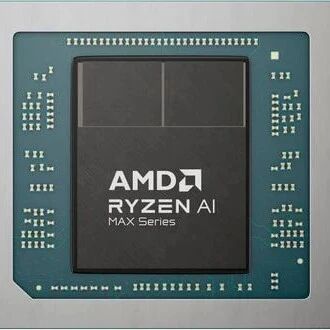
AMD首颗客户端APU:Strix Halo详解
半导体行业观察· 2025-10-21 00:51
Core Viewpoint - AMD's Strix Halo is positioned as a high-performance integrated mobile processor, capable of handling demanding CPU and GPU workloads without the need for a discrete graphics card, with a TDP range of 55W to 120W [2] Specifications and Performance - Strix Halo features dual 8-core Zen 5 cores, totaling 16 cores, and includes a 512b FPU, differing from the mainstream Strix Point APU which has a single chip design [4] - The maximum boost frequency for Strix Halo is 5.1GHz, which is 600MHz lower than the desktop flagship Zen 5 CPU Ryzen 9 9950X [4] - The integrated RDNA 3.5 iGPU has 40 compute units, 32MB of Infinity Cache, and a boost clock of up to 2.9GHz, placing its raw computational power between RX 7600 XT and RX 7700 [4] Memory and Bandwidth - Strix Halo is equipped with a 256b LPDDR5X-8000 memory bus, allowing for a maximum shared bandwidth of 256GB/s, which is lower than RX 7600 XT's 288GB/s but higher than other tested APUs [5] - Memory latency for Strix Halo is approximately 123 nanoseconds, slightly better than Strix Point's 128 nanoseconds, although desktop processors like the 9950X perform better at 75-80 nanoseconds [7][9] - The 16 Zen 5 cores can achieve over 175GB/s bandwidth during read-modify-write operations, with a single CCD's theoretical total bandwidth reaching 128GB/s [11] CPU Performance - Strix Halo's CPU performance is significantly stronger than that of Strix Point, rivaling the previous generation desktop flagship CPU 7950X in integer performance and nearly matching the 9950X in floating-point performance despite an 11.7% lower clock speed [13][15] - In SPEC CPU 2017 Integer subtests, Strix Halo closely approaches the performance of the 9950X, with some floating-point tests showing it outperforming the 9950X [17][19] GPU Performance - Strix Halo's memory bandwidth is more than double that of other mobile SoCs tested, although the RTX 5070 mobile version has about 50% higher memory bandwidth [23] - The Infinity Cache provides over 40% more bandwidth than the L2 cache of the 5070M, with a capacity increase of 33% [25] - Strix Halo's floating-point throughput is approximately 2.5 times that of Strix Point, and it can compete with or exceed the performance of the 5070 Mobile [29] Conclusion - Strix Halo aims to create a versatile SoC suitable for both desktops and laptops, with CPU and GPU performance exceeding standard low-power laptop chips and rivaling systems with discrete graphics [41] - Future iterations of Strix Halo may include updated CPU and GPU IPs and larger memory buses, opening up exciting hardware possibilities [42]


聚焦缺陷检测设备,聚时科技完成数亿元人民币B轮融资
半导体行业观察· 2025-10-20 01:47
Core Insights - Jushi Technology (Shanghai) Co., Ltd. has completed a Series B equity financing of several hundred million RMB, with investors including Shanghai Guotou and Shaoxing Integrated Circuit Industry Fund. The funds will be used to accelerate product technology iteration, expand semiconductor equipment manufacturing capacity, and enhance market development [1][2]. Company Overview - Jushi Technology is recognized as a national-level specialized and innovative small giant enterprise, focusing on integrating cutting-edge AI technology into integrated circuit manufacturing, particularly in semiconductor defect detection equipment [1][2]. - The company has established a comprehensive product system covering various semiconductor manufacturing processes, including front-end Fab, advanced packaging, and wafer manufacturing, serving numerous benchmark semiconductor clients and Fortune 500 companies [1][2]. Market Context - The arrival of the "post-Moore era" has increased the complexity of chip internal structures and the stringent requirements for defect detection and yield management, making these aspects critical in semiconductor manufacturing [2]. - The semiconductor defect detection equipment market is expected to grow at a compound annual growth rate (CAGR) of 15.4% from 2023 to 2027, reaching approximately 60 billion RMB by 2027 [2]. Product Development - Jushi Technology has developed a unique product system focused on semiconductor defect detection, including models like Juxin 6000 for advanced packaging detection and Juxin 5000 for AI-driven yield management [3]. - The company has achieved mass delivery of its products across various semiconductor processes, including wafer detection and advanced packaging, catering to multiple leading semiconductor clients [3].
二维晶体管路线图
半导体行业观察· 2025-10-20 01:47
Core Viewpoint - The article discusses the transition of two-dimensional (2D) semiconductors from a long-term development prospect to a core technology in the semiconductor industry, driven by the limitations of current silicon-based technologies and the need for advanced gate stack engineering for commercialization [1][5]. Group 1: Two-Dimensional Semiconductors - Two-dimensional semiconductors are gaining attention as channel materials that can maintain electrical properties even at atomic thickness, making them a promising alternative to silicon [1][8]. - Leading semiconductor companies and research institutions, including Samsung, TSMC, and Intel, have incorporated 2D semiconductor transistors into their technology roadmaps for the post-silicon era [1][5]. - The commercialization of 2D semiconductors faces significant challenges, particularly in gate stack integration technology, which is crucial for device performance and stability [1][5]. Group 2: Gate Stack Engineering - The research team from Seoul National University has developed a comprehensive roadmap for gate stack engineering, which is essential for the next generation of semiconductor devices [2][4]. - The study categorizes gate stack integration methods into five types: van der Waals (vdW) dielectrics, vdW-oxidized dielectrics, quasi-vdW dielectrics, vdW-seeded dielectrics, and non-vdW-seeded dielectrics, each evaluated based on various performance metrics [3][4]. - The potential application of ferroelectric materials in gate stack technology is highlighted, which could lead to ultra-low power logic, non-volatile memory, and memory computing [3][4]. Group 3: Performance Metrics and Challenges - Key performance indicators for gate stack engineering include subthreshold swing (SS), on-state current density, power supply voltage, and threshold voltage (VT), which are influenced by the composition and quality of the gate stack [6][12]. - The International Roadmap for Devices and Systems (IRDS) emphasizes the need for 2D semiconductors to meet specific performance targets, such as reducing equivalent oxide thickness (EOT) to below 0.5 nm by 2031 [12][29]. - Achieving low interface trap density (Dit) is critical for enhancing gate stack performance and controlling short-channel effects, which are essential for the scalability of 2D transistors [12][13][28]. Group 4: Integration Strategies - Various integration strategies for gate stacks are explored, focusing on minimizing Dit and leakage current while optimizing EOT [14][19]. - The article discusses the challenges of integrating high-k dielectrics with 2D semiconductors due to their surface chemical inertness and the need for tailored deposition methods [14][19]. - The potential of hybrid gate stack structures, which combine vdW and non-vdW dielectrics, is presented as a promising solution for achieving CMOS compatibility and reliability [20][21]. Group 5: Future Directions - The development of ferroelectric embedded gate stacks in 2D transistors is seen as a promising avenue for integrating logic and memory functions into single devices, enhancing performance and reducing power consumption [30][31]. - The article emphasizes the importance of optimizing materials and processes for gate stack integration to meet the demands of advanced CMOS technology [22][23]. - Continuous advancements in interface engineering and the development of specialized materials for 2D semiconductors are crucial for unlocking their full potential in next-generation electronic applications [22][30].
Jim Keller:AI芯片很简单
半导体行业观察· 2025-10-20 01:47
Core Insights - The development of AI chips will become easier and cheaper through open-source technology, as stated by chip expert Jim Keller [2] - Keller emphasizes that AI processors are simpler than commonly perceived and that significant investment is not necessarily required for their development [2] - Keller's company, Tenstorrent, is focused on open-source technology for AI processors and compilers, which lowers costs and increases accessibility [2] Group 1: Open-Source Technology - Open-source chips are more cost-effective and accessible, allowing for greater creativity in developing new solutions [2] - Tenstorrent plans to open-source its AI software stack, aiming to create a successful open-source software company [4] - Keller believes that the demand for AI technology is immense and that the next five years will be particularly interesting for the industry [2][4] Group 2: Industry Trends and Future Outlook - Keller predicts that RISC-V architecture will dominate data centers within the next 5 to 10 years, especially in scientific and high-performance computing [4] - The interest from clients in Tenstorrent's IP cores has been described as surprising, indicating a strong market demand [4] - Keller highlights the challenges in the edge AI market, noting that existing IP products are overly concentrated and difficult to program [5] Group 3: Company Background and Leadership - Jim Keller has a notable background, having worked at AMD, Apple, and Tesla, and he became CEO of Tenstorrent in early 2023 [3] - Keller advocates for an open environment where engineers can learn and innovate freely [3] - Tenstorrent recently licensed its Tensix AI accelerator core IP to LG Electronics for use in embedded edge computing applications [4]
OpenAI的芯片战略
半导体行业观察· 2025-10-20 01:47
Core Insights - OpenAI's CEO Sam Altman has proposed ambitious plans for AI infrastructure, including a partnership with Broadcom to develop custom chips tailored to future AI customer needs, indicating a demand for billions of AI-specific chips [2][3] - The collaboration aims to combine Nvidia's powerful training chips with Broadcom's cost-effective delivery solutions, essential for OpenAI's goal of providing advanced AI services [3][4] - OpenAI's strategy includes diversifying its chip suppliers, with plans to utilize chips from Oracle and AMD, while primarily relying on Nvidia for training [8] Chip Development and AI Infrastructure - OpenAI's data centers will require at least one AI-specific chip per user, leading to a potential demand for billions of chips globally [2] - The shift towards custom chips is seen as a way to reduce costs and improve efficiency in delivering AI services, as evidenced by the trend among major tech companies like Amazon and Google [3][4] - The latest AI models utilize "sparsity," activating fewer neural network nodes, which allows for more efficient chip design and reduced computational requirements [5] AI Supercomputing Goals - OpenAI aims to build a comprehensive AI supercomputer with a target capacity of up to 10 terawatts by 2030, requiring significant investment and energy resources [7] - The company currently has an AI computing capacity of 2 terawatts, with plans for expansion that could necessitate nearly one trillion dollars in investment [7] - Other companies, such as xAI and Meta, are also investing heavily in AI supercomputing, indicating a competitive landscape in the AI infrastructure sector [7] Future Applications and Market Position - OpenAI's future applications remain undisclosed, but the company emphasizes the need for high computational power for its products, such as the Pulse service that utilizes AI agents for internet searches [4] - The reliance on high-bandwidth memory chips is critical for OpenAI's models, highlighting the importance of partnerships with memory manufacturers like Samsung and SK Hynix [4] - Altman describes the construction of AI infrastructure as "the largest industrial joint project in history," underscoring the scale and ambition of OpenAI's initiatives [8]

这颗RISC-V MCU,创纪录
半导体行业观察· 2025-10-20 01:47
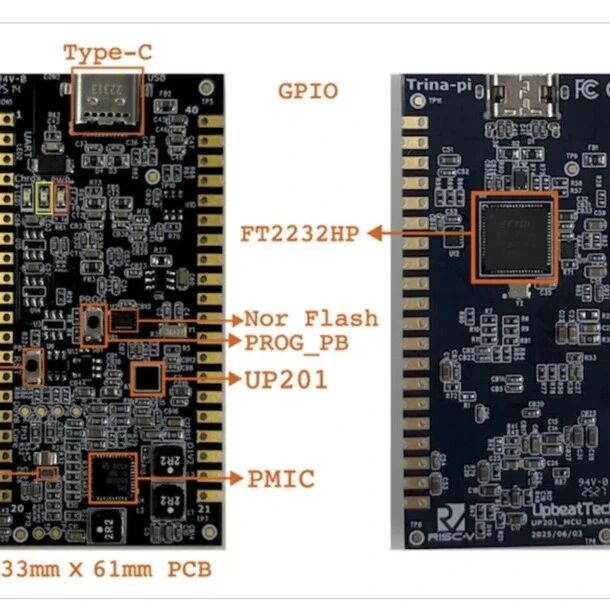
Core Insights - Upbeat Technology has launched the UP201/UP301 series microcontrollers (MCUs) aimed at the growing smart edge device market, featuring a dual-core RISC-V architecture and custom AI accelerators [2][3] - The company has raised approximately $20 million since its founding in 2021, with its first major product being a low-power MEMS bone conduction microphone for wireless earbuds and smart glasses [3] - The UP201/UP301 series utilizes near-threshold conduction (NTC) technology, allowing operation at voltages as low as 0.4V, significantly reducing power consumption [3][4] - The combination of RISC-V architecture and NTC technology reportedly reduces power consumption by about 40% compared to competing ARM solutions [4] Product Features - The UP201 is designed for space-constrained applications requiring long battery life, while the UP301 supports more advanced visual applications with additional peripheral interfaces [5] - Key applications for the UP301 include drone controllers and AI toys, showcasing the chip's versatility in low-power AI processing [5] - The company demonstrated a keyword recognition feature using the Trina-PI evaluation board, capable of recognizing 10 voice commands [7]
纳米铜膏上车,全球首家
半导体行业观察· 2025-10-20 01:47
Core Viewpoint - Pingchuang Semiconductor has achieved a significant milestone by independently developing pressure-sintered nano copper paste, marking it as the first company in China to break through international barriers in third-generation semiconductor packaging materials and the first globally to apply nano copper paste in automotive projects [1][19]. Group 1: Product Development and Features - The company has developed chip-level and system-level copper pastes, with the first production line capable of producing 500 kg/month and a second line planned for 1000 kg/month [3]. - The chip-level copper paste (seCure-BC1113) features low-temperature pressure sintering, excellent thermal and electrical conductivity, and high bonding strength, suitable for various chip surface coatings [4]. - The system-level copper paste (seCure-BC0323) allows for low-temperature sintering at 200°C and can sinter areas up to 3500 mm², eliminating the need for additional silver plating [5]. Group 2: Technical Innovations - The developed copper paste materials have an ultra-wide operational window, allowing for over 48 hours of handling time before drying, which enhances production efficiency and reduces material waste [7]. - The sintering process is characterized by low temperature (40-90°C lower than traditional methods), low pressure (over 30% reduction), and short duration (5 minutes), improving energy efficiency and equipment compatibility [9]. - The technology effectively addresses oxidation issues in DBC and AMB substrates, enhancing the reliability and strength of sintered connections without the need for additional reduction steps [11][19]. Group 3: Market Impact and Future Prospects - The nano copper paste technology represents a dual breakthrough in performance and cost, with copper prices being only 1/10 of silver, and the cost of the paste being 1/3 of sintered silver [19]. - The thermal conductivity of the developed materials exceeds 200 W/(m·K), significantly outperforming traditional solder pastes, and the shear strength exceeds 60 MPa, with no risks of silver paste sulfidation or electromigration [19]. - The recognition from leading automotive companies for the application of this technology in electric vehicles and power electronics indicates strong market potential and future growth opportunities [19].
台积电1.4nm,正式启动
半导体行业观察· 2025-10-20 01:47
Core Insights - TSMC has officially submitted applications to begin construction of its A14 (1.4nm) advanced manufacturing facility in the Central Taiwan Science Park, with an estimated initial investment of $49 billion, expected to create between 8,000 to 10,000 jobs [2] - The new facility is projected to start mass production in the second half of 2028, with an anticipated revenue exceeding NT$500 billion [2] - TSMC is accelerating its 1.4nm process technology deployment to maintain market dominance amid competition from companies like Intel and Samsung [3] Group 1 - TSMC's new factory in Central Taiwan will focus on 1.4nm process technology, with plans for four buildings, the first of which is expected to complete risk production by the end of 2027 [2] - The company aims to establish itself as the largest AI/HPC chip production base globally, with the 1.4nm process being prioritized in Taiwan [2][3] - TSMC's Arizona facility is also set to adopt advanced processes, including 2nm and A16 (1.6nm), with plans to accelerate production timelines [4][5] Group 2 - The 2nm process is expected to enter mass production in Taiwan later this season, with a monthly capacity projected to reach 100,000 wafers by the end of next year [5] - TSMC is actively expanding its capacity in Arizona, with plans for multiple new fabs to support strong demand from major clients like NVIDIA and Apple [5][6] - The timeline for introducing the 2nm process in Arizona may be advanced to 2027, two years later than Taiwan's schedule, which would further enhance TSMC's overall production capacity [6]

英特尔80386,40周岁了
半导体行业观察· 2025-10-20 01:47
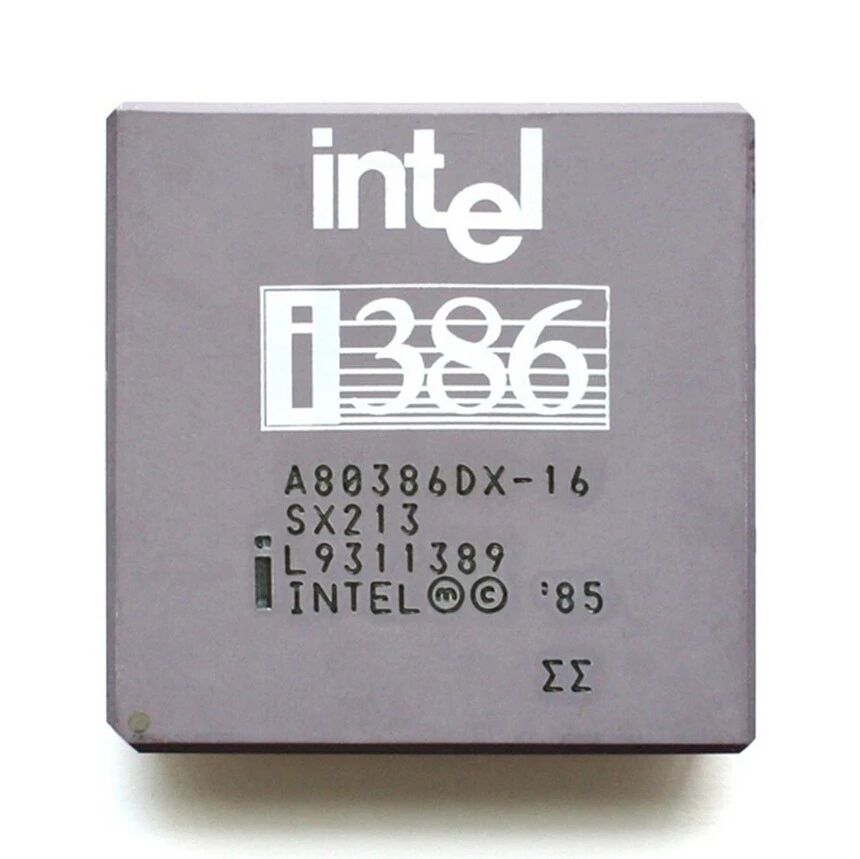
Core Insights - The Intel 80386 processor, launched in October 1985, marked a significant turning point in personal computing as the first 32-bit chip in Intel's PC product line and the origin of the IA-32 instruction set [2][6] - The 80386 featured 275,000 transistors and operated at a frequency of up to 16 MHz, supporting a flat memory model and up to 4GB of address space, which laid the groundwork for true multitasking and virtual memory [2][5] - Compaq was the first company to release a computer with the Intel 80386, the Deskpro 386, in September 1986, which became a pivotal moment in the PC industry [3][11] Group 1: Technical Features and Innovations - The 80386 introduced several key architectural features, including protected mode, virtual 8086 mode, and hardware paging, enabling advanced multitasking capabilities [2][5] - The architecture allowed for the development of true Unix-like systems without complex workarounds, as demonstrated by the early Linux kernel targeting the 386 hardware [5][15] - The 80386's instruction set, IA-32, remained a cornerstone for Windows and most Linux distributions well into the 2010s [5][15] Group 2: Market Impact and Competition - The introduction of the 80386 came at a time when Intel faced significant pressure from competitors, as IBM had previously established a multi-vendor approach for its PCs [6][8] - The 80386's success was crucial for Intel, especially after experiencing losses in 1986 due to manufacturing issues, making its market performance vital for the company's future [11][15] - By the end of the 386 era, competitors like AMD and Chips & Technologies had increased clock speeds, sometimes surpassing Intel's offerings, highlighting the competitive landscape [13][15] Group 3: Legacy and Evolution - The 80386's architecture laid the foundation for the x86 architecture, which continues to influence modern computing, including smartphones and AI data centers [15] - The processor's design and features have persisted in various forms, with the IA-32 architecture being a significant part of Intel's legacy [5][15] - The 80386's introduction of a protected multitasking software platform was unprecedented and has had lasting implications for software development and operating systems [5][10]

安世中国致全体员工
半导体行业观察· 2025-10-19 07:27
根据中国劳动法律法规,全体员工有义务遵守公司的劳动纪律、按照公司要求完成工作。因此,全体员工应当继续执行安世国内公司的 工作指示。对于任何其他未经安世国内公司法定代表人同意的外部指示(即使通过outlook、teams等方式传送),大家有权拒绝执行 而不构成违反工作纪律或者法律规定。 今天,安世中国发布了一个致全体员工的通知。 安世中国指出,安世国内公司是运营扎根中国、战略放眼全球的中国企业,必须遵守中国法律、合法合规运营。在任何时候,安世国内 公司都是独立经营、决策的中国企业,法定代表人有权代表公司意志,并最终负责公司全部运营决策,董事、监事、高管对公司承担忠 实勤勉义务。 大家好!相信大家已经从公开信息了解到 闻泰科技 在荷兰的分支机构安世半导体(Nexperia) 受到当地政府的干预,我国商务部亦对安世半导体中 国公司及分包商发布出口管制公告。近日,中国半导体行业协会发声表示将持续关注事态发展并通过合法手段向国际社会表达关切。 2025年10月16日下午,我国商务部发言希望荷兰方坚持契约精神、纠正错误做法;同日,大家收到了以Nexperia Chief Legal Office名义发出的标题 为"Glo ...