半导体行业观察

Search documents
TI暗示芯片复苏放缓,股价大跌
半导体行业观察· 2025-10-22 01:20
Core Viewpoint - Texas Instruments Inc. has issued a weak earnings forecast for the upcoming quarter, raising concerns about the sluggish recovery in the semiconductor industry [2][3]. Group 1: Financial Performance - The company's profit for the quarter was $1.36 billion, roughly flat compared to the same period last year. Earnings per share were $1.48, slightly below analysts' expectations of $1.49 [2]. - Revenue grew by 14% to $4.74 billion, exceeding analyst forecasts of $4.65 billion. The analog segment saw a 16% increase in revenue to $3.73 billion, while the embedded processing segment grew by 9% to $709 million [2]. - The company expects fourth-quarter revenue to be between $4.22 billion and $4.58 billion, with an anticipated earnings per share of approximately $1.26, lower than the previous expectation of $1.39 [2]. Group 2: Market Conditions and Challenges - The outlook indicates that customers are slowing down orders due to escalating trade tensions and economic uncertainty, despite a rebound in demand after two years of decline [2][3]. - CEO Haviv Ilan noted that the overall semiconductor market is recovering, but at a slower pace than previous recoveries, influenced by broader macroeconomic dynamics [3]. - Industrial customers are adopting a "wait-and-see" approach regarding their factory expansion plans due to potential tariffs and other government actions [3]. Group 3: Strategic Initiatives - Texas Instruments has invested heavily in new capacity to enhance resilience and provide more options amid increasing trade barriers. The company operates four factories outside the U.S., including one in China, and is constructing new facilities in the Dallas area and near Utah [6]. - CFO Rafael Lizardi mentioned that capital expenditures have impacted cash flow and profitability, projected to reach about $5 billion this year, potentially reducing to $2 billion to $3 billion next year [7]. - The company has optimized its inventory levels and is beginning to slow production to avoid excess inventory, which may temporarily affect profitability [7].



先进封装设备市场,风云再起
半导体行业观察· 2025-10-22 01:20
Core Viewpoint - ASML's introduction of the TWINSCAN XT:260 marks its strategic entry into the advanced packaging market, highlighting the increasing importance of advanced packaging in semiconductor technology as traditional scaling approaches physical limits [2][34]. Group 1: Market Dynamics - The advanced packaging market is experiencing significant growth, driven by the rising demand for AI chips and high-performance computing, with a projected market size of $45.73 billion in 2024, expected to reach $113.33 billion by 2033, reflecting a compound annual growth rate (CAGR) of 9.5% [3]. - The demand for advanced packaging equipment is also on the rise, with projections indicating that the backend equipment revenue will reach approximately $7 billion by 2025 and exceed $9 billion by 2030, with a CAGR of nearly 6% [3]. Group 2: Equipment Trends - Key equipment areas such as thermal compression bonding (TCB) and hybrid bonding are rapidly growing, with the TCB market expected to reach $936 million by 2030, driven by integration needs in memory and AI platforms [6]. - The hybrid bonding equipment market is projected to grow at a CAGR of 21.1%, reaching $397 million by 2030, emphasizing its critical role in advanced 3D integration [9]. Group 3: Competitive Landscape - Major players in the backend equipment market include DISCO, BESI, K&S, ASMPT, and Hanmi, each specializing in different aspects of semiconductor manufacturing [21]. - DISCO leads in wafer thinning and cutting technologies, while BESI focuses on hybrid bonding equipment, indicating a diverse competitive landscape [23][26]. Group 4: ASML's Strategic Position - ASML's TWINSCAN XT:260 is designed specifically for advanced packaging, filling a technological gap in high-end packaging lithography and enhancing production efficiency and precision [34][37]. - The XT:260 features significant advancements, including a resolution of 400nm and a production efficiency of 270 wafers per hour, which is four times that of previous models [37]. Group 5: Domestic Market Challenges and Opportunities - Domestic suppliers currently meet less than 14% of local backend equipment demand, facing challenges from reliance on imported technologies and geopolitical uncertainties [41]. - However, domestic manufacturers are gaining momentum, supported by policies and capital investments, with expectations that the domestic backend equipment localization rate will exceed 20% by 2025 [42].


汽车大芯片,成长惊人
半导体行业观察· 2025-10-22 01:20
Group 1 - The automotive processor market is projected to reach $8.9 billion in 2024, driven primarily by ADAS and infotainment segments, with ADAS being the main growth driver, particularly in centralized computing [2] - Centralized computing is expected to dominate the market by 2030 as more vehicles adopt centralized architectures, while radar and LiDAR technologies are anticipated to grow rapidly [2][4] - The demand for processors is shifting towards high-performance computing required for autonomous driving and infotainment, which will reshape automotive architecture over the next decade [2][6] Group 2 - The automotive processor market is undergoing a rapid transformation, with a slowdown in front camera sales due to inventory adjustments, and centralization becoming the new battleground [4] - Companies like Tesla, BYD, NIO, and XPeng are designing their own chips, while NVIDIA maintains a leading position among traditional suppliers [4] - Mobileye holds a 36% share of the ADAS market and is transitioning to launch streamlined and scalable high-performance chips [4] Group 3 - Automotive computing is entering a new era, with processors becoming smarter and more centralized, increasingly driven by artificial intelligence [6] - Front cameras now integrate powerful AI engines for detection, classification, and tracking, while radar and LiDAR are shifting from expensive FPGAs to more efficient APUs [6] - Chiplet technology is expected to reshape the market by providing flexibility, security, and supply chain resilience, creating new opportunities for OEMs and tier-one suppliers to develop custom processors for the next generation of vehicles [6]

这类SSD,国内首款
半导体行业观察· 2025-10-21 00:51
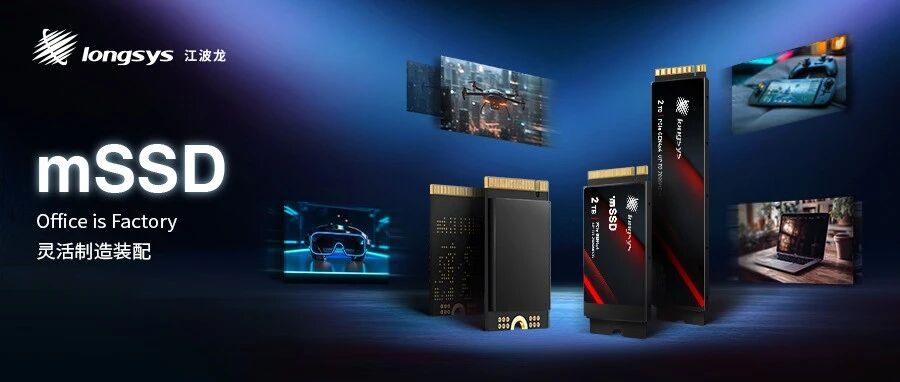
Core Viewpoint - The introduction of the new mSSD by Jiangbolong represents a significant evolution in SSD technology, utilizing integrated packaging to enhance flexibility, efficiency, and performance in storage solutions [1][4][26]. Group 1: SSD Market Overview - SSDs are widely used due to their advantages such as fast read/write speeds, lightweight, low energy consumption, and compact size, leading to a growing demand [3]. - Yole predicts a CAGR of approximately 15% for SSDs from 2022 to 2028, with the market expected to reach $67 billion by 2028 [3]. Group 2: Limitations of Traditional SSDs - Traditional SSDs face challenges such as high energy consumption during production, reliability issues due to numerous solder points, and difficulties in maintenance due to their larger size and non-standard interfaces [3][4]. - The conventional PCBA separation design complicates the manufacturing process and increases the risk of defects [3][4]. Group 3: Introduction of mSSD - Jiangbolong's mSSD utilizes a unique integrated packaging technology that combines various components into a single package, significantly simplifying the production process and enhancing product quality [4][6]. - The mSSD is the first of its kind in the industry, designed to be high-quality, efficient, low-cost, and flexible [4][6]. Group 4: Technical Specifications and Performance - The mSSD measures 20×30×2.0mm and weighs 2.2g, achieving high performance with a sequential read speed of up to 7400MB/s and a write speed of up to 6500MB/s [7]. - It supports PCIe Gen4×4 standards and is suitable for various applications, including laptops, gaming devices, drones, and VR equipment [7][16]. Group 5: Production Efficiency and Cost Reduction - The integrated design eliminates multiple SMT processes, doubling delivery efficiency and reducing additional costs by over 10% [10]. - The mSSD's production process significantly lowers energy consumption and carbon emissions, aligning with green manufacturing practices [11]. Group 6: Compatibility and Customization - The mSSD offers a range of capacities from 512GB to 4TB and features a tool-free expansion design, allowing for easy adaptation to different applications [13]. - It supports customization through on-site printing and assembly, enabling clients to quickly produce and personalize SSDs without high costs [22]. Group 7: Future Outlook - Jiangbolong plans to leverage the advantages of mSSD to meet market demands for rapid customization, reliable quality, and cost control, while continuing to innovate in storage solutions [26].
AI芯片,大泡沫?
半导体行业观察· 2025-10-21 00:51
Core Viewpoint - The article discusses the current state of the AI industry, comparing it to the internet bubble of 1999-2000, highlighting the rapid rise in valuations and the potential risks associated with companies like Coreweave [3][5]. Valuation and Market Trends - As of September, the Nasdaq composite index had a P/E ratio of 33, with major companies like Amazon, Apple, Google, Microsoft, Meta, and TSMC ranging from 27 to 39 [6]. - Nvidia's P/E ratio is notably high at 52, reflecting its leadership in the AI sector, while AMD's P/E has surged to 140 due to its acquisition of OpenAI [6][7]. - GenAI revenue is experiencing rapid growth, with predictions of AI data center investments reaching $5 trillion by 2030, primarily from large, profitable companies [6][7]. Adoption Rates and Consumer Behavior - GenAI adoption is accelerating, with ChatGPT reaching 100 million users in just two months, significantly faster than other platforms like TikTok and Facebook [6][11]. - A consumer AI market valued at $12 billion has emerged within two and a half years, with 60% of U.S. adults using AI in the past six months [11][12]. Enterprise Use Cases and Productivity - GenAI is expected to be the largest market, with significant applications in enhancing productivity, particularly in programming and financial analysis [13][14]. - Companies like Walmart and Salesforce are leveraging AI to avoid hiring additional staff while still achieving growth [14][15]. Competitive Landscape and Future Outlook - The cost of training advanced models is projected to reach billions, limiting participation to companies with substantial resources [16]. - Major players like Anthropic, AWS, Google, and Microsoft are expected to dominate, while smaller companies may need to specialize in niche markets [30][31]. - The article suggests that multiple winners may emerge in the GenAI space, as differentiation and ecosystem bundling are likely to occur [40]. Hardware and Infrastructure Challenges - The demand for data center capacity is surging, with predictions that the scale of data centers will grow significantly by 2026 [32]. - There are concerns about the adequacy of power supply to meet the growing needs of AI data centers, with projections indicating that AI could consume a substantial portion of the U.S. electricity supply by 2024 [38][39].

引领边缘AI新时代——湾芯展“边缘AI赋能硬件未来创新论坛”成功落幕
半导体行业观察· 2025-10-21 00:51
Core Viewpoint - The article discusses the rapid evolution of AI technology, particularly the rise of edge AI, which is transforming various industries and creating new opportunities for innovation and collaboration in the hardware sector [1][40]. Group 1: AI Technology and Industry Transformation - AI technology is penetrating various sectors at an unprecedented speed, with edge AI bringing intelligent computing from data centers to end devices, revitalizing the smart hardware industry [1]. - The integration of computing power, algorithms, and data is leading to innovative applications such as personal intelligent agents and large models on the edge, driving advancements in consumer electronics, industrial manufacturing, smart cities, and autonomous driving [1]. - Shenzhen is emerging as a global growth hub for the AI industry, supported by strong electronic information industry foundations, a complete supply chain, and a favorable policy environment [1]. Group 2: Policy and Ecosystem Support - Since 2025, Shenzhen has introduced a series of significant policies to support the AI industry, including funding subsidies, open scenarios, and computing power support, establishing a comprehensive AI industry support system [1]. - The "Action Plan for Accelerating the Construction of an AI Pioneer City in Shenzhen (2025-2026)" outlines Shenzhen's strategic ambition to become a globally influential AI city, promoting a "one area, one brand" industrial development pattern [1]. Group 3: Forum Highlights and Innovations - The "Edge AI Empowering Hardware Future Innovation Forum" held in Shenzhen gathered top experts and industry leaders to discuss technological frontiers, industry trends, and development opportunities under policy incentives [2]. - Keynote speeches highlighted advancements in edge AI technologies, including low-power, high-efficiency chips designed for personal intelligent agents, and the importance of balancing computing power, memory, and energy consumption in edge AI applications [5][8]. Group 4: Future Trends and Predictions - The AI industry is transitioning from a "training era" to a "reasoning era," with a focus on efficiency rather than scale, indicating a shift in competitive dynamics within the computing power industry [11]. - Predictions suggest that by 2025, the reasoning computing power will surpass training computing power, and the usage of domestic AI chips will exceed that of foreign chips for the first time [11]. Group 5: Technological Innovations and Solutions - Various companies are developing innovative solutions to address the challenges of edge AI, such as the introduction of new NPU architectures that enhance flexibility and efficiency in AI computations [8][9]. - The emergence of RISC-V architecture is highlighted as a transformative force in the semiconductor market, with expectations of significant market share growth by 2030 [20][21]. Group 6: Infrastructure and Global Expansion - Companies like China Unicom are building global computing networks to support enterprises' international expansion, addressing challenges related to dispersed computing power and network complexity [14][15]. - The integration of AI with global infrastructure aims to provide seamless connectivity and enhanced operational efficiency for businesses venturing abroad [14][15]. Group 7: Testing and Standards Development - The establishment of a comprehensive testing system for AI chips is crucial for ensuring efficiency and safety in the rapidly growing AI chip industry, with plans to develop national and industry standards by 2027 [39]. - The focus on application scenario-based testing and collaborative adaptation is essential for supporting the industry's growth and addressing the unique challenges posed by AI technologies [39].

芯片,太难了!
半导体行业观察· 2025-10-21 00:51
Core Viewpoint - The article emphasizes the increasing environmental impact of the digital industry, particularly through the lens of the semiconductor sector, which relies heavily on high-purity materials and complex supply chains [1][4][45]. Group 1: Environmental Impact of the Digital Industry - The digital sector's materiality is often discussed from the perspective of mining activities, highlighting the need for specific raw materials like lithium and cobalt for ICT products [3][4]. - Recent trends in artificial intelligence and edge computing have intensified concerns about the environmental footprint of large tech companies [3][4]. - The United Nations reports that key elements for ICT technologies represent only 0.77% of all mined elements, indicating a limited but critical demand for specific materials [3][4]. Group 2: Semiconductor Industry Materiality - The semiconductor industry is central to the digital sector, with microchips requiring a diverse range of materials and extremely high purity levels [5][8]. - The complexity of the semiconductor supply chain makes it challenging to analyze its environmental impact, as many upstream processes remain opaque [4][12]. - The industry now requires over 85% of non-radioactive elements from the periodic table, reflecting a significant shift in material requirements over the past 30 years [11][24]. Group 3: Purity Requirements and Case Studies - The article proposes a purity-based approach to understanding the materiality of semiconductors, focusing on the diversity of elements and their purity requirements [14][45]. - Case studies on silicon, aluminum, gold, and neon illustrate how purity demands shape the supply chain and environmental impacts [31][33][34][37]. - For instance, silicon requires a purity level of 11N (99.999999999%), necessitating multiple industrial processes that have significant environmental implications [31][32]. Group 4: Supply Chain Dependencies - The semiconductor industry's reliance on high-purity materials creates dependencies on other industrial sectors, such as steel production for neon gas purification [38][41]. - The article highlights that the production of ultra-pure materials often involves energy-intensive processes, raising concerns about the environmental footprint of these supply chains [41][45]. - The increasing complexity of manufacturing processes and the need for diverse materials will likely escalate as technology advances, further complicating the industry's environmental impact [45].
国巨完成1000亿日元收购
半导体行业观察· 2025-10-21 00:51
Core Viewpoint - The acquisition of Shibaura Electronics by Yageo marks a significant milestone as it is the first instance of a foreign company acquiring a large Japanese firm through a voluntary tender offer, reflecting Yageo's commitment to long-term investment in the Japanese market [2][4]. Group 1: Acquisition Details - Yageo has completed the acquisition of Shibaura Electronics with a tender offer acceptance rate of 87.3%, aiming to make Shibaura a wholly-owned subsidiary and delist it by Q1 2026 [2]. - The acquisition cost is approximately 109 billion yen (7.23 billion USD) for 100% of the shares, following a prolonged bidding war [2][4]. - The final acquisition price was set at 7,130 yen per share, surpassing the competing offer from Minebea Mitsumi, which was 6,200 yen per share [2][5]. Group 2: Strategic Implications - Yageo's acquisition aims to enhance its product line and transform into a comprehensive electronic component manufacturer, particularly in the semiconductor temperature sensor market where Shibaura holds the largest global market share [2][6]. - The acquisition is expected to create synergies, allowing Yageo to assist Shibaura in expanding its business beyond Japan into European and American markets [6]. - Yageo's revenue was approximately 4 billion USD last year, with a goal to reach 10 billion USD in the next decade, emphasizing a strategy of providing "one-stop supply" services for passive components [6]. Group 3: Market Context - The demand for passive components is rapidly increasing, driven by the growth of AI and electric vehicles, with significant applications in industrial and automotive sectors [6]. - Yageo's products are currently utilized in approximately 60% for industrial and automotive applications, and 16% for AI server and high-performance computing applications [6].

用钻石冷却芯片
半导体行业观察· 2025-10-21 00:51
Core Viewpoint - The article discusses the challenges of heat management in advanced semiconductor devices and introduces diamond as a potential solution for thermal conductivity, which could significantly enhance the performance of chips and electronic devices [2][5][32]. Group 1: Heat Management Challenges - The increasing number of transistors in chips leads to heat accumulation, creating hotspots that can exceed temperatures by several degrees, which limits CPU and GPU performance [2][5]. - High-performance processors require greater power density, with new Nvidia GPU servers consuming nearly 15 kilowatts [2]. - Current cooling strategies, such as heat sinks and fans, are becoming less effective as chip architectures evolve towards 3D stacking, necessitating innovative thermal management solutions [13][26]. Group 2: Introduction of Diamond as a Solution - Diamond is identified as an ideal material for heat dissipation due to its superior thermal conductivity, being several times more efficient than copper, and its electrical insulation properties [4][15]. - Recent advancements allow for the growth of diamond films at temperatures low enough to not damage sensitive semiconductor devices, enabling integration into chips [4][19]. Group 3: Benefits of Diamond Integration - Initial tests with gallium nitride (GaN) transistors show that adding diamond can reduce device temperatures by over 50°C and improve signal amplification by five times [5][24]. - The integration of diamond in CMOS chips is expected to mitigate the thermal limitations posed by increasing hotspot temperatures, which could rise by nearly 10°C in upcoming manufacturing technologies [5][26]. Group 4: Research and Development Efforts - The research team is collaborating with industry partners, including DARPA and TSMC, to develop diamond-based thermal management solutions for high-performance applications [31][32]. - Ongoing experiments demonstrate that diamond layers can significantly enhance thermal performance in GaN HEMT devices, with temperature reductions of up to 70°C observed [24][29]. Group 5: Future Implications - Successful integration of diamond technology could redefine thermal management across various industries, potentially becoming a standard in next-generation electronic products [32].
安世风波后,功率器件紧急涨价
半导体行业观察· 2025-10-21 00:51
Core Viewpoint - The global power semiconductor market is facing a severe supply-demand imbalance due to dual sanctions on Nexperia, leading to anticipated price increases for key components like diodes and MOSFETs, with potential hikes of 5% to over 20% in the fourth quarter [2][3]. Group 1: Market Impact - Nexperia is a critical supplier for automotive components, and its production disruptions are causing a crisis in the global automotive supply chain, affecting major manufacturers like Volkswagen, BMW, and Mercedes [2][4]. - The market is experiencing a tightening of inventory for MOSFETs and diodes, with lead times for automotive-grade components extending to over 12 weeks [2][3]. - The anticipated price increases are reminiscent of the "material shortage" experienced during the pandemic, driven by high demand from both the AI and automotive sectors [2][3]. Group 2: Production Challenges - Following the forced takeover of Nexperia by the Netherlands, China's Ministry of Commerce imposed export controls, halting exports of products manufactured in China [3][5]. - Nexperia's Dongguan factory has implemented a reduced work schedule and is facing raw material shortages, leading to a decrease in overtime hours for employees [3][5]. - The factory's output has been constrained, with reports indicating that incoming inventory has consistently exceeded outgoing shipments since the recent holiday [3][5]. Group 3: Company Position - Nexperia is a leading IDM manufacturer in the power semiconductor sector, holding the top global position in small-signal diodes and transistors, and ranking second in logic ICs and automotive-grade Power MOSFETs [4]. - Approximately 80% of Nexperia's production capacity is located in mainland China, which accounts for about 50% of its global sales, indicating significant risk if exports are restricted [5].