半导体行业观察

Search documents
全球首颗2nm GPU,要来了
半导体行业观察· 2025-10-10 00:52
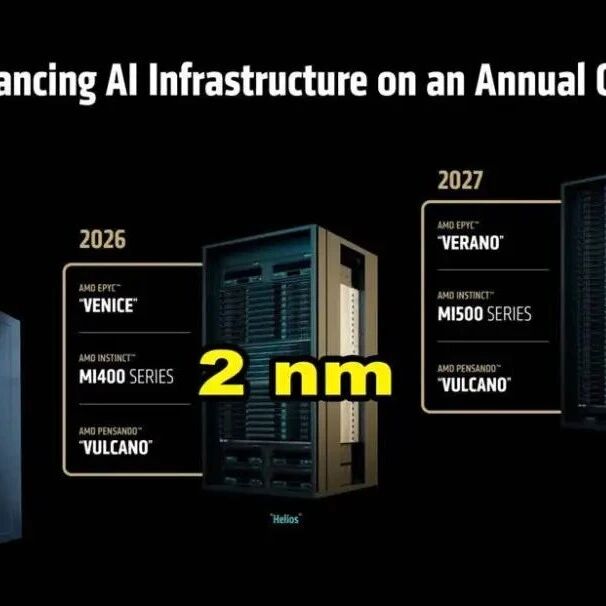
Core Viewpoint - AMD is set to launch its next-generation Instinct MI450 graphics accelerator using 2nm process technology, aiming to compete directly with NVIDIA's Rubin chip series [1][3][6] Group 1: Product Specifications - The Instinct MI450 will utilize TSMC's 2nm technology for its accelerator core chip (XCD), while the active interposer chip (AID) and media interface chip (MID) will be manufactured using TSMC's 3nm process [1][5] - MI450 is expected to deliver similar FP4/FP8 performance to NVIDIA's Rubin, but with 1.5 times the memory and bandwidth [3][5] - The MI400 series will integrate up to 432 GB of HBM4 memory, significantly enhancing bandwidth capabilities [7] Group 2: Market Positioning - AMD's data center operations head, Forrest Norrod, claims that MI450 will be the best solution for training, inference, distributed inference, and reinforcement learning, indicating confidence in competing with NVIDIA [6] - The MI450 is anticipated to be AMD's "Milan moment," referencing the significant leap made by AMD's EPYC server CPU series [6] - AMD plans to expand its rack options with the upcoming Helios system, which is expected to match the top configurations of NVIDIA's Rubin series [7] Group 3: Launch Timeline - The MI450 is projected to be released in 2026, coinciding with NVIDIA's launch of its next-generation Rubin series [7]


RISC-V市占,首次突破25%
半导体行业观察· 2025-10-10 00:52
Core Insights - RISC-V's market penetration has reached 25%, indicating significant growth in the chip market, particularly in IoT and automotive applications [3][4] - SHD Group's upcoming forecast suggests that RISC-V chip shipments could exceed 21 billion by 2031, generating over $2 billion in revenue [3] - Meta's acquisition of Rivos, a startup developing RISC-V processors, highlights the competitive landscape for advanced AI chips and the potential for RISC-V to challenge established players like Nvidia [4][9] RISC-V Market Growth - RISC-V's market penetration is a substantial leap, with predictions of reaching 25% of the semiconductor market by 2030, equating to 17 billion chip shipments [3] - The growth is attributed to RISC-V's applications in edge AI deployments, providing localized data centers for smaller communities [3] Meta's Acquisition of Rivos - Meta's acquisition of Rivos, which has developed RISC-V processors compatible with CUDA, signifies a strategic move to enhance its AI capabilities [4][7] - Rivos aims to reduce the cost and complexity of migrating applications to its SoC, leveraging its compatibility with existing CUDA software [6][9] - The acquisition is expected to accelerate Meta's development of proprietary chips for AI workloads, with significant R&D investment [7][8] European RISC-V Developments - The eProcessor project in Europe has successfully developed the first out-of-order RISC-V processor, marking a significant milestone in the semiconductor industry [12][14] - This processor, built on a 22nm process, enhances computational performance and efficiency for various applications, including AI and automotive [12][15] - The project aligns with the EU's semiconductor innovation strategy, aiming to boost Europe's position in the global chip market [14][17] Future Implications - The success of the eProcessor project underscores the potential for RISC-V to provide alternatives to traditional closed architectures, fostering innovation in high-performance computing and embedded systems [16][17] - Continued investment and strategic support are crucial for the eProcessor project to compete with industry leaders like AMD and Intel [17]


芯片设备,最新预测
半导体行业观察· 2025-10-10 00:52
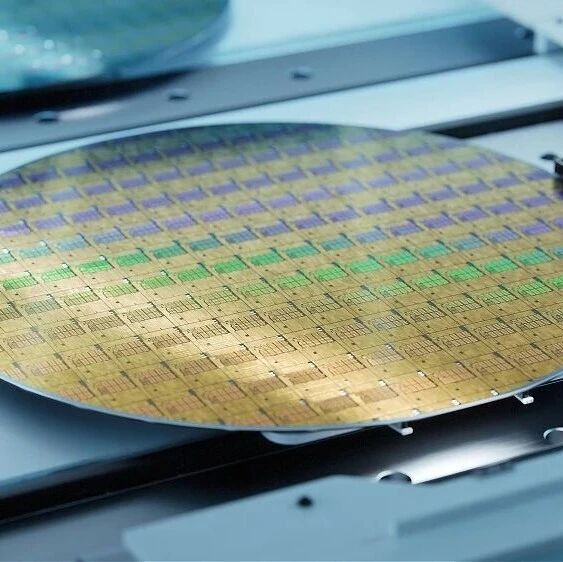
Core Insights - The global spending on 300mm wafer fab equipment is projected to reach $374 billion from 2026 to 2028, driven by the surge in demand for AI chips and the emphasis on regional self-sufficiency in semiconductor supply chains [1][3] Equipment Spending Forecast - In 2025, global spending on 300mm wafer fab equipment is expected to exceed $100 billion for the first time, growing by 7% to reach $107 billion [1] - Investment is forecasted to grow by 9% in 2026 to $116 billion, by 4% in 2027 to $120 billion, and by 15% in 2028 to $138 billion [1] Market Segmentation Growth - The logic and microelectronics sector is anticipated to lead equipment expansion, with total investments reaching $175 billion from 2026 to 2028, primarily driven by foundries expanding capacity for processes below 2nm [4] - The memory segment is expected to be the second-largest, with total spending of $136 billion over three years, including over $79 billion for DRAM-related equipment and $56 billion for 3D NAND investments [5] - The analog sector is projected to exceed $41 billion in investments over the next three years, while the power-related sector, including compound semiconductors, is expected to see $27 billion in investments [5] Regional Growth - China is expected to maintain its lead in 300mm equipment spending, with investments projected at $94 billion from 2026 to 2028 [7] - South Korea is forecasted to invest $86 billion, ranking second globally, driven by demand for generative AI [7] - Taiwan is projected to invest $75 billion, focusing on 2nm and below capacity to maintain its leadership in advanced foundry technology [7] - The Americas are expected to invest $60 billion, with the U.S. suppliers expanding advanced process capacity to meet AI application demands [7] - Japan, Europe, and the Middle East, along with Southeast Asia, are projected to invest $32 billion, $14 billion, and $12 billion respectively, with policies aimed at alleviating semiconductor supply issues expected to boost investments by over 60% by 2028 compared to 2024 [7]

英特尔18A正式亮相,两款芯片重磅发布
半导体行业观察· 2025-10-10 00:52
Core Viewpoint - Intel's recent production of Panther Lake and Clearwater Forest chips signifies a strong advancement in semiconductor technology, particularly with the introduction of the Intel 18A process, which incorporates innovative technologies like RibbonFET and PowerVia, enhancing performance and efficiency [1][3][10]. Intel 18A Process - Intel 18A is the first 2nm node developed and manufactured in the U.S., achieving a 15% increase in performance per watt and a 30% increase in chip density compared to Intel 35 [3]. - The RibbonFET technology represents a significant shift in transistor architecture, allowing for better performance and energy efficiency by enabling tighter packing of transistors [6][10]. - PowerVia, a back-side power delivery system, addresses routing congestion and improves power efficiency, making the manufacturing process more cost-effective [8][10]. Panther Lake Overview - Panther Lake is Intel's first AI PC processor built on the Intel 18A process, featuring five tiles: compute, GPU, base, filler, and platform control [12]. - Key features include a 50% increase in graphics performance, significant enhancements in NPU performance (from over 40 TOPS to 50 TOPS), and advancements in wireless connectivity with Wi-Fi 7 R2 [15][32]. - The architecture combines high efficiency from Lunar Lake and high performance from Arrow Lake, making it a competitive SoC [15]. Clearwater Forest Overview - Clearwater Forest is based on the E-Core design and features 288 E-Cores, making it Intel's most efficient server processor to date [44][52]. - The architecture includes multiple chiplets and advanced packaging technologies, enhancing performance and scalability for data centers [45][50]. - It supports a high number of PCIe and CXL channels, allowing for extensive connectivity and integration with existing server infrastructures [54][62]. Technological Innovations - The introduction of Foveros Direct 3D technology in Clearwater Forest allows for high-density, low-resistance interconnections between chips, significantly improving data transfer efficiency [57]. - The Darkmont E-Core architecture features enhancements in instruction processing and execution resources, leading to a 17% increase in IPC compared to previous generations [59][61]. Market Positioning - Intel aims to leverage these advancements to maintain competitiveness in the mature PC and server markets, responding to customer needs and emerging market trends [63]. - The Panther Lake and Clearwater Forest chips are expected to begin mass production and shipping by the end of the year, with broader availability in early 2026 [43].


为了让2nm显得不贵,台积电3nm涨价
半导体行业观察· 2025-10-09 02:34
Core Viewpoint - TSMC's advancement in wafer fabrication technology is leading to increased costs, impacting clients like Apple, Qualcomm, and MediaTek, although the premium for the new 2nm process may be less severe than initially expected, ranging from 10% to 20% compared to the 3nm process [1][2]. Pricing Dynamics - The anticipated price for TSMC's 2nm wafers is projected to be around $30,000 each, with the potential for a 50% price increase next year [5]. - TSMC's current 3nm process is expected to see price hikes, with the second-generation N3E reaching approximately $25,000 and the third-generation N3P around $27,000 [2][5]. Client Adaptation - Major clients like Qualcomm and MediaTek are adapting to the price increases, with Qualcomm planning to transition to the 2nm process for its Snapdragon 8 Elite Gen 6 SoC by 2026, and MediaTek already having successfully taped out its first 2nm SoC [3][5]. - Despite the cost pressures, clients are still willing to invest in TSMC's latest technology, indicating a strong demand for advanced semiconductor processes [3]. Market Demand and Competition - TSMC is reportedly experiencing high demand for its 2nm process, with 15 major companies preparing to adopt it, including AMD and MediaTek, and expectations that Apple will also become a client [5][6]. - The semiconductor industry is facing inflationary pressures, with rising prices for memory and storage components contributing to overall cost increases [5]. Production Capacity - TSMC is expanding its production capabilities by constructing multiple 2nm fabs in Taiwan and a third fab in Arizona, aiming to meet the growing market demand [6].

思科发布芯片,硬刚博通英伟达
半导体行业观察· 2025-10-09 02:34
Core Insights - Cisco has launched a new routing ASIC, the 8223, designed to help data center operators overcome power and capacity limitations by integrating existing data centers into a unified computing cluster [1] - The 8223 router supports a throughput of 51.2 Tbps and can theoretically achieve a total bandwidth of 3 EB per second when connected to enough routers, suitable for today's largest AI training clusters [1][28] - Major cloud providers, including Microsoft and Alibaba, are evaluating the potential deployment of this new chip [1] Summary by Sections Cisco's New Routing ASIC - The 8223 router features Cisco's Silicon One P200 ASIC and can support transmission distances of up to 1,000 kilometers with 800 Gbps coherent optical devices [1] - For customers not requiring such high-speed connections, the router can support bandwidths of up to 13 Pbps using a smaller dual-layer network [1] Industry Context - Cisco joins other network suppliers like Nvidia and Broadcom in the distributed data center trend, with Broadcom's Jericho4 and Nvidia's Spectrum-XGS also targeting high-speed data center interconnects [2] - The concept of high-speed, cross-scale data center networks is crucial for AI workloads, as traditional WAN/DCI performance is insufficient for scaling AI training tasks [5] Technical Challenges and Solutions - Latency remains a challenge in data transmission between data centers, with a single trip taking about 5 milliseconds over 1,000 kilometers, not accounting for additional delays from transceivers and amplifiers [3] - Cisco's approach includes deep buffering to manage congestion, which is essential for maintaining performance in AI workloads that are sensitive to latency and synchronization issues [30][31] Market Dynamics - The demand for cross-scale networks is driven by the exponential growth of AI model sizes, necessitating a shift from traditional data center architectures to interconnected clusters [29] - Cisco's P200 chip is positioned to provide significant bandwidth improvements, with estimates suggesting it can deliver around 12.8 Pb/s of bandwidth for large AI clusters [19][29] Future Outlook - Cisco's strategy includes embedding security features and operational flexibility into the 8223 chip, making it suitable for both AI and traditional data center applications [32] - The competition between Cisco and Nvidia highlights the diverse needs of AI networks, with Cisco focusing on distributed AI interconnects and Nvidia targeting low-latency scenarios [33]



黄仁勋:AMD做法让人意外
半导体行业观察· 2025-10-09 02:34
Core Insights - Nvidia's CEO Jensen Huang expressed surprise at AMD's decision to sell 10% of its shares to OpenAI, calling it imaginative and unique [1] - OpenAI and AMD agreed on a deal where OpenAI will purchase $6 billion worth of chips, including the upcoming MI450 series, and receive warrants for up to 160 million shares of AMD [1] - AMD's stock surged by 11% following the announcement, with a cumulative increase of 43% for the week [1] - Nvidia's stock also rose by 2% after Huang's comments, indicating market confidence in Nvidia's position [1] Nvidia's Investment in OpenAI - Nvidia announced plans to invest up to $100 billion in OpenAI over the next decade, with OpenAI agreeing to build systems requiring 10 gigawatts of power [2] - Huang highlighted that this investment allows Nvidia to sell products directly to the developers of ChatGPT, contrasting with AMD's deal [2] - Concerns were raised about the cyclical nature of AI infrastructure deals, with Huang noting that OpenAI currently lacks funds and needs to raise capital through revenue, equity, or debt [2] AI Demand Growth - Huang noted a significant increase in demand for AI models, particularly in the last six months, as they evolve from simple question answering to complex reasoning [7] - The demand for Nvidia's advanced GPUs, particularly the Blackwell series, is exceptionally high, signaling the start of a new industrial revolution [7] - The scale of AI industry plans raises questions about whether leading companies can secure the necessary power to meet their ambitions [7] Competition with China - Huang stated that the U.S. is currently "not far ahead" of China in the AI race, with China rapidly building the necessary infrastructure [8] - He emphasized the need for new power generation facilities outside the grid to meet AI demands and protect consumers from rising electricity prices [8] - Huang advocated for investment in various energy production methods to ensure data centers can generate power quickly [9] Nvidia's Relationship with Intel - Huang expressed optimism about Nvidia's recent collaboration with Intel, viewing it as a win-win situation for both companies [6] - He recounted a historical rivalry with Intel, suggesting that Intel had attempted to undermine Nvidia's growth over the years [5] - The partnership allows Nvidia to enter a large consumer market while providing Intel with opportunities in mainstream data center markets [6]

美国晶圆厂投资,将超过中国大陆、中国台湾和韩国
半导体行业观察· 2025-10-09 02:34
与此同时,根据SEMI周三发布的报告,得益于人工智能芯片的蓬勃发展,预计2026年至2028年,全 球用于生产12英寸(300毫米)半导体晶圆的芯片工厂设备的支出将达到3740亿美元,这些设备支持 成熟和先进的芯片制造。 公众号记得加星标⭐️,第一时间看推送不会错过。 来源 :本文编译自日经 。 国际半导体产业协会 (SEMI) 预测显示,随着人工智能需求的激增以及华盛顿推动本地化生产,美国 半导体投资将从2027年起超过主要芯片经济体中国大陆、中国台湾和韩国。 2027年至2030年,美国的芯片投资(包括设备和设施建设支出)将大幅增长,部分原因是政策驱动 的对先进逻辑芯片和存储芯片的投资。 根据行业机构SEMI的预测,今年和明年美国芯片投资将达到约210亿美元,到2027年和2028年将分 别增至330亿美元和430亿美元。 SEMI市场情报高级总监Clark Tseng表示,预计2027年至2030年,中国的芯片总投资将达到约1580 亿美元,这一增长幅度在世界其他地区是无法比拟的。 Clark在亚利桑那州凤凰城举行的SEMICON West贸易展期间对《日经亚洲》表示:"根据我们目前看 到的已确认的半导 ...

芯片设备巨头,集体大跌
半导体行业观察· 2025-10-09 02:34
Core Viewpoint - The U.S. House Committee has raised concerns that the semiconductor industry is supporting the development of China's semiconductor sector and its military, leading to fears of further export controls [1][2]. Group 1: Impact on Semiconductor Companies - Semiconductor companies, including Applied Materials and ASML, experienced stock price declines following the committee's statements, with ASML's stock dropping 7.1%, marking its largest intraday decline since July [1]. - The committee cited sales data from major tool manufacturers, indicating significant profits from selling equipment to Chinese state-owned enterprises and affiliates, although no legal violations have been reported [1][2]. Group 2: U.S.-China Relations and Export Controls - The committee has called for the Trump administration to significantly expand nationwide export bans and licensing requirements for tools sold to China, raising concerns about imminent export restrictions [2]. - As U.S.-China relations worsen, the semiconductor industry has become a primary target for stricter export limitations, with recent actions including the cancellation of authorizations that allowed certain companies to supply products to Chinese factories without U.S. permission [2]. Group 3: ASML's Market Position - China is ASML's second-largest market after Taiwan, accounting for 27% of its net system sales in Q2, down from 41% the previous year due to increased trade restrictions [3]. - The reliance on artificial intelligence-related investments has partially offset losses in the Chinese market, but it has also made ASML more dependent on a limited number of customers [3].

巨头解码边缘 AI ,重磅论坛即将举行
半导体行业观察· 2025-10-09 02:34
Core Viewpoint - The forum titled "Empowering Hardware Innovation with Edge AI" will be held on October 15, 2025, at the Shenzhen Convention Center, focusing on the integration of policies, technology, and market strategies to address challenges in edge AI hardware innovation [1][29]. Event Overview - The forum is organized by Semiconductor Industry Observation and will feature experts, industry leaders, and policymakers discussing topics such as optical computing, integrated processing, and practical applications of large models [1][2]. - The agenda includes various presentations from key figures in the semiconductor and AI sectors, covering topics from edge model chips to AI-enabled semiconductor manufacturing [2][3]. Keynote Speakers and Topics - Professor Yu Hao from the Shenzhen-Hong Kong Microelectronics Institute will discuss edge model chips for personal intelligent agents, focusing on technological breakthroughs and policy support [7]. - Arm China's Product Director Bao Minqi will present on NPU technology and its role in enhancing edge AI hardware performance [9]. - Luo Yi, Vice President of Yuntian Lifa Technology, will explore the new productivity in the intelligent computing era [10]. - Yang Cheng from China Unicom will share insights on AI hardware adapting to overseas markets [12]. - Zhang Shengbin from Inspur Cloud will discuss the international competitiveness of Chinese cloud computing and AI applications [14]. - Alibaba DAMO Academy's Li Jue will present on the innovative RISC-V architecture for the next generation of intelligent computing [15][16]. Policy and Market Integration - The forum aims to create a closed-loop system connecting policy, technology, implementation, and market expansion, addressing the pain points of aligning technology with policy support [29][30]. - Shenzhen's AI industry is set to accelerate with substantial funding and support for AI and semiconductor integration, including subsidies for R&D and application scenarios [31]. Conclusion - The event is positioned as a pivotal platform for discussing the future of edge AI and semiconductor innovation, leveraging policy advantages and technological advancements to foster a new era in the industry [1][31].