半导体行业观察

Search documents
这项互联技术,要超越CPO!
半导体行业观察· 2025-12-28 02:49
Core Viewpoint - The speed of training large AI models ultimately depends on two concepts: scaling up and scaling out, which involve different physical connection technologies [1][2]. Group 1: Scaling Technologies - Scaling out refers to increasing the number of interconnected AI computers to handle large tasks, while scaling up involves integrating as many GPUs as possible within each computer [1]. - Scaling out relies on photonic chips and optical fibers for data transmission, while scaling up uses copper cables, which are simpler and more economical [1]. - The network density achieved through scaling up is approximately ten times that of scaling out, but the data transfer rates required for high-performance computing are approaching the physical limits of copper cables [1][2]. Group 2: Challenges with Copper Cables - Copper cables face limitations due to the skin effect, which causes high-frequency signals to concentrate near the surface, increasing resistance and requiring thicker cables and more power [7][8]. - Active electrical cables (AECs) have been developed to mitigate these issues, but they increase complexity and power consumption [8]. Group 3: Innovations in Data Transmission - Point2 Technology and AttoTude propose a new solution that combines the low cost and reliability of copper cables with the fine size and long-distance capabilities of optical fibers [2][4]. - Point2 plans to mass-produce cables capable of 1.6 terabits per second using polymer waveguides, while AttoTude is developing similar technology using terahertz frequencies [4][11]. - Both companies claim their technologies can easily surpass copper cables in transmission distance, achieving 10-20 meters without significant loss [4][5]. Group 4: Future Prospects - The wireless technology being developed is expected to be more reliable and easier to manufacture than photonic technology, potentially replacing some copper cables in printed circuit boards [5][14]. - The market for vertical expansion networks is growing, with companies looking to integrate more GPUs while minimizing cooling technology needs [15][16]. - Both Point2 and AttoTude are working on versions of their technology that can be directly integrated into GPUs, which could further enhance performance and efficiency [15][16].


RISC-V市占,直逼25%
半导体行业观察· 2025-12-28 02:49
Core Viewpoint - The global semiconductor landscape has reached a historic turning point with the RISC-V architecture achieving a 25% market penetration, signaling the end of proprietary architecture monopolies and the rise of open-source hardware as a core pillar of next-generation computing [1][13]. Group 1: Market Dynamics - Qualcomm's acquisition of Ventana Micro Systems for $2.4 billion and META's strategic acquisition of Rivos are pivotal moves towards a "no ARM" roadmap, allowing tech giants to control their chip destinies to meet the demands of generative AI and autonomous driving systems [1][3]. - The transition to RISC-V is seen as a key hedge against ongoing licensing disputes and rising ARM intellectual property costs, enabling Qualcomm to potentially become a major competitor to Intel in the server and personal computer markets [6]. Group 2: Technological Advancements - RISC-V's inherent modularity allows engineers to add custom instructions without licensing fees, contrasting with ARM's rigid licensing model, thus providing flexibility for companies like Qualcomm and META to develop tailored platforms [3]. - The integration of neural processing units (NPUs) directly into CPU pipelines in edge AI and IoT applications can reduce latency by up to 40%, showcasing RISC-V's advantages over traditional ARM designs [4]. Group 3: Competitive Landscape - The rise of RISC-V poses significant challenges to ARM Holdings, as its dominance in mobile and IoT markets is threatened by "free alternatives," forcing ARM to innovate rapidly in licensing terms and technical performance [7]. - The shift towards RISC-V-based custom chips by major companies like META, Google, and Amazon could diminish reliance on high-margin general-purpose GPUs, potentially saving billions in capital expenditures over the next five years [6]. Group 4: Geopolitical Context - RISC-V's emergence is intertwined with global geopolitical tensions, serving as a tool for countries seeking semiconductor independence amid trade restrictions and "chip wars," thus accelerating the restructuring of global supply chains [9]. - The demand for highly specialized, low-power chips in edge AI applications is driving RISC-V's growth, with projections indicating that total revenue from RISC-V intellectual property could reach $2 billion by 2031 [9]. Group 5: Future Outlook - Over the next 3-5 years, RISC-V is expected to penetrate high-performance computing (HPC) and server markets, with predictions suggesting it could capture over 30% of the data center chip market by 2031 [11]. - The industry is closely monitoring the potential for other major players like Microsoft or Amazon to follow suit in RISC-V acquisitions, which could further accelerate the transition [11].

玻璃基板,量产前夜
半导体行业观察· 2025-12-28 02:49
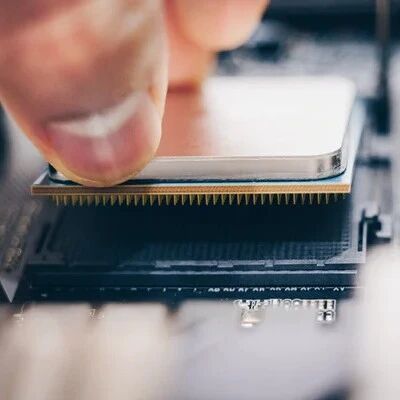
Core Viewpoint - The semiconductor industry is shifting from process competition to packaging innovation, with glass substrates emerging as a key material to overcome performance bottlenecks in advanced packaging [1][2]. Group 1: Industry Dynamics - Major companies like Samsung, Intel, AMD, and Nvidia are actively exploring glass substrates for next-generation chip development, indicating a strategic focus on this material [1]. - Recent developments include Japan's Rapidus exploring glass substrate technology and Samsung's plans to establish a joint venture with Sumitomo Chemical for glass substrate production [1][2]. Group 2: Advantages of Glass Substrates - Glass substrates offer significant advantages over traditional organic substrates and silicon interposers, including lower dielectric loss, excellent thermal stability, and high flatness [3][4]. - The electrical performance of glass substrates is superior, with signal transmission loss at 10GHz being only 0.3dB/mm, and dielectric loss reduced by over 50% compared to organic substrates [4]. - Glass substrates can achieve a thermal expansion coefficient (CTE) of 3-5ppm/°C, matching silicon chips and reducing warpage by 70% during thermal cycling [4]. Group 3: Types of Glass Substrates - Glass substrates are categorized into glass interposers and glass core substrates, each serving different roles in advanced packaging scenarios [3][6]. - Glass interposers are primarily used in 2.5D packaging, enabling high-density interconnections between multiple chips [6]. - Glass core substrates are aimed at 3D packaging and chiplet integration, providing a stable solution for increasing chip sizes and I/O counts [8]. Group 4: Industry Competition - The competition in the glass substrate market is intensifying, with companies like Intel, Samsung, TSMC, and new entrants like Rapidus and Absolics making significant investments and strategic moves [12][14][20]. - Intel has invested over $1 billion in developing glass substrate technology and aims for large-scale application by 2026-2030 [12][13]. - Samsung is pursuing a dual-line strategy, focusing on both rapid commercialization and long-term technological breakthroughs in glass substrates [14][15]. Group 5: Challenges and Barriers - The glass substrate industry faces challenges in scaling production, with many companies still in the early stages of development and validation [34][39]. - Key technical challenges include the efficiency and yield of TGV (Through Glass Via) processes, high-density wiring, and bonding reliability [35][41]. - Cost remains a significant barrier, with the production costs of glass substrates being substantially higher than traditional organic substrates, limiting their application in price-sensitive markets [39][40]. Group 6: Domestic Developments - Domestic companies in China are actively pursuing opportunities in the glass substrate market, leveraging their expertise in glass processing and precision manufacturing [23][30]. - Companies like BOE and Wog Glass are making strides in developing glass substrates for semiconductor packaging, with plans for mass production and technological advancements [24][25]. - The establishment of industry alliances and collaborations between academia and industry is fostering innovation and addressing common technical challenges in the glass substrate sector [30][31].




显卡价格彻底失控:每个月都要涨!
半导体行业观察· 2025-12-28 02:49
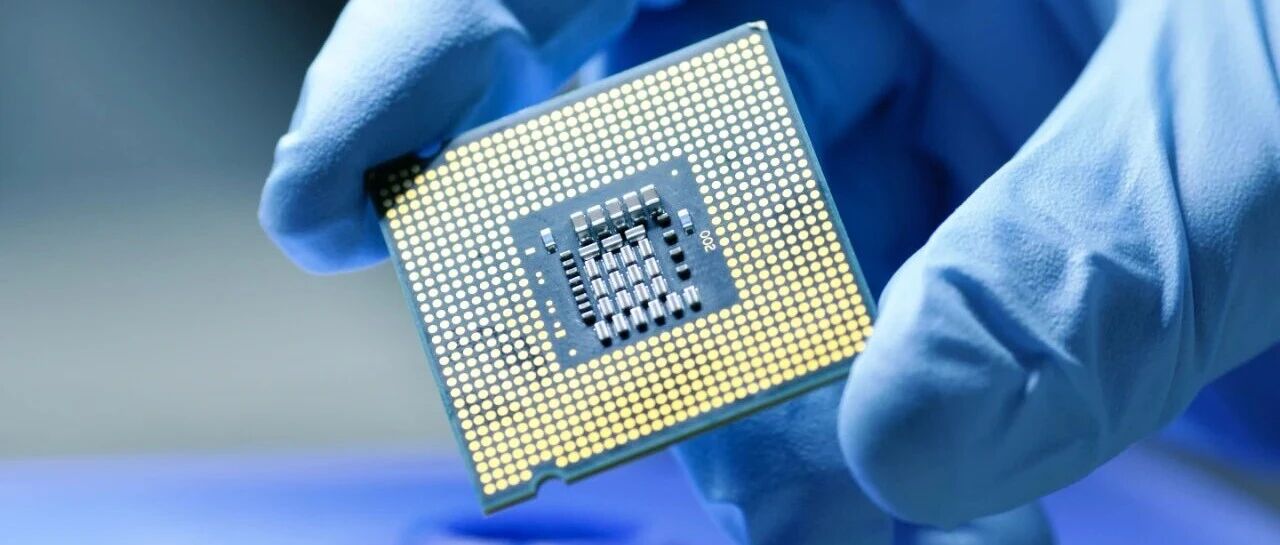
Core Viewpoint - The report from Board Channels indicates that GPU prices are expected to rise significantly starting in January 2026, with AMD likely leading the price increases, followed by NVIDIA in February 2026 [1][2]. Group 1: Price Increase Timeline - AMD is anticipated to raise GPU prices as early as January 2026, with multiple price hikes expected in the following months [1][2]. - NVIDIA is expected to follow suit with price increases for its GPUs starting in February 2026 [1][2]. Group 2: Current Market Conditions - The current RDNA 4 product line has a limited number of GPU models, while most previous generation products have reached their end of life (EOL) [2]. - Some brands have already implemented slight price increases in December, while others have chosen to maintain their current pricing [1][2]. Group 3: Cost Factors - The cost of GPU cores and VRAM accounts for nearly 80% of the total cost when delivered to AIB manufacturers, indicating significant pressure on pricing [2]. - The prices of DDR5 and other mainstream DRAM modules have surged, with costs increasing two to four times, which may lead to GPUs being priced at double their MSRP [2]. Group 4: Market Reactions - AIC manufacturers will ultimately decide on price increases, but rising costs of memory modules may compel them to raise GPU prices quickly [3]. - Some brands are already testing the market with premium versions of the RTX 50 series, with prices for models like the RTX 5090 approaching $5000 [3].

突破!经典半导体变身超导体
半导体行业观察· 2025-12-28 02:49
Core Viewpoint - Germanium, a semiconductor previously thought to be fully understood, has shown potential to transform into a superconducting material when combined with suitable metals, bridging the gap between classical electronics and next-generation quantum devices [1]. Group 1: Research Findings - A recent study published in *Nature Nanotechnology* details how researchers successfully converted germanium into a zero-resistance conductive material, positioning it as a crucial link between quantum and classical technologies [1]. - The research involved heavily doping germanium with gallium, replacing 17.9% of germanium atoms, which typically would compromise material structure. However, the team employed an epitaxy technique to maintain perfect lattice stability [2]. - The stable crystal exhibited superconductivity at just 3.5 Kelvin (-269.65°C), a temperature suitable for current advanced quantum systems [2]. Group 2: Potential Applications - The new materials are expected to lead to the development of next-generation quantum circuits, sensors, and high-efficiency low-temperature electronic devices, all requiring clean interfaces between superconducting and semiconductor regions [3]. - A promising application is the Josephson junction, a core component of superconducting qubits, which can be constructed using germanium in both its superconducting and standard semiconductor forms [3]. Group 3: Industrial Implications - If the technology matures, engineers could manufacture millions of Josephson junctions on a single wafer, a critical step towards the industrial-scale production of quantum processors [5]. - For the first time, a single element may connect the established classical computing infrastructure with transformative quantum technology [5].

UALink,能否一战?
半导体行业观察· 2025-12-27 01:33
Core Viewpoint - The UALink alliance has officially launched the UALink 1.0 specification, aimed at providing an open GPU interconnect I/O architecture to compete with Nvidia's NVLink technology [1][2]. Group 1: UALink Alliance Formation and Purpose - The UALink alliance was established in May 2022, consisting of major companies like AMD, Intel, Broadcom, Cisco, Google, HPE, Meta, and Microsoft, among others, totaling over 65 members [1]. - The primary goal of the alliance is to create an open standard for GPU accelerator interconnect I/O, facilitating high-speed, low-latency connections for AI servers and clusters [1][2]. Group 2: UALink 1.0 Specifications - UALink 1.0 is based on Ethernet physical layer specifications with a 200G standard, offering transmission rates of 100 Gb/s or 200 Gb/s per channel, with an effective signal rate of 212.5 GT/s [5]. - It allows for the interconnection of up to 1,024 GPU accelerators, forming a scalable AI Pod unit [6]. Group 3: Comparison with NVLink - UALink 1.0 provides higher single-channel bandwidth and larger GPU interconnect scale compared to NVLink, which allows for a maximum of 576 directly connected GPUs [6][7]. - While UALink can offer 800 Gb/s total bandwidth per GPU, NVLink can provide up to 1800 GB/s per GPU through multiple links, indicating a trade-off in total bandwidth versus interconnect scale [6][7]. Group 4: Market Implications and Future Outlook - The first products supporting UALink 1.0 are expected to be released between 2026 and 2027, with potential competition from Nvidia's upcoming NVLink 6.0 [7].
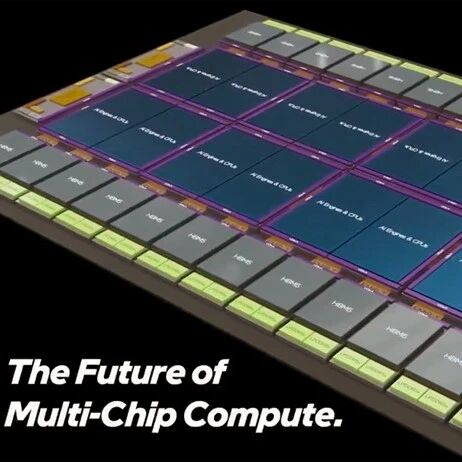
英特尔展示超大芯片封装技术
半导体行业观察· 2025-12-27 01:33
Core Viewpoint - Intel is pioneering a multi-chip design consisting of 47 chips, specifically targeting artificial intelligence and high-performance computing applications with its Ponte Vecchio computing GPU, which currently holds the record for the most chips in a design. The company plans to introduce an even more advanced multi-chip package that integrates at least 16 compute units and 24 HBM5 memory stacks on eight basic chips, with a size that can expand to 12 times that of the largest AI chips on the market, surpassing TSMC's 9.5 times [1][2]. Group 1 - The proposed multi-chip package features 16 large compute units manufactured using Intel's advanced 14A and 14A-E process technologies, which include 1.4nm features and enhanced capabilities [1]. - The foundational chips utilize 18A-PT technology (1.8nm) to perform additional computations or provide substantial SRAM cache for the main compute chips, showcasing Intel's innovative design [2]. - Intel's Foveros Direct 3D technology represents the pinnacle of its packaging innovation, utilizing ultra-high-density bonding techniques to maximize bandwidth and power for the top chips [2]. Group 2 - Intel suggests using a custom HBM5 module connected via a UCIe-A based EMIB-T interface instead of standard JEDEC-compliant HBM5 stacks, aiming for higher performance and capacity [3]. - The entire package can accommodate PCIe 7.0, optical engines, incoherent structures, 224G SerDes, dedicated accelerators for security, and even LPDDR5X memory to enhance DRAM capacity [3]. - Intel has showcased two conceptual designs: a "medium scale" design with four compute units and 12 HBM memory, and an "extreme scale" design with 16 compute units and 24 HBM5 stacks, with the latter being the focus of the article [7]. Group 3 - The extreme packaging concept is expected to emerge by the end of this decade, positioning Intel to compete closely with TSMC, which also plans to launch similar products around 2027-2028 [7]. - Achieving this extreme design within a few years poses significant challenges for Intel, particularly in ensuring that components do not deform during installation and can manage heat effectively over time [7]. - The size of these processors could reach up to 10,296 square millimeters, necessitating advanced thermal management solutions [7].
日本芯片设备,持续卖爆
半导体行业观察· 2025-12-27 01:33
Core Viewpoint - Japan's semiconductor manufacturing equipment sales continue to thrive, achieving record highs in November 2025, with sales exceeding 400 billion yen for 13 consecutive months, indicating strong market demand and growth potential in the semiconductor industry [1][2]. Group 1: Sales Performance - In November 2025, Japan's semiconductor equipment sales reached 420.67 billion yen, marking a 3.7% increase year-over-year and a record high for the same month historically [1]. - Cumulatively, from January to November 2025, sales totaled 4.635 trillion yen, a significant increase of 16.1% compared to the same period last year, surpassing the previous year's total of 3.992 trillion yen [2]. - The global market share of Japanese semiconductor equipment stands at 30%, making it the second largest in the world after the United States [2]. Group 2: Future Projections - The Semiconductor Equipment and Materials International (SEMI) predicts that global semiconductor equipment sales will reach a record high of $133 billion in 2025, with expected growth of 13.7% [4]. - For the years 2026 and 2027, global semiconductor equipment sales are projected to continue growing, reaching $145 billion and $156 billion, respectively [4]. - The demand for advanced logic, memory, and packaging technologies driven by AI investments is identified as the primary growth driver for semiconductor equipment sales [4]. Group 3: Segment Insights - SEMI forecasts that sales of front-end semiconductor manufacturing equipment (Wafer Fab Equipment) will increase by 11.0% to $115.7 billion in 2025, reflecting strong demand from AI-related investments [5]. - The growth in sales is also attributed to significant investments in advanced memory technologies, particularly in South Korea, which is expected to support equipment sales [6]. - By 2027, China, Taiwan, and South Korea are anticipated to remain the top three countries in semiconductor equipment procurement, with China continuing to invest in mature processes and specific advanced nodes [5][6].
英伟达1400亿“收购”,GPU拐点已现?
半导体行业观察· 2025-12-27 01:33
Core Viewpoint - The acquisition of Groq by Nvidia for $20 billion marks a significant shift in the AI chip industry, emphasizing the growing importance of non-GPU architectures in AI inference tasks [1][17]. Group 1: Acquisition Details - Nvidia and Groq reached a non-exclusive licensing agreement for $20 billion, which is Nvidia's largest investment ever, representing one-third of its cash and short-term capital [1]. - The acquisition is driven by the need to secure advanced technology in response to the rising prominence of non-GPU architectures like Google's TPU [1][15]. Group 2: Groq's Technology - Groq specializes in a unique LPU architecture, which is a software-defined hardware reconfigurable data flow architecture that eliminates memory bandwidth bottlenecks, achieving performance levels unattainable by traditional GPUs [2][6]. - Groq's LPU can process hundreds of tokens per second, significantly outperforming both TPU and traditional GPU architectures [2]. Group 3: Competitive Landscape - The AI chip market is evolving into two distinct factions: the GPU-centric shared computing approach and the non-GPU faction represented by ASICs and reconfigurable data flow chips like Groq's LPU [4][5]. - Nvidia's acquisition of Groq indicates a recognition that GPUs may not be the ideal choice for AI inference tasks, highlighting the increasing relevance of non-GPU architectures [3][14]. Group 4: Performance and Cost Efficiency - Groq's architecture allows for a 40-fold increase in model performance compared to traditional solutions, with a manufacturing cost per chip potentially below $6,000, making it more cost-effective than Nvidia's H100 chips [11][13]. - Groq's chips can achieve up to four times the throughput of other inference services while being priced significantly lower than competitors [11]. Group 5: Market Trends and Future Outlook - The AI chip market is projected to exceed $128.5 billion by 2025, with non-GPU architectures expected to capture over 21% of the market share by 2030 [18]. - In China, the non-GPU server market is anticipated to grow rapidly, potentially reaching nearly 50% market share by 2029 [21].
DRAM暴涨60%,三星创历史新高
半导体行业观察· 2025-12-27 01:33
公众号记得加星标⭐️,第一时间看推送不会错过。 三星电子26日收盘报11.7万韩元,较前一交易日上涨5900韩元(5.31%)。该公司股价创下历史新高 后结束交易。 日本野村证券发布报告预测三星电子利润将大幅增长后,大量外资涌入。野村证券解释道:"第四季 度通用DRAM和NAND闪存价格大幅上涨,迅速提升了三星存储器业务的盈利能力。"报告还补充 道:"预计第四季度通用DRAM价格上涨了30%至40%,而服务器DRAM价格上涨了40%至60%。" 韩国国内证券公司也纷纷上调了对三星电子的预期。近期,SK证券大幅上调了三星电子的目标股 价,从11万韩元上调至17万韩元,涨幅高达55%。包括KB证券(15万韩元→16万韩元)、未来资产 证券(14.2万韩元→15.5万韩元)、韩亚证券(14万韩元→15.5万韩元)、韩华投资证券(11万韩元 →14万韩元)以及美利证券(12万韩元→12.5万韩元)在内的十家公司也成功上调了目标股价。 根据证券行业普遍预期(平均预测),三星电子今年第四季度的销售额和营业利润预计将分别达到 88.2192万亿韩元和15.6965万亿韩元。与去年同期相比,这些数字分别增长了16.4%和14 ...